
Trading multiple currency pairs sounds like the fastest way to “diversify”… until you realize you’ve accidentally opened five versions of the same USD trade.
You’re long EUR/USD at 1.0520, long GBP/USD at 1.2680, short USD/JPY at 149.50, and you feel balanced—until DXY spikes from 106.80 and all positions move against you together.
This guide is built to prevent that exact scenario.
TL;DR — Multi-Pair Trading with Signals (Key Takeaways)
- Diversification isn’t “more trades.” It’s uncorrelated exposure with controlled risk across currencies and sessions.
- Correlation is the hidden leverage. EUR/USD + GBP/USD often behave like one trade; treat them as a single “USD short” bucket.
- Use exposure caps. Example: max 2% total risk open, max 1% per currency (USD, EUR, GBP, JPY) at any time.
- Allocate by quality, not quantity. If only one A+ signal appears, trade one A+ signal—don’t force five mediocre trades.
- Optimize signal selection. Prefer signals with clean structure, clear invalidation, and strong session alignment (London/NY).
- Track portfolio-level outcomes. Judge performance by weekly/monthly equity curve, not single-trade emotions.
Why Trading Multiple Currency Pairs with Signals Is Harder Than It Looks
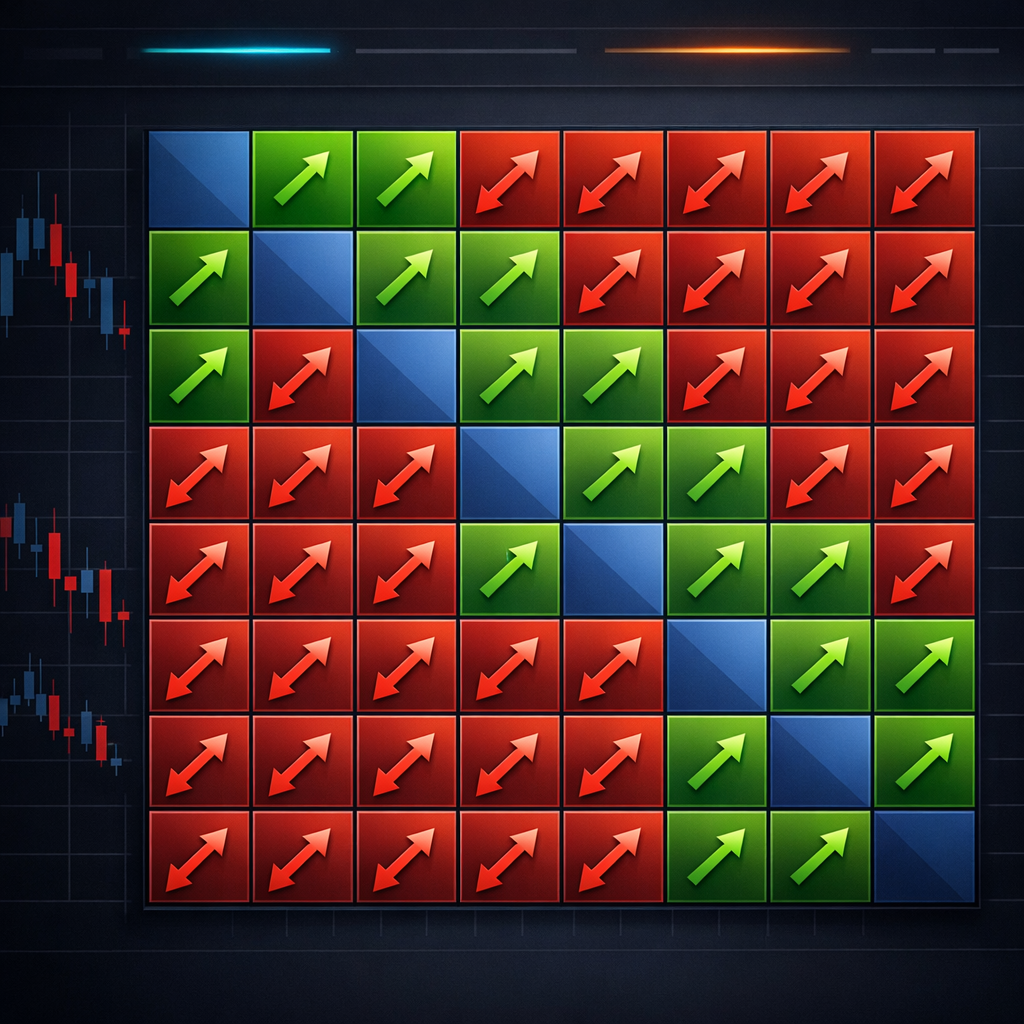
On paper, multi-pair trading looks like a free upgrade.
More pairs means more opportunities, more signals, and more chances to catch trends.
In reality, most traders blow up multi-pair accounts for one simple reason: they manage trades individually, but the market punishes them as a portfolio.
The “portfolio problem” most signal users miss
Signals typically arrive one by one.
Your brain treats them like separate events, but your account treats them like combined exposure.
If you take EUR/USD, GBP/USD, and AUD/USD longs at the same time, you might be running a single macro bet: USD weakness.
Current market context: why correlation risk is elevated
With DXY around 106.80, USD flows can dominate intraday movement.
That means a surprise US data print or a sharp move in Treasury yields can push multiple pairs in the same direction within minutes.
Even gold (XAUUSD) around $2650 (+0.35% in 24h) can react to USD and yields, creating cross-market correlation you didn’t plan for.
Signals help—but only if you build rules around them
A premium signal with entry, stop loss, and take profit is powerful.
But the edge disappears if you stack correlated trades, oversize positions, and ignore session volatility.
The goal of this guide is to help you turn signals into a controlled, diversified trading system.
If you’re still choosing providers, bookmark our checklist: forex signals provider checklist for beginners.
Multi-Pair Trading vs “Overtrading”: A Clear Comparison
Let’s separate two behaviors that look similar on a statement but have totally different outcomes.
Multi-pair trading is a structured approach to distribute risk across instruments.
Overtrading is chasing activity, usually in correlated markets, usually with inconsistent sizing.
Quick comparison table
| Topic | Structured Multi-Pair Trading | Overtrading Multiple Pairs |
|---|---|---|
| Goal | Reduce portfolio volatility while capturing quality setups | Increase action, “make back losses,” or maximize daily trades |
| Correlation handling | Limits same-direction exposure (e.g., USD short bucket) | Ignores correlation; stacks EUR/USD + GBP/USD + XAUUSD |
| Risk limits | Caps per trade, per currency, and total open risk | Risk grows trade-by-trade until margin pressure hits |
| Signal selection | Filters signals by session, structure, RR, and news risk | Takes everything because “the provider is good” |
| Performance tracking | Evaluates weekly/monthly equity curve + drawdown control | Judges by last trade; revenge trades after a stop-out |
A realistic scenario (with today’s levels)
Imagine EUR/USD is at 1.0520 and GBP/USD is at 1.2680.
You receive two buy signals, both targeting 40–60 pips, both with 20–30 pip stops.
If DXY jumps from 106.80 to 107.20 on a hawkish surprise, both trades can hit SL together.
That’s not “bad luck.” That’s correlation.
In the next sections, we’ll build rules so one macro move doesn’t wipe out a day’s work.
Forex Correlation 101: The Math Behind Your “Diversified” Trades

Forex correlation measures how two pairs move relative to each other.
When correlation is high and positive, pairs often move in the same direction.
When correlation is high and negative, they often move opposite.
The correlations that trap most traders
In many market regimes, EUR/USD and GBP/USD show strong positive correlation.
That means buying both can be like doubling down on the same thesis: USD weakness.
USD/JPY often behaves differently because it’s heavily influenced by yields and risk sentiment.
Correlation changes (and that’s the point)
Correlation isn’t permanent.
During risk-off shocks, USD can strengthen broadly and correlations tighten.
During country-specific news (UK CPI, ECB surprises), correlations can break, creating true diversification.
Practical correlation rules you can actually use
- Rule 1: Treat EUR/USD + GBP/USD as one “USD short” exposure unless proven otherwise.
- Rule 2: If you already have one EUR or GBP trade open, reduce size on the second similar exposure.
- Rule 3: Prefer adding a trade with a different driver (e.g., USD/JPY yield-driven) rather than stacking more USD shorts.
How gold fits into correlation (even in a forex article)
Gold at $2650 often reacts to USD strength and real yields.
So if you’re long EUR/USD and also long XAUUSD, you may be doubling down on the same macro driver.
That’s fine—if you size it correctly and understand it’s one combined bet.
For traders mixing instruments, our broader signals hub is here: United Kings trading signals.
Capital Allocation: How to Split Risk Across Multiple Currency Pairs
Allocation is where multi-pair trading becomes professional.
If you don’t define how much risk each pair can consume, your “diversified” portfolio becomes accidental leverage.
The core idea: allocate risk, not money
Many traders split capital by deposit percentage (e.g., 25% per pair).
That’s not enough because volatility differs across pairs and sessions.
Instead, split by risk per trade and risk per currency.
A simple allocation model you can copy
Here’s a clean framework for signal users:
- Max risk per trade: 0.25% to 1.00% (beginners stay at 0.25%–0.50%).
- Max total open risk: 1.0% to 2.0% across all trades combined.
- Max risk per currency: 1.0% (USD bucket, EUR bucket, GBP bucket, JPY bucket).
Example: You risk 0.5% on a EUR/USD buy signal.
You then get a GBP/USD buy signal that is highly correlated.
You either skip it or take it at 0.25% so your USD-short bucket doesn’t exceed your limit.
Position sizing example (numbers that feel real)
Suppose your account is $10,000 and you risk 0.5% per trade ($50).
If a EUR/USD signal has a 25-pip stop, your position size is $50 / 25 pips = $2 per pip.
That’s roughly 0.20 lots on many brokers (depending on contract specs).
Allocation across sessions (London vs NY)
United Kings focuses heavily on London and New York sessions because liquidity and follow-through are stronger.
Your allocation should respect that.
If you trade both sessions, avoid carrying maximum exposure into high-impact US releases unless the signal plan explicitly accounts for it.
For deeper sizing and protection rules, use this guide: risk management strategies when using forex signals.
Exposure Limits That Actually Work (Currency Buckets & Net USD)
When you trade multiple pairs, you need exposure limits that reflect how FX is built: it’s all relative.
Every trade is long one currency and short another.
So the cleanest control method is currency buckets.
Step-by-step: build currency buckets in 5 minutes
- List your open trades (or planned signals).
- Write the currencies involved (EUR, USD, GBP, JPY).
- Mark what you’re long and short for each trade.
- Sum your risk by currency (e.g., USD short risk totals 1.25%).
- Compare to your caps (e.g., max 1.0% per currency).
Example using today’s pairs
Assume you take three signals:
- Buy EUR/USD at 1.0520 (risk 0.5%) → long EUR, short USD
- Buy GBP/USD at 1.2680 (risk 0.5%) → long GBP, short USD
- Sell USD/JPY at 149.50 (risk 0.5%) → short USD, long JPY
Your USD exposure is now heavily one-sided: you’re short USD three times.
If a US surprise hits, all three can lose together.
This is why professional multi-pair trading often limits net USD exposure.
A practical “net USD” rule
Set a rule like:
- Max net USD risk: 1.0% open risk at any time.
- Max correlated trades: 2 trades in the same USD direction unless one is reduced size.
Where traders get this wrong with signals
They assume “85% win rate” means “take everything.”
Even with a strong provider, trades can cluster into the same macro theme.
Your job is to manage the clustering so one theme doesn’t dominate your equity curve.
If you’re new to Telegram-based execution, this is a good companion read: forex signals Telegram beginners guide.
How to Select the Best Signals Across Pairs (A Ranking System)
When multiple signals arrive close together, selection matters more than speed.
You’re not trying to trade the most.
You’re trying to trade the best set of trades that fits your exposure limits.
Use a simple A/B/C ranking
Here’s a ranking system you can apply in under 60 seconds per signal.
- A-Grade: Clear structure (break & retest / clean rejection), logical SL placement, 1:2+ RR, aligned with session momentum.
- B-Grade: Valid setup but closer to key level (choppy), RR around 1:1.5–1:2, or mild news risk.
- C-Grade: Late entry, messy structure, SL too tight for volatility, or heavy news within 30–60 minutes.
Selection rules for multi-pair portfolios
- Rule 1: Take A-grade signals first.
- Rule 2: If two A-grade signals are correlated, take the cleaner one or split risk (e.g., 0.5% + 0.25%).
- Rule 3: Never take a C-grade signal just because you “need diversification.”
- Rule 4: Prefer signals that diversify drivers (EUR event vs JPY yield move vs GBP data).
A realistic ranking example (London into NY)
Let’s say London session produces a EUR/USD buy with a 30-pip stop and 70-pip target (about 1:2.3).
At the same time, you see a GBP/USD buy but it’s sitting right under a weekly resistance and the stop needs to be 45 pips for safety.
Both might win, but the EUR/USD is often the cleaner A-grade.
What United Kings does differently
Our premium signals are built with clear Entry, SL, and TP levels so you can rank them quickly.
We also share educational context so you understand why a pair is chosen during London or NY.
If you want to see what “good” looks like, explore our dedicated page: premium forex signals.
Correlation Management in Real Life: Building a Diversified Basket
Diversified trading doesn’t mean holding one trade in every major pair.
It means building a basket where a single event doesn’t hit every position the same way.
Step-by-step: build a 3–4 position basket
- Start with one “core” signal (highest grade, best structure).
- Add a second trade only if it reduces concentration (different driver or opposite USD exposure).
- Add a third trade only if total open risk stays under your cap (e.g., 1.5% total).
- Stress-test the basket: “If USD spikes, what happens?” “If risk-off hits, what happens?”
Basket examples using today’s market levels
Basket A (concentrated, risky):
- Buy EUR/USD 1.0520
- Buy GBP/USD 1.2680
- Sell USD/JPY 149.50
This is basically one bet: USD weakness.
Basket B (more balanced):
- Buy EUR/USD 1.0520 (USD short)
- Sell GBP/USD 1.2680 if UK-specific weakness is present (USD long)
- Sell USD/JPY 149.50 only if yields confirm (USD short, but different driver)
Now you have offsets and different catalysts.
Don’t forget cross-pairs
Crosses like EUR/GBP can help reduce USD concentration.
If the day is dominated by USD news risk, trading a cross can keep you active without stacking USD exposure.
Gold as a “diversifier” (sometimes)
Gold at $2650 can diversify a purely FX basket, but only when its driver differs.
If gold is moving mainly on USD weakness, it’s not a diversifier—it’s reinforcement.
If gold is moving on safe-haven demand while FX is range-bound, it can diversify well.
If you mix FX and metals, keep your tools in one place: United Kings gold signals.
Optimizing Entries, SL, and TP Across Pairs (So Trades Don’t Clash)
Multi-pair portfolios fail when stops cluster and get hit together.
Even if each trade is “good,” the combined structure can be fragile.
Your goal is to avoid having every stop sitting at the same macro invalidation point.
Use volatility-aware stops (not “same pip stop”)
EUR/USD might be comfortable with a 20–30 pip stop in normal conditions.
GBP/USD often needs more room because it whips harder around London/NY transitions.
USD/JPY can spike on yields, especially near 149.50 where round-number liquidity sits.
Gold example: realistic SL/TP construction
Even though this is a forex guide, many traders run gold alongside FX.
Here’s a realistic XAUUSD signal structure around current prices:
- Buy XAUUSD: 2650
- Stop loss: 2636 (14 points / $14)
- Take profit 1: 2678 (RR ≈ 1:2)
- Take profit 2: 2692 (RR ≈ 1:3)
This fits the guideline of $10–$25 SL distance and uses realistic targets in the $2610–$2690 zone.
Portfolio-level TP logic (how pros lock in weeks)
Instead of treating each trade independently, set a portfolio rule:
- If two trades hit TP1, reduce risk by moving SL to BE on the remaining position.
- If total floating profit reaches +1R (portfolio), stop opening new trades that day.
Why this matters when signals come fast
In active London and NY windows, you might get multiple alerts.
Without rules, you’ll add trades while already exposed, then get caught in a reversal.
With rules, you scale exposure up only when the market is paying you.
News, Sessions, and Volatility: When Multi-Pair Trading Breaks
Most correlation disasters happen around news.
Not because news is “untradeable,” but because traders ignore timing and liquidity.
Multi-pair portfolios amplify that mistake.
High-impact events that tighten correlations
- US CPI / PCE inflation
- FOMC rate decision and Powell press conference
- Non-Farm Payrolls (NFP)
- Unexpected geopolitical headlines (risk-off spikes)
When these hit, DXY can move sharply from levels like 106.80 and drag multiple USD pairs together.
That’s when your “diversified” basket can behave like one oversized position.
Session mechanics (why London/NY matters)
London session often sets the day’s directional bias.
New York session often confirms it—or reverses it—especially if US data surprises.
That’s why our community focuses on these windows: the moves are cleaner and liquidity is deeper.
Step-by-step: a simple “news shield” for signal users
- Check the calendar before you place any trade.
- 60 minutes before red news: avoid opening new correlated positions.
- 30 minutes before red news: consider reducing risk or taking partial profits.
- After the release: wait 5–15 minutes for spreads to normalize, then follow the plan.
Gold volatility note (important if you trade both)
Gold around $2650 can expand quickly during US data.
A $12 stop that’s fine in normal conditions can get tagged in seconds during a spike.
If you’re holding both XAUUSD and USD pairs into news, treat it as one combined “USD/yields” exposure.
To understand how signals behave during shocks, read: how gold signals react to unexpected news events.
Execution System: A Step-by-Step Workflow for Managing 5–10 Pairs
If you want to trade multiple currency pairs, you need a workflow.
Without one, you’ll miss entries, duplicate exposure, and move stops emotionally.
This workflow is designed specifically for signal users.
Step 1: Pre-session scan (10 minutes)
- Mark current prices and bias: EUR/USD 1.0520, GBP/USD 1.2680, USD/JPY 149.50, DXY 106.80.
- Identify the day’s driver: USD data? UK headline risk? Yield move?
- Set your daily max loss (example: 1.5R) and max open risk (example: 2%).
Step 2: Signal intake (when alerts arrive)
- Rank the signal A/B/C using structure, RR, and session alignment.
- Update your currency buckets (USD, EUR, GBP, JPY).
- Decide: take, reduce size, or skip.
Step 3: Execution checklist (before you click buy/sell)
- Entry matches the signal (no “close enough” FOMO entries).
- SL is placed exactly as planned (not tighter to “increase lot size”).
- TP levels are set (or you have a clear management plan).
- Total open risk after this trade stays under your cap.
Step 4: Management rules (so you don’t babysit charts)
- At +1R on a trade, consider partial profit or move SL to reduce risk (depending on the signal plan).
- If two correlated trades are open, manage them as one position (don’t “hope” they diversify).
- Stop trading after hitting daily max loss or daily profit target.
Step 5: Post-session review (5 minutes)
Log each trade with:
- Pair, direction, entry, SL, TP
- Risk % and whether it was correlated with existing trades
- Result in R multiples (not just dollars)
If you want daily, structured alerts across FX and metals, start here: best forex signals (latest guide).
Common Multi-Pair Mistakes (and How to Fix Them Fast)
Most traders don’t fail because they lack signals.
They fail because they combine good signals into a bad portfolio.
Here are the mistakes we see most often—and the fixes that work.
Mistake 1: “Diversifying” into the same USD trade
Buying EUR/USD and GBP/USD together feels diversified.
But if both are driven by DXY at 106.80, you’re just stacking USD exposure.
Fix: Use currency bucket caps and reduce size on the second correlated trade.
Mistake 2: Using identical risk on every pair
GBP/USD can whip 30–50 pips fast during London.
EUR/USD might be smoother.
Fix: Keep risk per trade consistent, but let stop size reflect volatility and adjust lot size accordingly.
Mistake 3: Holding too many trades into US news
Three open USD trades into CPI is not “confidence.”
It’s concentrated event risk.
Fix: Reduce exposure or hedge concentration before red news.
Mistake 4: Taking every signal because the community is excited
A big community (we’re proud of our 300K+ active traders) can create momentum.
But momentum isn’t a rule.
Fix: Follow your A/B/C ranking and exposure caps, even when chat is hyped.
Mistake 5: Measuring success by win rate instead of drawdown control
Win rate matters, but portfolio drawdown matters more.
Two correlated losses at 1% each can erase a week of small wins.
Fix: Track weekly max drawdown and reduce risk when you hit it.
If you want a broader overview of how we structure alerts and education, visit about United Kings.
Putting It All Together: A Multi-Pair Plan You Can Use Today
Let’s convert everything into a practical plan you can follow starting next session.
This is designed for traders using premium Telegram signals and managing multiple pairs.
1) Define your portfolio rules (write these down)
- Risk per trade: 0.5% (or 0.25% if you’re new)
- Max open risk: 1.5%–2.0%
- Max net USD risk: 1.0%
- Max correlated trades: 2 in the same theme
- Daily stop: -1.5R (stop trading after)
2) Build your “approved pairs” list
Start with 5–8 pairs you can actually monitor.
A clean set for many traders is: EUR/USD, GBP/USD, USD/JPY, plus one cross (EUR/GBP) and optionally gold.
More pairs isn’t better if you can’t execute calmly.
3) Create your signal selection filter
- Only A and strong B signals.
- Minimum RR target: 1:2 when conditions allow.
- Avoid entering right before high-impact news unless the plan is designed for it.
4) Example day plan (using the current levels)
You start London with EUR/USD at 1.0520 and USD/JPY at 149.50.
You take one A-grade EUR/USD signal at 0.5% risk.
Later you receive a GBP/USD signal in the same direction; you take it at 0.25% or skip if USD bucket is full.
If DXY starts trending strongly from 106.80, you avoid adding more USD exposure and look for a cross or stand aside.
5) Review weekly, not emotionally
Multi-pair trading is a probability game.
Judge your process across 20–40 trades, not the last two.
If you’re consistent with caps, your equity curve becomes smoother—and that’s the real benefit of diversified trading.
If you want to follow structured alerts across markets, you can explore our full offerings at UnitedKings.net or message support via contact.
FAQ: Trading Multiple Currency Pairs with Signals
How many currency pairs should I trade at once?
Most traders perform best with 3–6 pairs they understand.
If you’re using signals, limit simultaneous trades by total open risk (e.g., 2%) and correlation, not by pair count alone.
What’s the biggest risk when trading multiple pairs?
The biggest risk is hidden concentration.
EUR/USD and GBP/USD can move together, so taking both can double your exposure to the same USD move.
Can I trade gold and forex together for diversification?
Yes, but only if you understand the driver.
Gold near $2650 can be correlated with USD and yields, so it may increase the same exposure rather than diversify it.
Should I copy every signal from my provider?
No.
Even strong providers can send multiple signals that align to one macro theme, so you still need exposure caps and selection rules.
How do I know if my multi-pair strategy is working?
Track results in R multiples, weekly drawdown, and whether your rules reduced “cluster losses.”
If your worst days are getting smaller while your average day stays positive, your diversification is working.
Risk Disclaimer (Read This Before You Trade)
Forex and gold trading involve significant risk and may not be suitable for all investors.
Signals, analysis, and examples are for educational purposes and do not constitute financial advice.
Past performance does not guarantee future results. You can lose some or all of your capital.
If you’re new, practice on a demo account first and use conservative risk (e.g., 0.25% per trade) until you’re consistently disciplined.
Join United Kings: Trade Smarter Across Multiple Pairs
If your goal is to master multiple currency pairs without stacking hidden correlation risk, you need two things: high-quality signals and a portfolio framework.
United Kings delivers premium Telegram signals for forex and gold with clear Entry, SL, and TP levels, plus education to help you execute with confidence during London and NY sessions.
What you get with United Kings
- Premium Telegram alerts with structured trade plans
- A community of 300K+ active traders
- Educational guidance alongside signals (so you improve, not just copy)
- Transparent plans and a 48-hour money-back guarantee
Choose your plan (3 options)
See full details on our plans at United Kings pricing:
- Starter (3 Months): $299 (~$100/mo)
- Best Value (1 Year): $599 ($50/mo) + FREE ebook (50% savings)
- Unlimited (Lifetime): $499 (pay once, access forever)
Ready to receive signals and build a controlled multi-pair strategy?
Join our Telegram now: United Kings premium signals channel on Telegram.


