
You can be right about gold… and still lose money on XAUUSD.
It happens when you enter at the wrong time of day, place a stop that’s too tight for gold’s volatility, or trade against the dollar’s momentum without realizing it.
This xauusd trading guide is built to prevent exactly that. We’ll go from “what moves gold?” to session timing, correlations, and repeatable setups you can execute with discipline.
We’ll use realistic current context throughout: XAUUSD ~$2650 (+0.35% 24h), DXY ~106.80, EUR/USD 1.0520, GBP/USD 1.2680, and USD/JPY 149.50.
TL;DR: The fastest way to trade XAUUSD smarter
- Gold is a volatility instrument. Stops of $10–$25 are common, and position sizing matters more than being “right.”
- Time of day is an edge. The best liquidity for XAUUSD is typically London and New York, especially the overlap.
- DXY and US yields matter. When DXY (106.80) strengthens aggressively, gold often struggles unless risk-off flows dominate.
- Trade a plan, not a prediction. Use clear levels, confirmation, and a defined risk-reward (aim for 1:2 or 1:3).
- News can break your setup. On CPI/FOMC/NFP, spreads and slippage can turn a “good” stop into a bad fill—reduce size or stand aside.
- Signals work best with execution rules. If you want structured entries/SL/TP, follow a professional process and track outcomes.
What is XAUUSD and why gold trades differently than forex

XAUUSD is the price of gold (XAU) quoted in US dollars (USD). If XAUUSD is 2650, that means one troy ounce of gold costs $2,650.
Gold is not “just another pair.” It behaves like a hybrid between a currency and a commodity.
In practice, XAUUSD often reacts to real yields, USD strength, risk sentiment, and sudden liquidity waves during major sessions.
That’s why beginners get surprised: gold can move $10–$25 quickly even on a “quiet” day, and $30–$60 on high-impact news days.
Why gold moves fast: volatility + liquidity pockets
Gold’s volatility is driven by deep institutional participation and fast repricing around macro expectations.
Even when price looks calm, liquidity can be thin in certain hours (late NY, early Asia), causing sharp wicks.
If you place a stop $6 away because that works on EUR/USD, gold will often take it—then move in your intended direction.
Gold’s “personality” vs major forex pairs
EUR/USD and GBP/USD tend to respect technical levels more cleanly in stable conditions.
Gold respects levels too, but it’s more likely to overshoot and then mean-revert, especially around session opens.
That’s why we treat XAUUSD as a market where execution quality and risk structure can matter more than the indicator you choose.
Gold’s pricing context right now
With XAUUSD around $2650 and DXY around 106.80, we’re in a context where dollar strength can be a headwind.
Yet gold is still bid (+0.35% 24h), which tells you there’s either persistent demand, risk hedging, or expectations that rates won’t rise as much as the dollar suggests.
As a trader, you don’t need to “solve” the macro story. You need a framework that lets you trade the reaction safely.
Gold market fundamentals: what actually moves XAUUSD
If you want to learn how to trade gold, start with the drivers that consistently matter.
Gold is priced globally, but it’s heavily influenced by US macro because it’s quoted in USD and traded alongside US rates.
Think of gold as a tug-of-war between inflation hedging, real yields, and risk sentiment.
1) US dollar (DXY) and gold: the classic relationship
When the dollar strengthens broadly (DXY rising), gold often faces pressure because it becomes more expensive for non-USD buyers.
With DXY around 106.80, a push to 107.20–107.50 can easily coincide with gold pulling back from 2650 toward 2635 or 2625.
But it’s not a fixed rule. In true risk-off events, gold and the dollar can rise together.
2) Real yields and the “opportunity cost” of holding gold
Gold doesn’t pay interest. When real yields rise, investors often prefer yield-bearing assets, which can weigh on gold.
When real yields fall, gold tends to benefit because the opportunity cost drops.
As a trader, you don’t need to calculate real yields daily, but you should respect the direction of rates expectations around CPI, FOMC, and jobs data.
3) Inflation expectations, central banks, and reserve demand
Central bank buying has been a major theme in recent years.
Even without day-to-day headlines, that underlying demand can create “buy-the-dip” behavior around key zones.
This is one reason gold sometimes holds up even when DXY is firm.
4) Geopolitics and risk sentiment
Gold is a global hedge. When uncertainty spikes, gold can gap or spike during thin liquidity.
That’s why position sizing and stop placement are not optional in XAUUSD—they’re survival tools.
If you want to understand how signals behave when surprises hit, read how gold signals react to unexpected news events.
XAUUSD sessions and timing: when gold is easiest (and hardest) to trade
Most traders focus on “the setup.” Professionals also focus on when to trade it.
Gold’s best moves often happen when liquidity is highest and institutions are active.
That usually means London session, New York session, and especially the London–NY overlap.
Why session timing is a real edge in XAUUSD
During high-liquidity hours, spreads are typically tighter and follow-through is cleaner.
During low-liquidity hours, gold can still move, but it’s more likely to wick both sides and trigger stops.
If you’re a beginner, simply restricting your trading to the best hours can improve results dramatically.
Practical session behavior (what you’ll notice on charts)
- Asia: often range-bound, with occasional spikes. Great for marking levels, not always for chasing breakouts.
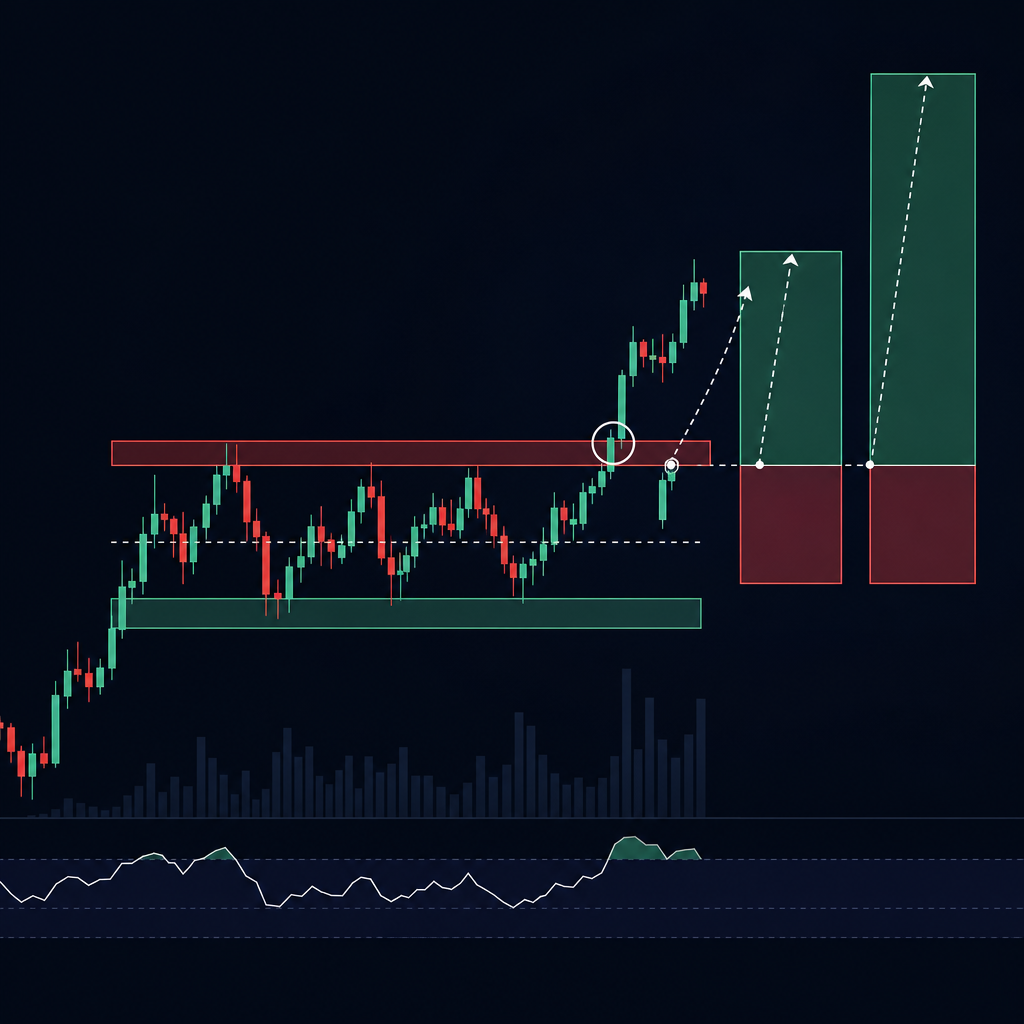
- London open: frequent “fake then go” behavior—price sweeps one side of the range, then trends.
- NY open: strong continuation days or full reversals, especially when US data hits.
- Late NY: follow-through fades; spreads can widen; avoid forcing trades.
A simple timing rule for beginners
Trade only when you can get clean execution and attention.
That often means 60–180 minutes around London open and NY open, plus the overlap window.
If you want a session-specific plan, you can pair this guide with our broader education inside United Kings Gold Signals, where we focus heavily on London/NY trading behavior.
Session-based example near current price
Let’s say gold is hovering around 2650 pre-London and Asia has ranged 2642–2654.
A common London pattern is a sweep to 2656–2658 (taking breakout buyers), then a drop back below 2650.
That’s not a “guarantee,” but it’s a repeatable behavior you can plan for with defined risk.
Gold correlations: DXY, USD/JPY, EUR/USD, and risk-on/risk-off
Gold doesn’t move in isolation. If you ignore correlations, you’ll often enter XAUUSD at the exact moment the macro flow is against you.
Correlation is not about predicting. It’s about filtering low-quality trades.
Right now we have DXY around 106.80 and USD/JPY around 149.50, both suggesting the market is still sensitive to US rate expectations.
DXY vs XAUUSD: how to use it as a filter
When DXY is trending strongly up, gold longs need extra confirmation.
When DXY is trending down, gold longs often perform better and breakouts have higher follow-through.
Practical filter: if DXY is making higher highs on the 15m/1h and gold is trying to break up, be cautious.
USD/JPY as a “rates proxy”
USD/JPY often reflects US yields and risk sentiment.
If USD/JPY is ripping higher (e.g., 149.50 → 150.20), gold can struggle unless fear is dominating.
If USD/JPY is dropping while gold is rising, that alignment can support cleaner gold trends.
EUR/USD and GBP/USD context
With EUR/USD around 1.0520 and GBP/USD around 1.2680, if both are falling while DXY rises, that’s a broad USD bid.
In that environment, gold longs should generally be more selective.
Gold shorts may have better wind at their back—if technical structure agrees.
Risk-on vs risk-off: why gold can rise with the dollar
In true risk-off, money can flow into both USD and gold.
That’s why you should also watch equities sentiment and headline risk.
If you want a deeper correlation breakdown, see our related resource on gold and USD behavior on the United Kings blog.
XAUUSD chart basics: ticks, pips, spreads, and what “$1” means
Many traders blow up not because their analysis is wrong, but because they misunderstand gold’s contract behavior.
Before you pick an xauusd strategy, you must know what a move means in dollars and in risk.
What is a “pip” in gold?
Brokers quote XAUUSD differently, but commonly gold moves in increments like 0.01 or 0.10.
For most retail trading platforms, it’s easiest to think in dollars per ounce.
A move from 2650 to 2660 is a $10 move. That’s the unit you should plan around.
Typical spreads and why they matter
Gold spreads vary by broker and by time of day.
During London/NY, you might see tight spreads. During rollover or news, spreads can widen sharply.
That spread is part of your “real” risk, so avoid placing stops that are too tight relative to current conditions.
Volatility reality check: why $10–$25 stops are normal
At XAUUSD 2650, a $12 stop might be reasonable for a tight intraday setup.
A $20–$25 stop may be more realistic for swing entries around higher timeframes.
Your goal is not to minimize the stop. Your goal is to size the position so the stop is affordable.
Position sizing example (simple and practical)
Assume a $1,000 account and you risk 1% ($10) per trade.
If your stop is $20 away, your position size must be small enough that a $20 move equals $10 loss.
That’s how professionals survive gold’s swings: fixed risk, flexible size.
For a fuller framework, see our risk-focused guide: risk management strategies when using forex signals (the principles apply directly to XAUUSD).
Core technical framework for XAUUSD: levels, structure, and confirmation
Indicators can help, but gold responds best to a clean framework built on price action.
That means: identify the dominant trend, mark key levels, then wait for confirmation.
At current pricing (2610–2690 range), gold is in a zone where intraday structure can shift quickly.
Step 1: Start with higher timeframe structure
Begin on the 4H and 1H charts.
Mark obvious swing highs and lows, plus the most reacted-to zones.
Example zones in our current context might include 2615–2625 (support band) and 2675–2685 (resistance band), depending on recent swings.
Step 2: Define the day’s “line in the sand”
Pick one level where your bias changes.
For example, if price repeatedly fails above 2660 and keeps closing below it on the 15m, you can treat 2660 as the intraday ceiling.
This prevents emotional flip-flopping.
Step 3: Wait for confirmation on the execution timeframe
Use 5m–15m for execution.
Confirmation can be a break-and-retest, a strong rejection wick at a level, or a sequence of higher lows/higher highs.
Gold loves to “tap” a level once, pull back, then run. Don’t chase the first touch.
Step 4: Build the trade with realistic SL/TP
Stops should go beyond the structure that invalidates your idea.
Take profit should be placed at logical liquidity zones, not random numbers.
Aim for 1:2 minimum if you want long-term expectancy.
Example: clean long from support with 1:3 RR
- Context: XAUUSD pulls back into 2625 after failing to hold 2650.
- Entry: 2628 on a 15m break-and-retest of a micro downtrend line.
- Stop: 2613 (15 dollars risk).
- TP1: 2658 (30 dollars reward = 1:2).
- TP2: 2673 (45 dollars reward = 1:3).
This is not a prediction. It’s a structure-based plan with defined invalidation.
Beginner-to-advanced XAUUSD strategies (with realistic examples)
You don’t need 12 strategies. You need 2–3 that fit your schedule and temperament.
Below are three practical approaches used by many profitable gold traders.
We’ll keep the examples inside the 2610–2690 range and use stops typical for gold.
Strategy 1: Range-to-breakout (Asia range, London break)
This is a classic because it repeats often.
Gold ranges in Asia, then London injects liquidity and chooses direction.
Step-by-step:
- Mark the Asia high/low (e.g., 2642–2654).
- Wait for London to break one side.
- Do not chase the first candle. Wait for a retest.
- Enter on confirmation (rejection wick or close back in favor).
- Place SL beyond the range boundary, TP at the next HTF level.
Example short: Break below 2642, retest 2643–2645, entry 2643, SL 2656 ($13), TP 2617 ($26, 1:2).
Strategy 2: Trend continuation pullback (the “boring” money)
When gold is trending, the best trades are often the pullbacks into a level.
You’re buying dips in an uptrend or selling rallies in a downtrend.
Example long: Trend is up on 1H, pullback to 2650, entry 2652, SL 2637 ($15), TP 2682 ($30, 1:2).
This works best when the pullback is “orderly,” not chaotic.
Strategy 3: Liquidity sweep + reversal (advanced, high precision)
Gold frequently sweeps a prior high/low, then reverses sharply.
This is an advanced strategy because you must be patient and selective.
Example reversal short: Price spikes from 2650 to 2684 (sweeping an old high), then closes back below 2678 on 15m.
Entry 2676, SL 2696 ($20), TP 2636 ($40, 1:2). Aggressive traders might trail for 2620.
Key rule: if it keeps accepting above the swept level, you’re wrong—exit without debate.
Comparison table: which gold trading style fits you best?
| Style | Best Sessions | Typical Stop (Gold) | Typical Hold Time | Best For | Main Risk |
|---|---|---|---|---|---|
| Scalping (5m) | London open, NY open | $8–$15 | 5–30 minutes | Fast decision-makers | Overtrading, spread/news spikes |
| Day trading (15m–1H) | London, NY, overlap | $12–$25 | 1–6 hours | Most traders | Chasing moves, emotional exits |
| Swing trading (4H–Daily) | Any (manage at set times) | $25–$60+ | 1–10 days | Busy schedules | Holding through news/overnight gaps |
Risk management for XAUUSD: the rules that keep you in the game
Gold rewards discipline and punishes improvisation.
If you want to become a profitable trader, risk management is not a chapter—it’s the foundation.
Below are practical rules we’ve seen work across thousands of gold trades.
Rule 1: Risk a fixed percentage, not a fixed lot size
Gold volatility changes. Your lot size must adapt.
Choose a risk per trade (commonly 0.5%–2%).
Then calculate size based on stop distance (e.g., $15 or $22).
Rule 2: Respect the “two-loss rule”
If you take two losses in a session, stop trading.
Gold can enter chop conditions where it hunts both sides.
Walking away protects your psychology and your account.
Rule 3: Use RR targets that make sense (1:2 to 1:3)
If your stop is $15, your first target should be $30 for 1:2, or $45 for 1:3.
This gives you positive expectancy even if you don’t win every trade.
Chasing 1:1 in gold often turns into death by a thousand cuts.
Rule 4: Plan for spreads and slippage on news
On CPI/FOMC/NFP, gold can jump $10 in seconds.
Your stop might fill worse than expected. That’s slippage.
Reduce size, widen stops (if your plan supports it), or avoid trading the release.
For a survival mindset around surprise volatility, revisit our guide to unexpected news events.
Rule 5: Journal your execution, not just your entries
Write down: session, spread, entry type (market/limit), and whether you chased.
Most gold traders don’t fail on analysis. They fail on execution drift.
If you want a structured way to build consistency around signal-based trading, see more United Kings education posts that cover routine and execution habits.
Step-by-step: how to build a complete XAUUSD trade plan
If you want consistency, you need a written plan you can follow on good days and bad days.
This is a practical blueprint you can copy into your notes.
Keep it simple, measurable, and repeatable.
Step 1: Choose your trading window (sessions)
Pick one: London open, NY open, or overlap.
Don’t trade randomly across 24 hours.
If you can only trade Asia, focus on ranges and level-to-level moves, not aggressive breakouts.
Step 2: Define your market bias using structure
- Is 1H making higher highs/higher lows (uptrend)?
- Is price stuck between two major levels (range)?
- Did we just sweep a key high/low (possible reversal)?
Bias is not a prediction. It’s a framework for what you’re willing to trade today.
Step 3: Mark 3–5 key levels only
Too many lines create confusion.
Mark the nearest support, nearest resistance, and one “magnet” level (often a prior day high/low).
In our current zone, levels like 2620, 2650, and 2680 are the kind of round-number areas gold frequently reacts to.
Step 4: Decide your entry trigger
Pick one trigger and master it:
- Break and retest
- Rejection candle at HTF level
- Liquidity sweep + reclaim
When you mix triggers, you start taking “almost” trades.
Step 5: Set SL, TP, and management rules before entry
Write: “If price hits X, I’m wrong.” That’s your stop.
Write: “If price hits Y, I take partial or move stop.” That’s management.
Example: entry 2651, SL 2636 ($15), TP 2681 ($30). Move SL to breakeven after +$15 only if structure supports it.
Step 6: Limit your daily trades
Set a cap: 1–3 trades per session.
Gold tempts you to revenge trade because it moves fast.
Your cap is your circuit breaker.
Using gold signals responsibly: how pros execute entries, SL, and TP
Signals can be powerful, but only if you execute like a professional.
The biggest gap we see is not signal quality—it’s traders changing the plan mid-trade.
At United Kings, our premium Telegram signals are designed to be simple: clear Entry, SL, and TP, built around London and NY session behavior.
What “good execution” looks like on a gold signal
- You check spread before entering.
- You confirm the price is close to the signal entry (not $8 late).
- You use the given SL (or adjust size if the SL is wider than your comfort).
- You don’t move SL further away when price goes against you.
If you’re new to signals, start here: forex signals Telegram for beginners guide (the execution principles transfer directly to gold).
How to handle “missed entries” on XAUUSD
Gold moves quickly. You will miss entries sometimes.
Professional rule: if price is too far from entry, skip it.
Chasing turns a planned $15 stop into a $25 stop emotionally, because you enter at the worst point.
Signal + personal filter (a smart hybrid approach)
A strong method is to combine signals with one filter:
- Only take buys above your intraday key level (e.g., above 2650).
- Only take sells below it.
This keeps you aligned with structure and reduces “coin flip” trades.
If you’re evaluating providers, use a checklist like this signal provider checklist to avoid hype and focus on process.
Where United Kings fits (and what to expect)
We run a large community of 300K+ active traders and focus on high-clarity trade plans.
Our performance target is consistency, not marketing fantasies, and we never claim guaranteed profits.
To explore our full offering across markets, see United Kings Signals or go directly to Gold Signals and Forex Signals.
Common XAUUSD mistakes (and how to fix them fast)
Most losing gold traders don’t lack intelligence. They lack a stable process.
Below are the mistakes that show up again and again, plus the fix you can apply today.
Mistake 1: Using forex-sized stops on gold
A $5 stop on XAUUSD is often noise.
Fix: place stops beyond structure and adjust position size to keep risk constant.
If your setup needs a $18 stop, accept it and trade smaller.
Mistake 2: Trading every wiggle during low-liquidity hours
Gold can chop for hours in late NY/early Asia.
Fix: choose a session window and only trade your best pattern.
Fewer trades, better trades.
Mistake 3: Moving stops because “it will come back”
Gold can trend relentlessly when it chooses a direction.
Fix: your stop is your invalidation point. If hit, you’re out—no negotiation.
Re-enter only if a new setup forms, not because you want revenge.
Mistake 4: Ignoring DXY and rate-sensitive context
With DXY near 106.80, sudden USD strength can slam gold $15–$25 quickly.
Fix: before any gold long, check if DXY is trending up strongly intraday.
If it is, demand stronger confirmation or reduce size.
Mistake 5: Overleveraging because gold “moves a lot”
Gold’s movement is exactly why leverage must be controlled.
Fix: cap risk per trade and cap daily loss. Professional traders protect capital first.
If you want to diversify signals beyond gold, we also cover other markets—see Crypto Signals for traders who want multi-asset exposure (with the same risk-first mindset).
FAQ: XAUUSD trading guide (gold trading questions answered)
1) Is XAUUSD good for beginners?
Yes, but only if you treat it as a high-volatility market. Start on demo, trade small, and focus on one session window and one setup.
2) What is a good stop loss for gold (XAUUSD)?
It depends on volatility and your timeframe, but intraday stops often fall in the $10–$25 range. Place the stop beyond structure and size your position so the dollar risk stays fixed.
3) What is the best time to trade gold?
Typically London and New York sessions, especially the overlap, because liquidity is higher and moves have better follow-through.
4) Why does gold sometimes rise when the dollar rises?
In strong risk-off conditions, both USD and gold can be bought as safe-haven assets. That’s why correlation is a filter, not a rule.
5) Can I trade XAUUSD using signals?
Yes—signals can help with structure and discipline if you execute properly. Always respect the SL/TP, avoid chasing entries, and manage risk per trade.
Risk disclaimer (read before you trade)
Risk Warning: Trading forex and gold (XAUUSD) involves significant risk and is not suitable for all investors. You can lose more than your initial deposit. Past performance does not guarantee future results. Signals and analysis are for educational/informational purposes and do not constitute financial advice. If you’re a beginner, practice on a demo account first and use strict risk management.
Join United Kings: premium gold signals + education (Telegram)
If you want structured XAUUSD execution with clear trade parameters, join the United Kings community.
We provide premium Telegram signals for forex and gold with clear Entry, SL, and TP, built around London and NY session behavior, plus ongoing education to help you become consistent.
Explore our full suite at United Kings Signals or go straight to Gold Signals.
To see the three plans and choose what fits you, visit United Kings pricing: Starter 3 Months ($299), Best Value 1 Year ($599, 50% savings + FREE ebook), or Lifetime ($999).
Ready to get the live feed and community support? Join our Telegram now: United Kings Telegram trading signals channel.
Bonus: We also offer a 48-hour money-back guarantee so you can evaluate the service with confidence—while still trading responsibly.


