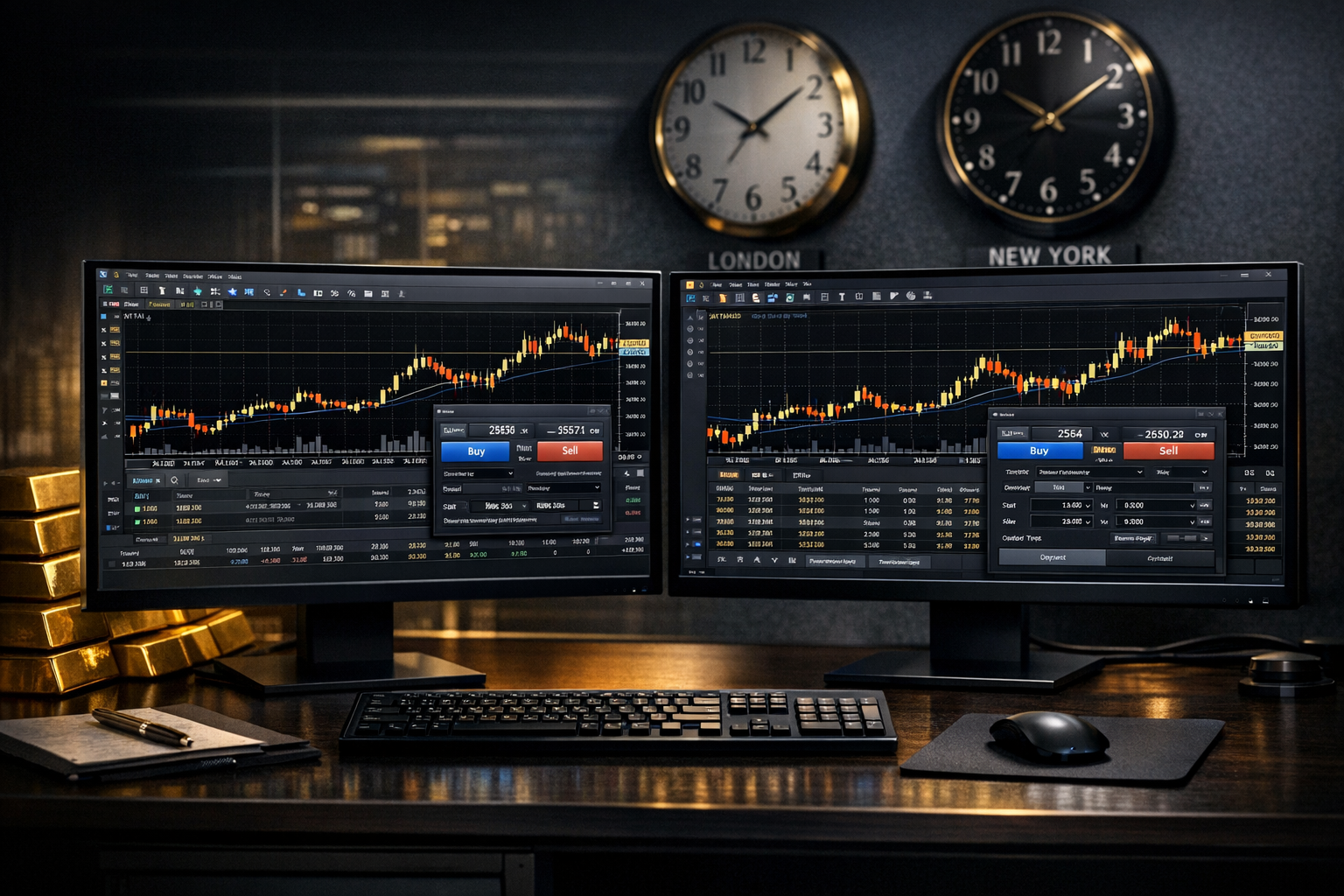
You’re watching gold (XAUUSD) trade around $2650, up about +0.35% on the day, and you’re thinking: “Should I just focus on gold… or am I leaving money on the table by not trading forex pairs like EUR/USD at 1.0520 or USD/JPY at 149.50?”
That question is more important than most traders realize.
Because your long-term results rarely come from finding a “secret indicator.” They come from choosing the right market for your personality, capital, schedule, and risk tolerance—then executing one repeatable plan.
This guide is a definitive, practical comparison of gold vs forex, including XAUUSD vs forex pairs like EUR/USD, GBP/USD, and USD/JPY, using realistic examples from current conditions (DXY ~106.80, elevated volatility, and heavy session-driven moves).
TL;DR: Gold vs Forex (Quick Decision Guide)
- Choose gold (XAUUSD) if you like strong, clean momentum moves, news-driven volatility, and you can handle wider stops (often $10–$25).
- Choose forex majors (EUR/USD, GBP/USD) if you prefer smoother price action, tighter spreads, and more “technical” structure during London.
- Choose USD/JPY carefully if you understand yield differentials, BOJ surprises, and fast spikes—great opportunities, but unforgiving.
- Capital matters: gold can swing $20–$40 quickly; position sizing discipline is non-negotiable compared to many FX majors.
- Session timing matters: gold often “wakes up” during London/NY overlap; EUR/USD tends to be most efficient in London and early NY.
- Best approach for many traders: specialize in one market first, then add the second as a “secondary” once execution is consistent.
Gold vs Forex at a Glance (Comparison Table)
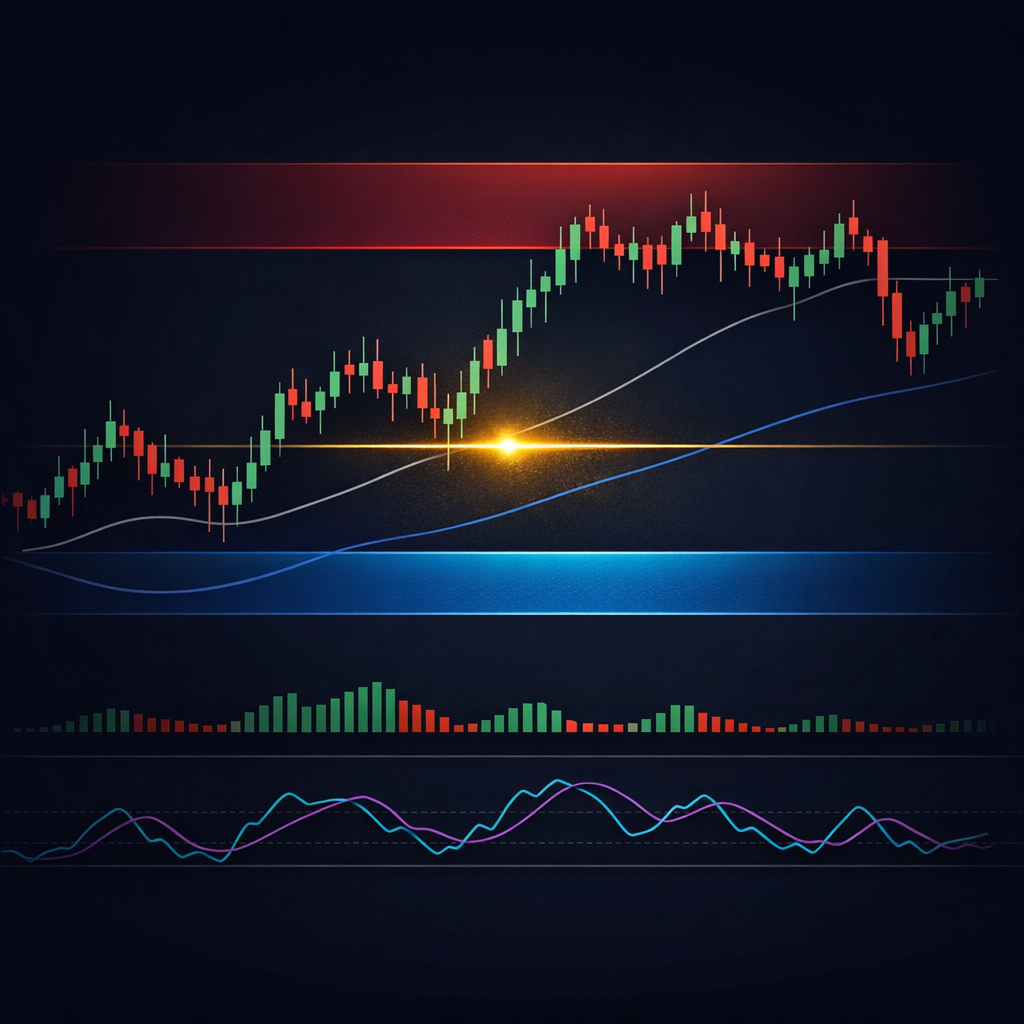
| Factor | Gold (XAUUSD) | Forex Majors (EUR/USD, GBP/USD) | JPY Pairs (USD/JPY) |
|---|---|---|---|
| Typical volatility | High; $10–$30 intraday is common | Moderate; 40–90 pips typical on active days | Can be high; spikes on data/BOJ headlines |
| Spread impact | Often higher than majors; varies by broker | Usually lowest spreads (especially EUR/USD) | Moderate; can widen on news |
| Stop size (typical examples) | $10–$25 (100–250 “points”) | 10–35 pips (strategy-dependent) | 15–50 pips (or more around events) |
| Best sessions | London, NY, and overlap | London and early NY | Asia + NY (US yields) but volatile on events |
| What moves it most | USD, real yields, risk-off, geopolitics, CPI/NFP | Rates, central banks, growth/inflation data | Yield spreads, BOJ policy, risk sentiment |
| Best suited for | Momentum traders, breakout traders, active day traders | Structure traders, scalpers, systematic traders | Experienced traders who respect headline risk |
1) Understanding the “Personality” of Gold vs Forex
Markets have personalities.
Not in a mystical way—more like “how they behave under stress,” how they trend, how they mean-revert, and how they react to news.
Gold (XAUUSD) is a hybrid instrument.
It trades like a commodity, reacts like a macro hedge, and often behaves like a currency when the USD dominates the narrative. With DXY around 106.80, gold’s intraday swings can be sharp because USD strength/weakness quickly reprices global risk.
Forex majors (EUR/USD at 1.0520, GBP/USD at 1.2680) tend to be more “two-sided” and liquid.
That usually means cleaner spreads and more consistent technical levels. But it also means that on some days, majors can chop for hours inside 20–30 pips, especially when the market is waiting for a catalyst.
USD/JPY at 149.50 is its own category.
It can be beautifully trending when yield differentials dominate. But it can also rip 80–150 pips on a single BOJ headline or intervention rumor. That’s not “good” or “bad”—it’s just a different risk profile.
Why this matters more than strategy
If you’re a calm, process-driven trader, you might thrive in EUR/USD structure trades.
If you’re a decisive, momentum-focused trader, gold’s impulsive moves can fit you—if you size correctly.
If you hate being stopped out by random spikes, USD/JPY may feel personal. If you understand its drivers and respect event risk, it can become one of your best pairs.
A real scenario (gold vs EUR/USD)
Imagine gold is at $2650 and breaks above $2662 after a soft US data print.
Gold can run $12–$20 quickly—toward $2674 or $2682—because traders rush to reprice yields and the dollar.
At the same time, EUR/USD might move from 1.0520 to 1.0550 (30 pips). That’s a clean move, but often slower and more technical.
Both are tradable. The question is: which movement style matches your execution?
2) Volatility & Range: Where Traders Win (and Blow Accounts)
Volatility is opportunity.
Volatility is also the fastest way to destroy a good strategy with bad sizing.
In the current context, gold around $2650 has been delivering intraday swings that can easily reach $15–$30 on active days. That’s not unusual when macro themes are dominant and traders are sensitive to inflation, yields, and geopolitical risk.
Forex majors, by contrast, often move in more measured ranges.
EUR/USD around 1.0520 might deliver 50–80 pips on a strong day, but it can also compress into 25–40 pips when markets are in “wait mode.” GBP/USD at 1.2680 is typically more volatile than EUR/USD, but still often less jumpy than XAUUSD.
Gold volatility in practical numbers
Let’s use realistic gold trade math.
If you buy XAUUSD at $2652 with a stop at $2637, that’s a $15 risk.
A 1:2 target would be $2682. A 1:3 target would be $2697 (slightly above our guideline range, so you might instead cap at $2690 and trail).
Notice the key point: a “normal” stop in gold can be $10–$25.
If you size that like a 15-pip EUR/USD stop, you’ll get punished fast.
Forex volatility in practical numbers
Now compare a EUR/USD setup.
Say you sell EUR/USD at 1.0520 with a stop at 1.0550 (30 pips) and target 1.0460 (60 pips) for 1:2.
That’s a clean, classic structure trade. It’s also typically easier to hold psychologically because price often moves in waves rather than sudden $8 spikes.
The hidden truth: volatility changes your psychology
Many traders think they’re “bad at trading.”
In reality, they’re trading a market whose volatility doesn’t match their temperament.
If gold’s speed makes you chase, revenge trade, or move stops, you might do better focusing on majors first. If majors bore you into overtrading, gold might actually reduce your trade count—because you wait for the real move.
3) Costs, Spreads, and Execution: The Silent Performance Killer
If two traders take the same strategy, the one with better execution usually wins.
This is where the gold vs forex debate gets real, because costs hit each market differently.
Forex majors often have the tightest spreads in retail trading.
EUR/USD is typically the cheapest pair to trade. GBP/USD is usually slightly wider, but still efficient. That’s why scalpers and high-frequency intraday traders often gravitate toward majors.
Gold spreads can be wider and more variable.
During calm periods, spreads may be reasonable. During volatile moments—CPI, FOMC, NFP, unexpected headlines—gold spreads can widen, and slippage becomes more likely.
Why this matters to your strategy choice
If your average target is small, costs matter more.
For example, if you scalp EUR/USD for 8–12 pips, a 0.8–1.2 pip spread is significant but manageable. If you scalp gold for $2–$3, a wider spread and quick spikes can eat your edge.
If your average target is bigger, costs matter less.
A gold day trade targeting $20 (like $2652 to $2672) can absorb a bit of spread. But you must still account for execution around news.
Practical execution rules (that save accounts)
- Avoid market orders during major releases unless your plan specifically trades news volatility.
- Use limit orders at pre-defined zones when possible, especially in gold where spikes can “tag” your entry and reverse.
- Know your broker’s contract specs for XAUUSD (lot size, tick value, margin). Gold sizing errors are common.
- Track slippage in a journal. If your average slippage is worse in gold, adapt by widening entries or waiting for post-news stabilization.
Signals and execution (where many traders get it wrong)
Even the best signal is only as good as your execution.
That’s why at United Kings we publish clear Entry, SL, and TP levels and focus heavily on London and New York session opportunities, where liquidity is deeper and fills are typically cleaner.
If you want a structured approach to following signals responsibly, pair this article with our risk-focused guide: risk management strategies when using forex signals.
4) Capital Requirements & Position Sizing: Gold Feels “Bigger” for a Reason
Traders often say, “Gold is expensive.”
What they usually mean is: “Gold punishes oversized positions faster.”
Because XAUUSD can move $10–$30 intraday, the same lot size that feels harmless on EUR/USD can become lethal on gold.
A simple sizing example (gold)
Let’s say your account is $1,000 and you risk 1% per trade ($10).
You take a gold buy at $2650 with a stop at $2638 (risk $12).
Your position size must be small enough that a $12 move equals $10 loss. That’s the math that keeps you alive.
Many traders skip this step. They “feel” the lot size instead of calculating it.
A simple sizing example (EUR/USD)
Same account, same 1% risk ($10).
You sell EUR/USD at 1.0520 with a stop at 1.0550 (30 pips).
You size so 30 pips equals $10. The position may be larger than your gold position because the stop is measured differently and the pair’s movement is typically smoother.
Why gold attracts (and traps) small accounts
Gold’s movement looks like easy money.
A $15 move “sounds” like a lot, so traders imagine big profits quickly. Then they oversize, get stopped, and revenge trade.
The correct way is boring: define risk, calculate size, accept the stop.
Step-by-step: how to choose risk per trade for your market
- Pick a fixed risk (0.5%–1% if you’re building consistency; lower if you’re new).
- Define your stop based on structure, not based on what you “can afford.”
- Calculate position size so the stop equals your fixed risk.
- Only then decide whether the trade is worth taking (RR, conditions, session).
If you want to follow professional-grade trade planning, our forex trading signals provider checklist will help you evaluate signal quality and execution rules.
5) Session Timing: London & New York vs Asia (What Moves Best, When)
Most traders underestimate how much their results depend on when they trade.
Two traders can trade the same market with the same strategy and get different outcomes simply because one trades dead hours and the other trades peak liquidity.
Gold session behavior (XAUUSD)
Gold often delivers its cleanest moves during London and New York, especially during the overlap.
That’s where institutional participation is highest, and where macro catalysts (US data, rate expectations) get repriced quickly.
In the current environment—gold around $2650 with DXY near 106.80—gold can react sharply to any shift in real yields or USD momentum.
That’s why many of our best XAUUSD opportunities are structured around these sessions in our premium gold signals.
Forex majors session behavior
EUR/USD tends to be most “efficient” during London.
That’s when Europe is active, liquidity is deep, and technical levels are respected. Early New York adds continuation or reversal fuel, especially when US data hits.
GBP/USD can be lively in London due to UK flows and headlines. It can also be more reactive and spiky than EUR/USD.
USD/JPY session behavior
USD/JPY has meaningful activity in Asia because Japan is open.
But the bigger directional pushes often come from US yields during New York. At 149.50, USD/JPY is also a “headline pair,” meaning one unexpected BOJ comment can change the day.
Step-by-step: build a session-based routine
- Pick your primary session (London or NY) based on your schedule.
- Limit your watchlist to 1–3 instruments (e.g., XAUUSD + EUR/USD).
- Mark key levels 30–60 minutes before the session opens.
- Trade only the “A+” setups during the first 2–3 hours of your session.
- Stop trading after 1–2 trades if you hit your daily risk limit.
If you want signals aligned with peak liquidity, start with our main hub United Kings trading signals and choose the market you want to specialize in.
6) What Actually Moves Gold vs Forex (Fundamentals That Matter)
Technical analysis tells you where to trade.
Fundamentals often decide whether the move extends or fades.
Gold’s main drivers (in plain language)
- US dollar direction (DXY): With DXY around 106.80, gold can face headwinds when the USD is bid, and tailwinds when USD weakens.
- Real yields: Gold often struggles when real yields rise and rallies when real yields fall.
- Risk sentiment: Risk-off flows (equity stress, geopolitics) can push gold higher.
- Inflation expectations: CPI surprises can reprice rates and slam or spike gold in minutes.
That’s why gold can move $15–$25 quickly even when charts look “quiet.”
Forex majors’ main drivers
- Interest rate differentials: ECB vs Fed expectations drive EUR/USD; BoE vs Fed expectations drive GBP/USD.
- Growth and inflation data: PMIs, CPI, jobs data shift central bank paths.
- Risk sentiment: In stress, USD can act as a safe haven, pressuring EUR/USD and GBP/USD.
USD/JPY’s special driver: yields + policy credibility
USD/JPY is heavily tied to US yields and Japan’s policy stance.
At 149.50, traders also watch “line in the sand” levels where intervention risk feels higher. That can cause sudden reversals.
How to use fundamentals without overcomplicating
You don’t need a PhD in macro.
You need a weekly checklist:
- What are the top 2–3 events this week (CPI, FOMC, NFP)?
- Is the market risk-on or risk-off?
- Is the USD trending (DXY direction) or chopping?
For gold traders specifically, unexpected headlines matter. If you want a survival framework, read: how gold signals react to unexpected news events.
7) Technical Behavior: XAUUSD vs Forex Pairs (Patterns That Work Best)
Technically, gold and forex can look similar on a chart.
But they often respond differently to the same pattern.
Gold tends to respect “zones,” then explode
Gold frequently compresses into a tight range, builds liquidity, then breaks aggressively.
For example, if gold rotates between $2640 and $2655 for hours, the eventual break can run fast to $2672 or $2685.
That makes gold excellent for:
- Breakout and continuation trades (with confirmation)
- Pullback entries after an impulsive move
- Momentum-based trailing toward session highs/lows
Forex majors tend to respect “levels,” then mean-revert
EUR/USD often respects clean horizontal levels and previous day highs/lows.
It also mean-reverts more frequently intraday, especially when there’s no major catalyst.
That makes majors strong for:
- Range trading during quiet conditions
- Structure-based entries around support/resistance
- Scalping in liquid session windows
USD/JPY can trend cleanly, then spike violently
USD/JPY is a trending machine when yields trend.
But it can also wick hard around data. That means you must place stops where the trade is invalid, not where it’s “comfortable.”
A practical gold setup example (with current levels)
Scenario: Gold is $2650 and reclaims $2656 after a pullback.
- Entry: Buy $2656
- Stop: $2644 (risk $12)
- TP1 (1:2): $2680
- TP2 (trail): $2688–$2690 if momentum is strong
This is a classic “reclaim and run” pattern that often appears during London/NY when liquidity is deep.
A practical EUR/USD setup example
Scenario: EUR/USD at 1.0520 rejects 1.0540 resistance.
- Entry: Sell 1.0535–1.0540 zone
- Stop: 1.0565 (25–30 pips)
- TP (1:2): 1.0480–1.0490
Same concept—different rhythm.
8) Trading Styles: Which Market Fits Scalping, Day Trading, and Swing?
When traders ask “which market should I trade,” they usually mean: “which market matches my style?”
Let’s map it clearly.
Scalping: forex majors usually win
Scalping is a game of spreads, fills, and consistency.
EUR/USD is often the best scalping instrument because of tight spreads and stable liquidity during London.
Gold scalping can work, but it requires:
- excellent execution
- discipline around news
- accepting that a $3 target can reverse in seconds
Day trading: gold and forex can both be elite
Day trading is where the gold vs forex debate becomes personal.
If you want 1–2 high-quality trades per day with meaningful movement, gold is a strong candidate. A clean $15–$25 move can complete your daily plan.
If you prefer multiple smaller opportunities, forex majors might fit better.
Swing trading: depends on your patience and macro comfort
Swing trading gold can be powerful because macro themes can run for weeks.
But swings can also be violent, with deep pullbacks that test your nerves.
Swing trading forex majors often requires understanding central bank cycles and being patient through consolidation phases.
Step-by-step: choose your market based on your style
- Write your preferred holding time: 5 minutes, 2 hours, or 3 days?
- Define your “pain threshold”: how much drawdown can you tolerate without interfering?
- Match the instrument: gold for bigger bursts; majors for smoother structure; USD/JPY for yield-driven trends.
- Backtest one setup on one instrument for 30 trades before adding another market.
9) Risk Management Differences: Stops, Targets, and Daily Loss Limits
Risk management is not a generic rule you copy-paste.
It must fit the instrument.
Gold risk management (XAUUSD)
Gold often requires wider stops because it wicks.
A stop of $10–$25 is common depending on timeframe and volatility. With gold at $2650, it’s normal to see a quick push to $2642 and back to $2655 in minutes.
That means:
- Stops must be structural (below a swing low / above a swing high).
- Targets must respect nearby liquidity (previous day high, session high, key round numbers like $2660, $2680).
- Daily loss limits should be strict (e.g., stop after -2R or -3R).
Forex risk management (majors)
Forex majors can often work with tighter stops if your entry is precise.
But the trap is overtrading chop. Many traders lose not because the pair is “hard,” but because they take too many marginal setups.
So in majors, risk management is often about:
- trade selection
- avoiding low-volatility hours
- not forcing trades between levels
Practical daily framework (works for both markets)
- Max trades per day: 1–3
- Max loss per day: 1%–3% depending on experience
- Minimum RR: aim for 1:2 unless the setup is exceptionally high probability
- News rule: no new positions 5–10 minutes before high-impact data unless it’s a planned news trade
A quick “gold trap” story
A trader buys gold at $2650 with a $5 stop because they’re used to EUR/USD.
Gold wicks to $2644, stops them out, then rallies to $2678 without them.
They re-enter late, get chopped, and the day ends red. The strategy wasn’t the problem. The stop logic was.
10) A Decision Framework: Which Market Should You Focus On?
Let’s make the decision practical.
Below is a simple framework we use when advising traders inside signal communities.
Choose gold (XAUUSD) if you relate to these statements
- I prefer fewer, higher-impact trades.
- I’m comfortable with wider stops if the setup is strong.
- I can stay disciplined during volatility and not chase.
- I can trade London/NY or at least the overlap.
If that’s you, you’ll likely enjoy focusing on XAUUSD gold signals and building mastery around one instrument.
Choose forex majors if you relate to these statements
- I like structured price action and cleaner levels.
- I want tighter spreads and more predictable execution.
- I can trade London consistently.
- I prefer smaller, more frequent opportunities.
If that’s you, start with EUR/USD and GBP/USD and use a tight process with premium forex signals.
Choose a “hybrid” approach if you can handle complexity
Many profitable traders do this:
- Primary market: one instrument (gold or one major pair)
- Secondary market: one additional instrument for A+ setups only
The rule is simple: specialize first, diversify later.
Step-by-step: your 14-day focus plan
- Pick one market (gold or one forex pair) for 14 days.
- Trade only one setup (breakout, pullback, or range).
- Journal every trade: entry reason, stop logic, session, outcome.
- Review after 20 trades: are losses from bad analysis or bad execution?
- Only then consider adding the second market.
11) How Signals Change the Game (and How to Use Them Correctly)
Signals can be a shortcut to structure.
They’re not a shortcut to discipline.
At United Kings, we focus on giving you clear trade plans with Entry, Stop Loss, and Take Profit levels and a process built around the most liquid times of day.
But the traders who benefit most do three things consistently.
1) They treat signals as execution plans, not gambling tips
If a gold signal says buy $2656, SL $2644, TP $2680, that’s a complete plan.
Your job is to size the trade so the SL is acceptable and then execute without improvising.
2) They understand the market context
When DXY is strong near 106.80, gold longs may need cleaner confirmation.
When US yields drop sharply, gold can trend harder and hit extended targets.
3) They follow a risk cap
Even with an 85%+ historical win rate target, no strategy wins 100%.
So you cap your risk, keep your psychology stable, and let the edge play out over a sample size.
Where to start with United Kings
- Explore all markets: United Kings premium signals
- Gold specialization: Gold signals (XAUUSD)
- Forex specialization: Forex signals for majors
- Want optional diversification later? We also offer crypto signals for traders who understand weekend volatility.
Community and accountability
Trading alone is hard.
In an active community of 300K+ traders, you get repetition, shared context, and fewer “am I crazy?” moments.
You can also join our Telegram for updates and discussions: United Kings signals Telegram channel.
12) Putting It All Together: Sample Weekly Plans for Gold Traders vs Forex Traders
You don’t need more information.
You need a weekly plan you can repeat.
Below are two templates you can copy and adapt immediately.
Weekly plan template for a gold-focused trader (XAUUSD)
Goal: 3–6 high-quality trades per week, mostly London/NY.
- Monday: Mark prior week high/low and key zones (e.g., $2610–$2620 support, $2680–$2690 resistance).
- Daily pre-session: Identify the “line in the sand” (today’s bias invalidation level).
- Trade triggers: break and retest of key levels, or momentum continuation after a pullback.
- Stops: typically $10–$25 depending on structure.
- Targets: 1:2 first target, then trail to session extremes when conditions are trending.
Example week: If gold holds above $2640 and reclaims $2660 during London, your upside magnets might be $2680 and $2690. If $2640 fails, $2620 becomes the next area to watch.
Weekly plan template for a forex-major-focused trader (EUR/USD, GBP/USD)
Goal: 5–10 selective trades per week during London and early NY.
- Monday: Mark weekly open, prior week high/low, and daily session levels.
- Daily pre-London: Identify whether the pair is trending or ranging.
- Trade triggers: rejection from a key level, break-and-retest, or continuation after a pullback.
- Stops: 15–35 pips depending on timeframe and volatility.
- Targets: 1:2 to the next liquidity pool (prior day high/low, round numbers).
Example week: With EUR/USD around 1.0520, map 1.0500 and 1.0550 as psychological levels. If price is stuck between them, you reduce trade frequency and wait for a break with follow-through.
How to avoid the #1 mistake: switching markets mid-week
Many traders start the week trading EUR/USD, get bored, switch to gold, get whipsawed, then end up in USD/JPY because “it’s moving.”
That’s not diversification. That’s emotional trading.
Pick your lane for the week, execute, then review.
FAQ: Gold vs Forex (Choosing the Right Market)
Is gold harder to trade than forex?
Gold isn’t “harder,” but it’s typically more volatile. That means you need better position sizing and wider, structure-based stops. Forex majors can be smoother but may chop more.
Is XAUUSD better than EUR/USD for beginners?
Beginners often do well starting with EUR/USD because spreads are tight and moves are more measured. If you start with XAUUSD, use smaller risk, trade demo first, and avoid news spikes until you have a process.
Which market is best for London session trading?
Both are strong in London. EUR/USD and GBP/USD are classic London pairs. Gold also moves well in London, and often accelerates into the London–NY overlap.
How much stop loss should I use for gold?
It depends on structure and volatility, but many intraday gold trades use $10–$25 stops. For example, entry $2656 with SL $2644 is a $12 stop, which is common in current conditions.
Can I trade both gold and forex at the same time?
You can, but it’s best to specialize first. Master one instrument and one setup, then add a second market as a secondary opportunity once your execution is consistent.
Risk Disclaimer: Trading forex and gold (XAUUSD) involves significant risk and may not be suitable for all investors. You can lose more than your initial deposit depending on your broker and account type. Past performance does not guarantee future results. Signals and educational content are provided for informational purposes only and are not financial advice. If you are new, practice on a demo account before risking real capital and always use proper risk management.
Join United Kings: Focus on One Market, Execute Like a Pro
If you want to stop guessing and start trading with structure, we built United Kings for exactly that.
You get premium Telegram signals for gold and forex, with clear Entry, SL, TP levels, a community of 300K+ active traders, and a process centered on London and New York sessions.
Choose the plan that fits your commitment level on our pricing page: Starter (3 Months $299), Best Value (1 Year $599 with 50% savings + FREE ebook), or Unlimited (Lifetime $999). All plans include a 48-hour money-back guarantee.
Start here: United Kings premium signals, or go direct to gold signals and forex signals.
If you want immediate access and updates, join our Telegram now: United Kings Telegram trading channel.
Your edge isn’t choosing gold or forex. Your edge is choosing one, mastering it, and executing with discipline every single week.