
Gold correlation is the difference between “I think XAUUSD will go up” and “I know what must happen in the dollar, yields, and risk sentiment for my trade to work.”
If you’ve ever bought gold at $2650, watched it spike to $2662, and then dump $25 in minutes, you already know the pain of trading XAUUSD without a macro compass.
Right now, gold (XAUUSD) is trading near $2650 (+0.35% on the day). DXY is around 106.80. USD/JPY is near 149.50. EUR/USD is around 1.0520 and GBP/USD near 1.2680. This is exactly the kind of environment where correlations can either save you—or bait you into overconfidence.
TL;DR: Gold correlation trading in one page
- Gold vs DXY: Most of the time, gold and the dollar move inversely—but the relationship weakens during crisis flows and regime shifts.
- Gold vs yields: Watch real yields (nominal yields minus inflation expectations). Rising real yields usually pressure gold; falling real yields usually support it.
- Risk sentiment matters: In risk-off, gold can rise even if DXY rises (safe-haven bid). Don’t force a simple inverse rule.
- Use correlations as filters, not triggers: Let XAUUSD price action be the trigger; let DXY/yields/sentiment confirm or warn.
- Build a “3-factor checklist”: DXY direction + yield impulse + risk tone before you size up.
- Execution edge: Correlation alignment is strongest during London and New York sessions—the same windows we focus on at United Kings.
Why gold correlation trading works (and when it fails)
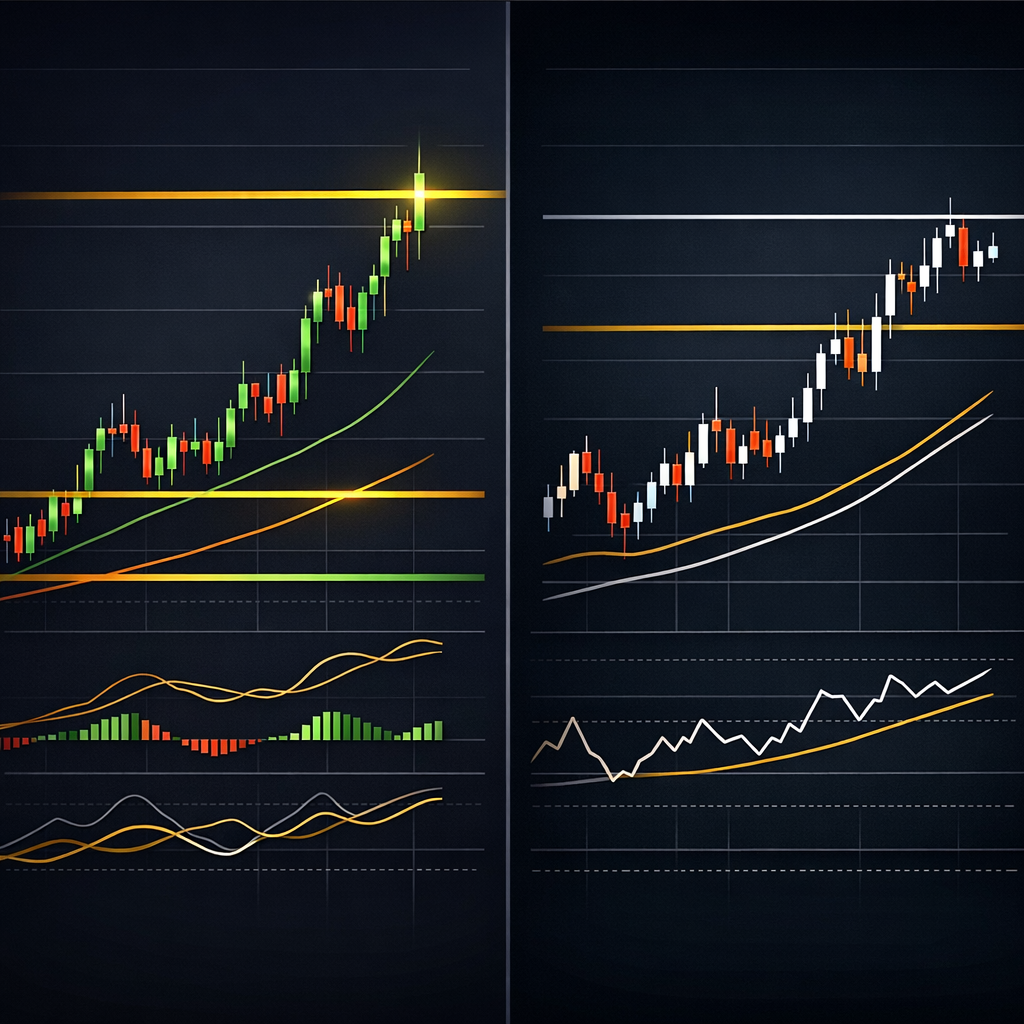
Gold is not just a commodity. It trades like a macro asset with multiple identities: inflation hedge, crisis hedge, real-yield hedge, and sometimes a momentum instrument.
That’s why correlation trading works: it helps you identify which “identity” gold is wearing today.
When gold is trading as a real-yield hedge, you’ll see tight relationships with US yields and rate expectations. When gold is trading as a safe haven, correlations with equities, volatility, and even DXY can flip or soften.
In practical terms, correlation gives you:
- Context: Is a move in XAUUSD “supported” by macro flows or just a stop-hunt?
- Confirmation: If gold breaks $2660, do DXY and yields agree with the breakout?
- Early warning: If gold is rising but DXY and real yields are also rising, your long may be on borrowed time.
But correlation also fails—often at the worst time—because correlations are not laws. They are relationships that change by regime.
Here are common failure regimes you must respect:
- Event risk: CPI, FOMC, NFP, geopolitics. Gold can gap and ignore “normal” relationships for hours.
- Liquidity pockets: During thin liquidity (late NY, rollover), gold can move on positioning rather than macro.
- Safe-haven scramble: In a true risk-off shock, both DXY and gold can rise together.
- Japan-driven dollar moves: USD/JPY volatility can push DXY while gold reacts differently.
The goal is not to predict perfectly. The goal is to stack probabilities.
If you want a practical framework that combines macro confirmation with clean entries, our premium team posts structured trade ideas (Entry, SL, TP) inside United Kings Gold Signals—built around London/NY flow and risk-managed execution.
Gold vs DXY: the core “gold dollar correlation” explained
The classic relationship is simple: when DXY rises, gold often falls. That’s the “gold dollar correlation” most traders quote.
The reason is also simple: gold is priced in USD. A stronger dollar makes gold more expensive for non-USD buyers, often reducing demand at the margin.
But advanced traders go one step deeper: the DXY move matters less than why DXY is moving.
Two types of DXY strength (only one is bearish for gold)
1) Rate-driven dollar strength (hawkish Fed pricing, rising real yields).
This is usually bearish for gold. If DXY is rising because rate expectations are rising, gold often struggles to hold rallies.
2) Risk-off dollar strength (flight to cash/liquidity).
This can be neutral or even bullish for gold if the market is hedging tail risk. In these moments, gold and DXY can rise together.
How to read DXY at today’s levels (106.80)
With DXY around 106.80, you should treat it like a “pressure gauge.”
If DXY pushes from 106.80 to 107.20 during London, and gold fails to reclaim $2655–$2660, that’s a typical correlation alignment for a gold pullback.
If DXY drops from 106.80 to 106.30 while gold is holding above $2640, that’s often the fuel for a clean $10–$20 upside continuation.
Practical correlation filter using DXY (simple, effective)
- Gold long bias: DXY trending down on 15m–1H, or failing at a clear resistance zone.
- Gold short bias: DXY trending up with higher highs, especially if it breaks a prior NY high.
- No-trade zone: DXY chopping sideways and yields are mixed—trade smaller or wait for NY.
We like to combine this with clean structure on XAUUSD (break + retest, liquidity sweep, or range expansion). If you’re building a repeatable process, pair this article with our execution-focused resources and signals at United Kings Signals.
Bond yields and real yields: the “hidden engine” behind gold moves
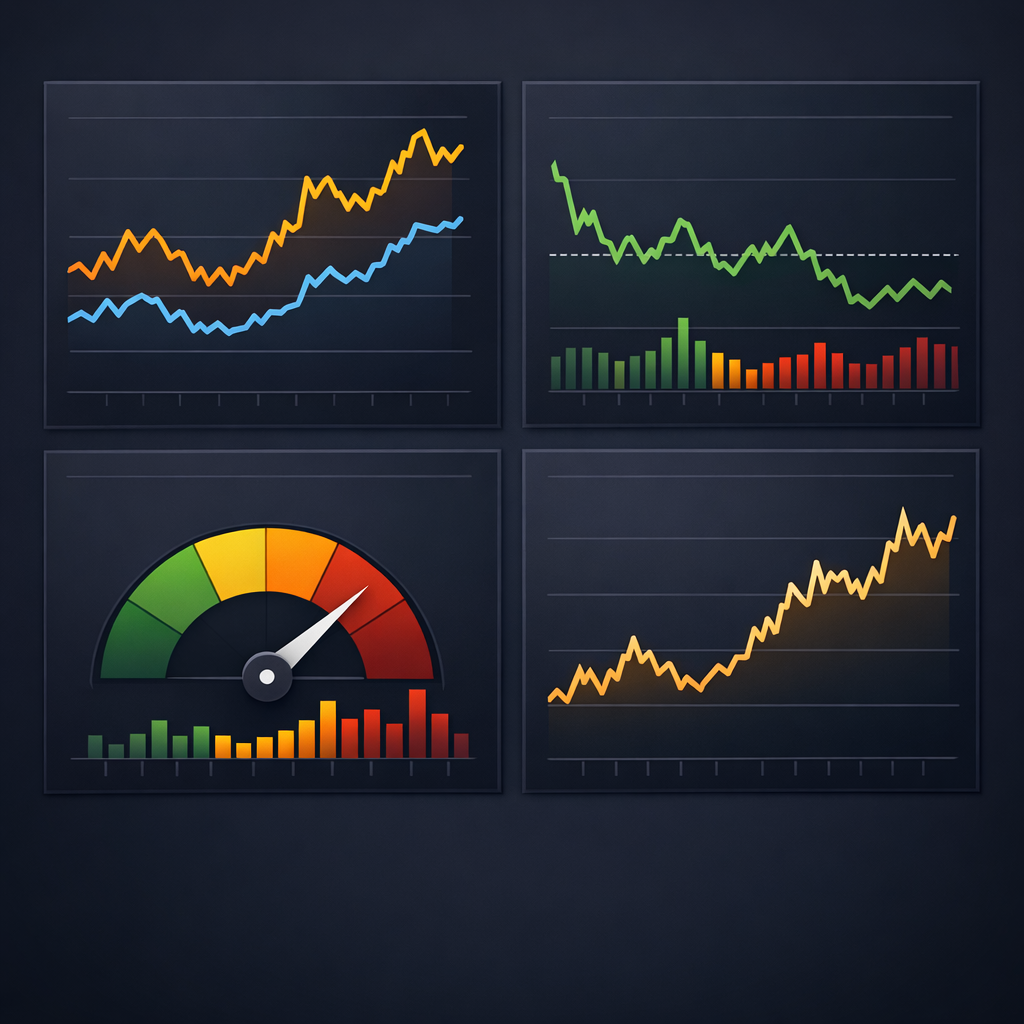
If DXY is the headline, yields are the engine.
Gold has no coupon. So when yields rise—especially real yields—the opportunity cost of holding gold rises, and gold often weakens.
Most retail traders watch the US 10-year yield and stop there. Advanced correlation trading separates:
- Nominal yields: the quoted US 10Y yield.
- Inflation expectations: what the market thinks inflation will be.
- Real yields: nominal minus expected inflation (a rough proxy).
Gold tends to respond most consistently to real yield impulses, not just nominal yields.
How yields create “fake” gold signals
Here’s a common trap around $2650:
Gold breaks above $2660 in NY, you buy the breakout, but yields are also rising because the market is repricing Fed cuts lower. The breakout can fail quickly, dropping back to $2645 or even $2635.
The chart looked bullish. The macro engine wasn’t.
A practical yield checklist for XAUUSD traders
- Best long environment: yields drifting lower (or spiking down) while DXY is flat to down.
- Best short environment: yields pushing higher with conviction, especially after US data surprises.
- Warning sign: gold rising while yields rise—assume the move is fragile unless risk-off is dominant.
Example using realistic levels (risk-managed)
Let’s say gold is trading at $2650.
- Long idea (correlation-aligned): Entry $2652 after a break/retest of $2650, SL $2638 (14 points), TP1 $2680 (28 points, 1:2), TP2 $2694 (42 points, 1:3).
- Macro confirmation: DXY softening from 106.80 toward 106.50 and yields ticking lower into NY.
Notice what makes this “correlation trading”: the entry is still price action, but the conviction comes from the macro alignment.
For more on structured risk and position sizing when following trade ideas, keep our risk playbook bookmarked: risk management strategies when using forex signals.
Risk sentiment: when gold ignores DXY and yields
Risk sentiment is the part most traders underestimate because it’s not a single chart. It’s a “tone” across equities, credit, volatility, and headlines.
When risk sentiment flips hard, gold can behave in ways that look “wrong” if you’re only watching DXY and yields.
Three sentiment regimes that change gold correlations
1) Risk-on (growth optimism)
Equities bid, volatility soft, credit spreads calm. In this regime, gold often trades more like a yield-sensitive asset. If yields rise, gold struggles.
2) Mild risk-off (defensive rotation)
Equities pull back, DXY firms, yields may fall. Gold can rise if yields fall faster than DXY rises.
3) Crisis risk-off (liquidity scramble)
Everything sells, cash is king. Gold can dip initially (margin calls), then rally strongly as hedging demand takes over.
How to “measure” sentiment without overcomplicating
You don’t need ten indicators. Use a small dashboard:
- S&P 500 / Nasdaq: are US equities trending or dumping?
- Volatility proxy (VIX): rising fast = risk-off impulse.
- USD/JPY: at 149.50, sharp JPY strength often signals risk-off.
- Headlines: geopolitics, central bank surprises, banking stress.
When sentiment is the main driver, correlations can invert. The key is to identify the regime early and adjust expectations.
Scenario: DXY up, gold up—how it happens
Imagine DXY climbs from 106.80 to 107.10 on a risk-off day, while yields drop as traders price slower growth. Gold can rally from $2650 to $2670 even with a stronger dollar because the real yield impulse is down and safe-haven demand is up.
If you short gold purely because DXY is green, you’re trading a rule, not the market.
Inside our community of 300K+ traders, we constantly emphasize “regime first, setup second.” If you want the daily read on sentiment plus actionable levels, join our live updates via United Kings Telegram channel.
A correlation “dashboard” for XAUUSD: what to watch daily
Advanced correlation trading is not about staring at five charts all day. It’s about building a repeatable dashboard you can check in 3–5 minutes before London and before NY.
Here’s the dashboard we recommend for gold traders around current conditions (XAUUSD ~$2650, DXY 106.80, USD/JPY 149.50):
1) DXY (Dollar Index)
- Direction on 1H and 4H (trend vs range).
- Is DXY breaking a prior day high/low?
- Is the move rate-driven or risk-driven (check yields + headlines)?
2) US yields (2Y and 10Y if possible)
- 2Y = Fed policy expectations (fast money).
- 10Y = broader growth/inflation expectations.
- Watch “impulses”: sharp moves after data are more tradable than slow drifts.
3) USD/JPY as a risk barometer
USD/JPY around 149.50 is a key risk-sentiment tell. Sharp drops in USD/JPY often coincide with risk-off, which can support gold even if DXY is mixed.
4) Equity tone
- Are US indices making higher highs (risk-on) or breaking supports (risk-off)?
- Is the move orderly or panicky?
5) XAUUSD structure (your trigger)
Macro is your filter. XAUUSD structure is your entry trigger.
- Key levels: $2630, $2640, $2650, $2660, $2680, $2690 (use as zones, not single prices).
- Look for: break & retest, liquidity sweep, range expansion, rejection wicks.
When you combine these five, you stop taking random trades. You start taking “if-then” trades.
We also publish educational breakdowns alongside signals so you understand the “why,” not just the entry. If you’re building your workflow, explore our broader ecosystem at UnitedKings.net and the dedicated pages for gold signals and forex signals.
Correlation regimes: when the relationships change (and how to adapt)
Most traders lose money not because they don’t know correlations—but because they assume correlations are stable.
They aren’t.
Gold can switch regimes in a single week: from “inflation hedge” to “rate hedge” to “safe haven.” Your job is to identify which regime is dominant and trade accordingly.
Regime 1: Rate-dominant (real yields lead)
What you’ll see: gold reacts sharply to CPI, FOMC, and rate pricing. DXY and yields are highly influential.
How to trade it: prioritize yield direction. If yields spike up after data, sell rallies in gold with tight invalidation.
Regime 2: Dollar-dominant (FX flows lead)
What you’ll see: large DXY moves (often driven by EUR/USD weakness). Gold follows the dollar more cleanly.
How to trade it: use DXY as the primary filter. If DXY breaks out, be cautious with counter-trend gold trades.
Regime 3: Fear-dominant (risk-off leads)
What you’ll see: equities drop, volatility rises, headlines drive flows. Gold can rally even if DXY is firm.
How to trade it: focus on sentiment triggers and liquidity behavior in gold (sweeps, fast expansions). Expect larger wicks and wider ranges.
Regime 4: Liquidity/positioning-dominant (technical flows lead)
What you’ll see: gold respects technical levels while macro is mixed. Often happens when markets wait for a major event.
How to trade it: trade ranges and level-to-level moves. Reduce size before news.
In each regime, you still use the same tools—but you weight them differently. That’s the “advanced” part.
Comparison table: what each driver usually does to gold
Use this table as a quick reference. The key word is usually—regime and context matter.
| Driver | What it means | Typical impact on XAUUSD | When it can flip | Trader action |
|---|---|---|---|---|
| DXY up | USD stronger | Gold often down | Risk-off safe-haven bid in gold | Prefer shorts unless yields falling fast / fear rising |
| DXY down | USD weaker | Gold often up | If yields spike up (real yields rising) | Prefer longs, but confirm with yields |
| Nominal yields up | Higher rates | Gold often down | If inflation expectations rise faster (real yields down) | Sell rallies unless real yields are falling |
| Real yields down | Lower opportunity cost | Gold often up | If USD spikes up on crisis liquidity | Look for breakouts and higher timeframe continuation |
| Risk-off | Fear rising | Gold often up (but can dip first) | Forced selling / margin calls | Trade smaller, expect volatility and wicks |
| Risk-on | Optimism | Gold mixed; often yield-sensitive | If USD weak + yields fall | Prioritize yield filter; don’t chase |
Step-by-step: a repeatable gold correlation trading process
If you want a process you can run every day, use this step-by-step routine. It’s designed for traders who can check the market before London and before NY, then execute 1–3 high-quality setups.
Step 1: Start with XAUUSD key levels (5 minutes)
Mark the nearest magnets around current price (~$2650):
- Support zones: $2640–$2635, then $2620–$2610.
- Resistance zones: $2660–$2665, then $2680–$2690.
These are realistic reaction areas where stops cluster and liquidity is taken.
Step 2: Check DXY direction and “reason” (2 minutes)
- If DXY is rising and yields are rising: bearish gold bias.
- If DXY is rising but yields are falling: mixed, watch sentiment.
- If DXY is falling: supportive for gold, confirm with yields.
Step 3: Check yields for impulse (2 minutes)
You’re not forecasting yields. You’re reading whether the market is repricing rates today.
- Impulse up: avoid aggressive gold longs; look for short setups at resistance.
- Impulse down: favor gold longs at support or on breakouts.
Step 4: Check risk sentiment (2 minutes)
- Equities red + volatility rising = risk-off.
- USD/JPY falling sharply from ~149.50 = risk-off impulse.
Step 5: Execute only when price action triggers (the entry)
Correlation is not your entry. XAUUSD structure is.
Examples of triggers:
- Break & retest of $2660 with buyers holding the retest.
- Liquidity sweep below $2640, then reclaim $2645.
- Rejection wick into $2680–$2690 with bearish follow-through.
Step 6: Define SL and TP with math (not hope)
Use realistic gold risk:
- Stop loss: typically $10–$25 from entry depending on volatility.
- Take profit: aim 1:2 or 1:3 (example: risk $14 to make $28 or $42).
This is the same structure we use when we publish trades with clear Entry/SL/TP inside our signals service.
High-probability setups around $2650 using correlation alignment
Let’s turn the theory into tradeable scenarios using the current context: XAUUSD ~$2650, DXY 106.80, USD/JPY 149.50, EUR/USD 1.0520, GBP/USD 1.2680.
These are examples for education—not guarantees—and they show how correlation informs the decision.
Setup A: Gold long continuation when DXY rolls over
Market picture: DXY fails to hold above 106.80 and starts making lower highs. Yields drift lower into NY. Risk sentiment is stable (not panic).
- Entry: Buy $2654 after a break & retest above $2650.
- Stop loss: $2640 (14 points).
- TP1: $2682 (28 points, 1:2).
- TP2: $2696 (42 points, 1:3).
Correlation logic: weaker dollar + softer yields removes the two main headwinds for gold.
Setup B: Gold short from resistance when yields spike
Market picture: US data surprises hot. Yields jump. DXY holds firm. Gold rallies into resistance but looks heavy.
- Entry: Sell $2682–$2686 after rejection wicks near the $2680 zone.
- Stop loss: $2702 (16–20 points depending on entry).
- TP1: $2646 (36 points from $2682, better than 1:2).
- TP2: $2632 (50 points, near 1:3).
Correlation logic: rising yields increase opportunity cost; gold rallies into supply are vulnerable.
Setup C: “Don’t short it” risk-off gold bid
Market picture: equities dump, volatility rises, USD/JPY drops from 149.50 toward 148.90. DXY is green but yields fall.
- Entry idea: Wait for a dip into $2645–$2640 and a reclaim, then buy.
- Stop loss: $2628 (12–20 points depending on volatility).
- TP: $2675 then $2688.
Correlation logic: this is a sentiment regime. Gold can ignore the “DXY up = gold down” rule.
If you want these kinds of scenarios packaged into clear, actionable alerts with exact levels, we deliver them via premium gold signals, with an educational note so you understand the correlation logic behind the trade.
Using correlated FX pairs (EUR/USD, GBP/USD, USD/JPY) to confirm gold
DXY is an index, but you can often “see” DXY through major pairs—especially EUR/USD and USD/JPY.
Right now, EUR/USD is around 1.0520 and GBP/USD around 1.2680. If EUR/USD is falling, DXY often rises (because EUR is a large weight in DXY). That tends to pressure gold.
EUR/USD as a proxy for DXY (quick read)
- EUR/USD up (from 1.0520 to 1.0560): DXY likely softens → supportive for gold longs.
- EUR/USD down (from 1.0520 to 1.0480): DXY likely firms → headwind for gold.
When you see gold trying to break $2660 but EUR/USD is dumping, be cautious. That’s often a breakout failure environment.
GBP/USD adds “risk tone” nuance
GBP/USD can behave as a risk-sensitive pair. If GBP/USD is firming with equities stable, risk is likely supportive. That can help gold hold bids, especially if yields aren’t spiking.
USD/JPY is the sentiment accelerant
USD/JPY at 149.50 matters because JPY strength often appears during risk-off. If USD/JPY drops quickly while gold is at support ($2640–$2650), gold longs often become higher probability.
On the other hand, if USD/JPY is ripping higher while yields rise, gold rallies tend to be sold.
How to combine the trio (simple scoring)
- +1 for gold longs if EUR/USD is rising.
- +1 for gold longs if USD/JPY is falling (risk-off).
- -1 for gold longs if both are moving against gold (EUR/USD down, USD/JPY up).
This is not a mechanical system. It’s a quick alignment check before you commit size.
If you’re also trading majors alongside gold, our forex signals often complement gold setups—because the same macro drivers flow through both.
Correlation mistakes that destroy gold traders (and how to avoid them)
Correlation analysis can make you sharper. It can also make you stubborn.
Here are the most expensive mistakes we see—especially among traders who “know just enough macro to be dangerous.”
Mistake 1: Treating correlation as a trade trigger
“DXY is down, so I’m buying gold” is not a strategy. It’s a bias.
Fix: Use DXY/yields/sentiment as a filter. Use XAUUSD structure as the trigger.
Mistake 2: Ignoring timeframes
DXY can be bearish on the day, but bullish on the hour. Gold can whipsaw $15–$25 inside that conflict.
Fix: Align timeframes. If you trade 15m entries, confirm with 1H direction, not daily alone.
Mistake 3: Overconfidence during news
During CPI or FOMC, correlations can break for 30–90 minutes. Spreads widen, wicks print, and stops get hunted.
Fix: Reduce size, widen stops appropriately, or wait for post-news structure. For a deeper playbook on surviving volatility, read how gold signals react to unexpected news events.
Mistake 4: Not accounting for “safe-haven dual bid”
In real risk-off, both USD and gold can be bid. Traders short gold because DXY is green and get steamrolled.
Fix: Check yields and sentiment. If yields are falling and fear is rising, don’t force the inverse rule.
Mistake 5: Poor risk management (the silent killer)
Correlation can improve entries, but it cannot save oversized positions.
Fix: Use consistent risk per trade (example: 0.5%–1%). Keep gold SLs realistic ($10–$25). Target 1:2+ R:R. If you follow signals, use a sizing framework you trust.
We publish trades with clear SL/TP and emphasize risk discipline inside our community. If you’re comparing services, you may also like: best forex signals (November 2025).
How United Kings applies correlation in real trading (London & NY focus)
Correlation is most useful when liquidity is real.
That’s why we focus heavily on London and New York sessions. These windows drive the cleanest continuation moves and the most meaningful breaks of key levels.
What “correlation-based execution” looks like day to day
- Pre-London: identify whether the day is rate-driven, dollar-driven, or sentiment-driven.
- London open: watch for the first impulse in DXY and yields; map gold’s response at $2640/$2650/$2660.
- NY open: confirm whether US flow continues the London story or flips it (common on data days).
Why signals help (when done properly)
Even skilled traders struggle with consistency because correlation analysis is mentally demanding. You’re processing multiple markets while managing your own emotions.
That’s where a premium signal provider should add value: not by promising magic, but by delivering clarity.
- Clear Entry, SL, TP levels.
- Context: why the trade makes sense (DXY/yields/sentiment alignment).
- Risk discipline and realistic targets.
At United Kings, we’re proud of an 85%+ win rate track record shared with our community, but we always emphasize that past performance doesn’t guarantee future results. Trading is probabilistic.
If you’re new to Telegram-based trading, our beginner-friendly walkthrough is here: forex signals Telegram for beginners guide.
Putting it all together: a daily correlation checklist you can screenshot
Here’s a practical checklist you can run before you trade gold. Keep it simple and repeatable.
Daily Gold Correlation Checklist (XAUUSD)
- 1) XAUUSD location: Are we near $2640 support, $2650 pivot, or $2680 resistance?
- 2) DXY direction: Is DXY trending from 106.80 up or down on 1H?
- 3) Yield impulse: Are yields pushing higher (bearish) or lower (bullish) today?
- 4) Risk tone: Are equities stable, or is there risk-off (VIX up, USD/JPY down)?
- 5) Regime call: Rate-dominant, dollar-dominant, fear-dominant, or technical/positioning?
- 6) Trigger: What is the exact price action trigger on gold (break/retest, sweep, rejection)?
- 7) Risk plan: SL $10–$25, target 1:2 or 1:3, risk fixed %.
If you follow this checklist, you’ll take fewer trades—but your trades will make more sense. That’s how professionals survive gold’s volatility.
FAQ: Gold correlation, DXY gold, and yields
1) Is gold always inversely correlated with DXY?
No. The gold dollar correlation is often negative, but it can weaken or flip during risk-off shocks, liquidity events, or when yields dominate the narrative.
2) Which yields matter most for gold: 2Y or 10Y?
Both matter, but for different reasons. The 2Y reflects Fed policy expectations (fast repricing). The 10Y reflects broader growth/inflation dynamics. Gold often reacts strongly when real yield expectations shift.
3) What is the best way to use correlation in gold trading?
Use correlation as a filter and confirmation tool, not as a trigger. Let XAUUSD price action define the entry, and use DXY/yields/sentiment to decide whether to size up, size down, or skip.
4) Can gold rise when the dollar rises?
Yes. In risk-off environments, gold can rise alongside DXY if safe-haven demand increases or if yields fall sharply. That’s why context matters more than rules.
5) Are correlation strategies suitable for beginners?
They can be, if you keep the process simple and practice on a demo first. Beginners should avoid trading major news until they can manage volatility and risk consistently.
Risk disclaimer (read before you trade)
Trading forex and gold (XAUUSD) involves significant risk and may not be suitable for all investors. You can lose more than your initial deposit. Correlations can change quickly, especially around economic news and geopolitical events. Any examples, levels, or scenarios in this article are for educational purposes only and are not financial advice. Past performance does not guarantee future results. If you’re a beginner, consider practicing on a demo account and always use disciplined risk management.
Join United Kings: premium gold signals with macro confirmation
If you want correlation analysis turned into clear, actionable trades, join the United Kings community.
We deliver premium Telegram signals for forex and gold with clear Entry, Stop Loss, and Take Profit levels, focused on London and New York sessions, plus educational context so you understand the “why.”
- 300K+ active traders in our community
- 85%+ win rate shared with members (no guarantees—trading is probabilistic)
- 3 plans with a 48-hour money-back guarantee
Choose your plan on our pricing page: Starter 3 Months ($299), Best Value 1 Year ($599, 50% savings + FREE ebook), or Unlimited Lifetime ($499).
Then join our live channel here: United Kings signals on Telegram. If you have questions before subscribing, reach us via contact United Kings support.
Trade gold with context, not guesses.
