
Gold trading in January is where a lot of traders either start the year with structure… or donate their first month’s risk to the market.
If you’ve ever opened XAUUSD on the first week of January, saw a clean breakout, jumped in, and then watched price snap back $18 in minutes—this monthly analysis is for you.
Right now, XAUUSD is trading around $2650 (+0.35% on the day). EUR/USD sits near 1.0520, GBP/USD near 1.2680, USD/JPY around 149.50, and DXY is elevated near 106.80. That mix matters because January often sets the tone for real yields, USD flows, and risk sentiment.
TL;DR — January 2026 XAUUSD monthly playbook
- Key range to respect: $2610–$2690 is the practical January “decision zone” for swing planning; $2650 is the current pivot.
- Primary catalysts: U.S. CPI/PCE, Fed communication, real yields, and risk sentiment (equities + geopolitics) can move gold $15–$35 fast.
- Best sessions for execution: London open and NY overlap often provide the cleanest liquidity for entries and stops.
- Two high-probability map ideas: (1) buy dips into $2620–$2635 with confirmation, (2) sell failed breakouts into $2675–$2690 with rejection.
- Risk model that survives volatility: $10–$25 stops on gold are normal; aim for 1:2 or 1:3 R:R and reduce size during news weeks.
- Signals shortcut: If you want structured entries, SL, and TP, align with a proven process via United Kings gold signals and execution guidance in Telegram.
January 2026 market snapshot: where gold sits and why it matters
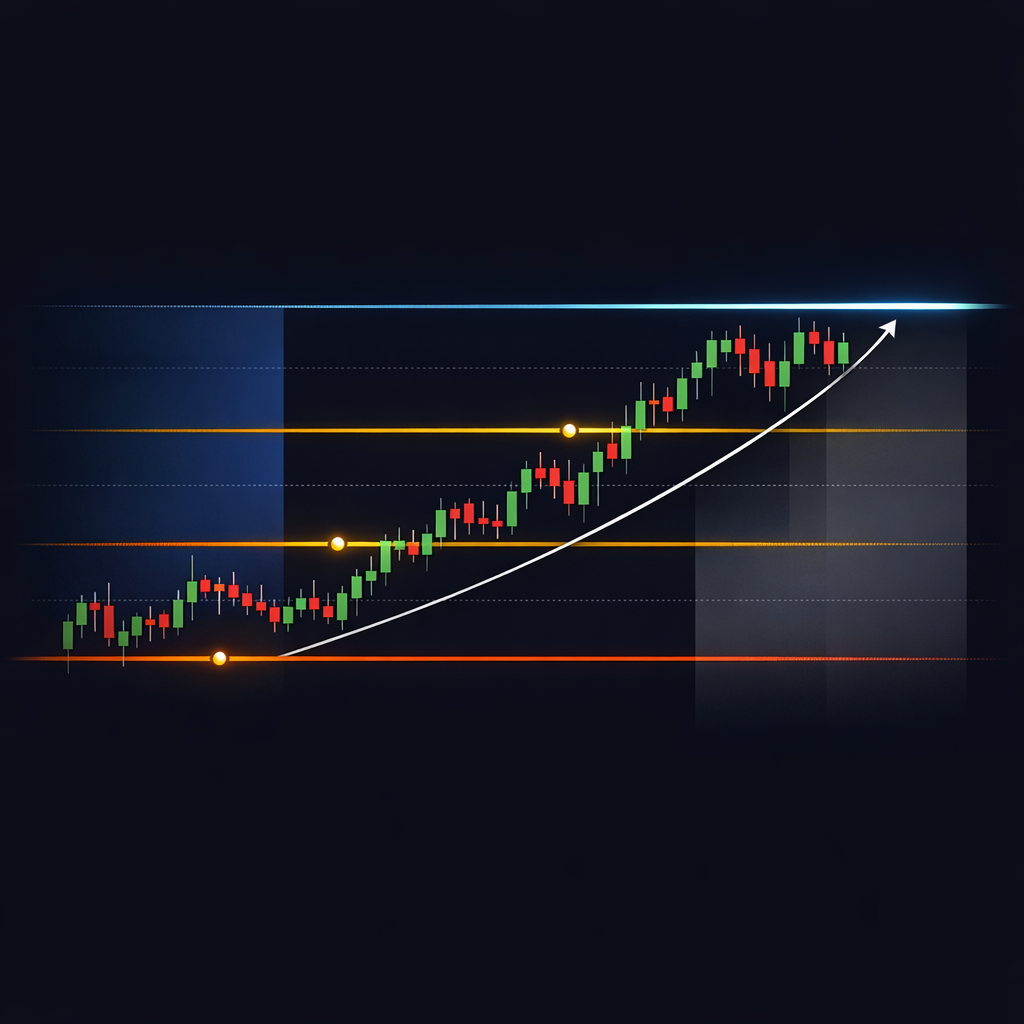
Gold at $2650 is not just a random print. It’s the middle of a working range that traders can actually plan around.
In the $2610–$2690 band, you typically see two types of participants fighting for control: swing traders positioning around macro expectations, and intraday traders harvesting liquidity around session opens.
When DXY is elevated near 106.80, gold can still rally, but it usually needs one of two conditions.
First: real yields soften (even if nominal yields don’t move much). Second: risk-off demand (equity stress, geopolitical headlines, or credit spreads widening) outpaces USD strength.
January is also a month where positioning “resets.” Portfolio rebalancing, new hedges, and fresh macro narratives can create sharp moves that don’t always respect last month’s intraday patterns.
That’s why monthly analysis is less about predicting an exact top or bottom, and more about building a map: where the market is likely to accelerate, where it’s likely to stall, and where it’s likely to trap.
From a practical trading standpoint, treat $2650 as the pivot until price proves otherwise.
If gold holds above it and builds higher lows, you’ll look for continuation toward $2675–$2690. If it fails and closes below it with momentum, the path of least resistance often shifts to $2635 and then $2610–$2620.
One more note: volatility around these levels is normal. A $12 candle on XAUUSD is not “crazy.” It’s Tuesday.
So the question for January 2026 isn’t “will gold move?” It’s “will you have a plan when it does?”
Macro drivers for January 2026: the forces that move XAUUSD
Gold is a macro instrument disguised as a chart. If you ignore fundamentals completely, you’ll still catch trades—but you’ll also get blindsided when the market reprices expectations in a single hour.
In January, the biggest macro levers are usually the same, but their weight changes depending on what the market is obsessed with.
1) The U.S. dollar (DXY at 106.80) remains a core driver. A rising dollar often pressures gold, but it’s not a perfect inverse relationship.
When the market is in “fear mode,” gold can climb with the dollar because both are treated as defensive assets.
2) Real yields are the hidden engine. Gold doesn’t pay interest. When real yields rise, holding gold becomes relatively less attractive.
So if January brings hotter inflation data and yields jump faster than inflation expectations, gold can drop even if headlines sound “inflationary.”
3) Fed communication matters even when there’s no rate change. The market trades the slope of expectations.
A single phrase about “higher for longer” can push yields up and gold down $15–$25. Conversely, a softer tone can ignite a squeeze higher.
4) Risk sentiment is the wild card. If equities wobble, gold often catches a bid, especially if volatility expands.
5) Geopolitics and energy can create sudden safe-haven flows. These moves can be technically messy, but they’re tradable if your risk is controlled.
The clean way to use fundamentals is not to become a news trader. It’s to decide whether you want to be aggressive (trend-following) or defensive (mean-reversion) around key levels.
For example, if CPI week is approaching and DXY is firm, you may reduce position size and demand stronger confirmation at $2620 support before buying.
Or if the Fed is expected to be dovish and gold is holding above $2650, you may choose to buy break-and-retest setups toward $2675 with a tighter invalidation.
This is exactly how we frame our trade planning inside United Kings signals: macro context first, then precise technical execution with defined SL and TP.
Key XAUUSD levels for January 2026 (support, resistance, pivots)

Monthly analysis becomes actionable when you translate it into levels you can execute around.
For January 2026, the practical level map—based on current price around $2650 and the $2610–$2690 guideline—looks like this.
Primary pivot: $2650
$2650 is the “decision line.” Above it, buyers have structure. Below it, sellers can press toward the lower band.
When price chops around the pivot, your edge comes from waiting for liquidity to form: equal highs/lows, session sweeps, and clear candles back through the level.
Support zone: $2610–$2620
This is the lower boundary where dip buyers often defend aggressively.
If gold tags $2615 and immediately reclaims $2625, that’s often a sign of absorption and a potential swing reversal.
But if $2610 breaks and holds on a 4H close, the market is telling you the range is failing.
Mid-support: $2635–$2640
This is a common “make-or-break” area after a pivot failure.
In many months, you’ll see gold drop from $2650, bounce at $2638, and then either reclaim $2650 (bullish) or roll over and continue to $2620 (bearish).
Resistance zone: $2675–$2690
This is where breakouts either run or trap.
If gold spikes to $2685 during NY and closes back under $2675, that’s a classic failed breakout profile.
If it breaks $2690 and holds above on retests, you shift from range tactics to trend tactics.
How to use these levels without overtrading
One mistake in monthly analysis is plotting 20 lines and reacting to every $3 move.
Instead, treat each zone as a place to ask a single question: is price accepting or rejecting?
Acceptance looks like closes above resistance with shallow pullbacks. Rejection looks like wicks, quick reversals, and closes back inside the range.
January’s job is to give you the framework. Your job is to wait for the market to confirm which side is in control.
Scenario planning: bullish, bearish, and range cases for January 2026
Professional trading is scenario planning, not prediction.
For January 2026, you want three clean scripts: bullish continuation, bearish breakdown, and range rotation.
Scenario A: Bullish continuation (buyers defend $2635–$2650)
This scenario plays out when gold holds above $2650 or quickly reclaims it after a dip.
You’ll typically see higher lows on 1H/4H, with London pushing price up and NY confirming.
Targets: $2675 first, then $2690. If momentum is strong, $2690 becomes a “hold above or fade” level.
Example plan: Buy $2652 after a pullback holds above $2645. Stop $2638 (14 points). TP1 $2680 (28 points, 1:2). TP2 $2690 (38 points, ~1:2.7).
This is a clean plan because invalidation is clear: if price loses $2645 and closes below, the setup is wrong.
Scenario B: Bearish breakdown (pivot fails, sellers press to $2620)
This scenario often starts with a failed push into $2675–$2690.
Gold wicks above resistance, then closes back below $2675 and later breaks $2650 with momentum.
Targets: $2635 first, then $2620, and possibly $2610.
Example plan: Sell $2648 after a 15-min close below $2650 and a retest rejection. Stop $2662 (14 points). TP $2620 (28 points, 1:2). If volatility expands, partial at $2635 and runner to $2612.
Notice the logic: you’re not selling “because it feels bearish.” You’re selling because the pivot failed and the retest confirmed.
Scenario C: Range rotation (mean reversion dominates)
In range months, gold can ping-pong between $2620 and $2685, trapping breakout traders.
Your job is to trade the edges with confirmation and take profits faster.
Example plan: Buy $2624 after a sweep under $2620 and reclaim. Stop $2610 (14 points). TP $2652 (28 points, 1:2). If price stalls at $2650, exit—don’t “hope” for $2690 in a choppy month.
Range tactics require humility. You take what the market gives and you don’t marry the trade.
This is also where premium signals help because execution discipline is everything.
When we publish levels and setups in United Kings gold signals, we’re not just giving entries—we’re giving context: whether we’re treating the month as trend-friendly or rotation-heavy.
Technical analysis toolkit for January: what we prioritize on XAUUSD
Gold rewards simplicity. The more complicated your chart, the more likely you are to hesitate at the moment you need to act.
For January 2026, we prioritize a small toolkit that fits how XAUUSD actually moves during London and NY.
1) Market structure (HH/HL vs LH/LL)
If price is making higher highs and higher lows above $2650, you trade pullbacks.
If price is making lower highs below $2650, you sell rallies.
This sounds basic, but it prevents the most expensive mistake: buying a falling market because “it’s cheap.”
2) Liquidity sweeps and reclaims
Gold loves to sweep obvious highs/lows by $2–$6, then reverse.
If you see equal lows around $2636 and price spikes to $2632, then reclaims $2638, that’s often a better long trigger than a random indicator cross.
3) Session timing (London + NY)
Gold’s cleanest moves often start around London open and accelerate into NY.
So we like entries after a session sweep, not in the dead zone where spreads widen and follow-through is weak.
4) Moving averages (as context, not signals)
A 50 EMA on 1H or 4H can help you see bias.
If price is above and respecting it, you lean bullish. If price is below and rejecting it, you lean bearish.
But you still need price action triggers at levels like $2650 or $2620.
5) ATR and volatility sizing
In weeks where gold is printing $20–$30 daily ranges, your stop and position size must adapt.
If you normally use a $12 stop, but the 14-day ATR suggests $22 average movement, you either widen the stop (and reduce size) or skip marginal setups.
At United Kings, our edge comes from combining these tools into a repeatable process: identify the monthly map, wait for session liquidity, then execute with defined risk.
If you want to see how that looks in real time with entries, SL, and TP, explore our signals service and the gold-specific stream at /gold-signals/.
Signal-style setups for January 2026 (with entries, SL, TP examples)
Let’s turn the monthly map into practical, “signal-style” setups.
These are not guarantees. They’re templates you can adapt based on confirmation.
Setup 1: Dip-buy at support ($2620 zone) after a sweep
Context: Price trades down into $2620 during London, sweeps below, then reclaims.
- Entry idea: Buy $2624–$2628 after a 15-min close back above $2620 and a higher low forms.
- Stop loss: $2610 (14–18 points risk depending on entry).
- Take profit 1: $2652 (about 24–28 points, ~1:2).
- Take profit 2: $2675 (about 47–55 points, ~1:3).
Management: If price hits $2650 and stalls, consider partials. If it breaks through with momentum, trail under 1H structure.
Setup 2: Sell failed breakout at resistance ($2675–$2690)
Context: NY pushes gold into $2682–$2688, but it closes back below $2675.
- Entry idea: Sell $2672–$2675 on retest rejection after the failure.
- Stop loss: $2688–$2695 (13–23 points, depending on volatility).
- Take profit 1: $2650 (22–25 points, near 1:1 to 1:2 depending on stop).
- Take profit 2: $2635 (37–40 points, ~1:2).
- Take profit 3: $2620 (52–55 points, ~1:3 if stop is tight).
Management: If price reclaims $2675 and holds, you exit. Failed breakout trades must be cut quickly when wrong.
Setup 3: Break-and-retest continuation above $2650
Context: Gold breaks above $2650, pulls back shallow, and holds $2648–$2650.
- Entry idea: Buy $2651–$2654 after a bullish close and retest hold.
- Stop loss: $2639–$2642 (12–15 points).
- Take profit: $2680 (26–29 points, ~1:2), stretch to $2690 (~1:2.5).
These are the same mechanics we use when publishing trades to our community: clear entry, clear invalidation, and realistic targets.
If you prefer to receive these as ready-to-execute alerts, our premium Telegram stream is designed for that: United Kings Telegram channel.
January execution plan: step-by-step routine for London & NY sessions
Most traders don’t fail because their analysis is wrong. They fail because their execution is inconsistent.
January is the perfect month to tighten your routine, because volatility and news flow punish sloppy entries.
Step 1: Mark your monthly and weekly levels (10 minutes)
Before Monday London, mark $2610–$2620, $2635–$2640, $2650, and $2675–$2690.
Then decide: are you in range mode or trend mode based on where price is relative to $2650?
Step 2: Check the day’s catalysts (2 minutes)
Look for CPI, jobs data, Fed speakers, and unexpected geopolitical risk.
If a major release is within 60–90 minutes, you either wait or cut size.
For deeper guidance on volatility shocks, keep our gold news survival guide bookmarked.
Step 3: Wait for liquidity to form (don’t chase)
In London, let the first push happen. In NY, let the initial volatility spike settle.
Your best trades often come after a sweep of an obvious high/low.
Step 4: Use confirmation triggers
- A 15-min close back above/below a key level
- A retest that holds (for continuation) or rejects (for reversal)
- A structure shift (break of minor swing high/low)
This is how you avoid random entries based on emotion.
Step 5: Place SL and TP immediately
Gold can move $10 in a blink during NY.
If you enter without a stop, you’re not trading—you’re hoping.
Step 6: Manage with partials and time stops
If your trade hasn’t moved after 60–90 minutes during active session, consider exiting.
Gold is a momentum instrument. When it’s right, it usually moves.
Step 7: Journal outcomes in numbers
Track entry, stop size, R multiple, and whether you followed the plan.
January’s goal is to build a repeatable process you can scale all year.
If you want a structured daily routine guided by professional trade planning, pair this execution plan with United Kings gold signals and our education-first approach inside the community.
Comparison: DIY gold trading vs premium signals (what changes in practice)
Some traders love building everything themselves. Others want a proven framework and faster decision-making.
Neither is “morally better.” The right choice is what matches your time, temperament, and consistency.
| Factor | DIY Gold Trading | Premium Signals (United Kings) |
|---|---|---|
| Preparation time | 30–90 min/day to plan levels, scenarios, news | Minutes to review posted Entry/SL/TP and context |
| Execution speed | Depends on your experience and discipline | Faster decisions with clear instructions and updates |
| Risk structure | Often inconsistent early on (common beginner issue) | Standardized SL/TP planning and risk guidance |
| Learning curve | High—trial and error can be expensive | Lower—learn by seeing repeated, real setups explained |
| Emotional load | Higher—analysis + execution + self-doubt | Lower—outsourced structure, you focus on execution |
| Community feedback | Usually solo (unless you find a good group) | 300K+ active traders sharing execution and experience |
At United Kings, we focus heavily on London and NY session trading, because that’s where gold’s liquidity is cleanest.
We also publish educational notes alongside trade ideas, so you’re not just copying—you’re understanding.
And while we’re proud of our historical performance and community feedback, we never frame trading as guaranteed income.
Trading is risk. Our job is to help you approach it professionally.
If you’re exploring providers, you may also want to read our due diligence guide: forex signals provider checklist. The principles apply to gold signals too.
Risk management for XAUUSD in January: position sizing, SL placement, and drawdown control
Gold can be generous, but it’s unforgiving when you oversize.
January is when many traders blow confidence because they treat the first month like a casino reset.
Let’s keep it professional.
1) Use a fixed risk percentage per trade
A common model is 0.5% to 1% risk per trade.
If your account is $5,000 and you risk 1%, that’s $50 maximum loss.
Now your stop distance determines your lot size, not your emotions.
2) Gold stop losses: why $10–$25 is normal
With XAUUSD around $2650, a $12 stop is often the minimum to survive normal noise.
During news weeks, $18–$25 stops can be more realistic, but you must reduce size to keep risk constant.
3) Aim for 1:2 or 1:3 R:R (and be honest about hit rate)
If you target 1:3 every time but only win 25%, you’ll struggle psychologically.
Many gold traders do well with partials: take 1:2 on the first portion, then let a runner attempt 1:3.
4) Drawdown rules that keep you in the game
- Daily loss limit: stop trading after -2R or -3R.
- Weekly review: if you’re down 5R, reduce size and trade only A+ setups.
- No revenge trades: the market will always offer another setup.
5) News-risk protocol
Before CPI or major Fed events, decide in advance:
- Will you trade the release or wait 15 minutes?
- Will you halve position size?
- Will you avoid holding positions through the number?
This prevents “surprise” losses that were actually predictable.
We go deeper into these frameworks here: risk management strategies when using signals.
Even if you don’t use signals, the position sizing logic is universal.
How gold interacts with EUR/USD, GBP/USD, USD/JPY, and DXY in January
Gold doesn’t trade in isolation. It trades inside a web of USD flows and risk sentiment.
With EUR/USD near 1.0520 and DXY at 106.80, the market is still respecting USD strength.
Yet gold is holding near $2650, which tells you something important: there’s persistent demand underneath.
DXY (106.80): the headline relationship
When DXY pushes higher, gold often struggles to sustain rallies.
So if you see DXY breaking up and holding, be more selective with gold longs at resistance.
Conversely, if DXY rolls over from 106.80 and starts making lower highs, gold often gets “air” to run.
EUR/USD (1.0520) and GBP/USD (1.2680): risk tone and USD pressure
EUR/USD and GBP/USD are major components of USD sentiment.
If EUR/USD starts reclaiming levels and trending up, it often aligns with USD softness and can support gold bids.
But if EUR/USD is heavy and GBP/USD breaks down, gold longs need stronger technical confirmation to work.
USD/JPY (149.50): yields proxy and risk barometer
USD/JPY often tracks yield differentials.
If USD/JPY is ripping higher, it can signal rising yields, which can pressure gold.
If USD/JPY is falling while gold rises, that’s a classic “yields easing” alignment that can fuel sustained gold trends.
Practical cross-market checklist
- Gold trying to break $2675? Check if DXY is also breaking higher. If yes, be cautious on longs.
- Gold bouncing from $2620? Check if USD/JPY is stalling or reversing. If yes, bounce odds improve.
- Gold chopping at $2650? Check if EUR/USD is also range-bound. If yes, expect more chop.
If you also trade FX alongside gold, keep your approach unified.
United Kings supports multi-asset traders with forex signals and also coverage for digital markets via crypto signals, so you can align risk across correlated instruments.
Mistakes traders make in January (and how to avoid them)
January losses are rarely “bad luck.” They’re usually predictable behavior patterns.
Here are the big ones we see every year—and what to do instead.
Mistake 1: Treating the first week like a trend guarantee
Early January can be driven by repositioning and thin liquidity pockets.
A breakout on Monday doesn’t mean a trend for the month.
Fix: demand confirmation: break, retest, hold, then continuation.
Mistake 2: Oversizing to “start the year strong”
This is emotional trading disguised as motivation.
Fix: cap risk at 0.5%–1% and increase size only after 20+ trades of consistent execution.
Mistake 3: Moving stop losses on gold
Gold punishes wide, emotional stop moves because volatility expands when you’re wrong.
Fix: place the stop where your idea is invalidated. If that stop is too wide, reduce size—not discipline.
Mistake 4: Trading every wiggle around $2650
$2650 is a pivot, which means it will chop.
Fix: trade edges ($2620 or $2685) or trade confirmed breaks with retests.
Mistake 5: Ignoring news risk
CPI can move gold $20+ quickly.
Fix: have a news protocol and accept that “no trade” is a position.
If you want a structured stream that filters out low-quality setups, that’s the purpose of a premium service like United Kings gold signals: fewer decisions, better decisions.
How to use United Kings signals in January 2026 (without becoming dependent)
Signals work best when you treat them like a professional tool, not a magic button.
Here’s how we recommend using United Kings in January so you improve execution and build skill.
1) Start with a demo if you’re new
If you’re still learning how gold spreads behave and how fast candles move, use a demo first.
Copy the entries, place the SL/TP, and practice the discipline of not interfering.
2) Follow the plan exactly for 20 trades
Most traders “test” a provider by changing the stop, missing the entry, or taking profit early.
That’s not testing. That’s randomizing.
Run a clean sample size, then evaluate.
3) Use our education notes to understand the why
We don’t just post numbers. We focus on context: session timing, key levels, and what would invalidate the idea.
That’s how you become a better trader while using signals.
4) Align risk with your account size
Our community includes beginners and experienced traders.
So you must adjust lot size so that the stop loss equals your chosen risk (0.5%–1% is a common range).
5) Choose the plan that matches your goals
We offer three tiers on our pricing page:
- Starter: 3 Months for $299 (about $100/month)
- Best Value: 1 Year for $599 (about $50/month) with 50% savings + FREE ebook
- Unlimited: Lifetime for $499 (pay once, access forever)
And yes, we back it with a 48-hour money-back guarantee, so you can evaluate the service experience with less friction.
If you want to see how the Telegram workflow feels before committing, join the community channel here: United Kings on Telegram.
FAQ: Gold trading insights for January 2026
1) Is January a good month for gold trading?
It can be, because volatility and positioning shifts often create clean moves. But it’s also a month where false breakouts are common, so risk management and confirmation matter more than excitement.
2) What are the most important XAUUSD levels for January 2026?
Using current context around $2650, the key zones are $2610–$2620 (support), $2635–$2640 (mid-support), $2650 (pivot), and $2675–$2690 (resistance).
3) How big should my stop loss be on gold?
In current volatility conditions, $10–$25 from entry is common depending on the setup and session. The key is to keep your account risk fixed (e.g., 0.5%–1%) and adjust lot size accordingly.
4) Can gold rise even if the dollar index is strong?
Yes. Gold can rise with a strong DXY during risk-off periods or when real yields soften. That’s why you track yields/risk sentiment, not just the dollar.
5) How do I follow signals without overtrading?
Limit yourself to A+ setups, keep a daily loss limit, and follow entries/SL/TP exactly. If you’re new, start on demo first. For more structure, use a dedicated stream like United Kings gold signals.
Risk disclaimer (read before you trade)
Trading forex and gold (XAUUSD) involves significant risk and may not be suitable for all investors. You can lose some or all of your capital. Past performance and historical win rates do not guarantee future results. Signals, analysis, and educational content are provided for informational purposes only and are not financial advice. If you are a beginner, consider practicing on a demo account before risking real money, and always use proper risk management.
Join United Kings: get January 2026 gold setups with clear Entry, SL & TP
If you want to trade January with more structure, less hesitation, and a community that takes execution seriously, we’ve built United Kings for exactly that.
We deliver premium Telegram signals for gold and forex with clear Entry, SL, and TP levels, backed by an education-first approach and a community of 300K+ active traders.
Start here: explore UnitedKings.net, review our 3 plans, and join the live feed on United Kings Telegram.
Your edge in January isn’t predicting the next $30 move. It’s executing a repeatable plan when the market offers it.
