Ever joined a “premium” forex signals provider, followed three trades, and realized the provider’s results don’t match what you’re seeing in your account?
It happens more than most traders admit.
In a market where EUR/USD is hovering around 1.0520, GBP/USD around 1.2680, USD/JPY near 149.50, and DXY sits elevated near 106.80, signal quality matters.
Volatility is real, spreads widen during news, and sloppy entries get punished.
This guide is your professional checklist for choosing a forex signals provider you can actually trust.
TL;DR: The Professional’s Checklist (Save This)
- Verify track record with third-party proof (Myfxbook/FX Blue) or broker statements, not screenshots.
- Judge risk using drawdown, average R-multiple, and consistency—not just win rate.
- Demand transparency: entry, SL, TP, timeframe, and trade management rules must be clear.
- Check execution realism: slippage, spreads, session timing (London/NY), and typical holding time.
- Spot red flags fast: martingale, “guaranteed profits,” hidden losses, and constant signal edits.
- Choose fit: your account size, leverage, risk tolerance, and schedule must match the provider’s style.
1) Start With the Hard Truth: Most “Best Forex Signals” Claims Are Marketing

Search “best forex signals” and you’ll see the same promises repeated.
High win rate, fast profits, and “institutional” strategies.
But the market doesn’t pay you for confidence.
It pays you for process, risk control, and execution.
A proper forex signal review isn’t about whether a provider had a great week.
It’s about whether their method can survive different regimes: trending, ranging, and news-driven spikes.
Why this matters in the current market context
With DXY around 106.80, USD strength can dominate majors.
That changes how EUR/USD behaves near 1.0520 and how GBP/USD reacts around 1.2680.
USD/JPY near 149.50 can also be headline-sensitive when yield expectations shift.
In these conditions, a provider who only performs in quiet markets will look amazing… until the first real volatility day.
Signals are not a substitute for thinking
Even the best provider can’t trade for you.
You still choose lot size, accept slippage, and manage psychology when a trade pulls back 20–40 pips.
The right provider makes those decisions easier by being clear and consistent.
What we’re evaluating (and what we’re not)
This checklist evaluates whether a provider is credible, transparent, and compatible with your trading.
We’re not chasing a fantasy of “never losing.”
Losses are normal.
What matters is whether losses are planned, limited, and followed by a recoverable edge.
If you want to see how a professional signal service is structured (entries, SL, TP, and education), start with our main signals hub: United Kings premium signals.
2) Verification First: How to Prove a Forex Signals Provider Is Real
Before you analyze strategy, you verify results.
If you skip verification, everything else is just storytelling.
What counts as real proof (ranked)
- Third-party verified tracking (Myfxbook / FX Blue) with trading privileges verified.
- Broker statements with account number partially hidden, showing deposits/withdrawals and full trade list.
- Live trade recaps posted in real time (timestamped), including losses.
- Community execution evidence: multiple users confirming fills around the same entry zone.
Screenshots alone are weak.
They can be edited, cherry-picked, or taken from demo accounts.
Step-by-step: How to verify a track record in 10 minutes
- Ask for a verified link (Myfxbook/FX Blue) or a downloadable statement.
- Confirm track record length: aim for 3–12 months minimum, ideally longer.
- Check open trades and floating drawdown (not just closed profits).
- Review max drawdown and whether it matches the provider’s claimed risk.
- Scan for position sizing spikes (a common martingale clue).
- Compare average win vs average loss. A 90% win rate can still lose money if losses are huge.
The “verification traps” professionals watch for
- Short time windows: “Last 30 days: +40%” is meaningless without drawdown context.
- Demo disguised as live: demo fills are often cleaner and slippage-free.
- Hidden losses: providers delete losing messages or only post wins publicly.
- Signal edits: changing entry/SL/TP after price moved.
Realistic performance language
Credible providers talk in probabilities.
They mention losing streaks, risk limits, and how they adapt around major news.
If you hear “guaranteed profits,” you’re not hearing trading—you’re hearing sales.
For transparency into how we structure our signals across sessions, explore United Kings forex signals and the way we communicate entries and risk.
3) Track Record Analysis: Win Rate Is Not the Metric Pros Use
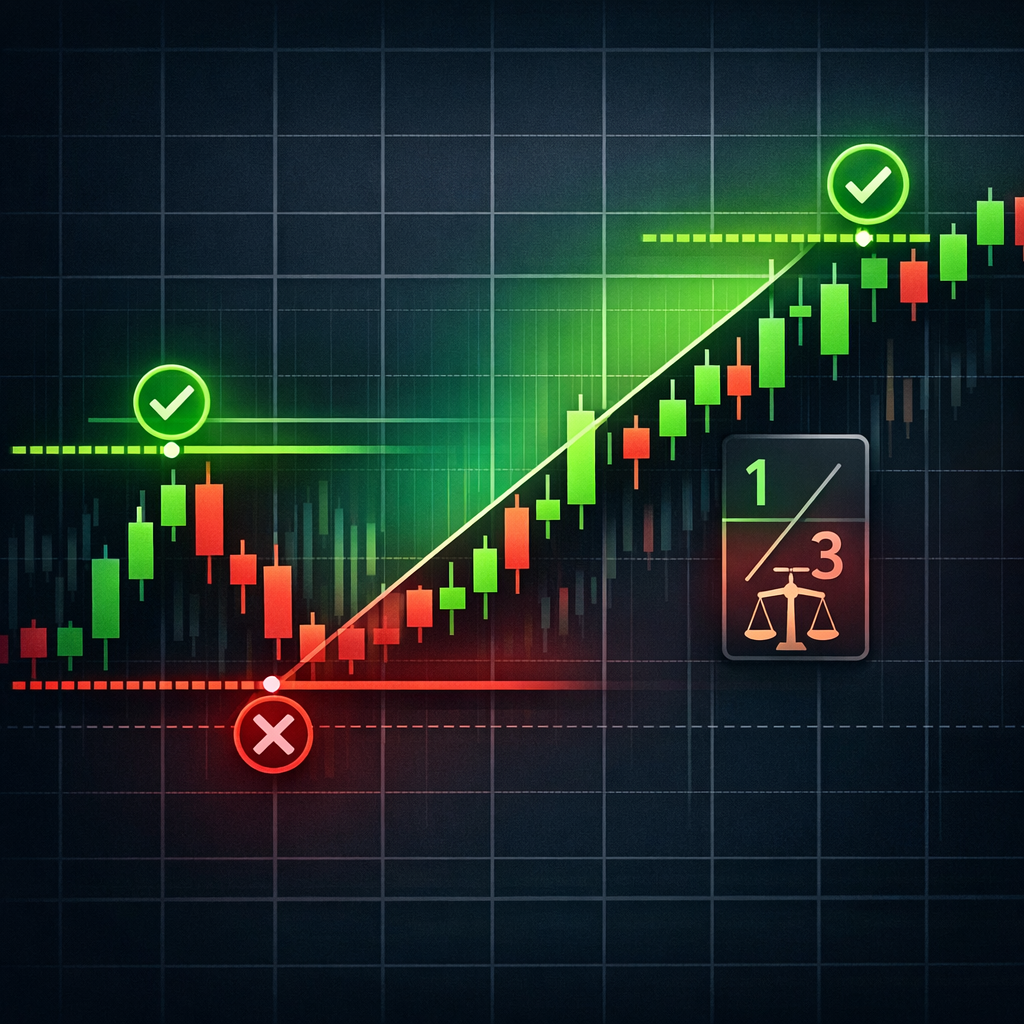
Win rate is the most abused statistic in the signal industry.
It’s easy to inflate with tiny take profits and huge stop losses.
Professionals focus on the distribution of outcomes.
The metrics that actually matter
- Expectancy: average profit per trade after losses and costs.
- Average R-multiple: average win/loss measured in “R” (risk units).
- Max drawdown: worst peak-to-trough equity drop.
- Profit factor: gross profit divided by gross loss (above 1.5 is generally solid).
- Consistency: stable monthly results vs one lucky month.
Example: Two providers, same win rate, totally different reality
Provider A wins 80% of trades.
They take +10 pips on winners and lose -60 pips on losers.
Over 10 trades: 8 wins = +80 pips, 2 losses = -120 pips.
Net: -40 pips despite an 80% win rate.
Provider B wins 55%.
They target 1:2 RR: +40 pips wins, -20 pips losses.
Over 10 trades: ~5–6 wins = +200 to +240 pips, ~4–5 losses = -80 to -100 pips.
Net: +100 to +160 pips with a lower win rate.
How to read a provider’s “85% win rate” claim
An 85%+ win rate can be legitimate.
But you must ask: At what risk?
Is it achieved with tight stops and smart entries, or with averaging down until price comes back?
A professional provider can show you the numbers behind it: average SL size, average TP size, and worst drawdown.
Costs: spreads and slippage can flip a strategy
On EUR/USD at 1.0520, a 1.0 pip spread vs 2.0 pips matters if the provider scalps 5–8 pips.
On USD/JPY at 149.50, fast spikes can cause slippage during data releases.
Any “forex signals provider” worth your time will account for these realities.
Want a deeper guide on risk when following signals? Keep risk management strategies for signal users bookmarked.
4) Transparency Checklist: What Every Signal Must Include (No Exceptions)
Signals should reduce decision fatigue.
If a signal creates confusion, it’s not a signal—it’s a suggestion.
The minimum information a professional signal includes
- Pair and direction: e.g., EUR/USD Buy or Sell.
- Entry: exact price or a clear zone (with rules).
- Stop Loss (SL): fixed level, not “mental stop.”
- Take Profit (TP): at least one target, ideally multiple.
- Timeframe / style: scalp, intraday, swing.
- Session context: London, NY, or Asia, plus any news caution.
Gold (XAUUSD) example using current market context
Gold is around $2650.00 (+0.35% over 24h).
A transparent gold signal might look like this:
- XAUUSD Sell @ 2662.0
- SL @ 2678.0 (16 dollars risk)
- TP1 @ 2630.0 (32 dollars reward, ~1:2)
- TP2 @ 2614.0 (48 dollars reward, ~1:3)
That’s tradeable.
You can size it, place it, and know the plan before the first tick moves.
What “fake transparency” looks like
- “Buy gold now” with no SL.
- “TP open” but the provider never defines how exits are decided.
- Entry zones so wide you can’t measure risk (e.g., 80–120 pips wide on majors).
- “We’ll update later” after price already moved 30–50 pips.
Trade management rules should be written, not improvised
Many providers claim to “manage trades live.”
That’s fine, but rules must be consistent.
For example: “Move SL to breakeven after +25 pips,” or “Scale out 50% at TP1.”
If you primarily trade metals, compare how providers structure their gold calls by reviewing a dedicated page like United Kings gold signals.
5) Strategy Fit: Match the Provider’s Style to Your Life and Account
One of the biggest mistakes is choosing a provider based on hype rather than fit.
A profitable strategy can still be a bad choice for you.
Key fit questions (be honest)
- Can you trade London and NY sessions, or are you mostly available in Asia?
- Do you prefer scalps (minutes) or intraday (hours) or swing (days)?
- What is your account size and broker’s minimum lot?
- Can you tolerate a 5–10 trade losing streak without revenge trading?
- Do you need set-and-forget signals or active management updates?
Execution reality: the same signal trades differently on different accounts
Let’s say a provider sends GBP/USD Sell at 1.2680, SL 1.2710 (30 pips), TP 1.2620 (60 pips).
If your broker’s spread is 1.8 pips and you enter late by 6 pips, your effective RR changes.
That’s not the provider’s fault, but it is your responsibility to account for it.
Scalping vs intraday vs swing: what to expect
- Scalping: high frequency, sensitive to spread/slippage, requires fast execution.
- Intraday: fewer trades, clearer structure, often best for most signal followers.
- Swing: wider SL, more patience, can survive noise but needs margin discipline.
Comparison table: choose the right provider style
| Style | Typical Hold Time | Pros | Cons | Best For |
|---|---|---|---|---|
| Scalping | 1–15 minutes | Many opportunities, quick feedback | Spread/slippage heavy, stressful, timing-sensitive | Fast executors, low spreads, active traders |
| Intraday | 30 minutes–6 hours | Clear setups, manageable frequency, good RR | Needs session awareness and patience | Most signal followers, London/NY traders |
| Swing | 1–10 days | Less screen time, can catch big moves | Wider stops, swap costs, larger drawdowns possible | Busy professionals, higher patience, larger accounts |
United Kings focuses heavily on London and New York session opportunities, where liquidity is deeper and levels tend to respect better.
That matters when EUR/USD is compressing near 1.0520 or gold is rotating around $2650.
6) Risk Management Standards: The Provider Should Protect You From Yourself
A signal is only as good as the risk framework behind it.
Professionals don’t just ask “Where is TP?”
They ask “What happens if we’re wrong five times in a row?”
What good risk management looks like in a signals service
- Defined SL on every trade, with a reason (structure, ATR, invalidation).
- Reasonable risk per trade guidance (commonly 0.5%–2%).
- No martingale or uncontrolled averaging down.
- Session and news filters to avoid avoidable chaos.
- Clear scaling rules (partial closes, breakeven logic).
Gold risk example (XAUUSD) with realistic stops
Gold in the $2610–$2690 zone can move $10–$20 quickly.
If you take XAUUSD Buy at 2648.0 with SL 2635.0 ($13 risk), a 1:2 target is 2674.0.
A 1:3 target is 2687.0.
Those are realistic levels in current volatility.
Position sizing: the missing link in most “forex signal review” posts
Two traders can follow the same signal and get opposite experiences.
Trader A risks 1% per trade and survives variance.
Trader B risks 10% per trade and blows up on a normal losing streak.
A simple sizing rule you can apply today
- Pick a fixed risk per trade (start with 0.5%–1% if you’re new).
- Convert SL distance into money risk.
- Size the lot so that if SL hits, you lose only that chosen percentage.
This is how pros stay in the game long enough for the edge to play out.
If you want a full framework, our in-depth guide on risk management when using forex signals pairs perfectly with this checklist.
7) Communication Quality: Speed Matters, But Clarity Matters More
Signals are a communication product.
You’re not only buying trade ideas.
You’re buying how those ideas are delivered under pressure.
What great signal communication looks like
- Consistent format: Pair, direction, entry, SL, TP, notes.
- Fast updates when conditions change (invalidations, news risk).
- Post-trade recap: what worked, what didn’t, what to learn.
- Execution guidance: “Wait for retest,” “limit order,” or “market now.”
The difference between “fast” and “usable”
A provider can be fast but chaotic.
If you’re constantly asking “Where is SL?” or “Is TP1 hit?” you’re not trading—you’re chasing.
Clear signals reduce emotional decision-making.
Real scenario: late entry and why providers should use zones
Imagine EUR/USD is at 1.0520.
A provider sends “Sell 1.0520, SL 1.0540, TP 1.0480.”
You see it late at 1.0512.
If the provider doesn’t define an entry window, you’re guessing.
A professional provider might say: “Sell zone 1.0518–1.0524, SL 1.0540.”
Now you can execute with rules.
Community support is part of signal quality
When you’re following signals, questions come up fast.
Is the setup still valid?
Should you hold through CPI?
A responsive community and admin team is not a luxury.
It’s risk control.
If you want a beginner-friendly overview of how Telegram-based signals work in practice, read our forex signals Telegram guide.
8) Red Flags and Scams: The Checklist Pros Use to Avoid Blowups
If you only remember one section, remember this one.
Most traders don’t lose because they chose a “bad strategy.”
They lose because they chose a provider with bad incentives.
Top red flags (walk away)
- Guaranteed profits or “can’t lose” language.
- No stop loss or “we never use SL.”
- Martingale/averaging down presented as “recovery strategy.”
- Deleting messages or hiding losing trades.
- Constant signal edits after price moves.
- Pressure sales tactics: “Only 10 spots left” every day.
- Unrealistic monthly returns with no drawdown discussion.
How martingale usually shows up in signals
It starts innocently: “Add another entry for better average.”
Then the position grows as price goes against you.
Eventually one trend day wipes weeks of gains.
In a USD/JPY environment near 149.50, a trend day can run 150–250 pips.
That’s where martingale accounts go to die.
Screenshot culture vs audited reality
A scam provider can show 20 winning screenshots in a row.
A real provider can show you a month with 2–3 losses in a row and explain why it happened.
Professionals trust audited process more than curated images.
Refund policies and accountability
A serious business stands behind its service.
Look for clear terms, support channels, and a reasonable refund policy.
United Kings offers a 48-hour money-back guarantee, which adds a layer of accountability for new members.
If you want to cross-check how providers behave during volatility spikes, pair this checklist with educational reads from the United Kings blog.
9) A Professional Due Diligence Process (Do This Before You Pay)
Most traders choose a provider emotionally.
Pros choose a provider like they’d choose a fund manager: with a process.
Step-by-step due diligence (48-hour framework)
- Collect proof: verified tracking or statements, plus sample signals.
- Score transparency: do signals include entry, SL, TP, and management rules?
- Test execution: follow on a demo for 10–20 signals or at least 1–2 weeks.
- Measure slippage: compare your fills to the posted entry zone.
- Check risk consistency: are SL sizes and RR stable, or random?
- Review communication: are updates timely during London/NY?
- Assess education: do they teach you why trades are taken?
- Decide fit: match to your schedule, broker, and psychology.
What to record during your demo test
- Signal time posted vs time you saw it.
- Your entry price vs provider entry.
- Whether SL/TP were hit or modified.
- How the provider handled losses publicly.
Realistic expectations during a test window
Even a strong provider can hit a flat patch.
You’re not testing whether they win every trade.
You’re testing whether they behave professionally when trades don’t work.
Why London/NY focus is a practical edge for many followers
Liquidity is typically highest during London and New York.
That can mean cleaner breaks, tighter spreads, and fewer “random” spikes.
When gold is rotating around $2650, those sessions often define the day’s real direction.
If you want an additional checklist tailored for newer traders, keep this resource handy: forex trading signals provider checklist.
10) Pricing, Value, and What You’re Really Paying For
Price is not the same as value.
Cheap signals can be expensive if they cause drawdown.
Premium signals can be worth it if they save time and reduce mistakes.
What a signals subscription should include
- Clear, structured signals with SL/TP.
- Timely updates and trade management guidance.
- Education so you improve, not just copy.
- Community access for execution support and feedback.
- Accountability: recaps, transparency, and support.
Beware “lifetime access” without a real business
Some sellers offer lifetime access because they don’t plan to be around long.
A real provider invests in analysts, moderators, and infrastructure.
That costs money, and it should show in service quality.
United Kings plans (and who they fit)
We keep pricing simple with three tiers:
- Starter (3 Months): $299 (~$100/month) for traders who want to test the service seriously.
- Best Value (1 Year): $599 (~$50/month) with 50% savings plus a FREE ebook.
- Unlimited (Lifetime): $999 pay once for ongoing access.
You can review the three options directly on our pricing page.
Value math (simple and honest)
If a provider helps you avoid one major mistake per month—like oversizing a gold trade when XAUUSD whips $20—subscription cost can pay for itself.
But that only happens if you follow a risk plan and execute consistently.
Community scale as a signal quality factor
One overlooked value driver is community size and activity.
With 300K+ active traders, you’re not trading alone.
You see execution feedback, broker differences, and session commentary in real time.
11) What “Good” Looks Like in 2026: A Modern Signals Provider Standard
The industry has matured.
Traders are more skeptical, and that’s healthy.
In 2026, a credible provider operates more like a newsroom than a hype channel.
Modern standards you should expect
- Pre-trade context: why this level, why now, what invalidates it.
- Session-aware planning: London/NY focus, Asia range notes, news caution.
- Consistent risk language: “Risk 1R,” “move SL to BE at X,” “partial at TP1.”
- Education alongside signals: helping you build independence over time.
- Multi-asset clarity: if they cover forex and gold, they must respect different volatility profiles.
Example: How a provider should handle news risk
Let’s say gold is at $2650 and a high-impact US release is due.
A professional provider may pause entries 10–15 minutes before the event.
Or they may tighten execution rules, like “only enter after the first 5-minute candle closes.”
This is how you avoid getting slipped $3–$8 on XAUUSD in seconds.
Why education matters even if you “just want signals”
Signals work best when you understand the logic.
When you understand why EUR/USD sells a retest at 1.0520, you’re less likely to panic-close at +6 pips.
Education improves compliance, and compliance improves results.
Where United Kings fits
United Kings is built around premium Telegram delivery, structured trade plans, and session-based execution.
We publish clear Entry, SL, and TP levels, and we reinforce risk discipline.
Our goal is not to overwhelm you with noise.
It’s to help you trade with a repeatable plan.
If you’re also exploring multi-asset signals, you can compare our coverage through crypto signals as well, but for this article we’re focused on choosing a forex signals provider correctly.
12) The United Kings Standard: A Practical Checklist You Can Apply Today
Let’s turn everything into a simple, usable scorecard.
Use it to evaluate any provider, including us.
The 20-point provider scorecard
- Verification (0–5)
- Third-party verified results? (2)
- Track record length 6+ months? (1)
- Drawdown disclosed? (1)
- Full transparency on losses? (1)
- Signal Quality (0–5)
- Every signal has Entry/SL/TP? (2)
- Clear entry windows/zones? (1)
- Trade management rules? (1)
- Recaps and accountability? (1)
- Risk Framework (0–5)
- No martingale / no uncontrolled averaging? (2)
- RR consistency and sensible SL sizes? (1)
- Risk-per-trade guidance? (1)
- News/session filters? (1)
- Fit & Support (0–5)
- Matches your session availability? (1)
- Community and support responsiveness? (1)
- Educational support? (1)
- Fair pricing + refund policy? (1)
- Clear onboarding for beginners? (1)
How to interpret your score
- 17–20: Professional-grade provider. Still demo test, but strong signs.
- 13–16: Potentially good, verify more and test execution carefully.
- 9–12: Too many gaps. Proceed only with strict limits and demo testing.
- 0–8: Walk away.
How to start with United Kings (simple path)
- Browse our service overview on UnitedKings.net and learn how we operate.
- Choose your preferred channel: forex signals or gold signals.
- Review plans on pricing (Starter 3 Months $299, Best Value 1 Year $599, Lifetime $999).
- Join our official Telegram community at United Kings Telegram signals channel.
- Start on demo if you’re new, then scale responsibly.
A quick realism check (what you should expect)
You will see losing trades.
You may see weeks where EUR/USD chops around 1.0520 and setups fail.
The goal is not perfection.
The goal is a repeatable edge with controlled downside.
FAQ: Choosing the Best Forex Signals Provider
1) What is the most important factor when choosing a forex signals provider?
Verification and risk control. If results aren’t verifiable and risk rules aren’t clear (SL, sizing guidance, no martingale), nothing else matters.
2) Is a high win rate (like 85%+) always better?
No. Win rate must be evaluated with risk-reward and drawdown. A 55% win rate with 1:2 RR can outperform an 85% win rate with poor loss control.
3) Should I follow signals on a live account immediately?
If you’re a beginner, start on a demo for 1–2 weeks or 10–20 signals to learn execution, spreads, and how updates are delivered. Then go small on live.
4) How do I know if a provider is using martingale?
Look for increasing lot sizes after losses, repeated “add another entry” messages, missing SLs, and unusually high win rates paired with occasional massive drawdowns.
5) Are Telegram forex signals reliable?
Telegram is just a delivery tool. Reliability depends on verification, transparency, and execution rules. A structured Telegram channel with clear Entry/SL/TP and consistent recaps can be very effective.
Risk Disclaimer: Forex and gold trading involves significant risk and may not be suitable for all investors. You can lose more than your initial deposit. Signals and educational content are provided for informational purposes only and do not constitute financial advice. Past performance is not indicative of future results. Always use proper risk management, consider trading on a demo account first, and consult an independent financial advisor if needed.
Ready to stop guessing and start following a structured plan?
Join the United Kings community of 300K+ active traders and get premium Telegram signals with clear Entry, SL, and TP levels, focused on London and NY sessions, plus education to help you grow.
Explore United Kings signals, compare the 3 plans (3 Months $299, 1 Year $599, Lifetime $999), and join our official channel: United Kings on Telegram.