
You get a forex signal… and price is already moving. Do you jump in late, wait for a pullback, or skip it entirely?
That moment is where most traders lose their edge—not because the signal is bad, but because execution is sloppy.
In this guide, we’ll break down forex signal execution like a professional: entry timing, position sizing, managing multiple take-profits, trailing stops, and the execution mistakes that quietly destroy otherwise profitable strategies.
TL;DR: Professional Forex Signal Execution in 6 Rules
- Execute the plan, not your emotions: treat every signal as a pre-defined business decision with Entry, SL, and TP.
- Never size before you know the stop: position sizing starts with SL distance (pips), then risk %, then lot size.
- Use the right order type: market orders for momentum, limit orders for pullbacks, stop orders for breakouts.
- Manage multiple TPs with structure: scale out (TP1/TP2/TP3), protect the trade, and let runners work.
- Trailing stops are a tool—not a habit: trail only after structure breaks in your favor or after TP1.
- Track execution quality: your win rate can stay the same while your P&L improves if you reduce slippage, late entries, and oversized risk.
Why Signal Execution Matters More Than the Signal Itself
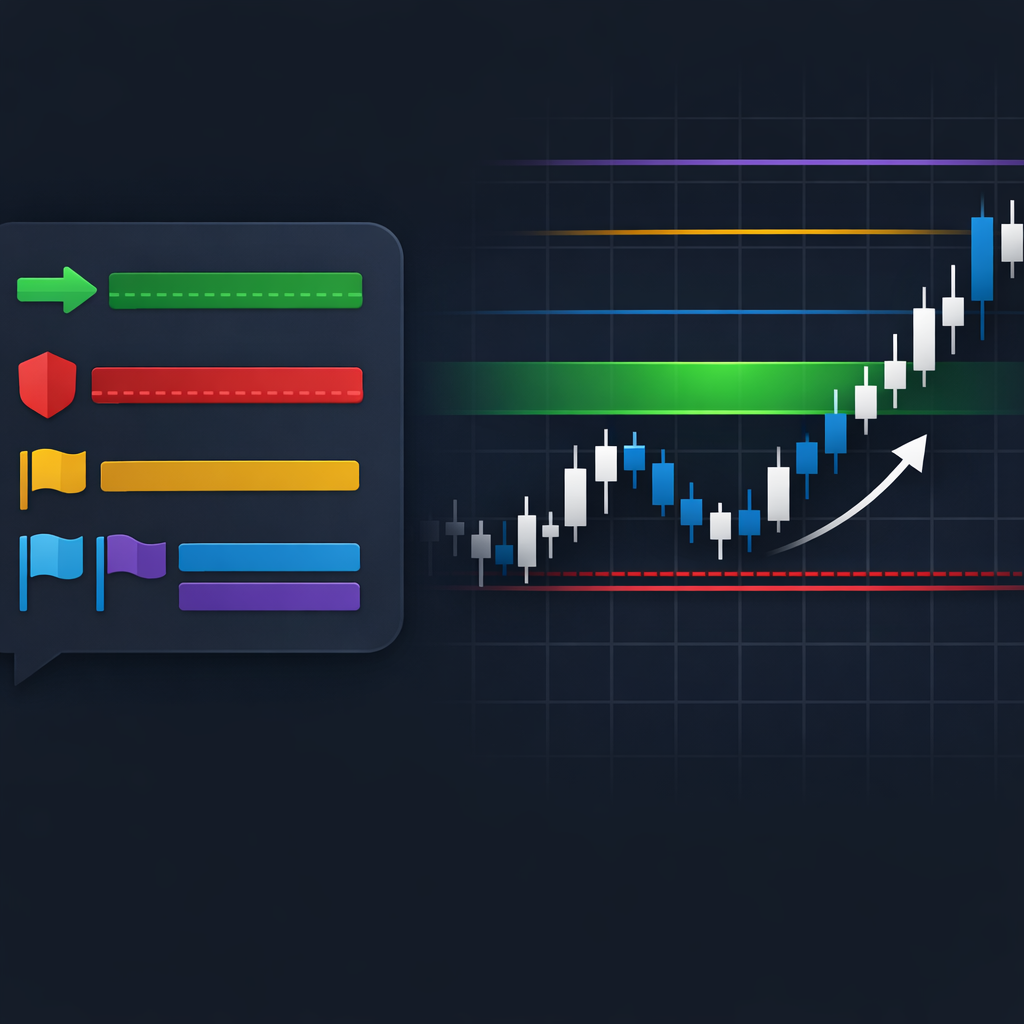
Most traders think the “secret” is finding a provider with the highest win rate.
Win rate matters, but execution is the multiplier.
Two traders can receive the exact same EUR/USD signal at 1.0520, and one ends the week up +4R while the other is down -2R.
The difference is usually not strategy.
It’s things like entering 8 pips late, placing the stop 5 pips tighter “to reduce risk,” closing early at TP1 every time, or revenge-trading after a stop-out.
Execution is where edge gets leaked
Let’s use the current market context.
DXY is around 106.80, USD/JPY is near 149.50, and EUR/USD is around 1.0520.
That’s a classic environment where USD strength can create fast directional bursts in majors.
If your signal says “Sell EUR/USD 1.0520, SL 1.0560,” and you enter at 1.0512 because you chased a candle, your stop effectively becomes tighter (48 pips instead of 40).
That changes the probability profile of the trade without you realizing it.
Signals are instructions—execution is craftsmanship
Professional traders treat a signal like a flight checklist.
They don’t “feel” their way into the trade.
They confirm the order type, calculate risk, place the trade, and manage it with rules.
If you’re still choosing between “hope” and “panic” once you’re in a position, you’re not executing—you’re improvising.
And improvisation is expensive in leveraged markets.
If you want premium, structured signals with clear Entry/SL/TP and a disciplined community, start with United Kings trading signals and then use this guide to execute them like a pro.
Know What You’re Executing: Anatomy of a High-Quality Forex Signal
Before we talk about clicking “Buy” or “Sell,” we need to define what a professional-grade signal looks like.
If a signal is vague, execution becomes guesswork.
At United Kings, we focus on clarity: Entry, Stop Loss, Take Profits, and context—especially around London and New York sessions where liquidity is highest.
Core components you should expect
- Instrument: EUR/USD, GBP/USD, USD/JPY, or XAU/USD (Gold).
- Direction: Buy or Sell.
- Entry: exact price or an entry zone (e.g., 1.0518–1.0523).
- Stop Loss (SL): invalidation level (not “pain threshold”).
- Take Profit(s): TP1/TP2/TP3 with logic for scaling out.
- Optional notes: session timing, news caution, or “wait for candle close.”
Forex vs Gold signals: execution differences
Gold (XAU/USD) is around $2650 with a +0.35% daily change.
That’s not extreme, but gold can still move $10–$25 quickly around news or NY open.
A typical gold setup might look like:
- Buy XAU/USD: 2648.0
- SL: 2634.0 (14 dollars)
- TP1: 2676.0 (28 dollars, ~1:2)
- TP2: 2690.0 (42 dollars, ~1:3)
Gold is quoted differently than forex pairs, so your platform’s contract size matters.
Execution must account for spread, volatility, and the fact that gold can “spike” through levels and come back.
Checklist: Is this signal executable?
- Is the entry a price or zone you can actually place orders around?
- Is the SL logical (beyond structure), not random?
- Are TPs aligned with realistic session ranges?
- Is there any major news that could change execution conditions?
If you’re still building your standards for what “good” looks like, pair this guide with our beginner-friendly resource: forex signals provider checklist.
Step-by-Step Forex Signal Execution Workflow (The Pro Checklist)
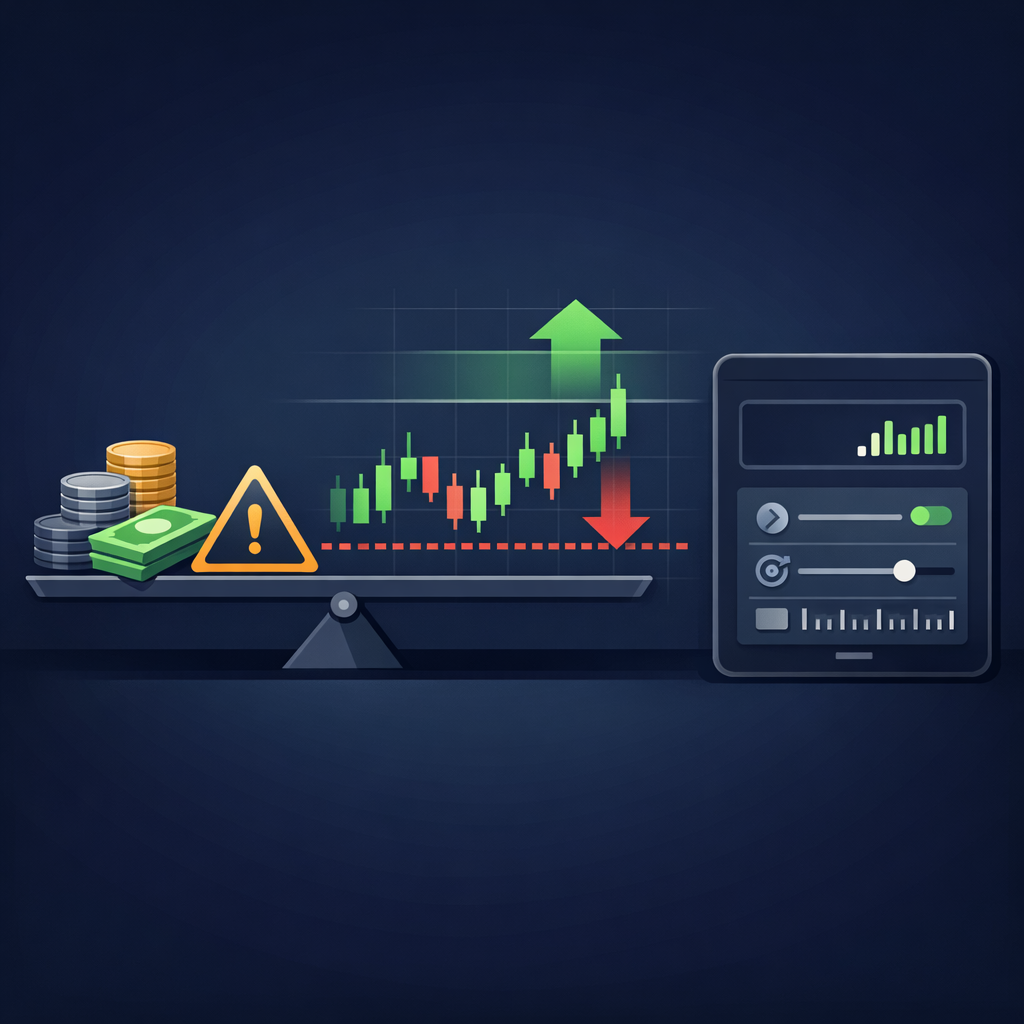
Professionals don’t execute signals by “watching and reacting.”
They run a repeatable workflow that reduces mistakes under pressure.
Here’s a step-by-step process you can use for how to trade signals consistently.
Step 1: Confirm market conditions (30 seconds)
Look at the pair and the broader USD tone.
With DXY near 106.80 and USD/JPY around 149.50, USD strength can persist, but it can also mean crowded positioning.
That’s why execution must respect the stop and avoid chasing.
Step 2: Check the clock (session matters)
Signals often perform best when liquidity is high.
London open, London/NY overlap, and NY open are where follow-through is more reliable.
Executing a breakout signal at 2 a.m. platform time can be a different trade.
Step 3: Choose the correct order type
Don’t default to market orders.
Match the order to the setup:
- Market: when price is at entry and momentum supports immediate fill.
- Limit: when the plan expects a pullback into a zone.
- Stop: when the plan requires a breakout confirmation above/below a level.
Step 4: Calculate risk and lot size (before placing the trade)
This is where retail traders lose professionalism.
They pick a lot size first, then “hope” the stop holds.
Pros do the opposite: SL distance → risk amount → lot size.
Step 5: Place Entry + SL + TPs as a single bracket
Always place the stop immediately.
If your platform allows OCO (one-cancels-other) or bracket orders, use them.
If not, manually place SL and TP the moment you enter.
Step 6: Manage the trade only at decision points
Decision points are: entry fill, TP1 hit, structure break, news spike, or time-based exit.
Staring at every tick invites emotional interference.
Step 7: Log execution quality
Record whether you entered late, adjusted the stop, or closed early.
Your journal should track execution errors, not just profit and loss.
If you want signals designed around structured execution with clear levels, explore our dedicated forex signals service and follow the workflow above trade-by-trade.
Order Types for Forex Signal Execution (Market vs Limit vs Stop)
Using the wrong order type is one of the fastest ways to turn a good signal into a bad trade.
A professional chooses an order based on what must happen next for the setup to be valid.
Quick comparison table: which order should you use?
| Order Type | Best For | Common Mistake | Professional Fix |
|---|---|---|---|
| Market | Momentum entries during London/NY when price is at entry | Entering after a spike (late entry, worse R:R) | Use a max deviation rule (e.g., don’t enter if >5–8 pips late) |
| Limit | Pullback entries into a zone (better price, better R:R) | Placing limit too early before structure forms | Wait for the signal’s condition (retest, wick, or confirmation) |
| Stop | Breakout confirmation (enter only if level breaks) | Stop order triggers on a fakeout spike | Use buffer (2–5 pips) + confirmation rules + session filter |
Example 1: EUR/USD market execution (when it’s correct)
Signal: Sell EUR/USD 1.0520, SL 1.0560, TP 1.0440.
If price is 1.0519–1.0521 during London/NY overlap and spreads are normal, a market sell is fine.
Your job is to avoid micro-managing and let the stop define the trade.
Example 2: GBP/USD limit execution (pullback entry)
GBP/USD is around 1.2680.
If the signal expects a pullback to 1.2685–1.2690 after a drop, you don’t chase at 1.2672.
You place a limit sell in the zone, with SL above structure (for example 1.2720) and TPs below (for example 1.2620 and 1.2580 depending on the plan).
Example 3: USD/JPY stop execution (breakout confirmation)
USD/JPY near 149.50 often reacts sharply to yields and risk sentiment.
If a signal calls for buying only above 149.80, a buy stop at 149.82 can prevent premature entries.
But you must accept that fakeouts happen, so the stop placement and position sizing are non-negotiable.
Order type is not a preference.
It’s part of the strategy.
Position Sizing Like a Pro (So Every Signal Has the Same Risk)
If you want to execute like a professional, this is the skill that changes everything.
Professionals don’t “feel” their lot size.
They calculate it so that every trade risks a consistent fraction of capital—typically 0.5% to 2% depending on experience and drawdown tolerance.
The core formula (simple and powerful)
Risk ($) = Account Balance × Risk %
Lot Size = Risk ($) ÷ (Stop Distance in pips × Pip Value per lot)
Your platform or a position size calculator can do the math, but you must understand the logic.
Because if you change the stop, you must change the lot size.
Example: EUR/USD sizing with a 40-pip stop
Account: $5,000.
Risk per trade: 1% = $50.
Signal: Sell EUR/USD 1.0520, SL 1.0560 (40 pips).
Assume pip value is roughly $10 per pip for 1.00 lot on EUR/USD.
Risk per 1.00 lot with 40 pips = 40 × $10 = $400.
So lot size ≈ $50 ÷ $400 = 0.125 lots.
Why this matters even more on gold (XAU/USD)
Gold at $2650 can move $15 in minutes around NY open.
If your SL is $14 (e.g., 2648 entry, 2634 SL), your position size must reflect that distance.
Many traders oversize gold because the “pip math” feels unfamiliar.
The result is a stop-out that feels like a disaster, even though it was a normal move.
Scaling into a position? Keep total risk capped
Some traders add positions when price confirms.
That’s fine if your total risk stays constant.
If you take two entries, split the risk (e.g., 0.5% + 0.5%), not 1% + 1%.
Practical rules professionals follow
- Never widen SL to avoid being stopped. That changes the trade idea.
- Never increase lot size to “make it back.” That’s revenge sizing.
- Reduce risk after drawdown. Pros protect capital first.
- Respect correlation. EUR/USD and GBP/USD often move together; don’t double your USD exposure by accident.
For deeper frameworks (including correlation and drawdown-based risk), use our dedicated guide: risk management strategies when using forex signals.
Entry Timing: How to Avoid Late Entries, Slippage, and FOMO
Timing is the execution skill that separates “signal followers” from professional operators.
The goal isn’t to get the perfect entry.
The goal is to enter within a pre-defined tolerance so your risk-reward math stays valid.
Define an “entry tolerance” rule
Professionals decide in advance how late is too late.
For majors like EUR/USD and GBP/USD, a common rule is:
- Do not enter if you’re >5–8 pips worse than the planned entry.
For USD/JPY, you might use a similar range, adjusted for spread and volatility.
For gold, you might define tolerance in dollars (e.g., $1.5–$3.0 depending on volatility).
Real scenario: the late-entry trap
Signal: Buy GBP/USD 1.2680, SL 1.2640 (40 pips), TP 1.2760 (80 pips, 1:2).
You see price already at 1.2692 and you buy anyway.
Your stop is still 1.2640, so your risk is now 52 pips.
Your TP is still 1.2760, so your reward is now 68 pips.
You just turned a clean 1:2 into roughly 1:1.3.
How pros handle it instead
- Option A: wait for a pullback to the entry zone (limit order).
- Option B: skip the trade if it ran without you.
- Option C: reduce position size if you must enter late (so $ risk stays constant).
Slippage: what it is and how to minimize it
Slippage is the difference between your requested price and your filled price.
It increases during news, low liquidity, and fast markets.
To reduce slippage:
- Prefer limit orders when the plan allows.
- Avoid entering right into red-flag news releases.
- Execute during liquid sessions (London/NY) when spreads are tighter.
- Use a broker with stable execution and avoid trading on unstable connections.
Gold timing: respect the “spike and return” behavior
With XAU/USD around $2650, it’s common to see a $6–$10 spike that tags entries and then retraces.
If your signal is a buy at 2648 and price spikes to 2656, buying at 2656 is often a FOMO entry.
That’s how traders get stopped at 2634 even though the original plan might have worked.
Execution rule: if you missed the entry, you missed the trade—unless the signal explicitly allows a zone or re-entry.
Managing Multiple Take Profits (TP1/TP2/TP3) Without Overthinking
Multiple take profits are not about complexity.
They’re about balancing two goals that conflict:
- Get paid (lock in profit).
- Let winners run (capture big moves).
A professional scaling model (simple)
Here’s a common structure for signal-based trading:
- TP1: close 30–50% of the position.
- TP2: close another 25–40%.
- TP3 (runner): leave 10–30% to ride a trend with a trailing stop.
The exact percentages aren’t sacred.
What matters is that you decide them before the trade is live.
Example: EUR/USD with 3 targets
Signal: Sell EUR/USD 1.0520, SL 1.0560 (40 pips).
Targets:
- TP1: 1.0480 (40 pips, 1R)
- TP2: 1.0440 (80 pips, 2R)
- TP3: 1.0400 (120 pips, 3R)
Execution approach:
- At TP1, close 40% and consider moving SL to breakeven (or to a structure level).
- At TP2, close 40% and trail the rest above lower highs.
- Let TP3 be market-structure-driven rather than “hope-driven.”
Example: Gold (XAU/USD) scaling with realistic levels
Gold is around $2650.
Signal: Buy XAU/USD 2648.0, SL 2634.0 (14 dollars).
Targets:
- TP1: 2676.0 (+28, ~1:2)
- TP2: 2690.0 (+42, ~1:3)
At TP1, many pros will:
- Close 50%.
- Move SL to 2648.0 (breakeven) only if price action confirms (e.g., higher low formed).
- Trail the rest under a swing low or a key moving average.
The biggest mistake: taking profit too early every time
Some traders close 100% at TP1 “to be safe.”
It feels good, but it often kills the strategy’s expectancy.
If your provider’s edge relies on occasional 2R–3R runners, you must leave a runner.
Professional execution is not about being right often.
It’s about getting paid properly when you are right.
Trailing Stops Done Right (And When Not to Use Them)
Trailing stops are one of the most misunderstood tools in signal trading.
Used correctly, they protect profits and keep you in trends.
Used emotionally, they cut winners short and turn good trades into scratches.
When trailing stops make sense
- After TP1 is hit: you’ve been paid, and now you can manage the runner.
- After a clear structure break: price makes a new high/low and holds it.
- In strong session trends: London or NY directional days.
When trailing stops are usually a mistake
- Immediately after entry: spreads and noise can stop you out.
- In range markets: you’ll get chopped repeatedly.
- During news spikes: volatility can hit your trail and then continue.
Three professional trailing methods
1) Structure-based trailing (preferred)
Move SL behind swing highs/lows.
On a sell, trail above lower highs.
On a buy, trail below higher lows.
2) ATR-based trailing (volatility-aware)
Use an ATR multiple (e.g., 1.5× ATR) to avoid being too tight.
This adapts to conditions when volatility expands.
3) Fixed-step trailing (simple but blunt)
Trail by a fixed distance (e.g., 25 pips on EUR/USD, or $8 on gold).
This is easy, but it ignores market structure.
Example: trailing a USD/JPY runner near 149.50
Suppose you’re long USD/JPY from 149.10 with SL 148.70 (40 pips).
Price pushes to 149.90 during NY.
After taking partial profit, you trail SL under a higher low (for example 149.40) instead of trailing too tight at 149.70.
That gives the trade room to breathe while still protecting profit.
Breakeven stops: helpful, but often overused
Moving SL to breakeven feels professional.
But if you do it too early, you’ll get taken out by normal pullbacks.
A better rule is: move to breakeven after TP1 or after a confirmed structure shift.
Trailing stops should be a rule-based decision, not a reaction to fear.
Managing Multiple Signals and Correlated Pairs (Without Overexposure)
As you follow a premium provider, you’ll often see multiple signals across majors and gold.
That’s normal.
The professional question is: what is my total exposure?
Correlation: the hidden risk in signal execution
EUR/USD and GBP/USD often move in the same direction because both are heavily influenced by USD flows.
If you take a EUR/USD buy and a GBP/USD buy at full risk, you might be doubling your USD-short exposure.
One USD spike can stop out both.
A simple exposure rule you can use today
- Limit total risk across correlated USD pairs to 1.5× your normal per-trade risk.
- If your standard risk is 1%, then EUR/USD + GBP/USD combined risk might be capped at 1.5% total.
Example: managing EUR/USD + GBP/USD signals
Account: $10,000. Risk per trade: 1% ($100).
You receive two signals:
- Sell EUR/USD (USD strength thesis)
- Sell GBP/USD (same thesis)
Instead of risking $100 on each, you risk $75 on each.
Total USD exposure risk = $150 (1.5%).
Gold and USD pairs: sometimes correlated, sometimes not
Gold can move inversely to USD, but not always.
With gold around $2650 and DXY near 106.80, you can see mixed behavior depending on real yields and risk sentiment.
So treat gold as its own risk bucket, but still respect total drawdown limits.
Professional “max loss” rules
- Max daily loss: stop trading after -2R or -3R in a day.
- Max weekly loss: reduce size after -5R in a week.
- Max open risk: cap total open SL risk (e.g., 2%–3% total).
These rules prevent a bad day from becoming a blown account.
They also help you follow signals calmly, which improves execution quality.
Common Forex Signal Execution Mistakes (And Exactly How to Fix Them)
If you’ve ever said, “The signal was right but I still lost,” this section is for you.
Execution mistakes are usually small, repeatable, and fixable.
Mistake #1: Moving the stop loss farther away
This is the classic “give it room” mistake.
But the SL is the point where the idea is invalid.
If you move it, you’re no longer trading the signal—you’re trading hope.
Fix: If you can’t accept the SL, reduce position size before entry.
Mistake #2: Tightening the stop loss to increase lot size
Some traders tighten SL by 10–15 pips so they can trade bigger lots.
That often increases stop-outs and destroys the provider’s statistical edge.
Fix: Use the SL given. If it’s too wide for your risk tolerance, lower the lot size.
Mistake #3: Entering late because you don’t want to miss out
Late entries are silent expectancy killers.
They reduce reward, increase risk, and often put you in at the worst price.
Fix: Create an entry tolerance rule (pips or dollars). If violated, skip or wait for a re-entry setup.
Mistake #4: Closing early at the first profit
Taking profit early feels like “smart risk management.”
But if you do it every time, you cap upside and your average win shrinks.
Fix: Scale out. Take partial at TP1, then manage the runner with structure-based trailing.
Mistake #5: Overtrading after a loss (revenge execution)
After a stop-out, traders often jump into the next signal with bigger size.
That’s not execution—it’s emotional compensation.
Fix: Pre-define max daily loss (e.g., -2R). When hit, stop for the day.
Mistake #6: Ignoring news and spreads
Spreads can widen before major releases.
That can trigger stops even if price doesn’t truly break structure.
Fix: If a high-impact event is imminent, either reduce size, wait, or accept the volatility with wider structure-based stops (and smaller lots).
If you want to learn how professional signal teams handle volatility around surprise events, read: how signals react to unexpected news events.
Advanced Execution: Re-Entries, Break-Even Logic, and Time Stops
Once you can execute the basics cleanly, the next level is knowing what to do when the market doesn’t behave perfectly.
Professional execution includes rules for re-entries, break-even decisions, and time-based exits.
Re-entry rules (when a second chance is valid)
Re-entries work best when the first attempt fails due to noise, not because the idea is wrong.
Example: EUR/USD sell signal at 1.0520 gets stopped at 1.0560 on a spike, then price closes back below 1.0540.
That can be a “stop hunt” scenario.
Professional re-entry rules might include:
- Only re-enter if price returns to the original zone and shows rejection (wick + close).
- Only re-enter if the macro thesis is unchanged (e.g., USD strength still supported).
- Re-enter at reduced risk (e.g., 50% of normal) to avoid tilt.
Break-even logic: structural, not emotional
Break-even stops protect capital, but they can also reduce your win rate by cutting trades that needed room.
A professional uses break-even when the market “proves” the trade.
Two clean triggers:
- After TP1 is hit (you’ve been paid).
- After a structure shift (higher low on buys, lower high on sells).
Time stops: the underrated professional tool
Sometimes the market doesn’t hit SL or TP.
It just drifts.
That ties up margin and attention.
Time stop examples:
- If a day-trade signal doesn’t move at least 0.5R in your favor within 2–4 hours, consider exiting.
- If you’re trading London session momentum and by NY open nothing happened, reassess.
Partial close vs moving SL: choose one primary lever
Many traders do everything at once: partial close, move SL to breakeven, trail aggressively.
That often results in being stopped on the remaining position and missing the real move.
A cleaner approach:
- At TP1: partial close.
- Then: either move SL to a structure level or keep SL and trail later—based on volatility.
This is how you keep execution consistent without turning trade management into random decisions.
Execution Tools and Setup: MT4/MT5, Alerts, and Telegram Discipline
Even strong traders execute poorly if their setup is messy.
Professional execution is supported by simple tools that reduce friction.
Your execution stack (minimum viable)
- Trading platform: MT4/MT5 or a broker platform with bracket orders.
- Position size calculator: built-in or external.
- Telegram notifications: instant delivery and pinned rules.
- Economic calendar: to avoid entering blindly into high-impact events.
Telegram discipline: how pros use it
Telegram is fast, but it can also trigger impulsive behavior.
Professional rules:
- Turn on notifications only for the signal channel, not every chat.
- When a signal arrives, run the checklist: order type → lot size → bracket order.
- Don’t debate the trade in your head while price moves.
Join our live community and receive premium updates via United Kings Telegram channel.
Set alerts at entry zones (so you don’t chase)
One of the easiest professional upgrades is using price alerts.
If EUR/USD is at 1.0532 and your sell entry is 1.0520, set an alert at 1.0522 and 1.0518.
That keeps you patient and reduces late entries.
Use templates to reduce mistakes
Create a chart template with:
- Session separators (London/NY)
- Key moving averages (if you use them)
- ATR indicator for volatility awareness
- Clean structure markings (highs/lows)
The goal is not to add indicators.
The goal is to remove execution friction so you place the correct order, at the correct size, with the correct risk—every time.
Case Studies: Executing Signals in Today’s Market (EUR/USD, GBP/USD, USD/JPY, Gold)
Let’s bring everything together with realistic execution examples using today’s context.
We’ll focus on process, not predictions.
Case 1: EUR/USD execution around 1.0520
Context: DXY at 106.80 suggests USD bid tone.
Signal: Sell EUR/USD 1.0520, SL 1.0560 (40 pips), TP1 1.0480, TP2 1.0440.
Execution:
- Order type: market if price is within 1.0518–1.0522 during liquid hours.
- Risk: 1% of account.
- Bracket: SL and both TPs placed immediately.
- Management: at TP1, close 40% and move SL to 1.0520 only if a lower high forms.
Case 2: GBP/USD execution around 1.2680
Context: Cable is sensitive to risk sentiment and UK data surprises.
Signal: Buy GBP/USD 1.2680, SL 1.2645 (35 pips), TP 1.2750 (70 pips, ~1:2).
Execution:
- If price is at 1.2690 already, apply tolerance rule: if >8 pips late, wait for pullback or skip.
- Place a limit buy at 1.2680 if the signal expects a retest.
- At +35 pips (1R), consider partial close even if TP1 isn’t specified.
Case 3: USD/JPY execution around 149.50
Context: USD/JPY can trend strongly but also snap back on risk-off flows.
Signal: Buy USD/JPY 149.55, SL 149.15 (40 pips), TP1 150.35 (80 pips).
Execution:
- Use a stop order only if the signal is breakout-based (e.g., buy above 149.60).
- Be cautious with trailing too early; USD/JPY pullbacks are sharp.
- After TP1, trail under a higher low rather than a fixed tight trail.
Case 4: Gold (XAU/USD) execution around $2650
Context: Gold at $2650, daily change +0.35%, can still whipsaw $10–$20 intraday.
Signal: Buy XAU/USD 2648.0, SL 2634.0 (14), TP1 2676.0, TP2 2690.0.
Execution:
- Use limit order at 2648.0 if price is above and pulling back.
- Keep SL as defined; do not tighten to “reduce risk.”
- At TP1, close 50% and consider moving SL to 2648.0 only after a higher low forms above 2658–2660.
- Let the remainder target 2690.0 with a structure-based trail.
If you want dedicated gold coverage alongside forex, explore United Kings gold signals for structured XAU/USD trade ideas.
How to Build Your “Signal Execution Plan” (Printable Rules You Follow)
The fastest way to execute like a professional is to stop making decisions mid-trade.
Instead, you create a one-page plan and follow it.
Your execution plan (copy/paste template)
- Risk per trade: ____% (recommended 0.5%–1% if new)
- Max open risk: ____% total across all trades
- Max daily loss: ____R (e.g., -2R)
- Entry tolerance: ____ pips (majors), ____ pips (JPY), ____ $ (gold)
- Partial TP plan: TP1 ____%, TP2 ____%, runner ____%
- Breakeven rule: after TP1 or after structure shift (choose one)
- Trailing method: structure-based / ATR-based (choose one)
- News rule: no new entries within ____ minutes of red news (or reduce size)
- Journal rule: log entry quality (late? slippage? stop changed?)
Make it realistic for your lifestyle
If you can’t watch charts all day, don’t use a management style that requires constant monitoring.
Use bracket orders and pre-set TPs.
Then check at scheduled times (e.g., London close, NY open).
Beginner recommendation: start on demo
If you’re new, execute 30–50 signals on demo first.
Not to “see if signals work,” but to prove you can follow rules without emotional interference.
When you’re ready, you can upgrade execution with community support, education, and structured trade ideas from UnitedKings.net.
FAQ: Forex Signal Execution Questions Traders Ask Every Day
1) What is forex signal execution?
Forex signal execution is the process of placing and managing trades based on a signal’s Entry, SL, and TP. It includes order type selection, position sizing, timing, and trade management.
2) How do I trade signals if price already moved?
Use an entry tolerance rule. If price is beyond your allowed slippage (e.g., 5–8 pips on majors), wait for a pullback into the entry zone or skip the trade. Entering late often ruins risk-reward.
3) Should I always move my stop loss to breakeven?
No. Breakeven is useful after TP1 or after a confirmed structure shift. Moving to breakeven too early can stop you out on normal pullbacks and reduce your overall expectancy.
4) How many signals can I take at once?
It depends on total risk and correlation. A practical rule is to cap total open risk (e.g., 2%–3%) and reduce sizing when trades are correlated (like EUR/USD and GBP/USD).
5) Are gold signals executed differently than forex signals?
Yes. Gold (XAU/USD) often has sharper spikes and wider effective volatility. Use dollar-based tolerance rules, respect typical $10–$25 SL distances, and avoid tightening stops just to increase lot size.
Risk Disclaimer (Read Before You Trade)
Forex and gold trading involves significant risk and may not be suitable for all investors. You can lose more than your initial deposit when trading with leverage. Signals and analysis are educational and informational, not financial advice. Past performance does not guarantee future results. Always use a stop loss, manage position size, and consider practicing on a demo account before trading live.
Join United Kings: Premium Forex & Gold Signals With Clear Execution Levels
If you want to stop guessing and start executing with structure, we built United Kings for exactly that.
You’ll get premium Telegram signals for forex and gold with clear Entry, SL, and TP levels—designed for London and NY session trading.
- 85%+ win rate target with disciplined execution and clear trade plans (no guarantees).
- 300K+ active traders in our community learning and executing together.
- Education alongside signals so you understand the “why,” not just the entry.
- 48-hour money-back guarantee for peace of mind.
Start here: United Kings premium signals and choose the plan that fits your goals on our pricing page.
Plans: Starter (3 Months) $299, Best Value (1 Year) $599 with 50% savings + FREE ebook, or Unlimited Lifetime access $999.
Want instant access and community support? Join our Telegram now: United Kings on Telegram.
If you’re still comparing providers, continue your research in our blog hub: United Kings trading blog and our curated resource on quality services: best forex signals.