Ever copied a signal perfectly… and still lost money?
Not because the signal was “bad,” but because the execution was sloppy.
In real trading, forex signal execution is the difference between “same signal, different result.”
Today we’ll break down exactly how professional traders execute signals step-by-step, using realistic market prices (EUR/USD 1.0520, GBP/USD 1.2680, USD/JPY 149.50, XAUUSD $2650, DXY 106.80).
TL;DR — How to Execute Forex Signals Like a Pro
- Execution beats intention. A great signal with poor entry, wrong lot size, or late fills becomes a weak trade.
- Standardize your process. Use a pre-trade checklist: session, spread, news, entry type, SL/TP, risk %.
- Size positions from the stop loss. Professionals risk a fixed % (often 0.5%–2%) and let lot size adjust.
- Manage multiple TPs like a system. Partial profits + breakeven rules reduce emotional mistakes.
- Use limit orders when possible. They reduce slippage and stop you from chasing price.
- Journal execution errors. Most traders don’t fail from strategy— they fail from repeated execution leaks.
If you’re new to following signals, also bookmark our beginner-friendly guide on how Telegram forex signals work in real trading.
What “Professional Signal Execution” Actually Means (and Why Most Traders Miss It)

Most traders think execution is simply: “Enter, set SL, set TP.”
Professionals treat execution as a repeatable operating system.
That operating system covers timing, order type, sizing, spread control, partials, trailing logic, and what to do when price doesn’t behave “cleanly.”
The market context matters more than people admit
Right now, the market is giving us a classic “tight-to-violent” environment.
Gold is around $2650 (+0.35% on the day), DXY is firm at 106.80, and USD/JPY is elevated near 149.50.
That mix often produces fast spikes around data releases and session opens.
Same signal, different outcomes: a real scenario
Imagine a EUR/USD sell signal comes in at 1.0520 with a 25-pip stop.
Trader A enters instantly at market during spread widening and gets filled at 1.0517.
Trader B waits 60 seconds for spread to normalize, uses a limit at 1.0520, and gets filled cleanly.
They both “took the same signal,” but Trader A starts 3 pips worse.
On a 25-pip SL, that’s a 12% increase in effective risk before the trade even moves.
Execution is where signal followers either become traders… or gamblers
Signals are a decision framework.
Execution is the skill that turns that decision into a controlled bet with defined risk.
If you want a structured approach to risk, pair this article with our deep dive on risk management strategies when using forex signals.
Signal Formats Explained: Entry, Stop, TP, and the “Missing Details” You Must Add
A high-quality signal usually includes Entry, Stop Loss, and one or more Take Profits.
At United Kings, our premium Telegram signals are built to be clear and executable, typically with a defined entry zone, SL, and multiple TP levels.
But even with perfect formatting, there are “missing details” every trader must decide.
Common signal formats you’ll see
- Market execution: “Buy now @ 1.0520, SL 1.0495, TP 1.0570.”
- Limit execution: “Sell limit 1.0540, SL 1.0565, TP 1.0490.”
- Zone entries: “Buy zone 1.0505–1.0520, SL 1.0485, TP1 1.0550, TP2 1.0580.”
- Breakout triggers: “Buy stop above 1.0550 after a 15m close.”
The missing details you must define before you click “place order”
Professionals clarify these items every time.
- Entry method: market, limit, stop, or “wait for candle close.”
- Max slippage allowed: e.g., 1–2 pips on majors, 3–5 on volatile moments.
- Invalidation rule: if price runs X pips without you, do you chase or skip?
- Partial TP plan: what % to close at TP1/TP2/TP3.
- Stop management: when to move SL to breakeven, and when not to.
Gold signals need extra execution discipline
XAUUSD can jump $3–$8 in seconds around session opens.
At $2650, a “small” spike to $2656 is normal noise, not a trend change.
That’s why gold SL examples often sit $10–$25 away from entry.
Example: Buy XAUUSD 2648, SL 2633 (risk $15), TP 2678 (reward $30, 1:2).
If you trade both FX and metals, explore our premium gold signals alongside our forex signals so your execution rules match each instrument.
Pre-Trade Checklist: The 60-Second Routine Pros Never Skip
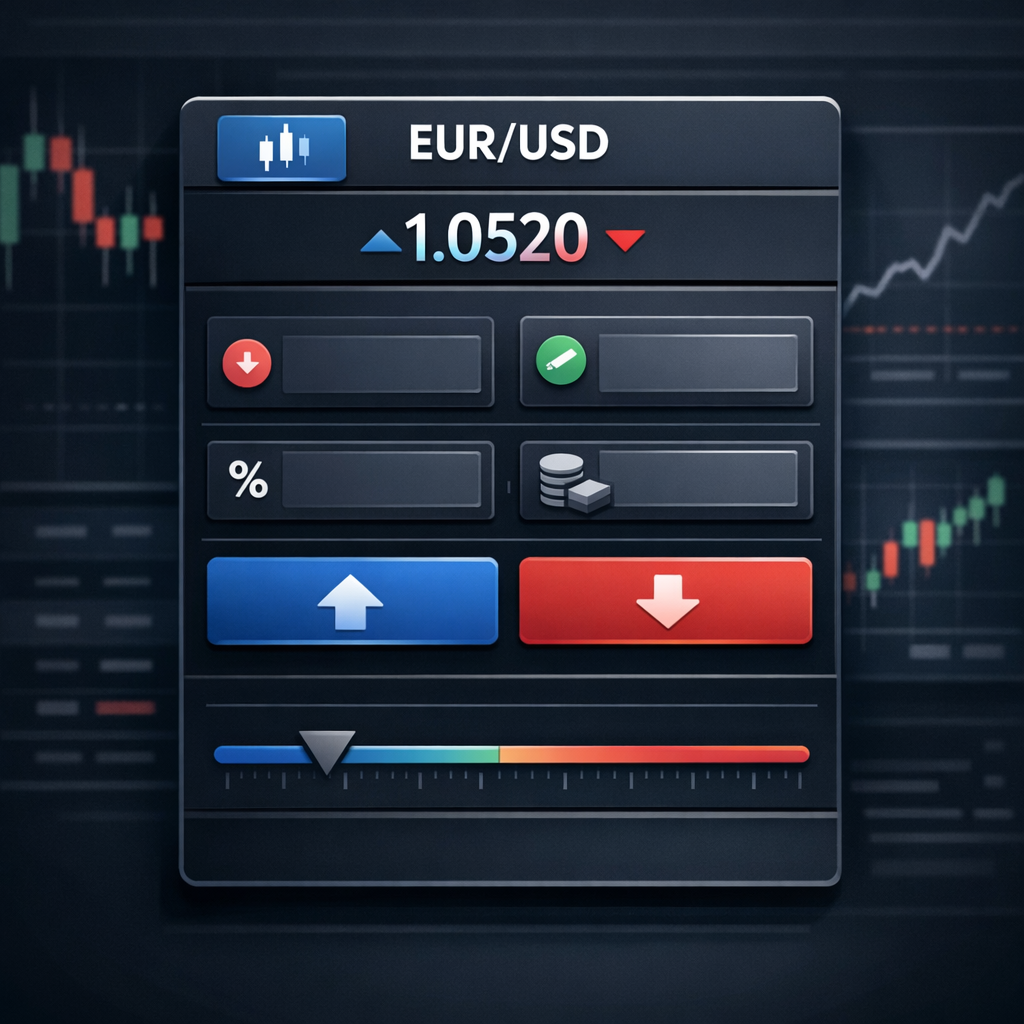
Professional execution starts before the entry.
Your job is to confirm the trade is executable under current conditions, not just “technically correct.”
This checklist takes 60 seconds once you build the habit.
Step-by-step: the pro execution checklist
- 1) Confirm the instrument and session: London and New York sessions are typically best for liquidity and follow-through.
- 2) Check spreads: If EUR/USD spread is unusually wide, delay or use a limit order.
- 3) Check the news clock: Avoid entering 1–3 minutes before high-impact events unless the signal is designed for it.
- 4) Validate the stop distance: Does SL sit beyond structure, or is it inside noise?
- 5) Calculate position size: Risk % first, lot size second.
- 6) Set alerts and contingencies: If price hits TP1, what happens next?
Use market context, not superstition
With DXY around 106.80, USD strength can create sharp pullbacks in EUR/USD and GBP/USD.
That doesn’t mean “don’t trade.”
It means execution should respect volatility.
If GBP/USD is at 1.2680 and you’re buying into a spike, you’re paying the worst price.
One rule that saves accounts: define your “late entry” policy
Signals often arrive when price is moving.
You need a rule like: “If price is more than 20% of the SL distance away from entry, skip.”
Example: SL is 25 pips.
If price moved 6+ pips away from the entry, you either use a limit at the original price or you skip.
This alone prevents the most common execution mistake: chasing.
Want a simple way to vet any provider and their execution clarity?
Use our forex signals provider checklist to compare what you receive versus what you need to execute professionally.
Order Types for Signal Execution: Market vs Limit vs Stop (With a Pro Comparison Table)
Order type is execution.
Pick the wrong one and you donate pips to the market.
Pick the right one and you reduce slippage, improve R:R, and lower stress.
When pros use each order type
Market orders are for urgency.
They’re useful when the signal is momentum-based and the edge depends on immediate participation.
Limit orders are for precision.
They’re ideal when the signal expects a pullback into a level (support/resistance, retest, supply/demand zone).
Stop orders are for confirmation.
They’re used when you want price to prove itself (breakout above a level, then continuation).
Comparison table: which order should you use to trade signals?
| Order Type | Best For | Main Risk | Execution Tip |
|---|---|---|---|
| Market | Fast moves, news momentum, break-and-go setups | Slippage + spread spikes | Set a max slippage rule (e.g., 1–2 pips majors) |
| Limit | Pullback entries, retests, range edges | Missed fills if price doesn’t retrace | Use entry zones (e.g., 1.0515–1.0520) to increase fill odds |
| Stop | Breakouts with confirmation | False breakouts / stop hunts | Wait for candle close confirmation when specified |
Realistic examples using current levels
EUR/USD (1.0520): If the signal is “sell on retest,” a sell limit at 1.0525–1.0530 may beat a market sell at 1.0518.
USD/JPY (149.50): Breakout signals often need stop orders, but you must respect whipsaws near round numbers like 150.00.
XAUUSD ($2650): If gold is spiking, market orders can slip $1–$3.
On a $15 SL, that’s meaningful.
The professional rule: match order type to the signal’s logic
If the signal expects a pullback and you use market, you’re paying “panic price.”
If the signal expects a breakout and you use limit, you might never enter.
Execution is not a button— it’s alignment.
Position Sizing Like a Pro: Risk % First, Lots Second (With Simple Math)
Most signal followers obsess over entries.
Professionals obsess over position sizing.
Because if you size wrong, even a great win rate becomes a blown account.
The core rule: define risk per trade in %
A professional approach is to risk a fixed percentage of your account per trade.
Common ranges: 0.5% to 2% depending on experience and volatility.
That means you decide “how much you’re willing to lose,” then calculate lot size from the SL distance.
Step-by-step position sizing for a forex signal
- Step 1: Account balance (example: $2,000)
- Step 2: Risk per trade (example: 1% = $20)
- Step 3: Stop loss distance (example: 25 pips)
- Step 4: Pip value per lot (varies by pair and account currency)
- Step 5: Lot size = Risk $ / (SL pips × pip value per lot)
A practical EUR/USD example at 1.0520
Assume your pip value is ~$10 per standard lot (typical for USD-quoted majors).
Risk = $20, SL = 25 pips.
Risk per 1.00 lot = 25 pips × $10 = $250.
Lot size = $20 / $250 = 0.08 lots (approx.).
This is how pros keep risk consistent regardless of SL size.
A realistic gold (XAUUSD) sizing example around $2650
Let’s say the signal is: Buy XAUUSD 2649, SL 2636 (risk $13), TP 2675 (reward $26, 1:2).
If your account risk is $30 and your broker’s gold contract is $1 per 0.01 lot per $1 move (varies by broker), you calculate size so that $13 move equals $30.
That means your position should lose ~$30 if price hits 2636.
The exact lot depends on your broker’s XAUUSD specification.
Professionals check contract size once and save it as a note.
The biggest sizing mistake: “fixed lot” trading
Fixed lot size feels simple.
But it silently increases risk when SL is wider and decreases risk when SL is tighter.
That creates inconsistent results and emotional decision-making.
If you want signals designed with clean SL/TP logic and execution clarity, explore our premium United Kings signals offering.
Entry Timing: How Pros Avoid Chasing and Still Don’t Miss Trades
Entry timing is where most signal followers leak performance.
Not because they’re “slow,” but because they don’t have a timing framework.
You need rules for when to enter immediately, when to wait, and when to skip.
Rule #1: Respect the session open
London and New York opens can create the cleanest moves.
They can also create the nastiest fakeouts.
If you receive a signal 2–5 minutes before a session open, spreads can widen and wicks can increase.
Pros often wait for the first impulse to settle, then enter on the retest.
Rule #2: Use “entry zones” instead of one exact price
Retail traders want precision like “Enter at 1.0520 exactly.”
Professionals use zones like 1.0518–1.0523.
Why?
Because spreads, slippage, and micro-volatility make exact fills unrealistic.
Rule #3: Decide your “confirmation trigger” in advance
If the signal says “sell resistance,” your confirmation could be:
- a 5m candle rejection wick,
- a lower high on 1m/5m,
- or a break back below a level (e.g., EUR/USD fails above 1.0530 and closes below).
The key is to choose one trigger and repeat it.
Changing triggers mid-trade is how traders talk themselves into bad entries.
A realistic timing example: GBP/USD at 1.2680
Let’s say a buy signal comes in at 1.2680 with SL 1.2655 (25 pips).
Price spikes to 1.2692 instantly.
A pro doesn’t chase 12 pips into the move.
They place a limit near 1.2680–1.2683 or skip if it doesn’t retrace.
Missing a trade is a business expense.
Chasing is a business killer.
Managing Multiple Take Profits (TP1/TP2/TP3) Without Cutting Winners Short
Multiple take profits are not about being “fancy.”
They’re about controlling psychology while still letting trades run.
Professionals build a plan where the trade pays them early, then gives them a chance at a bigger move.
Why partial profits work for signal followers
Signals are often designed with a clean R:R structure.
But followers struggle to hold to TP2/TP3 because floating profit feels fragile.
Taking partial profit at TP1 reduces emotional pressure.
A simple professional TP model you can copy
- TP1: Close 40% at 1R (profit equals initial risk)
- TP2: Close 40% at 2R
- TP3: Close 20% at 3R or trail
This model creates consistency.
It also prevents the classic mistake: closing 100% too early because you “felt nervous.”
Example with EUR/USD around 1.0520
Signal: Buy 1.0520, SL 1.0495 (25 pips risk).
TP1 at 1.0545 (25 pips), TP2 at 1.0570 (50 pips), TP3 at 1.0595 (75 pips).
If you close 40% at TP1, you’ve already booked a win.
Now you can manage the rest with less stress.
Example with gold (XAUUSD) around $2650
Signal: Sell 2662, SL 2677 (risk $15).
TP1 2632 (reward $30, 1:2), TP2 2617 (reward $45, 1:3).
Even if gold bounces after TP1, you’ve monetized the move.
If it trends, you participate.
The execution mistake to avoid: moving TP targets mid-trade
Changing TP because “it looks strong” often ends with giving back profit.
Professionals adjust targets only when structure changes.
Otherwise, they follow the plan.
Trailing Stops and Breakeven Rules: The Professional Way (Not the Emotional Way)
Trailing stops are powerful.
They’re also one of the easiest ways to sabotage a good signal.
The goal is not to trail because you’re scared.
The goal is to trail because the market has earned it.
Breakeven is a tool, not a religion
Many traders move SL to breakeven the moment they see +5 pips.
Then they get stopped out by normal noise.
On EUR/USD, 5–10 pips can be nothing.
On gold, $2–$5 can be nothing.
A professional breakeven framework
- Rule A: Move to breakeven only after TP1 hits, or after price closes beyond a structure level.
- Rule B: If volatility is high, move to “reduced risk” instead of full breakeven (e.g., -0.3R).
- Rule C: Never move SL closer while price is still inside the entry zone noise.
Trailing stop methods that work with signals
- Structure trail: Trail below higher lows (for buys) or above lower highs (for sells).
- ATR trail: Trail by a fraction of ATR to respect volatility.
- Fixed-step trail: Move SL every X pips after price moves Y pips (simple, but can be crude).
Example: USD/JPY around 149.50
USD/JPY can whip 20–40 pips quickly near key levels.
If you trail too tight, you’ll get shaken out.
A structure-based trail (above the last 15m swing high for shorts, or below the last swing low for longs) usually survives better than a 10-pip trail.
Example: XAUUSD around $2650
If gold sells from 2660 to 2640, it can retrace to 2648 and continue lower.
If you moved SL to breakeven too early, you’re out.
If you waited for TP1 or a clean lower high, you stay in the trade.
Handling Volatility, Spread, and Slippage: Execution Tactics in Real Market Conditions
Execution is easy when the market is calm.
Execution is what separates pros from amateurs when volatility hits.
And volatility is normal—especially around London/NY overlap and high-impact data.
Spread: the hidden tax on every signal
Spread is the difference between bid and ask.
On majors it’s often small, but it can widen at session opens, rollover, and news.
If your SL is 20–25 pips and spread widens by 2–3 pips, your effective risk increases meaningfully.
Slippage: why market orders can betray you
Slippage happens when your market order fills at a worse price than expected.
It’s common on gold and during fast FX moves.
At XAUUSD $2650, a $2 slippage is not rare during spikes.
If your SL is $12–$15, that’s a big deal.
Professional tactics to reduce execution costs
- Use limit orders for pullback signals: Don’t pay the spread twice by entering late and exiting early.
- Avoid entering during the first seconds of a spike: Let the candle form and spreads normalize.
- Set maximum deviation (if your broker allows): Control fills during volatility.
- Trade liquid times: London and NY sessions typically give better fills than dead hours.
News-aware execution (without becoming paralyzed)
You don’t need to fear news.
You need rules.
A practical rule is: don’t open a new position within 3–5 minutes of major releases unless the signal explicitly targets that event.
If you already have a position, consider reducing risk or taking partials before the release.
For gold traders, also read how gold signals react to unexpected news events so you understand why spikes happen.
Volatility example: DXY 106.80 and USD pairs
With DXY elevated, USD-driven moves can be sharp.
EUR/USD and GBP/USD may trend lower with violent pullbacks.
Execution means you don’t panic-close on pullbacks if SL is placed correctly.
It also means you don’t widen SL mid-trade “to survive.”
Common Signal Execution Mistakes (That Quietly Destroy Win Rate)
Most traders blame the signal provider.
Then you watch their execution and see the real problem.
Here are the mistakes that quietly turn an 85% system into a coin flip.
Mistake #1: Entering late and pretending it’s the same trade
If a signal is buy 1.0520 and you enter 1.0532, you changed the trade.
Your SL is tighter in reality, your R:R is worse, and your probability drops.
Professionals either use a limit at the intended area or skip.
Mistake #2: Random lot sizing
“I used 0.50 lots because it felt right” is not a strategy.
It’s a stress response.
Pros size from risk and SL distance, every time.
Mistake #3: Moving stop loss away
This is the account killer.
Once SL is set, it represents invalidation.
If you move it, you’re saying your original analysis didn’t matter.
Professionals only move SL closer (to reduce risk), not farther.
Mistake #4: Closing winners early, holding losers too long
This is pure psychology.
It feels good to lock a small profit.
It feels painful to accept a planned loss.
But the math of trading rewards the opposite behavior.
Mistake #5: Overtrading multiple signals at once
If you take EUR/USD sell, GBP/USD sell, and gold sell simultaneously, you may be massively exposed to USD strength.
That’s not diversification.
That’s correlation risk.
Pros cap total risk across correlated positions (e.g., max 2% combined).
How Professionals Execute Signals Across Multiple Trades (Correlation, Exposure, and Risk Caps)
One signal is simple.
Five signals in a day is where execution becomes portfolio management.
If you want to follow signals like a professional, you must think in terms of total exposure.
Correlation 101 (in practical terms)
EUR/USD and GBP/USD often move in the same direction because USD is the quote currency.
Gold (XAUUSD) can also correlate with USD moves, but it has its own drivers (yields, risk sentiment, geopolitics).
USD/JPY is different: it’s heavily influenced by yields and risk-on/risk-off behavior.
Step-by-step: a professional risk cap system
- Step 1: Set max risk per trade (example: 1%).
- Step 2: Set max risk per “theme” (example: USD strength theme max 2%).
- Step 3: If you already have EUR/USD sell risking 1%, and you want GBP/USD sell, reduce the second trade to 0.5%–1% depending on correlation.
- Step 4: If a third correlated trade appears, either skip or cut size drastically.
A realistic multi-signal day example
Assume you have a $5,000 account and risk 1% ($50) per trade.
You take:
- EUR/USD sell at 1.0520 (risk $50)
- GBP/USD sell at 1.2680 (risk $50)
- XAUUSD sell at 2660 (risk $50)
If USD strengthens suddenly, all three may move in your favor.
But if USD dumps due to a surprise headline, all three can hit SL together.
Total loss could be $150 (3%).
A pro might cap the combined theme risk at 2% and size them $50 + $30 + $20 instead.
Execution tip: treat your account like a business inventory
Your open trades are inventory.
Don’t stack inventory that all depends on one outcome.
This is one of the biggest differences between professional signal execution and casual copying.
Building Your Personal “Signal Execution Playbook” (Templates You Can Reuse Daily)
If you want consistent results, you need consistent behavior.
That means turning this article into a playbook you can reuse.
Professionals don’t “wing it.”
They run templates.
Template 1: Classic intraday signal (2 TP model)
- Entry: Use limit if pullback-based, market if momentum-based.
- Risk: 0.5%–1% per trade.
- TP1: 1R (close 50%).
- TP2: 2R (close 50%) or trail after TP1.
- SL move: Move to breakeven after TP1 or structure break.
Template 2: Volatile gold signal (wider SL, fewer mistakes)
- Entry: Prefer limit orders inside a zone to reduce slippage.
- SL: $12–$25 depending on volatility and structure.
- TP: Aim 1:2 minimum, consider 1:3 when trend is strong.
- Management: Don’t rush breakeven; let gold breathe.
Template 3: Breakout signal (confirmation-based)
- Trigger: 5m or 15m close beyond the level.
- Entry: Stop order above/below breakout level, or enter on retest.
- SL: Beyond the breakout structure, not inside the range.
- Exit: Scale out into momentum, trail behind structure.
Execution journaling: the fastest way to improve without changing providers
Most traders journal P/L only.
Professionals journal execution quality.
Track:
- Were you late? By how many pips?
- Did spread widen?
- Did you follow your TP plan?
- Did you move SL emotionally?
After 20 trades, you’ll see patterns.
Fixing one pattern can increase results more than switching strategies.
How United Kings Signals Are Designed to Be Executed (and How You Should Follow Them)
Not all signals are built for real-world execution.
Some look good on screenshots but fail in live conditions.
At United Kings, we focus on signals that are clear, structured, and tradable in the sessions that matter most.
What you should expect from premium signal execution
- Clear entries: specific price or defined zone.
- Defined SL: placed where the idea is invalidated, not where it “feels comfortable.”
- Multiple TP levels: so you can scale out and reduce emotion.
- Session-aware timing: focus on London and New York for liquidity.
- Education alongside signals: so you learn the “why,” not just the “what.”
Community and process: why execution gets easier when you’re not alone
Execution is psychological.
When you trade in isolation, you second-guess every tick.
In a structured community, you execute your plan and stop improvising.
United Kings has a community of 300K+ active traders following structured ideas across forex and gold.
Where to start on the site (so you don’t get lost)
- Explore the full premium offering on United Kings signals.
- If you’re FX-focused, start with forex trading signals.
- If you trade metals, add XAUUSD gold signals to your toolkit.
- If you also want diversification, see our crypto signals coverage.
- Review plans and benefits on our pricing page (Starter 3 Months $299, Best Value 1 Year $599 with 50% savings + FREE ebook, Unlimited Lifetime $999).
Execution tip for Telegram signals
Use Telegram pinned messages and notifications intelligently.
Turn on alerts for entries, but don’t let your phone force impulsive market orders.
If you want to follow live with the community, join our official Telegram: United Kings Telegram trading room.
FAQ: Forex Signal Execution Questions Traders Ask Every Day
1) If I miss the entry, should I still take the signal?
Only if you have a rule for it.
A common professional rule is to skip if price moved more than 20%–30% of the SL distance away from entry, or wait for a limit retest.
2) What risk percentage should I use when trading signals?
Many disciplined traders use 0.5%–1% per trade, especially when starting.
More aggressive traders may use 2%, but only with strong consistency and a proven process.
3) Should I always move stop loss to breakeven?
No.
Move to breakeven after TP1 or after a structure break, not just because you’re slightly in profit.
4) How do I manage multiple take profits correctly?
Pick a model (like 40/40/20 or 50/50) and apply it consistently.
Scaling out reduces emotion and helps you hold for bigger moves without panic.
5) Can I execute signals on a small account?
Yes, but sizing must be precise.
Use micro lots, keep risk small (often 0.5%–1%), and consider demo trading first to master execution mechanics.
Risk Disclaimer (Read This Before You Trade)
Forex and gold trading involves significant risk and may not be suitable for all investors.
Signals and educational content are provided for informational purposes only and do not constitute financial advice.
Past performance does not guarantee future results. You can lose more than your initial deposit depending on your broker and leverage settings.
If you are a beginner, we strongly recommend practicing on a demo account first and using strict risk management on every trade.
Final Step: Execute With a System — Then Upgrade Your Signals
If you take one thing from this guide, let it be this: signals don’t make you profitable—execution does.
When you combine a professional execution playbook with a premium signal flow, your results become more consistent and your stress drops.
Join United Kings to get premium Telegram forex and gold signals with clear Entry, SL, and TP levels, a disciplined London/NY session focus, educational guidance, and a 48-hour money-back guarantee.
Choose your plan: Starter (3 Months $299), Best Value (1 Year $599 with 50% savings + FREE ebook), or Unlimited (Lifetime $999).
Start here: United Kings pricing and plans, then join the live room on United Kings Telegram.