You can have the best forex trading signals in the world and still lose money.
Not because the analysis is wrong, but because execution is sloppy: late entries, wrong lot size, moving stop losses, or taking profits too early.
This guide is built around one goal: mastering forex signal execution so you can trade signals like a professional—calm, consistent, and process-driven.
TL;DR — Professional Signal Execution in 6 Takeaways
- Execution beats prediction: the same signal can be a win or loss depending on entry timing, spread, and discipline.
- Risk first, always: size every trade from your stop loss distance, not from your emotions or “confidence.”
- Use a trigger plan: know exactly when you’ll enter (market, limit, or on candle close) before price reaches the level.
- Manage multiple TPs like a pro: partials + breakeven rules reduce stress and protect equity during volatility.
- Trailing stops are a tool, not a religion: trail only after structure breaks and price proves momentum.
- Most losses are preventable: the biggest mistakes are late entry, widening SL, revenge trading, and overexposure.
Market context matters for execution. Right now, we’re trading in a USD-supported environment with DXY around 106.80, while majors sit near EUR/USD 1.0520, GBP/USD 1.2680, and USD/JPY 149.50. Gold is holding strong near XAUUSD $2650 after a modest +0.35% 24h move.
That combination often creates quick spikes around London and New York opens, plus sharp reactions to US data. Execution needs to be tighter than usual.
Why “Forex Signal Execution” Is the Real Edge (Not the Signal)
Most traders think the signal is the edge. Professionals know the edge is the process.
Two people can receive the same buy signal on EUR/USD at 1.0520 and get opposite outcomes. One enters late at 1.0530 with a wider stop, the other executes at the level with correct sizing and a plan.
Execution is where slippage, spread, psychology, and platform mechanics show up.
Execution is a chain, and the chain breaks in predictable places
In 16+ years of trading and running signals communities, the same failure points repeat:
- Entry drift: you enter 8–20 pips worse because you “waited for confirmation” without a defined rule.
- Wrong lot size: you risk 3% when you meant 1% because you sized by feel.
- Stop loss sabotage: you move SL “just a bit” and turn a planned loss into a painful one.
- TP chaos: you close early, then re-enter, then chase—death by a thousand cuts.
Signals are supposed to reduce decision fatigue. Poor execution brings it back.
What “professional execution” actually looks like
Professionals don’t trade harder. They trade cleaner.
- They know the exact condition that triggers entry.
- They size the position from pre-defined risk.
- They manage the trade with rules, not vibes.
- They track execution errors like a business tracks costs.
If you want a framework that turns any decent signal into a repeatable approach, you’re in the right place.
If you’re new to the ecosystem, start by exploring our United Kings signals hub to understand how we structure entries, SL, and multiple take-profits for different market conditions.
Signal Types and How Execution Changes (Market, Limit, Stop)
Before you place anything, you need to know what type of signal you’re executing.
“Buy now” is not the same as “Buy limit at 1.0505.” Professionals treat them differently because the execution risk is different.
Market execution signals
A market signal expects you to enter immediately near current price. This is common during strong momentum moves, especially around London or NY session breaks.
The hidden cost is spread + slippage. On EUR/USD, that might be 0.5–1.5 pips on a good broker. On GBP/USD it can be 1–2+ pips. During news spikes, it can be much worse.
Rule: if your fill is more than your allowed tolerance (example: 2 pips on EUR/USD, 3–5 pips on GBP/USD), you either reduce size or skip.
Limit order signals
Limit signals are where pros shine. You’re buying at support or selling at resistance, with structure-defined risk.
Example: EUR/USD buy limit 1.0508, SL 1.0488 (20 pips), TP 1.0548 (40 pips). That’s a clean 1:2 setup.
Your job is not to “improve” it by entering early. Your job is to place the order and let price come to you.
Stop order (breakout) signals
Stop orders trigger when price breaks a level. They’re useful in trending markets, like USD/JPY when it’s pushing highs near 149.50.
The risk is false breakouts. Execution rules matter: do you enter on wick break, candle close, or retest? That must be defined.
Comparison table: which signal type fits which market?
| Signal Type | Best For | Main Execution Risk | Pro Execution Rule |
|---|---|---|---|
| Market | High momentum, session breaks | Slippage + spread | Use max slippage tolerance; avoid during red news |
| Limit | Pullbacks, range edges, mean reversion | Missing entry by a few pips; impatience | Place order early; don’t chase if it doesn’t fill |
| Stop | Breakouts in trending pairs | False breakouts | Define trigger: close vs break vs retest |
When you understand the signal type, you stop improvising. That alone improves results.
Step-by-Step: The Professional Pre-Trade Checklist (Before You Click Buy/Sell)
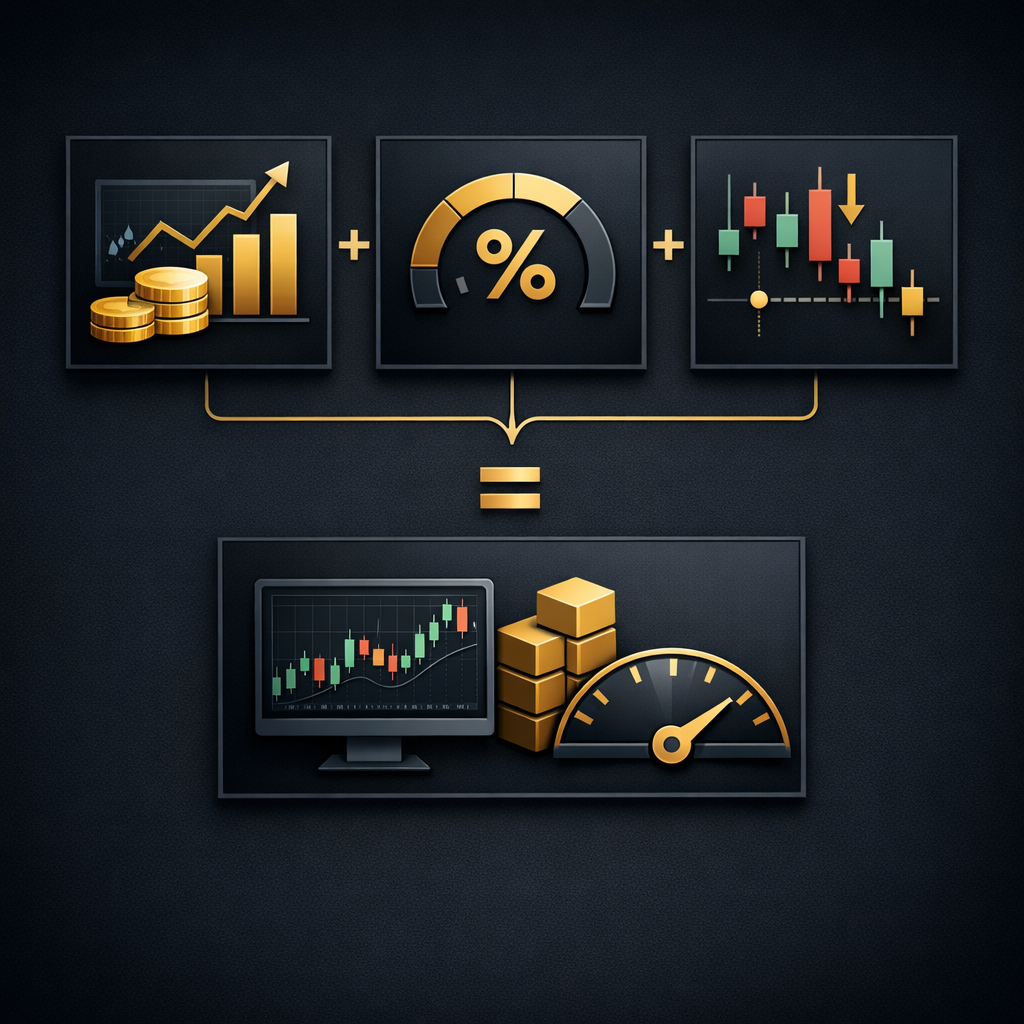
Pros don’t “take trades.” They execute checklists.
This is the difference between being a signal follower and being a signal operator.
Step 1: Confirm the instrument and session
Execution quality depends on liquidity. London and New York sessions typically give tighter spreads and cleaner moves.
United Kings focuses heavily on these windows because execution is more reliable. If you’re trading during low liquidity, you need wider tolerance.
Step 2: Check spread and platform conditions
Before entering, look at spread. If EUR/USD spread is unusually wide, your effective risk increases.
Also check if your broker is freezing, requoting, or showing delayed ticks. Execution problems are not “bad luck.” They’re measurable.
Step 3: Validate the stop-loss distance
Every signal is built around a stop loss. Your job is to accept it, not negotiate with it.
If the stop is 25 pips on GBP/USD, your position size must adapt. If you can’t tolerate that, you’re overleveraged.
Step 4: Calculate position size from risk
Professional sizing starts with: “How much am I willing to lose if SL hits?”
Example: $2,000 account, risk 1% = $20. If stop is 20 pips on EUR/USD, you can size roughly $1/pip (0.10 lot on many brokers, depending on contract specs).
That means if SL hits, you lose about $20. Not $60. Not $120. Exactly what you planned.
Step 5: Plan TP management before entry
Decide whether you will:
- Take partial at TP1 and move SL to breakeven.
- Hold full size to TP2/TP3.
- Trail after a structure break.
Most traders decide this mid-trade. That’s when emotions are loudest.
Step 6: Check correlation and exposure
If you’re long EUR/USD and long GBP/USD at the same time, you’re often effectively short USD twice.
With DXY around 106.80, USD flows can be aggressive. Overexposure is a hidden execution error.
For a deeper risk framework, pair this checklist with our guide on risk management strategies when using forex signals. It’s the backbone of consistent execution.
Entry Timing: How Pros Avoid Late Entries and Bad Fills
Late entries are the #1 silent killer in “how to trade signals.”
You don’t notice it at first because you still get some winners. But your average R:R collapses over time.
Define an entry tolerance (and respect it)
If a signal says sell EUR/USD 1.0520 with SL 1.0540 (20 pips), and you enter at 1.0512, you improved the trade.
If you enter at 1.0530, you just added 10 pips of hidden risk and reduced upside.
Professional rule: define a maximum deviation from entry, like:
- EUR/USD: 2–4 pips
- GBP/USD: 3–6 pips
- USD/JPY: 3–7 pips (depends on volatility)
Beyond that, you skip or wait for a retest. You do not “make it work.”
Use a trigger method: wick, close, or retest
Many execution mistakes come from unclear triggers. If you don’t know what you’re waiting for, you’ll always be late.
Pick one method and stick to it:
- Wick trigger: fastest entry, more false signals.
- Candle close trigger: fewer false breaks, often later entry.
- Retest trigger: best price, but you may miss trades.
Pros accept trade-offs. Retail traders want perfection and end up with chaos.
Session timing matters more than most people admit
EUR/USD at 1.0520 behaves differently at 03:00 GMT than it does at 13:30 GMT.
During London and NY overlap, your entry can fill cleanly, but the move can also spike 15–30 pips in seconds. That’s where limit orders and alerts shine.
Practical tool: alerts + pre-set orders
Professional execution is often automated at the micro level:
- Set an alert 5–10 pips before entry.
- Prepare lot size in advance.
- Place a pending order if the signal allows it.
This reduces panic clicking and prevents “I entered because it was moving.”
If you want to see how we format signals for fast execution, explore our forex trading signals page and compare it to what you’ve seen in other groups.
Position Sizing Like a Pro: The Math That Keeps You in the Game
Position sizing is where professionals separate from gamblers.
Signals give you direction and levels. Sizing determines whether a normal losing streak is survivable or account-ending.
The only sizing formula you need
Lot Size = (Account Risk $) / (Stop Loss in pips × Pip Value)
Even if you use a calculator, you must understand the logic. Otherwise you’ll override it when emotions hit.
Example 1: EUR/USD sizing
Account: $5,000. Risk: 1% ($50). Stop: 25 pips.
If pip value is ~$10 per 1.00 lot on EUR/USD, then 0.20 lot ≈ $2/pip.
25 pips × $2/pip = $50 risk. Clean and controlled.
Example 2: GBP/USD sizing with wider volatility
Account: $5,000. Risk: 1% ($50). Stop: 40 pips (common on GU during volatile sessions).
$50 / 40 pips = $1.25/pip. That’s about 0.12 lots (approx).
Notice what changed: not your risk, only your size.
Gold (XAUUSD) sizing note (because many signal traders cross-trade)
Gold is near $2650 and can move $10–$20 quickly in active sessions. If you’re also executing gold signals, you must size even more carefully.
Example: Buy XAUUSD 2652, SL 2637 (15 points). If you risk $50, your position size must fit your broker’s contract specs so that a $15 move equals $50 loss.
This is why many traders blow up on gold: they treat it like EUR/USD.
Fixed lot sizing is a hidden execution mistake
“I always trade 0.50 lot” sounds confident. It’s actually undisciplined.
Stops differ. Volatility differs. Your lot size must adapt, or your risk becomes random.
Professional risk bands
For most signal traders, sensible ranges look like:
- Conservative: 0.25%–0.75% per trade
- Balanced: 1% per trade
- Aggressive: 1.5%–2% per trade (only with proven discipline)
If you’re still learning execution, start small. The goal is to survive long enough to master consistency.
For beginners who want a structured onboarding path, combine this article with our Forex signals Telegram beginner’s guide.
Managing Multiple Take Profits (TP1, TP2, TP3) Without Overthinking
Multi-TP management is where professional signal execution becomes stress-free.
It turns one trade into a plan: reduce risk early, then let the market pay you for being right.
Why multiple TPs work psychologically
Most traders close too early because they fear winners turning into losers.
TP1 solves that. It pays you quickly and gives you permission to hold the rest.
A practical multi-TP model you can copy
Let’s use a realistic EUR/USD example around current levels.
Signal: Buy EUR/USD 1.0520, SL 1.0495 (25 pips).
- TP1: 1.0545 (25 pips, 1R)
- TP2: 1.0570 (50 pips, 2R)
- TP3: 1.0595 (75 pips, 3R)
Execution plan:
- Close 40% at TP1.
- Move SL to breakeven after TP1 is hit (or after a candle closes above TP1).
- Close 40% at TP2.
- Trail the final 20% behind structure or a moving average.
Breakeven rules: do it like a pro (not too early)
Moving SL to breakeven too early is a common execution mistake.
Price often retests entry before continuing. If you move to BE after +5 pips, you’ll get stopped out and watch it run.
Better rule: move to BE only after:
- TP1 is hit, or
- Price closes beyond a key structure level, or
- Price reaches at least 1R and then forms a higher low / lower high in your favor.
Gold example: TP management with $10–$25 stops
Gold near $2650 can be clean for multi-TP because it respects levels, then trends hard.
Example: Buy XAUUSD 2648, SL 2633 (15 points).
- TP1: 2678 (30 points, 1:2)
- TP2: 2693 (45 points, 1:3)
Same logic: partial + protect + let it run. Execution stays mechanical.
If gold is part of your watchlist, our gold signals page shows how we structure XAUUSD entries with clear SL/TP levels for session-based volatility.
Trailing Stops: When to Trail, Where to Trail, and When Not To
Trailing stops are powerful, but most traders use them like a superstition.
Pros trail for one reason: to stay in the trade while the market is paying you.
The biggest trailing stop mistake
The most common mistake is trailing too tight, too soon.
You “lock profit,” then get stopped by normal pullbacks. After that, you re-enter worse and lose discipline.
Three trailing methods professionals actually use
- Structure trail: move SL below higher lows (for buys) or above lower highs (for sells).
- ATR trail: SL = X × ATR away from price (useful in changing volatility).
- Moving average trail: trail behind a 20 EMA or 50 EMA in strong trends.
Structure trailing is the most “price-action honest.” It respects how markets breathe.
When trailing makes sense
Trail after the trade has proven itself. Good triggers include:
- After TP1 is hit and the market breaks structure in your favor.
- After a strong impulse move during London/NY that creates clear swing points.
- After a breakout retest holds (especially on USD/JPY style trends).
When trailing is a bad idea
Don’t trail aggressively in choppy ranges.
Example: EUR/USD hovering around 1.0520 with DXY stable near 106.80 can chop for hours. Tight trailing will stop you repeatedly.
A realistic trailing scenario (GBP/USD)
Say you sell GBP/USD 1.2680 with SL 1.2720 (40 pips). Price drops to 1.2620 (60 pips).
A retail move is to trail SL to 1.2660 immediately. A pro move is to trail above the last lower high, maybe 1.2668–1.2675 depending on structure.
That gives the trade breathing room while still protecting profit.
Trailing is not about maximizing every pip. It’s about capturing the meat of the move without self-sabotage.
How to Execute Signals Across Forex + Gold Without Overexposure
Many traders in signal communities trade both forex and gold. That’s fine.
The danger is accidental concentration: multiple trades that are basically the same bet.
Understand your USD exposure
With DXY around 106.80, USD strength/weakness can dominate the tape.
If you take:
- Buy EUR/USD
- Buy GBP/USD
- Sell USD/JPY
…you’re effectively short USD three times. If USD spikes on data, all three can hit SL together.
Gold correlation is not constant
Gold near $2650 can move with real yields, risk sentiment, and geopolitics. Sometimes it’s inverse to USD. Sometimes it rises with USD if risk-off dominates.
Execution rule: don’t assume gold is your hedge. Treat it as its own volatility engine.
Professional exposure rules you can adopt today
- Cap total risk: limit open risk to 2%–3% across all trades combined.
- One theme at a time: if you’re already short USD heavily, avoid adding more USD shorts.
- Stagger entries: don’t open three correlated trades within the same 5-minute impulse.
Execution example: balancing a forex + gold day
Scenario: You already took a EUR/USD buy at 1.0520 risking 1%.
You then receive a gold buy signal: XAUUSD 2650, SL 2635 (15 points), TP 2680/2695.
Professional approach: either reduce gold risk to 0.5% or wait until EUR/USD is protected at breakeven. That keeps your total downside controlled.
When you treat risk like inventory, you stop stacking trades emotionally.
Common Execution Mistakes (And the Exact Fix for Each One)
If you want fast improvement, don’t look for a new strategy.
Audit your execution errors. Fixing two or three of these can change your entire curve.
Mistake 1: Chasing after price moves
You see EUR/USD jump from 1.0520 to 1.0532 and you buy anyway because you fear missing out.
Fix: use an entry tolerance rule. If price is beyond tolerance, wait for retest or skip.
Mistake 2: “Just this once” increasing lot size
You had two losses, then you double size to get it back.
Fix: lock your risk % for the day. If you break it, you stop trading. No negotiation.
Mistake 3: Moving stop loss wider
This is the account killer. A planned -1R becomes -3R.
Fix: adopt a one-way rule: SL can only move closer, never farther (except rare, pre-planned scaling strategies).
Mistake 4: Taking profits randomly
You close at +12 pips because it “feels good,” then watch it hit TP2.
Fix: pre-define TP partials. If you can’t, follow the signal’s TP structure exactly.
Mistake 5: Trading during high-impact news without a plan
Spreads widen, slippage appears, stops get jumped.
Fix: either avoid trading 5–15 minutes before major releases or reduce size and widen tolerance with strict rules.
Mistake 6: Overtrading after a win
Confidence turns into carelessness. You start taking “extra” trades not in the plan.
Fix: set a daily max trades rule. Professionals protect their best days from becoming average days.
If you want a provider-level checklist to evaluate quality and avoid signal traps, bookmark our forex trading signals provider checklist.
Step-by-Step: Executing a Signal From Telegram to Your Broker (Clean Workflow)
Let’s make this practical. Here’s a workflow you can use every day.
This is the “operator mindset”: you receive a signal, execute it, and manage it without drama.
Step 1: Read the signal like a pilot reads instruments
Do not skim. Confirm you understand:
- Pair (EUR/USD, GBP/USD, USD/JPY, XAUUSD)
- Direction (buy/sell)
- Entry type (market/limit/stop)
- SL and TP levels
- Any management notes (partial, BE, trailing)
Step 2: Check your chart for “obvious conflicts”
You’re not re-analyzing the trade. You’re checking if there’s a major level immediately in the way.
Example: If EUR/USD buy at 1.0520 is directly under a strong 1.0530 resistance that just rejected twice, you may need to be patient for a break-and-hold or accept that TP1 may come slower.
Step 3: Choose your execution method
- Pending order: best for limits and precise entries.
- Market order: best for momentum signals with tight timing.
- Split orders: useful if you want separate TP targets without partial closing manually.
Step 4: Enter with SL and TP attached
Professionals do not enter naked trades.
Attach SL and TP at entry. If your platform makes it hard, set them immediately after, but do it as part of the same action.
Step 5: Set management alerts
Set alerts at:
- +0.5R (to prepare)
- TP1 (to execute partial/BE rules)
- Near SL (to avoid panic decisions)
Step 6: Journal the execution, not just the outcome
Write down:
- Your actual entry price (was it late?)
- Your lot size and intended risk
- Whether you followed the management plan
This is how you identify execution leaks that cost you money.
If you want to experience a clean signal workflow daily, join our Telegram at United Kings Telegram trading channel where entries, SL, and TP levels are posted clearly for fast execution.
Execution in Volatile Markets: Spreads, Slippage, and News Spikes
Execution changes when volatility changes. If you ignore that, you’ll blame signals for what is actually market microstructure.
Spread widening: the invisible stop-loss killer
During volatility, spreads widen. That means your stop can be hit even if the chart “didn’t touch it” on mid-price.
This is common around major US releases, central bank speeches, and sudden risk-off headlines.
Slippage: why your fill is worse than expected
Slippage happens when price moves between the time you click and the time your order is filled.
On fast spikes, you can get filled 5–20 pips worse on some brokers. That changes your R:R instantly.
Professional rules for volatile execution
- Reduce size: keep dollar risk constant, but assume worse fills.
- Prefer limits over markets: limits control entry price (but may not fill).
- Widen tolerance, not SL: don’t move SL farther just because volatility is high.
- Wait for the first spike: often the first move after news is a fake-out.
Gold volatility example around $2650
Gold can jump from $2650 to $2662 and back to $2647 in minutes during NY open.
If your SL is $10 and you’re trading too large, you’ll panic. If you size correctly and manage partials, you’ll execute calmly.
For a deeper look at how gold behaves in surprise volatility, read our breakdown on how gold signals react to unexpected news events.
Professional Habits: Discipline, Journaling, and “Execution Score”
Here’s the uncomfortable truth: most traders don’t have a strategy problem.
They have a consistency problem. And consistency is built from habits.
Create an “execution score” for every trade
Instead of only tracking win/loss, score your execution out of 10:
- Entry within tolerance? (0–2)
- Correct lot size and risk? (0–2)
- SL/TP placed correctly? (0–2)
- Followed TP/BE rules? (0–2)
- No emotional overrides? (0–2)
A losing trade with a 10/10 execution score is a professional loss. A winning trade with a 4/10 score is a future problem.
Build a weekly review that takes 20 minutes
Every weekend:
- List your top 3 execution mistakes.
- Write one rule to prevent each mistake.
- Pick one rule to focus on next week.
This is how you improve without changing systems every month.
Use a “two-strike” rule for emotional days
If you break your rules twice in one day (late entry, moved SL, revenge trade), you stop.
Professionals protect their mindset the way they protect capital.
Community and education matter
Execution improves faster when you’re around traders who treat trading seriously.
At United Kings, our community includes 300K+ active traders, and we focus on education alongside signals so you’re not just copying—you’re learning why execution rules matter.
To explore our approach and background, visit about United Kings and see how we structure our premium Telegram service for real-world execution.
FAQ: Forex Signal Execution Questions Traders Ask Every Week
1) How do I know if I entered a signal too late?
Use an entry tolerance rule. If your fill is beyond your maximum deviation (example: 3 pips on EUR/USD, 5 pips on GBP/USD), treat it as “late” and either skip or wait for a retest.
2) Should I always move my stop loss to breakeven at TP1?
Not always. Moving to breakeven too early can stop you out during normal pullbacks. A professional approach is to move to BE after TP1 is hit and price shows structure in your favor (like a higher low after the impulse).
3) What risk percentage is best when following forex trading signals?
Many consistent signal traders use 0.5%–1% per trade. If you’re still improving execution, start at 0.25%–0.5% so mistakes are cheap while you build discipline.
4) Can I execute multiple signals at the same time?
Yes, but cap total open risk (for example 2%–3% combined) and watch correlation. Long EUR/USD and long GBP/USD is often the same USD short exposure.
5) Are Telegram signals enough, or do I need to analyze charts too?
You don’t need to over-analyze, but you should understand basic structure, spreads, and session behavior. The goal is clean execution, not second-guessing every trade.
Risk Disclaimer (Read This Before You Trade Any Signal)
Forex and gold trading involve significant risk and may not be suitable for all investors. You can lose some or all of your capital. Signals and analysis are educational and informational, not financial advice.
Past performance does not guarantee future results. Market conditions change, and execution factors like spread, slippage, and liquidity can materially affect outcomes.
If you are a beginner, we strongly recommend starting on a demo account and using conservative risk (e.g., 0.25%–0.5% per trade) until you can follow rules consistently.
Join United Kings: Premium Signals + Execution Clarity (Telegram)
If you want to execute forex signals like a professional, you need two things: high-quality levels and a repeatable execution process.
United Kings delivers premium Telegram signals for forex and gold with clear Entry, SL, and TP levels, built for the London and NY sessions.
Our community includes 300K+ active traders, and we combine signals with education so you keep improving your execution over time.
Choose a plan (3 options)
- Starter: 3 Months for $299 (~$100/mo)
- Best Value: 1 Year for $599 (~$50/mo) with 50% savings + FREE ebook
- Unlimited: Lifetime for $999 (pay once, access forever)
See all plan details on our pricing page, then join the team and start executing with clarity.
Ready to trade with structure? Join our Telegram now: United Kings signals on Telegram.
If you have questions before joining, reach out via our contact page and we’ll point you to the best plan for your trading goals.