You get a forex signal… and still manage to lose on a winning idea.
If that sounds familiar, you’re not alone.
Forex signal execution is where most traders bleed: late entries, wrong lot sizes, missed stop-loss, or moving TP at the worst moment.
In this guide, we’ll turn signal-following into a professional process you can repeat every day.
TL;DR: Professional Forex Signal Execution in 6 Takeaways
- Execution beats prediction. A good signal can fail in your hands if you enter late, size wrong, or ignore spread and volatility.
- Standardize your routine. Use a 60-second pre-trade checklist: news, spread, entry type, SL/TP placement, and risk %.
- Position sizing is the difference-maker. Risk a fixed % (often 0.5%–2%) and size the lot based on SL distance in pips.
- Handle multiple TPs like a pro. Scale out, move SL to breakeven at logical milestones, and avoid “all-in/all-out” emotional decisions.
- Trailing stops should be rule-based. Trail behind structure (not random pip counts) and only after price proves the trade.
- Avoid the 7 execution killers. FOMO entries, widening spreads, revenge trades, over-leverage, and “editing” signals mid-trade.
Why Signal Execution Matters More Than the Signal Itself
Most traders think the signal is the edge.
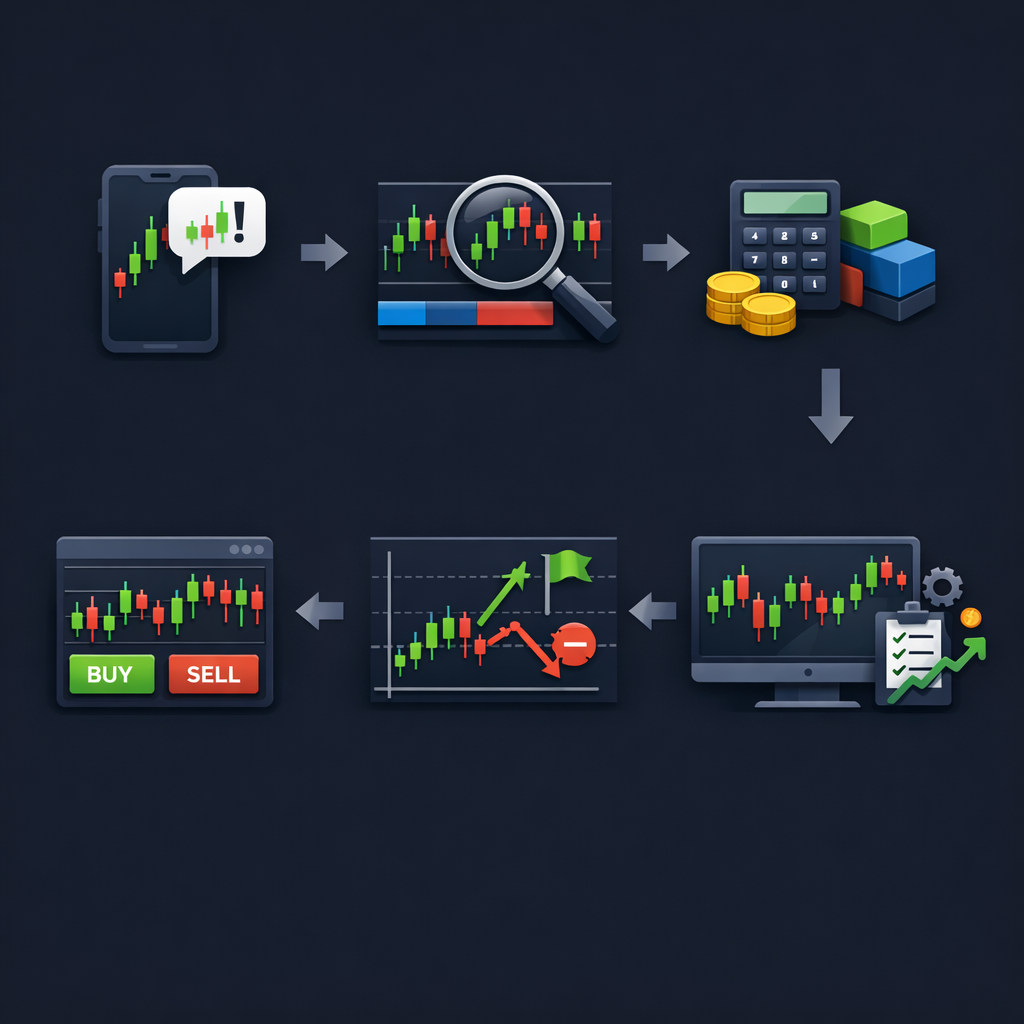
Professionals know the edge is the full chain: signal quality + execution + risk control + consistency.
Let’s use today’s market context to make this real.
Gold (XAUUSD) is trading around $2650, up about +0.35% in 24 hours.
EUR/USD is near 1.0520, GBP/USD around 1.2680, USD/JPY near 149.50, and DXY is elevated around 106.80.
That mix often means USD-sensitive volatility.
When DXY is strong, EUR/USD and GBP/USD can chop, and gold can whip on yields and headlines.
In that environment, two traders can take the same signal and get totally different outcomes.
A quick example: same signal, two different results
Imagine a EUR/USD sell signal:
- Sell: 1.0520
- Stop-loss: 1.0550 (30 pips)
- Take-profit: 1.0460 (60 pips) and 1.0430 (90 pips)
Trader A enters at 1.0520 with correct lot size, SL set, and partials planned.
Trader B enters late at 1.0511, forgets SL, and increases lot size “to make it worth it.”
Even if price hits 1.0460, Trader B might get stopped earlier due to panic, or lose more on a spike.
Execution is not a detail.
Execution is the strategy.
Signal Types (Market, Limit, Stop) and When to Use Each
Before you execute, you need to recognize what kind of order the signal requires.
Professional traders don’t force every signal into a market order.
They match the order type to volatility, spread, and the signal’s logic.
Market orders: fastest, but most sensitive to spread and slippage
A market order is “get me in now.”
It’s ideal when price is already at the intended entry and conditions are stable.
But during London open, NY open, or red-folder news, market orders can fill worse than expected.
On USD/JPY near 149.50, a sudden 10–20 pip spike can happen in seconds.
If your spread widens and you chase, your risk-reward collapses.
Limit orders: precision entries for pullbacks
A limit order is “only fill me at this price or better.”
Limits are great when the signal expects a retracement.
Example: GBP/USD is at 1.2680 and the signal is to buy at 1.2665 support with a 25-pip SL.
You don’t want to buy at 1.2680 and donate 15 pips of edge.
You want the level.
Stop orders: breakout entries with confirmation
A stop order is “fill me if price breaks through.”
This is useful when the signal is built around momentum confirmation.
Example: EUR/USD buy stop above 1.0540 if price breaks a range and holds.
Stop entries reduce “guessing,” but they can be vulnerable to fakeouts.
Comparison table: which order type fits which signal?
| Order Type | Best For | Main Risk | Pro Tip |
|---|---|---|---|
| Market | Fast execution when price is at entry | Slippage, spread spikes | Only use when spread is normal and no imminent news |
| Limit | Pullbacks into support/resistance | Missed fills (price runs without you) | Set alerts and accept “missed trades” as part of discipline |
| Stop | Breakouts and momentum continuation | Fakeouts and whipsaws | Place SL beyond structure, not just beyond entry |
When you follow United Kings forex signals, the order type and levels matter as much as the direction.
Execution means respecting the “how,” not just the “buy/sell.”
The 60-Second Pre-Trade Checklist Professionals Use
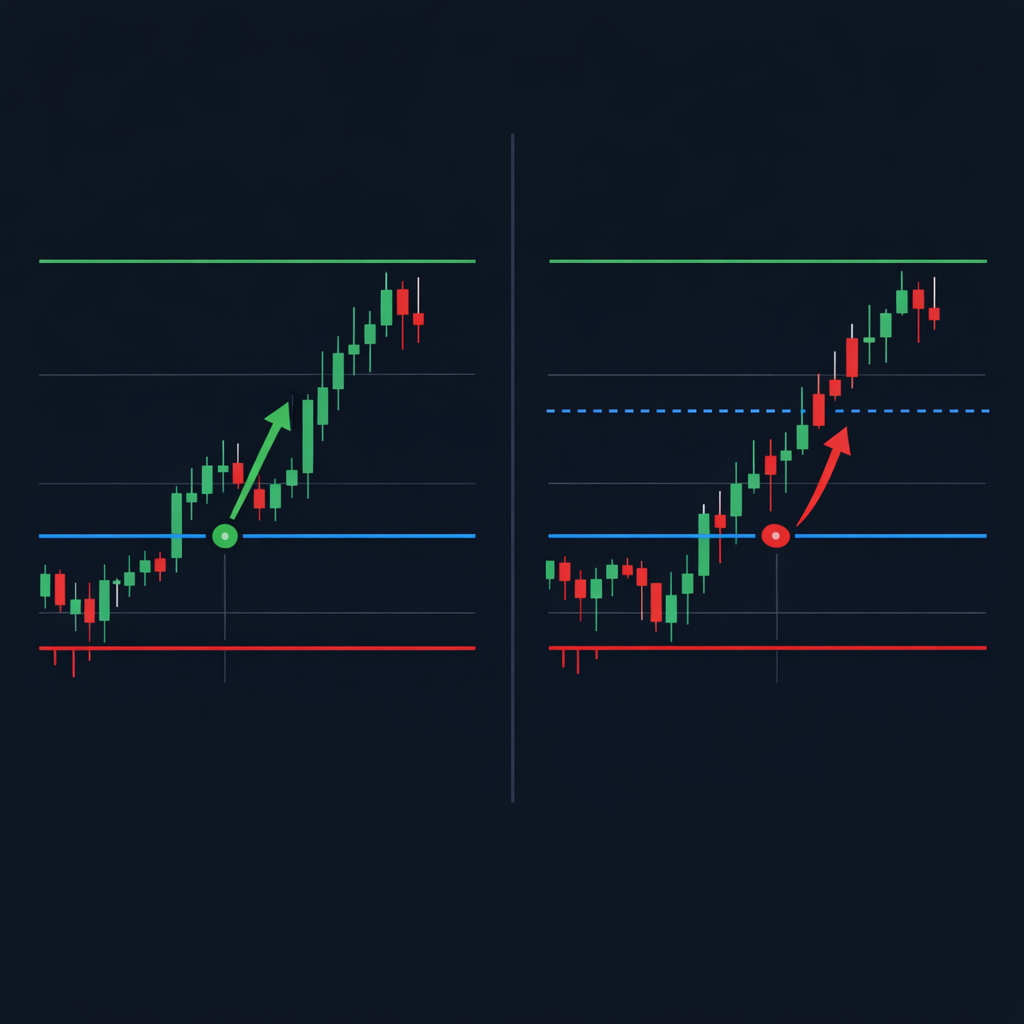
If you want to execute like a pro, you need a pre-trade routine that is faster than your emotions.
We’re aiming for a checklist you can run in under a minute.
That’s how professionals stay consistent during London and NY sessions.
Step-by-step: the pro checklist (before you place the order)
- 1) Confirm the instrument and session. Is this EUR/USD during London? Gold during NY? Liquidity matters.
- 2) Check spread right now. If EUR/USD spread is usually 0.8–1.5 pips and it’s suddenly 3.0+, pause.
- 3) Check imminent red-folder news. If CPI, NFP, or a central bank decision is within 15–30 minutes, execution risk rises.
- 4) Identify entry type. Market now? Limit at a level? Stop above/below a breakout?
- 5) Validate SL distance. Does the SL sit beyond structure? Is it realistic for current volatility?
- 6) Calculate lot size from risk. You risk % first, then size the trade. Never the other way around.
- 7) Place order with SL and TP attached. No manual “I’ll add it later.”
Why this checklist saves accounts
Most execution errors happen in the first 30 seconds.
You’re excited, you’re rushed, and you’re afraid of missing the move.
A checklist forces you to slow down just enough to avoid expensive mistakes.
Real scenario: gold spread and volatility around $2650
Gold at $2650 can move $5–$15 quickly when yields or headlines shift.
If your broker widens XAUUSD spread from $0.30 to $0.80 during a spike, your entry quality changes instantly.
A $0.50 worse fill on gold isn’t “small.”
On a tight SL like $12, that’s a meaningful chunk of risk.
If you want a ready-made routine, pair this guide with our beginner-friendly checklist article: forex trading signals provider checklist.
Execution is easier when your process is written down.
Entry Timing: How Pros Avoid Late Entries and FOMO
Entry timing is where signal-followers get chopped up.
The market doesn’t care that you saw the signal late.
Professionals treat timing as a rule-set, not a feeling.
Understand the “entry window” concept
Every signal has an implied window where the risk-reward makes sense.
If EUR/USD is 1.0520 and the signal says sell 1.0520 with SL 1.0550, your edge assumes that entry.
If you enter at 1.0505 because you were late, you changed the trade.
Now your SL might be too wide, or your TP too close.
3 professional rules for timing entries
- Rule 1: Don’t chase more than X pips. For majors, many pros set a max chase of 2–5 pips. Beyond that, reassess.
- Rule 2: Use limits when the plan is a pullback. If the signal expects a retrace, don’t market in.
- Rule 3: If you missed it, you missed it. Professionals miss trades weekly. They protect capital first.
Practical example: EUR/USD at 1.0520
Let’s say the signal is:
- Sell: 1.0520
- SL: 1.0550 (30 pips)
- TP1: 1.0480 (40 pips)
- TP2: 1.0460 (60 pips)
You open your phone and EUR/USD is already 1.0508.
If you sell now, you’re 12 pips better on entry, which sounds good.
But your TP distances shrink, and you may get stopped on a normal pullback.
A professional adjustment is either:
- Wait for a pullback toward 1.0520 and use a limit, or
- Skip the trade if the structure has changed.
Timing around sessions: London and New York matter
At United Kings, we focus heavily on London and NY session trading.
That’s where liquidity and follow-through often show up.
But it’s also where fakeouts happen if you enter in the first few minutes without confirmation.
So your timing should respect the session rhythm.
If you’re receiving signals in real time, make sure you’re connected to our community and updates via United Kings Telegram channel.
Execution improves dramatically when you see follow-up notes and management guidance quickly.
Position Sizing: The Professional Way to Risk 0.5%–2% Per Trade
Position sizing is the most important “execution skill” you can learn.
It’s also the skill that makes a signal strategy sustainable.
Professionals don’t ask, “How many lots should I trade?”
They ask, “How much am I willing to lose if I’m wrong?”
Step-by-step: calculate lot size from your SL
Use this repeatable process:
- Step 1: Choose risk per trade (example: 1%).
- Step 2: Convert that into money (1% of $2,000 = $20).
- Step 3: Measure SL in pips (example: 30 pips on EUR/USD).
- Step 4: Calculate lot size so 30 pips = $20 risk.
Example: EUR/USD sizing with a 30-pip stop
Assume a $2,000 account and 1% risk ($20).
On EUR/USD, 1.00 standard lot is roughly $10 per pip.
So 0.10 lot is roughly $1 per pip.
If you risk $20 with a 30-pip SL, you want about $0.67 per pip.
That’s approximately 0.07 lots (depending on your broker’s pip value).
Now your risk is controlled.
Your emotions calm down.
Gold (XAUUSD) sizing example around $2650
Gold position sizing varies by broker contract size, so you must check your platform.
But the logic is the same: risk amount ÷ SL distance = position size.
Example signal:
- Buy XAUUSD: $2648
- SL: $2636 (12 dollars)
- TP: $2672 (24 dollars, 1:2 RR)
If you risk $50 and your SL is $12 away, your “risk per $1 move” is about $4.17.
Your lot size should be set so a $12 adverse move equals $50 loss.
This is exactly why pros size after SL, not before.
Common sizing mistakes when trading signals
- Using the same lot size for every trade even when SL distance changes.
- Doubling size after a loss to “get it back.” That’s gambling, not execution.
- Ignoring correlation (e.g., taking EUR/USD and GBP/USD in the same USD move with full risk on both).
If you want a deeper framework, we’ve laid out practical guardrails in risk management strategies when using forex signals.
Execution without risk control is just fast losing.
Managing Multiple Take-Profits (TP1/TP2/TP3) Without Overthinking
Multiple take-profits are powerful.
They reduce emotional decision-making and smooth your equity curve.
But only if you execute them consistently.
Why pros scale out instead of “all-in, all-out”
Markets rarely move in straight lines.
Even the best signals experience pullbacks.
Scaling out lets you lock in partial profit while still participating in the larger move.
A clean scaling model you can copy
Here’s a simple model many professional signal followers use:
- TP1: Close 30%–50% of the position.
- At TP1: Move SL to breakeven (or reduce risk meaningfully).
- TP2: Close another 30%–40%.
- TP3 (runner): Leave 10%–30% to trail behind structure.
This approach turns a trade into a managed campaign.
It also prevents the classic tragedy: price hits TP1, reverses, and you turn a winner into a loser.
Example: GBP/USD execution with two take-profits
Market context: GBP/USD around 1.2680.
Signal example:
- Buy: 1.2680
- SL: 1.2655 (25 pips)
- TP1: 1.2730 (50 pips, 1:2)
- TP2: 1.2755 (75 pips, 1:3)
Execution plan:
- Close 50% at 1.2730.
- Move SL to 1.2680 (breakeven) or 1.2690 (small lock-in) depending on structure.
- Let the remaining 50% target 1.2755.
Now you’re trading like a pro: structured, not reactive.
Gold example: scaling profits in a volatile $2610–$2690 range
Gold often respects clean intraday levels, but it can spike fast.
Example signal near current price:
- Sell XAUUSD: $2662
- SL: $2676 (14 dollars)
- TP1: $2634 (28 dollars, 1:2)
- TP2: $2620 (42 dollars, 1:3)
You can take partial profit at $2634 and trail the rest if momentum stays heavy.
This is especially useful when DXY is firm around 106.80 and gold is reacting to yield shifts.
If you’re trading metals alongside FX, you’ll likely also benefit from our dedicated gold signals page to understand how we structure XAUUSD entries and trade management.
Trailing Stops: How to Protect Profit Without Getting Stopped Too Early
Trailing stops are misunderstood.
Most traders trail too early, too tight, and then complain the signal “didn’t work.”
Professionals trail based on structure and volatility.
When trailing stops make sense
- After TP1 is hit and the trade is “paid for.”
- When price breaks structure (new high/low, strong close beyond a level).
- When volatility expands and you want to stay in a trend move.
Two trailing methods professionals actually use
1) Structure trailing (recommended)
You move SL behind swing highs/lows, or behind a broken support/resistance that should now hold.
This keeps you in the move while respecting how price breathes.
2) ATR-based trailing (advanced)
You trail SL by a multiple of ATR (Average True Range).
This adapts to volatility automatically.
It’s great for trends, but you must be consistent.
Example: USD/JPY trailing around 149.50
USD/JPY can trend hard, then snap back on a single headline.
Suppose you’re long from 149.10 with SL 148.70 and TP1 at 149.70.
Once TP1 hits, you can trail under the last higher low on M15 or H1.
That might be 149.25 instead of breakeven at 149.10.
Now you’ve locked structure, not just emotion.
Gold trailing example near $2650
Gold often makes $6–$12 pullbacks even in a clean trend.
If you trail by $3, you’ll get stopped constantly.
Instead, trail behind the last swing high/low or behind a key intraday level.
Example: if gold sells from $2662 to $2634, and then retests $2642 and rejects, you might trail above $2648.
That gives the trade room while protecting profit.
Trailing is a tool, not a reflex.
If you trail because you’re scared, you’ll execute like an amateur.
If you trail because your plan says so, you’ll execute like a pro.
Execution Mistakes That Destroy Signal Performance (And How to Fix Them)
Let’s get brutally practical.
Most signal users don’t fail because the signal is bad.
They fail because they repeatedly commit the same execution mistakes.
Mistake 1: Entering late and “improving” the signal
Late entry turns a 1:3 setup into a 1:1 setup.
Fix: define a maximum chase distance (pips) and stick to it.
Mistake 2: Not placing SL immediately
This is the fastest way to blow an account during a spike.
Fix: place SL and TP in the same ticket as the entry.
Mistake 3: Oversizing because “it looks certain”
No trade is certain.
Even with an 85%+ historical win rate, losses are part of trading.
Fix: cap risk per trade, and cap total daily risk.
Mistake 4: Moving SL wider “to give it room”
This is a hidden form of refusing to be wrong.
Fix: if the SL is hit, the idea is invalid. Exit and review.
Mistake 5: Closing early because you want to “secure profit”
Closing early is not always bad.
But doing it randomly destroys expectancy.
Fix: only take early profit at predefined levels (TP1, key support/resistance, or session close).
Mistake 6: Trading too many pairs at once
More trades doesn’t mean more money.
It often means more correlated risk and more mistakes.
Fix: focus on a small basket (e.g., EUR/USD, GBP/USD, USD/JPY, XAUUSD).
Mistake 7: Ignoring broker conditions (spread, execution, swaps)
Signal execution is not broker-neutral.
A bad broker can turn good signals into mediocre results.
Fix: track your average spread and slippage, and avoid trading at spread blowout times.
If you want to build a full routine around avoiding errors, combine this article with our educational hub at United Kings blog.
Execution improves fastest when you learn one fix at a time and apply it for 30 days.
How to Execute Signals Across Forex and Gold Without Overexposure
Many traders follow both forex and gold signals.
That’s smart for opportunity, but dangerous for correlation.
When DXY is strong near 106.80, USD-driven moves can hit multiple instruments at once.
You can accidentally take “one big USD bet” disguised as three separate trades.
Understand correlation in plain English
- EUR/USD and GBP/USD often move in the same direction (USD is the quote currency).
- Gold can move inversely to USD, but not always. Yields and risk sentiment can dominate.
- USD/JPY can move with yields and risk-on flows, sometimes aligning with DXY strength.
So if you short EUR/USD and short GBP/USD at the same time, you may be doubling your USD exposure.
Add a gold buy, and you might be adding a third USD-sensitive position.
A professional exposure framework (simple and effective)
- Set a max total open risk: for example, 3% across all trades.
- Set a max per-theme risk: for example, 2% total on USD theme trades.
- Stagger entries: don’t open three correlated trades within 2 minutes.
- Prioritize the cleanest setup: choose the best structure and best RR.
Realistic scenario: three signals arrive together
Imagine you receive:
- EUR/USD sell at 1.0520
- GBP/USD sell at 1.2680
- USD/JPY buy at 149.50
All three are basically “USD strength.”
If you take all with 2% risk each, you’re effectively risking 6% on one macro theme.
Professionals might:
- Take the best one with 2% risk, or
- Split risk: 1% + 1% + 0.5%, or
- Take two trades and skip the third.
Where United Kings helps here
In a large community (300K+ active traders), you’ll see how experienced members manage overlap.
And when you follow our premium signals, you’ll typically get clear Entry, SL, and TP levels so you can standardize risk quickly.
If you want to diversify further beyond FX and metals, we also offer crypto signals, but the same execution rules apply: sizing, correlation, and discipline.
Step-by-Step: Executing a Signal From Telegram to Your Trading Platform
This is the part most guides skip.
Let’s go step-by-step from the moment a signal hits your phone to the moment you manage the trade.
Use this as your default operating procedure.
Step 1: Read the signal like a professional
Don’t just read “BUY” or “SELL.”
Extract the full structure:
- Instrument (EUR/USD, XAUUSD, etc.)
- Entry (exact price or zone)
- Stop-loss (exact)
- Take-profits (TP1/TP2/TP3)
- Any notes (session, confirmation, partials)
Step 2: Check spread and current price vs entry
If the signal entry is 1.0520 and price is 1.0532, you’re late.
Don’t auto-execute.
Either wait for a pullback or skip.
Step 3: Decide order type and place the order correctly
- If price is at entry: market order may be fine.
- If entry is lower/higher than price: use a limit or stop order.
- If the signal is a zone: place limit(s) in the zone with the same SL, or use one entry and accept variance.
Step 4: Set SL and TP immediately
SL is not optional.
TP levels prevent you from improvising under stress.
Even if you plan to manage manually, set at least TP1 as a safety net.
Step 5: Record the trade (yes, even if you’re busy)
Pros track execution quality.
Write down:
- Entry price vs signal entry
- Spread at entry
- Lot size and % risk
- Any deviation from plan (and why)
Step 6: Manage the trade using rules, not feelings
- At TP1: partial close + SL adjustment.
- Before news: reduce risk or tighten exposure if needed.
- If structure breaks: accept exit without negotiation.
Step 7: Post-trade review in 2 minutes
Ask two questions:
- Did I execute the signal as intended?
- If not, what single change will fix it next time?
Execution skill compounds.
Small improvements across 50 trades can outperform “better signals” with sloppy execution.
Pro-Level Trade Management During Volatile News and Fast Markets
Signals don’t exist in a vacuum.
They live inside a market that can change personality in seconds.
With DXY around 106.80 and USD/JPY near 149.50, headline risk can be sharp.
Gold near $2650 can whip $10–$20 quickly when yields jump.
What professionals do differently before big events
- They reduce size if the setup is good but the event risk is high.
- They avoid new entries 5–15 minutes before major releases unless the strategy is news-specific.
- They don’t widen stops to “survive” volatility. They either accept risk or step aside.
Gold example: managing a trade around $2650 during a spike
Suppose you’re long XAUUSD from $2648 with SL $2636 and TP $2672.
Price reaches $2660, then a headline hits and gold spikes to $2668 and dumps to $2652.
Amateurs panic and close at $2652.
Professionals:
- Stick to the plan if structure holds.
- Or scale partial at a predefined level (like $2668) and keep the rest managed.
How to avoid slippage traps
- Use limit orders when possible.
- Trade liquid sessions (London/NY) rather than thin hours.
- Don’t place stops at obvious round numbers (like 1.0500 or $2650) if the signal allows a better structural placement.
Know when “no trade” is the best execution
Professional execution includes skipping trades.
If spreads are abnormal, platform is lagging, or you’re emotionally compromised, you stand down.
That discipline is part of why top traders survive long enough to compound.
If you want to understand how signals behave in surprise volatility, read: how gold signals react to unexpected news events.
The principles apply to forex too.
Choosing a Signal Provider Workflow That Fits Your Lifestyle (Without Missing Trades)
Execution isn’t just technical.
It’s logistical.
If your lifestyle can’t support your signal workflow, your results will be inconsistent.
Pick the right execution style: manual, semi-automatic, or alerts-only
- Manual execution: best control, best learning, but requires attention.
- Semi-automatic: you place pending orders in advance and manage from phone.
- Alerts-only: you use signals as bias, then enter based on your own confirmation (advanced).
A realistic routine for busy traders
If you work a day job, you can still execute professionally by batching decisions.
- Set alerts for key levels (entry zones).
- Pre-calculate lot sizes for common SL distances (20, 30, 40 pips).
- Use pending orders for limit entries during London/NY overlap.
- Manage at TP1 and at session close.
How United Kings is structured for execution
We keep signals clear: Entry, SL, TP.
We focus on high-liquidity windows, especially London and New York.
And we combine signals with education so you understand the “why,” not just the “what.”
Where to start on United Kings
- Explore our full signal ecosystem on United Kings signals.
- If you only want FX setups, start with forex signals.
- If you want XAUUSD focus, add gold signals.
And if you want a curated page for what’s working right now, see best forex signals (November 2025).
FAQ: Forex Signal Execution Questions Traders Ask Every Day
1) What is forex signal execution?
Forex signal execution is the process of turning a trade idea (entry, SL, TP) into an actual position in your platform, including correct timing, lot size, and trade management.
2) How do I know if I’m entering a signal too late?
If price has moved far enough that your original risk-reward changes meaningfully, you’re late. A practical rule is to avoid chasing more than 2–5 pips on major pairs unless the signal explicitly allows it.
3) Should I always move stop-loss to breakeven at TP1?
Often yes, but not blindly. If moving to breakeven puts your SL inside normal market “noise,” you may get stopped before the real move. A better method is moving SL behind structure after TP1.
4) How much should I risk per signal?
Many disciplined traders risk 0.5%–2% per trade depending on experience and drawdown tolerance. Beginners should start smaller, especially while learning execution and dealing with emotions.
5) Can I trade forex and gold signals at the same time?
Yes, but you must control correlation and total exposure. In USD-driven markets (like when DXY is strong), multiple positions can become one big USD bet.
Risk Disclaimer (Read Before You Trade)
Forex and gold trading involves significant risk and may not be suitable for all investors. You can lose some or all of your capital. Signals and educational content are provided for informational purposes only and do not constitute financial advice. Past performance is not indicative of future results. Always use a stop-loss, manage position size carefully, and consider practicing on a demo account if you’re a beginner.
Join United Kings: Execute Signals with Clarity, Structure, and Community
If you’re serious about improving your forex signal execution, you need two things: high-quality signals and a professional execution process.
United Kings delivers premium Telegram signals for forex and gold with clear Entry, SL, and TP levels, plus educational guidance to help you execute with discipline.
You’ll also be part of a 300K+ active trader community where execution questions get answered in real time.
Choose your plan:
- Starter (3 Months): $299 (~$100/mo)
- Best Value (1 Year): $599 ($50/mo) — 50% savings + FREE ebook
- Unlimited (Lifetime): $999 (pay once)
See all options on our pricing page and remember: we offer a 48-hour money-back guarantee.
Ready to get the signals and execute like a pro?
- Start here: United Kings premium signals
- Join the live channel: United Kings Telegram signals community
Your next level isn’t a new indicator. It’s professional execution, repeated daily.