Ever copied a forex signal perfectly… and still got a worse result than everyone else?
That gap usually isn’t the signal.
It’s execution: the exact entry timing, the lot size, how you handle partial take profits, and what you do when price spikes 10–20 pips against you during London or New York volatility.
In this guide, we’ll break down forex signal execution like a professional trader would.
We’ll use today’s market context (EUR/USD 1.0520, GBP/USD 1.2680, USD/JPY 149.50, DXY 106.80, and XAUUSD around $2650) so the examples feel real, not theoretical.
TL;DR: Professional Forex Signal Execution in 60 Seconds
- Execution beats prediction. Two traders can take the same signal and get different outcomes because of spread, slippage, timing, and sizing.
- Always size the trade from the stop-loss. Risk a fixed % (often 0.5%–2%) and calculate lots from SL pips, not from “how confident you feel.”
- Use a rule for entries. Market entry is fastest; limit entry is cheaper but risks missing; “trigger” entry (break + retest) is often best for volatile sessions.
- Manage TPs like a system. Scale at TP1, reduce risk, then trail or hold to TP2/TP3 depending on structure and session timing.
- Control execution mistakes. Over-leverage, late entries, moving SL wider, and revenge trades are the top performance killers.
- Keep a signal journal. Track “planned vs executed” and you’ll spot the exact leak (spread, latency, hesitation, or rule-breaking).
Why Signal Execution Matters More Than the Signal Itself
Most traders think the “edge” is the entry idea.
Professionals know the edge is often how consistently the idea is executed.
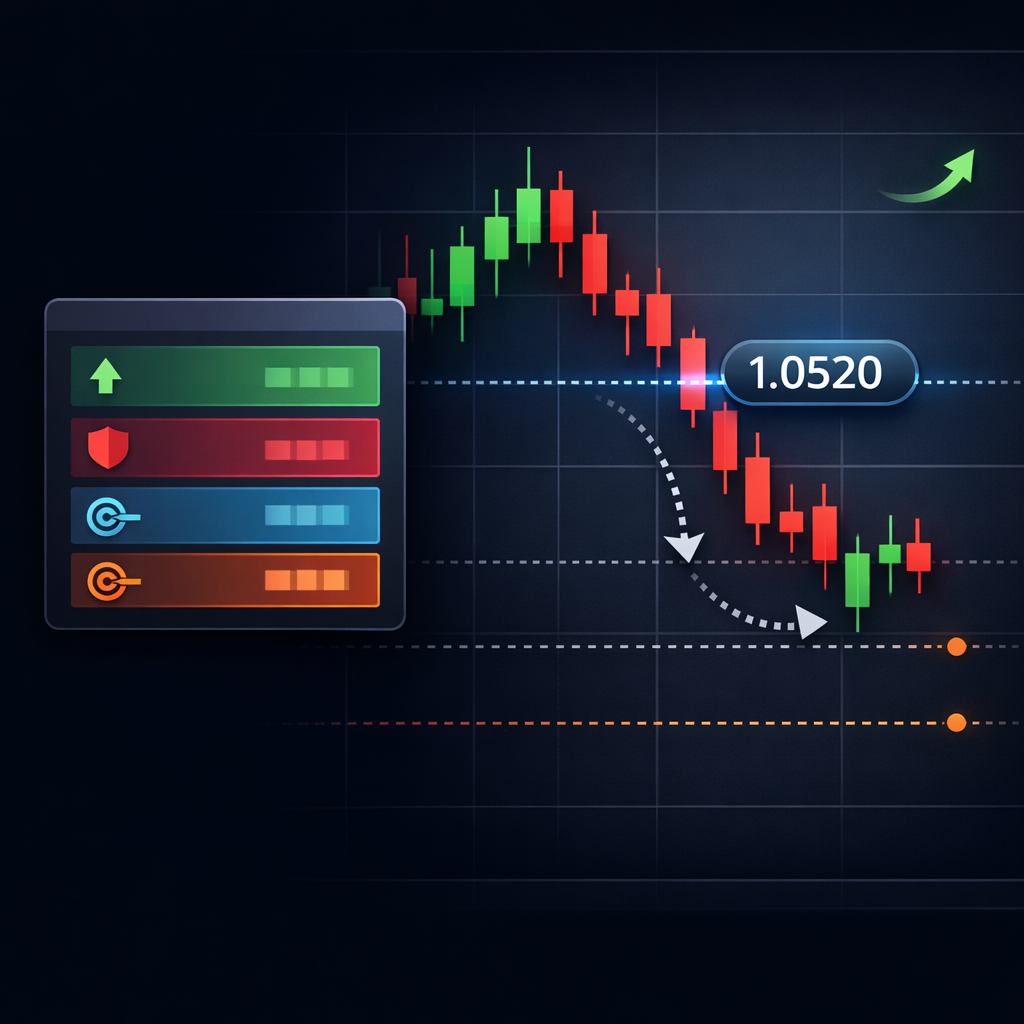
Let’s say a provider posts a EUR/USD sell signal near 1.0520 with a 25-pip stop and 50–75 pips of projected profit.
If Trader A enters at 1.0520 and Trader B hesitates and enters at 1.0507, they’re not trading the same setup anymore.
Trader B has effectively reduced reward and changed the risk-to-reward profile.
Now add real-world friction.
Spread at rollover, slippage during news, and broker execution speed can easily cost 1–5 pips on majors and more on volatile moments.
On USD/JPY at 149.50, a fast spike might fill you 3–8 pips worse than expected during New York open.
That may not sound huge.
But over 50 trades, “just 3 pips” becomes a meaningful drag on expectancy.
Execution also includes what happens after entry.
Do you take partial profits at TP1 or hold for TP2?
Do you move stop to breakeven too early and get stopped out before the real move?
Do you widen the stop because “it will come back”?
Those decisions often matter more than whether the signal was buy or sell.
At United Kings, our signals are designed to be executable: clear entry, SL, and multiple TPs.
But the trader still has to execute like a pro.
If you’re new to signals, start with our broader overview resources on the United Kings blog and then come back to this execution playbook.
Signal Types and Execution Styles (Market, Limit, Trigger)
Before you can execute like a professional, you must know what kind of entry the signal implies.
Most signal messages fall into one of three entry styles.
Each has a different “failure mode.”
1) Market Execution (Instant Entry)
Market entries prioritize participation over price.
You accept the current price and get filled immediately (within broker latency).
This is ideal when momentum is strong, like a DXY-driven USD move pushing EUR/USD quickly away from 1.0520.
The downside is cost: you may pay a slightly worse entry due to spread and slippage.
2) Limit Execution (Pre-Placed Price)
Limit entries prioritize price over participation.
You set a specific entry level and only get filled if price returns there.
This is common when a signal expects a pullback to structure.
The risk is you miss the trade if price runs without you.
3) Trigger Execution (Break + Retest / Confirmation)
Trigger entries are a professional favorite.
You wait for a condition: a break of a level, then a retest, or a candle close above/below a key area.
This helps avoid entering into a fakeout.
The tradeoff is you need rules and discipline, because “waiting for confirmation” can become procrastination.
| Entry Style | Best For | Main Risk | Pro Tip |
|---|---|---|---|
| Market | Fast momentum, breakouts, news continuation | Slippage/spread, entering at the end of the move | Use a max deviation rule (e.g., don’t chase beyond 5–10 pips on majors) |
| Limit | Pullbacks to structure, range edges | Missing the trade, partial fills | Place alerts and accept “missed trades” as part of the system |
| Trigger | London/NY volatility, fakeout-prone levels | Late entries, hesitation | Define the trigger precisely (candle close + retest + rejection) |
When you follow United Kings Forex Signals, you’ll usually see a clear entry zone or level.
Your job is to match the signal to the correct execution style based on volatility and session conditions.
Step-by-Step: A Professional Forex Signal Execution Checklist
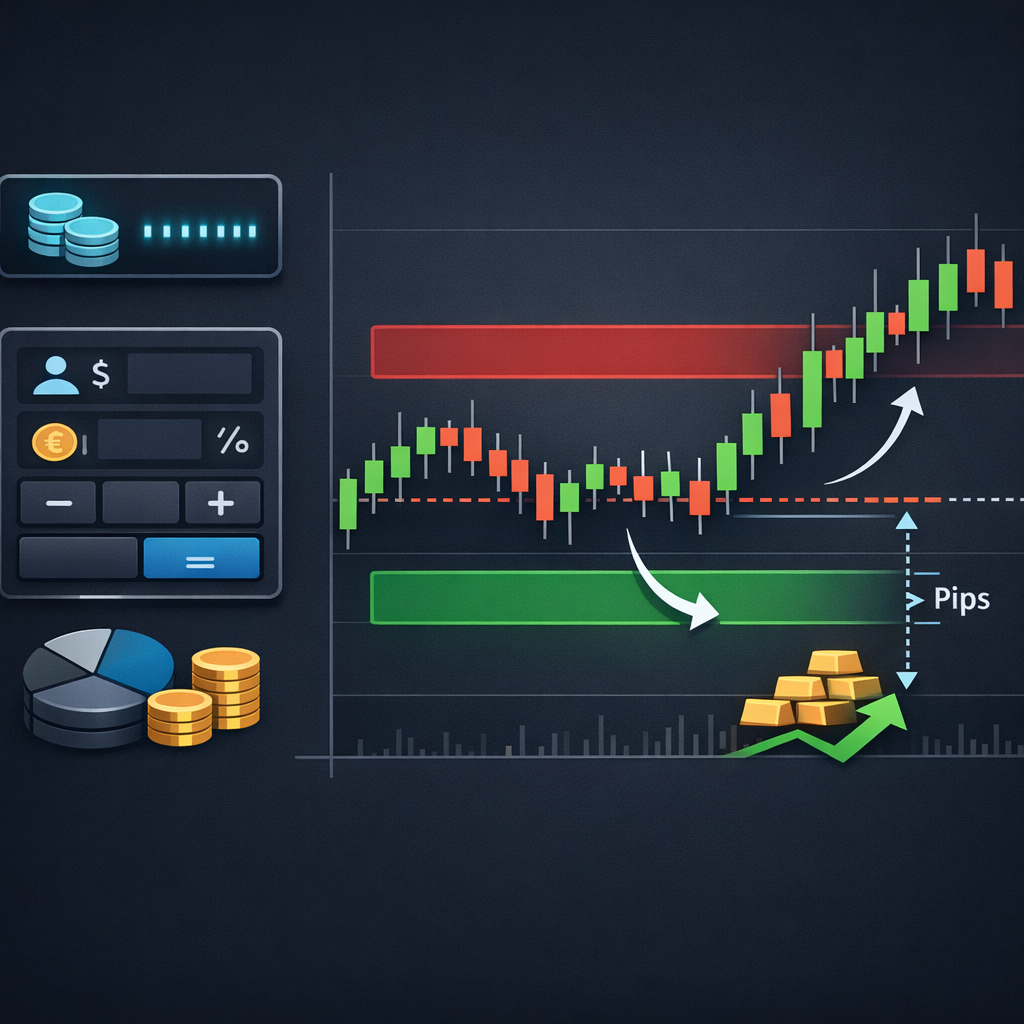
Professionals don’t “wing it.”
They run the same checklist every time.
This is how you reduce emotional decisions and keep your results close to the signal’s intended performance.
Step 1: Confirm the Instrument and Session
Check the pair: EUR/USD, GBP/USD, USD/JPY, or XAUUSD.
Then check the session: London and New York are where most clean moves happen.
If it’s late Asia and spreads are wider, execution quality can drop.
Step 2: Check Spread and Liquidity
Before entering, look at spread.
On majors, you want it tight (often 0.5–1.5 pips depending on broker/account type).
On gold, spread can widen noticeably during spikes even if XAUUSD is around $2650 and “calm” on the surface.
Step 3: Validate the Entry Zone and “Chase Limit”
Define a maximum acceptable deviation from the signal entry.
Example: if a EUR/USD sell is at 1.0520, you might allow entry between 1.0517 and 1.0523.
If price is already at 1.0508, you’re not executing the signal—you’re chasing.
Step 4: Calculate Position Size from SL (Not from Confidence)
Pick a risk amount per trade.
Many consistent signal traders use 0.5%–1% risk while learning, then 1%–2% once consistent.
Then calculate lot size using the stop distance in pips.
Step 5: Place the Trade with SL and TPs Immediately
Pros don’t enter “naked.”
They place stop-loss and take-profits at the same time to avoid hesitation under pressure.
Step 6: Decide Your Management Plan (TP1/TP2/Trail)
Before the trade moves, decide how you’ll manage it.
Will you take 50% off at TP1 and move SL to breakeven?
Or will you hold full size to TP2 because structure supports it?
Step 7: Journal “Planned vs Executed”
Write down the signal details and what you actually did.
This is how you diagnose execution leaks like late entries and premature breakevens.
If you want a deeper framework for selecting providers and building rules, pair this guide with our checklist resource: forex trading signals provider checklist.
Entry Timing: How Pros Avoid Late Entries and Bad Fills
Timing is the silent killer in signal trading.
You can have the right direction and still lose because you entered at the wrong moment.
Professional execution is about entering when the trade thesis is most valid.
Use “Structure Time” Instead of “Clock Time”
New traders enter because “the signal just came.”
Pros enter because price is at a level where the setup makes sense.
If GBP/USD is at 1.2680 and a signal calls for a buy on a pullback to 1.2665, you don’t buy at 1.2680 just to feel involved.
You wait for the structure level.
Define a Chasing Rule (Non-Negotiable)
Create a hard rule for how far you’re allowed to chase.
For majors, a common rule is 5–10 pips beyond the entry level.
For USD/JPY, you might allow slightly more during NY volatility, but still keep it defined.
If your rule says “max 8 pips,” then 9 pips means no trade.
Watch the Candle Close Around the Level
One of the most professional execution upgrades is waiting for a candle close.
If EUR/USD is testing 1.0520 resistance for a sell, a 5-minute close back below the level can confirm rejection.
This can reduce getting trapped in a breakout fake.
The cost is you may enter 2–4 pips worse.
That’s a fair trade if it increases your win rate and reduces emotional stress.
Account for News and Micro-Spikes
DXY at 106.80 suggests USD strength is a key driver.
That means USD pairs can spike hard on data like CPI, NFP, or Fed speakers.
Even without major news, London open can produce a 15–30 pip “liquidity sweep.”
Pros anticipate that and avoid entering right into the sweep.
Gold Entry Timing (XAUUSD Example)
Gold at ~$2650 (+0.35% on the day) can look calm, but it often moves in $5–$15 bursts.
If a gold signal is a buy at $2642 with SL at $2627 (risk $15), entering at $2652 increases risk and reduces reward.
Pros treat gold entries like surgery: precise, patient, and rule-based.
If you trade gold alongside forex, keep our gold resources bookmarked, including United Kings Gold Signals and the news-survival guide: how gold signals react to unexpected news events.
Position Sizing Like a Pro: Lots, Pips, and Real Risk Control
Most signal traders blow up for one reason: position sizing.
They treat lot size like a guess.
Professionals treat it like math.
Pick a Fixed Risk Percentage
Choose a percentage you risk per trade.
If you’re building consistency, 0.5%–1% is a strong starting range.
If you’re experienced and disciplined, 1%–2% can be reasonable.
Above 2% per trade, execution mistakes become expensive very quickly.
Convert Stop-Loss Distance into Position Size
Here’s the professional logic:
- Account balance: $5,000
- Risk per trade: 1% = $50
- Signal SL distance: 25 pips on EUR/USD
- Value per pip depends on lot size
If 1.00 lot on EUR/USD is about $10/pip, then a 25-pip stop risks $250.
That’s too much for a $50 risk plan.
You’d size down to 0.20 lots (about $2/pip), risking about $50 at 25 pips.
Gold Sizing Example (XAUUSD)
Gold is priced in dollars, and the pip/point value varies by broker contract.
But the principle is identical: risk = position size × stop distance.
Example:
- XAUUSD buy: $2640
- SL: $2625 (risk $15)
- TP: $2670 (reward $30, a 1:2 R:R)
If your plan is to risk $100, you size so that a $15 move against you equals $100.
That keeps your execution consistent across trades, even when volatility changes.
Adjust Risk for Volatility and Correlation
When DXY is driving the market, EUR/USD and GBP/USD can become correlated.
If you take both trades in the same USD direction, you’re effectively doubling exposure.
Pros reduce risk per trade when stacking correlated positions.
For example, instead of risking 1% on EUR/USD and 1% on GBP/USD, you might risk 0.5% each.
Use a Risk Plan You Can Repeat 100 Times
Professional sizing is boring.
That’s the point.
The goal is to survive the inevitable losing streak and still be there for the high-quality runs.
If you want a dedicated deep dive, keep this open: risk management strategies when using forex signals.
Managing Multiple Take Profits: TP1, TP2, TP3 Without Confusion
Multi-TP signals are powerful.
They’re also where many traders sabotage themselves.
You’ll see a signal with TP1, TP2, maybe TP3… and then you improvise mid-trade.
Professionals decide the plan before price moves.
Why Multi-TP Exists
Markets rarely move in a straight line.
Scaling out reduces emotional pressure and locks in progress.
It also allows you to hold a runner for the bigger move without risking the full position.
A Simple Professional TP Model (Works for Most Traders)
- TP1: Take 30%–50% off.
- After TP1: Move SL to breakeven or to a structure-based level (not random).
- TP2: Take another 30%–40% off.
- TP3 (runner): Leave 10%–30% to trail.
This model keeps you paid while still giving upside.
EUR/USD Example with Clean Numbers
Assume a EUR/USD sell signal:
- Entry: 1.0520
- SL: 1.0545 (25 pips)
- TP1: 1.0470 (50 pips, 1:2)
- TP2: 1.0445 (75 pips, 1:3)
Professional execution could look like this:
- Close 50% at 1.0470.
- Move SL to entry (1.0520) or slightly in profit if structure allows.
- Hold the rest to 1.0445.
This reduces the chance you turn a winning trade into a loss due to a sudden retracement.
Gold Example with Volatility Reality
Assume XAUUSD buy:
- Entry: $2642
- SL: $2627 (risk $15)
- TP1: $2672 (reward $30, 1:2)
- TP2: $2687 (reward $45, 1:3)
Gold can spike $8 in minutes and then retrace $6.
Scaling at TP1 often prevents emotional decisions like “I’ll just hold everything.”
Common Multi-TP Mistake: Moving Targets
Many traders hit TP1 and then get greedy.
They cancel TP2 and aim higher without reason.
Professionals only adjust targets when structure changes, not because emotions changed.
If you want signals that are already formatted for multi-TP execution, explore United Kings Signals and choose the market you trade most.
Trailing Stops and Breakeven: When to Use Them (and When Not To)
Trailing stops sound like a “free money” tool.
In reality, they’re a tool that must match the market environment.
Used well, they protect profits and keep you in trends.
Used poorly, they stop you out before the real move.
The Breakeven Trap
New signal traders love moving SL to breakeven quickly.
It feels safe.
But markets often retest entry zones before continuation.
If you move to breakeven after +10 pips on EUR/USD, you may get tagged and watch price run +60 pips without you.
When Breakeven Makes Sense
- After TP1 is hit and you’ve locked profit.
- After a clear structure break confirms direction.
- When the session is ending and liquidity may fade (reducing follow-through).
Trailing Stop Methods Professionals Use
Pros don’t trail randomly.
They trail using structure or volatility.
Method 1: Structure Trail (Swing High/Low)
In a downtrend, trail above lower highs.
In an uptrend, trail below higher lows.
This keeps your stop in “logical” places where the trend is invalidated.
Method 2: ATR-Based Trail
ATR (Average True Range) measures typical movement.
If EUR/USD ATR on your timeframe is 12 pips, a 10-pip trail is likely too tight.
A 1.5× ATR trail (around 18 pips) may be more realistic.
Method 3: Time-Based Tightening
As New York approaches close, you can tighten stops because liquidity drops.
This is especially relevant on USD/JPY around 149.50, where late-session spikes can be abrupt.
Gold Trailing Reality
Gold around $2650 can whip $10 quickly.
If you trail by $5, you’ll often get stopped out prematurely.
Many professional gold traders trail by structure or use wider volatility-based trails like $10–$15 once in profit.
Trailing stops are not mandatory.
They’re a strategy choice.
If you don’t have a tested trailing rule, you’re better off using fixed TPs and structure-based SL moves.
Executing Signals Across Sessions: London vs New York vs Asia
Session awareness is a professional edge that most signal users ignore.
The same signal can behave differently depending on when you execute it.
That’s because liquidity and volatility change throughout the day.
London Session: The “Real Move” Often Starts Here
London open frequently sets the day’s direction.
Spreads tighten and volume increases.
But London also loves stop hunts: a quick sweep above/below a level, then a reversal.
That’s why trigger-style entries (break + retest) can outperform during the first 30–60 minutes.
New York Session: Continuation or Reversal
New York can either continue London’s trend or reverse it.
It depends on US data and bond yields.
With DXY around 106.80, USD sensitivity is high.
That means EUR/USD and GBP/USD can accelerate quickly after US releases.
Asia Session: Cleaner Ranges, Different Tactics
Asia often ranges more on EUR/USD and GBP/USD.
USD/JPY can be more active due to regional flows.
Signal execution in Asia often favors limit entries at range edges with smaller targets.
But if your signal is designed for London/NY momentum, forcing it in Asia can lead to chop.
Gold Session Notes
Gold can move in any session, but it often becomes most explosive during US hours.
A gold move from $2648 to $2670 can happen in one strong push when US yields react.
Execution must consider slippage risk around data.
A Professional Rule: Don’t Execute Blindly Into Session Transitions
Spreads and volatility can change sharply at session opens.
If you enter right at the transition without a plan, you’re more likely to get a poor fill.
Instead, let the first wave show itself, then execute with structure.
United Kings focuses heavily on London and New York execution because that’s where the highest-quality follow-through tends to occur.
If you want live trade ideas delivered in real time, our community on Telegram is where most traders execute together: United Kings Telegram channel.
Common Execution Mistakes (That Make Good Signals Look Bad)
If you want to improve quickly, don’t hunt for a “better provider” first.
Hunt for your execution mistakes.
These are the most common ones we see in signal communities.
Mistake 1: Entering Late (Then Blaming the Signal)
You see EUR/USD at 1.0520 in the signal.
You enter at 1.0509 because you were busy.
Now your stop and TP are no longer aligned with the original plan.
Professionals either enter within the allowed zone or they skip.
Mistake 2: Changing the Stop-Loss (Especially Widening It)
Widening SL is usually emotional.
It turns a planned 25-pip risk into a 45-pip risk without adjusting lot size.
That breaks your risk model.
If you must adjust SL due to new structure, you must also resize the position.
Mistake 3: Over-Leveraging to “Make It Worth It”
Signals feel like certainty, so traders increase lots.
But no signal is 100%.
Even a strong system can hit losing streaks.
Over-leverage turns normal variance into account damage.
Mistake 4: Closing Early Because of Small Pullbacks
Price action breathes.
A 10–15 pip pullback on GBP/USD is normal.
On gold, a $6 pullback is normal.
If you can’t tolerate normal pullbacks, your position size is too big.
Mistake 5: Moving TP Further Mid-Trade (Greed Drift)
You planned TP2 at 1.0445, but now you want 1.0400 “because it’s moving.”
Sometimes it will work.
Over time, it usually reduces consistency because you stop taking profits at logical levels.
Mistake 6: Taking Too Many Signals at Once (Correlation Blow-Up)
EUR/USD sell + GBP/USD sell + gold sell can all be the same USD theme.
If USD reverses, everything hits SL together.
Pros cap total portfolio risk across correlated trades.
If you want to compare providers and see what professional-grade signal formatting looks like, you can also review our curated page: best forex signals (November 2025).
Advanced Execution: Slippage, Spread, and Broker Settings Pros Optimize
Once your basic execution is solid, the next layer is reducing friction.
Professionals treat spread and slippage like business costs.
Small improvements compound.
Spread: The Hidden Fee You Pay Every Trade
Spread is the difference between bid and ask.
On EUR/USD, a 1-pip spread is manageable.
On gold, spread can widen during volatility spikes even if price is still near $2650.
If you scalp small targets, spread can destroy your edge.
If you swing for larger targets, spread matters less but still adds up.
Slippage: Why Your Fill Isn’t Always Your Price
Slippage happens when price moves between your click and the broker fill.
It’s common during news and session opens.
It’s also common on stop orders when price gaps through a level.
Pros plan for it by:
- Avoiding entries seconds before high-impact news.
- Using limit orders for pullbacks when appropriate.
- Not placing ultra-tight stops in high-volatility moments.
Order Types Pros Use Intentionally
- Market order: fastest fill, higher slippage risk.
- Limit order: better price, risk of missing.
- Stop order: confirmation entry, can slip in fast moves.
Platform Settings That Improve Execution
These are small, but they matter:
- Enable one-click trading only if you can control mistakes.
- Use default SL/TP templates to reduce “naked entries.”
- Set alerts at entry zones so you don’t chase.
- Check contract sizes for XAUUSD and crypto products.
Execution Reality Check: Your Broker Matters
Even with perfect discipline, a poor broker can ruin fills.
Pros look for consistent spreads, fast execution, and minimal requotes.
If you notice systematic slippage, track it in your journal.
Data beats complaints.
If you also trade crypto signals, execution friction can be even more intense due to volatility.
That’s why we separate markets clearly, including United Kings Crypto Signals for traders who want that exposure.
Building Your Personal “Signal Execution System” (Rules You Can Repeat)
The goal isn’t to execute one trade perfectly.
The goal is to execute 100 trades consistently.
That requires a simple system you can repeat under stress.
Rule Set 1: Entry Rules
- Only enter within the signal entry zone.
- No chasing beyond X pips (define X per pair).
- If price is too far, wait for a pullback or skip.
Rule Set 2: Risk Rules
- Risk fixed % per trade (example: 1%).
- Max total open risk at once (example: 2%–3%).
- Reduce risk on correlated trades (EUR/USD + GBP/USD).
Rule Set 3: Management Rules
- Take partial at TP1 (e.g., 50%).
- After TP1, move SL to breakeven or structure.
- Trail the runner only after a new swing forms.
Rule Set 4: “No Trade” Rules (Professionals Skip Trades)
- Skip if spread is abnormally wide.
- Skip if major news is imminent and the signal isn’t designed for it.
- Skip if you’re emotionally compromised (anger, revenge mode, FOMO).
How to Journal Signals Like a Pro
Keep it simple and objective.
- Signal: pair, direction, entry, SL, TP1/TP2
- Your execution: actual entry, actual SL, actual exits
- Notes: spread, slippage, session, emotions
After 20–30 trades, you’ll see patterns.
Maybe you always enter late.
Maybe you move SL too early.
Fix one leak at a time.
Where Most Traders Level Up Fast
The fastest improvement usually comes from:
- Reducing risk per trade slightly.
- Stopping late entries.
- Using consistent TP scaling.
That’s execution—not prediction.
If you want to learn execution in a community environment, explore our background and approach on About United Kings.
Real Execution Scenarios Using Today’s Market Prices (EUR/USD, GBP/USD, USD/JPY, Gold)
Let’s make this practical.
Below are realistic execution walkthroughs using current market context: EUR/USD 1.0520, GBP/USD 1.2680, USD/JPY 149.50, and gold around $2650.
These are examples of process, not promises of outcome.
Scenario A: EUR/USD Sell Near 1.0520 (DXY Strong)
Context: DXY at 106.80 supports USD strength.
Signal idea: Sell resistance with defined risk.
- Entry: 1.0520 (sell)
- SL: 1.0545 (25 pips)
- TP1: 1.0470 (50 pips)
- TP2: 1.0445 (75 pips)
Professional execution:
- If price is 1.0521–1.0518, enter.
- If price is 1.0508, skip and wait for pullback.
- At TP1, take 50% off and move SL to entry.
- Hold remainder to TP2 or trail above lower highs.
Scenario B: GBP/USD Buy at 1.2680 With a Pullback Plan
Context: GBP can be volatile; spreads can widen at news.
Signal idea: Buy support after a dip.
- Entry zone: 1.2680–1.2665 (buy)
- SL: 1.2645 (20–35 pips depending on entry)
- TP1: 1.2720 (40–55 pips)
- TP2: 1.2760 (80–95 pips)
Professional execution:
- Use a limit at 1.2665 if structure supports a pullback.
- If filled, place SL immediately and don’t widen it.
- If TP1 hits, reduce risk and let the rest work.
Scenario C: USD/JPY Breakout Style Around 149.50
Context: USD/JPY can trend strongly but whips on yield moves.
Signal idea: Trigger entry to avoid fakeouts.
- Trigger: 149.60 break and 149.50 retest holds
- SL: 149.25 (25–35 pips)
- TP1: 150.10 (50 pips)
- TP2: 150.55 (95 pips)
Professional execution:
- Wait for a candle close above 149.60.
- Enter on retest confirmation, not at the spike.
- Trail using structure as new higher lows form.
Scenario D: Gold (XAUUSD) Buy Around $2650 With Tight Risk
Context: Gold at ~$2650 (+0.35%) can still whip $10 quickly.
Signal idea: Buy pullback with 1:2 to 1:3 R:R.
- Entry: $2643
- SL: $2628 (risk $15)
- TP1: $2673 (reward $30, 1:2)
- TP2: $2688 (reward $45, 1:3)
Professional execution:
- Don’t chase a $2655 print if the entry is $2643.
- If TP1 hits, take partial and protect the trade.
- If volatility spikes, avoid tightening stops too aggressively.
If you want gold-first execution guidance, you can also browse our gold-focused Telegram channel recommendations: best Telegram channels for gold trading signals.
How to Use United Kings Signals Professionally (Workflow + Tools)
Signals work best when you treat them like a professional workflow.
That means fast reading, clear execution rules, and consistent management.
Here’s a practical way to execute United Kings signals in real time.
1) Prepare Before the Session
Before London or New York:
- Check your platform is logged in and stable.
- Know your daily risk cap (example: 2%).
- Set alerts on key levels so you don’t chase.
2) Read the Signal Like an Order Ticket
Professional signal messages include:
- Instrument (EUR/USD, XAUUSD, etc.)
- Direction (buy/sell)
- Entry or entry zone
- Stop-loss (SL)
- Take profits (TP1/TP2/TP3)
Your job is to convert that into a correctly sized trade with minimal delay.
3) Execute with Templates
Create preset order templates in your platform:
- Default risk sizing method
- Default partial close plan
- Default SL/TP placement rules
This reduces mistakes when price is moving fast.
4) Communicate and Learn in the Community
Many traders improve simply by seeing how others manage the same setup.
Our community has 300K+ active traders, which creates a strong learning environment.
Join the live flow here: United Kings Telegram signals community.
5) Combine Signals with Education (So You Don’t Stay Dependent)
Signals are best when they also teach you.
When you understand why a trade is taken, your execution improves.
You become calmer during pullbacks because you understand the structure.
6) Choose the Right Plan for Your Trading Frequency
United Kings offers three plans designed for different commitment levels:
- Starter (3 Months): $299 (~$100/mo)
- Best Value (1 Year): $599 ($50/mo) with 50% savings + FREE ebook
- Unlimited (Lifetime): $999 pay once, access forever
You can review them on our pricing section: United Kings pricing plans.
FAQ: Forex Signal Execution Questions Traders Ask Most
1) What is forex signal execution?
Forex signal execution is the process of placing and managing a trade based on a signal: entering at the intended price, using the correct lot size, setting SL/TP, and managing exits consistently.
2) How do I avoid entering signals too late?
Use an “entry deviation” rule (e.g., don’t chase beyond 5–10 pips on majors), set price alerts, and prefer limit or trigger entries when the signal is based on a pullback or confirmation.
3) Should I always move stop-loss to breakeven?
No. Breakeven is useful after TP1 or after a structure break confirms the move. Moving to breakeven too early is a common reason traders get stopped out before the main trend leg.
4) How do I size positions when trading multiple signals at once?
Cap total open risk (for example 2%–3%) and reduce risk on correlated positions (like EUR/USD and GBP/USD in the same USD direction). Treat correlation like “hidden leverage.”
5) Can beginners trade signals safely?
Beginners should start on a demo account, risk small (often 0.5%–1%), and focus on flawless execution rather than profits. Signals help, but learning risk and discipline is essential.
Risk Disclaimer (Read Before You Trade)
Forex and gold trading involves significant risk and may not be suitable for all investors. You can lose some or all of your capital. Signals and educational content are provided for informational purposes and do not constitute financial advice. Past performance does not guarantee future results. Spreads, slippage, and market volatility can materially impact outcomes. If you are a beginner, we strongly recommend practicing on a demo account before trading live, and using strict risk management at all times.
Final CTA: Execute Like a Pro With United Kings Signals
If you’re serious about improving your forex signal execution, don’t just collect signals.
Execute them with a repeatable system: precise entries, correct sizing, structured TP management, and disciplined risk control.
When you’re ready to trade with a premium community, join United Kings.
- Premium Telegram forex + gold signals with clear Entry, SL, and TP levels
- Designed for London and New York session opportunities
- Educational support alongside signals
- 300K+ active traders in the community
- Transparent plans: 3 Months ($299), 1 Year ($599 best value), Lifetime ($999)
- 48-hour money-back guarantee (terms apply)
Start here: United Kings premium trading signals.
Or jump straight into the live community: United Kings Telegram channel.
If you have questions before joining, reach us anytime via United Kings contact page.