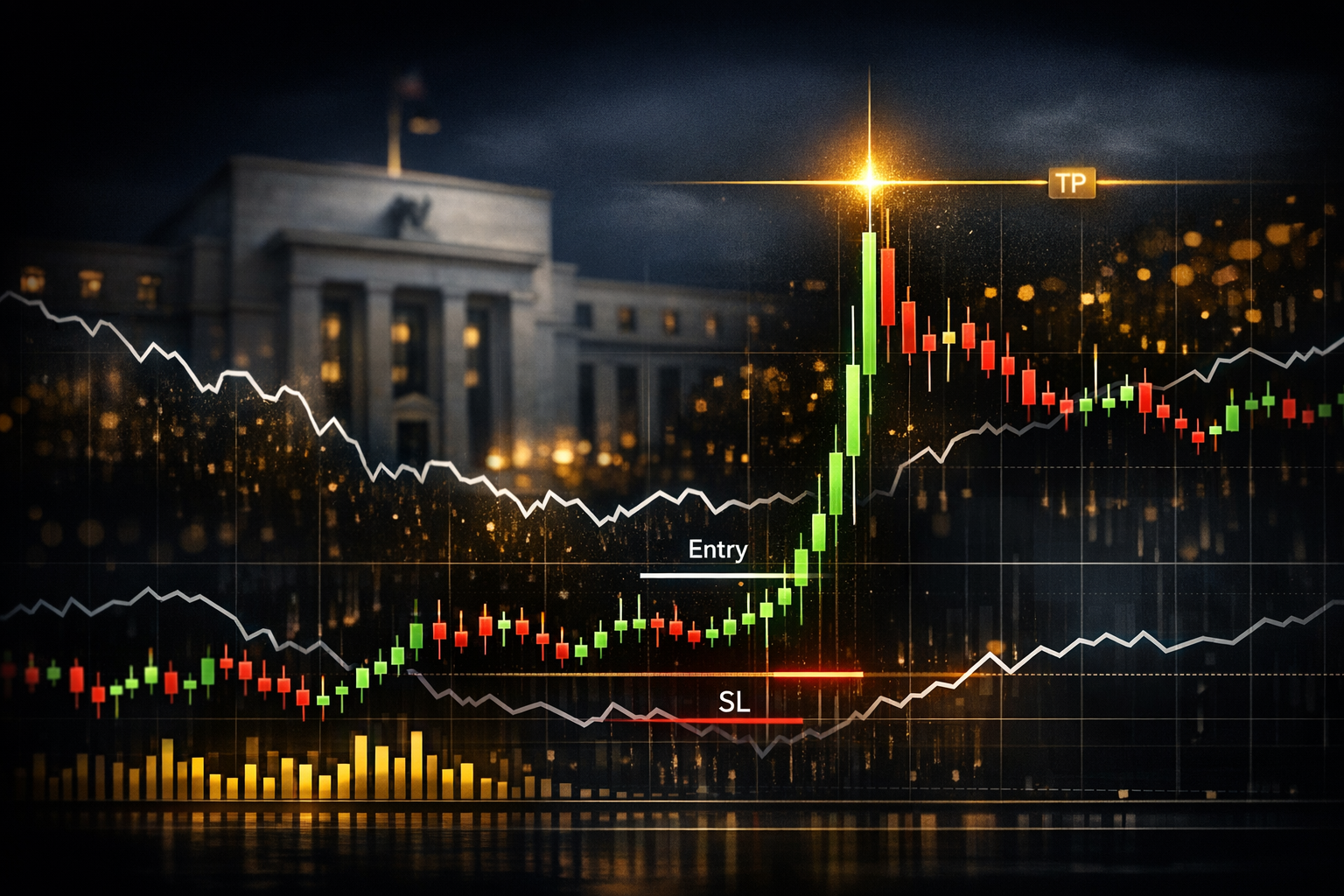
Ever hit “Buy” on XAUUSD seconds before the FOMC decision… and watched price rip $18 up, snap $25 down, and stop you out before moving in your original direction?
If you’ve traded gold during a Fed rate decision, you know the feeling.
This guide is a practical, rules-based XAUUSD FOMC strategy built for real-world conditions: spread widening, whipsaws, and the psychological pressure of fast candles.
TL;DR: The FOMC-Day XAUUSD Playbook (Bookmark This)
- Respect the “no-trade window”: for many traders, the highest-risk time is 30–90 seconds around the decision and the first algorithmic spike.
- Expect spread widening on XAUUSD during FOMC; if your broker’s spread jumps from ~20–35 points to 80–200+ points, your “perfect” setup can become a bad trade.
- Trade levels + volatility, not headlines: use key zones (e.g., $2635, $2650, $2668) and confirm with expansion + structure.
- Use confirmation rules: break-and-retest, candle close logic, and a volatility filter (ATR/true range) to avoid whipsaws.
- Risk smaller than usual: consider cutting risk to 0.25%–0.75% per attempt on FOMC days, with wider stops ($10–$25) and fewer trades.
- Have two plans: one for the decision spike and one for the press conference reversal (gold often fakes one way, then trends the other).
Why FOMC Rate Decisions Move Gold So Violently (And Why It’s Not Random)
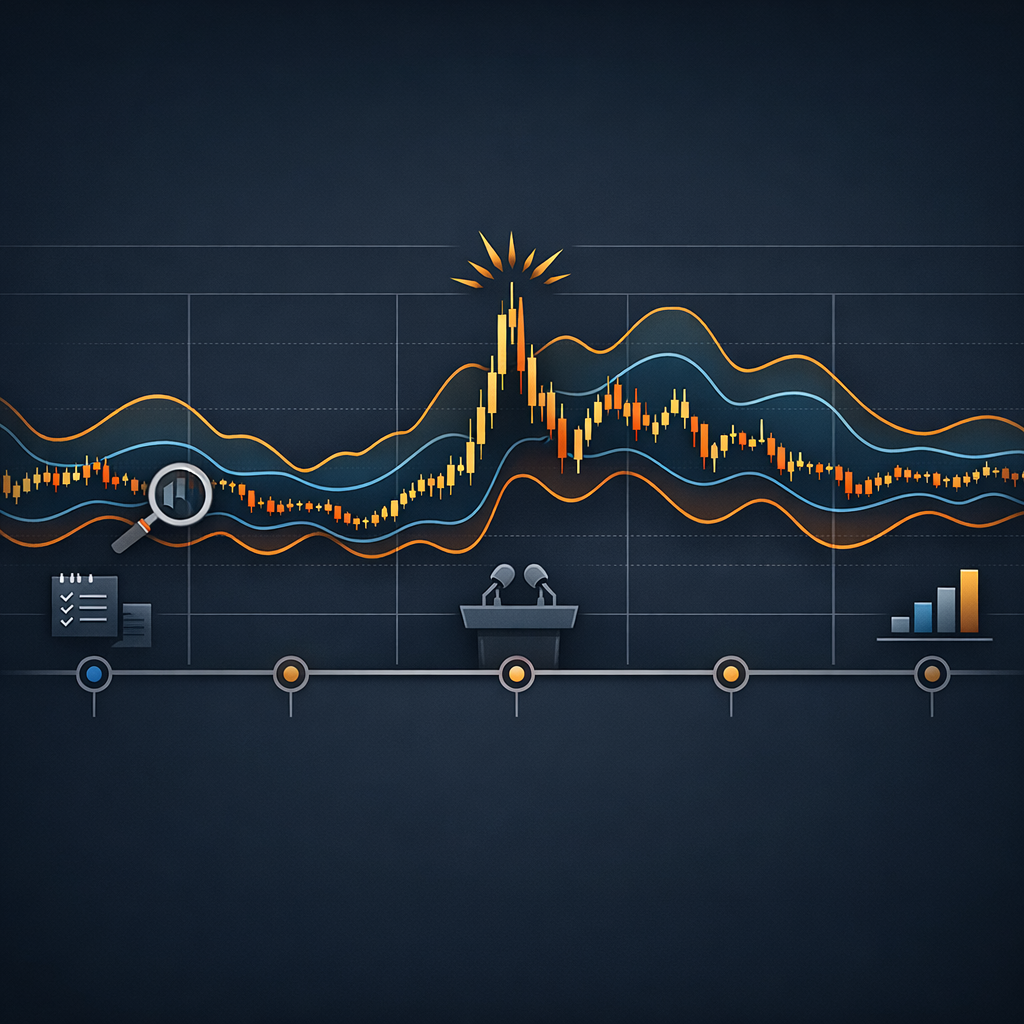
Gold (XAUUSD) is priced in dollars, reacts to real yields, and is hypersensitive to forward guidance.
That’s why FOMC days often create two separate volatility events: the decision statement and the press conference.
Today’s market context (use this as your reference frame)
- XAUUSD: ~$2650.00 (+0.35% 24h)
- EUR/USD: 1.0520
- GBP/USD: 1.2680
- USD/JPY: 149.50
- DXY: 106.80
When DXY is elevated (like ~106.80), gold can feel “heavy” unless risk-off demand or dovish expectations overpower the dollar bid.
On FOMC days, the market is not just pricing the rate decision.
It’s pricing the gap between expectations and reality.
The 3 drivers that matter most for XAUUSD on FOMC
- Rate decision vs consensus: Even a “no surprise” hold can move gold if guidance changes.
- Dot plot / projections: Gold often reacts more to the path of rates than the current rate.
- Press conference tone: One hawkish sentence can reverse a $20 move in seconds.
Here’s the key: gold doesn’t need a “dovish Fed” to rally.
Gold needs the Fed to be less hawkish than priced, or for financial conditions to tighten enough that the market anticipates future easing.
That’s why your job as a trader is not to predict the Fed.
Your job is to trade the reaction with structure—and survive the noise long enough to catch the real move.
Spreads, Slippage, and Liquidity: The Hidden Cost of Trading XAUUSD on FOMC
Most traders lose on FOMC days for one boring reason: execution.
Your chart can be right, but your fill can be wrong.
What spread widening looks like in real life
On a normal London/NY overlap, XAUUSD spread might sit around 20–35 points (varies by broker and account type).
During the FOMC release, it can widen to 80–200+ points for brief moments.
That’s $0.80–$2.00 on the quote, which can be the difference between a clean entry and instant drawdown.
Slippage: why stop orders can hurt during news
When price gaps through your stop, you may be filled worse than expected.
For example, you short XAUUSD at $2652 with a stop at $2665 (risk $13).
If the release candle jumps and your stop fills at $2669, your risk becomes $17.
News execution comparison table (what to use and when)
| Order Type | Pros on FOMC | Cons on FOMC | Best Use Case |
|---|---|---|---|
| Market Order | Gets you in immediately | Highest slippage risk | Post-release confirmation entries (after spreads normalize) |
| Limit Order | Controls entry price | May miss the move; can get “tagged” in spikes | Retest entries at key levels (e.g., $2650 retest) |
| Stop Order | Breakout participation | Can trigger on fakeouts; slippage likely | Only with strict filters and reduced size |
| Stop-Limit | Caps worst entry price | May not fill in fast markets | Advanced traders who prefer missing trades over bad fills |
Your “spread rule” (simple and effective)
- Define your maximum acceptable spread before the event.
- If spread is above that threshold, you do not enter.
- Re-check spread after the first impulse move.
Example rule: if your normal spread is ~30 points, you might set a rule like “no new entries if spread > 70 points”.
That one rule can save you from the worst “instant red” trades on FOMC.
If you use Telegram signals, this is also why provider quality matters.
A good provider adapts execution rules to news conditions instead of pretending every day is the same.
Pre-FOMC Preparation (4–24 Hours Before): Build Your Map, Not a Prediction
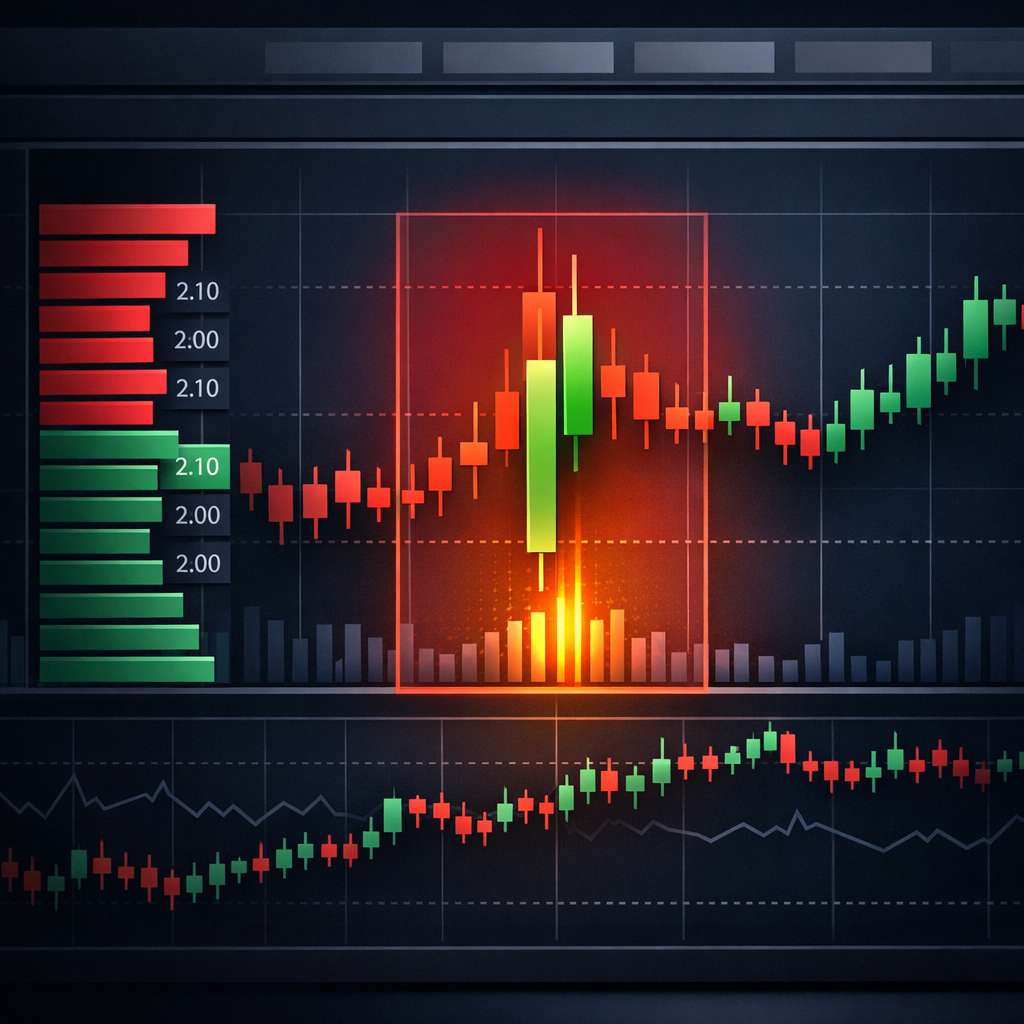
FOMC-day trading starts the day before.
You’re not trying to guess whether Powell is hawkish.
You’re building a map of levels and scenarios so you can react fast without improvising.
Step 1: Mark your XAUUSD key levels (use realistic zones)
With gold around $2650, a practical level map could look like this:
- Resistance zone: $2668–$2675 (recent supply / swing highs)
- Pivot zone: $2648–$2652 (round number + intraday equilibrium)
- Support zone: $2632–$2638 (prior demand / structure)
- Deeper support: $2615–$2622 (panic flush area)
- Upper extension: $2685–$2690 (blow-off / TP magnet)
You don’t need 20 lines.
You need 5–7 meaningful zones that price can actually react to.
Step 2: Check the “macro crosswinds” in 3 minutes
- DXY (106.80): Is it trending or ranging into the event?
- USD/JPY (149.50): Risk sentiment proxy; sharp moves can spill into gold.
- US yields (if you track them): Rising yields often pressure gold; falling yields often support it.
We’re not trading DXY directly here.
We’re using it as a confirmation tool so we don’t fight the dominant flow.
Step 3: Define your “no-trade zones” before the chaos
No-trade zones are where your edge collapses.
On FOMC, that’s usually when price is inside the pre-event compression and spreads are unstable.
- No-trade time window: from ~2 minutes before to ~1 minute after the decision (adjust to your style).
- No-trade price area: the middle of the pre-FOMC range (the “chop box”).
Example: if gold ranges between $2642 and $2658 for hours, the middle ($2649–$2651) is often a trap.
We want edges of ranges and clean breaks, not coin flips.
Step 4: Decide your maximum risk and number of attempts
FOMC is not the day to “make your month.”
It’s the day to trade smaller and cleaner.
- Risk per attempt: 0.25%–0.75% (many traders do best here)
- Max attempts: 1–3 trades total
- Stop size: typically $10–$25 depending on volatility
If you want a deeper framework for controlling risk when following signals, pair this guide with our risk-focused resource: risk management strategies when using forex signals.
The 90-Minute FOMC Countdown: What to Watch in the Hours Before the Decision
The best FOMC trades often come from reading the pre-decision behavior.
Not because it predicts the outcome.
Because it tells you where liquidity is resting and where the traps are likely to trigger.
1) Identify the “compression range”
Gold often compresses into a tight range before the announcement.
You might see 5-minute candles shrink, wicks increase, and price gravitate to the pivot (around $2650).
Example: from 12:00–13:45 NY time, XAUUSD holds a range between $2644 and $2656.
That 12-dollar box becomes your battlefield.
2) Mark the “liquidity shelves” above and below
Liquidity shelves are obvious swing highs/lows where stops cluster.
On our example map:
- Stops above: $2656, then $2668–$2675
- Stops below: $2644, then $2632–$2638
FOMC algos love to run one side first.
That first run is often the fake move.
3) Watch how DXY behaves into the event
If DXY grinds higher into the release while gold holds flat near $2650, that’s information.
It can mean gold is being supported by safe-haven demand or positioning.
On the other hand, if DXY is firm and gold is already slipping from $2665 to $2648, gold may be vulnerable to a deeper flush if the Fed is hawkish.
4) Check your broker conditions early (don’t wait for the spike)
- Test the platform speed and quotes.
- Observe spread behavior 30–60 minutes before.
- Decide whether you’ll trade the event or only the post-event setup.
Professional-style discipline is sometimes saying: “Not today.”
If spreads are unstable early, they will likely be worse at release.
5) Choose your “mode”: breakout trader or reaction trader
There are two valid FOMC styles:
- Breakout participation: attempt to catch the first impulse (higher risk).
- Reaction confirmation: wait for the first spike, then trade the retest (lower risk).
If you’re newer, reaction trading is usually the safer path.
It’s also easier to follow with high-quality Telegram calls that include Entry, SL, and TP and clear confirmation rules.
The Step-by-Step XAUUSD FOMC Strategy (Rules for Entry, SL, TP, and No-Trade)
Let’s turn this into a repeatable plan.
Below is a step-by-step framework we use to structure FOMC gold trades around levels + volatility + confirmation.
Step 1: Define the pre-FOMC range and midpoint
Example range: $2644 low and $2656 high.
Midpoint: $2650.
Rule: do not trade inside the midpoint zone unless you have a confirmed break and retest.
Step 2: Create two scenarios (A and B) before the release
Scenario A (bullish gold): price breaks above $2656, holds above $2650, then targets $2668 and $2685.
Scenario B (bearish gold): price breaks below $2644, fails to reclaim $2650, then targets $2635 and $2620.
This matters because during FOMC you won’t have time to think.
You’ll have time to execute.
Step 3: Apply the “first candle is guilty until proven innocent” rule
The first 1-minute candle after the decision is often a liquidity sweep.
Rule: do not enter on the first candle unless your strategy is specifically built for that and you accept slippage risk.
Step 4: Wait for confirmation (choose at least 2 of 3)
- Structure: break and close beyond the level (not just a wick).
- Retest: price returns to the level and holds (rejects) with a clear candle signal.
- Volatility filter: range expands (ATR/true range) and then stabilizes (smaller candles) before continuation.
Example confirmation long:
- Gold spikes from $2650 to $2669.
- It pulls back to retest $2658–$2660.
- A 5-minute candle closes back above $2660 with a strong body.
Step 5: Place stops where the setup is invalid (not where it “feels safe”)
If you buy the retest at $2660, a logical invalidation could be below the retest low and below the pivot zone.
Example: SL at $2648 (risk $12).
This fits the guideline of typical FOMC stops: $10–$25 depending on volatility.
Step 6: Use 1:2 or 1:3 risk-reward targets (and scale if needed)
If risk is $12:
- TP1 (1:2): $2660 + $24 = $2684
- TP2 (1:3): $2660 + $36 = $2696 (note: this is slightly above our $2690 guideline, so you could cap at $2688–$2690)
On FOMC, it’s common to take partial profits at TP1 and let the rest run if momentum stays strong.
Step 7: Set a hard “time stop” if price stalls
FOMC moves can trend hard, but they can also mean-revert.
If 20–40 minutes after entry gold is still stuck near your entry and spreads remain jumpy, reducing exposure is often smart.
This is exactly the kind of execution detail we build into our premium calls on United Kings Gold Signals, especially around London and NY session volatility.
Signal Confirmation on FOMC: How to Avoid Whipsaws Using Volatility + Key Levels
FOMC is a whipsaw factory.
So confirmation is not optional.
It’s the difference between “caught the move” and “donated to the spread.”
Confirmation method #1: Close beyond level (not a wick)
During news, wicks lie.
A candle can spike above $2668 and instantly snap back under $2655.
Rule: for breakouts, require a 5-minute close beyond the key zone.
Example: only treat $2668 as broken if a 5-minute candle closes above $2670 (buffer included).
Confirmation method #2: Break-and-retest entry (the “second chance” trade)
This is the most practical FOMC entry style for most traders.
You let the first spike happen, then trade the retest when spreads calm down.
Example short setup:
- Gold dumps from $2650 to $2636.
- It bounces back to $2646–$2648.
- It fails to reclaim $2650 and prints a bearish rejection on 5-minute.
- Sell: $2646
- SL: $2660 (risk $14)
- TP1 (1:2): $2618 (cap around $2620 if you want to stay conservative)
- TP2 (1:3): $2604 (often too ambitious for the same day; you can trail instead)
Notice the logic: we’re not shorting the bottom of the spike.
We’re shorting the failed reclaim of the pivot.
Confirmation method #3: Volatility filter (ATR/true range behavior)
You don’t need complex math.
You need a simple observation: is volatility expanding, and then stabilizing?
- If candles are still printing $6–$10 ranges every minute, entries are high-risk.
- If ranges shrink to $2–$4 while price holds above/below a key level, that’s often your window.
Confirmation method #4: DXY alignment (optional, but powerful)
Gold and DXY often move inversely, especially during macro repricing.
So if gold breaks above $2668 while DXY is simultaneously dropping from 106.80 to 106.55, that’s cleaner confirmation.
If gold breaks up but DXY is ripping higher, you should demand stronger price confirmation or reduce size.
For more on how signals behave in fast news conditions, see: how gold signals react to unexpected news events.
Stops and Position Sizing for FOMC Gold Trades (So One Spike Doesn’t Wreck Your Week)
On FOMC, the market can move $15–$30 in minutes.
That means your normal stop and lot size may be completely wrong for the day.
Why “tight stops” are usually a trap during FOMC
A $6 stop might work in calm conditions.
During FOMC, a $6 stop can be hit by spread + noise alone.
That doesn’t mean you should use reckless stops.
It means you should size down so a wider stop is still safe.
A practical stop framework (within $10–$25)
- $10–$12 stop: only after volatility cools and you enter on a clean retest.
- $15–$18 stop: common for post-release continuation trades.
- $20–$25 stop: only if the structure demands it and your size is reduced.
Position sizing step-by-step (simple method)
We’ll keep this platform-neutral because contract sizes vary by broker.
The process is the same everywhere.
- Choose account risk: example 0.5% of a $10,000 account = $50.
- Choose stop distance: example $12 (from $2660 to $2648).
- Calculate value per $1 move for your lot size on your broker (check contract specs).
- Adjust lot size so that $12 adverse move ≈ $50 loss (including a buffer for slippage).
Add a slippage buffer on FOMC.
If your stop is $12, plan as if it could be $14 in worst execution moments.
The “two-strike rule” (FOMC risk circuit breaker)
Because whipsaws happen, you need a hard limit.
- If you take two losses on FOMC day, you stop trading the event.
- If you hit TP1, you can consider one additional attempt later (press conference or NY close setup).
This rule protects you from revenge trading when the market is at peak emotional intensity.
If you’re following a provider, this is also a key quality filter: do they teach risk controls, or do they just post entries?
Use our beginner-friendly checklist to evaluate providers: forex trading signals provider checklist.
Three High-Probability FOMC Setups for XAUUSD (With Realistic Price Examples)
Let’s make this concrete.
These are three setups that show up repeatedly on FOMC days.
They’re not “guaranteed.”
They’re simply structured ways to participate without gambling.
Setup 1: Break-and-retest continuation (the “cleanest” FOMC trade)
Context: Gold is at $2650 pre-release and breaks higher on the statement.
- Impulse: $2650 → $2672
- Pullback: $2672 → $2660
- Confirmation: 5m close above $2662 + rejection wick below $2660
- Buy: $2662
- SL: $2649 (risk $13)
- TP1 (1:2): $2688
- TP2 (runner): $2690 (cap near the guideline ceiling)
Why it works: you’re trading after the first chaos, using a level that should hold if the move is real.
Setup 2: Liquidity sweep reversal (the “fake first move” pattern)
Context: Gold sweeps above resistance, triggers breakout buyers, then reverses.
- Sweep: $2655 → $2674 (takes stops above $2668)
- Rejection: fast drop back under $2668, then under $2658
- Sell: $2658 after a 5m close below
- SL: $2678 (risk $20)
- TP1 (1:2): $2618 (conservative cap around $2620)
- TP2: trail stop above lower highs if momentum persists
Why it works: FOMC often runs liquidity first, then reveals direction.
Setup 3: Press conference second move (the “real trend” after the whipsaw)
Context: Statement causes chop; press conference clarifies policy tone.
Gold whips between $2642 and $2666 for 20 minutes.
Then it breaks and holds above $2668 during Q&A.
- Buy: $2670 on retest
- SL: $2655 (risk $15)
- TP1 (1:2): $2700 (cap at $2688–$2690 if you want to stay within the near-term range)
- TP2: manage with trailing stop under 5m swing lows
Why it works: the second move often has cleaner order flow after positioning resets.
If you want structured entries like these delivered in real time, our community focuses heavily on gold during London and NY sessions via United Kings premium signals.
Avoiding the Classic FOMC Mistakes (That Even Good Traders Still Make)
Most FOMC losses are not strategy problems.
They’re behavior problems under speed.
Mistake #1: Trading the release candle like it’s a normal breakout
The release candle is often a liquidity event.
If you buy the top of that candle, you’re often buying into the stop-hunt.
Fix: wait for a close + retest, or trade smaller with strict rules.
Mistake #2: Ignoring spread and thinking your broker “won’t do that”
Spreads widen for a reason: liquidity thins and risk increases.
Fix: define a max spread threshold and follow it.
Mistake #3: Moving stops because “it will come back”
On FOMC, it might not come back for hours.
And if it does, it might come back after you’ve doubled your risk.
Fix: place stops at invalidation and accept the loss if wrong.
Mistake #4: Overtrading the chop after the first spike
After the initial move, gold often enters a violent range.
That range is designed to churn both sides.
Fix: trade fewer attempts, and use the two-strike rule.
Mistake #5: Forgetting that forex pairs can confirm (or warn)
Gold doesn’t move in isolation.
Watch EUR/USD (1.0520) and USD/JPY (149.50) for dollar strength clues.
If EUR/USD is breaking down while gold is “trying” to rally, your long needs stronger confirmation.
And if you also trade majors on FOMC week, keep your plan consistent with your broader signal approach using United Kings Forex Signals.
How We Confirm Gold Signals on FOMC Days (What to Look for in a Premium Provider)
Not all “gold signals” are built for FOMC conditions.
Some are fine on normal days and fall apart in news volatility.
What a FOMC-ready signal should include
- Clear entry logic: not just “BUY NOW,” but why (level, break, retest).
- Exact Entry, SL, TP: with realistic distances (e.g., $12–$20 stop).
- Session timing: London/NY focus, with awareness of release time.
- Execution notes: “Wait for 5m close,” “avoid if spread > X,” “use limit on retest.”
- Risk guidance: suggested reduced risk on major news.
At United Kings, our approach is designed around clarity and repeatability.
We deliver premium Telegram signals with a documented track record mindset and a community of 300K+ active traders.
We target high-quality setups with a stated goal of maintaining an 85%+ win rate through disciplined selection and confirmation, while still acknowledging that losses are part of trading.
Where to follow and how to learn alongside the signals
If you want to see how we structure trades and confirmations, explore:
- Gold signals (XAUUSD-focused) for our main gold coverage
- All premium signals if you trade both gold and forex
- United Kings blog for ongoing education and market playbooks
And if you prefer learning how Telegram signals work from the ground up, this guide pairs well with: forex signals Telegram for beginners guide.
Realistic expectation setting (important on FOMC)
Even the best setups can be scratched or stopped out by a single spike.
So a premium provider should also teach you when not to trade.
Sometimes the best FOMC signal is “wait for the retest” or “skip due to spread.”
FOMC Day Execution Checklist (Print This Before You Trade)
When volatility hits, you won’t rise to the occasion.
You’ll fall to your checklist.
60–90 minutes before the decision
- Mark key levels: $2635, $2650, $2668, $2688 (example map).
- Identify the pre-event range high/low.
- Check DXY (106.80) direction and whether it’s trending or flat.
- Decide your mode: breakout vs reaction.
10–15 minutes before the decision
- Check spread and platform stability.
- Set your max spread rule (example: no entries if > 70 points).
- Cancel unnecessary pending orders.
- Confirm your max risk per attempt (0.25%–0.75%).
At the decision (the no-trade window)
- Do not chase the first candle.
- Wait for a close beyond level and/or a retest.
- Watch for liquidity sweep behavior above $2668 or below $2635.
5–30 minutes after (where the best trades often appear)
- Look for break-and-retest entries.
- Keep stops at invalidation; do not widen.
- Take TP1 at 1:2 when hit; consider trailing the rest.
After the press conference starts
- Be ready for the second move.
- If you’re already in profit, protect it.
- If you’re down two trades, stop for the day.
Execution is where most traders need help.
That’s why our members value getting clear, ready-to-execute levels and confirmations in real time on Telegram: United Kings official Telegram channel.
Choosing the Right United Kings Plan for FOMC Weeks (Signals + Education)
FOMC weeks are when a premium signal service can genuinely reduce decision fatigue.
You still control risk and execution.
But you’re no longer guessing levels alone.
What you get with United Kings (in plain terms)
- Premium Telegram signals for forex and gold with clear Entry, SL, and TP.
- London and NY session focus, where liquidity is strongest.
- Educational guidance so you understand the “why,” not just the “what.”
- Community scale: 300K+ active traders learning and executing together.
- 48-hour money-back guarantee (trade responsibly and evaluate the service fit).
Pricing plans (3 options)
We keep it simple with three plans available on our pricing section: United Kings pricing plans.
- Starter (3 Months): $299 (~$100/mo)
- Best Value (1 Year): $599 ($50/mo) with 50% savings + FREE ebook
- Unlimited (Lifetime): $999 (pay once, access forever)
If your main focus is gold around macro events, start with our dedicated gold signals page.
If you want gold + majors like EUR/USD and GBP/USD during the same week, explore all signals and combine them with your own risk rules.
If you have questions before joining, you can always reach us via United Kings contact or learn more about our mission on about United Kings.
FAQ: Trading Gold (XAUUSD) During FOMC Rate Decisions
1) Is it safe to trade XAUUSD during the FOMC decision?
It can be traded, but it’s higher risk than normal sessions due to spread widening, slippage, and whipsaws.
Many traders choose to trade only the post-release retest instead of the first spike.
2) What’s the best timeframe for FOMC gold trading?
Use lower timeframes (1m–5m) to manage entries, but anchor your key levels from higher timeframes (15m–1H).
On FOMC, requiring a 5-minute close beyond a key level often reduces fakeouts.
3) How wide should my stop loss be on FOMC for XAUUSD?
It depends on volatility, but many practical FOMC stops fall in the $10–$25 range.
The key is to reduce position size so the wider stop doesn’t increase your account risk.
4) Why does gold sometimes move up first and then crash (or vice versa)?
Because FOMC often triggers a liquidity sweep first.
Price runs obvious stops above/below the range, then reveals direction once positioning resets and guidance is digested.
5) Can I follow gold signals during FOMC as a beginner?
Yes, but start on a demo account and focus on learning execution rules (spread thresholds, no-trade windows, confirmation entries).
Beginner-friendly structure helps a lot, especially when signals include Entry/SL/TP and clear confirmation notes.
Risk Disclaimer (Read Before You Trade)
Trading forex and gold (XAUUSD) involves significant risk and may not be suitable for all investors.
FOMC events can cause extreme volatility, spread widening, slippage, and rapid losses.
Past performance does not guarantee future results. No signal provider can guarantee profits.
If you’re new, practice on a demo account first and use strict risk management (small risk per trade, hard daily limits).
Join United Kings: Get FOMC-Ready XAUUSD Signals With Clear Confirmation
If you want to trade FOMC days without guessing, we built United Kings for exactly that.
You get premium gold and forex signals with clear Entry, SL, and TP, plus education that explains the logic.
Start here based on your goal:
- Get United Kings Gold Signals (XAUUSD) for gold-focused trading
- Explore all United Kings signals if you trade gold + majors
- Choose a plan: Starter (3 Months $299), Best Value (1 Year $599 + FREE ebook), or Unlimited (Lifetime $999)
- Join our Telegram community: United Kings on Telegram
Trade the plan, not the panic.
And on FOMC days, let structure and confirmation do the heavy lifting.