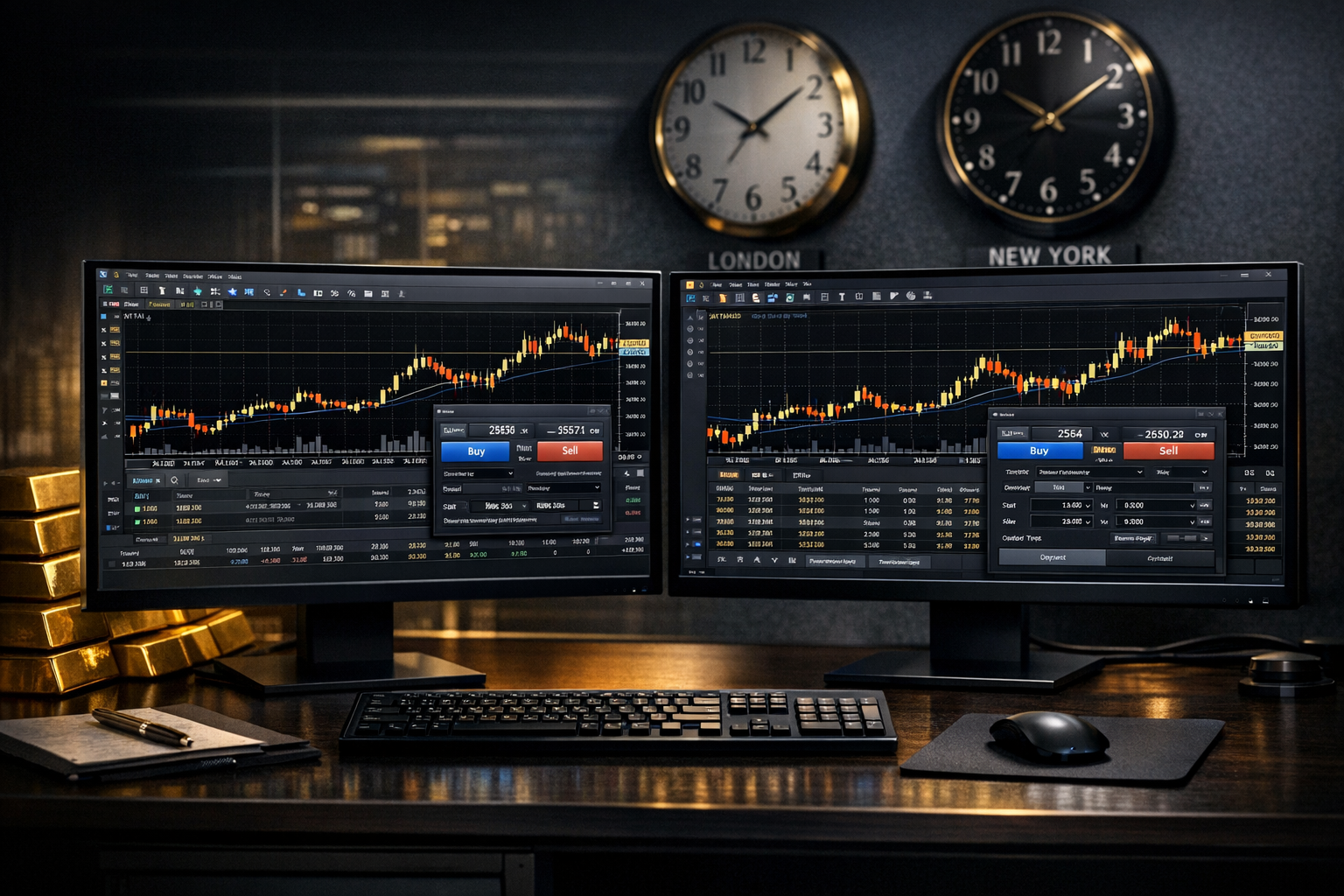
You can do everything “right” on XAUUSD… and still get chopped to pieces on FOMC day.
Gold (XAUUSD) is sitting around $2650 (+0.35% in the last 24 hours), and the market is watching the Fed like a hawk.
If you want to trade XAUUSD during FOMC, you need more than a bias.
You need a signal execution plan that survives widened spreads, slippage, fakeouts, and the second wave after Powell speaks.
TL;DR — The FOMC XAUUSD Signal Execution Playbook
- Don’t trade the headline. Trade the reaction once spreads normalize and structure forms (often 3–10 minutes after).
- Use volatility filters. If 1-minute candles exceed $6–$10 repeatedly or spreads blow out beyond your limit, it’s a no-trade.
- ATR-based stops beat fixed stops on FOMC. A typical gold stop might be $10–$25, but on Fed days it must match volatility.
- Partial take-profits reduce stress. Bank 30–50% at 1R, then trail or target 2R–3R (example: risk $12, aim $24–$36).
- Timing matters more than prediction. Your best windows are often 10–45 minutes after the decision and during Powell Q&A.
- Signals work best with rules. Follow entry/SL/TP exactly, but add execution rules: max spread, max slippage, and “two-candle confirmation.”
Why FOMC Rate Decisions Move Gold So Violently (and Why Traders Get Trapped)
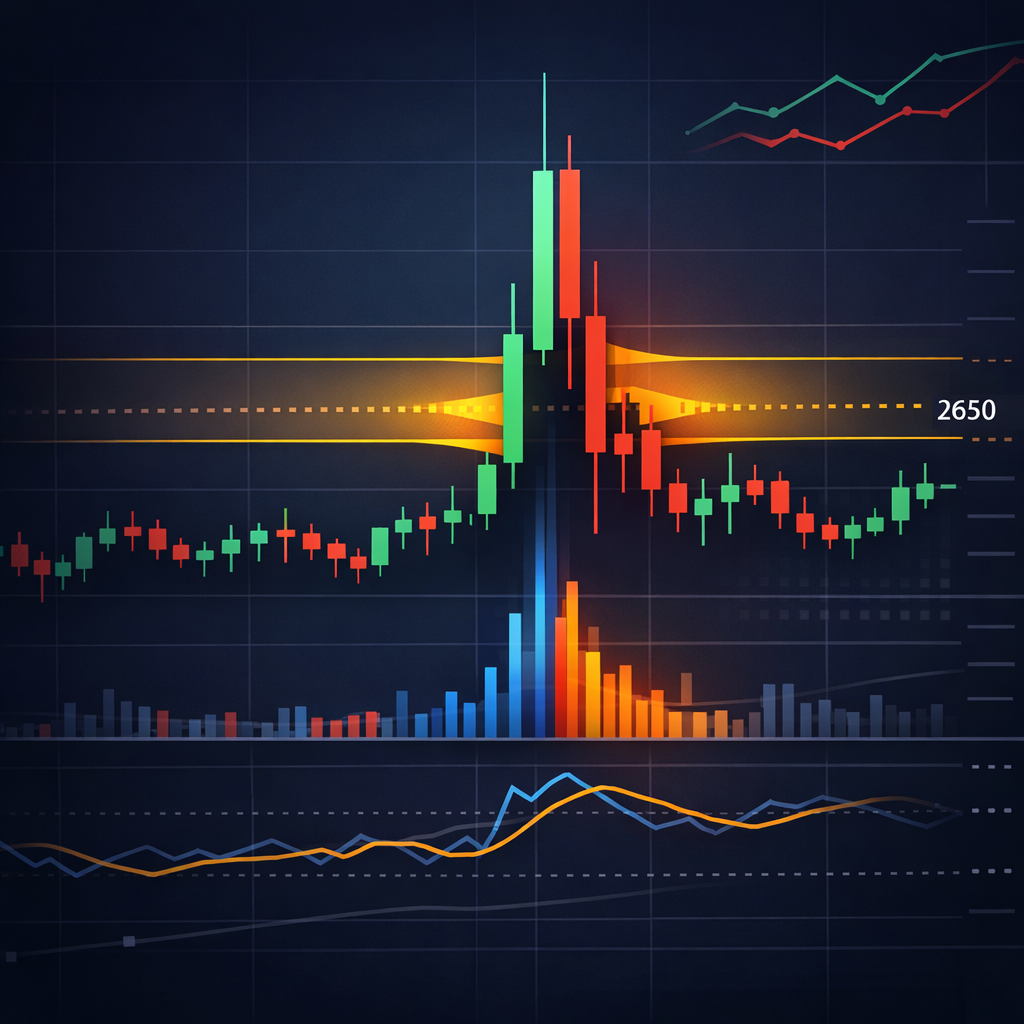
Gold isn’t just a commodity.
In practice, XAUUSD trades like a macro instrument that reacts to real yields, the US dollar, and risk sentiment in seconds.
Right now, the broader tape matters: DXY around 106.80, USD/JPY near 149.50, EUR/USD around 1.0520, and GBP/USD around 1.2680.
On FOMC days, these markets can all move together, then diverge, then snap back.
The three drivers that hit XAUUSD on FOMC
1) Rate decision (headline): Hike/cut/hold is the first punch.
But most of the time, the market is already positioned for the headline.
That’s why the first spike can be a trap.
2) Statement + dots (expectations): The Fed’s guidance changes the path of rates.
Gold reacts to the future, not the present.
If dots turn more hawkish than expected, gold can dump $20–$40 in minutes even if rates are unchanged.
3) Powell press conference (re-pricing): This is where the “real move” often happens.
Markets interpret tone, wording, and risk framing.
It’s common to see gold spike up, reverse down, then trend for 60–120 minutes.
Why retail traders lose: execution, not analysis
Most losses happen because of spread expansion, slippage, and emotional clicking during 1-minute chaos.
You can have the correct direction and still get stopped out by a $15 wick.
Or you can chase a breakout at $2664 and get filled at $2668, instantly down $4 before the move even starts.
That’s why this guide is not a “predict the Fed” article.
It’s a practical XAUUSD news trading strategy built for signal execution under stress.
If you want the broader framework we use across markets, start with our main signals hub at United Kings premium trading signals.
What Makes a “Good” Gold Trading Signal on Fed Day (and What Makes It Dangerous)
On a normal day, a clean signal is one that aligns with structure, momentum, and risk-reward.
On FOMC day, a clean signal must also be executable.
That means you can realistically enter near the planned price, place the stop, and manage the trade without getting destroyed by microstructure.
Signal quality checklist for FOMC conditions
- Clear entry zone (not a single “perfect” price): e.g., Buy $2642–$2644, not “Buy $2642.37”.
- Stop loss outside the noise: typically $10–$25 on gold, but adjusted for event volatility.
- At least 1:2 R:R: if SL is $12, first realistic TP should be $24 away (e.g., $2643 entry, SL $2631, TP1 $2667).
- Defined invalidation: if price closes below/above a key level, you’re wrong—no arguing.
- Execution rules included: max spread, max slippage, and time window.
Two signal types that work best around FOMC
1) Post-release continuation signals: You wait for the first impulse, then enter on a pullback when structure confirms.
This avoids the headline whipsaw but still captures the trend.
2) Break-and-retest signals: You trade a key level (like $2660 or $2630) only after a break and retest with candles closing in the direction.
This reduces false breakouts, which are common during the first 5 minutes.
What makes a signal dangerous on Fed day
- “Market execution now” during the release minute.
- Tight stops like $5–$7 on gold when 1-minute candles are $8–$12.
- Targets too close (TP $8 with SL $12) that don’t justify the risk.
- No spread/slippage guidance—you’ll get filled badly and blame the signal.
At United Kings, our gold calls are built for execution with clear Entry, SL, and TP levels, and we focus heavily on the London and New York sessions when liquidity is best.
If you want to see how we structure them, explore our dedicated page for XAUUSD gold signals.
And if you’re also trading majors around the same macro event, our forex signals help you align gold with USD pairs instead of trading them in isolation.
FOMC vs Normal Session: Spreads, Slippage, and Volatility (Comparison Table)
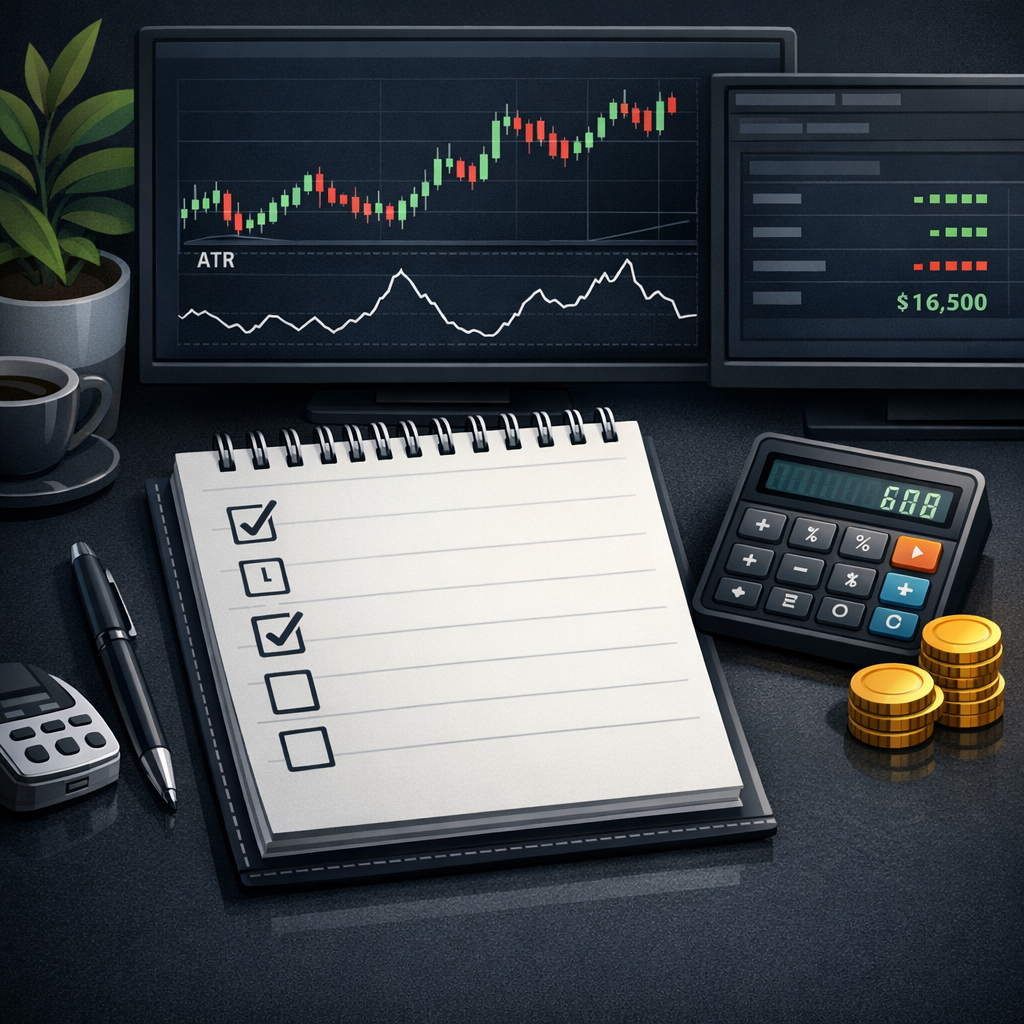
FOMC trading is not “harder” because the chart is mysterious.
It’s harder because your broker’s conditions change and the market’s microstructure turns hostile.
That’s why we build an execution plan that assumes imperfect fills.
Key differences you must plan for
| Factor | Normal NY Session (Typical) | FOMC Decision Window (Typical) | What You Do |
|---|---|---|---|
| Spread on XAUUSD | $0.20–$0.50 | $0.80–$3.00+ (can spike) | Set a max spread rule (e.g., don’t enter if spread > $1.20) |
| Slippage risk | Low to moderate | High (especially minute 0–2) | Use limit orders or wait for stabilization |
| 1-min candle size | $1–$4 | $6–$15+ (wicks common) | Use ATR-based stops; avoid tight SLs |
| False breakouts | Occasional | Very common | Require candle close confirmation + retest |
| Liquidity | Stable | Patchy for seconds at a time | Reduce size; avoid market orders at release |
| Emotional pressure | Moderate | Extreme | Pre-plan entries, SL, TP, and “no trade” rules |
When traders say “news trading doesn’t work,” what they often mean is: “I traded the release minute with a market order and a $6 stop.”
That’s not a strategy—it’s a coin flip with bad pricing.
If you want a broader checklist to judge any provider before you risk money, keep this bookmarked: signals provider checklist for beginners.
The Pre-FOMC Setup: Build Your Bias Without Predicting the Fed
Let’s get practical.
When gold is around $2650, you don’t need to guess whether the Fed will sound hawkish or dovish.
You need a plan for both outcomes and a filter for when the market becomes untradable.
Step 1: Mark the “decision zone” on XAUUSD
In the 24–48 hours before FOMC, gold often compresses into a range.
For our current context, a realistic working range could be:
- Resistance zone: $2665–$2685
- Support zone: $2620–$2635
- Pivot / magnet: $2648–$2652
These zones matter because FOMC moves frequently start by running liquidity above/below them.
Step 2: Align gold with the dollar and yields proxy
You don’t need a Bloomberg terminal.
Use what you have: DXY at 106.80 and key USD pairs.
If DXY is trending up into FOMC while gold holds $2650, that’s a warning sign: gold may be “held up” by safe-haven bids that can vanish fast.
Also watch USD/JPY around 149.50.
When USD/JPY is bid and rising, it often signals higher US yields, which can pressure gold.
Step 3: Decide your “only trade if” conditions
This is where most traders level up.
Before the event, you write rules like:
- Only take a buy if price reclaims $2660 and holds above it for two 1-min closes.
- Only take a sell if price breaks $2635 and retests from below without a $10 wick.
- No trade if spreads stay above $1.50 for more than 3 minutes after the release.
Step 4: Pre-size your risk (not your lot size)
On FOMC, we recommend thinking in dollars at risk, not lots.
Example: if your rule is “max -1% on the event,” then your position size must shrink if your stop expands.
If your normal stop is $12, but today you need $20, your lot size should be roughly 40% smaller to keep risk constant.
For a deeper dive into building that logic into your trading, use our guide: risk management strategies when using signals.
Volatility Filters and “No-Trade” Rules (Your Account’s Seatbelt)
Here’s the uncomfortable truth.
The best FOMC trade is often the one you don’t take.
Your edge comes from participating only when the market is tradable.
Volatility filter #1: Candle size threshold
Open a 1-minute chart.
If you see repeated candles printing $10+ bodies with long wicks in both directions, price is not discovering value—it’s hunting orders.
Rule we like: if the last 3 one-minute candles have a high-to-low range above $12 on average, stand down for 5–10 minutes.
Volatility filter #2: Spread threshold
Spreads can go from $0.30 to $2.50 instantly.
If you enter a breakout with a $2 spread, you’re starting the trade down $2.
Rule we like for many brokers: no entry if spread > $1.20.
Adjust this to your broker’s typical conditions, but set the rule before the event.
Volatility filter #3: “Two-direction sweep” condition
This is the classic FOMC trap.
Gold spikes up from $2650 to $2668, then instantly dumps to $2638, then returns to $2658.
If that happens within 2–4 minutes, the market is sweeping liquidity.
Rule: if both sides of the pre-FOMC range are swept in under 10 minutes, you wait for a new range to form.
Hard no-trade conditions (non-negotiable)
- Your platform freezes, quotes lag, or you can’t modify stops reliably.
- Spread spikes beyond your rule more than twice in 5 minutes.
- You missed the entry by more than your maximum slippage rule (example: > $2.50).
- You feel the urge to “make it back” after a loss (revenge trading signal).
If you want to understand how our gold calls behave when news hits unexpectedly (and why rules matter), read: how gold signals react to unexpected news events.
30 Minutes Before to 2 Hours After: The Timing Checklist That Actually Works
Most traders treat FOMC like a single moment.
Professionals treat it like a two-hour process with phases.
Here’s the timing checklist we use to execute gold trading signals on Fed rate decision days.
T-30 to T-10 minutes: Prepare, don’t predict
- Mark the nearest liquidity levels: for example $2660, $2675, $2640, $2630.
- Check current spread and write it down (baseline).
- Cancel any old pending orders that don’t match today’s plan.
- Decide your max loss for the event (example: 0.5%–1%).
During this window, gold often “drifts” around the pivot (near $2650) as positioning tightens.
T-10 to T-1 minute: Reduce variables
- Move to the execution timeframe you trust (1-min for timing, 5-min for structure).
- Confirm your order type plan: limit entries on pullbacks, not market orders at the release.
- Pre-calc your stop distance using ATR logic (we’ll cover this next).
T (release minute) to T+3 minutes: Observe only
This is where accounts go to die.
Spreads widen, slippage peaks, and wicks print through stops that were “safe” yesterday.
Unless you are an experienced news trader with specialized execution, the best play is to wait.
T+3 to T+15 minutes: First tradable structure
Now you look for one of two things:
- Continuation: impulse move, then a pullback that holds above/below a key level.
- Reversal: spike-and-fade where price re-enters the pre-event range and breaks the opposite side.
This is a prime window for signal execution—if spreads normalize.
T+15 to T+45 minutes: The “real move” window
This is often where the market chooses direction.
If gold breaks above $2665 and holds, you may see a measured push toward $2685–$2690.
If it loses $2635 cleanly, $2620 and $2610 become realistic magnets.
T+45 to T+120 minutes: Powell Q&A and trend management
Expect second-wave volatility during Powell’s answers.
This is where partial profits, trailing stops, and “do nothing” discipline separate pros from gamblers.
If you’re new to executing signals under pressure, also review our execution guide here: how to use Telegram signals as a beginner.
ATR-Based Stops for XAUUSD on FOMC (With Real Price Examples)
Fixed stops can work on calm days.
On FOMC, fixed stops often become random.
That’s why we like ATR-based stops as a baseline, then we place them beyond structure.
Step-by-step: how to set an ATR-based stop on gold
- Choose your execution timeframe: 5-minute ATR is a solid balance for FOMC management.
- Read the ATR value: assume 5-min ATR is $4.50 during pre-event compression.
- Multiply for event conditions: use 2.5x to 4x depending on volatility. Example: 3x $4.50 = $13.50.
- Place SL beyond structure: not just ATR distance—beyond the swing low/high plus buffer.
Example 1: Post-release continuation buy
Scenario: after the decision, gold spikes to $2666, pulls back, and forms support at $2652–$2654.
You receive a signal concept like: Buy $2654, SL $2642, TP $2678 / $2690.
- Entry: $2654
- Stop: $2642 (risk $12)
- TP1: $2678 (reward $24 = 2R)
- TP2: $2690 (reward $36 = 3R)
This fits the $10–$25 stop guideline and respects 1:2 to 1:3 R:R.
Example 2: Break-and-retest sell after a hawkish repricing
Scenario: gold breaks $2635, retests $2636–$2638, then rejects.
Sell plan:
- Entry: $2637
- Stop: $2652 (risk $15)
- TP1: $2607 (reward $30 = 2R) — if you prefer to keep within our guideline range, set TP1 at $2610
- TP2: $2592 (reward $45 = 3R) — optional, only if trend is strong; otherwise manage toward $2610–$2620
Notice the key point: the stop is not “tight.”
It’s placed where the trade idea is invalidated—above the retest zone and beyond typical wick noise.
Common ATR mistakes on FOMC
- Using 1-min ATR and getting an SL that’s too small.
- Setting SL purely by ATR without structure (you’ll get clipped).
- Not reducing position size when SL expands (risk balloons).
If you want more on sizing and survival rules, our risk hub is here: risk management for signal traders.
Partial Take-Profits, Trailing Stops, and the “Two-Target” Method
FOMC moves are fast.
They can also reverse violently.
That’s why “one TP and pray” is not ideal for news conditions.
The two-target method (simple and effective)
We structure many trades with:
- TP1 at 1R (or 1.2R) to reduce emotional load.
- TP2 at 2R–3R to capitalize on the trend if it runs.
Example with current gold prices
Say you buy XAUUSD at $2646 after a confirmed reclaim of the pivot.
Your stop is $2634 (risk $12).
- TP1: $2658 (+$12 = 1R). Close 40%.
- Move SL to breakeven or to -$2 (to cover spread) after TP1.
- TP2: $2670 (+$24 = 2R). Close another 40%.
- Runner: trail the final 20% under 5-min higher lows toward $2685–$2690 if momentum stays strong.
Trailing stop rules that work on Fed days
Trailing “too tight” is the fastest way to donate profits back.
Two practical approaches:
- Structure trail: move SL under/over the last 5-min swing (best for trending moves).
- ATR trail: trail by 2x 5-min ATR once trade is > 1.5R in profit (best when swings are messy).
When to take full profit early
Sometimes the best decision is to exit before TP2.
Consider closing the whole trade if:
- Spread suddenly expands again during Powell Q&A.
- Price prints a major reversal candle near your target (e.g., $2685 rejection wick).
- DXY flips hard in the opposite direction and gold stalls.
This is also where having a live community helps.
United Kings has a 300K+ active trader community where traders compare execution conditions and keep each other disciplined.
When you’re ready, join our Telegram here: United Kings Telegram trading room.
Step-by-Step: Executing a United Kings XAUUSD Signal on FOMC Day
Signals are not magic.
They’re a plan.
Your job is to execute the plan with rules that match FOMC conditions.
Step 1: Confirm the time window
If a signal is posted right at the decision minute, be cautious.
Our preferred execution is usually post-release once spreads normalize.
If you’re within minute 0–2 and spreads are wide, waiting is a position.
Step 2: Check your execution constraints
- Max spread: set a number (example $1.20).
- Max slippage: set a number (example $2.50).
- Max risk: define event risk (example 0.5%–1%).
Step 3: Use “zone entries” not perfection entries
On FOMC, trying to hit the exact entry is how you chase.
If the signal says Buy $2654, treat it as Buy $2653.5–$2655.5 depending on spread.
Step 4: Place SL immediately (and validate it)
Never enter without the stop already planned.
Then validate it against structure:
- Is it beyond the last swing?
- Is it at least 2–3x the 1-min noise?
- Does it keep your risk inside your event limit?
Step 5: Manage with a pre-written plan
Write it before you enter:
- At TP1: close X% and reduce risk.
- At TP2: close Y% and trail the rest.
- If price stalls for 20–30 minutes: consider reducing exposure.
Step 6: Log the trade (especially on news)
FOMC trades teach you more than normal trades—if you document them.
Record your fill price, spread at entry, slippage, and whether you followed rules.
To see how we think about execution quality across markets, explore our education hub via United Kings Blog.
Common FOMC XAUUSD Traps (and How to Avoid Them With Simple Rules)
Let’s name the traps clearly.
If you can recognize them in real time, you’ll avoid most FOMC damage.
Trap #1: The “first spike” breakout
Gold jumps from $2650 to $2667 in one minute.
Everyone buys.
Then the candle closes and the next minute dumps to $2646.
Rule: don’t take the first breakout.
Wait for a pullback and a hold above the broken level (two 1-min closes is a simple filter).
Trap #2: The wick stop-out
You sell $2640 with a $7 stop at $2647.
Price wicks to $2649, stops you out, then drops to $2625.
Rule: on FOMC, stops must be placed beyond the wick zone.
Use ATR + structure, not hope.
Trap #3: The spread tax
You enter at $2655 ask, but the chart shows $2653 bid.
You’re instantly down $2.
Rule: if spread is above your threshold, you don’t trade.
No exceptions, because exceptions become habits.
Trap #4: The “Powell reversal” after you relax
The decision hits, gold trends for 20 minutes, and you think it’s done.
Then Powell answers one question and the market reprices instantly.
Rule: reduce risk after TP1 and expect second-wave volatility.
Don’t let a winning trade become a loser because you refused to manage it.
Trap #5: Overtrading the chop
Gold oscillates between $2646 and $2656 for 30 minutes.
You take three trades and pay spread three times.
Rule: cap your attempts.
Example: maximum 2 trades in the first hour after FOMC.
If you want a deeper read on trader behavior under stress, you’ll like our psychology breakdown on the site (and it pairs perfectly with this playbook): more trading psychology and execution guides.
Putting It All Together: Two Complete FOMC Trade Playbooks (Buy and Sell)
You don’t want theory.
You want a playbook you can run when the candles start flying.
Here are two complete, realistic plans using current context and the $2610–$2690 level guidelines.
Playbook A: Dovish surprise / USD selloff / Gold continuation buy
Market picture: DXY drops from ~106.80, EUR/USD pops above 1.0520, USD/JPY dips under 149.50.
Gold spikes up, then holds above the pre-event resistance.
- Trigger: XAUUSD breaks above $2660 and retests $2660–$2658 with 2 x 1-min closes holding.
- Entry: Buy $2660–$2662
- Stop: $2646 (risk ~ $14–$16 depending on fill)
- TP1: $2688 (reward ~ $26–$28 ≈ 1.7R–2R). Close 40–50%.
- TP2: $2690 (conservative) or manage a runner with a trail if volatility remains directional.
- Management: After TP1, move SL to $2658 or breakeven minus spread.
No-trade clause: if price breaks $2660 but immediately wicks down to $2648 and back up (two-direction sweep), you wait for a new base.
Playbook B: Hawkish repricing / USD rally / Gold breakdown sell
Market picture: DXY jumps above 106.80, USD/JPY pushes higher, EUR/USD and GBP/USD slip.
Gold breaks support and fails to reclaim it.
- Trigger: XAUUSD breaks below $2635 and retests $2635–$2638, then prints a rejection candle on 1-min and 5-min.
- Entry: Sell $2634–$2637
- Stop: $2650–$2654 (risk $16–$20)
- TP1: $2610 (reward $24–$27 ≈ 1.2R–1.6R). Close 40–50%.
- TP2: $2590–$2600 is possible on extreme hawkishness, but only trail if conditions remain clean; otherwise keep it to $2610–$2620 region.
- Management: If price reaches $2622 quickly, consider moving SL to entry to protect against snapback.
No-trade clause: if spreads remain elevated and fills are poor, skip it—even if the setup is “perfect.”
This is exactly how we think when we publish our premium calls: structured levels, realistic stops, and management logic.
You can learn more about our approach and team on the United Kings about page.
How United Kings Signals Fit Into FOMC Trading (Without Overtrading)
Signals are most powerful when they remove decision fatigue.
But on FOMC, they must be paired with execution discipline.
What you should expect from a premium signal on Fed day
- Clear Entry, SL, TP levels you can execute even with some slippage.
- Session-aware timing (we focus on London/NY liquidity, not random hours).
- Educational context so you understand the “why,” not just the numbers.
- Risk-first mindset—because one FOMC can erase a month of gains if you gamble.
How to avoid overtrading signals during FOMC
Overtrading isn’t taking many trades.
It’s taking trades when your edge is gone.
Use these caps:
- Max 2 attempts in the first hour after the decision.
- Max 1 re-entry after a stop-out (only if structure remains valid).
- Stop trading after hitting daily loss limit (example: -1%).
Where traders mess up: mixing strategies
They start with a plan to wait for confirmation.
Then they see a $12 candle and scalp randomly.
Then they blame the signal provider.
Pick one approach for the event:
- Post-release continuation only, or
- Break-and-retest only.
If you want to follow gold and forex together during macro events, keep both hubs open: gold signals and forex signals.
And if you ever need support with access or membership questions, our team is reachable via United Kings contact.
FAQ: Trading XAUUSD During Fed Rate Decisions
1) Is it safe to trade gold during FOMC?
It can be tradable, but it’s not “safe.”
Volatility, spreads, and slippage increase significantly.
That’s why you need strict risk limits, volatility filters, and a plan for no-trade conditions.
2) What’s the best timeframe to trade XAUUSD around FOMC?
Many traders use 1-minute for execution timing and 5-minute for structure confirmation.
Higher timeframes (15-min, 1H) help define the key levels like $2660 or $2635, but entries are usually refined lower.
3) Should I place pending orders before the Fed announcement?
For most traders, it’s risky.
Pending orders can be filled during spread spikes or on wick sweeps, leading to poor entries.
A safer approach is waiting for post-release structure and then using limit orders on pullbacks.
4) How big should my stop loss be on FOMC for gold?
There is no single number.
In the $2610–$2690 environment, many FOMC trades require $12–$25 stops depending on ATR and structure.
What matters more is that your position size adjusts so your account risk stays constant.
5) Do gold trading signals work during Fed rate decisions?
They can work well when they’re designed for execution and you follow rules on spread, slippage, and confirmation.
Signals are not guarantees, and FOMC conditions can invalidate technical levels quickly.
Risk Disclaimer (Read This Before You Trade FOMC)
Trading forex and gold (XAUUSD) involves significant risk and is not suitable for all investors.
FOMC events can cause extreme volatility, widened spreads, slippage, and rapid losses.
Past performance does not guarantee future results, and no signal provider can promise profits.
If you’re a beginner, consider practicing on a demo account and risking small amounts until you can execute consistently.
Join United Kings: Premium XAUUSD Signals Built for London & NY Sessions
If you want a structured way to trade gold around major events like FOMC, we built United Kings for exactly that.
We deliver premium Telegram signals for forex and gold with clear Entry, SL, and TP levels, plus education so you understand the setup—not just copy it.
We’re proud of our community of 300K+ active traders and a track record that targets an 85%+ win rate with disciplined execution (results vary; risk always exists).
Choose your plan (3 options)
- Starter: 3 Months — $299 (~$100/mo)
- Best Value: 1 Year — $599 ($50/mo, 50% savings) + FREE ebook
- Unlimited: Lifetime — $999 (pay once, access forever)
See all plan details on our United Kings pricing page.
Ready to trade with a real plan on Fed days?
Start with our gold signals and join the live room on Telegram: https://t.me/unitedkings1.
And remember: you don’t need to catch every spike.
You only need to catch the moves where your execution is clean and your risk is controlled.