
Ever watched gold (XAUUSD) sit quiet all night… then explode the moment London opens?
If you’ve traded XAUUSD around the London session, you’ve felt that mix of excitement and frustration.
Excitement because the move can be fast and clean.
Frustration because false breakouts can stop you out in seconds.
This guide is a rule-based London session breakout XAUUSD strategy built for real trading conditions around current levels (XAUUSD near $2650, DXY near 106.80).
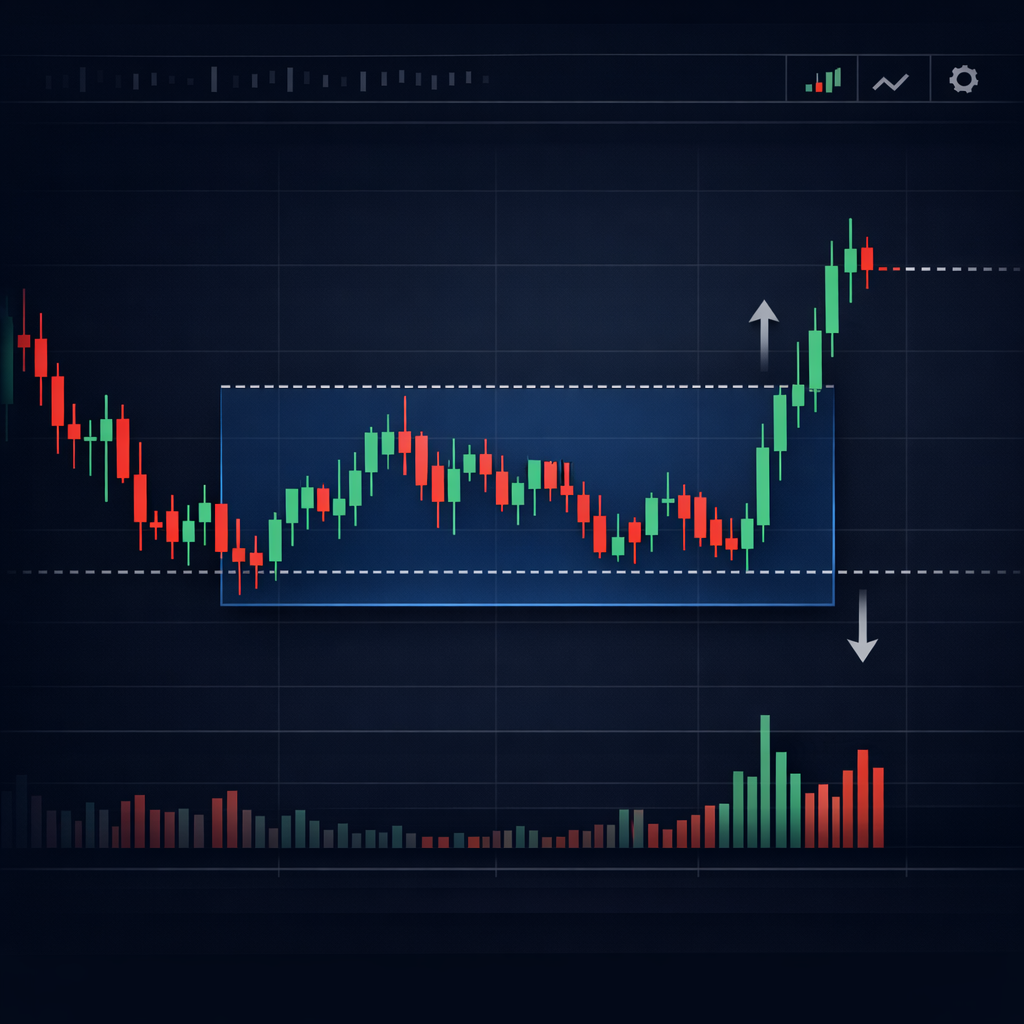
We’ll use a simple framework: mark the Asian range, wait for valid breakout confirmation, place stops and targets based on volatility, then manage the trade like a professional.
TL;DR: London Session Breakout XAUUSD (Quick Rules)
- Mark the Asian range (Tokyo-to-pre-London) and trade the first clean London break of that box.
- Only take confirmed breakouts: a close outside the range + retest/hold or momentum continuation.
- Stops are structural + volatility-based: typically $10–$25 from entry, beyond the range and the retest swing.
- Targets use 1:2 to 1:3 R:R with partials (e.g., take 50% at 1R, trail the rest).
- Avoid false breaks with a checklist: spread, news, range size, wick behavior, and time filter.
- Time-based exits matter: if London doesn’t follow through within 60–120 minutes, reduce risk or exit.
Why the London Session Breakout Works So Well on XAUUSD
Gold is a liquidity-driven instrument.
It reacts sharply when participation increases, and London is one of the biggest liquidity injections of the day.
When XAUUSD is hovering around $2650 with a modest 24h change (+0.35%), it often means the market is waiting for a “real” catalyst: positioning, flows, or a macro headline.
London open is where that waiting frequently ends.
What changes at London open (practically)
During Asia, gold can range as larger players manage inventory and hedge risk.
By the time London opens, the market has a defined box of liquidity (the Asian range) filled with resting stops.
A break of that range is not “magic.”
It’s often simply orders being triggered and new participants chasing momentum.
How macro context influences breakout quality
In the current backdrop, the Dollar Index (DXY) around 106.80 matters.
A firm DXY can cap gold rallies, while a softening DXY can fuel upside breaks.
Also watch the majors for risk tone: EUR/USD near 1.0520, GBP/USD near 1.2680, and USD/JPY near 149.50.
When USD/JPY is pushing higher and DXY is bid, upside gold breakouts may need stronger confirmation.
The edge is not “breakout = buy”
The edge comes from selectivity and trade management.
Most traders lose on breakouts because they enter the first spike, place a random stop, and hope.
We’ll do the opposite: define the box, define the trigger, define the invalidation, and manage the position like a plan—not a guess.
If you want the same structured approach but delivered as ready-to-execute setups, our premium gold signals are built around clear entries, SLs, and multiple TPs—especially during London and NY sessions.
Asian Range Breakout Gold: Defining the Range (Non-Negotiable Rules)
Every breakout strategy lives or dies by how you define the range.
If your “Asian range” is inconsistent, your results will be inconsistent.
So we make it mechanical.
Session times (choose one and stick to it)
You need a fixed window that captures the quiet-to-building phase before London.
Two common choices work well for XAUUSD:
- Option A (tight): 00:00–06:00 London time (captures the core Asian consolidation).
- Option B (standard): 00:00–07:00 London time (includes the pre-London build-up).
Pick one.
Backtest it.
Don’t change it week to week.
How to mark the Asian range (step-by-step)
- Open XAUUSD on M15 (or M5 if you prefer more precision).
- From your chosen start time to end time, mark the highest high and lowest low.
- Draw a rectangle (box) across that period at those levels.
- Extend the box to cover the London open and the first 2–3 hours of London.
That box is your battlefield.
Everything you do next is a reaction to how price behaves around it.
Range size filter (this prevents bad trades)
Not every Asian range is tradable.
Gold can print ranges that are too tight (noise) or too wide (already moved).
Use a simple filter:
- Ideal Asian range: $8–$18
- Too tight: under $6 (more fakeouts)
- Too wide: over $22 (breakout may be late)
Example near current conditions:
Assume Asia prints a high at $2654 and a low at $2642.
That’s a $12 range—a clean candidate.
Where traders go wrong (and how we fix it)
Many traders include the first London spike inside the “Asian” box.
That defeats the purpose.
Your Asian range must be locked before London volatility arrives.
Once London opens, you stop drawing and start executing.
For traders who want a second layer of structure, pair this with risk guidelines from our guide on risk management strategies when using signals.
London Session Breakout XAUUSD: The Exact Entry Triggers (No Guessing)

A breakout is not a wick through the level.
A breakout is acceptance outside the range.
That one concept will save you more money than any indicator.
Trigger #1: Close-and-go (momentum continuation)
This is the cleanest when London opens with strong participation.
Rules:
- Wait for an M15 candle close outside the Asian range.
- The close must be at least $1.50 beyond the range edge (avoid “barely outside”).
- Enter on the next candle’s pullback (or market if it immediately continues).
Example (bullish):
Asian high = $2654.
M15 closes at $2656.2 (over $2 beyond).
Entry = $2656.0–$2656.5 on slight pullback.
Trigger #2: Break-and-retest (higher probability, slightly later)
This is the “professional” entry because it forces the market to prove the level.
Rules:
- Price closes outside the range.
- Price returns to test the broken level (range high for longs, range low for shorts).
- You enter only if the retest holds (rejection wicks, bullish/bearish close, or micro structure shift).
Example (bullish retest):
Break above $2654 to $2660.
Retest dips to $2654.5–$2655.0 and rejects back above $2657.
Entry = $2657 with a defined invalidation below the retest low.
Trigger #3: Liquidity sweep then reversal (the “false break” you trade)
Sometimes London hunts stops above the range high, then reverses hard.
This is common when DXY is firm and gold is stretched.
Rules:
- Price wicks above the Asian high (or below the low) but closes back inside the range on M15.
- Next candle breaks the opposite side micro-structure (e.g., lower low for shorts).
- Entry targets the opposite side of the box first.
Example (bearish sweep):
Asian high = $2654.
London spikes to $2663 but M15 closes back at $2652.
Next M5 breaks below $2650.
Entry short = $2649.5, first target = Asian low near $2642.
These three triggers cover 90% of tradable London behaviors without overcomplication.
They’re also easy to align with our United Kings signals format (Entry, SL, TP1/TP2/TP3) so you can execute quickly.
Stop-Loss Placement for XAUUSD Breakouts (Structure + Volatility)
Gold punishes vague stops.
On XAUUSD, a “random $5 stop” is often just a donation to volatility.
Your stop must sit where your trade idea is objectively wrong.
The two-layer stop model
We use two layers:
- Structure: beyond the retest swing (or beyond the range edge if no retest).
- Volatility buffer: an extra $2–$6 depending on conditions.
This keeps you out of the “stop cluster” where most traders place stops exactly on the level.
Typical stop sizes in current volatility
With gold around $2650, normal London volatility often supports stops in the $10–$25 zone.
That aligns with your guideline and real market behavior.
Stop placement examples (long and short)
Example A: Break-and-retest long
- Asian high: $2654
- Retest low: $2652.8
- Entry: $2657.0
- Stop: $2646.5 (below retest low + buffer, ~ $10.5 risk)
Why this works: if price is truly accepting above the range, it shouldn’t trade back below the retest and push deep into the box.
Example B: Close-and-go short
- Asian low: $2642
- M15 closes at $2639.5
- Entry: $2639.0
- Stop: $2654.0 (beyond range + buffer, $15 risk)
Yes, that stop is larger.
But it’s coherent: the trade is wrong if price reclaims the range and breaks above the opposite edge.
Stop tightening (when it’s allowed)
You can tighten stops only after the market gives you proof.
Proof looks like:
- Two consecutive M5 closes in your direction outside the range.
- A new impulse high/low followed by a higher low/lower high.
- Your position reaches +1R and holds above/below the breakout level.
Until then, keep the stop where it belongs.
If you’re still building confidence with stop placement, combine this with execution best practices from our Forex signals Telegram beginner guide—the mechanics transfer perfectly to gold.
Take-Profit Targets: Building 1:2 and 1:3 R:R Into the Plan
Gold can trend hard after London breaks the Asian range.
But it can also snap back violently.
That’s why your target plan should be predefined, not emotional.
The baseline target model (TP1, TP2, runner)
We’ll use a simple three-stage approach:
- TP1: 1R (bank partial profit, reduce stress)
- TP2: 2R (core target for most days)
- TP3/Runner: 3R or next major level (capture trend days)
This model is compatible with how professional signal providers structure trades.
How to calculate targets (real example near $2650)
Let’s use a realistic London breakout long:
- Entry: $2657.0
- Stop: $2646.5
- Risk: $10.5
Targets:
- TP1 (1R): $2657.0 + $10.5 = $2667.5
- TP2 (2R): $2657.0 + $21.0 = $2678.0
- TP3 (3R): $2657.0 + $31.5 = $2688.5
Notice how TP3 lands near the upper end of the guideline range ($2690).
That’s realistic for a strong London trend day.
Level-based targets (when R:R alone is not enough)
Sometimes the chart gives you obvious magnets:
- Previous day high/low
- Weekly open
- Round numbers like $2660, $2670, $2680
- Unfilled impulsive moves (fair value gaps / inefficiencies)
In those cases, you can blend both methods:
Take partials at 1R and 2R, then aim the runner at the next major level.
What if the range is wide?
If your Asian range is $20+ and your stop becomes $22–$25, your 2R target might be $44–$50 away.
That can be unrealistic on a normal day.
Solution: either skip the trade (best), or scale down expectations and treat it as a level-to-level move, not a 3R home run.
When we send setups via United Kings gold signals, you’ll typically see multiple take-profit levels so you can bank profits systematically instead of trying to “sell the top” or “buy the bottom.”
False Breakout Checklist (The Filter That Saves Your Week)
Most losing breakout trades aren’t “bad luck.”
They’re predictable situations where breakouts fail more often.
So we use a checklist before entering.
The London breakout checklist (8 items)
- 1) Range size is tradable: ideally $8–$18.
- 2) Break candle quality: close outside the range, not just a wick.
- 3) Spread is normal: if spread widens at the moment of breakout, wait.
- 4) Time filter: best trades often occur in the first 30–90 minutes after London open.
- 5) Nearby news risk: avoid entering right before high-impact USD releases.
- 6) Obvious higher-timeframe level: don’t buy directly into a daily resistance at $2685, for example.
- 7) Retest behavior: if retest slices through the level like butter, it’s not holding.
- 8) Correlation sanity check: if DXY is ripping higher, be stricter on gold longs.
Two common false-break patterns (and what to do)
Pattern A: The “double wick” trap
Price wicks above the range high twice, but closes weak both times.
That’s often distribution.
Instead of buying, wait for a close back inside and consider the sweep-reversal setup.
Pattern B: The “instant reclaim”
Price breaks out, then immediately closes back inside the box on M5/M15.
That’s the market telling you it didn’t accept the new price.
Rule: if you entered, reduce risk or exit quickly; don’t “hope.”
News awareness without becoming a news trader
You don’t need to predict CPI or NFP.
You just need to respect the clock.
If a major USD event is scheduled within 15–30 minutes, London breakouts often turn into whipsaws.
Either wait for the release, or trade smaller size with wider stops (only if your plan allows it).
If you want a deeper playbook for volatility spikes, read how gold signals react to unexpected news events—the same survival rules apply to discretionary breakout trading.
Trade Management Framework: Partials, Breakeven, and Time-Based Exits
Entry is only the start.
On gold, trade management is the strategy.
A great entry with poor management often ends as a scratch or a loss.
Step-by-step management plan (simple and repeatable)
- At +1R: take partial profit (commonly 30%–50%).
- After TP1: move stop to breakeven only if price holds outside the range for 2–3 candles.
- At +2R: take another partial (20%–40%).
- Runner: trail behind M15 swing lows/highs or a moving average (optional) until a clear reversal.
- Time-based rule: if no follow-through within 60–120 minutes, reduce exposure or exit.
Breakeven rules that actually work
Breakeven is a tool, not a religion.
Move to BE too early and you’ll get clipped on normal pullbacks.
Use one of these conditions:
- Condition 1: price reaches 1R and forms a higher low (for longs) on M5/M15.
- Condition 2: price reaches 1R and retests the breakout level again, holding cleanly.
- Condition 3: price reaches 1R and DXY confirms (e.g., softening for gold longs).
Time-based exits (the underrated edge)
London breakout trades are momentum trades.
If momentum doesn’t show up, the setup is likely wrong or delayed.
Here’s a practical rule:
- If you enter and price is still inside/near the range after 90 minutes, consider exiting or cutting size by half.
- If price hasn’t hit TP1 by 2 hours, tighten management aggressively.
This rule alone reduces the “death by a thousand cuts” that breakout traders experience.
A realistic management scenario
You buy a confirmed break-and-retest at $2657 with SL $2646.5.
Price pushes to $2667.5 (TP1), you take 50%.
Price pulls back to $2659 but holds above the range high.
You move stop to $2657 (BE) only after the hold is confirmed.
Then price extends to $2678 (TP2), you take another 30%.
You trail the final 20% under M15 swing lows aiming for $2688–$2690.
This is how a single trade can pay you even if the runner fails.
It’s also how our signals are designed: structured exits, not one all-or-nothing target.
Risk Management and Position Sizing for XAUUSD (So One Loss Doesn’t Ruin You)
Gold is not EUR/USD.
XAUUSD can move $10 in a blink during London.
So your sizing must respect volatility.
Pick a fixed risk per trade
Professional consistency comes from risking a small, repeatable amount.
Common ranges:
- Conservative: 0.25%–0.5% per trade
- Moderate: 0.5%–1% per trade
- Aggressive (not recommended for most): 1%–2%
If you’re newer, stay conservative until your execution is stable.
Translate stop distance into lot size (conceptual)
Your lot size should be a function of:
- Account size
- Risk %
- Stop distance ($10 vs $25 is a huge difference)
Example logic:
If you risk $100 and your stop is $10 away, you can size larger than if your stop is $25 away.
The market decides the stop distance; you decide the size.
Daily loss limits (the guardrail)
London breakout trading can tempt you into revenge trades.
Set a daily max loss:
- Rule: stop trading after 2 losses or after -2R on the day.
- Reason: after two failed breakouts, conditions may be choppy.
Correlation risk: gold + USD pairs
Many traders unknowingly stack the same bet.
If you’re long gold and also short DXY proxies (like USD/JPY shorts), you may be doubling exposure.
Given USD/JPY near 149.50 and DXY near 106.80, be aware of USD-driven bursts.
For a deeper due-diligence framework when following any provider, use our signals provider checklist to keep your risk and expectations realistic.
London Breakout vs Other Approaches (When to Use Which)
Breakout trading is powerful.
But it’s not always the best tool for the job.
Here’s how the London session breakout compares to other popular XAUUSD styles.
| Approach | Best Market Condition | Typical Entry Style | Pros | Cons |
|---|---|---|---|---|
| London Session Breakout | Asia range then volatility expansion | Close outside range + retest/continuation | Captures fast moves; clear invalidation | False breaks; needs discipline and timing |
| Mean Reversion | Choppy, range-bound days | Fade extremes back to midpoint | High win rate in ranges | Gets crushed on trend days |
| Trend Pullback | Strong daily trend (bull/bear) | Buy/sell pullbacks to key levels | Great R:R; avoids chasing | Requires identifying trend correctly |
| News Momentum | High-impact releases (CPI, NFP) | Trade post-release structure | Huge moves possible | Spreads/slippage; very risky for beginners |
How to decide (a practical decision tree)
- If Asia is tight and London is approaching: breakout plan.
- If Asia is messy and price is whipping: skip or mean revert.
- If daily trend is clear and London breaks in trend direction: breakout + hold runner.
- If major news is imminent: wait, then reassess.
Where signals fit in
A premium provider should tell you which play is active.
At United Kings, we focus on London and NY windows because that’s where the cleanest expansions and follow-through often happen.
If you also trade FX, our forex signals can help you diversify without forcing trades on gold every day.
Step-by-Step: A Complete London Session Breakout Trade Plan (Template)
You can read strategies all day.
What changes your results is having a template you can execute in under 2 minutes.
Here’s a full plan you can copy into your notes.
Step 1: Pre-London preparation (10 minutes)
- Check current price: XAUUSD around $2650.
- Mark Asian high/low and range size.
- Mark yesterday’s high/low and any obvious H1 supply/demand zones.
- Check DXY (106.80) and USD/JPY (149.50) for USD strength/weakness.
- Scan the calendar for major USD events in the next 2 hours.
Step 2: Define your “A+ setup” conditions
Your A+ breakout trade might require:
- Range size $8–$18
- M15 close outside range by $1.50+
- Retest hold (preferred)
- No major news in 15–30 minutes
Step 3: Execute entry and stop
Pick one trigger (close-and-go or break-and-retest).
Place stop beyond the retest swing + buffer.
Keep stop in the $10–$25 band when possible, but don’t force it.
Step 4: Place targets and management rules
- TP1 at 1R (take 30%–50%)
- TP2 at 2R (take 20%–40%)
- Runner toward 3R or next major level
- Move stop to BE only after confirmation (not immediately)
Step 5: Time-based decision
At +60 minutes, ask: “Did the breakout follow through?”
If not, reduce risk.
At +120 minutes, if still stagnant, exit or tighten aggressively.
Step 6: Post-trade review (5 minutes)
- Screenshot entry, stop, targets.
- Note which trigger you used.
- Score the trade: A/B/C based on rule adherence.
- Track outcomes over 20–30 trades before changing anything.
If you prefer to follow a done-for-you version of this template, our community of 300K+ active traders shares live trade context and education alongside entries inside our signals room and United Kings Telegram channel.
Realistic Examples Around Current Prices (XAUUSD $2610–$2690)
Let’s anchor everything with practical scenarios in the current price neighborhood.
These are not “perfect chart” examples.
They’re the kind you’ll actually see when gold is trading around $2650.
Scenario 1: Clean bullish breakout with retest
Asia prints:
- High: $2654
- Low: $2642
London opens and drives price to $2660.
M15 closes at $2656.2 (acceptance above the range).
Price retests $2654.8 and holds.
- Entry: $2657.0
- SL: $2646.5 (risk $10.5)
- TP1: $2667.5
- TP2: $2678.0
- TP3: $2688.5
Management: take 50% at TP1, move stop to BE only after price holds above $2654 again.
Scenario 2: False upside break then reversal short
Asia prints a tight box:
- High: $2649
- Low: $2641
London spikes to $2658 but closes back inside at $2647.
That’s a sweep.
You wait for structure to break lower on M5, then enter short.
- Entry: $2646.5
- SL: $2661.5 (risk $15.0)
- TP1 (1R): $2631.5
- TP2 (2R): $2616.5
This scenario fits the lower guideline boundary around $2610–$2620 if momentum is strong.
Scenario 3: Breakout that fails the time rule (best exit is early)
Asia range is $10.
You get a close outside the range and enter.
But after 90 minutes, price is still hovering around the breakout level, printing wicks both sides.
This is where many traders get chopped.
Your plan says: reduce exposure or exit.
Even if price later runs, you followed your edge.
The goal isn’t to win every trade.
The goal is to avoid the expensive losses while staying present for the clean expansions.
How to Use This Strategy Alongside United Kings Gold Signals
Many traders ask a fair question:
“If I’m using signals, why learn a breakout strategy?”
Because understanding the logic behind a setup improves execution.
And execution is where most signal-followers struggle.
Signals + strategy = better fills, fewer mistakes
When you understand the Asian range concept, you’ll know why a buy above $2654 makes sense.
You’ll also know when not to chase—like when price already ran $25 and is hitting a daily resistance.
What “premium” should look like (in practice)
At United Kings, our premium Telegram signals are designed to be executable:
- Clear entry (often aligned with London/NY timing)
- Defined SL (not vague “manage risk”)
- Multiple TPs (so you can scale out)
- Education notes explaining the context
We target a high-quality approach with an 85%+ win rate track record in our community—while still respecting that no results are guaranteed and market conditions change.
Which plan fits which trader?
We keep it simple with three options on our pricing page:
- Starter (3 Months): $299 (~$100/mo) for traders who want to test consistency over a quarter.
- Best Value (1 Year): $599 (~$50/mo) with 50% savings plus a FREE ebook.
- Unlimited (Lifetime): $999 pay once for long-term access.
All plans come with a 48-hour money-back guarantee, so you can evaluate the experience without long uncertainty.
Where to start if you’re new
If you’re brand new to following signals, start with execution education first.
Then use this London breakout framework to understand why trades are placed.
Also bookmark our blog for ongoing gold and forex education.
FAQ: London Session Breakout Strategy for XAUUSD
1) What is the best timeframe for the London session breakout on XAUUSD?
M15 is the sweet spot for most traders because it filters noise and gives cleaner candle closes.
M5 works for precision entries, but it increases false signals if you don’t enforce close-based confirmation.
2) What if the breakout happens before London open?
If price breaks during the final part of Asia, be cautious.
Often the best move is to wait for London to either confirm (acceptance) or fade it (reclaim into range).
3) How far should my stop-loss be on XAUUSD breakouts?
In current conditions around $2650, a practical range is $10–$25, placed beyond structure plus a buffer.
Stops that are too tight get hit by normal volatility.
4) How do I avoid getting trapped in false breakouts?
Require an M15 close outside the range, prefer a retest hold, and use the checklist (range size, spread, time filter, news proximity).
Also respect higher-timeframe levels like prior day highs/lows.
5) Can I trade this strategy with signals?
Yes.
In fact, understanding the Asian range and London volatility helps you execute signal entries more confidently and manage partials logically.
Risk Disclaimer (Read This Before You Trade)
Forex and gold trading involves significant risk and may not be suitable for all investors.
Prices can move rapidly, and you can lose more than your initial deposit depending on your broker and leverage.
Past performance does not guarantee future results.
Nothing in this article is financial advice; it is educational information.
If you are a beginner, consider practicing on a demo account before risking real capital.
Join United Kings: Premium Gold Signals Built for London & NY Sessions
If you want to stop guessing and start trading with structure, we’d love to have you inside United Kings.
We deliver premium Telegram signals for gold and forex with clear Entry, SL, and TP levels, designed around the London and New York sessions.
You also get educational context so you understand the “why,” not just the numbers.
- Explore all packages on our United Kings pricing page (3 Months $299, 1 Year $599, Lifetime $999).
- Start with our dedicated XAUUSD gold signals if gold is your main market.
- Prefer currencies too? Add our forex signals for diversification.
- Join the live community on United Kings Telegram.
Your next step: mark tomorrow’s Asian range, wait for a confirmed London break, and execute the plan exactly as written.
And if you want those setups delivered to you with professional trade management levels, join United Kings today.