
You're watching XAUUSD hover around $2650, London is about to fully come online, and you can almost feel the liquidity thickening.
Spreads tighten, candles get cleaner, and the "random" chop you saw in Asia suddenly turns into decisive runs.
If you've ever felt like gold only behaves when London opens, you're not imagining it. London session gold trading is where a huge chunk of XAUUSD's daily business gets done.
TL;DR: The London Session Gold Trading Playbook
- London is gold's "structure session": it often sets the day's high/low framework and creates the best risk-to-reward swings.
- Trade the first 90 minutes with rules: focus on liquidity sweeps, break-and-retests, and clean continuation patterns.
- Use tight, logical risk: for XAUUSD, many London setups allow $10–$25 stops with 1:2 to 1:3 targets (e.g., risk $15 to make $30–$45).
- Let DXY and yields "confirm": with DXY near 106.80, gold around $2650 can react sharply to USD strength/weakness.
- Avoid the trap windows: don't force trades in dead zones; wait for either London open expansion or London–NY overlap momentum.
- Consistency comes from process: pre-session levels, a single A+ setup, and strict sizing beat "more trades."
Why the London Session Is the Sweet Spot for XAUUSD

The London session is where gold often transitions from "overnight positioning" to "institutional execution."
When Europe opens, you get a surge in participation from banks, hedgers, funds, and prop desks. That participation is what creates tradable structure.
Gold is a global market, but liquidity isn't evenly distributed across the day.
Asia can be clean on some days, but it's also famous for range-building. London frequently breaks those ranges.
What "most liquid hours" really means for gold traders
Liquidity isn't just "more volume." It's also better fills, tighter spreads, and more reliable reactions at levels.
That's why a $15 stop can make sense in London while the same stop gets wicked out in a thinner session.
With XAUUSD around $2650 (+0.35% in the last 24h), the market is moving, but not in a panic.
This is exactly the environment where London can produce measured expansions—the kind you can plan, execute, and manage.
London's role in the daily gold narrative
In practice, London often does one of three things:
- Sets the day's range by establishing the first meaningful high/low outside Asia.
- Reverses Asia by sweeping one side of the Asian range and rotating hard the other way.
- Continues the prior day trend after a calm Asian consolidation.
When you understand London's "job," your chart stops looking random.
You start asking better questions: Where is liquidity resting? Which side is trapped? What level would confirm the move?
This is also why professional signal providers emphasize London and New York.
At United Kings, our core focus is the London and NY sessions because that's where the highest-quality setups appear most frequently for both gold and majors like EUR/USD (1.0520), GBP/USD (1.2680), and USD/JPY (149.50).
If you want the bigger ecosystem around your gold trades—USD flows, risk sentiment, and cross-market confirmation—London is where it comes together.
London Session Gold vs Other Sessions (What Changes and Why)
Not all sessions are equal, and treating them the same is one of the fastest ways to develop inconsistent results.
A clean London plan starts by accepting that the same pattern behaves differently depending on who is active.
Here's a practical comparison you can use when deciding which hours match your strategy and personality.
| Session | Typical XAUUSD Behavior | Best For | Common Trap |
|---|---|---|---|
| Asia | Range building, slower candles, occasional spikes | Range fades, patient scalps, level mapping | Overtrading chop and paying spread for nothing |
| London | Breakouts, liquidity sweeps, trend initiation | Structured entries, 1:2–1:3 RR swings | Chasing the first impulse without confirmation |
| London–NY Overlap | Fast expansions, news reactions, strong follow-through | Momentum trades, continuation after London structure | Entering right before high-impact US data |
| Late NY | Liquidity drops, more erratic wicks | Position management, not fresh entries | Giving back profits in thin conditions |
Why London breakouts are more trustworthy
London brings participation from major financial centers, and that creates two-way order flow.
When price breaks an Asian high and holds, it's often because real demand is supporting it—not just a stop run.
But the opposite is also true.
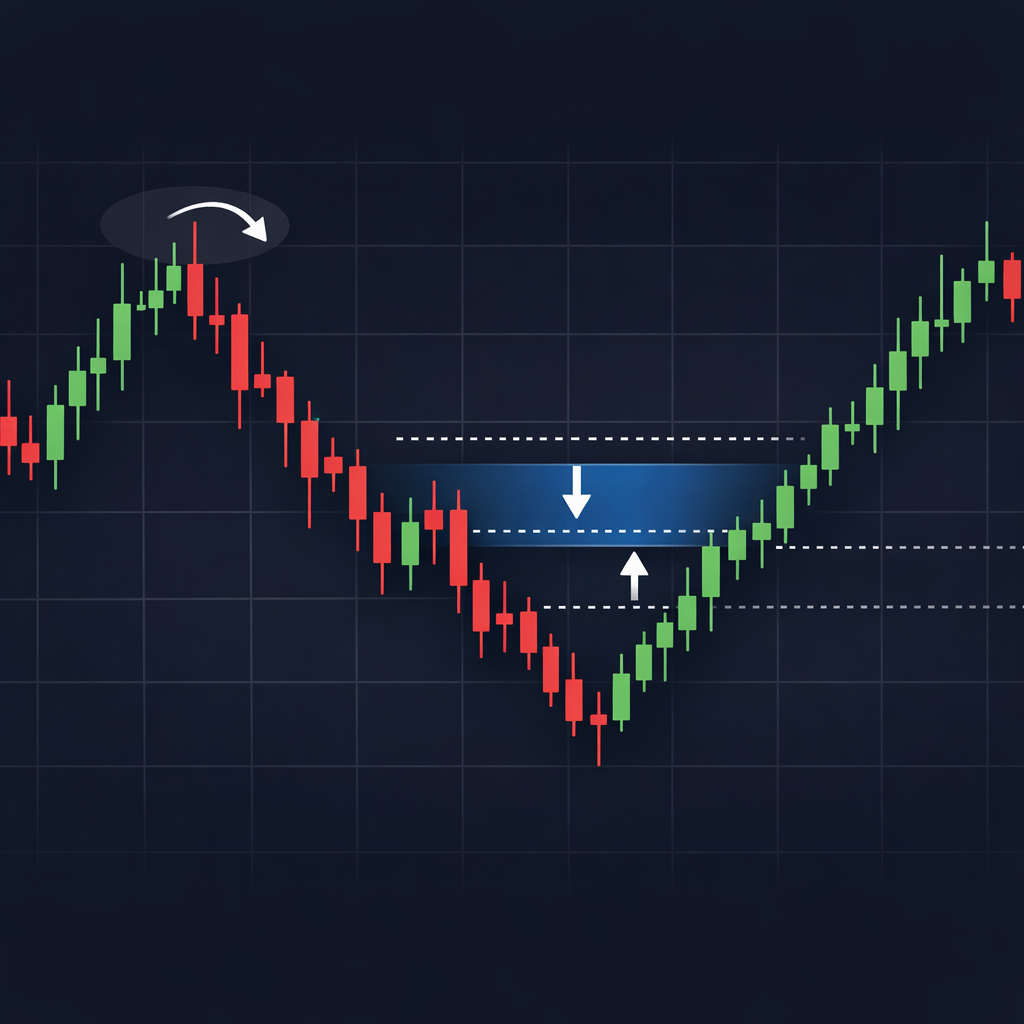
London is famous for liquidity sweeps—a quick push above/below a well-known level to trigger stops, then a reversal.
How to adapt your expectations
If you're trading London, your plan should assume:
- Price may fake out first before the real move starts.
- Stops need to be placed beyond structure, not just "$10 away."
- Targets should respect intraday ranges, not hope.
This is where many traders get stuck: they trade London volatility with an Asia mindset.
London rewards preparation and punishes impulse.
The Pre-London Routine: Levels, Bias, and the 10-Minute Checklist
The easiest way to lose during London is to "wake up and react."
The easiest way to win is to show up with a map.
Your pre-London routine doesn't need to be complicated, but it must be consistent.
We want a repeatable checklist that takes about 10 minutes.
Step-by-step: your pre-London checklist for XAUUSD
- Mark the Asian range: identify Asia high and Asia low on M15 or M30.
- Mark yesterday's high/low: these are magnets for London liquidity.
- Identify the current intraday trend: use H1 structure (higher highs/higher lows or the opposite).
- Note key round numbers: in our context, $2610, $2630, $2650, $2670, $2690 matter.
- Check USD context: DXY at 106.80 is firm; watch if it's pushing higher or stalling.
- Scan the calendar: avoid fresh entries right before high-impact EUR/GBP/US releases.
Now you have levels and context. Next, you define what would make you bullish or bearish.
Bias rules that keep you out of trouble
Bias is not a prediction. It's a conditional plan.
Here are practical bias rules for London session gold trading:
- Bullish bias if price holds above Asia high and retests it cleanly, especially if DXY is softening below a local intraday high.
- Bearish bias if price sweeps Asia high and closes back inside the range, especially if DXY is pushing higher.
- Neutral if price is stuck mid-range and London hasn't shown its hand.
For example, with gold around $2650, suppose Asia formed a range from $2641 to $2656.
If London spikes to $2660, then quickly closes back under $2656, that's not bullish strength. That's a potential sweep.
One more rule: choose your "A+ zone"
Before London starts, decide where you will trade and where you won't.
If your A+ zone is the Asia high/low and yesterday's extremes, you stop taking random mid-range entries.
This single habit can cut your trade count in half and improve your win rate immediately.
It's also how professional signal desks operate: fewer, higher-quality decisions.
Setup #1: The Asian Range Sweep (London Liquidity Grab)
If you only learn one London setup for XAUUSD, learn this one.
The Asian range sweep is the classic "London fakeout" that traps breakout traders and fuels a clean reversal.
What the setup looks like
Asia forms a tight range. Traders draw the high and low.
London opens, price pushes above the high (or below the low), triggers stops, then snaps back inside the range.
That snapback is your clue: the breakout failed, and trapped traders become forced buyers/sellers in the opposite direction.
Entry criteria (rules, not vibes)
- Condition 1: A clear Asian range is visible (at least 2–4 hours of respect).
- Condition 2: London sweeps one side by at least $2–$6 (enough to take stops).
- Condition 3: Price closes back inside the range on M5 or M15.
- Condition 4: You enter on a retest of the swept level from the inside (confirmation).
Example using current price context
Let's say Asia high is $2656 and Asia low is $2641.
London spikes to $2662, then closes an M5 candle back under $2656.
A conservative short entry is on a retest of $2655–$2656 from below (price fails to reclaim it).
A typical stop could be $2670 (about $14–$15 risk depending on fill).
Targets should be structured, not random:
- TP1: mid-range near $2648 (partial, reduce risk)
- TP2: Asia low at $2641
- TP3 (stretch): liquidity below at $2630–$2625 if momentum continues
If you risk $15 and aim for $45, that's a clean 1:3 profile when the move runs.
On days it doesn't, TP2 still gives you a realistic 1:2-ish opportunity.
Common mistakes that ruin this setup
- Entering the sweep: shorting the spike before it confirms can be expensive.
- Stops too tight: placing SL right on the wick top is asking to be tagged.
- Forcing it mid-range: the edge is at the boundary, not in the middle.
This setup is one reason our members value structured alerts in real time.
When a sweep forms fast, having clear Entry/SL/TP levels (like we publish in our premium gold signals) can prevent emotional entries.
Setup #2: London Break-and-Retest Continuation (The "Clean Trend Day")
Not every London move is a fakeout.
Some days, London simply continues the higher-timeframe trend and the best trade is the boring one: break, retest, go.
When this setup is most likely
Look for these conditions:
- H1/H4 structure is already trending (clear HH/HL or LH/LL).
- Asia consolidates in a tight flag or wedge.
- DXY is aligned with the move (e.g., DXY softening for gold longs).
With gold near $2650, imagine the prior day closed strong and price is holding above $2635 support.
Asia prints higher lows and compresses under $2656.
Entry criteria
- Condition 1: London breaks above the consolidation with an M15 close.
- Condition 2: Price retests the breakout level (former resistance becomes support).
- Condition 3: Retest holds with a rejection candle (pin bar / engulf / strong close).
- Condition 4: Your stop is below the retest structure, not "somewhere."
Example trade plan
Breakout above $2656 with an M15 close at $2659.
Retest pulls back to $2656–$2657 and prints a bullish M5 engulfing candle.
Entry: $2658.
Stop loss: $2644 (about $14 risk; below the retest swing low).
Take profits:
- TP1: $2686 (about $28; ~1:2)
- TP2: $2700 is a psychological magnet, but per your guideline we'll keep targets realistic inside $2690. So a strong TP2 could be $2690 (~$32; ~1:2.3)
On continuation days, the "gift" is that your invalidation is clear.
If price breaks out and can't hold the retest, you're wrong quickly—and that's a professional feature, not a bug.
How to avoid getting chopped
Two filters help massively:
- Wait for the M15 close beyond the level. Wicks are not breaks.
- Demand a retest. If it never retests, you missed it. Let it go.
Traders who chase the first impulse often buy the top of the breakout candle.
Professionals buy the retest because it offers defined risk and better RR.
Setup #3: The London Open Reversal (When the First Move Lies)
London has a personality: it often makes an early push, then rotates.
This is the "first move lies" concept, and it's especially common when Asia was one-directional.
The story behind the pattern
During Asia, price drifts up or down in a controlled way.
Retail traders interpret that drift as the day's trend and position accordingly.
London opens, pushes that direction one more time to fill orders and grab stops, then reverses into the real move.
That reversal can be the cleanest trade of the day because it's powered by trapped positions.
What you look for on the chart
- Asia trend is clear but not explosive.
- London prints a strong impulse in the same direction.
- Then you see failure: inability to hold above/below a key level (Asia high/low, yesterday high/low, or a round number like $2650).
Example: Reversal around $2650
Assume Asia slowly climbs from $2638 to $2654.
London opens and spikes to $2666 but immediately stalls near a prior H1 resistance zone.
Then price breaks back below $2654 and retests it from underneath.
That retest failure is your entry trigger for a short.
Entry: $2652.
Stop loss: $2668 (about $16 risk; above the London spike).
Targets:
- TP1: $2636 (~$16; 1:1 to reduce risk)
- TP2: $2620 (~$32; ~1:2)
- TP3: $2610 (~$42; ~1:2.6)
Execution rule that keeps this setup "professional"
Don't short just because price wicks.
Short because price breaks structure and fails a retest.
That single confirmation step removes a lot of low-quality trades.
It also makes your stop placement logical, which is crucial for gold's intraday volatility.
If you want to see how we structure these entries in real time, our signals dashboard and Telegram alerts format trades with clear Entry, SL, and TP levels so you're not improvising under pressure.
Indicators for London Session Gold (Keep It Minimal, Make It Useful)
Most profitable London gold traders are not drowning in indicators.
They use price, levels, and one or two tools to standardize decisions.
The "minimalist" indicator stack we actually like
- 20 EMA (M5/M15): helps you gauge momentum and pullback quality.
- ATR (M15): helps you size stops and targets based on current volatility.
- Session high/low markers: not an indicator, but a must-have tool.
Notice what's not here: five oscillators telling you "overbought."
Gold can stay "overbought" while it runs $20–$40 in London.
How to use EMA without turning it into a religion
EMA is not a signal by itself.
It's a context tool.
- In a strong London uptrend, price often respects the 20 EMA on M5/M15.
- When pullbacks start closing below the EMA repeatedly, momentum is weakening.
- For break-and-retest trades, EMA alignment adds confidence (not certainty).
ATR-based stop logic (practical example)
Let's say M15 ATR on XAUUSD is around $6 during London.
A stop of $10–$25 is reasonable depending on structure, but you can calibrate it:
- Tight structure trade: 1.5–2.0x ATR (≈ $9–$12)
- Sweep/reversal trade: 2.0–3.5x ATR (≈ $12–$21)
This prevents the classic mistake: placing a $7 stop in a $6 ATR environment and wondering why you get wicked out.
What about RSI or MACD?
You can use RSI as a divergence tool, but don't let it override structure.
MACD can help confirm momentum shifts, but it's lagging.
If you're building a London session gold trading strategy, your edge will come from:
- Session levels
- Liquidity behavior
- Retest confirmation
- Risk management discipline
Indicators should support those decisions, not replace them.
Risk Management Rules for XAUUSD in London (Non-Negotiables)
Gold is generous, but it's not forgiving.
In London, a great setup can move $20 in minutes, and a bad entry can do the same against you.
So we treat risk management as the core strategy, not a footnote.
Rule 1: Risk a fixed percentage, not a fixed dollar amount
If you risk $50 on a $500 account, that's 10%.
Two losses and you're emotionally broken.
A professional framework is typically 0.5% to 2% per trade depending on experience.
Beginners should stay closer to 0.5%–1%.
Rule 2: Stop loss goes beyond structure (and respects volatility)
In our current price environment ($2610–$2690), typical London stops can be $10–$25.
But the number is not the point. The structure is.
If you short a sweep at $2656, your SL should be above the sweep high (e.g., $2668–$2672), not at $2661 because it "feels tight."
Rule 3: Plan partials to reduce emotional management
Gold moves fast, and watching open profit swing can cause early exits.
Partials create a mechanical plan.
- Take 30%–50% at 1R (where profit equals risk).
- Move stop to breakeven only after structure confirms (not instantly).
- Let the remainder target 2R–3R when momentum is clean.
Rule 4: One trade per setup, not five trades per emotion
London can tempt you into revenge trading.
A simple boundary helps: max 2 trades in the London window, then stop.
This forces selectivity and protects your week.
Rule 5: Position sizing example (so it's not abstract)
Assume account size: $5,000.
Risk per trade: 1% = $50.
You take a London break-and-retest long on XAUUSD:
- Entry: $2658
- SL: $2644
- Risk: $14 per ounce (price difference)
Your position size should be $50 / $14 ≈ 0.36 oz (depending on your broker's contract specs).
This is why pros size by math, not by feeling.
If you want a deeper framework for managing risk while following trade alerts, pair this article with our guide on risk management strategies when using forex signals.
Fundamentals That Move Gold During London (DXY, Yields, and Headlines)
Technical setups work best when you understand what can invalidate them.
During London, gold is highly sensitive to USD flows, bond yields, and risk sentiment.
Start with the USD: DXY at 106.80 matters
With the Dollar Index around 106.80, the USD is not weak.
That can cap gold rallies unless gold has its own catalyst (risk-off flows, geopolitical stress, or yield drops).
In practical terms:
- If DXY is pushing higher during London, be cautious with aggressive XAUUSD longs.
- If DXY stalls and rolls over, gold breakouts have a higher chance to hold.
Yields: the "silent driver" behind intraday gold moves
Gold doesn't pay interest, so higher real yields can pressure it.
When yields spike, gold can drop even if your chart looks bullish.
You don't need to become a bond trader.
Just know that sudden yield moves can create the exact volatility spikes that hit stops.
European data and central bank commentary
London session overlaps with key European releases.
Even though gold is priced in USD, EUR and GBP flows can indirectly influence USD positioning.
With EUR/USD near 1.0520 and GBP/USD near 1.2680, any surprise inflation or rate commentary can move USD pairs and spill into gold.
Geopolitics and "headline risk"
Gold reacts to unexpected headlines because it's a risk hedge.
That's why London can produce sudden $10–$20 spikes with no obvious technical reason.
Instead of pretending this won't happen, build it into your plan:
- Don't trade oversized during headline-heavy weeks.
- Use structure-based stops (not ultra-tight).
- Consider taking partials earlier if volatility is elevated.
If you want a survival framework for those moments, read how gold signals react to unexpected news events.
Bottom line: fundamentals don't replace your setup.
They tell you when to be more selective, when to reduce size, and when to expect expansion.
Timing Windows: The Best (and Worst) Minutes to Trade XAUUSD in London
London session gold trading isn't just "trade during London."
It's about choosing the right window inside London.
The three London windows that matter
- London Open Expansion (first 30–90 minutes): best for sweeps, breakouts, and reversals.
- Mid-London (late morning): often slower; best for managing positions or taking only A+ continuation setups.
- London–NY overlap: best for momentum continuation, especially if US data supports the move.
Most traders lose money in the "in-between" time because they feel they must trade.
Professionals accept boredom as part of the job.
A practical timing framework
Here's a simple rule set you can apply immediately:
- First trade window: wait for the first clear sweep or break-and-retest. No entry in the first 5 minutes unless your plan explicitly includes it.
- Second trade window: if you missed the first move, wait for a pullback to a major level (Asia high/low, yesterday high/low, or $2650-style round numbers).
- Stop trading window: if price is mid-range and ATR compresses, stand down.
Why "waiting" is a tactical edge
Gold's early London candles can be noisy.
Waiting for confirmation means you're letting the market show its intention before you commit risk.
For example, if XAUUSD pops from $2650 to $2658 in 3 minutes, buying instantly often gives you a poor stop location.
Waiting for a retest of $2656–$2657 can give you a cleaner $14–$18 stop with a realistic $28–$45 target.
When not to trade (even if a setup appears)
Skip or reduce size when:
- There's a high-impact release in the next 10–15 minutes.
- Spread widens unexpectedly (broker conditions or news).
- You've already hit your daily loss limit.
- You're emotionally reactive after a loss.
These rules sound simple, but they're what separates a "strategy" from a gamble.
Putting It Together: A Complete London Session Gold Trading Plan
Strategies fail when they live as ideas instead of rules.
So let's turn everything into a structured playbook you can follow tomorrow.
Step 1: Define your market map (levels)
- Asia high / Asia low
- Yesterday high / yesterday low
- Key intraday round numbers: $2610, $2630, $2650, $2670, $2690
- Nearest H1 supply/demand zones (keep it simple)
Step 2: Choose one primary setup for the day
Pick based on what the market is offering:
- If Asia is range-bound: prioritize Asian range sweep.
- If Asia is a tight flag in trend: prioritize break-and-retest continuation.
- If Asia drifts one way and London spikes: watch London open reversal.
Step 3: Standardize entries (confirmation)
Use one confirmation method so you're not improvising:
- M15 close beyond a key level plus retest hold, or
- Sweep candle plus close back inside range plus retest failure
Step 4: Standardize stops and targets
Use structure-based stops with volatility awareness:
- Stop: typically $10–$25 away, placed beyond the invalidation point.
- Targets: first partial at 1R, main target at 2R, stretch at 3R when momentum supports it.
Example template (you can copy this into your notes):
- Entry: $____
- SL: $____ (Risk: $____)
- TP1: $____ (1R)
- TP2: $____ (2R)
- TP3: $____ (3R)
Step 5: Define daily limits
Professionals protect their ability to trade tomorrow.
- Daily loss limit: 2R (example: if you risk 1% per trade, stop at -2%).
- Daily win cap: optional, but many traders stop after 3R to avoid giving it back.
- Max trades: 2 in London unless conditions are exceptional.
If you want a guided approach where the trade plan is delivered to you with clear levels, you can combine this playbook with our XAUUSD gold signals and our broader forex signals when USD flows are driving everything.
Realistic London Session Scenarios (Using Today's Market Levels)
Let's make this real with a few scenarios around current context: gold near $2650, DXY near 106.80, USD/JPY near 149.50.
These aren't predictions. They're rehearsals.
Scenario A: Bullish continuation toward $2690
Asia holds above $2638 and prints higher lows.
London breaks $2656 and retests it cleanly.
- Long Entry: $2658
- SL: $2644 (risk $14)
- TP1: $2686 (reward $28, 1:2)
- TP2: $2690 (reward $32, ~1:2.3)
Management: take partial at $2672–$2675 if momentum is choppy.
Hold runner for $2686–$2690 if price keeps closing above M5 20 EMA.
Scenario B: Classic sweep and dump back to $2620
Asia range: $2641–$2656.
London spikes to $2662, closes back under $2656, and retests $2656 from below.
- Short Entry: $2654–$2656
- SL: $2670 (risk ~$14–$16)
- TP1: $2641 (reward ~$13–$15)
- TP2: $2625 (reward ~$29–$31, ~1:2)
- TP3: $2620 (reward ~$34–$36, ~1:2.3)
Management: if DXY is rising and EUR/USD is slipping under 1.0520, that's extra confirmation for downside pressure in gold.
Scenario C: Choppy mid-range (the no-trade day)
Gold sits between $2646 and $2654 for hours.
Every push is rejected, and ATR compresses.
This is where professionals do nothing.
You protect capital, wait for NY overlap, or simply skip the day.
Scenario D: London–NY overlap continuation
London sets a structure low at $2632 and price trends up to $2668.
NY overlap brings a pullback to $2658 and then continuation.
- Long Entry: $2660 after retest confirmation
- SL: $2648 (risk $12)
- TP: $2684 (reward $24, 1:2)
The point is not the exact numbers.
The point is that every scenario has: a level, a trigger, an invalidation, and a target.
How to Use Signals During London Without Becoming Dependent
Signals can be a shortcut to structure, but only if you use them professionally.
The goal is not blind copying. The goal is execution support and learning.
The professional way to follow a London gold signal
- Check the level context: does the signal align with Asia high/low or a major H1 zone?
- Confirm timing: is this during London expansion or a dead zone?
- Calculate position size: risk % first, then lot size.
- Place orders exactly: entry, SL, TP—no "I'll manage it later."
- Journal the trade: screenshot before/after, note emotions, note execution quality.
What quality signals should include (and why it matters)
At minimum, you want:
- Entry price (or entry zone)
- Stop loss (clear invalidation)
- Take profit levels (structured, not vague)
- Session logic (why this is a London/NY trade)
This is the format we use at United Kings because it removes ambiguity.
Our community is built for traders who want clarity: 85%+ historical win rate (not a guarantee), clear levels, and education alongside alerts.
Signals + education = faster skill building
If you're learning london session gold trading, signals can act like "training wheels."
You see the setup, you execute it, and you compare it to your own read.
For beginners, a good starting point is understanding how Telegram-based alerts work and how to manage them responsibly.
Pair this article with our forex signals Telegram beginner guide to build the right habits.
And if you want to evaluate any provider (including us) with a clear framework, use this signals provider checklist so you know what "good" looks like.
Common London Session Gold Mistakes (And the Fix Pros Use)
Most traders don't fail because they lack a setup.
They fail because they repeat the same execution mistakes during the most emotional hours of the day.
Mistake 1: Chasing the first green/red candle
London open can print a big candle that looks like "the move."
Often, it's just the stop run that creates the move.
Fix: require a retest or a close-confirmation. If you miss it, you miss it.
Mistake 2: Stops placed where everyone places them
If your stop is 1–2 dollars above the obvious high, you're donating liquidity.
Gold loves those stops.
Fix: place SL beyond structure and size down if the stop must be wider.
Mistake 3: Trading mid-range because you're bored
The middle of the range is where probability goes to die.
You can win there, but you won't build consistency there.
Fix: define your A+ zone before London. Boundaries create discipline.
Mistake 4: Ignoring correlated markets
With USD/JPY around 149.50 and DXY around 106.80, USD strength can appear across pairs.
When USD is broadly bid, gold longs are fighting the tape.
Fix: glance at DXY and one USD major. You don't need more than that.
Mistake 5: "One more trade" after a loss
London gives you enough opportunity that you don't need revenge trades.
But the emotional brain doesn't care.
Fix: set a daily loss limit (2R is a solid start) and stop trading when hit.
Mistake 6: Not using a demo phase
London volatility can punish beginners who jump straight into live trading.
Even a great strategy needs practice.
Fix: demo trade the playbook for 2–4 weeks, then go live with micro size.
If you want more mindset and execution guidance specifically for XAUUSD, browse our education hub on the United Kings blog and build your process step by step.
FAQ: London Session Gold Trading (XAUUSD)
1) What is the best strategy for london session gold trading?
The most reliable London strategies are Asian range sweeps and break-and-retest continuations.
They work because London hunts liquidity around obvious session levels and then either reverses or expands with structure.
2) What time is the London session for XAUUSD?
London session generally runs from the London market open through the European trading day.
What matters most is the first 30–90 minutes for expansion and the London–NY overlap for momentum.
3) How many pips is $10–$25 in gold (XAUUSD)?
Gold "pip" conventions vary by broker, but practically, a $10 move in XAUUSD is a meaningful intraday swing.
Instead of thinking in pips, London gold traders often think in dollars per ounce and size positions accordingly.
4) Is it better to scalp or swing trade gold in the London session?
London supports both, but the cleanest edge for many traders is intraday swings with 1:2 to 1:3 RR.
Scalping can work, but it demands faster execution and stricter discipline around spread and slippage.
5) Can I trade XAUUSD London session using Telegram signals?
Yes, but use signals as a structured plan, not a substitute for risk management.
Always calculate position size, respect SL/TP, and consider demo trading first if you're new.
Risk Disclaimer (Read This Before You Trade)
Trading forex and gold (XAUUSD) involves significant risk and may not be suitable for all investors.
Past performance, win rates, or historical results do not guarantee future outcomes.
You can lose some or all of your capital. If you're a beginner, consider practicing on a demo account before trading live, and never risk money you cannot afford to lose.
Join United Kings: Trade London Gold With a Real Plan (Not Hope)
If you want to trade the London session like a pro, you need two things: a repeatable playbook and consistent execution.
That's exactly what we help you build at United Kings.
We deliver premium Telegram signals for gold and forex with clear Entry, SL, and TP levels, designed around the London and New York sessions.
Our community includes 300K+ active traders, and we focus on education alongside alerts so you keep improving.
Choose your plan (3 options)
- Starter (3 Months): $299 (~$100/mo)
- Best Value (1 Year): $599 ($50/mo) with 50% savings + FREE ebook
- Unlimited (Lifetime): $499 (pay once, access forever)
You can review plans on our pricing page and get started immediately.
We also offer a 48-hour money-back guarantee so you can evaluate the service with confidence.
Ready to trade XAUUSD London session with structure?
- Explore our full United Kings trading signals
- Start with dedicated gold signals for XAUUSD
- Or diversify with our forex signals (and even crypto signals if you trade multiple markets)
- Join the live community on Telegram: United Kings Telegram channel
If you have questions before joining, visit about us or reach out via contact.
