
MT4 vs MT5 XAUUSD isn’t a “which platform is newer” debate.
It’s a question of whether your gold signal gets filled where it should, with the spread you expected, using the order type the strategy actually needs.
When XAUUSD is trading around $2650.00 (up roughly +0.35% in the last 24h), a small execution difference can decide whether a clean 1:3 setup becomes a scratched trade—or a stop-out.
TL;DR: MT4 vs MT5 for XAUUSD signal execution (what changes results)
- Slippage shows up most during fast candles (news spikes, London/NY overlap). MT5’s execution reporting and order handling often makes slippage easier to diagnose and control.
- Spreads are broker-driven, not platform-driven, but MT5 typically offers more transparency (Depth of Market) and better tools to audit costs.
- Order types can change your fill quality: MT5’s Stop Limit orders can reduce “chase entries” on gold compared to MT4’s simpler set.
- Partial fills and execution policies (FOK/IOC/Return) matter more for XAUUSD than most traders realize—MT5 supports these; MT4 is more limited.
- Your replication accuracy depends on setup: deviation, one-click trading, max spread filters, and session timing can reduce execution drift.
- Best practice: if you trade gold signals actively in London/NY, MT5 usually gives more control; MT4 can still perform well if configured properly with the right broker.
We’ll keep this practical and execution-focused, the way signal traders need it.
And we’ll use realistic examples around today’s market context: XAUUSD $2650, EUR/USD 1.0520, GBP/USD 1.2680, USD/JPY 149.50, and DXY 106.80.
Why XAUUSD execution is different (and why MT4 vs MT5 matters more on gold)
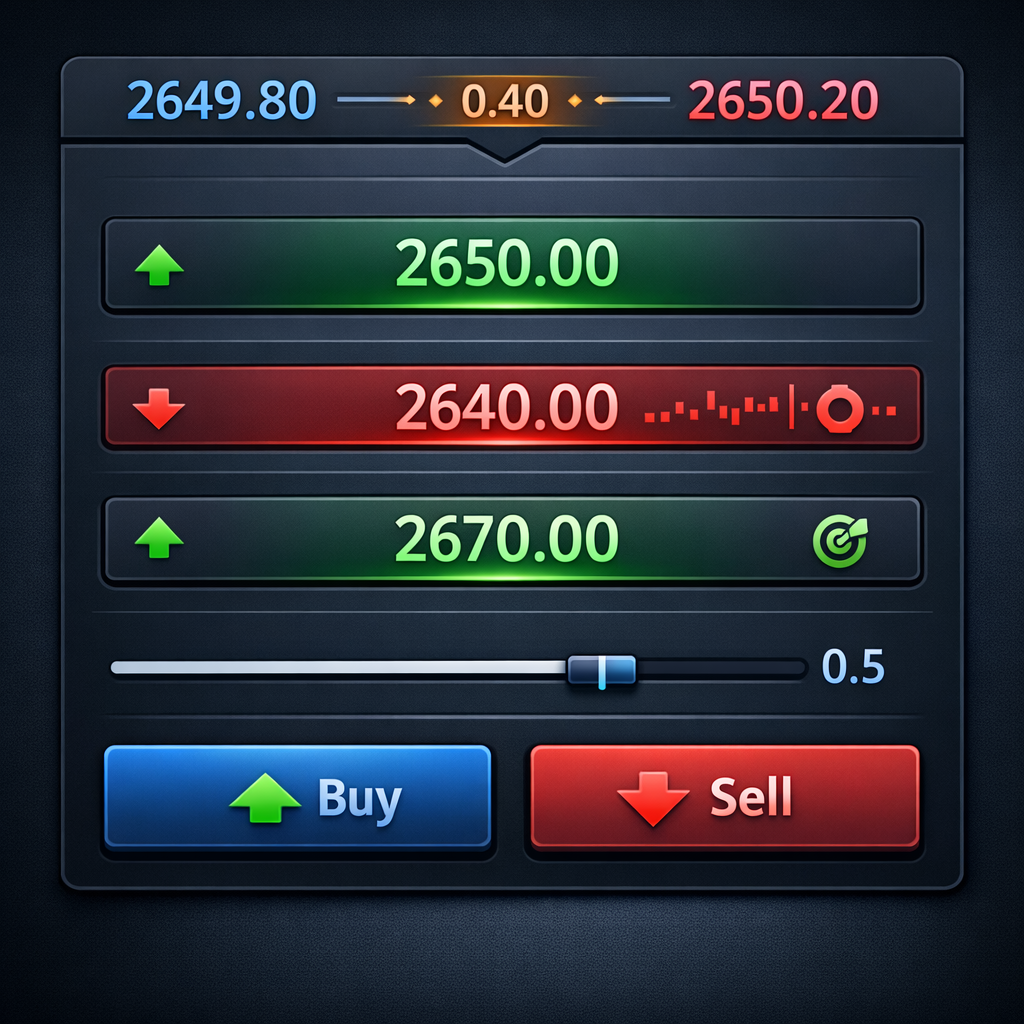
Gold is not EUR/USD.
On majors, you can often “get away” with mediocre execution because spreads are tiny and price moves are smoother.
On XAUUSD, the combination of wider spreads, faster impulses, and stop-hunt style liquidity runs makes the platform’s order behavior feel more important—even when the broker is the real engine behind pricing.
Here’s what makes gold execution uniquely sensitive:
- Volatility clustering: gold can sit quiet for 20 minutes, then print a $6–$12 impulse in seconds.
- Spread expansion: a “normal” spread might be $0.20–$0.50 on some brokers, but can widen quickly during news or thin liquidity.
- Stop placement is tighter in signal trading: many XAUUSD signals use stops $10–$25 from entry. A couple dollars of slippage plus a spread spike can materially change outcome.
- Session-driven moves: London open and New York open are where a lot of clean setups trigger—and where execution stress is highest.
Now layer in the reality of signal execution.
When we publish a gold signal with a clear Entry / SL / TP, your job is to replicate it as closely as possible.
Even a small drift—say, $1.80 worse entry—can reduce a 1:3 trade to 1:2.5, or bring your stop closer to being tagged.
That’s why the MT4 vs MT5 question is really about:
- How the platform lets you place orders (types, rules, limits).
- How the platform reports fills (so you can audit slippage).
- How the platform helps you control execution (deviation, policies, partial fills).
To be clear: your broker still determines most of your spread and the quality of liquidity.
But the platform can either help you manage that reality—or hide it until it costs you.
Spreads on MT4 vs MT5 for XAUUSD: what’s real vs what’s marketing
Let’s kill a myth first.
MT5 doesn’t “have tighter spreads” than MT4 by itself.
Spreads come from the broker’s pricing model, liquidity providers, and how they mark up costs.
So why do traders often feel MT5 spreads are “better”?
Because MT5 tends to be offered by brokers on newer infrastructure and account types that also happen to have tighter pricing.
That’s correlation, not magic.
How spreads actually hit your XAUUSD signal results
Assume XAUUSD is at $2650.00.
You receive a buy signal targeting a momentum continuation:
- Buy: 2650.20
- SL: 2637.20 (risk $13)
- TP1: 2676.20 (reward $26, 1:2)
- TP2: 2689.20 (reward $39, 1:3)
If your broker’s spread widens by $0.80 at entry, and you market-buy into it, you might fill at 2651.00 instead of 2650.20.
That alone cuts your reward and moves your effective stop closer.
Where MT5 helps is not “tightening” the spread, but helping you see and respond to spread behavior:
- Depth of Market (DOM): on many brokers, MT5 can show liquidity levels, which helps you avoid entering during a thin moment.
- More detailed trade reporting: easier to track if the broker filled you at a worse price than expected.
- Better multi-symbol handling: if you’re monitoring XAUUSD plus DXY proxies (like USD/JPY 149.50) you can manage timing more cleanly.
Broker account type matters more than MT4/MT5
For gold signals, your decision tree should usually be:
- Step 1: Choose a broker/account with consistently tight XAUUSD spreads in London/NY.
- Step 2: Choose MT4 or MT5 based on order types, execution control, and your workflow.
In practice, many “MT5 accounts” are paired with ECN-style pricing, while “MT4 accounts” are paired with older standard models.
That’s why traders report different results—even when the platform isn’t the cause.
Slippage on XAUUSD: where MT4 vs MT5 differences actually appear
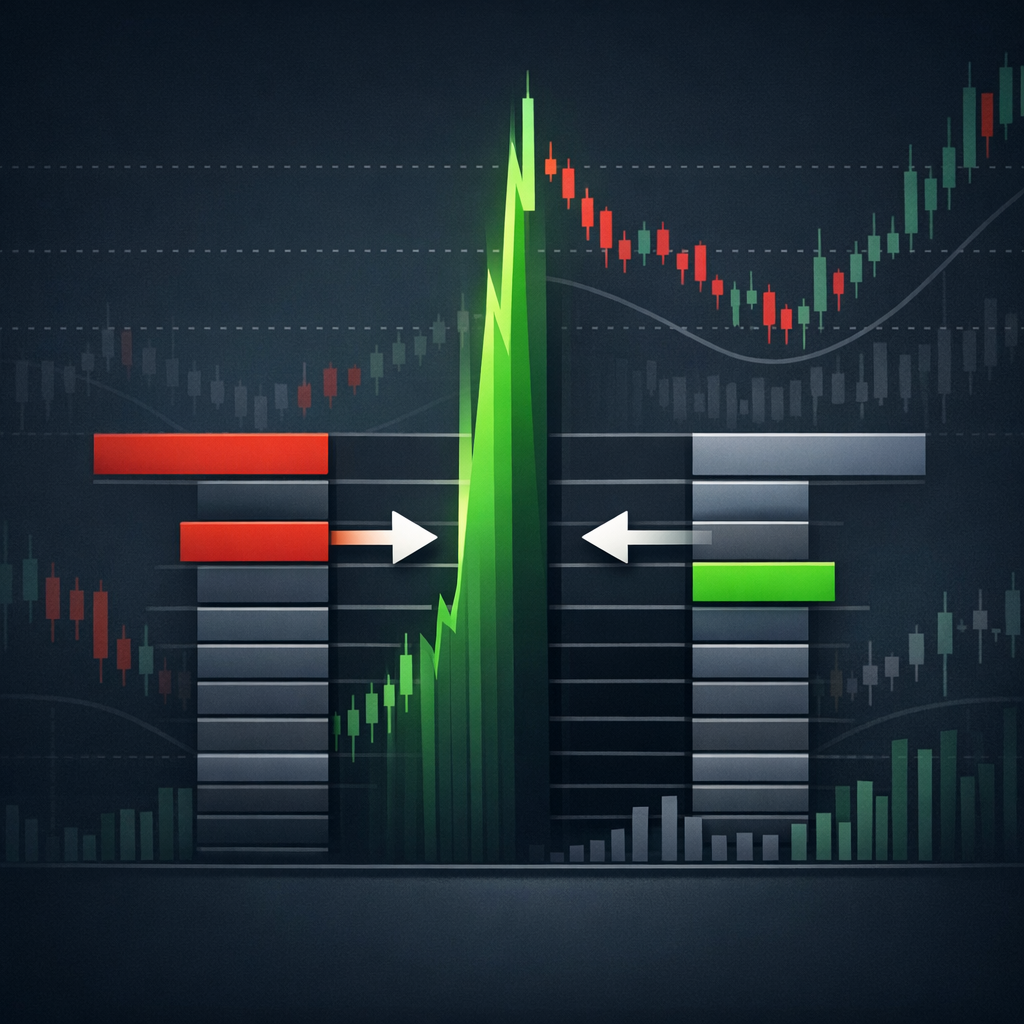
Slippage is the silent killer of signal replication.
Especially on gold, where a $3–$7 slip during a spike is not rare on some brokers.
Let’s define slippage in a signal context:
- You intend to enter at 2650.20.
- Your order is executed at 2652.10.
- Your slippage is $1.90 worse than expected.
Now imagine your stop is $13 away.
That $1.90 is 14.6% of your planned risk—added instantly, with no warning.
Why slippage happens more on gold than on EUR/USD
Gold reacts to:
- US yields and DXY (DXY at 106.80 is a key context level).
- Risk sentiment (equities, geopolitics).
- Data prints (CPI, PPI, NFP, Fed speakers).
When those catalysts hit, XAUUSD can gap between ticks in retail feeds.
Your platform sends the order, but the next available price is simply worse.
MT4 vs MT5: what changes in practice
Both platforms can slip.
But MT5 gives you more levers and clearer diagnostics.
- Execution policies: MT5 supports Fill-or-Kill (FOK), Immediate-or-Cancel (IOC), and Return on many brokers. This can reduce surprise partial fills or unwanted execution behavior.
- Better fill transparency: MT5’s history and reporting often makes it easier to audit whether slippage was market-driven or broker-driven.
- Stop Limit orders: MT5 can reduce “panic entries” by letting you define a stop trigger and a maximum acceptable fill.
MT4 can still be excellent if your broker’s execution is clean and you trade with discipline.
But MT4 is less expressive in how you define acceptable fills.
A realistic slippage scenario (London open impulse)
Picture this: London opens, XAUUSD is hovering at 2646–2648.
A bullish break triggers, and you receive a signal to buy the breakout at 2649.80.
In the next 3 seconds, price prints 2652.50, then wicks to 2654.20.
If you market-buy on MT4 with no deviation control, you may fill at 2653.60.
Your stop might still be 2639.60, but your risk is now effectively larger and your R:R worse.
On MT5, you could use a Stop Limit approach (more on that later): trigger at 2649.80, limit at 2651.20.
If price jumps beyond 2651.20, you simply don’t get filled.
That can feel painful in the moment, but it protects your long-term expectancy.
Order types that change XAUUSD results: MT4 vs MT5 (the practical list)
This is where MT5 genuinely separates itself for gold signal execution.
Not because MT4 is “bad,” but because XAUUSD often benefits from more precise order logic.
MT4 order types (typical)
- Market execution (Buy/Sell)
- Limit orders (Buy Limit / Sell Limit)
- Stop orders (Buy Stop / Sell Stop)
- Stop Loss / Take Profit attached to positions
MT5 order types (typical + additional capability)
- Everything MT4 has
- Stop Limit orders (Buy Stop Limit / Sell Stop Limit)
- More execution policy controls (FOK/IOC/Return depending on broker)
- More robust pending order rules (expiration options and handling)
For XAUUSD signals, Stop Limit is the most overlooked upgrade.
It’s not “advanced for the sake of advanced.”
It’s a direct tool to reduce bad fills when gold spikes.
When a Stop Limit beats a Stop (gold breakout signals)
Let’s say we want to buy a breakout above resistance.
- Resistance: 2650.00
- Signal idea: buy if price breaks and holds above 2650
On MT4, you might place a Buy Stop at 2650.20.
If price gaps from 2649.90 to 2652.40, you can be filled at 2652.40 or worse.
On MT5, you can place a Buy Stop Limit:
- Stop (trigger): 2650.20
- Limit (max fill): 2651.20
If the move is too aggressive, you avoid getting dragged into a late entry.
That keeps your stop ($10–$25 away) meaningful and keeps your target math intact.
When MT4 is still enough (gold pullback signals)
Many high-quality gold signals are pullback-based.
Example: buy a retest of a broken level.
- Buy Limit: 2642.00
- SL: 2629.00 (risk $13)
- TP: 2668.00 (reward $26, 1:2)
This is a classic MT4-friendly structure.
Here, your main risk is not order type limitations—it’s spread and execution quality at the moment price tags 2642.00.
Comparison table: MT4 vs MT5 for XAUUSD signal execution (what you feel in real trading)
| Execution Factor | MT4 for XAUUSD | MT5 for XAUUSD | Why it matters for signals |
|---|---|---|---|
| Core spreads | Broker-dependent | Broker-dependent | Platform doesn’t create tight spreads; account type does. |
| Slippage control | Basic deviation behavior (varies by broker) | More policy options + better diagnostics | Helps reduce “late fills” during gold spikes. |
| Stop Limit orders | Not native | Supported | Can prevent chasing breakouts and protect R:R. |
| Execution policies (FOK/IOC/Return) | Limited | Supported on many brokers | Controls partial fills and unexpected execution behavior. |
| Depth of Market (DOM) | Limited/plug-in dependent | More common and integrated | Useful to avoid thin liquidity moments on XAUUSD. |
| Trade reporting & auditing | Good but simpler | Typically richer detail | Lets you measure slippage and broker behavior over time. |
| Automation ecosystem | Massive EA library (MQL4) | Strong and modern (MQL5) | If you automate signal execution, tooling choice matters. |
Step-by-step: Configure MT4 for faster, cleaner XAUUSD signal execution
If you’re staying on MT4, you can still execute gold signals professionally.
The goal is simple: reduce the time between “signal received” and “order placed,” while controlling the most common execution mistakes.
Step 1: Enable one-click trading (and practice with it)
One-click trading reduces hesitation.
On gold, a 5–10 second delay can be the difference between entering at 2650.20 and 2652.00.
- Enable one-click trading in MT4.
- Practice opening and closing micro-lots on a demo first.
- Make sure you know where your lot size is set before you click.
Step 2: Build an XAUUSD “signal template” chart
Signal execution improves when your chart is standardized.
- Use a clean candlestick chart.
- Add your preferred session markers (London/NY).
- Keep indicators minimal so the platform stays responsive.
Step 3: Pre-plan your risk in dollars, not vibes
Gold signals often use $10–$25 stops.
Pick a fixed risk per trade (example: $50), then calculate lot size accordingly.
If your stop is $15 away, your position size must reflect that.
To go deeper on sizing and protecting your account, use our guide on risk management strategies when using forex signals.
Step 4: Use pending orders whenever the signal allows
Market orders are most vulnerable to spread spikes.
If a signal is a pullback or level-based entry, a pending order often replicates the signal more accurately.
- For buys at support: Buy Limit.
- For sells at resistance: Sell Limit.
- For breakouts: Buy Stop / Sell Stop (with caution).
Step 5: Add SL/TP immediately (no “I’ll add it later”)
Gold moves fast.
“I’ll add the stop in a second” is how accounts get blown on a single candle.
Attach SL and TP in the order ticket before confirming.
Step 6: Trade the right sessions for signal replication
Even the best signal struggles in dead liquidity.
We focus heavily on London and New York sessions because spreads and fills are typically more stable.
That’s also why our community is built around active session execution inside our premium gold signals.
Step-by-step: Configure MT5 for tighter control over XAUUSD slippage and order behavior
MT5’s advantage is control.
Not theoretical control—practical control you can use the next time XAUUSD rips $8 in 30 seconds.
Step 1: Turn on one-click trading and set default lot logic
Same principle as MT4, but with a stronger workflow.
- Enable one-click trading.
- Set your default symbol to XAUUSD.
- Keep your order panel visible during session hours.
Step 2: Choose the right order filling policy (if your broker allows)
Depending on your broker, MT5 may let you choose:
- FOK (Fill or Kill): either fill fully at available price or cancel.
- IOC (Immediate or Cancel): fill what’s available immediately, cancel the rest.
- Return: allow partial fills and keep the remainder pending.
For many retail-sized gold orders, partial fills are less common than in futures, but the policy still matters.
The key is consistency: you want the platform to behave predictably when volatility hits.
Step 3: Use Stop Limit for breakout-style gold signals
This is the MT5 “edge” most signal traders ignore.
Example breakout plan near 2650:
- Buy Stop: 2650.30 (trigger)
- Buy Limit: 2651.10 (max acceptable fill)
- SL: 2637.10 (risk $14.00)
- TP: 2679.10 (reward $28.00, 1:2)
If price explodes to 2653+ instantly, you don’t get dragged into a low-quality fill.
That protects your statistics over 50–200 trades, which is where signal execution becomes a game of small edges.
Step 4: Use Depth of Market (DOM) as a timing filter
DOM won’t predict direction.
But it can warn you when liquidity looks thin and spreads are likely to jump.
On gold, that’s often the difference between a smooth fill and a surprise $2 slip.
Step 5: Audit your execution weekly
MT5 makes it easier to export history and measure:
- Average slippage (in $ terms) on XAUUSD.
- How often spreads widened at entry.
- Whether your worst fills cluster around specific times (news, rollover, session opens).
This is how you stop guessing and start improving your replication process like a professional.
Real trade examples: how MT4 vs MT5 can change the same XAUUSD signal outcome
Let’s make this real with two scenarios.
Same signal idea, different execution outcomes.
Scenario A: Pullback buy (MT4 and MT5 both fine)
Market context: XAUUSD is bullish intraday and holding above 2640.
Signal:
- Buy Limit: 2643.00
- SL: 2630.00 (risk $13)
- TP: 2669.00 (reward $26, 1:2)
If your broker fills you at 2643.10 due to spread, your risk becomes $13.10 and reward becomes $25.90.
That’s a small change.
Both MT4 and MT5 handle this well, assuming you place the pending order correctly.
Scenario B: Breakout buy (MT5 usually has an advantage)
Market context: XAUUSD is compressing below 2650 during NY open.
Signal idea: buy the breakout continuation.
MT4 approach (Buy Stop):
- Buy Stop: 2650.20
- SL: 2637.20 (risk $13)
- TP: 2676.20 (reward $26)
A spike jumps to 2652.60 and your fill is 2652.60.
Your risk is now $15.40, while your TP is still 2676.20 (reward $23.60).
Your 1:2 just turned into roughly 1:1.53—without you changing the strategy.
MT5 approach (Buy Stop Limit):
- Trigger: 2650.20
- Max fill: 2651.20
- SL: 2637.20
- TP: 2676.20
If price gaps past 2651.20, you skip the trade.
You might miss one runner, yes.
But you also avoid the long-term damage of consistently entering breakouts late.
This is the difference between “taking signals” and replicating signals with expectancy intact.
Broker execution, not just platform: spreads, swaps, and why XAUUSD costs vary wildly
If you want a definitive guide, we have to talk about the uncomfortable truth.
Most traders blame MT4 or MT5 for what is actually broker behavior.
Three broker variables that dominate your gold results
- Pricing model: Standard vs Raw/ECN-style spreads (plus commission).
- Liquidity quality: how the broker sources XAUUSD pricing during volatility.
- Execution model: how orders are routed and filled when price moves fast.
Two traders can both be on MT5 and still have totally different outcomes.
One gets $0.30–$0.60 spreads during London/NY.
The other sees $1.20 spreads and random $3 slippage.
Why this matters specifically for United Kings-style signal trading
Premium signals are built on precision.
If the signal is calling for a $14 stop and a $28 target, the whole edge is in the math.
When execution costs eat $2–$4 on entry and $2–$4 on exit, your “paper edge” can disappear.
This is also why we recommend traders evaluate providers and setups systematically.
If you haven’t yet, use our signal provider checklist for beginners to audit whether your current setup is helping you—or quietly bleeding you.
Swap/rollover and weekend gaps (the hidden cost)
Gold can be held intraday or swing.
If you hold overnight, swap matters.
If you hold over weekends, gaps matter.
MT4 vs MT5 won’t change the broker’s swap rates.
But MT5’s reporting can make it easier to track total costs and compare accounts over time.
Execution checklist for consistent signal replication (MT4 and MT5)
If you want more consistent results from any signal service, you need a checklist.
Because execution errors are rarely “one big mistake.”
They’re usually ten small mistakes repeated for months.
Checklist Part 1: Before the session starts
- Update platform and restart it before London/NY.
- Check XAUUSD spread when market is calm (baseline) and during active minutes (stress test).
- Confirm your lot size is aligned with your risk plan.
- Mark key levels (today’s high/low, prior day high/low, round numbers like 2650, 2660, 2675).
- Know the catalysts (Fed speakers, CPI, NFP). If you trade news, read our survival guide on how gold signals react to unexpected news events.
Checklist Part 2: When the signal arrives
- Confirm symbol: XAUUSD (some brokers label it XAUUSDm, GOLD, etc.).
- Confirm order type: market vs pending. Don’t force a market entry if the signal is level-based.
- Set SL/TP immediately in the ticket.
- Check spread at that second. If it’s abnormally wide, consider waiting for normalization (if the setup allows).
- Don’t “improve” the signal emotionally. Follow the plan or skip it.
Checklist Part 3: After entry (the part most traders ignore)
- Record your fill price vs the signal’s intended price.
- Track slippage in $ terms (example: +$1.40 worse).
- Note time of day (London open, NY open, lunch, rollover).
- Review weekly and decide if the issue is platform settings, broker conditions, or your reaction time.
This process is exactly how serious traders turn “random” execution into measurable improvement.
Gold volatility right now: how to adapt execution with XAUUSD near $2650
With XAUUSD around $2650 and DXY around 106.80, gold is sitting in a zone where both trend continuation and sharp mean reversion are common.
That creates a specific execution environment: breakouts can be violent, and pullbacks can be deep.
What that means for spreads and slippage
When the market is “two-sided,” liquidity can look fine until it isn’t.
You’ll often see:
- Spread stable at $0.30–$0.60, then suddenly $1.20+ during a 1-minute impulse.
- Stop orders filling late, especially on breakout candles.
- More wick behavior around round numbers like 2650 and 2660.
How to choose order types in this environment
- For breakouts: prefer MT5 Stop Limit if available, or reduce size / widen acceptable entry rules.
- For pullbacks: pending limits are your friend; you can often get better fills than market orders.
- For news minutes: consider standing aside unless you have a dedicated news plan and accept higher slippage risk.
Session timing matters more than most indicators
We see the cleanest replication when traders execute during:
- London session: strong liquidity, structured moves.
- New York session: continuation or reversal based on US data and yields.
- London-NY overlap: highest activity—and the highest execution stress.
That’s one reason our signals and education are built around active session trading inside our United Kings signals hub, especially for gold.
Common MT4/MT5 mistakes that cause “bad signal results” (and how to fix them)
Most “this signal didn’t work” complaints are actually execution problems.
Not because the trader is careless—but because nobody taught them what to watch.
Mistake 1: Entering late and pretending it’s the same trade
If the signal entry is 2650.20 and you enter at 2653.10, you’re in a different trade.
Your stop distance and R:R are no longer the same.
Fix: use pending orders where possible, and on MT5 use Stop Limit for breakouts.
Mistake 2: Ignoring spread spikes
Gold spreads can widen in seconds.
Fix: check spread before clicking market orders, and avoid thin times like rollover unless the setup is designed for it.
Mistake 3: Wrong symbol specifications
Some brokers use XAUUSD with different contract sizes, digits, or naming (XAUUSDm, GOLD).
Fix: confirm your symbol and test a small order on demo to see pip value behavior.
Mistake 4: Not attaching SL/TP immediately
Gold can move $5–$10 quickly.
Fix: SL/TP in the ticket, every time. No exceptions.
Mistake 5: Overleveraging because gold “looks slow”
Gold can look quiet, then rip.
Fix: risk a fixed percent or fixed dollar amount per trade. If you’re unsure, start with demo and micro sizes.
If you’re new to Telegram-based execution, you’ll also benefit from our practical guide on how forex signals work on Telegram for beginners (the execution principles apply to gold too).
Which platform should you use for United Kings XAUUSD signals?
Here’s the honest answer.
Both MT4 and MT5 can execute XAUUSD signals profitably.
But they reward different trader profiles.
Choose MT4 if…
- You already have a stable broker account with proven XAUUSD execution.
- You mostly trade pullback entries (limits) rather than breakout stops.
- You want simplicity and a massive ecosystem of tools.
- You are disciplined about not chasing price.
Choose MT5 if…
- You trade active London/NY sessions and want more execution control.
- You want Stop Limit orders to avoid late breakout fills.
- You want better reporting and easier auditing of slippage/spread behavior.
- You’re building a more systematic signal replication process.
Our practical recommendation for most gold signal traders
If you’re serious about XAUUSD and you’re executing signals multiple times per week, MT5 is usually the better long-term choice.
Not because it guarantees better fills, but because it gives you more tools to prevent bad fills.
That said, if your broker’s MT5 execution is worse than their MT4 execution (it happens), choose the environment that produces the best real fills.
Execution reality beats platform theory.
How United Kings signals are designed for real-world execution (not perfect-chart fantasy)
Signals only matter if you can execute them.
That’s why at United Kings we focus on clarity and practicality, not vague “buy now” messages.
Inside our premium community, you get:
- Clear Entry, SL, TP levels designed for active session liquidity.
- A community of 300K+ active traders sharing execution feedback across brokers.
- A performance culture built around process, not hype.
- Educational guidance alongside signals so you understand how to replicate them.
We also specialize in the markets where execution details matter most:
- Gold (XAUUSD) signals for session-based moves and volatility.
- Forex signals on major pairs for structured setups.
- Multi-asset coverage via our main signals page.
And if you trade beyond gold, you can explore our broader ecosystem from the UnitedKings.net homepage and our learning resources on the blog.
FAQ: MT4 vs MT5 for XAUUSD signal execution
1) Does MT5 always have less slippage than MT4 on gold?
No.
Slippage is mostly broker and market-condition driven.
MT5 can help you reduce slippage impact with Stop Limit orders and execution policy controls, but it can’t override poor liquidity or extreme volatility.
2) Are XAUUSD spreads tighter on MT5?
Not inherently.
Spreads depend on the broker and account type.
Many brokers offer their better pricing on MT5 accounts, which is why traders often associate MT5 with tighter spreads.
3) What’s the best order type for gold signals?
It depends on the setup.
- Pullbacks: Buy Limit / Sell Limit often replicate best.
- Breakouts: MT5 Stop Limit is often superior to a simple Stop because it caps your acceptable fill.
- Fast momentum entries: Market orders can work, but you must accept higher slippage risk.
4) Why do I get different results than other traders on the same signal?
Common reasons include spread differences, slippage, execution delays, different account types, entering late, or using a different symbol (XAUUSD vs XAUUSDm).
That’s why we recommend tracking your fill vs intended entry and auditing it weekly.
5) Should beginners start on MT4 or MT5 for XAUUSD?
If you’re brand new, start where your broker support is strongest and where you can execute safely.
Use a demo first, keep risk small, and prioritize correct SL/TP placement.
As you get comfortable, MT5’s extra order types can be a meaningful upgrade for gold.
Risk disclaimer (read before trading)
Forex and gold trading involve significant risk and may not be suitable for all investors.
You can lose some or all of your capital, especially when trading leveraged products like XAUUSD during volatile sessions.
Past performance does not guarantee future results. Signals and analysis are educational and informational, not financial advice.
If you’re a beginner, we strongly recommend practicing on a demo account and using strict position sizing before trading live.
Join United Kings: execute gold signals with clarity, levels, and a real community
If you want to stop guessing and start executing XAUUSD signals like a pro, join the United Kings community.
We deliver premium Telegram signals with clear Entry, SL, and TP levels, built for London and New York session conditions.
Choose your plan:
- Starter (3 Months): $299 (~$100/mo)
- Best Value (1 Year): $599 ($50/mo) with 50% savings + FREE ebook
- Unlimited (Lifetime): $499 (pay once)
See all three options on our pricing page, and if you have questions about setup or access, reach out via our contact page.
Ready to get signals and execution guidance inside Telegram?
Join our official channel: United Kings Telegram signals community.
We also offer a 48-hour money-back guarantee—so you can evaluate the service with confidence.
