If you’ve ever opened Telegram, saw three signals drop at once, and thought “Which one do I take… and how do I not mess this up?” you’re exactly who this guide is for.
In 2025, forex signals telegram channels are everywhere.
Some are genuinely professional, with clear Entry/SL/TP and disciplined risk rules.
Others are noisy “forex telegram groups” that spray trades, delete losses, and leave you holding the bag.
This article is the complete strategy guide for following telegram forex signals like a pro.
We’ll cover the setup, the timing, execution details, how to manage multiple signals, and the exact routines that help you maximize results while controlling risk.
TL;DR: The 2025 Telegram Forex Signals Playbook
- Use a strict execution checklist (spread, session, news, entry type, and lot sizing) before every trade.
- Trade the right hours: London and New York sessions deliver the cleanest liquidity and follow-through for most signal styles.
- Never “oversubscribe” your risk when multiple signals fire; cap total open risk (example: 2%–3% across all positions).
- Track signal quality like a portfolio (R-multiples, drawdown, win rate, and expectancy) instead of obsessing over single trades.
- Prefer providers with structure: clear Entry/SL/TP, updates, and education—plus transparent rules and community support.
- Start on demo or micro lots until your execution is consistent; past performance never guarantees future results.
Why Telegram Forex Signals Still Dominate in 2025
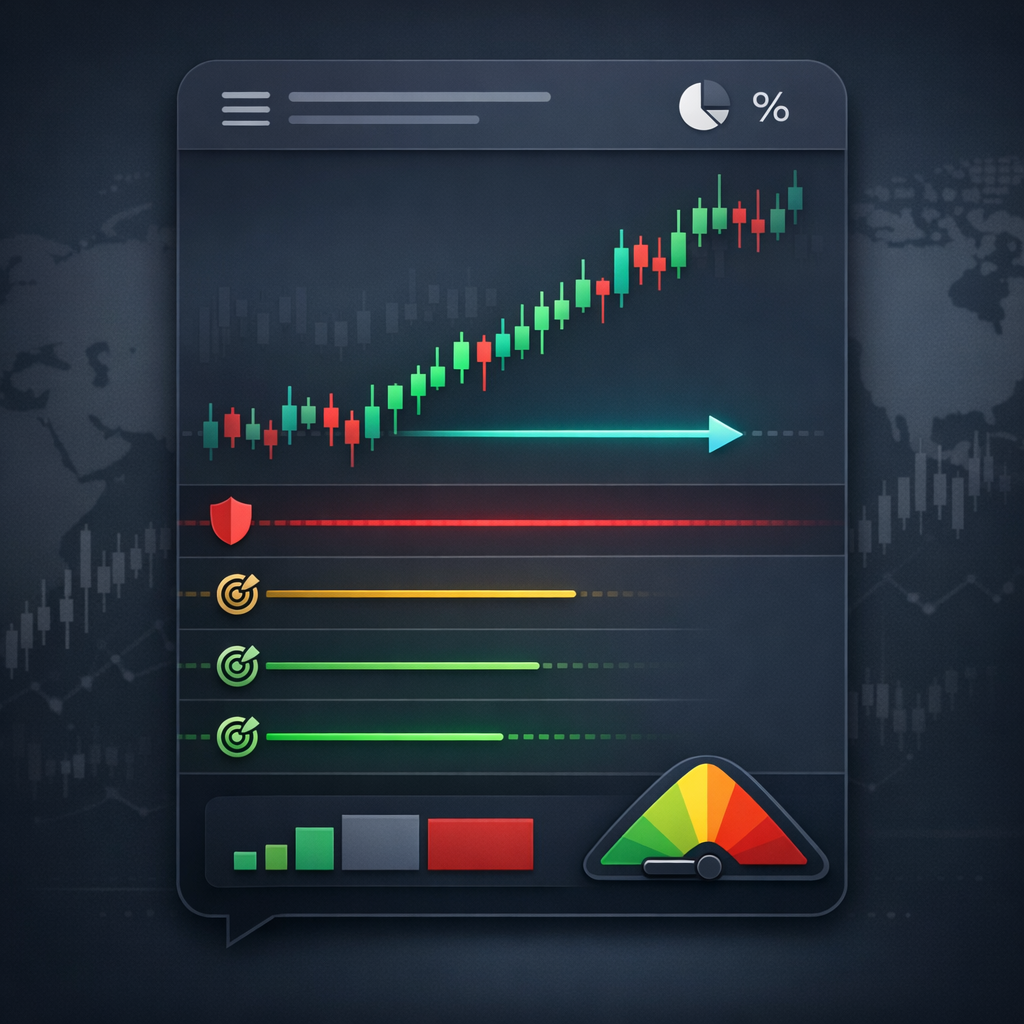
Telegram is fast.
In forex, speed matters because price can move 10–30 pips in seconds during active sessions or data releases.
In 2025, the market is also more “headline-sensitive” than many traders expect.
Even when EUR/USD is sitting around 1.0520 and looks calm, a surprise data print can create a 40–70 pip impulse that either hits your take profit quickly or tags your stop if you’re late.
Telegram works because it’s built for real-time delivery and community coordination.
A good channel doesn’t just post a trade idea.
It posts the plan, the risk, the invalidation, and the management rules.
That’s the difference between “signals” and “noise.”
What changed from 2020–2024 to 2025?
Three big shifts have made signal-following both easier and more dangerous.
First: spreads and execution improved at many brokers, but slippage during volatility is still real.
Second: more retail traders are active, which means more marketing, more fake screenshots, and more “copy-trade hype.”
Third: macro themes (rates, inflation, geopolitical risk) keep FX and gold reactive.
Right now, the DXY is around 106.80, USD/JPY is near 149.50, and gold is around $2650 (+0.35% on the day).
That backdrop matters because USD strength/weakness often drives multiple pairs at once.
If you blindly take three USD-related signals, you might accidentally triple your exposure to the same theme.
Signals don’t replace skill—they compress the learning curve
A premium signal can give you a high-quality setup.
But your result depends on execution quality: entry timing, correct lot size, and not breaking rules when the candle spikes.
Think of signals like a flight plan.
You still have to fly the plane.
If you want to see how a structured service should look, explore our United Kings Forex Signals and how we format entries, stop loss, and take profits for real trading conditions.
Telegram Forex Signals vs Forex Telegram Groups: What You’re Really Joining
Most traders join a “forex telegram group” expecting one thing: profitable trades.
But groups come in different categories, and mixing them up is where people get burned.
In 2025, you’ll typically encounter:
- Premium signal channels (paid): structured entries, SL/TP, updates, and risk rules.
- Free signal channels: inconsistent quality, often used as a funnel to upsell.
- Community chat groups: lots of opinions, screenshots, and emotional trading.
- Copy-trade/managed account promotions: higher risk, sometimes unregulated, often marketing-heavy.
Signals are not “bad” or “good” by default.
The difference is process.
Process is what survives drawdowns.
Hype doesn’t.
Comparison table: What to expect (and what to avoid)
| Type | Typical Content | Pros | Cons / Red Flags | Best For |
|---|---|---|---|---|
| Premium Telegram Signals | Entry, SL, TP1–TP3, updates, session timing | Structure, accountability, repeatable execution | Still risk; requires discipline and correct sizing | Traders who want a system and routine |
| Free Signals Channel | Random calls, vague targets, fewer updates | Low barrier to try | Cherry-picked wins, deleted losses, no risk rules | Observation only (not live trading) |
| Community Chat Group | Opinions, screenshots, “buy now” messages | Social learning, ideas | FOMO, conflicting advice, emotional contagion | Networking, not signal execution |
| Copy Trading Promotions | Performance screenshots, equity curves | Hands-off in theory | Opaque risk, leverage abuse, limited control | Advanced traders who can audit risk |
The 2025 quality checklist (quick filter)
Before you follow any provider, ask:
- Do they post Entry + SL + TP every time?
- Do they specify pair, direction, and entry type (market/limit/stop)?
- Do they trade primarily during London/NY sessions with liquidity?
- Do they explain why (even briefly) to build your skill?
- Do they show losses transparently, not just wins?
For a deeper provider vetting framework, keep this bookmarked: forex signals provider checklist for beginners.
Account Setup for Telegram Forex Signals (So Execution Doesn’t Fail)

Most signal followers lose money for a boring reason: setup mistakes.
Not strategy.
Not “bad signals.”
They lose because their broker settings, platform defaults, or risk parameters are wrong.
So let’s build your 2025 setup the way a professional would.
Step 1: Choose the right account type (and understand your costs)
Your main costs are spread, commission, and slippage.
If a signal targets 25 pips but your all-in cost is 3–4 pips, you’re donating a big chunk of expectancy.
For majors like EUR/USD (around 1.0520) and GBP/USD (around 1.2680), a competitive setup might be:
- EUR/USD spread: ~0.2–1.0 pips (depending on account type and session)
- GBP/USD spread: ~0.6–1.5 pips
- USD/JPY spread: ~0.4–1.2 pips
During news, spreads can widen dramatically.
Your setup must assume that happens sometimes.
Step 2: Platform and chart template (keep it simple)
You don’t need 12 indicators to follow signals.
You need a clean template to check:
- Trend context (higher timeframe structure)
- Key levels (support/resistance)
- Session timing (London/NY)
- Current spread and volatility
A practical template is:
- H1 and H4 structure
- One moving average (e.g., 50 EMA) for quick bias
- ATR(14) to estimate realistic stop/target distances
Keep it consistent so your decisions don’t change trade-to-trade.
Step 3: Telegram notifications that don’t ruin your life
Turn on notifications for the signal channel.
Turn off notifications for general chat groups.
This is not a lifestyle tip—it’s a performance tip.
If you get 200 messages per day, you’ll miss the one that says “Cancel pending order” or “Move SL to breakeven.”
Step 4: Risk controls inside your trading account
Set guardrails before you trade live:
- Max daily loss (example: 2%–3%)
- Max open positions (example: 2–4)
- Max total open risk (example: 2% across all trades)
If your platform supports it, use risk calculators and one-click trading with confirmation.
In fast markets, misclicks happen.
Guardrails reduce the damage.
How to Read a Telegram Forex Signal Like a Pro (Entry, SL, TP, Updates)
A signal is only as good as your ability to interpret it correctly.
In 2025, the best providers format signals so there’s no ambiguity.
But you still need to understand the components and what they imply.
The anatomy of a high-quality Telegram forex signal
A professional signal typically includes:
- Pair (e.g., EUR/USD)
- Direction (Buy/Sell)
- Entry (market price or a specific level)
- Stop Loss (SL) (the invalidation point)
- Take Profit (TP) levels (TP1/TP2/TP3)
- Optional management rules (move SL to BE at +X pips, partial close, etc.)
If any of these are missing consistently, treat it as a red flag.
Market vs limit vs stop entries (and why it matters)
Many followers lose pips because they don’t understand entry type.
Here’s the practical difference:
- Market entry: you enter immediately at the best available price (subject to slippage).
- Limit entry: you enter only if price retraces to a better level (reduces cost, but you may miss the trade).
- Stop entry: you enter only if price breaks a level (momentum confirmation, but can be prone to false breaks).
Example on EUR/USD around 1.0520:
- Buy limit at 1.0505 with SL 1.0475 (30 pips risk) aims to catch a pullback.
- Buy stop at 1.0540 with SL 1.0510 (30 pips risk) aims to catch a breakout.
Same “bullish idea,” totally different execution profile.
Stop loss placement: the difference between “tight” and “correct”
Traders love tight stops because they feel safe.
But a stop must be placed where the idea is invalid, not where your emotions feel comfortable.
On GBP/USD near 1.2680, if the pair’s typical London volatility is 35–55 pips, a 12-pip stop is often just a donation.
That doesn’t mean you risk more money.
It means you size down.
Correct stop + smaller lot beats tight stop + bigger lot.
TP logic: why TP1/TP2/TP3 exists
Multi-target signals are designed to handle different market behaviors.
Sometimes price hits TP1 and reverses.
Sometimes it trends and hits TP3.
Scaling out can smooth your equity curve.
But only if you follow the plan consistently.
Execution Timing in 2025: London & New York Sessions (Plus the “No-Trade” Hours)
Timing is the silent edge in signal trading.
The same setup can be a winner at 9:00 London time and a loser at 2:00 Asia time.
Why?
Liquidity, spreads, and follow-through.
London session: structure and clean moves
London often sets the day’s direction for EUR/USD and GBP/USD.
When liquidity floods in, price breaks out of Asian ranges.
That’s why many professional signal services focus on London.
A typical scenario:
- EUR/USD ranges 20–30 pips during Asia.
- London opens, breaks the range, then runs 40–80 pips if macro alignment is strong.
If you enter late, your stop gets bigger and your reward shrinks.
So your “signal edge” turns into a coin flip.
New York session: continuation or reversal
New York can either:
- Continue the London trend (best case for trend-following signals), or
- Reverse it (common when US data changes expectations).
With DXY around 106.80, USD flows can dominate multiple pairs.
That means your EUR/USD and GBP/USD signals may correlate.
So you must manage total exposure, not just single trades.
The “no-trade” hours most signal followers ignore
Even strong signals can fail in low-liquidity windows.
Be cautious during:
- Late New York (liquidity drops, spreads can widen)
- Pre-rollover periods (swap/rollover volatility)
- Major holidays (thin books = erratic spikes)
In those hours, a 15–20 pip spike can hit your SL and then price goes to TP without you.
That’s not “bad luck.”
That’s trading at the wrong time.
Gold context: why session timing matters even if you trade FX
Gold at $2650 is a live reminder that risk sentiment is active.
When gold trends strongly, USD pairs can behave differently.
If gold is pushing from $2638 to $2665 during NY, USD/JPY might react differently than usual.
Even if you don’t trade XAUUSD, it’s a useful “risk mood” dashboard.
If you do trade gold, our United Kings Gold Signals are built around the same session logic and risk structure.
Step-by-Step: Your Daily Routine for Following Telegram Forex Signals
Most traders want better signals.
What they actually need is a better routine.
Because the same signal, executed with discipline, can outperform a “better” signal executed with chaos.
Here’s a step-by-step routine you can use daily in 2025.
Step 1: Pre-market scan (5 minutes)
Before you take any signal, scan:
- DXY trend and level (currently around 106.80)
- USD/JPY behavior (around 149.50)
- Major pairs you trade: EUR/USD (1.0520), GBP/USD (1.2680)
- High-impact news schedule for the next 4–6 hours
You’re not trying to predict the market.
You’re checking if conditions are normal or “event-driven.”
Step 2: When a signal arrives, run the 30-second execution checklist
- Is spread normal? If EUR/USD spread is 2.5 pips during a quiet moment, something is off.
- Is this during London/NY? If not, reduce size or skip.
- Is there major news in the next 15 minutes? If yes, wait.
- Can I place the exact SL and TP? If not, don’t improvise.
- Does this conflict with an open correlated trade? If yes, adjust risk.
Step 3: Place the trade correctly (no “close enough” entries)
Signal following is not the time to freestyle.
If the signal is a limit entry and price has already moved far away, you either:
- Wait for the limit to trigger, or
- Skip the trade.
Chasing is how you turn a 1:3 plan into a 1:1 mess.
Step 4: Manage the trade with rules, not feelings
Pick one management style and stick to it for a month:
- Option A: No management—let SL/TP hit.
- Option B: Move SL to breakeven at +1R.
- Option C: Partial close at TP1, trail remainder.
Switching styles mid-week destroys your data.
If you want structured guidance on handling multiple open trades, read: risk management strategies when using forex signals.
Step 5: Post-trade logging (2 minutes)
Log only what matters:
- Pair, entry, SL, TP
- R result (e.g., +2R, -1R)
- Execution notes (late entry? wrong lot? spread high?)
This is how you improve outcomes without changing providers every week.
Managing Multiple Signals Without Blowing Your Account (Correlation & Exposure)
This is the part most Telegram signal followers never learn.
They think “three signals = three independent opportunities.”
But in FX, many trades are the same trade in disguise.
If USD is the driver, EUR/USD, GBP/USD, and USD/JPY can all move together.
That’s correlation risk.
The simplest rule: cap total open risk
Instead of risking 1% on every signal, use a portfolio cap.
Example framework:
- Max risk per trade: 0.5%–1%
- Max total open risk: 2%
- Max correlated basket risk (USD-related): 1%–1.5%
So if you already have 1% risk on EUR/USD short, and a GBP/USD short signal arrives, you might take it at 0.5% or skip it.
You’re not being “scared.”
You’re being solvent.
Basket thinking: treat USD exposure like one position
Here’s a real-world style scenario with today’s levels:
- EUR/USD at 1.0520, signal says SELL with SL 1.0560 (40 pips risk)
- GBP/USD at 1.2680, signal says SELL with SL 1.2740 (60 pips risk)
- USD/JPY at 149.50, signal says BUY with SL 148.90 (60 pips risk)
All three are essentially “USD strength” trades.
If DXY drops from 106.80 to 106.20 on a surprise event, you could lose on all three at once.
That’s why basket risk matters more than trade count.
How to prioritize signals when they conflict
When multiple signals fire, prioritize using a simple hierarchy:
- Session quality: London/NY setups first.
- Clarity of structure: clean level + confirmation beats messy chop.
- R:R: 1:3 beats 1:1.5 if win rate is comparable.
- Correlation: diversify across currencies if possible.
One high-quality trade at 1% risk is often better than three mediocre trades at 1% each.
Gold as a correlation wildcard
Gold near $2650 can act like a “risk barometer.”
If gold is ripping from $2630 to $2675, it can coincide with USD weakness and risk-off flows.
If you’re in USD-long baskets, be extra cautious.
And if you trade gold signals too, treat XAUUSD risk as part of your total exposure.
Risk Management for Telegram Signals (Lot Sizing with Real Numbers)
Risk management is where signal followers separate into two groups.
Group A thinks: “I’ll just use 0.10 lots.”
Group B thinks: “I’ll risk 0.5% per trade, based on my stop distance.”
Group B survives drawdowns.
Group A eventually gets surprised by a big stop loss.
The only sizing formula you need
Position size = (Account Risk $) / (Stop Loss in pips × Pip value)
If you don’t know pip value, use your broker’s calculator.
But the logic never changes.
Example 1: EUR/USD signal sizing
Account: $2,000.
Risk per trade: 1% = $20.
Signal: EUR/USD BUY 1.0520, SL 1.0490 (30 pips).
Assume pip value at 0.10 lot is about $1/pip (varies by broker/account currency).
Risk at 0.10 lot ≈ 30 pips × $1 = $30.
That’s 1.5% risk, not 1%.
To risk $20, you’d size closer to 0.06–0.07 lots (depending on pip value).
This is how you keep risk consistent even when stops vary.
Example 2: GBP/USD with a wider stop
Account: $5,000.
Risk per trade: 0.5% = $25.
Signal: GBP/USD SELL 1.2680, SL 1.2745 (65 pips).
If 0.10 lot is ~$1/pip, risk would be $65.
To risk $25, size around 0.03–0.04 lots.
Wide stop does not mean you skip good setups.
It means you size down.
Gold sizing example (for traders who also take XAUUSD signals)
Even though this is a forex-focused guide, many Telegram traders also trade gold.
Gold is around $2650 and can move $10–$25 quickly during NY.
Example signal structure:
- XAUUSD BUY 2648
- SL 2633 (15 dollars)
- TP 2678 (30 dollars) = ~1:2 R:R
Gold contract specs vary by broker.
So use a calculator to ensure that a $15 stop equals your chosen $ risk (e.g., 0.5% of account).
If you want gold-specific Telegram channel guidance, pair this article with: best Telegram channels for gold trading signals.
Drawdown planning: the “10-loss week” stress test
Even strong providers can hit losing streaks.
So stress test your risk:
- If you risk 1% per trade, 10 losses = -10% (plus spread/slippage).
- If you risk 0.5% per trade, 10 losses = -5%.
Ask yourself: can you follow the plan after that?
If not, reduce risk until you can.
Maximizing Results: Execution Quality, Slippage, and “Signal Hygiene”
Two traders can take the exact same Telegram signal and get different results.
The difference is execution quality.
In 2025, this is the edge most people ignore because it’s not exciting.
But it’s measurable—and fixable.
Signal hygiene: don’t take trades you can’t execute properly
If you’re driving, in a meeting, or your platform is lagging, you are not “available.”
Skipping a trade is a strategy.
For market entries, being 10–15 pips late can destroy the setup.
For limit entries, chasing converts a planned pullback trade into a bad breakout entry.
How to reduce slippage in real conditions
- Avoid entering during the first seconds of major news unless the signal explicitly targets that event.
- Use limit orders when the strategy calls for retracements.
- Trade liquid sessions where spreads are tighter.
- Check your broker’s execution with small size before scaling up.
Slippage is not always negative.
But planning as if it will be perfect is how you get surprised.
Partial profits vs full TP: pick one approach and measure it
Many Telegram signals include TP1/TP2/TP3.
If you always close at TP1 because you fear reversals, you’re changing the strategy.
That might still be profitable.
But you must measure your expectancy with that method.
Track 30 trades and compare:
- Method 1: full close at TP2
- Method 2: 50% at TP1, 50% at TP2
- Method 3: TP1 then trail
Pick the one that fits your psychology and delivers stable results.
When to skip a signal (yes, even a good one)
Skipping is part of professional execution.
Skip when:
- Your spread is abnormally wide.
- You already have correlated exposure near your max risk.
- High-impact news is imminent and the signal isn’t designed for it.
- You missed the entry by more than your planned tolerance (example: 10 pips on majors).
Consistency beats activity.
Tracking Performance: How to Know If Telegram Signals Are Actually Working
Most traders judge a signal service by screenshots.
That’s a mistake.
You should judge it like an investor judges a strategy: by numbers over a meaningful sample size.
In 2025, you can track performance in a spreadsheet in 10 minutes per week.
And it will change your trading life.
Forget win rate alone—track expectancy
Win rate is seductive.
But a 90% win rate with tiny wins and huge losses can still lose money.
The metric that matters is expectancy:
Expectancy = (Win% × Avg Win) − (Loss% × Avg Loss)
Track results in R-multiples (risk units) to keep it clean.
If you risk 1R per trade:
- A full SL is -1R
- A 1:2 TP is +2R
- A partial might be +0.7R
This makes different stop sizes comparable.
The minimum sample size you should use
Don’t judge a service after 5 trades.
In active markets, 5 trades is noise.
A better baseline:
- 30 trades: early read on execution and fit
- 100 trades: meaningful performance picture
Also track the worst drawdown period.
That’s the real “cost” of the strategy.
Separate “signal quality” from “your execution quality”
In your journal, label each trade:
- A-execution: entered on time, correct SL/TP, followed management rules
- B-execution: small mistake (late by a few pips)
- C-execution: broke rules (moved SL, oversized, revenge trade)
If your C-execution trades are losing, that’s not the provider.
That’s your process.
Fixing that can instantly improve results without changing anything else.
Where United Kings fits in
At United Kings, our goal is to deliver clear Entry, SL, and TP levels and the context you need to execute.
We focus heavily on London and New York session trading, because that’s where liquidity makes signal execution more reliable.
You can see our full ecosystem here: United Kings Signals.
Advanced Tactics for 2025: News, Volatility, and Signal Stacking
Once your basics are solid, you can improve outcomes with advanced tactics.
These are not “hacks.”
They’re professional habits that reduce avoidable losses.
News-aware execution (without becoming a news trader)
You don’t need to predict CPI or central bank decisions.
You just need to respect the clock.
Rules that work:
- Don’t open fresh positions 5–10 minutes before high-impact news unless the signal explicitly says it’s a news trade.
- If you’re already in a trade and news is coming, consider reducing risk or tightening exposure based on your plan.
- Expect spread widening and slippage around releases.
Gold traders know this well.
At $2650, XAUUSD can swing $15–$25 on a single surprise headline.
That volatility can bleed into USD pairs fast.
If you want to understand how signals behave during shocks, this is a strong companion read: how gold signals react to unexpected news events.
Volatility-based position sizing (simple version)
If ATR rises, stops typically need to be wider to avoid noise.
Instead of keeping lot size fixed, keep risk fixed.
Example:
- Normal day: EUR/USD stop 25 pips, risk 1%.
- Volatile day: EUR/USD stop 40 pips, risk still 1% (smaller lot).
This prevents volatility from secretly increasing your risk.
Signal stacking: when it helps and when it hurts
Signal stacking means adding another position in the same direction after confirmation.
It can work in strong trends.
But it can also double your exposure at the worst time.
Use stacking only if:
- Your first position is protected (e.g., SL moved to breakeven), and
- Total basket risk stays within your cap.
If you can’t calculate total open risk quickly, don’t stack.
Managing “runner” positions
When a trade goes in your favor, it’s tempting to close everything early.
But runners are how you capture the big moves that pay for small losses.
A balanced approach:
- Take partial at TP1.
- Move SL to breakeven at +1R (if your plan uses this).
- Let the remainder aim for TP2/TP3.
The key is consistency.
Randomly changing rules is the fastest way to flatten expectancy.
Choosing the Right Telegram Forex Signals Provider in 2025 (What Pros Look For)
There are more signal providers than ever.
That doesn’t mean there are more good providers than ever.
In 2025, marketing is cheap.
Discipline is rare.
So here’s what professionals look for when selecting a Telegram signal service.
1) Clarity and repeatability
Signals should be formatted so you can execute in under 60 seconds.
That means:
- Exact entry price or range
- Exact SL
- TP levels that make sense relative to SL (often 1:2 or 1:3)
- Updates when conditions change
2) A real trading schedule
Serious providers have a rhythm.
They focus on sessions where their edge works.
At United Kings, we emphasize London and New York session opportunities because that’s where liquidity and follow-through generally support cleaner execution.
3) Education alongside signals
If a provider never teaches, you stay dependent.
Education helps you understand why a setup works, when to skip, and how to size risk.
That’s how you become resilient during drawdowns.
4) Community and support
One underrated edge is community.
When you have questions about execution, you need fast answers.
United Kings has a 300K+ active trader community where traders share execution experiences and learn together.
You can also follow our official Telegram here: United Kings Telegram community and signal updates.
5) Transparent pricing and a fair trial policy
Professional services are clear about pricing.
United Kings offers 3 plans:
- Starter: 3 Months for $299 (about $100/month)
- Best Value: 1 Year for $599 (about $50/month) with 50% savings + FREE ebook
- Unlimited: Lifetime for $999 (pay once, access forever)
See current options on our United Kings pricing page.
We also offer a 48-hour money-back guarantee so you can evaluate fit with less pressure.
Where to start if you’re new
If you’re a beginner, start with structured onboarding content like: forex signals Telegram beginner’s guide.
Then graduate into daily execution routines and risk tracking from this article.
FAQ: Telegram Forex Signals in 2025
1) Are Telegram forex signals legal and safe to follow?
Telegram is simply a messaging app.
Signals are trade ideas, and legality depends on your country, broker regulations, and how the service operates.
Safety comes down to transparency, risk management, and avoiding unrealistic claims.
2) How many signals should I take per day?
There’s no perfect number.
A practical range for many traders is 1–3 trades per day, but only if they fit your risk caps and session rules.
More trades without a portfolio risk cap usually increases drawdown.
3) What’s a good risk per trade when following Telegram signals?
Many disciplined traders use 0.25%–1% per trade.
If you’re new, start smaller (or demo trade) until your execution is consistent.
The goal is to survive long enough to benefit from a strategy’s edge.
4) Why do I get different results than the signal provider?
Common reasons include slippage, spread differences, late entries, different broker pricing, and changing management rules.
That’s why a strict execution checklist and consistent trade management are essential.
5) Should I trade forex and gold signals together?
You can, but manage total exposure carefully.
Gold (XAUUSD) can be very volatile (e.g., $10–$25 swings around $2650), and it can correlate with USD moves.
If you combine them, cap total open risk and avoid stacking correlated trades.
Risk Disclaimer (Read This Before You Trade)
Forex and gold trading involve significant risk and may not be suitable for all investors.
You can lose some or all of your capital, especially when trading with leverage.
Signals and analysis are provided for educational and informational purposes and do not constitute financial advice.
Past performance does not guarantee future results. Always use proper risk management, and if you are a beginner, practice on a demo account before trading live.
Final CTA: Join United Kings Premium Telegram Forex Signals
If you want to follow telegram forex signals with structure—clear Entry, SL, and TP levels, London/NY session focus, and a serious community—you’ll fit right in at United Kings.
Start here to see our full offering: United Kings premium signals hub.
Then choose your plan on our pricing page (Starter 3 Months $299, Best Value 1 Year $599 with FREE ebook, or Unlimited Lifetime $999).
And join our official Telegram channel for updates and community access: United Kings on Telegram.
Trade smart, size correctly, and let process—not emotion—drive your results in 2025.