You open Telegram, see three new forex signals, and the market is already moving. Do you enter late, skip it, or chase it and hope? In 2025, most traders don’t fail because they “don’t have signals.” They fail because they don’t have a system for executing Telegram forex signals with discipline, timing, and risk control.
This guide is built to be your complete playbook for forex signals Telegram execution. We’ll cover setup, execution timing, managing multiple signals, and the exact routines we’ve seen separate consistent followers from the “signal-hoppers.”
TL;DR: The 2025 Telegram Forex Signals Playbook
- Execution beats information. A great signal with poor entry timing and oversized risk still loses.
- Trade the right sessions. In 2025, most clean moves still come during London and New York overlaps.
- Standardize your risk. Use fixed % risk (often 0.5%–1%) and pre-defined SL/TP rules per signal.
- Don’t follow everything. Limit concurrent positions and avoid correlated exposure (e.g., EUR/USD + GBP/USD same USD theme).
- Track outcomes like a portfolio. Evaluate weekly: win rate, average R, slippage, and rule breaks.
- Choose providers carefully. Transparency, structure, and education matter more than “big TP screenshots.”
What Telegram Forex Signals Are (and What They Aren’t) in 2025
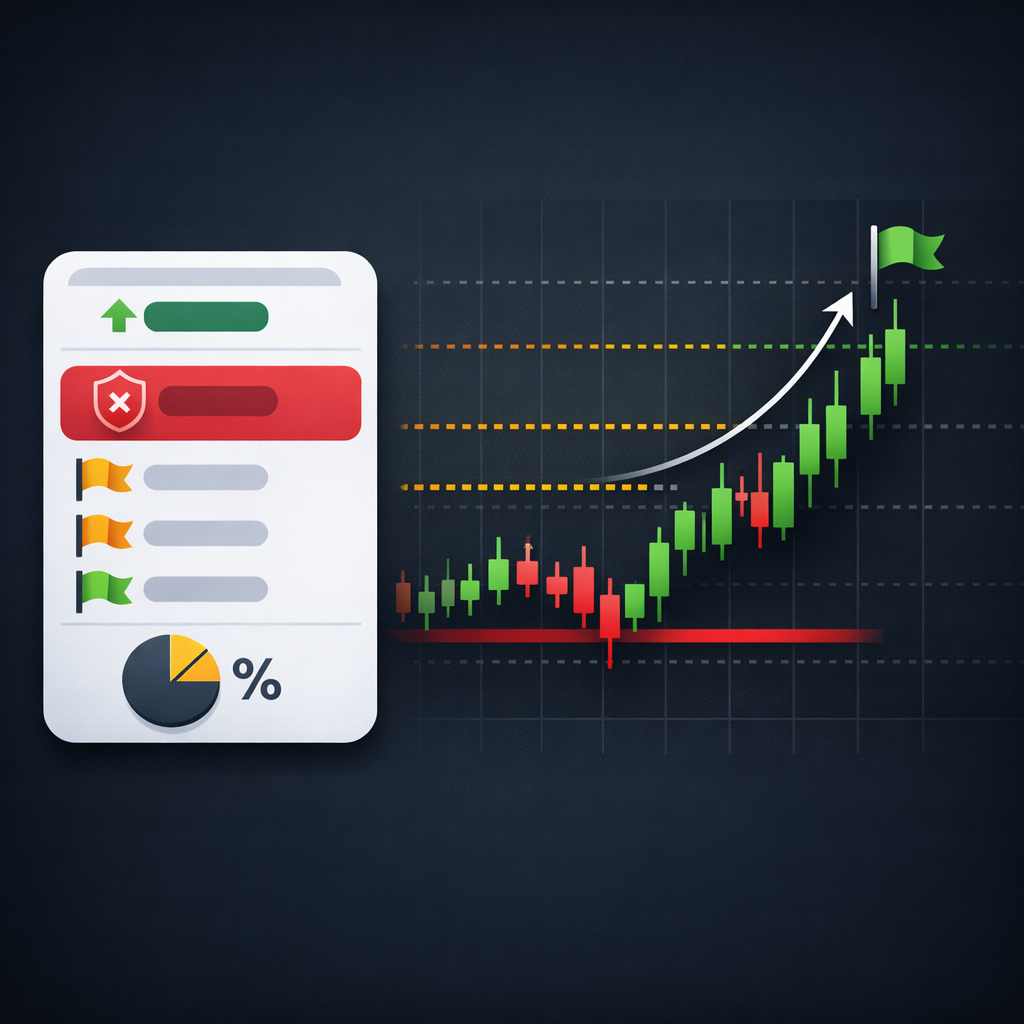
Telegram forex signals are trade ideas delivered through Telegram channels or groups, usually including an instrument (like EUR/USD), an entry price (or zone), a stop loss (SL), and one or more take profit targets (TP1/TP2/TP3). The best providers also include the trade direction, timeframe context, session timing, and a short explanation.
In 2025, the signal industry is more crowded than ever. That’s good because you have options. It’s also dangerous because it’s easier to fall into “noise trading,” where you follow too many forex telegram groups and end up with conflicting bias.
The core promise: structure, not certainty
A signal is not a guarantee. It is a structured plan: Entry + Invalidation (SL) + Objective (TP). Your job is to execute it consistently and manage risk as if any single trade can lose.
Even strong systems can have losing streaks. In real markets, EUR/USD at 1.0520 can spike 20–30 pips on data, reverse, then trend for 60–90 pips. If you treat every alert like a “sure win,” you’ll eventually oversize and give back weeks of gains.
Signals vs. “copy trading” mindset
Many traders follow Telegram signals as if they are copying a robot. That mindset breaks fast when spreads widen, entries slip, or the provider updates the plan. Signals require active execution: placing orders correctly, checking news risk, and managing trade lifecycle.
Where United Kings fits
United Kings focuses on premium Telegram signals for forex and gold with clear Entry, SL, and TP levels, designed around London and NY sessions. If you want to see how our ecosystem is structured, start from the United Kings signals hub and then explore our dedicated forex signals service and gold signals.
We also publish education alongside signals because the best followers eventually learn to understand why a signal makes sense. That’s how you improve execution quality and reduce emotional mistakes.
How to Choose the Best Telegram Forex Signals Provider (Without Getting Trapped)
Choosing a provider is the highest-leverage decision you’ll make. A clean, consistent signal format with realistic risk management can transform your results. A hype-driven channel can drain your account slowly through overtrading, late entries, and unclear stops.
Use a provider checklist (seriously)
Before you pay for any subscription, evaluate the provider like a business partner. We recommend using a structured checklist. If you want a ready-made framework, our internal guide is here: forex trading signals provider checklist.
Green flags you want in 2025
- Clear formatting: Pair, direction, entry, SL, TP(s), and risk guidance.
- Session awareness: Trades aligned with London/NY liquidity windows.
- Risk-first culture: No “all-in,” no martingale, no revenge trades.
- Realistic targets: 1:2 or 1:3 risk-reward is common; not 300-pip daily promises.
- Education: Explains market structure, news risk, and execution rules.
- Community support: You can ask questions and get clarifications.
Red flags that cost traders money
- No stop loss or vague SL like “mental stop.”
- Constant signal edits after the fact without transparency.
- Unverified screenshot culture with no consistent reporting method.
- High-frequency spam that pushes you into overtrading.
- Pressure tactics like “last chance” daily upsells.
Comparison table: Free vs paid vs premium (what changes)
| Feature | Free Telegram Signals | Paid Signals (Generic) | Premium Signals (United Kings style) |
|---|---|---|---|
| Signal clarity (Entry/SL/TP) | Often inconsistent | Usually clear | Always structured with simple execution |
| Risk management guidance | Rare | Sometimes | Core focus (position sizing + SL discipline) |
| Session timing (London/NY) | Random | Mixed | Intentional and repeatable routine |
| Education + explanations | Minimal | Basic | Included to improve your execution |
| Community + support | Low | Medium | Large community (300K+ traders) |
| Long-term consistency | Unreliable | Depends on provider | Process-driven with performance mindset |
If you specifically want a beginner-friendly walkthrough of how Telegram signals are delivered and how to follow them, you can also read: forex signals Telegram for beginners.
Set Up Your Telegram + Trading Stack Like a Pro (So You Don’t Miss Entries)

Your setup is not “just notifications.” It’s your execution infrastructure. In 2025, markets can move quickly around news, and many signal strategies depend on entering within a tight window. If your phone is muted, your broker app is slow, or your lot sizing is improvised, you’ll turn a good signal into a bad trade.
Step-by-step: the ideal setup in 20 minutes
- Use a dedicated Telegram folder for trading channels. Keep it clean so signals don’t get buried.
- Turn on custom notifications for your premium channel only. Make it distinct from other apps.
- Set your broker favorites: EUR/USD, GBP/USD, USD/JPY, XAU/USD. Remove distractions.
- Pre-save lot sizes (or use a position size calculator). Your risk should be one tap away.
- Check spreads during the sessions you trade. If EUR/USD spread jumps, adjust expectations.
- Create a 60-second pre-trade checklist (news, spread, entry distance, correlation).
Execution speed matters more than people admit
Let’s say a signal calls for EUR/USD buy at 1.0520 with a 20-pip stop and a 40-pip target (1:2). If you enter 10 pips late because you were searching for the pair, your risk-reward collapses. You’re now risking 30 pips to make 30 pips, and the trade becomes average at best.
Use alerts and pending orders the smart way
For many Telegram forex signals, pending orders are your best friend. If the provider gives an entry zone, you can set a limit order at the preferred price and let the market come to you. This reduces chasing and improves consistency.
However, don’t blindly place pending orders into major news. If DXY is at 106.80 and a high-impact USD event is scheduled, EUR/USD and USD/JPY can whip 30–60 pips in seconds. In that environment, entries can slip and stops can be hit by volatility spikes.
Build a “signal journal” channel for yourself
Create a private Telegram channel where you forward signals you take, then post your execution notes: entry price, actual SL, actual TP, and why you deviated (if you did). This one habit can improve your results more than switching providers every month.
If you want to trade across markets, set the same stack for metals and crypto too. You can explore our crypto signals as a separate stream, but keep execution rules consistent to avoid chaos.
Understanding a Telegram Forex Signal Message (Entry, SL, TP, and “Management”)
The best signal followers treat each message like a mini trade plan. The worst followers treat it like a “buy now” button. Your edge comes from understanding what each component means and how to execute it with minimal interpretation.
The four non-negotiables in every signal
- Instrument: EUR/USD, GBP/USD, USD/JPY, XAU/USD, etc.
- Entry: exact price (e.g., 1.0520) or a zone (e.g., 1.0515–1.0525).
- Stop loss: the invalidation level. If hit, the idea is wrong.
- Take profit(s): a target level or multiple targets for scaling out.
Example: a clean EUR/USD signal structure
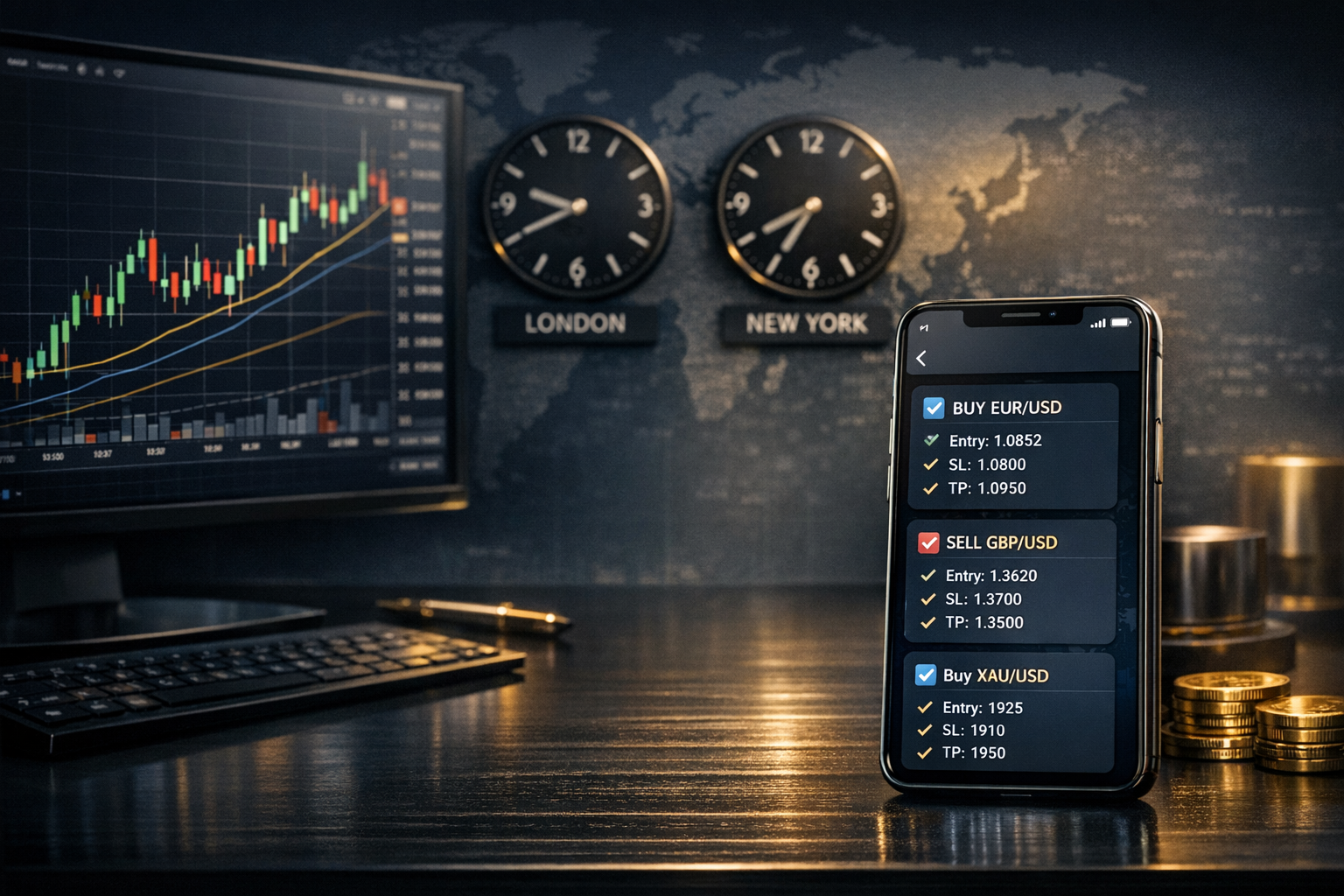
Imagine EUR/USD is trading around 1.0520. A structured signal might look like this:
- EUR/USD BUY
- Entry: 1.0520
- SL: 1.0500 (20 pips)
- TP1: 1.0560 (40 pips, 1:2)
- TP2: 1.0580 (60 pips, 1:3)
Your job is to execute the plan as written, not redesign it based on fear. If you constantly tighten SL because you “feel” uncertain, you’ll get stopped out by normal noise and miss the intended move.
Gold signal example using current context (XAU/USD)
Gold is around $2650 (+0.35% in the last 24 hours). A realistic gold signal in the current volatility regime might be:
- XAU/USD SELL
- Entry: 2650
- SL: 2665 (15 points)
- TP: 2620 (30 points, 1:2)
This aligns with the guideline of a $10–$25 stop and a 1:2 risk-reward structure. It also respects that gold can swing fast, especially when USD/JPY is near 149.50 and DXY is elevated around 106.80.
What “management” messages usually mean
Some providers send updates like “move SL to breakeven,” “partial at TP1,” or “close 50%.” These are not random. They are attempts to manage trade distribution: reduce downside after price proves the idea, and lock in R when volatility is high.
But management only works if you apply it consistently. Randomly taking profit early because you’re nervous is not management. It’s fear-based execution.
To go deeper on risk rules while following signals, keep this bookmarked: risk management strategies when using forex signals.
Execution Timing: When to Enter Telegram Forex Signals (London, NY, and “Late Entry” Rules)
Timing is where most Telegram signal followers leak money. The signal can be correct, but your entry is late. Or the move happens during a low-liquidity hour, spreads widen, and you get wicked out. In 2025, clean execution still clusters around the same windows: London open, London mid-session, New York open, and the London–NY overlap.
Why London and New York sessions matter
Liquidity is highest when major banks and institutions are active. That liquidity reduces random spikes and improves fill quality. For pairs like EUR/USD and GBP/USD, London often sets the direction, and New York either confirms it or reverses it based on US data.
With EUR/USD near 1.0520 and GBP/USD near 1.2680, even a “normal day” can produce 50–90 pip ranges if there’s momentum. But outside session windows, you might see choppy 10–20 pip noise that triggers stops without follow-through.
Step-by-step: a simple late-entry rule that protects you
- Define acceptable slippage: For majors, many traders use 2–5 pips; for gold, 0.5–2.0 points depending on broker.
- Measure distance to entry: If price is already 10–15 pips beyond the intended entry on EUR/USD, your R:R is damaged.
- Only enter late if the SL can remain the same and the trade still offers at least 1:1.5 or 1:2.
- If not, skip. Skipping is a skill, not a failure.
Real scenario: late entry turns a good signal into a bad trade
Signal: GBP/USD buy at 1.2680, SL 1.2655 (25 pips), TP 1.2730 (50 pips). That’s 1:2.
If you enter at 1.2692 because you were late, your stop is now 37 pips away (to 1.2655) and your TP is only 38 pips away (to 1.2730). You just flipped a 1:2 into roughly 1:1. That changes the entire expectancy of the strategy.
News timing: the hidden execution tax
In 2025, headline risk remains a major factor. DXY at 106.80 suggests USD strength is a key theme. That means USD pairs can react sharply to CPI, NFP, Fed speakers, and surprise geopolitical headlines.
Before entering any signal, check if a high-impact event is within the next 15–30 minutes. If it is, consider waiting for the spike to settle or reduce risk. If you’re trading gold near $2650, remember it can move $10–$20 in minutes on sudden risk-off flows.
If you want a broader library of market education and execution guides, browse the United Kings blog and build a routine around one concept per week.
Managing Multiple Telegram Forex Signals Without Overtrading (Correlation + Exposure Rules)
One of the biggest problems in Telegram signal following is not losing trades. It’s stacking trades that all depend on the same macro theme. You think you’re diversified because you have three pairs open. But in reality, you’re just tripling your USD exposure.
Understand correlation in plain English
Correlation means your positions tend to move together. If DXY is strong at 106.80 and USD/JPY is around 149.50, a “USD strength” day can push EUR/USD down, GBP/USD down, and USD/JPY up at the same time. If you’re on the wrong side across multiple pairs, losses cluster.
Simple exposure rules you can implement today
- Limit simultaneous trades: Many signal followers do best with 1–3 open positions max.
- Cap USD theme exposure: If you’re in EUR/USD and GBP/USD, think twice before adding another USD trade.
- Use a daily risk cap: Example: stop trading after -2R on the day.
- Avoid “revenge stacking”: Losing one signal is not a reason to take the next one bigger.
Portfolio approach: treat signals like a basket
Instead of judging signals one-by-one emotionally, judge them like a portfolio. Over 30 trades, what matters is average R, drawdown control, and consistency. This mindset stops you from abandoning a good provider after two losses.
Scenario: stacking EUR/USD and GBP/USD
Let’s say you receive two signals:
- EUR/USD sell from 1.0520 targeting 1.0460
- GBP/USD sell from 1.2680 targeting 1.2600
These are both USD-strength trades. If you risk 1% on each, you’re effectively risking 2% on one macro idea. That can be fine if it’s planned. It’s dangerous if it’s accidental.
How we recommend handling it
Pick the cleaner setup, or split risk. For example, risk 0.5% on EUR/USD and 0.5% on GBP/USD instead of 1% on both. You keep exposure controlled while still participating.
For traders who also trade metals, the same rule applies. Gold often has an inverse relationship with USD strength, but it doesn’t always behave “textbook.” If you’re short EUR/USD and also short gold at $2650, you might be doubling down on the same risk-on/off theme without realizing it.
If you want a dedicated gold-focused Telegram channel shortlist and how to evaluate them, see: best Telegram channels for gold trading signals.
Risk Management for Telegram Forex Signals: Position Sizing, SL Discipline, and R-Multiples
Risk management is the difference between “I follow signals” and “I compound.” In 2025, markets can be fast and unforgiving. If you don’t standardize your risk, your results will be random even if the signals are good.
Start with one number: risk per trade
Choose a fixed percentage risk per trade. Many consistent signal followers use 0.5% to 1%. If you’re new, 0.25%–0.5% is often better until execution becomes automatic.
Example: If your account is $2,000 and you risk 1%, your max loss per trade is $20. If a EUR/USD stop is 20 pips, you size the lot so that 20 pips equals $20.
Use R-multiples to stay objective
R is your risk unit. If you risk $20, then:
- -1R = -$20 (stop loss)
- +2R = +$40 (a 1:2 winner)
- +3R = +$60 (a 1:3 winner)
This makes performance tracking clean. It also stops you from focusing on pips alone, which can be misleading across different pairs.
SL discipline: the rule that saves accounts
If the provider gives a stop loss, treat it as part of the strategy. Moving SL wider because you “know it will come back” is how small losses become big losses. The market doesn’t care about your entry.
There are only a few valid reasons to adjust SL: provider update, structural change (like a clear new swing), or planned trailing rules. Everything else is emotion.
Gold volatility example near $2650
Gold can move $10 quickly. If you enter XAU/USD at 2652 with SL at 2667 (15 points) and TP at 2622 (30 points), you’re targeting 1:2. If you panic and close at 2645 for a 7-point loss, you’re cutting winners and keeping losers. Over time, that destroys expectancy.
Daily and weekly risk limits (non-negotiable)
- Daily max loss: common rule is -2R to -3R, then stop.
- Weekly max loss: if you hit it, reduce size or pause and review.
- Max open risk: avoid having more than 1.5%–3% at risk across all open trades, depending on experience.
If you want a deeper framework with templates and practical examples, our full guide is here: risk management strategies when using forex signals.
Trade Management: Partial Profits, Breakeven, Trailing Stops, and When to Close Early
Trade management is where many signal followers accidentally sabotage performance. They take profit too early, move stops too quickly, or close trades randomly because the P/L is flashing. In 2025, with volatility spikes and algorithmic liquidity hunts, management must be rule-based.
Three management styles (choose one and stick to it)
- Set-and-forget: enter with SL/TP and let it play out. Best for busy traders.
- Scale-out: take partial at TP1, move SL, aim for TP2/TP3.
- Active trail: trail behind structure (swing highs/lows) or ATR-based stops.
The mistake is mixing all three based on emotion. If you scale out, scale out every time. If you set-and-forget, stop watching every tick.
Step-by-step: a practical scale-out plan for Telegram signals
- Enter at the signal entry (or within your late-entry rule).
- Keep SL exactly as provided.
- At TP1 (often +1R to +2R), close 30%–50% of the position.
- Move SL to breakeven only after price closes beyond a key level (not just a spike).
- Let the remainder aim for TP2/TP3 or trail behind structure.
Example with USD/JPY near 149.50
Suppose you get a USD/JPY buy at 149.50, SL 149.10 (40 pips), TP1 150.30 (80 pips). That’s 1:2. If price hits 150.30 during New York, you can take partial and protect the rest. If you move to breakeven too early (like after +15 pips), you risk getting stopped out by normal pullbacks.
When closing early can be valid
- Major news risk: high-impact data in minutes and you’re already in profit.
- Provider invalidates the setup: a clear update to exit.
- Spread blowout: during illiquid times or broker issues.
When closing early is usually a mistake
- You’re up 10 pips and “don’t want to lose.”
- You’re down slightly and panic-close, then watch it hit TP.
- You keep checking P/L every minute.
Remember: a signal strategy is a probability engine. Your job is to execute the engine, not override it with feelings.
Signal Quality in Real Market Conditions: Spreads, Slippage, and Volatility in 2025
Most marketing screenshots ignore the real friction of trading: spreads, slippage, and volatility. In 2025, these factors still decide whether your results match the provider’s posted outcomes, especially if you trade from a phone or with a broker that widens spreads during news.
Spread: the “invisible fee” you pay every trade
On EUR/USD, a tight spread might be 0.2–1.0 pips depending on account type and time. On GBP/USD, it might be slightly wider. On gold, spreads can vary a lot by broker and session.
If your signal targets 20 pips but you pay 2 pips spread and 2 pips slippage, that’s 20% of the move gone. This is why many premium providers prefer clean 1:2 and 1:3 structures rather than tiny scalps.
Slippage: why your entry is not always the provider’s entry
Slippage happens when price moves between the time you place the order and the time it fills. It’s common during news spikes and in fast moves after breakouts.
Practical fix: use limit orders when possible, and avoid entering at the exact second of major releases. If you must trade those moments, reduce size and expect imperfect fills.
Volatility context using today’s levels
With gold around $2650 and USD/JPY near 149.50, the market is sensitive to USD strength and risk sentiment. DXY at 106.80 suggests USD demand remains firm. In that environment, you can see sharp intraday reversals, especially when liquidity shifts from London to New York.
How to “grade” a signal after the fact (without blaming the provider)
- Did you enter within the rule? If you were late, log it as execution error.
- Was spread abnormal? If yes, note the time and broker conditions.
- Was there news? If yes, log whether the plan accounted for it.
- Did you move SL/TP? If yes, you changed the strategy—track it separately.
This is how professional followers improve. They don’t just label trades as “win/loss.” They label them as “followed rules / broke rules.”
To understand how signals can behave during surprise events, especially in metals, see: how gold signals react to unexpected news events.
A Complete Daily Routine for Following Telegram Forex Signals (15 Minutes a Day)
You don’t need to stare at charts all day to follow Telegram forex signals. You need a routine. A routine reduces emotional decisions and keeps your execution consistent across weeks.
Pre-session routine (5 minutes)
- Check the calendar: identify high-impact events for USD, EUR, GBP, JPY.
- Mark key levels: yesterday’s high/low on EUR/USD and GBP/USD.
- Check spreads: open your broker and verify conditions.
- Decide your max risk for the day: e.g., 2R.
Signal execution routine (5 minutes per trade)
- Read the signal fully (pair, direction, entry, SL, TP).
- Confirm price distance from entry (late-entry rule).
- Calculate lot size based on SL distance and your % risk.
- Place the order (market or pending) with SL/TP attached immediately.
- Log the trade in your journal (even one sentence).
Post-session review (5 minutes)
- Did you follow the rules?
- Did you overtrade or stack correlated positions?
- Were entries clean or late?
- What is your weekly R total so far?
Realistic weekly tracking metrics
Forget vanity metrics. Track what actually improves results:
- Win rate: useful, but not everything.
- Average R per trade: the best single metric.
- Rule-break rate: how often you deviated.
- Average slippage: helps choose better execution times.
Where most traders go wrong
They treat signals like entertainment. They take trades when bored, skip trades after losses, and then jump back in oversized to “catch up.” A routine turns trading into a process, not a mood.
If you want to see how we structure our broader offering and education around signals, visit the About United Kings page and understand the process behind the community.
Advanced Tactics: Scaling, Compounding, and Maximizing Results (Without Blowing Up)
Once you can execute signals consistently, the next question becomes: how do you grow results responsibly? In 2025, the fastest way to blow up is to compound aggressively after a winning streak. The smartest way is to increase size only when your process metrics are stable.
Compounding rule: increase size based on equity + discipline
A practical approach is to increase risk per trade only after a defined milestone. For example:
- Start at 0.5% risk per trade.
- After 30 trades with rule-break rate under 10% and positive R, consider 0.75%.
- After another 30 trades with stable results, consider 1%.
This is slow. It’s also how you survive long enough to benefit from compounding.
Scaling into trades (only for experienced followers)
Some signals provide an entry zone. If you understand execution well, you can scale in with two smaller orders instead of one. Example: EUR/USD buy zone 1.0515–1.0525. You could place half size at 1.0525 and half at 1.0515, with the same SL. This can improve average entry.
But scaling increases complexity. If scaling makes you hesitate, skip it. Consistency beats cleverness.
Managing drawdowns like a professional
Drawdowns are part of trading. The goal is to keep them controlled so you can continue executing the strategy. Use these drawdown rules:
- After -5R: reduce risk per trade by 25% for the next 10 trades.
- After two consecutive rule breaks: pause trading for 24 hours and review.
- After a big win: do not increase size immediately. Keep risk constant.
Maximizing results is mostly about avoiding big mistakes
Most traders don’t need more signals. They need fewer errors: fewer late entries, fewer revenge trades, fewer oversized positions, and fewer correlated stacks.
When you remove those leaks, even a solid, realistic performance profile—like an 85%+ win rate environment with structured SL/TP—can translate into meaningful account growth over time. But it still requires discipline, and it still includes losing days.
If you ever need clarification or want to discuss execution, you can reach the community directly via our official Telegram: United Kings Telegram channel.
Pricing, Plans, and What You Should Expect From Premium Telegram Signals
Let’s talk about expectations. A premium signal service is not just “more trades.” It’s better structure, better timing, clearer risk parameters, and support that helps you execute consistently. The goal is to reduce randomness and decision fatigue.
What you should reasonably expect
- Clear entries and stops that reflect real market structure.
- Realistic targets aligned with volatility (not fantasy numbers).
- Consistency in format so you can execute fast.
- Education so you improve and become less dependent over time.
- Community where you can learn from other traders’ execution.
United Kings plans (3 options)
United Kings offers three straightforward plans designed for different commitment levels:
- Starter (3 Months): $299 (about $100/month)
- Best Value (1 Year): $599 (about $50/month) with 50% savings + FREE ebook
- Unlimited (Lifetime): $999 (pay once, access forever)
You can review the current options on our pricing page and choose the plan that matches your timeframe. If you’re still exploring, start from UnitedKings.net and navigate to the track you want (forex, gold, or crypto).
Why many traders prefer the annual plan
Most traders don’t become consistent in two weeks. Consistency comes from repetition: executing the same rules across dozens of trades. That’s why a 1-year window often gives enough sample size to judge performance fairly, build discipline, and refine execution.
48-hour money-back guarantee (how to use it responsibly)
We offer a 48-hour money-back guarantee, but the best way to use any guarantee is not as a “try to get rich fast” experiment. Use it to evaluate structure: signal clarity, timing, risk logic, and whether the education matches your learning style.
Want to ask something before joining?
If you have questions about access, plans, or which market is best for your schedule, reach out via our contact page. Getting the right fit upfront saves time and frustration later.
FAQ: Telegram Forex Signals in 2025
1) Are Telegram forex signals good for beginners?
They can be, if the provider is structured and you use small risk. Beginners should start on a demo account, focus on execution, and avoid overtrading. A clear Entry/SL/TP format is essential.
2) How many signals should I take per day?
Most traders do best with quality over quantity. Many consistent followers take 1–3 trades per day (or even fewer), especially if signals are correlated. Use a daily risk cap like -2R to prevent spirals.
3) What if I miss the entry price?
Use a late-entry rule. If entering late destroys the risk-reward (for example, turning a 1:2 into a 1:1), skip the trade. Missing trades is part of the business.
4) Do I need to watch charts all day when following signals?
No. You need a routine: pre-session check, fast execution, and post-session review. If you choose set-and-forget management, you can place orders with SL/TP and step away.
5) Can I follow forex and gold signals at the same time?
Yes, but manage exposure. Gold around $2650 can react to USD themes similarly to EUR/USD and GBP/USD at times. Limit open risk and avoid stacking trades that all depend on the same macro move.
Risk Disclaimer (Read This Before You Trade)
Forex and gold trading involves significant risk and may not be suitable for all investors. Signals and educational content are provided for informational purposes and do not constitute financial advice. You can lose some or all of your capital. Past performance does not guarantee future results. Always use a stop loss, apply proper position sizing, and consider practicing on a demo account before trading live. If you are unsure, seek independent financial advice.
Final Step: Join United Kings Premium Telegram Signals (and Trade With a Real System)
If you’re done guessing and you want a structured way to follow telegram forex signals with clear Entry, SL, and TP levels, we’re ready for you. United Kings is built for traders who want disciplined execution, London and NY session focus, and education alongside signals—supported by a community of 300K+ active traders.
Start here based on your focus:
- Join our Forex Signals service for major pairs like EUR/USD, GBP/USD, and USD/JPY.
- Get our Gold (XAU/USD) signals if you prefer metals volatility around key levels like $2610–$2690.
- Or explore the full ecosystem at United Kings Signals.
When you’re ready, review the 3 plans—Starter (3 Months $299), Best Value (1 Year $599 with FREE ebook), or Unlimited (Lifetime $999)—and join the official community on Telegram: https://t.me/unitedkings1.
Trade the plan. Respect the risk. Let consistency do the heavy lifting.