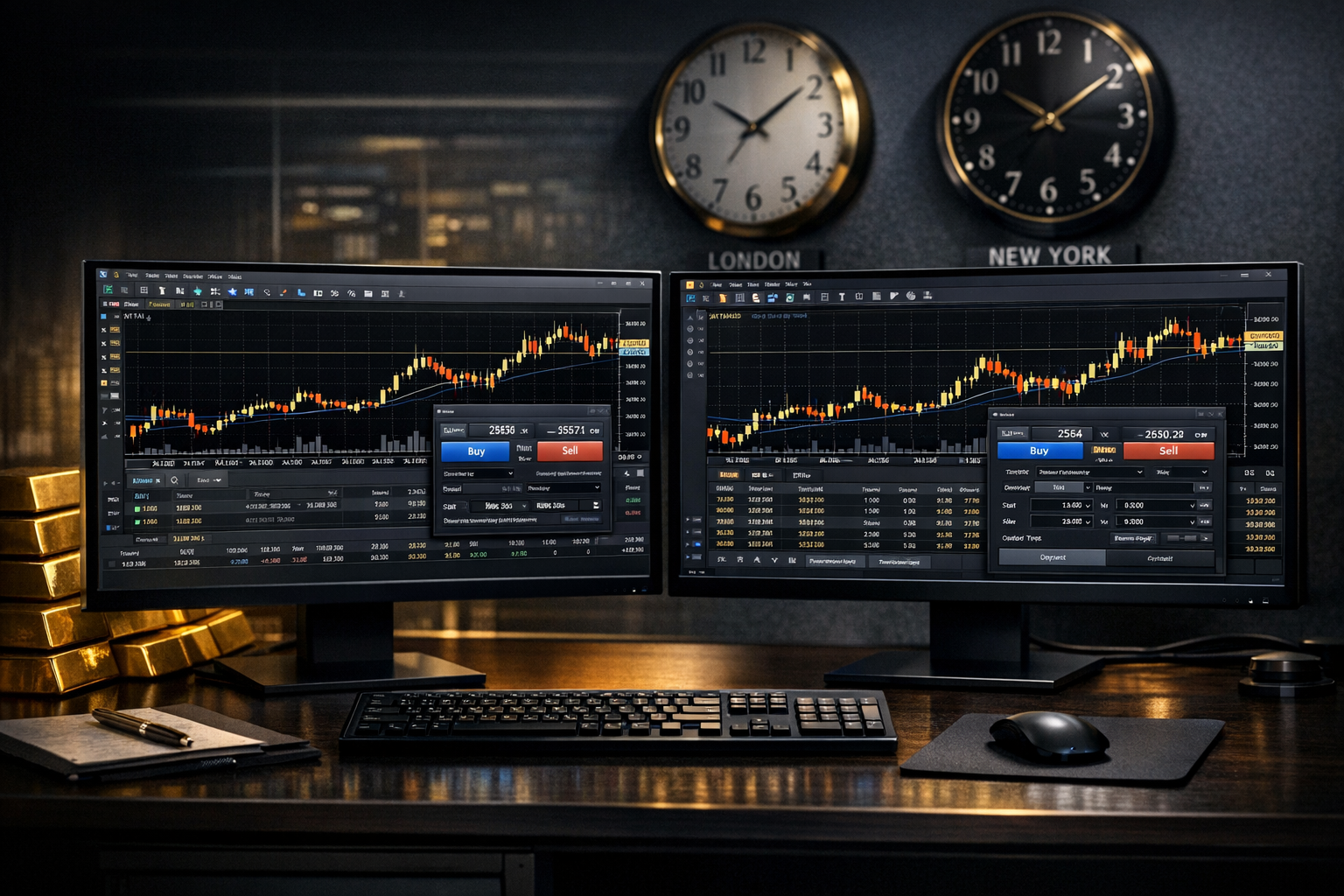
Gold at $2,650 looks calm on the surface.
Then a single US data release hits, spreads widen, candles stretch $8–$15 in minutes, and suddenly your “safe” trade is a stress test.
If you’ve ever asked, “How do I trade XAUUSD without getting chopped up?” this complete xauusd trading guide is for you.
TL;DR: The fastest path to trading XAUUSD like a pro
- XAUUSD is a volatility product: treat it like an instrument that can move $10–$30 fast, especially in London/NY overlap.
- Gold reacts to real yields, USD (DXY 106.80), and risk sentiment: don’t trade it in a macro vacuum.
- Use levels + catalysts: the best gold trades often come from clean price zones (e.g., $2,640 / $2,660) plus a trigger (CPI, NFP, FOMC).
- Stop losses must match gold’s “breathing room”: common XAUUSD SLs are $10–$25; tighter stops often get tagged.
- One strategy is not enough: you need a trend plan, a range plan, and a news plan.
- Risk management beats prediction: aim for 1:2 to 1:3 R:R and keep risk per trade consistent (often 0.5%–1%).
1) What is XAUUSD and why gold trading behaves differently
XAUUSD is the price of gold (XAU) quoted in US dollars (USD).
When you buy XAUUSD, you’re effectively buying gold and selling USD at the same time.
That sounds simple.
But gold is not “just another forex pair,” and treating it like EUR/USD is a classic beginner mistake.
Gold is a macro asset first, a chart second
Gold is heavily influenced by macro drivers like inflation expectations, real interest rates, central bank demand, and geopolitical risk.
Today’s context is a good example: XAUUSD ~$2,650 (+0.35%) while DXY ~106.80.
That combination tells you gold is holding up despite a firm dollar, often implying either safe-haven demand or shifting rate expectations.
Gold’s “pip” math is different (and it matters)
Most brokers quote gold with two decimals (e.g., 2650.10).
On many platforms, a $1 move equals 100 “points” (or 100 pips in broker language).
So a move from $2,650 to $2,660 is a $10 move, which is meaningful.
That $10 can be a full take profit for some intraday traders.
Why XAUUSD spreads and slippage feel “worse”
Gold spreads widen around high-impact events, session opens, and thin liquidity moments.
It’s normal to see spreads expand during US CPI, FOMC, or NFP.
That’s why your strategy must include timing rules, not just entry rules.
Gold moves in bursts
EUR/USD often trends smoothly.
Gold often moves in impulses, then consolidates, then impulses again.
This “burst behavior” is why breakout traders love it, and why over-leveraged traders fear it.
If you want structured trade ideas with clear entries, stop losses, and take profits during the most liquid windows, explore our premium gold signals and see how we frame trades around London and New York sessions.
2) Gold market fundamentals: what actually moves XAUUSD
If you only learn one thing about how to trade gold, learn this: gold isn’t random.
It responds to a small set of drivers again and again.
Your job is to recognize which driver is dominant today.
1) Real yields and rate expectations
Gold competes with yield-bearing assets.
When real yields rise (or markets expect higher real yields), gold often struggles.
When real yields fall (or rate cuts get priced), gold often rallies.
That’s why FOMC guidance and inflation data matter even if you “only trade charts.”
2) The US dollar (DXY) and USD pairs
Gold is priced in USD.
A stronger dollar can pressure gold, and a weaker dollar can lift it.
Right now, DXY ~106.80, EUR/USD ~1.0520, GBP/USD ~1.2680, and USD/JPY ~149.50.
If DXY pushes higher while gold holds $2,650, that’s information.
It can signal underlying demand or a market hedging risk.
3) Risk sentiment (fear vs. greed)
Gold can act like a safe haven.
In risk-off periods (equities sell off, volatility rises), gold can catch bids.
But it’s not always that clean.
In liquidity panics, gold can drop as traders sell winners to raise cash.
4) Central bank buying and long-term flows
Central bank demand has become a major structural tailwind in recent years.
It doesn’t drive every intraday candle.
But it shapes the bigger trend and helps explain why dips can get absorbed.
5) Geopolitics and surprise headlines
Gold reacts fast to unexpected news.
A single headline can move XAUUSD $12–$25 quickly.
This is why you need a plan for “headline risk,” especially if you hold trades through volatile hours.
For practical survival rules around these moments, you can also read our guide on how gold signals react to unexpected news events.
3) XAUUSD sessions and timing: when gold is easiest (and hardest) to trade

Gold is traded 24 hours, but it does not move the same way all day.
Timing is a strategy.
If you ignore it, you’ll enter during dead zones and get chopped.
Understanding the “personality” of each session
Asian session is often more range-bound for gold.
You’ll see quieter price action, smaller candles, and more mean reversion.
This is where range strategies can work, but breakouts are less reliable.
London session is where gold often “wakes up.”
Liquidity improves and moves become cleaner.
Many of the day’s key levels are tested here.
New York session is where volume and catalysts collide.
US data releases can create the biggest intraday swings.
The London–New York overlap is often the most tradable window for momentum.
Practical timing rules you can apply today
- Avoid entries 1–3 minutes before major US news unless you trade news professionally.
- Prefer London open for breakout continuation from Asia ranges.
- Prefer NY morning for trend days and catalyst-driven moves.
- Be cautious late NY when liquidity can thin and spreads can widen.
Realistic example using current levels
Assume gold is trading around $2,650.
During Asia, price ranges between $2,642 and $2,654.
London opens and breaks above $2,654, then retests the level.
A simple plan is to buy the retest near $2,655 with an SL at $2,643 (risk $12).
A 1:2 target sits near $2,679, and a 1:3 target sits near $2,691 (if volatility supports it).
This is the kind of session-based structure we use in our United Kings trading signals: trade the right setup at the right time, not “any candle, any hour.”
4) XAUUSD correlations: USD, yields, EUR/USD, and risk-on/risk-off
Correlation is not a rule.
It’s a context filter.
Used correctly, it keeps you out of low-quality trades and helps you size risk during volatile regimes.
Gold vs. DXY (Dollar Index)
Gold and DXY often move inversely.
But “often” is not “always.”
When both rise together, it usually means there is another dominant driver, like safe-haven demand or inflation hedging.
With DXY ~106.80 and gold near $2,650, you should ask: is gold strong because of risk-off flows, or because yields are falling even as the dollar stays bid?
Gold vs. USD/JPY and yields
USD/JPY at 149.50 often reflects yield differentials.
If USD/JPY is ripping higher and yields are rising, gold can face headwinds.
If USD/JPY stalls or drops while gold rises, it can hint at falling yields or a risk-off rotation.
Gold vs. EUR/USD and GBP/USD
EUR/USD at 1.0520 and GBP/USD at 1.2680 give you a read on broad USD strength.
If both pairs are falling (USD strength) and gold is also falling, correlation supports a bearish gold idea.
If EUR/USD is falling but gold is rising, treat gold as the “special case” and look for safe-haven or inflation narratives.
Risk sentiment cross-check
Use equity indices and VIX-like volatility measures as a secondary check.
On risk-off days, gold can trend strongly, but it can also whip before choosing direction.
That’s where your execution rules matter more than your opinion.
A simple correlation checklist (fast)
- Is DXY trending or ranging?
- Is USD/JPY accelerating (yields up) or fading (yields down)?
- Are EUR/USD and GBP/USD aligned with the USD move?
- Is today a “headline day” (geopolitics) or a “data day” (CPI/NFP)?
If you want trade ideas that already account for these cross-market filters, our forex signals and gold coverage are designed to align entries with the broader tape, not fight it.
5) The best chart setups for gold: levels, structure, and price action
Indicators can help.
But in XAUUSD, clean levels and structure do most of the heavy lifting.
Gold respects obvious zones because that’s where liquidity sits.
Start with higher timeframe zones (H4/D1)
Mark the nearest swing highs and lows around current price.
With gold near $2,650, realistic zones might include:
- Support zone: $2,640–$2,635 (prior reaction + round number gravity)
- Mid pivot: $2,650 (psychological level)
- Resistance zone: $2,665–$2,670 (prior supply / breakout point)
- Upper extension: $2,685–$2,690 (trend extension area)
Then drop to execution timeframes (M15/M5)
Your job is to avoid “guessing” and wait for proof.
In gold, proof often looks like:
- Break and retest of a key level (classic and effective).
- Liquidity sweep (stop hunt) above a swing high, then rejection.
- Compression (tight range) before a volatility expansion.
Two high-probability price action patterns in XAUUSD
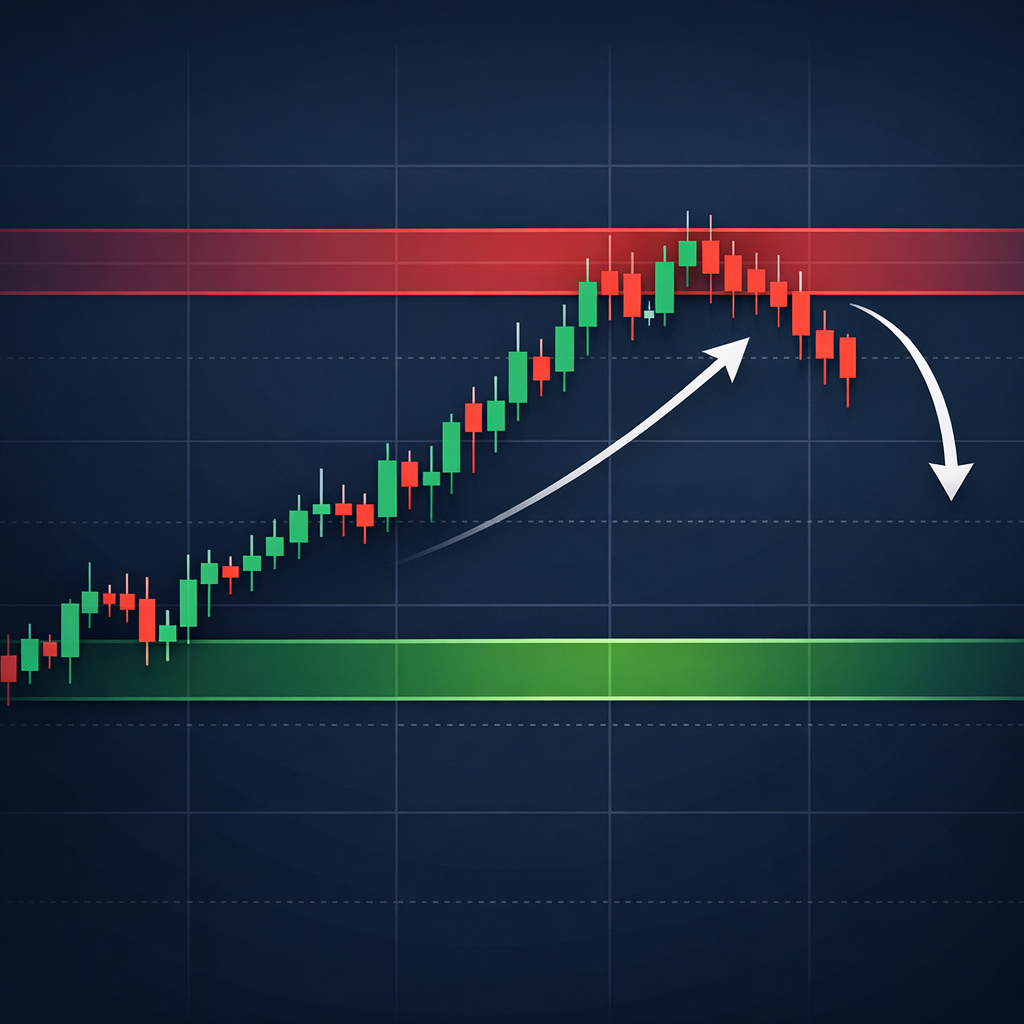
1) Sweep-and-reverse at a key level
Example: price spikes from $2,658 to $2,666 (sweeps highs) and immediately closes back below $2,662.
A short entry around $2,661 with SL at $2,673 (risk $12) targets $2,637 (1:2) or $2,625 (1:3 if structure allows).
2) Trend pullback to structure
Example: gold trends up from $2,630 to $2,668, then pulls back into $2,655–$2,658.
A long entry at $2,657 with SL at $2,645 (risk $12) targets $2,681 (1:2) or $2,693 (1:3).
Where traders go wrong with “support/resistance”
They draw one thin line.
Gold trades zones, not surgical lines.
Give your levels width, then use execution triggers to refine entries.
Want to see how a professional signal formats these ideas (Entry/SL/TP + reasoning)? Our XAUUSD signals service posts structured setups built around these exact concepts.
6) Indicator toolkit for XAUUSD (keep it simple, use it correctly)
Gold traders often over-stack indicators.
Then they get conflicting signals and freeze.
You only need a small toolkit—used with discipline.
Moving averages (trend filter, not entry magic)
A 50 EMA and 200 EMA on H1 or H4 can help define regime.
If price is above the 200 EMA and the 50 EMA is rising, prioritize longs.
If price is below and both are falling, prioritize shorts.
But do not buy just because price “touched the EMA.”
Use it to frame bias, then enter using structure.
ATR (Average True Range) for stop sizing
ATR tells you how much gold typically moves per candle period.
If M15 ATR is $3.50, then a $6 stop is tight.
A $12–$18 stop may be more realistic depending on the setup.
This is how you avoid placing stops where gold naturally breathes.
RSI (momentum and divergence, not overbought/oversold)
RSI is useful when you stop treating 70/30 like a reversal button.
In trends, RSI can stay “overbought” for hours.
Use RSI for:
- Momentum confirmation (holding above 50 in uptrends).
- Divergence at key zones (price makes higher high, RSI makes lower high).
Volume and order flow (if your platform supports it)
Spot gold is decentralized, so volume is imperfect.
But tick volume and futures volume can still provide clues.
Look for volume spikes at breakouts and at reversal wicks.
Comparison table: Price action vs indicators vs signals
| Approach | Best for | Common mistake | How to use it in XAUUSD |
|---|---|---|---|
| Price action + levels | Most traders, all sessions | Trading every touch of a level | Mark zones on H4/D1, execute on M15/M5 with break/retest or sweep |
| Indicators (EMA/ATR/RSI) | Trend filtering + stop sizing | Using indicators as entry signals | EMA for bias, ATR for SL distance, RSI for momentum/divergence at zones |
| Signal-based trading | Busy traders who want structure | Copying blindly without risk rules | Follow Entry/SL/TP, apply consistent % risk, avoid trading during forbidden times |
If you’re exploring signal-based execution, start with our educational resources on how Telegram forex signals work for beginners (the principles apply to gold too).
7) Three core XAUUSD strategies (trend, range, and breakout)
Gold will not reward a one-trick pony.
You need at least three playbooks, because market conditions rotate.
Let’s make them practical with current levels.
Strategy A: Trend continuation (the “easy money” days)
Trend days happen when a macro driver dominates.
Think CPI surprise, dovish/hawkish repricing, or strong risk-off.
On these days, gold can run $25–$60.
Your job is to join the move, not top-tick it.
- Bias: Use H1/H4 structure and a trend filter (e.g., above 200 EMA).
- Entry: Pullback to prior structure (e.g., $2,655–$2,658).
- SL: Below the pullback low (e.g., $2,645; risk $12).
- TP: Scale at 1:2 (e.g., $2,679) and trail toward 1:3 (e.g., $2,691).
Trend continuation is where traders build consistency because it aligns with momentum.
Strategy B: Range trading (Asia and “wait-and-see” days)
Range days happen when markets are waiting for a catalyst.
Gold oscillates between two zones and punishes breakout chasers.
Example range: $2,640 support and $2,665 resistance.
- Buy plan: Buy $2,642–$2,645 after rejection, SL $2,632 (risk ~$10–$13), TP $2,662–$2,665.
- Sell plan: Sell $2,664–$2,667 after rejection, SL $2,678 (risk ~$11–$14), TP $2,645–$2,642.
Range trading requires patience and fast profit-taking.
Don’t turn a range trade into a long-term “hope position.”
Strategy C: Breakout + retest (the gold classic)
Gold loves to fake out traders who buy the first breakout candle.
The higher-probability approach is breakout then retest.
Example: price consolidates under $2,665, breaks to $2,670, then retests $2,665.
- Entry: Buy $2,666 after bullish retest confirmation.
- SL: $2,654 (risk $12).
- TP: $2,690 (1:2) or $2,702 (1:3 if volatility expands).
These are the core frameworks behind many trades shared in our gold signals channel, especially during London and NY when breakouts have the liquidity to follow through.
8) Step-by-step: How to build a complete XAUUSD trade plan
Most traders don’t lose because their strategy is “bad.”
They lose because they don’t have a repeatable process.
Here is a step-by-step trade plan you can use daily.
Step 1: Identify today’s regime (trend, range, or event)
- Trend day clues: strong directional H1 candles, clean higher highs/lows, catalyst present.
- Range day clues: repeated rejections at same zones, shrinking volatility, no major news.
- Event day clues: CPI/NFP/FOMC on the calendar, spreads widen near release time.
Step 2: Mark 3–5 key levels (not 20)
Pick the nearest swing high, swing low, and a mid pivot.
In our current context, that might be $2,640, $2,650, $2,665, and $2,685.
That’s enough.
Step 3: Define your setup trigger
Choose one trigger and master it.
- Break and retest
- Sweep and rejection
- Pullback to structure in trend
If your trigger doesn’t appear, you don’t trade.
Step 4: Place stop loss where your idea is invalid
Gold stops must be logical, not emotional.
If you’re buying support at $2,645, your idea is invalid if price cleanly breaks below the support zone.
A stop at $2,642 “because it’s smaller risk” often gets hit.
A stop at $2,632–$2,635 might be the correct invalidation depending on structure and ATR.
Step 5: Set take profits using structure + R:R
Use 1:2 as a baseline.
Use 1:3 when the market is trending and you have room to the next zone.
Example:
- Entry: $2,657
- SL: $2,645 (risk $12)
- TP1: $2,681 (reward $24 = 1:2)
- TP2: $2,693 (reward $36 = 1:3)
Step 6: Manage the trade with rules (not feelings)
- Consider moving SL to break-even only after price clears a structure point (not instantly).
- Scale partial profits at TP1 on range days.
- Trail behind swing lows/highs on trend days.
Step 7: Journal in a way that improves you
Record screenshot, entry reason, and whether you followed rules.
Gold punishes sloppy execution, but it rewards disciplined repetition.
If you want a ready-made version of this plan delivered as actionable alerts, you can combine your process with our signals feed so you’re not building ideas from scratch every day.
9) Risk management for XAUUSD: position sizing, SL logic, and drawdown control
Gold can be the fastest account builder.
It can also be the fastest account destroyer.
The difference is rarely “analysis.”
It’s risk.
Why gold traders blow accounts (the uncomfortable truth)
- They oversize because gold “moves a lot.”
- They use tight stops and get stopped repeatedly.
- They revenge trade after a spike.
- They hold through news without a plan.
Choose a fixed risk model (simple and effective)
For most traders, risking 0.5% to 1% per trade is sustainable.
At 1%, you can take 10 losses and still have 90% of your account.
At 5%, a few losses becomes a crisis.
Position sizing example (practical, not theoretical)
Let’s say your account is $2,000.
You risk 1% ($20) on a gold trade.
Your SL distance is $12 (e.g., entry $2,657, SL $2,645).
You size the position so that a $12 adverse move equals ~$20 loss.
Your platform’s contract specs vary by broker, so calculate using your broker’s XAUUSD pip value.
This is exactly why many traders prefer signals that include SL distance and management notes.
Stop loss placement rules that work in XAUUSD
- Place SL beyond the zone, not inside it.
- Respect ATR: if gold is moving $3–$5 per 15 minutes, a $6 stop is fragile.
- Avoid “round number stops” like exactly $2,650.00 if structure suggests liquidity there.
Drawdown control: your “circuit breaker”
Gold can trigger emotional spirals.
Use daily loss limits.
- Daily max loss: 2R (e.g., two full stop-outs).
- Weekly max loss: 5R.
- If hit, stop trading and review.
For a deeper framework you can apply whether you trade manually or follow alerts, read our guide on risk management strategies when using forex signals (the same principles apply directly to XAUUSD).
10) Advanced XAUUSD tactics: liquidity, fakeouts, and scaling
Once you can trade basic structure, XAUUSD becomes a skill game.
The edge comes from understanding where orders sit and how gold hunts them.
Liquidity pools: where gold loves to run
Gold frequently targets:
- Equal highs and equal lows
- Previous day high/low
- Round numbers like $2,650 and $2,700
These areas attract stops and breakout orders.
That’s why you see sharp spikes and immediate reversals.
The “fake breakout” play (with rules)
Example: gold trades below resistance at $2,665 for hours.
NY opens and spikes to $2,671, then closes back below $2,665 on M15.
That close back inside the range is your clue.
- Entry: Sell $2,663–$2,665 after rejection confirmation.
- SL: $2,677 (risk $12–$14).
- TP: $2,639 (1:2) and $2,627 (1:3 if momentum continues).
This is not about predicting.
It’s about waiting for the market to show its hand.
Scaling in and scaling out (how pros smooth equity curves)
Scaling is powerful, but it must be rule-based.
Scaling out: Take partial profit at 1:2, then trail the remainder.
This reduces the psychological pressure and locks in progress.
Scaling in: Only add when the market confirms, not when you’re “down.”
Example: buy $2,657, then add only after price breaks $2,665 and holds, not during drawdown.
When not to use advanced tactics
- If spreads are wide around news.
- If you’re emotionally reactive that day.
- If you can’t define invalidation clearly.
Advanced tactics work best when paired with discipline and a community that reinforces good habits. That’s one reason our United Kings community has grown to 300K+ active traders—you’re not trading alone.
11) Common XAUUSD mistakes (and what to do instead)
Gold is brutally honest.
It exposes weak process fast.
Here are the most common mistakes I’ve seen over 16+ years, and the fixes that actually work.
Mistake 1: Using forex-style stops on gold
Traders use a $5 stop because it “feels safe.”
Then they get stopped out by normal noise.
Fix: Use structure + ATR. Many clean setups need $10–$25 SL depending on volatility.
Mistake 2: Trading gold all day
Gold has great windows and terrible windows.
Fix: Focus on London and NY session opportunities, especially overlap.
Mistake 3: Entering right before CPI/NFP/FOMC
Even if you’re “right,” slippage can ruin the trade.
Fix: Either stay flat or trade a defined news strategy with reduced risk.
Mistake 4: Turning a day trade into an investment
Gold moves fast, and hope is expensive.
Fix: Define TP/SL before entry. If your thesis changes, exit.
Mistake 5: Copying signals without risk rules
Signals can be powerful, but only if you apply consistent sizing.
Fix: Risk a fixed % per trade, respect SL, and avoid overtrading.
If you’re evaluating providers, use our signals provider checklist to avoid the usual traps.
Mistake 6: Ignoring the USD picture
With DXY at 106.80, EUR/USD at 1.0520, GBP/USD at 1.2680, and USD/JPY at 149.50, USD strength/weakness is not a side note.
Fix: Do a 60-second correlation check before every gold trade.
Gold rewards traders who do fewer things, better.
Your edge is not complexity.
Your edge is consistency.
12) A practical roadmap: from beginner to profitable XAUUSD trader
Profitability is not a secret indicator.
It’s a sequence of skills stacked in the right order.
Here’s a realistic roadmap you can follow.
Phase 1 (Weeks 1–2): Learn XAUUSD behavior and build your playbook
- Study how gold moves during Asia vs London vs NY.
- Practice marking zones on H4/D1.
- Pick one setup trigger (break/retest is a great start).
Use a demo account if you’re new.
Your goal is execution reps, not profit.
Phase 2 (Weeks 3–6): Build risk discipline and consistency
- Risk 0.5%–1% per trade.
- Trade only your best session window.
- Journal every trade with a screenshot.
Most traders skip this phase and pay for it later.
Phase 3 (Weeks 7–12): Add advanced filters and management
- Add correlation checks (DXY, USD/JPY).
- Use ATR to refine stop placement.
- Scale out at 1:2 and trail on trend days.
Phase 4 (Ongoing): Build a “signal + skill” workflow
This is where many traders accelerate.
You use signals as structured ideas, but you keep your own rules.
That means:
- You follow Entry/SL/TP exactly.
- You apply your fixed risk model.
- You avoid trades that conflict with your timing rules.
Where United Kings fits (if you want guidance and speed)
United Kings provides premium Telegram signals for forex and gold with clear Entry, SL, and TP levels.
Our approach focuses on London and New York session trading, where gold is most liquid.
We also share educational context so you learn while you trade.
We’re proud of a performance track record many traders cite as 85%+ win rate, but we always stress that past performance doesn’t guarantee future results.
If you want to see how this looks in real time, join our Telegram community at United Kings signals on Telegram.
FAQ: XAUUSD trading questions traders ask every day
1) What is the best time to trade XAUUSD?
The most consistently liquid and directional moves often occur during London session and the London–New York overlap.
Asia can be tradable, but it’s commonly more range-bound.
2) How much should my stop loss be on gold?
It depends on volatility and structure, but many clean intraday XAUUSD setups use $10–$25 stops.
Use ATR and place SL beyond the zone that invalidates your idea.
3) Is gold easier or harder than forex pairs like EUR/USD?
Gold is often more volatile than major forex pairs.
That can make it easier to hit targets, but harder to manage risk and emotions.
4) What moves gold the most: USD or news?
Both.
USD strength (DXY), yield expectations, and high-impact news (CPI, NFP, FOMC) are frequent drivers.
On some days, headlines and risk sentiment dominate everything.
5) Should beginners trade XAUUSD or start with forex?
Beginners can trade XAUUSD, but should start on a demo account and keep risk small.
Gold’s speed can punish oversized positions.
Risk disclaimer (read this before you trade)
Trading forex and gold (XAUUSD) involves significant risk and may not be suitable for all investors.
You can lose some or all of your capital.
Past performance does not guarantee future results, and no service can promise profits.
If you are a beginner, consider practicing on a demo account first and never risk money you can’t afford to lose.
Ready to trade XAUUSD with clear structure? Join United Kings
If you want high-quality gold setups with clear Entry, SL, and TP, plus a community of 300K+ active traders, we’ve built United Kings for you.
Start with our full United Kings signals hub, or go straight to premium XAUUSD gold signals if gold is your main focus.
We also cover currencies via forex signals and diversified opportunities with crypto signals.
Choose a plan that fits your timeline on our pricing page: Starter (3 Months $299), Best Value (1 Year $599 with 50% savings + FREE ebook), or Unlimited (Lifetime $999).
And if you want the fastest onboarding, join our Telegram now: United Kings Telegram signals channel.
Bonus confidence: we offer a 48-hour money-back guarantee so you can evaluate the service with peace of mind.