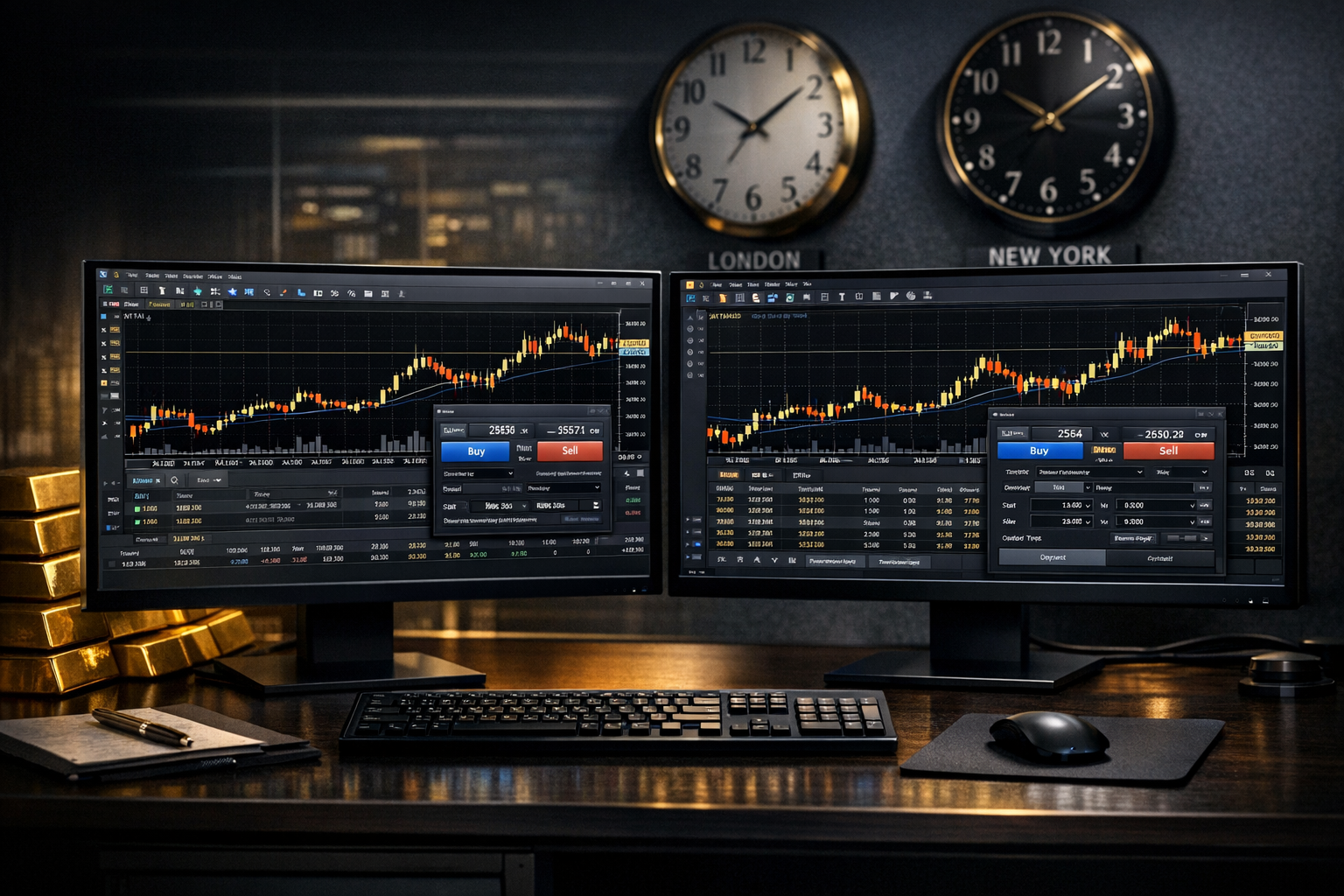
Gold is at $2650.00 and moving like it has something to prove.
You open your chart, you see a clean bullish candle, and you think: “This is it—buy and ride it.”
Then a $12 spike hits your stop, price reverses, and gold continues in the original direction without you.
If that sounds familiar, this xauusd trading guide is for you.
TL;DR: The complete XAUUSD trading guide in 60 seconds
- XAUUSD (gold vs USD) is driven by real yields, USD strength (DXY 106.80), risk sentiment, and news shocks—more than most forex pairs.
- Best trading windows are London and New York sessions; the London–NY overlap is where many of the cleanest moves form.
- Gold needs “breathing room.” Typical stops are $10–$25 (100–250 pips) depending on volatility and structure.
- Use structure first, indicators second. Build around support/resistance, break & retest, and liquidity sweeps; confirm with RSI/ATR if you want.
- Risk management is the edge. Aim for 1:2 to 1:3 R:R, risk 0.5–1% per trade, and avoid revenge trading after news spikes.
- Signals work best with execution rules. If you want clear Entry/SL/TP guidance, explore United Kings Gold Signals and our Telegram community.
What is XAUUSD, and why gold trades differently than “normal” forex

XAUUSD is the price of one troy ounce of gold quoted in US dollars.
When XAUUSD is at $2650, it means one ounce of gold costs $2650 in USD.
Gold is often called a “safe haven,” but in trading terms it’s better described as a macro-driven, liquidity-hunting instrument.
Gold is not just another pair
EUR/USD at 1.0520 and GBP/USD at 1.2680 usually move on rate expectations and data surprises.
Gold does that too, but it adds extra layers: physical demand, central bank buying, geopolitical risk, and real yield dynamics.
That’s why XAUUSD can trend smoothly for hours, then print a $15 wick in 30 seconds.
Understanding “pips” on gold (so your risk makes sense)
Many brokers quote gold to 2 decimals (e.g., 2650.00).
A move of $1.00 is often referred to as 100 pips (because 0.01 is 1 “pip” in that quote format).
So a $10 stop is roughly 1000 pips in “gold pips,” which sounds huge until you realize gold can move $10 in minutes during active sessions.
Why gold volatility feels “personal”
Gold is highly sensitive to order flow around round numbers and prior highs/lows.
At $2650, you’ll often see battles around levels like 2640, 2650, 2660, 2675.
That’s not magic—those are areas where large traders cluster orders, and where liquidity is easiest to access.
If you want a framework to follow alongside this guide, our broader trading resources on United Kings Blog pair well with the setups we’ll cover.
Gold market fundamentals: what actually moves XAUUSD
To trade gold profitably, you don’t need a PhD in macroeconomics.
You do need to know which fundamentals matter today, and how they show up on the chart.
Right now, gold at $2650 with a +0.35% daily change tells us buyers are active, but not in a panic.
1) The US dollar and DXY (106.80) relationship
Gold is priced in USD, so a stronger dollar often pressures gold lower.
With DXY around 106.80, USD strength can cap rallies unless gold has its own catalyst (risk-off flows, falling real yields, or geopolitical stress).
In practice: if DXY is trending up and gold is also rising, gold is showing relative strength, and breakouts can be more explosive.
2) Real yields and rate expectations
Gold pays no interest.
So when real yields rise (yields minus inflation), gold often struggles because the opportunity cost of holding gold increases.
When traders start pricing rate cuts, gold can trend higher even if the headlines look “neutral.”
3) Risk sentiment: the “fear bid” and the “liquidity bid”
Gold can rally in classic risk-off moments (war headlines, banking stress, recession fear).
But gold can also sell off during intense risk-off if traders need liquidity and sell winners.
That’s why you’ll sometimes see gold drop alongside stocks in a sharp liquidation, then rebound hard once forced selling ends.
4) Central bank demand and long-term flows
Central bank purchases can underpin gold for months.
You won’t trade those flows candle-by-candle, but they matter for the “why” behind persistent uptrends and shallow pullbacks.
5) News that matters most for XAUUSD
- US CPI / PCE inflation (rate path changes quickly)
- FOMC (dot plot, press conference tone)
- NFP (jobs + wages = yields reaction)
- Geopolitical headlines (risk premium)
We cover how to survive surprise volatility in more detail here: how gold reacts to unexpected news events.
XAUUSD session timing: when gold is easiest (and hardest) to trade
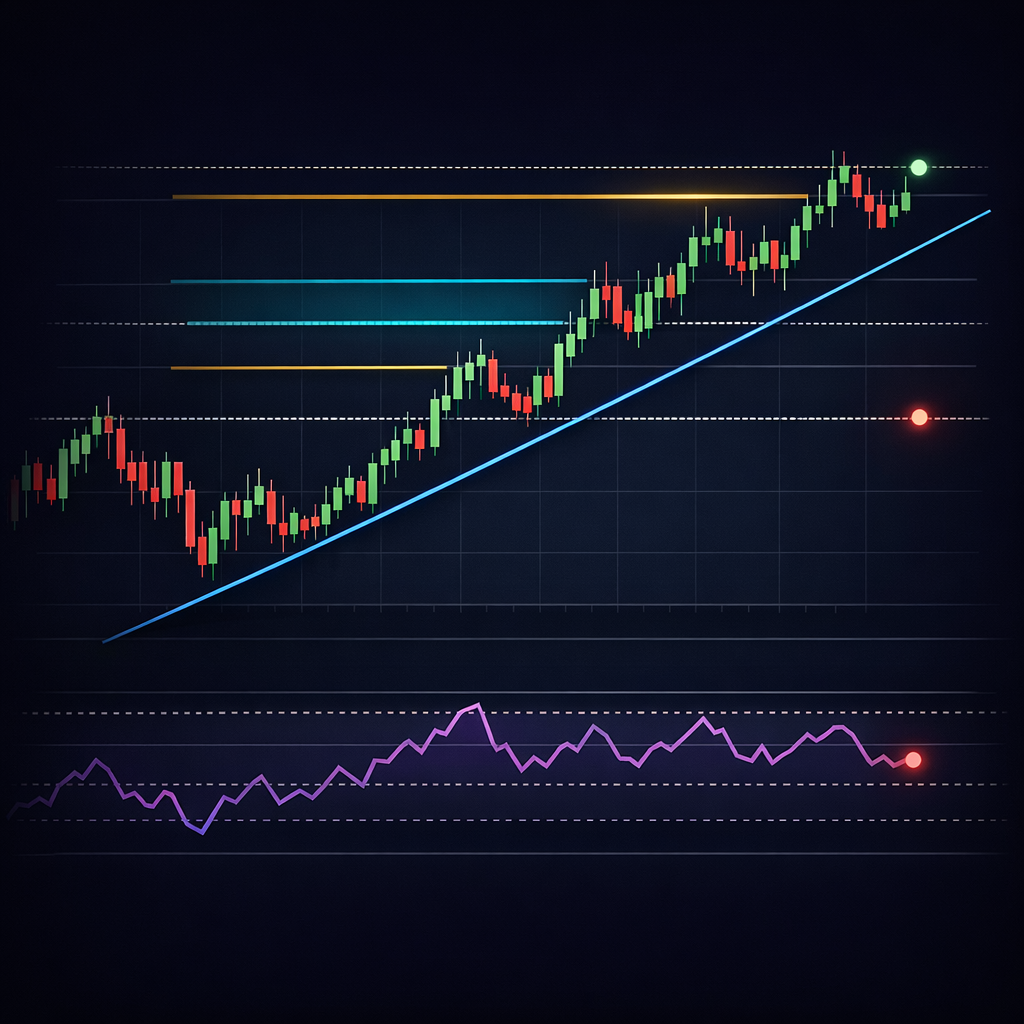
If you trade gold at random times, you’ll feel like the market is “rigged.”
If you trade gold during the right sessions, you’ll start seeing the same patterns repeat.
Gold is liquid almost 24/5, but liquidity quality changes dramatically by session.
Asia session: range-building and trap wicks
Asia often creates the day’s early range.
Moves can be clean, but breakouts are less reliable because volume is lighter than London/NY.
A common pattern: Asia prints a box (say 2638–2648), then London sweeps one side and runs the other.
London session: structure forms and trends begin
London is where gold often chooses direction.
If gold is trading around 2650 at London open, watch how it reacts to prior day high/low and key round numbers.
This is where break & retest setups shine, because there’s enough order flow to follow through.
New York session: expansion, reversals, and news volatility
New York brings US data and often the day’s largest candle.
With USD/JPY around 149.50 and DXY elevated, NY can create violent two-way moves as yields reprice.
It’s also where “fakeouts” happen—especially 5–15 minutes before major releases.
London–New York overlap: the sweet spot
This overlap is where many professional traders focus.
Liquidity is highest, spreads are tightest, and trends can extend.
United Kings signals focus heavily on London and NY session trading because that’s where execution quality is best for most traders.
Step-by-step: a simple session plan you can follow
- Mark the Asia range (high/low) on M15 or H1.
- Identify the bias from H4/D1 structure (trend, key levels).
- Wait for London to sweep liquidity above/below the Asia range.
- Enter on confirmation (retest, rejection candle, or break + hold).
- Manage into NY: partial at 1R, trail behind structure, avoid holding through high-impact news if you’re new.
If you prefer guided trade ideas with clear Entry/SL/TP, start here: United Kings Trading Signals.
Correlation analysis: gold vs USD, EUR/USD, GBP/USD, and USD/JPY
Correlation won’t “predict” gold, but it helps you avoid bad trades.
It also helps you understand when gold is moving for gold reasons versus USD reasons.
In today’s context, we have EUR/USD at 1.0520, GBP/USD at 1.2680, and USD/JPY at 149.50.
Gold and DXY: the classic inverse relationship
Most of the time, gold and DXY move inversely.
But during strong risk-off or strong inflation scares, they can rise together temporarily.
Trading rule: if gold is breaking higher while DXY is also firm, treat gold’s breakout as higher quality.
Gold and EUR/USD / GBP/USD: “USD lens” confirmation
EUR/USD and GBP/USD are heavily USD-driven.
If gold is bullish but EUR/USD is collapsing, ask why.
Sometimes gold is being bid as a haven while USD is also strong—those are high-volatility regimes where stops must be wider.
Gold and USD/JPY: risk sentiment and yields proxy
USD/JPY often tracks yield differentials.
When USD/JPY is accelerating upward, yields are often rising, which can pressure gold.
If you see USD/JPY pushing above a key level while gold is trying to break resistance (e.g., 2660–2665), be cautious with aggressive longs.
Practical correlation checklist (use this before every trade)
- DXY direction: trending up, down, or ranging?
- EUR/USD behavior: confirming USD weakness/strength?
- USD/JPY impulse: yields pressure likely?
- Gold reaction at level: rejecting or accepting price?
When we publish gold trade ideas, we typically note the broader context in the community, alongside the exact levels.
You can also pair gold with forex opportunities via United Kings Forex Signals if you want diversification.
Gold chart basics: structure, liquidity, and the levels that matter
Gold rewards traders who respect structure.
It punishes traders who chase candles in the middle of nowhere.
If you master three concepts—trend structure, support/resistance, and liquidity—you’ll already be ahead of most retail traders.
1) Trend structure: higher highs and higher lows (or the opposite)
On H1/H4, define whether price is printing higher highs/higher lows (bullish) or lower highs/lower lows (bearish).
At gold $2650, a bullish structure might look like: swing low at 2618, then higher low at 2632, then price pressing 2660.
In that case, your job is not to “predict tops.” Your job is to buy pullbacks into structure.
2) Support and resistance: use zones, not single lines
Gold often respects zones of $3–$8 rather than a perfect price.
So instead of “2660 is resistance,” think “2658–2665 is the decision zone.”
This mindset alone reduces stop-outs caused by tiny wicks.
3) Liquidity: where stops sit (and why price hunts them)
Liquidity is simply clusters of orders.
Retail stops often sit above obvious highs and below obvious lows.
Gold loves to sweep those levels by $2–$6, then reverse.
Example: a classic liquidity sweep around $2650
Imagine Asia range high at 2652 and low at 2640.
London pushes to 2656 (sweeping stops above 2652), then slams back under 2650.
A disciplined short waits for a retest of 2650–2652 and sells with a stop above 2662 (about $10–$12 risk).
Key level types to mark daily
- Previous day high/low
- Asia range high/low
- Weekly open (often acts like a magnet)
- Round numbers (2640, 2650, 2660, 2675)
- Major swing highs/lows on H4/D1
This is the foundation behind many professional signal models: levels first, confirmation second, risk always.
Indicators for XAUUSD (what to use, what to ignore)
Indicators are tools, not strategies.
On gold, too many indicators can actually make you late.
We prefer a price-action-first approach, with indicators used to confirm volatility and momentum.
ATR (Average True Range): your stop-loss reality check
ATR tells you how much gold typically moves per candle on a timeframe.
If M15 ATR is $2.50, a $3 stop is likely too tight in active sessions.
In current conditions near $2650, it’s common to need $10–$25 stops depending on timeframe and setup structure.
RSI: momentum confirmation, not “buy oversold”
RSI works well when used for divergence and momentum shifts.
For example, if price makes a higher high at 2664 but RSI makes a lower high, that can warn of exhaustion near resistance.
But RSI alone is not a reason to short a strong uptrend.
Moving averages: trend filter, not entry trigger
A 50 EMA on H1 or H4 can help you stay on the right side.
If price is above the 50 EMA and the EMA is rising, your default should be to look for longs.
Use it as a filter, then use structure for entries.
Volume: useful, but understand your broker feed
Spot gold volume is decentralized, so you’re often seeing tick volume.
It can still be helpful for spotting surges during breakouts.
Just don’t treat it like centralized futures volume.
Indicator stack we recommend (simple)
- ATR (volatility and stop sizing)
- RSI (momentum/divergence)
- One EMA (trend filter)
If your chart is covered in indicators, you’re probably trying to outsource decision-making.
Gold will punish that quickly.
Proven XAUUSD strategies: 4 setups that work in real conditions
Let’s turn theory into trades.
Below are four XAUUSD strategies that consistently show up around active sessions.
Each includes realistic entries around the $2610–$2690 range and risk parameters that match gold’s volatility.
Strategy 1: Break and retest (trend continuation)
This is the workhorse setup in trending markets.
You wait for price to break a key level, then retest it with rejection.
Example:
- Context: H4 bullish, price consolidating under 2660.
- Break: London pushes above 2660 and closes H1 at 2663.
- Retest entry: Buy 2661 on a retest.
- Stop loss: 2649 (risk $12).
- Take profit: TP1 2685 (reward $24, 1:2), TP2 2697 (reward $36, 1:3).
Key rule: if the retest slices through the level with no reaction, don’t force it.
Strategy 2: Liquidity sweep and reversal (London trap)
This is the setup that makes gold feel “manipulated.”
It’s not manipulation—it’s liquidity.
Example:
- Context: Asia range high 2652, resistance zone 2658–2665.
- Sweep: London spikes to 2664, then closes back below 2656.
- Entry: Sell 2654 on retest failure.
- Stop loss: 2667 (risk $13).
- Take profit: TP 2628 (reward $26, 1:2).
Best filter: reversal setups work better when the higher timeframe is at resistance or after an extended run.
Strategy 3: Pullback to structure (the “boring” profitable trade)
In strong trends, gold often pulls back to a prior breakout zone or a rising EMA.
You’re buying when others are panicking about a “crash.”
Example:
- Context: Gold rallies from 2620 to 2670.
- Pullback zone: prior resistance turned support at 2648–2652.
- Entry: Buy 2650 after a bullish rejection candle.
- Stop loss: 2635 (risk $15).
- Take profit: TP1 2680 (reward $30, 1:2), TP2 2695 (reward $45, 1:3).
This is one of the most “signal-friendly” setups because levels and invalidation are clear.
Strategy 4: News volatility fade (advanced, optional)
This one is not for beginners.
But you should understand it, because it explains many violent candles.
During CPI/FOMC, gold may spike $20, then retrace 60–80% within minutes.
Advanced traders fade the extreme when price returns inside the pre-news range.
Rule: if you can’t define risk precisely, skip it.
Risk management for gold: position sizing, stops, and trade management
Most traders don’t fail because their strategy is terrible.
They fail because their risk is inconsistent.
Gold makes this worse because it moves fast and punishes tight stops.
How wide should your stop be on XAUUSD?
Use structure first.
If your entry is at 2650 and the structure low is 2638, your stop can’t be 2647 “because you want a small loss.”
A realistic stop might be 2635 (below the swing see-saw), risking $15.
Risk-reward targets that fit gold (1:2 and 1:3)
Gold trends can deliver big R multiples, but only if you don’t take profits too early.
A simple model:
- Take partial at 1R (same distance as your stop).
- Move stop to breakeven only after structure confirms (not immediately).
- Hold the remainder for 2R–3R into the next liquidity pool.
Position sizing (the part most people skip)
Pick a fixed % risk per trade: 0.5% to 1% is a solid range.
Then calculate lot size based on your stop distance.
Example:
- Account: $5,000
- Risk: 1% = $50
- Stop: $12 (from 2661 to 2649)
- Position size: choose lots so that a $12 move equals ~$50 loss
Your broker’s contract specs vary, so confirm the $ value per $1 move for your lot size.
But the principle never changes: lot size is a function of stop size, not your mood.
Gold-specific risk rules we recommend
- Don’t widen stops after entry. If invalidated, exit.
- Avoid holding large size into CPI/FOMC if you’re not experienced.
- Max 2–3 trades/day on gold to prevent overtrading.
- One bad day rule: after -2R, stop trading for the day.
If you want a deeper risk framework specifically for signal users, read: risk management strategies when using forex signals.
Signal-style execution: how to enter XAUUSD trades like a professional
Many traders think the “secret” is the entry.
Professionals know the secret is execution: how you wait, how you place orders, and how you manage once in.
This is also why good signals can outperform random entries—because they enforce structure and discipline.
Market order vs limit order on gold
Gold can slip during volatility.
If you chase a breakout with a market order, you might get filled $1–$3 worse than expected.
Limit orders reduce slippage, but risk missing the trade if price doesn’t retest.
When to use each
- Use limit orders for break-and-retest and pullback setups (e.g., buy 2650 in a zone).
- Use market orders only after confirmation candles close (e.g., rejection + momentum shift).
- Avoid market orders in the 1–2 minutes around major news if you’re not advanced.
Step-by-step: executing a gold signal cleanly
- Read the signal: Entry, SL, TP(s), and any notes.
- Check the spread and current volatility (ATR or candle size).
- Place the order with SL and TP pre-set (no “I’ll add it later”).
- Manage at 1R: partial close or tighten risk only after structure confirms.
- Journal the trade: screenshot the entry and outcome.
Common execution mistakes that destroy good setups
- Entering late because you “wanted more confirmation” (confirmation becomes chasing).
- Moving SL closer because the stop “looks big.”
- Taking profit early because you fear a retrace.
- Doubling down after a loss (revenge trading).
If you’re new to Telegram-based trade ideas, our beginner-friendly guide helps: how to use forex signals on Telegram.
Gold vs forex vs crypto: what should you trade (and why XAUUSD often wins)
Some traders bounce between instruments and never build mastery.
Others specialize and build a repeatable edge.
Gold is a strong “specialization candidate” because it trends, respects levels, and offers clean R:R when traded during the right sessions.
Comparison table: XAUUSD vs major forex pairs vs crypto
| Feature | XAUUSD (Gold) | Major Forex (EUR/USD, GBP/USD) | Crypto (BTC/ETH) |
|---|---|---|---|
| Volatility profile | High, especially around NY news; frequent $10–$25 swings | Moderate; cleaner ranges, lower “spike” risk | Very high; weekend gaps and sudden sentiment shifts |
| Best sessions | London + New York overlap | London + New York overlap | 24/7, but liquidity varies by exchange and time |
| News sensitivity | Extremely sensitive to CPI/FOMC/NFP and geopolitics | Sensitive to rate data and central bank guidance | Sensitive to risk sentiment, regulation, and liquidity events |
| Technical behavior | Respects zones; loves liquidity sweeps and retests | Often smoother; fewer extreme wicks | Can trend hard; can also whipsaw violently |
| Beginner friendliness | Medium (needs wider stops and discipline) | Higher (slower moves, tighter structure) | Lower (large gaps, extreme volatility) |
So should you trade gold only?
If your goal is consistency, focusing on one instrument for 60–90 days can be transformative.
Gold gives you frequent opportunities, especially in London/NY.
But diversification can help if you overtrade gold.
That’s why many traders combine gold signals with selective forex signals and, for those who want it, crypto signals.
Beginner-to-profitable roadmap: a 30-day XAUUSD training plan
Most “how to trade gold” articles give you theory and leave you alone.
Let’s turn this into a plan you can execute.
This 30-day roadmap is designed to build skill without blowing accounts.
Days 1–7: build your foundation (no live trading required)
- Set up one clean chart: candlesticks + levels + ATR (optional).
- Mark daily: previous day high/low, Asia range, key round numbers.
- Backtest 20 examples of break-and-retest and liquidity sweep reversals.
- Write your rules in one page: entry trigger, SL placement, TP logic.
Goal: learn what “normal” looks like around $2650 so you can spot abnormal moves.
Days 8–14: demo trading with strict risk rules
- Trade only London and NY sessions.
- Risk a fixed amount per trade (e.g., 0.5% demo risk).
- Take only A+ setups: at key levels, with confirmation.
- Journal every trade with screenshots.
Goal: prove you can follow rules, not just “win.”
Days 15–21: introduce a signal framework (optional but powerful)
- Compare your analysis with professional levels.
- Practice executing Entry/SL/TP precisely.
- Track slippage and timing—did you enter late?
If you want to learn with real-time guidance, our community trades and learns together in Telegram: United Kings Telegram channel.
Days 22–30: go small live (or stay demo until consistent)
- Start with micro size and 0.25%–0.5% risk.
- Cap trades at 2/day.
- Only increase size after 20 trades with rule compliance.
Goal: build consistency under real emotions.
Why most XAUUSD traders lose (and how to avoid the common traps)
Gold is not “hard” because it’s random.
Gold is hard because it exposes human behavior.
Below are the mistakes we see repeatedly—especially when price is hovering around a psychologically loud number like $2650.
Trap 1: trading gold like EUR/USD
EUR/USD might tolerate a 10–15 pip stop in a calm session.
Gold often won’t tolerate a $3 stop unless your entry is perfect and volatility is low.
Fix: size down and widen stops to structure, not comfort.
Trap 2: chasing breakouts into obvious liquidity
If everyone sees 2660, everyone places orders around 2660.
Gold will often break 2660, tag 2664–2666, then reverse.
Fix: wait for the retest, or wait for the sweep-and-fail.
Trap 3: moving stop loss because “it will come back”
Gold can trend $30 against you in a single session when macro reprices.
A $12 planned loss can become a $120 disaster if you refuse to exit.
Fix: treat SL as a business expense, not an insult.
Trap 4: overtrading the chop
When gold is stuck between 2646 and 2654, it’s not “opportunity.”
It’s often a waiting room before expansion.
Fix: trade the edges, not the middle.
Trap 5: ignoring the calendar
Gold can invalidate the cleanest technical setup during CPI or FOMC.
If you don’t know a major release is coming, you’ll call it “bad luck.”
Fix: check the economic calendar daily and reduce risk into red-folder events.
If you want more mindset-specific guidance for gold, you can also explore related education on our site via About United Kings to see how we approach trading and community learning.
How United Kings approaches XAUUSD: levels, timing, and repeatability
At United Kings, we treat gold like a professional product: structured, timed, and risk-defined.
We don’t try to trade every candle.
We focus on the moments when liquidity and volatility create repeatable edges.
Our core approach (what you can copy even without signals)
- Session bias: focus on London and New York for cleaner execution.
- Level-first analysis: previous highs/lows, breakout zones, round numbers.
- Clear invalidation: every idea has a defined SL, typically $10–$25 depending on structure.
- R:R discipline: we look for 1:2 or better where conditions allow.
What “premium signals” should include (use this checklist)
- Exact Entry price (or a tight entry zone)
- Hard Stop Loss level
- One or more Take Profit targets
- Context notes: session, key level, and what invalidates the idea
Community and education matter more than people admit
Trading alone makes it easy to spiral after a loss.
That’s why we’ve built a community of 300K+ active traders who share charts, execution notes, and lessons.
Signals are important, but education alongside signals is what creates long-term improvement.
Where to start inside United Kings
- If gold is your focus, start with United Kings Gold Signals.
- If you want a mixed portfolio, explore all trading signals and add forex from our forex signals.
- If you want to evaluate providers intelligently, use this guide: signals provider checklist for beginners.
FAQ: XAUUSD trading guide (gold trading questions answered)
1) What is the best timeframe to trade XAUUSD?
For most traders, M15 to H1 is the sweet spot for entries, with H4/D1 used for direction and major levels.
If you go too low (M1–M5), gold’s noise and spread effects increase dramatically.
2) How much should my stop loss be for gold?
In current conditions near $2650, many solid setups need $10–$25 stops depending on structure and session volatility.
Place stops beyond the level that invalidates your idea, not at a random number.
3) Is gold easier to trade than forex pairs like EUR/USD?
Gold can be easier to read because it respects levels and trends well.
But it’s often harder emotionally because it moves faster and can spike aggressively around news.
4) Why does gold spike and reverse so often?
Because gold is highly liquid and heavily traded around obvious levels.
Price often sweeps stop clusters (liquidity), then reverses once that liquidity is filled.
5) Can beginners use gold signals safely?
Yes—if you use a demo account first, follow position sizing rules, and don’t increase risk after wins.
Signals help most when you execute exactly as written: Entry, SL, TP, and timing.
Risk disclaimer (read before you trade)
Forex and gold trading involves significant risk and may not be suitable for all investors. You can lose some or all of your capital.
Past performance does not guarantee future results. Any examples, price levels, or setups in this article are for educational purposes only and are not financial advice.
If you’re a beginner, we strongly recommend practicing on a demo account and using strict risk management before trading live.
Join United Kings: trade XAUUSD with clarity, structure, and community
If you’re serious about becoming consistent on gold, don’t do it alone.
United Kings provides premium Telegram signals with clear Entry, SL, and TP levels, built for the London and New York sessions.
We aim for high-quality execution and disciplined risk—not hype, not guaranteed profits.
Explore our services here: United Kings Signals and Gold Signals.
Then review our 3 plans on the pricing section: United Kings pricing (Starter, Best Value, Unlimited).
- Starter: 3 Months for $299 (~$100/mo)
- Best Value: 1 Year for $599 ($50/mo) + FREE ebook
- Unlimited: Lifetime for $999 (pay once)
Want instant access and community support? Join our Telegram now: United Kings Telegram trading community.
If you have questions before joining, reach out anytime via United Kings contact page.
Remember: we also offer a 48-hour money-back guarantee so you can evaluate the service with confidence.