
Forex signals for beginners can feel like a shortcut—until your first losing streak hits and you realize signals aren’t magic.
If you’ve ever opened Telegram, saw “BUY EURUSD 1.0520 SL 1.0485 TP 1.0590,” and thought, “Okay… but what do I actually do now?” this guide is for you.
We’ll break down what signals are, how to use forex signals step-by-step, how to choose a provider, and how to manage risk so your account can survive long enough to build consistency.
TL;DR: The beginner’s forex signals playbook
- A forex signal is a trade idea, not a guarantee. Your execution and risk management decide the outcome.
- Only risk 0.5%–1% per trade when starting, and always place the stop loss exactly as given (or smaller, not bigger).
- Match the signal to your broker conditions: spreads, slippage, leverage, and whether you can trade during news.
- Use a simple process: check pair, confirm entry type, place SL/TP, calculate lot size, then execute.
- Judge a provider by transparency and process (clear entry/SL/TP, session focus, education, track record), not by flashy screenshots.
- Consistency comes from routine: trade fewer, higher-quality signals (often London + NY), journal results, and review weekly.
1) What forex signals are (and what they are not)
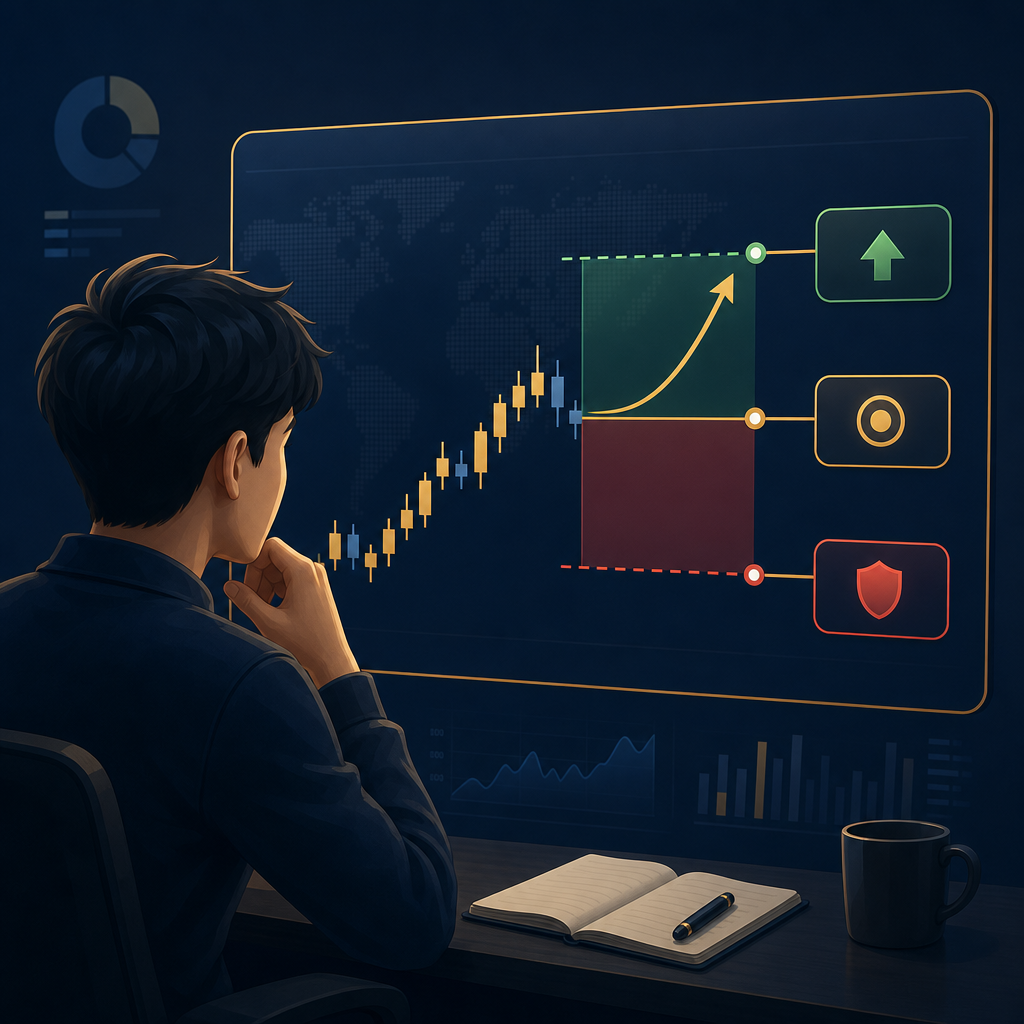
A forex signal is a structured trade idea that tells you what to trade, where to enter, where to cut the loss, and where to take profit.
Most high-quality signals include at least four elements: the instrument (like EUR/USD), direction (buy/sell), entry price (or entry zone), stop loss (SL), and take profit (TP).
Signals vs “tips”: why structure matters
Beginners often confuse signals with random tips. A tip is “EURUSD will go up.” A signal is “BUY EURUSD 1.0520, SL 1.0485, TP 1.0590.”
That structure matters because it defines your risk. Without a stop loss, you’re not trading—you’re hoping.
What signals can realistically do for you
Signals can accelerate your learning by exposing you to professional-level trade planning. You start seeing repeated logic: breakouts, retests, trend continuation, reversals at key levels, and session-based volatility.
Signals can also reduce decision fatigue. Instead of scanning 20 charts, you focus on executing a few high-quality ideas.
What signals cannot do (and what honest providers will tell you)
Signals cannot eliminate losses. Even the best traders take losses routinely, especially when volatility shifts or when unexpected news hits the market.
Signals also can’t control your broker execution. If your spread widens or you enter late, the trade may not match the provider’s intended risk-reward.
Finally, signals cannot fix over-leveraging. If you risk 10% per trade, a normal drawdown can wipe you out even with a strong strategy.
Relating signals to today’s market context
Right now, the market is in a familiar “USD strength vs risk sentiment” mix: DXY around 106.80, USD/JPY near 149.50, EUR/USD around 1.0520, and GBP/USD near 1.2680.
Gold (XAUUSD) is trading around $2650 with a modest +0.35% daily change. That’s not extreme volatility, but it’s enough that a $15–$25 stop can be hit quickly during London or New York bursts.
This is exactly where signals help beginners: when the market is moving, but not cleanly trending all day. You need clear levels and disciplined risk.
2) The anatomy of a high-quality forex signal (with real examples)
If you want to use forex signals effectively, you must learn to read them like an order ticket. The best providers write signals in a way that leaves little room for interpretation.
Below are the core components you should expect, plus how to interpret each one.
1) Instrument and direction
Example: SELL USDJPY. This tells you the pair and whether you’re shorting or buying.
As a beginner, avoid trading too many instruments at once. Start with 1–3 majors (EUR/USD, GBP/USD, USD/JPY) and optionally gold if you can handle faster swings.
2) Entry type: market, limit, or stop order
Signals can be executed in different ways:
- Market entry: enter immediately near current price.
- Limit entry: enter at a better price (pullback).
- Stop entry: enter only if price breaks a level (momentum/breakout).
Beginner mistake: placing a market order when the signal was meant as a limit order. That changes your risk and can destroy the planned risk-reward ratio.
3) Stop loss (SL): your business expense
Your stop loss is not “optional.” It’s the cost of doing business.
Example on EUR/USD: BUY 1.0520, SL 1.0485. That’s a 35-pip stop (0.0035).
Example on gold: BUY XAUUSD 2650, SL 2635. That’s a $15 stop, which is realistic in the current $2610–$2690 zone.
4) Take profit (TP): your plan, not your hope
Good signals usually set TP levels that respect market structure and aim for at least 1:2 risk-reward.
Gold example with 1:2:
- Entry: 2650
- SL: 2635 (risk = $15)
- TP: 2680 (reward = $30)
That’s clean, measurable, and easy to execute.
5) Context notes (optional, but powerful)
The best providers add a sentence like: “London session continuation; buy on pullback to support; avoid entering 5 minutes before CPI.”
Those notes teach you why the signal exists. Over time, you start understanding the pattern behind the entry.
3) Forex vs gold signals for beginners: what to trade first?

Many beginners ask whether they should start with EUR/USD or jump straight into gold because it “moves more.”
The honest answer: it depends on your temperament, broker conditions, and how strict you are with risk.
Why majors (EUR/USD, GBP/USD) are beginner-friendly
Major pairs often have tighter spreads and smoother price action. EUR/USD at 1.0520 can trend, but it also respects technical levels more cleanly than many exotics.
This matters because signals rely on structure. If spreads are low and execution is stable, your fills will be closer to what the signal provider intended.
Why gold (XAUUSD) is tempting—and dangerous
Gold around $2650 can move $10–$25 quickly during London and New York. That’s great for opportunity, but it also means stops get hit faster if you chase entries.
A beginner who risks too much on gold can experience emotional whiplash. One $20 move against you can feel like the market is “hunting your stop,” even when it’s normal volatility.
How to choose your starting instruments
- If you want calmer learning: start with EUR/USD and GBP/USD.
- If you can follow rules strictly and accept fast swings: add XAUUSD.
- If you trade Asian session mostly: USD/JPY can be more active.
Comparison table: majors vs gold vs “everything at once”
| Option | Pros | Cons | Best for |
|---|---|---|---|
| Major FX pairs (EUR/USD, GBP/USD) | Tighter spreads, cleaner structure, easier sizing | Sometimes slower moves; patience required | True beginners building discipline |
| Gold (XAUUSD) | Strong daily ranges; clear levels; great RR opportunities | Fast volatility; slippage around news; emotional pressure | Rule-followers who want active sessions |
| Trading many pairs at once | More signals, more “action” | Overtrading, correlation risk, messy tracking | Not recommended for beginners |
If you want a balanced approach, start with 2 FX pairs and add gold only after you can execute signals without hesitation or improvisation.
4) How to choose a forex signals provider (beginner checklist)
Choosing a provider is the most important decision you’ll make in signal-based trading. A good provider gives you structure and learning. A bad provider gives you chaos and excuses.
You don’t need perfection. You need process, clarity, and risk control.
Green flags: what trustworthy providers do
- Clear formatting: every signal includes Entry, SL, and TP.
- Session focus: they specialize (often London and NY), not “24/7 signals.”
- Risk language: they talk about drawdowns, losing trades, and proper sizing.
- Education included: short lessons, chart breakdowns, and post-trade reviews.
- Community support: a place to ask execution questions without being shamed.
Red flags: how beginners get trapped
- Guaranteed profits or “100% win rate” claims.
- Deleted losing trades or only posting winners after the fact.
- No stop losses or “no SL, trust the process.”
- Pressure tactics: “Join in 10 minutes or you’ll miss the move.”
- Unrealistic frequency: 30–50 signals per day to create dopamine addiction.
Ask these 7 questions before you pay
- Do you provide Entry + SL + TP on every trade?
- What sessions do you trade (London, NY, Asia), and why?
- What is a typical stop size on EUR/USD and on gold?
- How do you handle news events (CPI, NFP, FOMC)?
- Do you recommend a fixed risk per trade (like 1%)?
- Can I see examples of losing trades and how you managed them?
- Is there a refund policy or trial period?
If you want a ready-to-use checklist, we’ve already built one specifically for beginners: forex trading signals provider checklist for beginners.
Where United Kings fits (and why beginners like it)
United Kings is built around premium Telegram signals for forex and gold with clear Entry, SL, and TP levels.
We focus heavily on London and New York sessions, where liquidity is strongest and technical levels tend to respect better.
We also combine signals with education, so you’re not just copying—you’re learning the logic behind the trades. You can explore our full offering on the United Kings signals page and see the dedicated streams for forex signals and gold signals.
5) How to use forex signals step-by-step (the execution workflow)
Most beginners don’t lose because the signal was “bad.” They lose because they executed it poorly.
This section is your practical workflow. Use it like a checklist until it becomes automatic.
Step 1: Confirm the instrument and your broker symbol
Make sure you’re trading the right symbol: EURUSD vs EURUSDm (micro), XAUUSD vs GOLD, etc. Different brokers label instruments differently.
Also check whether your broker uses 5-digit pricing (1.05200) or 4-digit (1.0520). The pip math changes slightly, but the idea is the same.
Step 2: Identify the entry type and timing
If the signal says “BUY LIMIT 1.0505,” do not buy at market at 1.0520 just because you’re impatient.
Limit entries are designed to improve risk-reward. If you enter late, your stop becomes larger relative to the target, and the trade may no longer be valid.
Step 3: Place the stop loss immediately
Before you even think about profit, place the SL. This is non-negotiable.
Example: GBP/USD at 1.2680. If a signal says BUY 1.2680 SL 1.2645, you place that SL at 1.2645. You don’t “give it room” by moving it to 1.2620.
Step 4: Calculate position size (lot size) based on risk
This is the skill that separates beginners who survive from beginners who quit.
Let’s say you have a $1,000 account and you risk 1% per trade. That’s $10 risk.
If your EUR/USD stop is 35 pips, your position size should be set so that 35 pips = $10 loss. That’s roughly $0.285 per pip.
On many brokers, 0.01 lot on EUR/USD is about $0.10 per pip. So you’d trade around 0.03 lots (0.03 lot ≈ $0.30/pip), risking about $10.50 for 35 pips.
Numbers vary by broker and account currency, but the principle is fixed: risk first, size second, trade last.
Step 5: Set take profit(s) and decide on management rules
Some signals use one TP. Others use TP1/TP2 and partial closes.
As a beginner, keep it simple:
- Use the provider’s TP as given.
- Avoid moving TP closer because you “want to secure profit.”
- Avoid removing TP because you “want to ride it forever.”
Step 6: Screenshot and journal the trade
Before and after the trade, take a screenshot. Write down: pair, entry, SL, TP, session, and whether you followed the rules.
This is how you turn signals from “copying” into actual skill-building.
Step 7: Review execution, not just outcome
A losing trade can be a perfect execution. A winning trade can be reckless execution that got lucky.
Your goal is to become consistent, not to be “right” on every trade.
If you want a deeper execution walkthrough, pair this guide with: forex signals on Telegram for beginners.
6) Risk management for beginners using signals (the survival framework)
When you use signals, risk management becomes even more important because you’re outsourcing analysis. Your edge becomes execution + risk control.
If you master these basics, you can survive normal drawdowns and stay in the game long enough to benefit from good signals.
The 1% rule (and when to use 0.5%)
A simple beginner rule: risk 0.5% to 1% per trade.
If you’re brand new, start at 0.5%. If you’re consistent for 30 trades, consider moving to 1%.
Why so small? Because even a strong provider can hit a losing streak. Ten losses at 1% is -10%. Ten losses at 5% is -50% and likely emotional collapse.
Risk-reward ratios: why 1:2 changes everything
If you consistently take trades at 1:2, you don’t need a “perfect” win rate to grow.
Example: If you win 40% of trades at 1:2, your expectancy can still be positive. That’s why professional signal services care about structure, not just win rate.
Gold-specific risk examples (using current prices)
Gold at $2650 is active enough that stops of $10–$25 are common.
Example setup:
- BUY XAUUSD 2648
- SL 2633 (risk $15)
- TP 2678 (reward $30, 1:2)
Now imagine you risk $20 per trade on a $2,000 account (1%). That’s manageable. If you risk $200 per trade (10%), one normal stop-out feels like a disaster.
Correlation risk: the hidden beginner killer
EUR/USD and GBP/USD often move in similar directions because both are quoted against USD. If you take two signals that are basically the same USD bet, you might be doubling your risk without realizing it.
Beginner rule: treat correlated trades as one idea. If you take EUR/USD long, consider reducing size on GBP/USD long, or skip the second trade.
News risk: when not to trade signals
High-impact events can cause slippage and spread spikes. Even a good signal can fail if the market whipsaws.
As a beginner, be cautious around:
- US CPI and PPI
- Non-Farm Payrolls (NFP)
- FOMC rate decisions and press conferences
- Unexpected geopolitical headlines (especially for gold)
To understand how signals behave during shock moves, read: how gold signals react to unexpected news events.
For a deeper dive into sizing and risk rules, we also have: risk management strategies when using forex signals.
7) Building a beginner-friendly trading routine around signals (London + NY focus)
Signals work best when your routine matches the provider’s routine. If a provider specializes in London and NY, but you only check your phone once at midnight, you’ll enter late and blame the signal.
Your schedule is part of your trading edge.
Why London and New York sessions matter
The London session often brings the first major liquidity surge of the day. New York adds US data and institutional flows.
The overlap between London and NY can create sharp moves. That’s where you see clean breakouts, retests, and strong continuations—perfect conditions for structured signals.
A simple daily routine (30–45 minutes total)
- Pre-London (10 minutes): check economic calendar, mark key levels, review open trades.
- London window (10–15 minutes): execute signals that trigger; avoid chasing missed entries.
- Pre-NY (5 minutes): re-check calendar for US releases; tighten focus.
- NY window (10–15 minutes): manage trades; take new signals only if rules allow.
This routine is realistic for people with jobs. You’re not glued to charts all day, but you’re present during the most liquid periods.
Weekly routine: the compounding effect
Once a week, do a 30-minute review:
- How many trades did you take?
- Did you follow entry rules or chase?
- Did you move SL or TP emotionally?
- Which pairs performed best for you personally?
This is where consistency is built. Signals give you the plays. Your review turns them into a system.
What beginners should track (simple metrics)
- Execution accuracy: entered within allowed range?
- Risk consistency: same % risk every trade?
- RR achieved: did you take full TP or cut early?
- Session performance: London vs NY results
If you want to explore more market coverage later, United Kings also offers crypto signals, but for beginners we recommend mastering FX first because it’s typically cleaner and more liquid.
8) Common beginner mistakes when using forex signals (and how to fix them)
Most signal users don’t fail because they chose the wrong provider. They fail because they behave like gamblers while trying to follow a professional plan.
Here are the biggest mistakes I’ve seen over 16+ years in FX and gold—and the exact fixes that work.
Mistake #1: Entering late (and pretending it’s the same trade)
EUR/USD is at 1.0520. The signal was BUY 1.0505 with SL 1.0475 and TP 1.0565. You enter at 1.0520 anyway.
Now your stop is effectively smaller relative to entry, or your risk-reward is worse. You’ve changed the trade.
Fix: If you miss the entry, you miss the trade. Wait for the next setup.
Mistake #2: Moving the stop loss wider
Beginners widen stops because they want to avoid being wrong. But widening SL changes the math and increases risk beyond the plan.
Fix: Your SL is your contract with yourself. If you can’t accept that loss, reduce lot size—not discipline.
Mistake #3: Overtrading after a win
A win creates confidence. Too much confidence creates revenge-trading’s cousin: celebration trading.
Fix: Set a daily cap: maximum 2–3 trades per day, or maximum 2% risk per day.
Mistake #4: Using high leverage like it’s free money
Leverage is a tool, not an edge. Your edge is the strategy and your execution.
Fix: Choose a position size based on risk. Ignore the maximum leverage your broker offers.
Mistake #5: Not understanding spreads and stop-outs
On volatile moments, spreads widen. That can hit your stop even if price never touched it on the chart you’re watching.
Fix: Trade liquid sessions, avoid major news spikes, and use reputable brokers with stable execution.
Mistake #6: Treating signals as a replacement for learning
If you never learn why trades are taken, you’ll panic during drawdowns and quit at the worst time.
Fix: After each trade, ask: “What was the setup? Breakout? Retest? Trend continuation?” Even basic pattern recognition helps.
If you want a broader list of pitfalls, you can also browse more education in our trading blog.
9) A realistic beginner plan: your first 30 days with forex signals
Beginners often want a “perfect strategy.” What you really need is a simple plan you can actually follow.
Here’s a realistic 30-day roadmap that balances learning, execution, and risk control.
Days 1–7: Setup and demo execution
Start on a demo account if you’re new. This is not a punishment—it’s training.
- Choose 1–2 pairs (EUR/USD and GBP/USD are fine).
- Practice placing market, limit, and stop orders.
- Practice adding SL and TP immediately.
- Journal every trade, even demo trades.
Your goal this week is not profit. It’s clean execution.
Days 8–14: Add risk rules and consistency
Now add strict risk rules. Even on demo, treat it like real money.
- Risk 0.5%–1% per trade.
- Max 2–3 trades per day.
- No moving SL wider, ever.
If you can’t follow rules on demo, you won’t follow them on live.
Days 15–21: Go live small (or stay demo if needed)
If your execution is consistent, go live with small size. If not, stay demo another week.
On live, emotions appear. That’s normal. The goal is to keep emotions from changing your process.
Days 22–30: Review, refine, and specialize
At the end of 30 days, review your journal and answer:
- Which instruments did you execute best?
- Which session fit your schedule?
- Did you follow entries or chase?
- Did you keep risk consistent?
Then specialize. The fastest path to consistency is doing fewer things better.
A note on expectations (numbers that won’t mislead you)
Some weeks you’ll hit multiple TPs. Some weeks you’ll take small losses. That’s normal.
Think in 30–50 trade samples, not in “today’s result.” Trading is a probability business.
10) Why United Kings signals are built for beginners (without the hype)
There are many signal channels online. Most are noisy. Many are unstructured. Some are outright scams.
United Kings is built differently: premium, structured, and focused on repeatable execution—especially for traders who want to learn while they earn.
What you get with United Kings
- Premium Telegram signals for forex and gold with clear Entry, SL, and TP.
- A community of 300K+ active traders—so you’re not trading alone.
- A process designed around London and NY sessions, where liquidity is strongest.
- Educational content alongside signals, helping beginners understand setups and execution.
- A performance culture built around discipline and risk control (no “guaranteed profit” nonsense).
About win rate (how to think about it correctly)
You may hear “85%+ win rate” discussed in signal communities. Here’s the professional way to interpret that: it’s a historical performance indicator, not a promise.
Markets change. Volatility changes. Execution differs across brokers. Past performance does not guarantee future results.
What matters more is that every trade is structured with defined risk, and the strategy aims for strong risk-reward over time.
Where to start on the site
- Explore all packages and what’s included: United Kings Signals
- If you want FX-focused alerts: Forex Signals
- If you want XAUUSD setups: Gold Signals
Pricing plans (3 options, simple choice)
We keep pricing straightforward, with three plans:
- Starter (3 Months): $299 (~$100/month)
- Best Value (1 Year): $599 (~$50/month) with 50% savings + FREE ebook
- Unlimited (Lifetime): $999 pay once, access forever
You can compare and join from our pricing section: United Kings pricing plans.
48-hour money-back guarantee (how it should be used)
We offer a 48-hour money-back guarantee so you can evaluate fit and structure. Use that time to check signal clarity, frequency, and whether the style matches your schedule.
FAQ: Forex signals for beginners
1) Are forex signals good for beginners?
Yes—if you treat them as structured trade plans and you manage risk properly. Signals can help you learn faster, but they don’t remove losses or replace discipline.
2) How many signals should a beginner take per day?
Usually 1–3 is enough. More than that often leads to overtrading and poor execution. Quality and routine beat quantity.
3) Should I use forex signals on a demo account first?
Yes. Demo trading helps you practice order types, SL/TP placement, and position sizing without emotional pressure. Move to live only when you can follow rules consistently.
4) What risk-reward ratio should I aim for when using signals?
As a beginner, aim for signals that target at least 1:2 risk-reward when possible. More important: keep risk per trade consistent (0.5%–1%).
5) Can I use the same signal on any broker?
Not always. Spreads, execution speed, and symbol pricing differ. Always check your broker’s conditions and avoid trading signals during extreme news volatility if your broker widens spreads heavily.
Risk disclaimer (read before you trade)
Forex and gold trading involves significant risk and may not be suitable for all investors. You can lose some or all of your capital. Signals are educational and informational and do not guarantee profits. Past performance does not guarantee future results. If you are a beginner, consider practicing on a demo account first and use strict risk management (e.g., 0.5%–1% risk per trade). Always ensure you understand leverage, drawdowns, and your broker’s trading conditions before placing any trade.
Join United Kings: get structured signals + a real learning path
If you’re ready to stop guessing and start trading with a clear plan, United Kings gives you structured forex and gold signals designed around London and New York sessions.
Start here: explore United Kings premium signals, choose your plan on our pricing page, and join the community on Telegram: United Kings Telegram channel.
Your next step is simple: pick one plan, trade small, follow the rules, and let consistency compound.