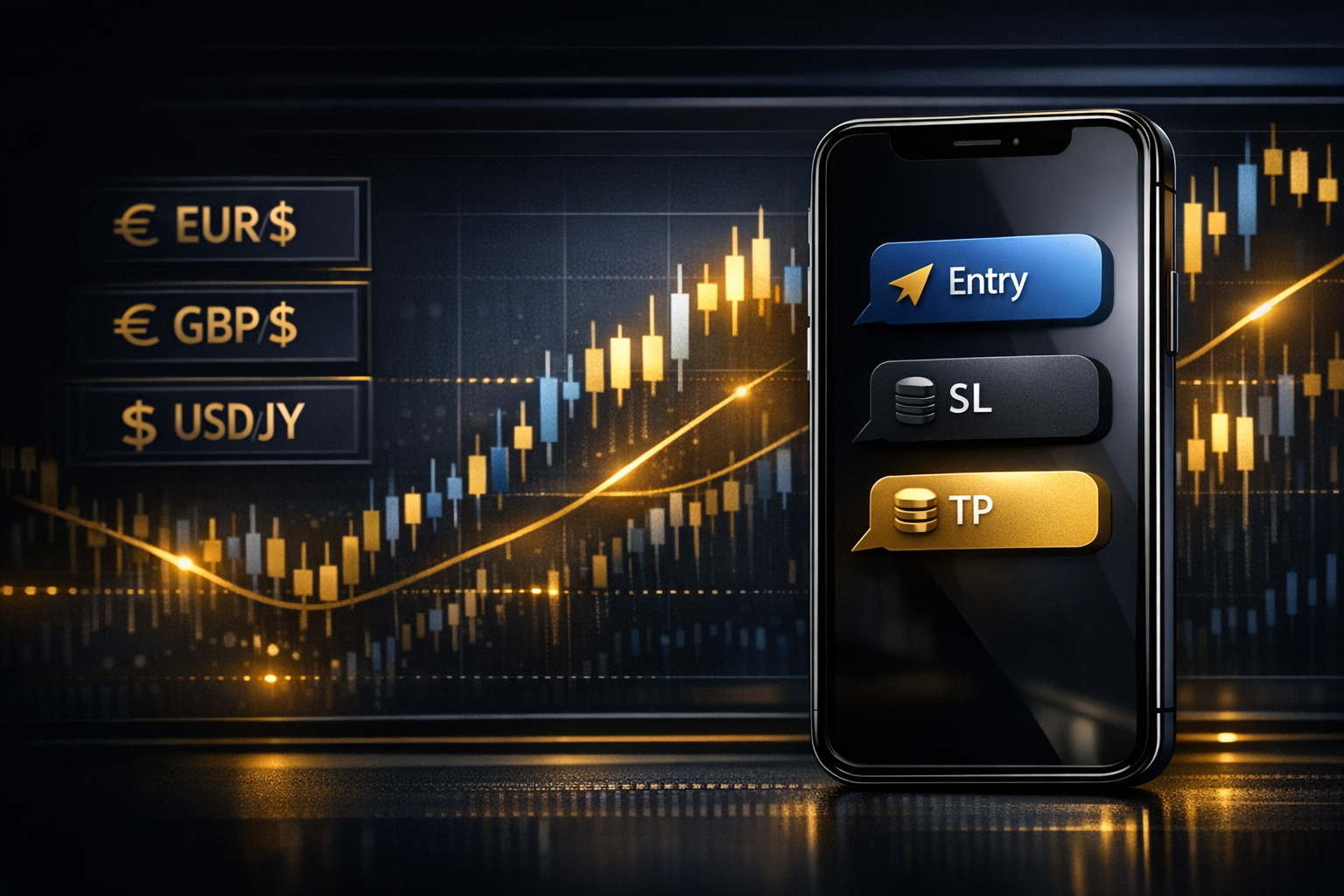
You just got your first forex signal. It says: “EUR/USD Buy 1.0520, SL 1.0490, TP 1.0580.”
Your heart rate jumps because it looks simple.
But then the real beginner questions hit: Do I enter now or wait? What lot size? What if spread is wide? What if price already moved 10 pips? And how do you know the provider isn’t guessing?
This is the ultimate forex signals guide for beginners—built to help you use signals like a professional, not like a gambler. We’ll cover what signals are, how to execute them, how to manage risk, how to evaluate providers, and how to build consistency with a repeatable routine.
TL;DR — Forex Signals for Beginners (Read This First)
- A forex signal is a trade plan (entry, stop loss, take profit, and context). Your job is execution and risk control.
- Never size a trade based on “confidence.” Size based on a fixed risk rule (like 0.5%–1% per trade) and the stop-loss distance.
- Don’t chase signals. If price moves too far from entry (example: 10–20 pips on majors), skip or wait for a new setup.
- Judge providers by process, not screenshots. Look for clear SL/TP, consistent reporting, and realistic expectations—no “guaranteed profits.”
- Track every signal you take. A simple journal (pair, entry, SL, TP, result, notes) turns signals into a learning system.
- Start on demo, then go small live. Consistency first, size later. Past performance never guarantees future results.
1) What Forex Signals Actually Are (And What They’re Not)

Forex signals for beginners are often marketed like a shortcut: “Just copy our entries and profit.”
That’s the fastest way to blow an account, because it frames signals as magic instead of what they really are.
A forex signal is a structured trade idea. It typically includes:
- Instrument: EUR/USD, GBP/USD, USD/JPY, XAU/USD (gold), etc.
- Direction: Buy or Sell.
- Entry: A price (or a zone) where the trade is valid.
- Stop Loss (SL): A price where the idea is invalidated.
- Take Profit (TP): One or multiple targets.
- Trade management notes: “Move SL to breakeven at +20 pips,” or “partial close at TP1.”
Signals can be based on price action, indicators, news catalysts, or a blend.
But they are not a guarantee of profit.
Even the best setups lose sometimes, because markets are probabilistic.
Right now, the market context is a great example of why.
Gold (XAU/USD) is trading around $2650 (+0.35% on the day), DXY is near 106.80, EUR/USD around 1.0520, GBP/USD near 1.2680, and USD/JPY around 149.50.
That mix can create conflicting flows: a firm dollar can pressure risk assets, while gold can still hold up on safe-haven demand.
So a signal is best understood as: “Here is a high-probability plan if price behaves as expected.”
Signal Types You’ll See as a Beginner
Before you learn how to use forex signals, you need to recognize the format.
- Market execution signals: “Buy now at 1.0520.”
- Limit order signals: “Buy limit 1.0505.”
- Stop order signals: “Buy stop 1.0540 (breakout).”
- Zone signals: “Sell 1.2680–1.2700.”
- Scalps vs intraday vs swing: Holding time can be minutes to days.
The beginner mistake is treating every signal like the same trade.
A scalp with a 10–15 pip stop behaves very differently than a swing trade with a 80–150 pip stop.
What a High-Quality Signal Looks Like
At minimum, a usable signal has Entry + SL + TP.
A premium signal also tells you why (breakout, retest, trend continuation, news play), and how to manage it.
If you want to see how a full signal ecosystem is structured across markets, review the United Kings signal hub at all trading signals.
2) How Forex Signals Work in Real Market Conditions (Spreads, Slippage, Sessions)
Most beginner guides explain signals in a perfect world.
But your trading platform is not a textbook.
Signals meet real-world friction: spread, slippage, latency, and session volatility.
Understanding this is the difference between “the signal didn’t work” and “my execution was off.”
Spread: The Hidden Cost Beginners Ignore
Spread is the difference between bid and ask.
On EUR/USD, it might be 0.6–1.5 pips on a good broker, but it can widen during news or rollover.
On GBP/USD, it can be slightly wider.
On gold (XAU/USD), spreads can be much larger, especially around high volatility moments.
Example: if gold is at $2650.00 and your spread is $0.30–$0.80 (sometimes more), your entry can be “late” instantly.
That matters if your SL is only $10 away.
Slippage: Why Your Fill Isn’t Always Your Entry
Slippage happens when price moves between the time you click and the time your order is filled.
It’s common during:
- Major economic releases (CPI, NFP, rate decisions)
- Sudden headlines (geopolitics, central bank comments)
- Thin liquidity (late NY, early Asia, holidays)
For beginners using signals, the rule is simple: if slippage materially changes your risk-reward, don’t force the trade.
If a signal planned 1:3 and your fill turns it into 1:1.6, you’re not taking the same trade.
Trading Sessions: When Signals Tend to Perform Best
Liquidity and volatility are not constant.
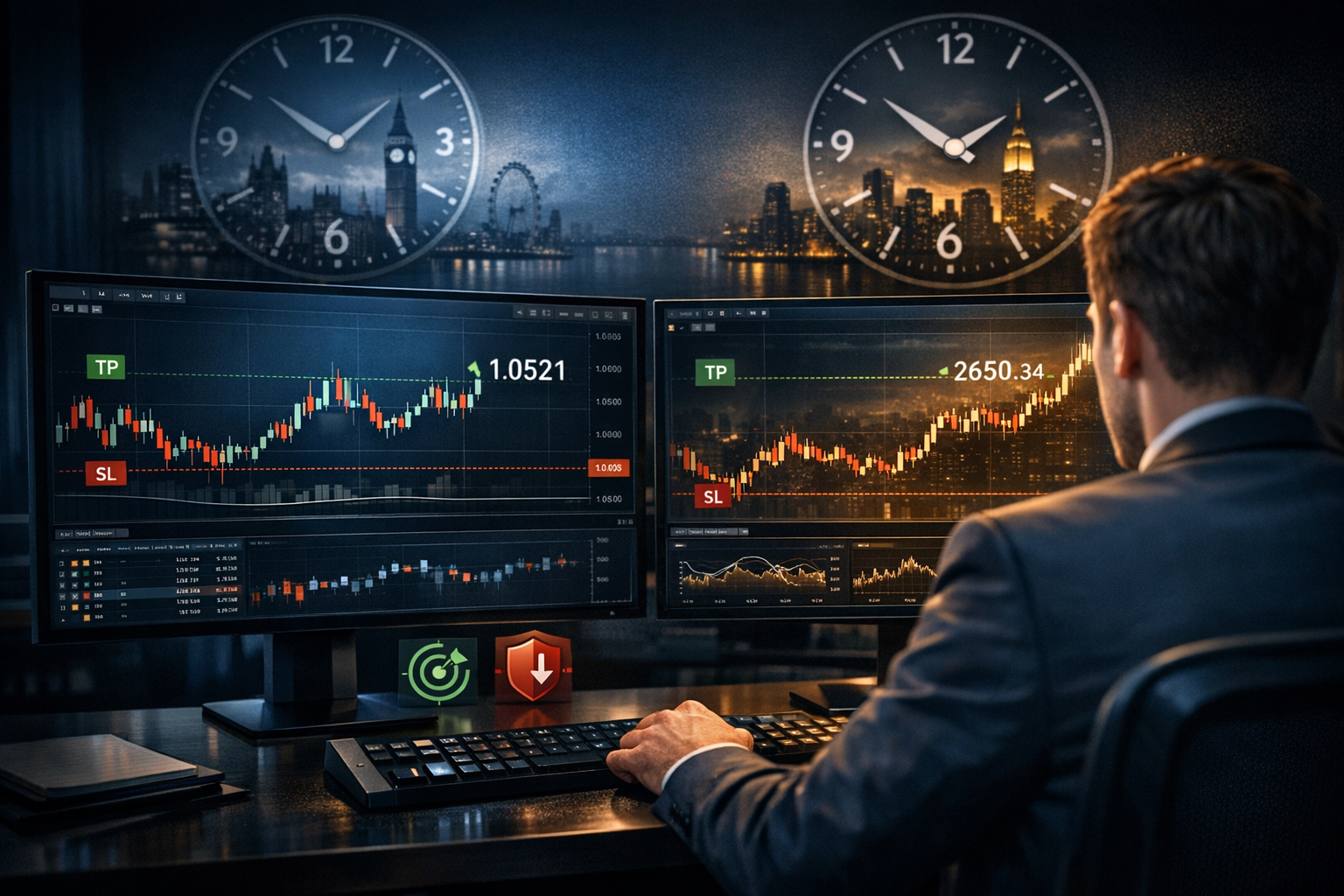
London and New York sessions typically provide the cleanest movement for majors.
That’s why United Kings focuses heavily on London and NY session trading: more volume, tighter spreads, and clearer follow-through.
In today’s context (DXY ~106.80, USD/JPY ~149.50), session volatility can be sharp because USD pairs react quickly to rate expectations.
Beginner Execution Rule: “Same Idea, Different Fill”
Even if your entry differs by 2–5 pips on EUR/USD, you can often still take the trade—if you adjust properly.
But if your entry differs by 15–25 pips, you’re likely chasing.
Chasing is how beginners turn good signals into bad trades.
3) Forex Signals vs Copy Trading vs Bots (What Beginners Should Choose)
Beginners usually want the simplest path.
So you’ll see three common options: manual signals, copy trading, and bots.
They can all work, but they require different skills and carry different risks.
| Method | How It Works | Best For | Main Risk | Beginner Tip |
|---|---|---|---|---|
| Manual Forex Signals | You receive Entry/SL/TP and place trades yourself | Beginners who want to learn while earning | Execution mistakes, overtrading | Use a checklist and fixed risk per trade |
| Copy Trading | Your account copies another trader automatically | Hands-off traders with limited time | Provider risk, drawdowns, mismatched risk settings | Cap risk and monitor weekly |
| Trading Bots/EA | Algorithm trades automatically based on coded rules | System-focused traders who can test and monitor | Curve-fitting, broker conditions, black-box logic | Backtest + forward test before real money |
For most beginners, manual signals are the best starting point because they teach you market structure and discipline.
They also let you control risk precisely.
Copy trading can be useful later, but it often hides the learning process.
Bots can be profitable, but they require testing and ongoing monitoring—most beginners underestimate that workload.
A Practical Recommendation
If you’re new, start with:
- Manual signals for 30–60 days on demo
- Then go live with very small risk (0.25%–0.5%)
- Only scale after you’ve logged 50–100 trades
If you want a beginner-friendly Telegram environment with structured trade formats, you can explore United Kings forex signals and see how we present entries, SL, and TP levels.
4) How to Use Forex Signals Step-by-Step (Beginner Execution Blueprint)
This is the core of the forex signals guide: how to take a signal and execute it correctly.
We’ll use realistic examples based on current market levels.
Step 1: Identify the Signal Type (Market, Limit, Stop)
Example signal:
- Pair: EUR/USD
- Action: Buy
- Entry: 1.0520
- SL: 1.0490 (30 pips)
- TP: 1.0580 (60 pips)
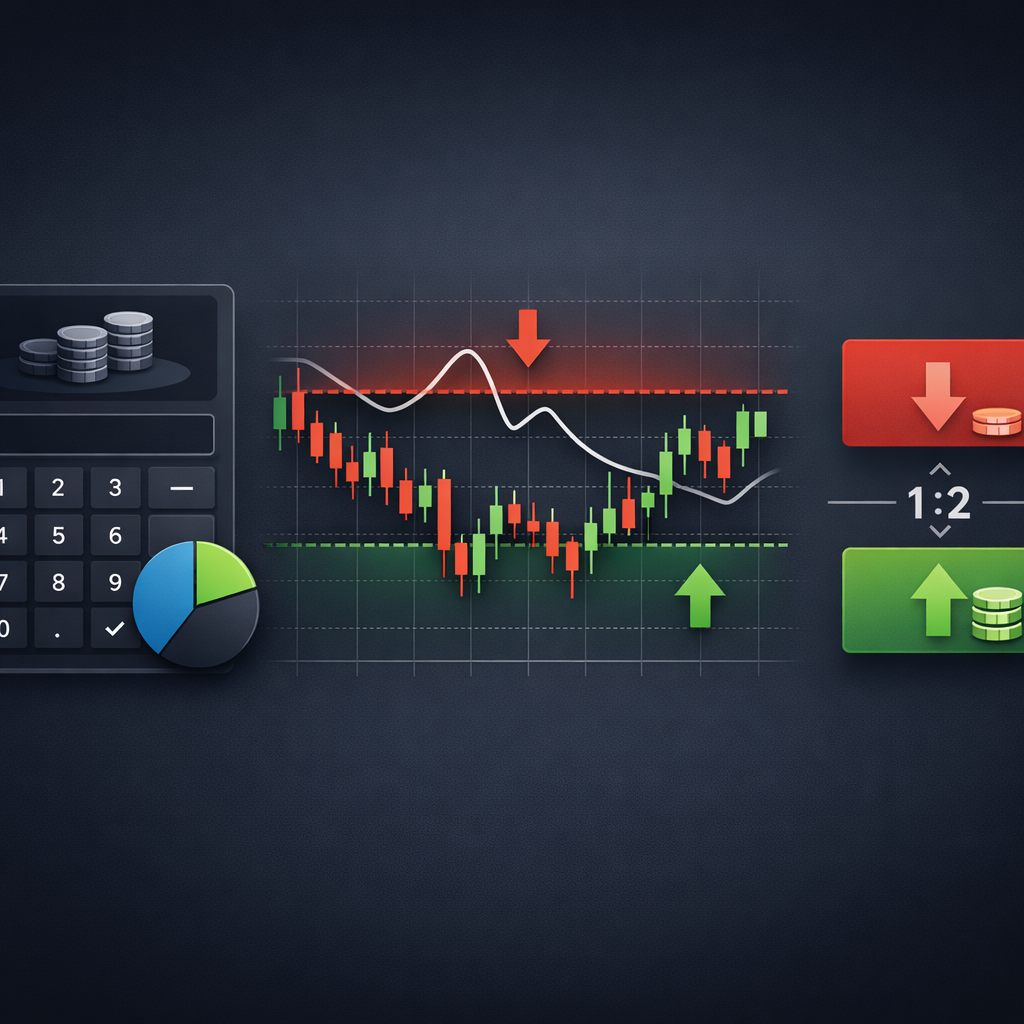
This is a classic 1:2 setup (risk 30, reward 60).
As a beginner, you want these clean numbers.
Step 2: Check If Price Is Still “Valid”
Before entering, check current price.
If EUR/USD is already at 1.0532, you’re 12 pips late.
That changes your risk-reward unless you adjust.
A simple beginner rule:
- If price moved more than 30–40% of the stop distance, don’t chase.
In this example, stop is 30 pips.
40% is 12 pips.
So 1.0532 is right on the edge.
If it’s 1.0535 or higher, skip or wait for a pullback.
Step 3: Place the Order Correctly
For a market entry, you place a buy and immediately set SL and TP.
For a limit entry, you set a pending order and walk away.
Beginners often forget to place the SL.
That’s not a mistake—it’s a time bomb.
Step 4: Set Your Lot Size Using Risk (Not Hope)
Let’s say your account is $1,000.
You decide to risk 1% per trade = $10.
Stop is 30 pips.
Your position size should be whatever equals $10 loss at 30 pips.
The exact lot size depends on your broker’s pip value.
But the process is what matters: Risk $ → Stop distance → Lot size.
If you want a deeper framework, our dedicated guide on risk management when using forex signals goes further into sizing models and drawdown control.
Step 5: Manage the Trade Like a Plan, Not a Feeling
Common management rules in signals:
- Move SL to breakeven after +20 to +30 pips (pair-dependent)
- Partial close at TP1, let the rest run to TP2
- Trail the stop behind structure (higher lows / lower highs)
As a beginner, keep it simple.
Pick one rule and apply it consistently for 30 trades.
Step 6: Journal the Result (This Is Where Consistency Comes From)
Every trade you take should be logged.
Minimum fields:
- Date/time, session (London/NY)
- Pair, direction, entry/SL/TP
- Result in pips and %
- Notes: “Chased entry,” “followed plan,” “spread widened”
Signals become a skill when you turn them into data.
5) Beginner Risk Management for Forex Signals (The Non-Negotiables)
If you remember one section from this forex signals guide, make it this one.
Signals don’t blow accounts.
Position sizing and emotional decisions blow accounts.
The 1% Rule (And When to Use 0.5%)
A beginner-friendly risk model:
- 0.5% risk per trade if you’re new or your strategy isn’t proven
- 1% risk per trade if you’ve logged 50–100 trades with consistency
With $1,000, that’s $5 to $10 per trade.
This feels small.
That’s the point.
Small risk keeps you in the game long enough to learn.
Risk-to-Reward: Why 1:2 Changes Everything
Many beginners obsess over win rate.
But risk-to-reward is often more important.
If your average trade is 1:2, you can be wrong more often than you think and still grow.
Example:
- 10 trades
- 4 wins at +2R each = +8R
- 6 losses at -1R each = -6R
- Net = +2R
This is why professional signal strategies often aim for structured R multiples.
Gold Risk Example (Because Many Beginners Trade XAU/USD Too)
Even if this is a forex signals article, beginners often mix in gold.
Let’s use current context: XAU/USD around $2650.
Example gold signal:
- Buy: 2650
- SL: 2638 (risk $12)
- TP: 2674 (reward $24, 1:2)
If volatility spikes and gold swings $8 in minutes, your risk must be sized accordingly.
Gold can punish oversized positions faster than EUR/USD.
If you also trade gold, review United Kings gold signals to see how we structure SL/TP distances in the $2610–$2690 environment.
Drawdown Control: The “Daily Stop” Rule
Signals can come in streaks.
So can losses.
A simple protection rule:
- Stop trading after 2 losses in a day (or after -2R)
This prevents revenge trading.
It also keeps your psychology stable, which is a real edge.
6) How to Choose a Forex Signals Provider (Beginner Checklist That Works)
Choosing a provider is where most beginners get trapped.
They choose based on flashy screenshots, not on process.
So let’s make it practical and measurable.
What to Look For (Green Flags)
- Clear trade format: Entry, SL, TP, and management notes
- Consistency: Similar structure across trades and weeks
- Realistic language: No “guaranteed” profits or “100% win rate”
- Education alongside signals: You learn why trades work
- Community and support: You can ask questions and get clarity
United Kings is built around those fundamentals: premium Telegram signals for forex and gold, educational context, and a large community of 300K+ active traders.
What to Avoid (Red Flags)
- Signals without stop loss
- Martingale or “recovery” systems hidden in the strategy
- Unverifiable performance claims
- Pressure tactics: “Buy now or miss the next 500 pips”
- Providers who delete losing trades from history
If you want a beginner-friendly evaluation framework, use this checklist: forex signals provider checklist for beginners.
Free vs Paid Signals: The Honest Trade-Off
Free signals can be a useful introduction.
But free groups often have problems:
- Inconsistent posting
- No accountability
- Wide SLs with vague entries
- Spam and affiliate-driven “signals”
Paid signals aren’t automatically better.
But a premium provider has resources to maintain analysis, execution discipline, and support.
For a benchmark of what “premium” should look like, see our curated overview: best forex signals (updated list).
7) Understanding Signal Performance: Win Rate, R-Multiple, and Expectations
Beginners often ask, “What win rate is good?”
It’s a fair question.
But it’s incomplete.
Because a 90% win rate strategy can still lose money if losses are huge.
The Three Metrics That Matter Most
- Win rate: Percentage of winning trades
- Average R: How much you win relative to what you risk
- Max drawdown: Worst peak-to-valley decline
If you only focus on win rate, you’ll fall for strategies that hide risk.
As a beginner, you want a provider that prioritizes controlled losses and repeatable setups.
How an 85% Win Rate Should Be Interpreted
United Kings is known for an 85%+ win rate with clear Entry, SL, and TP levels.
But here’s how to think about any win rate responsibly:
- It’s typically measured over a specific period and market regime
- It depends on following the exact execution rules
- It can change during high-volatility weeks
Past performance doesn’t guarantee future results.
So instead of expecting perfection, build a plan that survives normal losing streaks.
Beginner Expectation Setting (Realistic Numbers)
Here’s a realistic goal for a beginner using signals correctly:
- Focus on process for the first 30 days
- Target “no execution mistakes” before targeting profits
- Measure improvement by fewer rule breaks, not by bigger wins
The traders who last are the traders who treat trading like a skill.
Signals are a tool inside that skill, not a replacement for it.
8) Building a Beginner Routine: Before, During, and After Each Signal
Consistency is not motivation.
Consistency is a routine you can repeat on your worst day.
So let’s build a simple signal routine that fits a normal life.
Before the Session (10 Minutes)
- Check the economic calendar for red-flag news (CPI, NFP, rate decisions)
- Note current key levels: EUR/USD ~1.0520, GBP/USD ~1.2680, USD/JPY ~149.50, DXY ~106.80
- Decide your max risk for the day (example: -2R stop)
This keeps you from taking a signal blindly into a volatility trap.
During the Session (Execution Rules)
- Only take signals that match your available time (don’t take scalps if you can’t monitor)
- Don’t chase entries beyond your “validity” threshold
- Always place SL and TP immediately
- Don’t add to losers
If you’re trading London and NY, you’ll notice patterns.
Liquidity tends to surge at London open and NY open, and that’s where many clean moves begin.
After the Session (5 Minutes)
- Screenshot the chart (optional but helpful)
- Log the trade in your journal
- Write one sentence: “What did I do well?” and “What will I improve?”
This tiny habit compounds.
After 50 trades, you’ll have real data about your behavior.
The Beginner’s “No-Trade” List
Sometimes the best signal is the one you skip.
- You’re tired or emotional
- Spread is unusually wide
- Major news in the next 10 minutes
- You already hit your daily loss limit
Professionals protect capital first.
Opportunities are endless, but your account is not.
9) Common Beginner Mistakes When Using Forex Signals (And Fixes)
Most signal failures are not strategy failures.
They’re behavior failures.
Let’s break down the most common ones and how to fix them quickly.
Mistake #1: Taking Every Signal
Beginners think more trades = more profit.
Often, more trades = more mistakes.
Fix: Cap your trades.
- Max 1–3 trades per day
- Only take A+ setups that fit your schedule
Mistake #2: Moving the Stop Loss Wider
This is the silent account killer.
You move SL because you “feel” price will come back.
Sometimes it does.
But when it doesn’t, one loss becomes a disaster.
Fix: Decide before entry: SL is final unless your plan says otherwise.
Mistake #3: Closing Winners Too Early
Beginners fear giving back profit.
So they take +10 pips on a trade targeting +60.
That destroys expectancy.
Fix: Use a management rule like partial close.
- Close 50% at TP1
- Move SL to breakeven
- Let the rest run
Mistake #4: Ignoring Correlation
EUR/USD and GBP/USD often move similarly because both are USD-based majors.
If you take both long USD at the same time, you may be doubling your exposure without realizing it.
Fix: Treat correlated trades as one risk bucket.
If you risk 1% on EUR/USD and 1% on GBP/USD in the same direction, you might be risking 2% on “USD strength” as a theme.
Mistake #5: Trading Without Understanding News Risk
Signals can be technical, but news can override technicals.
For example, with DXY near 106.80 and USD/JPY around 149.50, one hawkish comment can spike USD pairs fast.
Fix: Know the calendar and reduce size or avoid trading around high-impact releases.
10) Beginner-Friendly Examples: Executing Signals on EUR/USD, GBP/USD, USD/JPY, and Gold
Let’s make “how to use forex signals” tangible with realistic examples.
These are educational examples, not financial advice.
Example A: EUR/USD Intraday Buy (1:2 Setup)
- Entry: 1.0520
- SL: 1.0495 (25 pips)
- TP: 1.0570 (50 pips)
Execution notes:
- If spread is 1.2 pips, your effective entry is slightly higher.
- If price is already 1.0530, you’re 10 pips late. Consider waiting for a pullback.
- At +25 pips, you can move SL to breakeven if your plan supports it.
Example B: GBP/USD Sell from Resistance Zone
- Zone: 1.2680–1.2700
- SL: 1.2725 (25–45 pips depending on entry)
- TP1: 1.2630 (50 pips from 1.2680)
- TP2: 1.2580 (100 pips from 1.2680)
Why zones help beginners:
You don’t panic if price tags 1.2692 before reversing.
You already expected some noise.
Example C: USD/JPY Breakout Trade (Volatility-Aware)
- Entry: Buy stop 149.70
- SL: 149.20 (50 pips)
- TP: 150.70 (100 pips)
USD/JPY can be headline-sensitive, especially around central bank commentary.
As a beginner, avoid oversizing this pair.
Give it room, size down, and respect the stop.
Example D: Gold (XAU/USD) Signal with Proper SL/TP
Gold is around $2650 and can move fast during NY.
- Sell: 2662
- SL: 2677 (risk $15)
- TP: 2632 (reward $30, 1:2)
If you’re trading gold with signals, you want to understand how news shocks can impact it.
One helpful read is how gold signals react to unexpected news events.
11) Getting Started with United Kings Signals (Beginner Setup + What You Receive)
If you want to accelerate your learning curve, the right environment matters.
United Kings is designed to be beginner-friendly while still professional-grade.
You receive premium Telegram signals for forex and gold with clear Entry, SL, and TP levels, plus educational guidance so you understand the “why,” not just the “what.”
Where to Start (Simple Path)
- Explore our signal ecosystem at United Kings signals.
- If you want majors-focused trades, start with forex signals.
- If you also trade XAU/USD, add gold signals to your watchlist.
- If you want diversification, we also offer crypto signals.
What Makes a Beginner Succeed in a Signal Community
Signals alone don’t build a trader.
But signals + structure + support often do.
Inside a large community (United Kings has 300K+ active traders), you can learn faster because you see how others manage entries, patience, and discipline.
Pricing Plans (3 Options, Clear Value)
United Kings offers three plans designed for different commitment levels:
- Starter (3 Months): $299 (about $100/month)
- Best Value (1 Year): $599 (about $50/month) with 50% savings + FREE ebook
- Unlimited (Lifetime): $999 pay once, access forever
You can review plan details on our pricing page.
We also offer a 48-hour money-back guarantee, so you can evaluate the format and see if it fits your trading routine.
Join the Telegram (Where Signals Are Delivered)
Signals are delivered via Telegram for speed and clarity.
You can join our official channel here: United Kings Telegram signals channel.
FAQ — Forex Signals for Beginners
1) Are forex signals good for beginners?
Yes, if you treat them as a structured learning tool and follow strict risk management. Beginners should start on demo, risk small, and focus on execution quality.
2) How do I know if a signal is still valid?
Check how far price moved from the suggested entry. A practical rule is to avoid chasing if price moved more than 30–40% of the stop-loss distance, because it damages risk-reward.
3) What lot size should I use with signals?
Choose lot size based on a fixed risk percentage (like 0.5%–1% per trade) and the stop-loss distance. Never size based on emotion or “confidence.”
4) Can I use forex signals on gold (XAU/USD) too?
Yes, but gold is often more volatile. Use wider awareness for spreads and slippage, and keep stops realistic (often $10–$25 from entry in the $2610–$2690 range depending on volatility).
5) What’s the biggest mistake beginners make with signals?
Overtrading and moving the stop loss. A signal strategy only works when losses are controlled and execution is consistent.
Risk Disclaimer (Read Before You Trade)
Forex and gold trading involves significant risk and may not be suitable for all investors. You can lose some or all of your capital. Signals and educational content are provided for informational purposes only and do not constitute financial advice. Past performance does not guarantee future results. If you are a beginner, we strongly recommend starting on a demo account, using small position sizes, and applying strict risk management on every trade.
Final Step: Turn Signals Into a Skill (Join United Kings)
If you want to stop guessing and start trading with structure, we’re ready for you.
Join United Kings to get premium forex and gold signals with clear Entry, SL, and TP levels, London/NY session focus, and a community of 300K+ active traders building consistency together.
- Start here: United Kings Forex Signals
- Add gold setups: United Kings Gold Signals
- View all services: All United Kings Signals
- Choose your plan: United Kings pricing (3 plans)
- Get signals on Telegram: Join United Kings on Telegram
Your next trade doesn’t need to be emotional. It needs to be planned, sized correctly, and executed with discipline. That’s exactly what we help you do.