Ever nailed the direction on FOMC… and still lost money on XAUUSD?
It happens more than traders admit.
Gold (XAUUSD) around Fed rate decisions is a different beast: spreads widen, candles whip 10–30 dollars in minutes, and the first move is often a trap.
In this guide, we’ll show you how to trade XAUUSD during FOMC using a signal-based volatility playbook: precise entry logic, SL/TP placement with ATR, and strict spread rules that protect you when the market is at its most chaotic.
TL;DR — The FOMC Gold Trading Rules That Keep You Alive
- Don’t trade the first 5 minutes after the Fed decision unless your signal includes a volatility filter and spread cap.
- Use ATR-based stops (typically $10–$25 in current conditions) and aim for 1:2 to 1:3 R:R (e.g., risk $12 to target $24–$36).
- Trade confirmation, not prediction: wait for a candle close and structure break before executing.
- Apply spread rules: if spread exceeds your cap (example: $0.60–$1.20 depending on broker), you wait—no exceptions.
- Prefer stop orders after confirmation and limits on pullbacks; avoid “hope entries” mid-spike.
- Use signals that provide Entry + SL + TP and a clear invalidation level—this is where disciplined execution beats raw speed.
Market Context: Why This FOMC Setup Is So Sensitive Right Now
Let’s anchor everything to today’s tape.
XAUUSD is around $2650.00 (up roughly +0.35% over 24 hours), which puts gold in a “high-value, high-attention” zone where liquidity is deep—but reactions can be violent.
At the same time, the dollar side of the equation matters.
DXY is near 106.80, USD/JPY trades around 149.50, and EUR/USD is near 1.0520.
That combination often creates a specific FOMC dynamic: the dollar is strong enough to pressure gold on hawkish surprises, but gold is still supported by macro uncertainty and “real yield” expectations.
So when the Fed hits the wire, gold can rip both ways before it chooses a direction.
Why gold reacts so hard to Fed decisions
Gold is priced in dollars, but it trades like a macro sentiment instrument.
FOMC decisions affect:
- Real yields (a key driver of gold demand).
- USD strength (via rate expectations and forward guidance).
- Risk appetite (which can either lift or dump gold depending on the narrative).
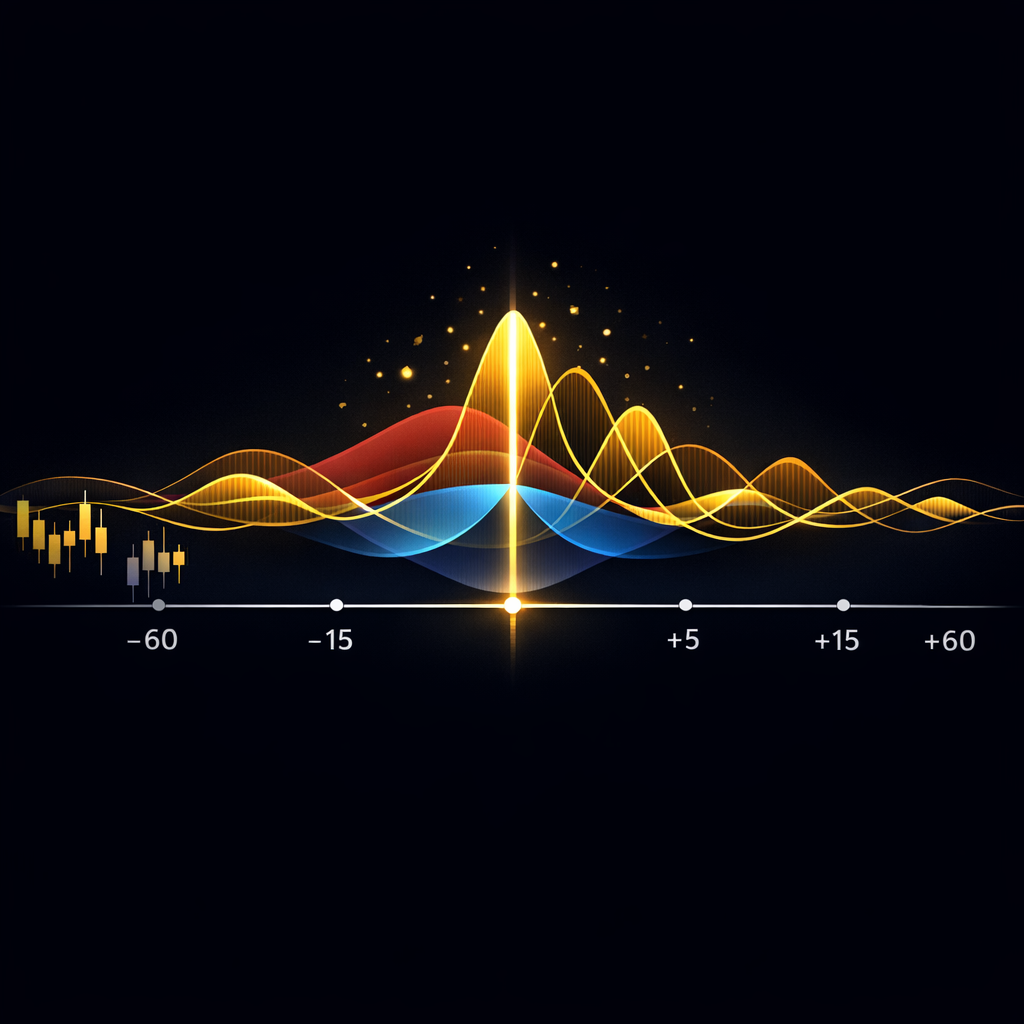
The result is that XAUUSD often moves in “waves” around the event.
You’ll commonly see a first spike, a reversal, and then the real trend—especially when Powell’s press conference reframes the statement.
What volatility looks like in numbers (realistic expectations)
In calm sessions, gold might range $8–$15 intraday.
During FOMC, a $25–$45 swing is not unusual, and the first 1–3 minutes can print multiple $6–$12 candles.
That’s why your “normal” stop placement fails.
And that’s why you need a playbook that treats FOMC as a special environment, not just another candle on the chart.
What Changes During FOMC: Spreads, Slippage, Liquidity, and Fakeouts
If you’ve ever been stopped out to the tick and watched price run to your target, you’ve met the FOMC microstructure problem.
It’s not only about direction.
1) Spread widening is a hidden tax
On normal conditions, many brokers quote XAUUSD with a tight spread.
During the release, that spread can widen dramatically for seconds or minutes.
Example:
- Normal spread: $0.20–$0.35
- FOMC spike spread: $0.80–$1.80 (sometimes more)
If your stop is $12 away but spread expands by $1.20 at the wrong moment, your effective risk is no longer $12.
It’s $13.20+ plus slippage.
2) Slippage turns “perfect entries” into bad trades
Market orders during the first seconds after the decision are a slippage magnet.
You might plan to buy at $2652.00 and get filled at $2654.10.
That’s not a small difference.
On gold, $2.10 is meaningful—especially for tight news stops.
3) Liquidity gaps create one-candle traps
When liquidity thins, price can jump levels.
This is why “breakout traders” often get punished: the candle breaks a level, fills stops, and then snaps back.
4) The first move is often the wrong move
A classic pattern:
- Gold spikes up $15 on the headline.
- Then dumps $25 as the market reads the dots or forward guidance.
- Then trends for $30–$60 in the real direction.
This is why our playbook is built around confirmation windows (5–15 minutes) and volatility filters.
Signal-based trading vs manual guessing (comparison)
| Approach | What you do | Main risk during FOMC | Best use case |
|---|---|---|---|
| Manual prediction | Pick direction before the decision | Whipsaw + spread + wrong narrative | Experienced macro traders only |
| Impulse market orders | Chase the first candle | Slippage + fakeouts | Almost never recommended |
| Signal + confirmation | Wait for trigger rules, then execute Entry/SL/TP | Missing part of move (acceptable) | Best balance for most traders |
| Signal + pullback limit | Trade retracements after first wave | Not getting filled | Disciplined execution, better R:R |
If your goal is consistency, you don’t need the first 10 dollars.
You need the clean 25 dollars that comes after the market reveals its hand.
The United Kings FOMC Framework: Pre-News, Release, Post-News
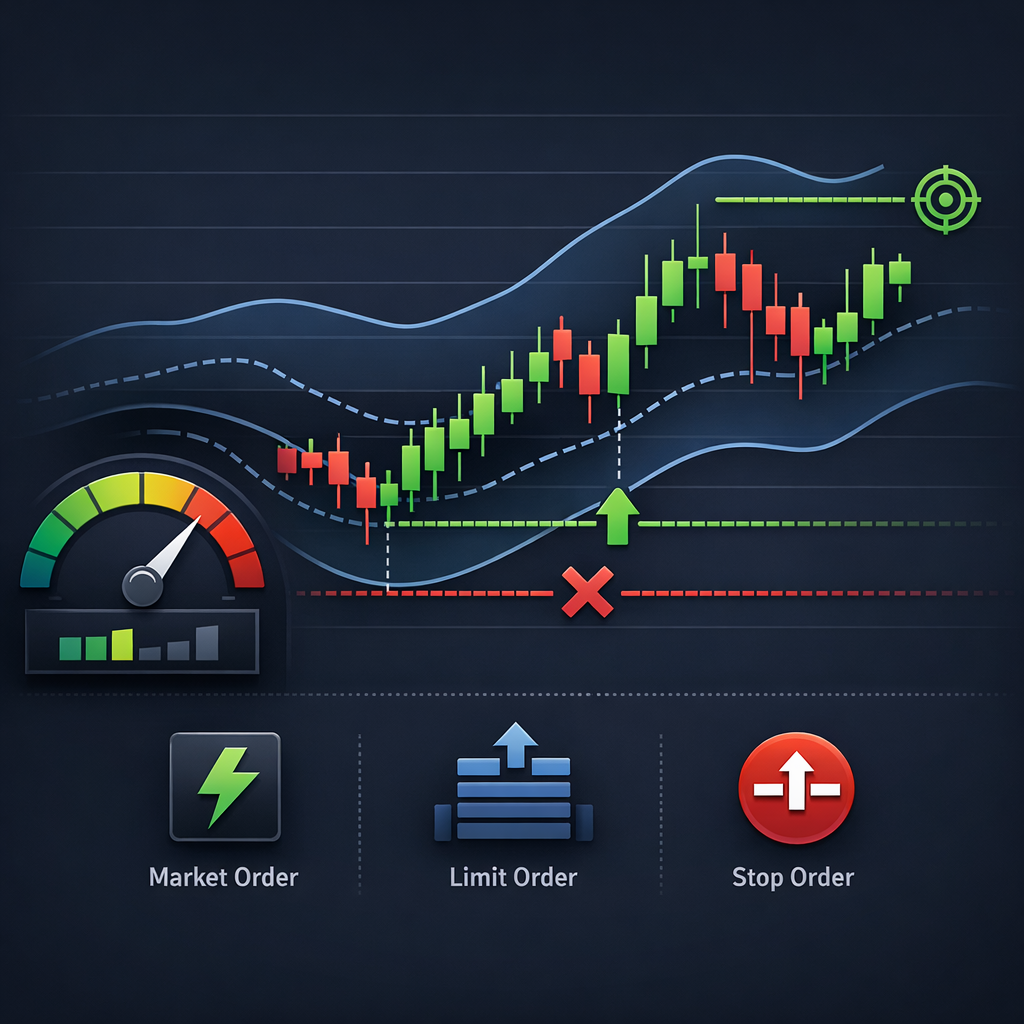
A professional FOMC trade is not one decision.
It’s a sequence of decisions with time-based rules.
Here’s the framework we teach our community (and apply inside our premium signal workflow).
Phase 1: Pre-news (T-60 to T-5)
This is where you prepare, not gamble.
Your job is to define the battlefield: key levels, ATR, and your “no-trade” conditions.
- Mark Asian range and London/NY session highs and lows.
- Identify the nearest liquidity pools (equal highs/lows, obvious swing points).
- Measure ATR(14) on M15 or M5 to size realistic stops.
- Decide your max spread allowed for execution.
In current conditions around $2650, a practical news stop is often $12–$20.
That’s wide enough to survive noise but tight enough to keep R:R attractive.
Phase 2: Release (T=0 to +5 minutes)
This is where most accounts get hurt.
Our default rule: no new trades in the first 5 minutes unless the signal explicitly says “fast execution allowed” and your spread filter is valid.
Why?
Because the first candle is often an algorithmic reaction to the headline, not the full message.
Phase 3: Post-news confirmation (+5 to +15)
This is the sweet spot for most traders.
You look for structure and confirmation:
- Candle close beyond a key level
- Retest (optional but powerful)
- Spread normalizing
- ATR not exploding beyond your risk model
Phase 4: Trend continuation (+15 to +90)
If FOMC creates a real directional move, gold can trend cleanly for 30–90 minutes.
This is where scaling and trailing logic can work—if you’re disciplined.
Want the signal version of this framework?
That’s exactly what we deliver in our premium gold signals and broader United Kings signals, with clear Entry, SL, and TP levels built for London and NY session execution.
Step-by-Step: Pre-FOMC Checklist (Levels, ATR, Bias, and No-Trade Rules)
This is the part most traders skip.
And it’s the part that determines whether your FOMC trade is planned—or emotional.
Step 1: Mark the “decision levels” on XAUUSD
Use H1 and M15 to mark:
- Previous day high/low
- London session high/low
- NY session open level
- Most recent M15 swing high/low
Example near today’s price:
- Resistance zone: $2668–$2675
- Support zone: $2632–$2625
These aren’t “magic numbers.”
They’re where stops cluster—and FOMC loves to run stops.
Step 2: Calculate ATR for realistic SL placement
Use ATR(14) on M15 as a baseline.
Let’s say M15 ATR is $6.50 pre-news.
A practical FOMC stop is often:
- 1.5× ATR = ~$9.75 (tight)
- 2× ATR = ~$13.00 (balanced)
- 3× ATR = ~$19.50 (conservative)
Given typical FOMC whipsaws, many traders do best around 2× to 3× ATR, then reduce lot size to keep risk fixed.
Step 3: Write down your spread cap before the event
This is non-negotiable.
Pick a number your broker can realistically maintain outside the first seconds.
Example spread rules:
- Conservative: Max spread $0.60
- Moderate: Max spread $0.90
- Aggressive: Max spread $1.20 (only if your system expects slippage)
If spread is above your cap, you don’t “hope.”
You wait.
Step 4: Define your no-trade conditions
Professional traders have rules that stop them from trading.
Here are three that work:
- ATR explosion rule: if M1 candles exceed $10 repeatedly, stand down until volatility stabilizes.
- Spread rule: if spread > cap for more than 60 seconds, wait for normalization.
- Mixed message rule: if the rate decision and statement conflict (e.g., hold rates but hawkish guidance), wait for +15 minutes confirmation.
If you want a deeper risk framework for signal execution, pair this article with our guide on risk management strategies when using forex signals.
Entry Models That Work: Break-and-Close, Pullback, and Two-Step Triggers
Let’s get practical.
When traders ask for an “XAUUSD news trading strategy,” what they really need is a rule that answers: When exactly do I click buy or sell?
Here are three entry models we use for gold signals around Fed rate decisions.
Model A: Break-and-close confirmation (best for most traders)
Rule: wait for an M5 candle to close beyond a key level, then enter on the next candle (market or stop order).
Example (bullish):
- Key resistance: $2660
- M5 closes at $2663.20
- Entry: Buy $2663.50–$2664.00
Why it works:
It forces the market to prove acceptance above the level, reducing “one-wick” traps.
Model B: Pullback limit after first wave (better R:R, fewer fills)
Rule: let price spike, then place a limit order on a retracement to the broken level or 50% of the impulse leg.
Example:
- Impulse: $2650 → $2670
- 50% pullback zone: ~$2660
- Entry: Buy limit $2660.50
Why it works:
You avoid paying the “panic premium” during the spike, and your stop can be tighter relative to target.
Model C: Two-step trigger (fakeout filter)
Rule: require two conditions:
- Condition 1: M5 close beyond level
- Condition 2: Next M1/M5 candle holds above (no immediate reclaim below)
This model is powerful during FOMC because it filters the classic pattern: break → reverse → trend.
Order type rules (what to use and when)
- Market orders: only after spread normalizes and you have confirmation.
- Stop orders: good when you want momentum after confirmation (e.g., buy stop above a confirmed high).
- Limit orders: best for pullbacks; avoid placing them too early if spreads are unstable.
Inside our gold signals, you’ll often see the entry model implied by the structure: “Buy above X” (stop/confirmation) or “Buy at X–Y zone” (pullback/limit), always paired with SL/TP.
Stop Loss and Take Profit for FOMC: ATR Bands, Structure, and 1:2–1:3 Targets
During FOMC, your stop loss is not just protection.
It’s your admission ticket to staying in the game long enough to catch the real move.
The three-layer SL method (simple and robust)
We combine:
- Structure (behind a swing high/low or broken level)
- ATR buffer (so noise doesn’t tag you)
- Spread buffer (because execution is not perfect)
Example buy setup near current prices:
- Entry: $2652.00 (post-news confirmation)
- Structure support: $2644.50
- ATR buffer: $6.50 (approx M15 ATR pre-news)
- Practical SL: $2639.50 (about $12.50 risk)
That SL is wide enough for volatility, but still inside the realistic $10–$25 band for this market context.
TP placement: don’t “pick a number,” build a plan
Two clean options:
- R-multiple targets: TP = 2R or 3R.
- Liquidity targets: TP at the next major swing / session high-low.
Using the example above (risk $12.50):
- TP1 (2R): $2652 + $25.00 = $2677.00
- TP2 (3R): $2652 + $37.50 = $2689.50
Those targets fit the guideline range ($2610–$2690) and match how gold actually moves when a real FOMC trend emerges.
Scaling out: the “reduce stress” technique
FOMC trades can move fast, then snap back.
A practical scaling plan:
- Close 50% at 1.5R–2R
- Move SL to breakeven only after a new structure forms (not immediately)
- Let the rest run to 3R or next liquidity level
Why not move to breakeven instantly?
Because gold loves to retest and wick you out before continuation—especially in the first 15–30 minutes post-release.
If you’re still building your execution discipline, you’ll benefit from our beginner-friendly framework in this forex signals Telegram guide (many of the execution principles apply to gold as well).
Spread Rules and Execution Filters: The “Do Not Trade” Guardrails
Most FOMC blowups aren’t caused by a bad idea.
They’re caused by trading when execution conditions are broken.
Your spread filter (simple, measurable, effective)
Before you execute any FOMC signal, check spread.
Use a rule like:
- Green: spread ≤ $0.60 → normal execution allowed
- Yellow: $0.60–$1.00 → only trade confirmed setups, reduce size
- Red: spread > $1.00 → no trade
Adjust those numbers to your broker, but keep the logic.
The point is to stop yourself from paying “invisible fees” when liquidity is thin.
Slippage rule: if you get slipped, don’t revenge trade
Here’s a professional rule:
If slippage exceeds 20% of your planned stop size, cancel the trade idea.
Example:
- Planned SL distance: $15
- 20% of $15 = $3
- If you’re slipped more than $3, you’re no longer trading your plan
Volatility filter: avoid the “knife fight” candle
Some minutes are simply untradeable.
A clean filter:
- If the last 1-minute candle range is > $12, wait for two candles with range < $8 before entering.
This keeps you out of the chaotic burst where stops get hunted randomly.
Broker reality check (important)
Not all brokers handle FOMC equally.
If your broker consistently widens spreads to extreme levels, your strategy may be fine—but your execution environment isn’t.
When you evaluate a signal provider, you should also evaluate your own “signal delivery chain”: broker → platform → execution → psychology.
Use our checklist: forex trading signals provider checklist (it applies to gold signal services too).
The 5–15 Minute Fakeout Problem: How to Avoid the Most Expensive Trap
If you only learn one thing from this article, make it this.
The first 5–15 minutes after the FOMC decision is where fakeouts are manufactured.
What a fakeout looks like on XAUUSD
Gold is at $2650 pre-release.
The decision hits and price spikes to $2666 in 60 seconds.
Breakout traders buy $2664–$2666.
Then gold dumps to $2642, taking out stops, before reversing again.
This isn’t “bad luck.”
This is liquidity seeking behavior in a high-event environment.
The confirmation trio (our anti-fakeout filter)
Before trading the direction, require at least two of these three:
- Close: M5 closes beyond the level (not just a wick)
- Hold: price holds beyond the level for 2–3 minutes
- Retest: price retests the level and rejects it (optional but strong)
This is how you shift from “reacting” to “confirming.”
Two real trade scenarios (numbers you can copy)
Scenario 1: Bullish continuation after confirmation
- Level: $2658
- M5 close: $2661.80
- Entry: Buy $2662.00
- SL: $2648.00 (risk $14)
- TP1: $2690.00 (reward $28 ≈ 2R)
Scenario 2: Bearish reversal (fade the spike after failure)
- Spike high: $2672
- Failure: M5 closes back below $2660
- Entry: Sell $2658.50
- SL: $2673.50 (risk $15)
- TP: $2628.50 (reward $30 ≈ 2R)
Notice what’s missing.
No guessing before confirmation, and no trading inside the worst spread/whipsaw window.
If you want more on surviving unexpected volatility beyond scheduled FOMC, read how gold signals react to unexpected news events.
Signal-Based FOMC Trading: How to Execute Entries Without Overtrading
Signals don’t replace skill.
They replace decision fatigue—as long as you execute them with rules.
At United Kings, our Telegram signals are built to be actionable: Entry, Stop Loss, and Take Profit, with a clear scenario.
We focus heavily on London and New York sessions, which is exactly when FOMC volatility matters most.
What a “good” FOMC signal should contain
- Trigger-based entry (e.g., “Buy above 2662 on M5 close”)
- Invalidation level (where the idea is wrong)
- SL distance that matches volatility (often $10–$25)
- Multiple TPs or a clear 1:2+ target
- Execution note (spread cap, wait time, confirmation window)
The “one trade rule” for FOMC (anti-revenge system)
Most FOMC losses become disasters because traders take 5–12 trades in 30 minutes.
Use this rule:
- Maximum 1–2 trades per direction during the entire FOMC window.
- If stopped out once, the next trade must have new information (new structure break, new close, new retest).
This single rule can change your entire equity curve.
How we align signals with volatility (practical filter)
When volatility is extreme, we prefer:
- Confirmation entries
- Wider stops with smaller size
- Targets at 2R first, then 3R only if structure supports it
When volatility is moderate (spread stable, ATR reasonable), we can be more precise with pullbacks and tighter execution.
Where to follow United Kings signals
You can explore our full signal offering on United Kings signals, or go straight to our dedicated gold signals page.
If you trade FX alongside gold, we also provide forex signals and optional diversification with crypto signals depending on your risk profile.
And if you want to see how our community trades in real time, join our Telegram: United Kings Telegram channel.
Position Sizing for FOMC: How to Risk the Same When Stops Get Wider
FOMC forces a choice.
You either keep your usual lot size and get stopped out constantly, or you widen your stop and blow your risk.
The professional solution is simple: fixed risk, flexible position size.
The fixed-risk formula (in plain English)
You decide how much you’re willing to lose on the trade—say 1% of your account.
Then you calculate lot size based on stop distance.
Example:
- Account: $5,000
- Risk per trade: 1% = $50
- Stop distance: $15 on XAUUSD
Your job is to size the position so that a $15 move against you equals about $50 loss (including spread).
Different brokers use different contract specs for gold, so the exact lot size varies.
But the principle never changes: when SL gets bigger, size gets smaller.
News-specific sizing rules (simple guardrails)
- Reduce risk during FOMC: many consistent traders use 0.25%–0.75% risk instead of 1%–2%.
- Add a spread buffer: treat spread as part of risk, not a footnote.
- No martingale: doubling down in news volatility is how accounts disappear.
When to skip the trade entirely
Sometimes the correct position size becomes so small that the trade isn’t worth it.
Skip when:
- Your broker’s spread is in the “red zone”
- Price is moving $10+ per minute for multiple minutes
- You can’t place the stop where it logically belongs (structure + ATR)
Skipping is a position.
And during FOMC, it’s often the most profitable one.
Advanced Playbook: Rate Decision vs Powell Presser (Two Volatility Waves)
Many traders treat FOMC as one event.
In reality, it’s often two separate volatility waves with different behavior.
Wave 1: The rate decision + statement (headline algo move)
This is the initial spike window.
It’s driven by:
- The rate decision itself (hike/cut/hold)
- Key wording changes in the statement
- Dots and projections (when released)
Gold can move $15–$30 quickly here.
But it’s also where fakeouts are most common.
Wave 2: Powell press conference (narrative move)
This is where the market “decides what it believes.”
You’ll often see gold establish a trend during the presser, especially if Powell shifts expectations on future cuts/hikes.
How to trade both waves without doubling your risk
- Choose one primary window to trade (decision or presser).
- If you trade both, cut risk in half for each.
- Don’t carry a losing bias from Wave 1 into Wave 2.
Practical example: adapting targets between waves
Let’s say Wave 1 gives you a confirmed buy:
- Buy $2654
- SL $2640 (risk $14)
- TP1 $2682 (2R)
If TP1 hits before the presser, you have options:
- Bank profits and stop trading
- Leave a runner with a protected stop under new structure
- Wait for Wave 2 confirmation to re-enter (fresh setup)
The key is that Wave 2 is not a “second chance to get your money back.”
It’s a new trade with a new context.
Common Mistakes Trading Gold During FOMC (And the Fix for Each)
We’ve watched thousands of traders in a 300K+ community make the same mistakes.
The good news is that each mistake has a simple fix.
Mistake 1: Entering because you feel you’ll “miss the move”
FOMO is expensive during FOMC.
Fix: enforce a time rule: no trades until +5 minutes, then only with confirmation.
Mistake 2: Using a normal-day stop on a news-day chart
A $6 stop might work on a quiet day.
During FOMC, it’s often a donation.
Fix: ATR-based stops (2×–3× ATR) and smaller size.
Mistake 3: Ignoring spread and blaming the signal
Even a great setup fails if your fill is terrible.
Fix: define a spread cap and stick to it.
Mistake 4: Taking multiple trades after a loss
This is the revenge spiral.
Fix: one-trade rule + require “new information” before re-entry.
Mistake 5: Confusing volatility with opportunity
Big candles look like opportunity.
But big candles also mean randomness.
Fix: trade the post-volatility structure, not the volatility itself.
If you want to benchmark signal providers (and avoid marketing traps), compare with our research post: best forex signals (November 2025) guide.
FAQ: Trading XAUUSD During Fed Rate Decisions
1) Is it safe to trade gold during FOMC?
It can be, but only with strict risk controls.
FOMC increases spread, slippage, and fakeouts, so you must use confirmation rules, ATR-based stops, and reduced position sizing.
2) What is the best timeframe to trade XAUUSD around FOMC?
For structure and confirmation, M5 and M15 are practical.
Use H1 to mark major levels, then execute on M5 after the +5 minute window when spreads normalize.
3) Should I trade before the Fed decision?
For most traders, no.
Pre-positioning is essentially a coin flip unless you’re hedged and experienced with macro scenarios.
4) How wide should my stop loss be on XAUUSD during FOMC?
In current conditions around $2650, many effective FOMC stops fall in the $10–$25 range.
Use 2×–3× ATR plus structure, then reduce lot size to keep risk constant.
5) Do gold signals work during Fed rate decisions?
They can work well when they’re built for volatility and you execute them with spread and confirmation filters.
A signal without execution rules is incomplete during FOMC.
Risk Disclaimer (Read Before You Trade FOMC)
Trading forex and gold (XAUUSD) involves significant risk and may not be suitable for all investors.
FOMC events can cause extreme volatility, widened spreads, and slippage, which may increase losses beyond expectations.
Past performance does not guarantee future results. No signal or strategy can guarantee profits.
If you’re new, consider practicing on a demo account before trading live, and never risk money you cannot afford to lose.
Join United Kings: Premium Gold Signals Built for Volatility
If you want to trade Fed decisions with a plan instead of emotions, we’ve built the infrastructure for it.
United Kings delivers premium Telegram signals for gold and forex with clear Entry, SL, and TP levels, focused on London and New York sessions.
Our community includes 300K+ active traders, and we combine signals with education so you understand the “why,” not just the “what.”
Explore your options on our pricing page with 3 plans:
- Starter (3 Months): $299 (~$100/month)
- Best Value (1 Year): $599 (~$50/month) with 50% savings + FREE ebook
- Lifetime: $999 (pay once, unlimited access)
We also offer a 48-hour money-back guarantee so you can evaluate the service with confidence.
Ready to trade XAUUSD during FOMC with rules?
Start here: United Kings Gold Signals, then join the live Telegram feed: https://t.me/unitedkings1.