Forex signals for beginners can feel like a shortcut—until you place your first trade, price spikes 20 pips, and you realize you don’t actually know what you’re doing.
If you’ve ever thought, “Just tell me where to enter, where to exit, and how much to risk,” this guide is for you.
We’re going to break down what signals really are, how to use forex signals properly, how to avoid the most common beginner mistakes, and how to build a simple process you can repeat in London and New York sessions.
TL;DR — The beginner’s blueprint for using forex signals
- A signal is a trade plan: it should include entry, stop-loss (SL), take-profit (TP), and often a setup note (trend/news/session).
- Your job is execution + risk control: even the best provider can’t save poor sizing, late entries, or moving stops.
- Start with 0.5%–1% risk per trade and aim for 1:2 or 1:3 reward-to-risk (RR) where possible.
- Use a checklist before every trade: spread, session, entry type, SL distance, and upcoming news.
- Track every signal you take (win/loss, R-multiple, mistakes) to build consistency instead of chasing.
- Choose providers with transparency: clear entries/SL/TP, realistic expectations, and education—not “guaranteed profits.”
1) What forex signals are (and what they are not)
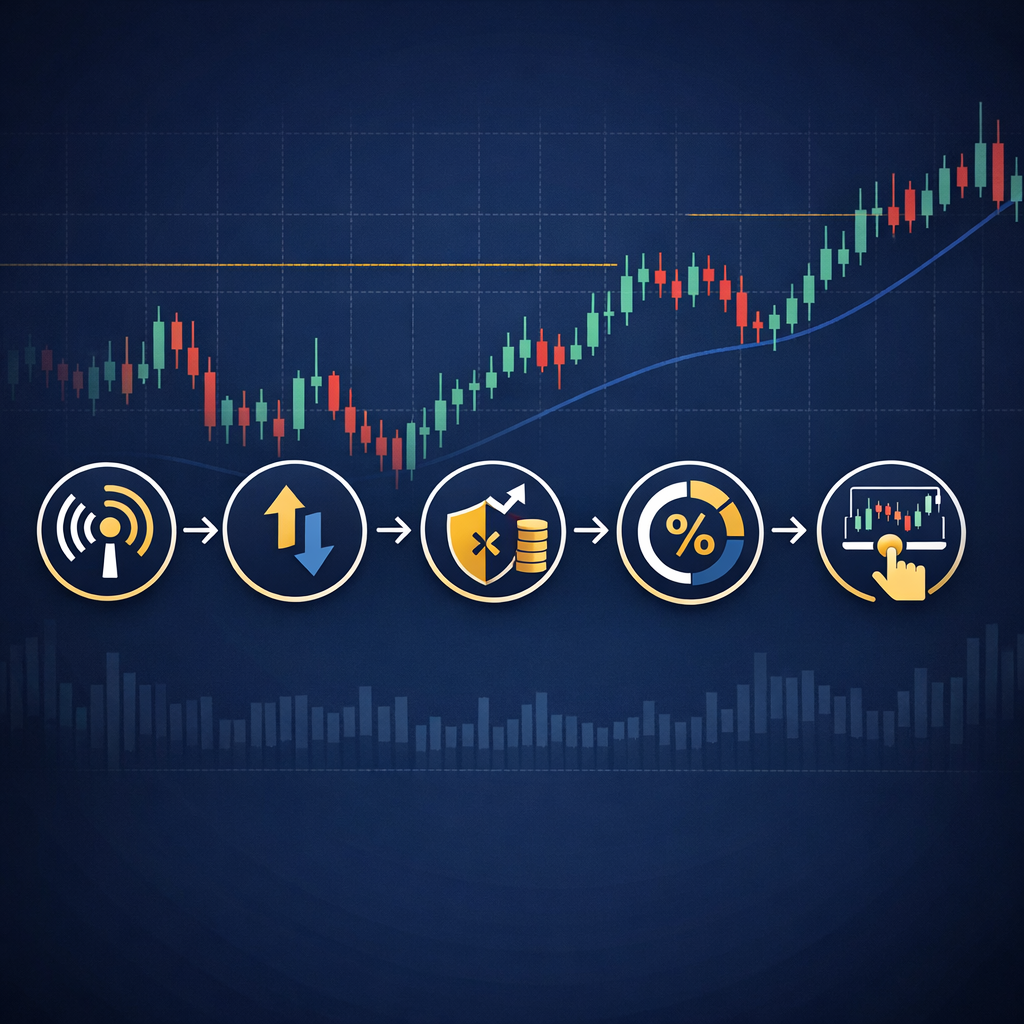
A forex signal is a structured trade idea sent by a trader, analyst, or system.
It typically tells you what to buy/sell, where to enter, where to exit if wrong (SL), and where to take profit (TP).
Signals are not magic
Signals don’t remove uncertainty.
They remove guesswork by giving you a pre-defined plan, but the market can still move against you.
Signals are a decision framework
Think of signals like a GPS route.
It can be the best route, but you still need to drive correctly—speed, lane changes, and not missing the exit.
What a high-quality signal message looks like
At minimum, a beginner-friendly signal should include:
- Pair (e.g., EUR/USD, GBP/USD, USD/JPY, XAUUSD)
- Direction (Buy/Sell)
- Entry (market or limit)
- Stop loss (price level)
- Take profit (one or multiple targets)
- Context (session, trend, key level, news caution)
Realistic beginner example using current market context
Let’s say EUR/USD is around 1.0520 and DXY is firm near 106.80.
A clean signal might look like: EUR/USD Sell 1.0520, SL 1.0550 (30 pips), TP 1.0460 (60 pips).
That’s a 1:2 RR idea, and you can size it properly.
Why beginners love signals (and why many still lose)
Signals are attractive because they reduce analysis time.
But beginners often lose because they execute poorly: late entries, oversized lots, revenge trades, and ignoring SL.
If you want a deeper overview of how signals are delivered and managed in real time, browse our resources on United Kings blog and compare approaches across strategies.
2) The different types of forex signals (manual vs automated, scalping vs swing)
Not all signals are built the same.
As a beginner, you’ll get better results faster when you match signal type to your schedule, risk tolerance, and execution skill.
Manual vs automated signals
Manual signals are created by human analysts using price action, indicators, and fundamentals.
Automated signals are generated by algorithms based on pre-set rules.
Manual signals can adapt to unusual conditions.
Automated signals can be consistent but may struggle during news spikes or regime changes.
Timeframe-based signals: scalps, day trades, swings
Scalping signals target small moves (5–20 pips) and demand fast execution.
Day-trade signals often target 30–120 pips and are usually managed within the same session.
Swing signals may target 150–500 pips and can run for days.
Beginner-friendly reality check
If you’re working a job or studying, scalping can be stressful.
Day trades during London and New York sessions are often the sweet spot for beginners because liquidity is higher and spreads are tighter.
Gold (XAUUSD) signals vs forex pair signals
Gold is currently around $2650 (up roughly +0.35% over 24h).
Gold can move $10–$25 quickly during volatility, which is why SL placement and lot size matter more than your “confidence.”
Example: XAUUSD Buy 2650, SL 2635 (−$15), TP 2680 (+$30) is a 1:2 RR structure.
That’s a great learning model because it forces discipline: one invalidation point, one target plan.
Comparison table: which signal type fits you?
| Signal Type | Typical Hold Time | Best Session | Pros | Beginner Risk |
|---|---|---|---|---|
| Scalping | Minutes | London/NY overlap | Many opportunities, tight targets | High (slippage, overtrading) |
| Day Trading | 1–8 hours | London + New York | Balanced pace, clearer structure | Medium (news spikes) |
| Swing Trading | Days–weeks | Any (less time-sensitive) | Less screen time, bigger moves | Medium (swap/overnight risk) |
| Automated/Algo | Varies | Depends on system | Consistency, less emotion | Medium-High (black-box trust) |
If you want signals across styles (forex, gold, and more), start by exploring our main hub at United Kings Signals and then choose the market you want to focus on first.
3) How to read a forex signal like a trader (entry, SL, TP, and “why”)
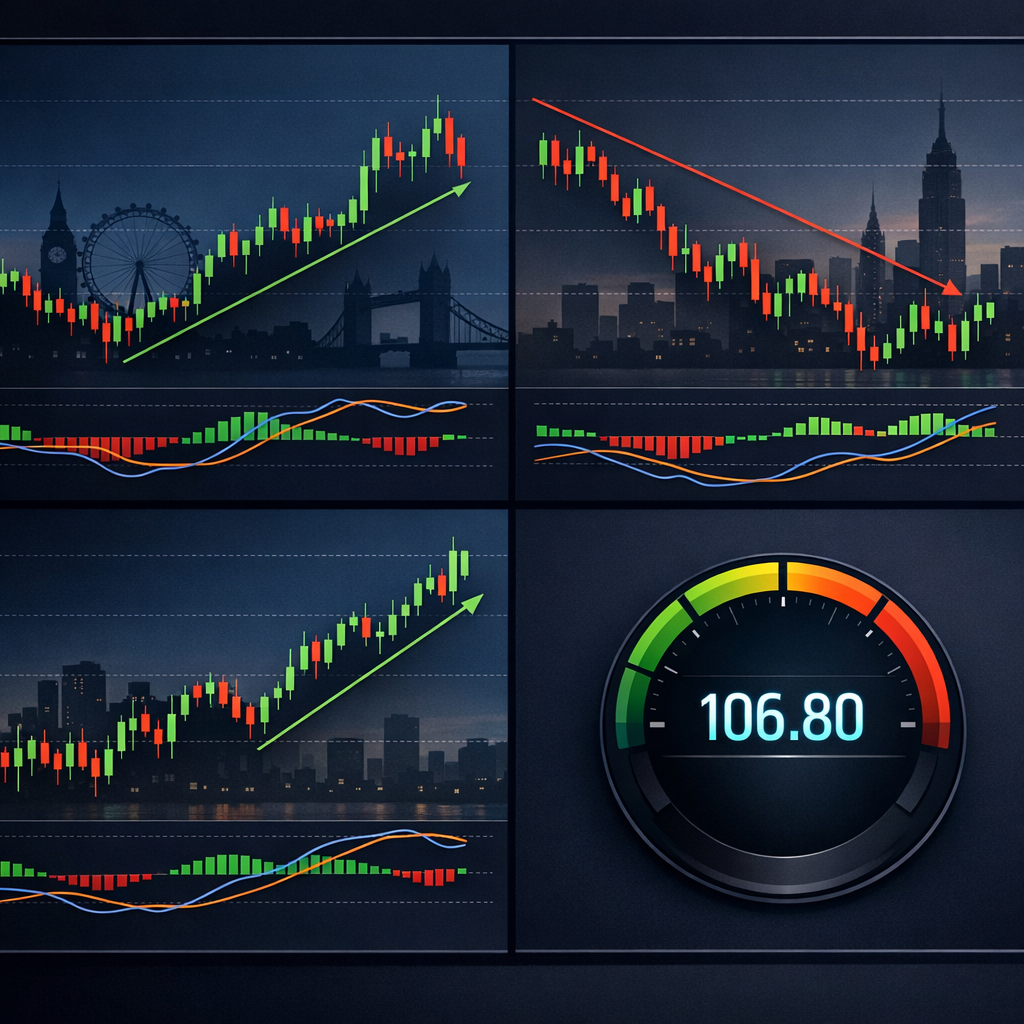
Most beginners read signals like a betting tip.
Professional traders read signals like a hypothesis with invalidation.
The 4 core components you must understand
- Entry: the price where the idea becomes valid.
- Stop Loss (SL): the price that proves the idea wrong.
- Take Profit (TP): the price(s) where you lock gains.
- Trade management: rules for moving SL, partial profits, or trailing.
Market order vs limit order signals
Market entry means you enter immediately at the current price.
Limit entry means you wait for price to come to you.
Beginners often prefer market entries because they feel simpler.
But limit entries can improve RR and reduce chasing—if you’re patient.
Example: GBP/USD signal breakdown
GBP/USD is around 1.2680.
Imagine a signal: GBP/USD Buy 1.2680, SL 1.2640 (40 pips), TP 1.2760 (80 pips).
Here’s how to read it:
- You risk 40 pips if wrong.
- You aim to make 80 pips if right.
- Your RR is 1:2, meaning you can be wrong more often and still grow.
What “SL hunting” feels like vs what it usually is
Beginners often say, “The market hunted my stop.”
Sometimes that’s true around obvious liquidity zones, but often the SL was just too tight for current volatility.
When USD/JPY is around 149.50, a 10-pip stop during a high-impact news window is usually a coin flip.
A provider that understands volatility will either widen SL appropriately or avoid trading that moment.
Always ask: what would invalidate the setup?
A good signal has a logical reason for the SL level.
For example, “below last swing low,” “above supply zone,” or “beyond session high.”
If the SL looks random, your confidence should drop.
And if you’re not sure how to evaluate provider quality, our beginner-friendly checklist helps: forex signals provider checklist for beginners.
4) How to use forex signals step-by-step (the exact execution workflow)
The difference between a beginner and a consistent trader is rarely “better entries.”
It’s having a repeatable workflow that prevents emotional decisions.
Step 1: Confirm your broker conditions (spread, leverage, execution)
Before you copy any signal, check the spread.
If EUR/USD spread is 1.5 pips instead of 0.2–0.6 pips, your edge shrinks fast.
Also confirm your account type and leverage.
High leverage doesn’t mean high profit—it means high risk if you oversize.
Step 2: Check the session and volatility
United Kings focuses heavily on London and New York because that’s where liquidity is strongest.
Signals taken during thin liquidity can slip and spread-widen, especially on GBP pairs and gold.
Step 3: Place the trade exactly as given
Beginners often “improve” the entry by a few pips.
That sounds smart, but it usually breaks the setup logic.
If the signal says Sell 1.0520 with SL 1.0550, don’t enter at 1.0505 because you’re impatient.
Either take it properly or skip it.
Step 4: Set SL and TP immediately (no exceptions)
This is non-negotiable for beginners.
No SL is how small losses become account-ending losses.
Step 5: Decide management rules before price moves
Will you take partial profit at 1R?
Will you move SL to break-even after +30 pips, or only after structure breaks?
Pick a rule and stick to it for 20–30 trades.
Consistency beats “genius” decisions made under stress.
Step 6: Log the trade (yes, even if it wins)
Track:
- Pair, direction, entry, SL, TP
- Risk %
- Result in pips and in R (e.g., +2R)
- Mistakes (late entry, moved SL, closed early)
Over time, your journal will show whether the problem is the provider or your execution.
For more on clean execution habits, also read risk management strategies when using forex signals.
5) Risk management for beginners using signals (the part that decides everything)
You can have a solid signal provider and still blow your account.
That happens when risk management is treated as optional.
Start with a fixed risk per trade (0.5% to 1%)
If your account is $1,000 and you risk 1%, your max loss is $10 per trade.
That may feel small, but it keeps you alive long enough to learn.
If you risk 10% per trade, a normal losing streak of 5 trades can cut your account by ~41%.
Then you start trading emotionally, which makes it worse.
Use RR as your “math advantage”
Let’s say you target 1:2 RR on average.
If you win 45% of trades, you can still be profitable because your winners are larger than your losers.
Example with gold near $2650:
- Buy 2650, SL 2638 (−$12)
- TP 2674 (+$24)
You don’t need to “be right” all the time.
You need your winners to pay for your losers.
Position sizing: the beginner formula
Your lot size should be determined by:
- Account size
- Risk %
- Stop distance (pips or dollars)
Simple rule: wider stop = smaller lot.
If your gold stop is $20, your position must be smaller than if your stop is $10.
Don’t stack correlated trades
If you take EUR/USD sell and GBP/USD sell at the same time, you may be doubling down on USD strength.
That’s fine if intentional, but beginners often do it accidentally.
Also watch USD/JPY exposure when DXY is strong around 106.80.
Many USD pairs can move together during risk-on/risk-off shifts.
Maximum daily loss and “stop trading rules”
Create a hard rule: stop for the day after −2R or −3R.
This prevents revenge trading, which is the fastest way to turn a small drawdown into a disaster.
If you want a ready-made framework, our team also shares educational guidance alongside signals inside our community at Forex Signals and Gold Signals.
6) Choosing a forex signals provider: what to look for (and what to avoid)
This is where most beginners get trapped.
They choose providers based on screenshots instead of process.
Green flags (what you want)
- Clear entries, SL, and TP on every trade.
- Consistency in strategy: not switching from scalping to swing randomly.
- Risk-first mindset: they talk about drawdowns, not just wins.
- Education included: you learn why trades work, not just what to copy.
- Realistic performance language: no “guaranteed profits.”
Red flags (what to avoid)
- Signals without stop loss.
- Martingale or “double lot after loss” without clear limits.
- Overtrading: 20–50 signals per day with no structure.
- Deleting losing trades from history or hiding drawdowns.
- Pressure tactics: “Join now or miss the next 500 pips.”
Why transparency matters more than win rate
Many providers advertise 90% win rate.
But if their average win is 10 pips and average loss is 80 pips, the math doesn’t work.
What matters is the combination of:
- Win rate
- Average RR
- Max drawdown
- Consistency across months
United Kings approach (what you can expect)
United Kings focuses on premium Telegram signals for forex and gold with clear Entry, SL, and TP.
We aim for a disciplined approach built around London and New York sessions, supported by educational context to help you grow.
We also have a large community of 300K+ active traders where you can see how others manage execution and mindset.
To understand our signal delivery format and access options, start at /signals/ and then choose your market.
If you specifically want to learn the Telegram workflow, you can also read: forex signals Telegram for beginners guide.
7) Executing signals in real market conditions (slippage, spreads, and news)
On paper, every signal looks clean.
In real markets, execution friction is the hidden cost beginners don’t see.
Spreads: the “invisible fee”
If EUR/USD spread is 1.2 pips and your target is 12 pips, you’re giving up 10% of the move immediately.
For scalps, this can be the difference between profit and breakeven.
Slippage: why your entry may differ
Slippage happens when price moves between the moment you click and the moment the broker fills.
It’s common during high volatility and around news releases.
On gold near $2650, a fast spike can jump $2–$5 in seconds.
If your SL is only $10 away, that slippage can materially change your risk.
News risk: when not to take the signal
Beginners should learn a simple rule: avoid entering right before high-impact news unless the provider explicitly trades that event.
Examples include CPI, NFP, central bank rate decisions, and surprise geopolitical headlines.
DXY at 106.80 suggests the market is still sensitive to USD data.
That sensitivity can create fast moves in EUR/USD (1.0520), GBP/USD (1.2680), and USD/JPY (149.50).
Practical execution rules you can adopt today
- Don’t enter if spread is unusually wide.
- Don’t move SL further “to give it room.”
- If you missed entry by more than 20% of the SL distance, skip it.
- Set alerts at entry/TP levels so you’re not glued to the screen.
Story: the classic beginner mistake
A new trader receives: USD/JPY Buy 149.50, SL 149.10, TP 150.30.
They enter late at 149.75 because they fear missing out.
Now their stop is effectively tighter, and a normal pullback stops them out.
The original signal then goes to TP—without them.
This isn’t “bad luck.”
It’s workflow failure, and it’s fixable with rules.
If you also trade gold signals, unexpected headlines can move XAUUSD sharply.
Keep this survival resource bookmarked: how gold signals react to unexpected news events.
8) Building consistency with signals: journaling, metrics, and weekly reviews
If you want to become consistent, you must measure your behavior.
Signals give you entries and exits, but your process determines your results.
Track results in R, not just pips
Pips can be misleading because different pairs move differently.
R-multiple standardizes performance based on your risk.
Example:
- You risk 30 pips on EUR/USD.
- You make 60 pips.
- That’s +2R.
When you think in R, you stop obsessing over “how many pips” and start focusing on repeatable edges.
The beginner journal template (simple but powerful)
- Date + session (London/NY)
- Pair + direction
- Signal entry/SL/TP
- Your actual entry (note slippage/late entry)
- Risk %
- Outcome in R
- Mistake category (if any)
Weekly review: the 30-minute routine that changes everything
Once a week, answer:
- Did I follow the signal rules exactly?
- Did I respect my daily loss limit?
- Which pair performed best for me and why?
- What was my biggest execution mistake?
Most beginners never do this.
That’s why they repeat the same mistakes for years.
Consistency comes from reducing variance
Don’t change everything after two losses.
Run a stable process for 20–50 trades, then adjust one variable at a time.
Inside the United Kings community, we emphasize education alongside execution so you learn to interpret conditions, not just copy trades.
If you’re exploring options, you can also review our curated page: best forex signals (November 2025).
9) A beginner’s toolkit: charts, indicators, and simple price action filters
You don’t need 12 indicators to use signals well.
You need a few simple filters to avoid taking trades in the worst conditions.
Tool 1: Higher-timeframe direction (the “trend filter”)
Before taking a signal, glance at the H1 and H4 charts.
If the signal is buying but price is below a major structure level and making lower lows, be cautious.
This doesn’t mean you ignore the signal.
It means you manage expectations and avoid overconfidence.
Tool 2: Key levels (support/resistance and session highs/lows)
Mark:
- Previous day high/low
- London session high/low
- Major swing points
Then ask: is TP realistic before the next major level?
If EUR/USD sells from 1.0520 targeting 1.0460, check if 1.0480 is a strong support zone that may cause a bounce.
Tool 3: One indicator (optional): ATR for volatility
Average True Range (ATR) helps you understand if your stop is too tight.
If gold’s ATR suggests $18 average movement and your SL is $8, you’re likely to get stopped by noise.
Tool 4: Economic calendar awareness
Signals work best when you know the “danger windows.”
For USD pairs and gold, news can cause sudden moves that ignore technical levels briefly.
Keep it simple: your goal is not to outsmart the signal
As a beginner, your edge comes from disciplined execution.
Use tools to avoid obvious mistakes, not to second-guess every trade.
If you want to expand later into multi-market coverage, United Kings also offers crypto signals, but we recommend beginners master one market first (often EUR/USD or XAUUSD).
10) Common beginner mistakes with forex signals (and how to fix them fast)
Most losses beginners blame on “bad signals” are actually execution errors.
Fixing these mistakes can dramatically improve your results without changing providers.
Mistake 1: Overleveraging because the SL looks small
A small stop doesn’t mean a safe trade.
It means you must size correctly because a tight SL can be hit easily.
Fix: cap risk at 0.5%–1% per trade until you have 50+ trades logged.
Mistake 2: Taking every signal
Beginners think more trades = more profit.
In reality, more trades often means more mistakes and more exposure.
Fix: take only the signals you can execute properly.
If you’re not present for London/NY, focus on limit entries or swing ideas.
Mistake 3: Moving the stop loss
This is the silent account killer.
One moved stop can erase a week of disciplined gains.
Fix: treat SL as a contract with yourself.
If you can’t accept the SL, reduce lot size or skip the trade.
Mistake 4: Closing winners too early
Many beginners take +10 pips and feel “safe.”
Then they hold losses hoping they’ll come back.
Fix: use partial profits.
Example: take 50% off at 1R, then let the rest run to 2R.
Mistake 5: Trading during news without a plan
Gold at $2650 can jump to $2665 and back to $2648 in minutes during surprises.
If your plan doesn’t account for that, you’ll panic.
Fix: avoid entries 10–15 minutes before high-impact news unless the provider explicitly states it’s a news trade.
Mistake 6: Not understanding correlation
Taking EUR/USD sell + GBP/USD sell + XAUUSD sell can be a USD-strength bet.
If USD reverses, everything hits SL together.
Fix: limit total account risk across correlated trades (e.g., max 1.5% total across USD-exposure positions).
If you want a deeper execution-focused read, explore our educational pages and updates via About United Kings to understand how our team approaches the market and community support.
11) A practical 30-day plan to start using forex signals as a beginner
You don’t become consistent by “trying harder.”
You become consistent by following a plan long enough to generate clean data.
Days 1–3: Set up your foundation
- Choose one market to focus on (EUR/USD or XAUUSD are common).
- Open a demo account if you’re brand new.
- Set your maximum risk to 0.5%–1% per trade.
- Create your journal template.
Days 4–10: Execute only A+ signals
Define A+ as signals you can take during your available hours.
Prefer London or New York session trades because spreads and liquidity are typically better.
Goal: 10–15 trades with perfect execution.
Not perfect results—perfect execution.
Days 11–20: Add one management rule
Pick one rule and test it:
- Move SL to break-even at +1R
- Take partial profit at +1R
- Trail SL behind structure on H1
Don’t mix rules.
You want to learn what actually improves your outcomes.
Days 21–30: Review and refine
At the end of 30 days, calculate:
- Total R gained/lost
- Win rate
- Average win in R
- Average loss in R
- Top 3 mistakes
If you’re negative but your mistakes are obvious (late entries, moved SL), that’s good news.
It means you can improve without changing strategy.
When to go live
Consider going live only after you can follow rules on demo for at least 30 trades.
Then start small, keep risk low, and scale slowly.
If you want help choosing the right access level, you can review our plans on United Kings pricing (Starter 3 Months $299, Best Value 1 Year $599 with 50% savings + FREE ebook, Unlimited Lifetime $999).
12) Why United Kings signals are built for beginners (and how to join)
Beginners don’t need more trades.
They need clear structure, risk discipline, and education that turns signals into skill.
What you get with United Kings
- Premium Telegram signals for forex and gold with clear Entry, SL, and TP levels.
- A disciplined approach focused on London and New York sessions.
- A large community of 300K+ active traders to learn from and stay accountable.
- Educational content alongside signals so you understand the “why.”
- A 48-hour money-back guarantee for added confidence when getting started.
Where to start (simple path)
- Choose your market: Forex Signals or Gold Signals.
- Review plan options on pricing (3 Months $299, 1 Year $599, Lifetime $999).
- Join our Telegram channel to receive updates and community access: United Kings Telegram.
- If you have questions before joining, reach out via contact United Kings.
A realistic expectation set (the honest part)
Even with a strong provider, you will experience losing trades.
What changes your outcome is how you handle them: fixed risk, no revenge trading, and consistent execution.
Our goal is to help you build a repeatable process so your results become more stable over time.
FAQ — Forex signals for beginners
Are forex signals good for beginners?
Yes, if you treat them as a learning tool and follow strict risk rules.
Signals can accelerate your learning by giving you structured trade plans, but you must still execute correctly and manage risk.
How many signals should a beginner take per day?
Usually 1–3 well-executed trades is enough.
More than that often leads to overtrading and mistakes, especially during volatile periods.
What risk percentage should I use when copying signals?
Most beginners should start at 0.5%–1% risk per trade.
If you’re still breaking rules (moving SL, entering late), reduce to 0.25% until your execution improves.
Can I use forex signals on gold (XAUUSD) too?
Yes, but gold is typically more volatile.
With XAUUSD around $2650, a normal move can be $10–$25, so lot size and SL discipline matter even more.
What’s the best way to verify a signals provider is reliable?
Look for transparency: clear entry/SL/TP, consistent strategy, realistic communication, and education support.
Also track your own execution results—many “provider problems” are actually workflow problems.
Risk disclaimer (read before you trade)
Forex and gold trading involves significant risk and may not be suitable for all investors.
Past performance does not guarantee future results.
Signals and educational content are provided for informational purposes and do not constitute financial advice.
You can lose some or all of your capital; always use stop losses, manage position size, and consider practicing on a demo account if you are a beginner.
Ready to trade with a plan instead of guessing?
If you want structured, session-focused trade ideas with clear Entry, SL, and TP—and a community that helps you stay disciplined—United Kings is built for you.
Join United Kings premium signals and start building consistency with a risk-first process.
- Explore all options: United Kings Signals
- Start with currencies: Forex Signals
- Trade XAUUSD with structure: Gold Signals
- Pick your plan (Starter, Best Value, Unlimited): see pricing
- Join our Telegram now: https://t.me/unitedkings1