
Ever placed a clean XAUUSD trade… only to watch it spike $18 against you in seconds, tag your stop, then reverse and run $40 in your original direction?
If you’ve traded gold during an FOMC rate decision, you know that pain. Spreads widen, liquidity thins, and even “perfect” technical levels get sliced like they aren’t there.
This guide is your XAUUSD FOMC strategy playbook—built for signal execution on the most volatile day of the month. We’ll use today’s realistic context: XAUUSD ≈ $2650 (+0.35%), DXY ≈ 106.80, EUR/USD 1.0520, GBP/USD 1.2680, USD/JPY 149.50.
You’ll walk away with repeatable rules for entries, stops, take-profits, no-trade zones, and what to do during the press conference when whipsaws are common.
TL;DR: The FOMC-Day XAUUSD Volatility Playbook
- Define a no-trade zone around the release (typically 5–15 minutes before and 5–20 minutes after) to avoid spread spikes and stop hunts.
- Use ATR-based stop sizing on FOMC days; gold often needs $15–$25 breathing room, not the usual $8–$12.
- Trade the second move (post-whipsaw) more often than the first spike; FOMC initial candles are frequently traps.
- Only execute signals with structure: clear entry trigger, invalidation level, and pre-defined TP at 2R–3R.
- Manage through the press conference with rules (reduce risk, trail logically, or flatten before Q&A if conditions are chaotic).
- Have a “no-trade” checklist: if spreads are abnormal, slippage is high, or price is inside the volatility box—skip the trade.
Why FOMC Days Are Different for XAUUSD (and Why Signals Need Rules)

Gold is not just a commodity. In FX terms, XAUUSD is a macro instrument that reacts instantly to USD strength, real yields, risk sentiment, and Fed expectations.
On FOMC days, those expectations can shift in minutes. The rate decision, statement, dot plot (when available), and Powell’s press conference can each move price independently.
That’s why “normal” signal execution often fails on FOMC. A standard gold signal might assume stable spreads and clean follow-through. But during the release window, you can see:
- Spread expansion (e.g., from $0.20–$0.40 to $1.50–$3.00 on some brokers).
- Slippage where a stop at $2638 fills at $2635.80, turning a planned -$12 into -$14.20.
- Whipsaw candles that run both sides of a range before choosing direction.
- False breakouts through obvious highs/lows that reverse within 1–3 minutes.
So the goal isn’t to predict every tick. The goal is to survive the noise and monetize the directional move that follows.
At United Kings, our approach to premium Telegram signals is built around clarity: Entry, SL, TP, plus guidance on timing (we focus heavily on London and New York sessions). If you’re new to executing signals professionally, start with our broader execution framework on the blog and explore our live offerings under United Kings trading signals.
Now let’s build your FOMC-day framework so you can execute gold signals without getting chopped.
Pre-FOMC Preparation: The 60-Minute Setup That Prevents Bad Trades
Most FOMC losses happen before the announcement. Traders enter early, assume a direction, and then get punished by a pre-positioning squeeze.
Here’s a clean 60-minute preparation routine you can repeat every FOMC day. Keep it simple and mechanical.
Step 1: Mark the “Event Window” on Your Chart
FOMC rate decisions are typically released at 2:00 PM ET, followed by the press conference (often 2:30 PM ET).
On your XAUUSD chart, mark:
- T-60 to T-15: positioning phase (ranges often form).
- T-15 to T+20: danger zone (spreads + whipsaws).
- T+20 onward: follow-through phase (best for structured entries).
We’ll define exact no-trade zones later. For now, you’re simply preparing mentally: we don’t need to trade the first candle.
Step 2: Map the Liquidity Range (The “FOMC Box”)
In the hour before FOMC, gold often compresses into a range. You want to mark the highest high and lowest low of that pre-news range.
Example with current context:
- XAUUSD trades between $2642 and $2661 in the hour before the release.
- Your “FOMC box” is $2642–$2661.
This box becomes your reference for breakouts, fakeouts, and invalidations.
Step 3: Check the Macro Dashboard (You Only Need 3 Inputs)
You don’t need a PhD in economics to trade FOMC day. You need three quick reads:
- DXY (106.80): rising DXY usually pressures gold; falling DXY supports gold.
- USD/JPY (149.50): a “risk/yen” proxy; sharp moves often signal broad USD repricing.
- Real yields / rate expectations: even a basic “hawkish vs dovish” expectation helps you avoid fighting the tape.
Then decide your bias: bullish gold, bearish gold, or neutral. On FOMC days, “neutral” is a valid professional stance.
Step 4: Confirm Your Broker Conditions (Spreads + Execution)
Before the event, watch the live spread for 3–5 minutes. If your broker is already widening spreads abnormally, you must adjust.
Professional rule: if spread is >3–5x normal, treat it as a no-trade condition until spreads normalize.
If you’re using a signal service, this is where discipline matters. A great signal can still fail if you execute it in a broken execution environment.
Building No-Trade Zones: The Anti-Whipsaw Rule Set
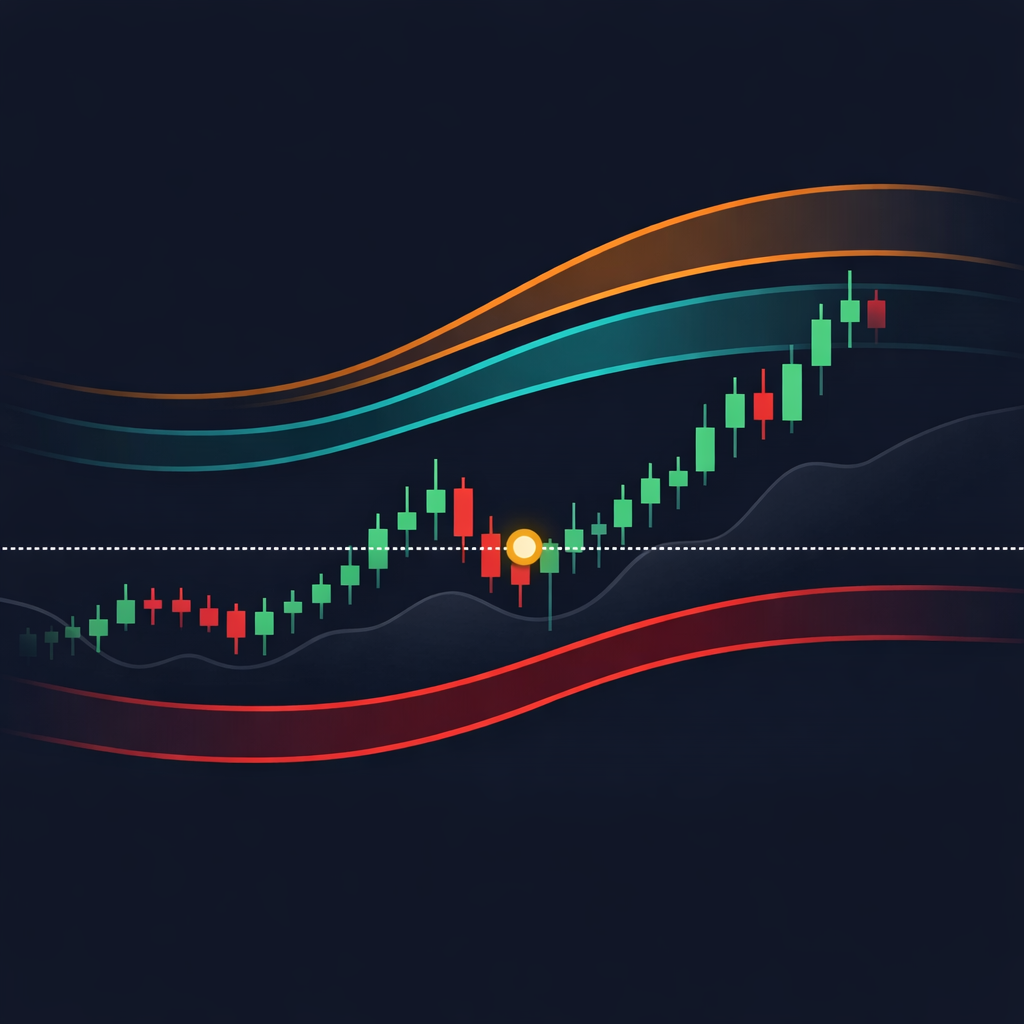
No-trade zones are what separate pros from gamblers on FOMC. Your edge is not “being brave.” Your edge is not donating to the market during the worst microstructure conditions.
Let’s define three no-trade zones you can apply to any gold signal on FOMC day.
No-Trade Zone #1: The Time-Based Blackout Window
This is the simplest and most effective filter.
- Hard rule: no new market orders from T-5 minutes to T+5 minutes.
- Safer rule (recommended for most traders): no new trades from T-10 to T+15.
Why? Because the first 1–3 candles after the release are frequently “liquidity sweeps.” They’re designed to fill big orders, trigger stops, and create a misleading first direction.
No-Trade Zone #2: The Spread/Slippage Condition
Even after T+15, spreads can remain unstable. So we use a condition-based rule.
- If spread is > $1.00 on XAUUSD (or >2.5x your normal), you either reduce size or stand down.
- If you experience > $1.50 slippage on a test order (or prior fills), treat it as an execution warning.
This matters because your stop-loss is a contract with reality. If execution is unstable, your planned risk is not your real risk.
No-Trade Zone #3: The “Inside the Box” Chop Zone
Remember the pre-FOMC range box (example: $2642–$2661). If price is still trading inside that box after the release, it often means the market is undecided.
Rule:
- No trades inside the box unless you have a very specific mean-reversion plan (most signal traders shouldn’t).
- Wait for a break and close outside the box on M5 or M15.
A practical example:
- Gold spikes to $2668 at 2:00 PM, then dumps to $2644 by 2:03 PM.
- By 2:10 PM, it’s back at $2652—inside the $2642–$2661 box.
That’s classic chop. If you trade there, you’re guessing.
Instead, you wait for structure: either a clean reclaim above $2661 with acceptance, or a breakdown below $2642 with continuation.
ATR-Based Stops and Targets for FOMC: Sizing Risk When Gold Is Moving Fast
On normal days, many traders use a “fixed $10 stop” on gold. On FOMC days, that’s often a fast way to get stopped out by noise.
Your stop needs to reflect volatility. The cleanest way to do that is with ATR (Average True Range).
Which ATR Settings to Use (Simple and Practical)
You don’t need complex math. Use one of these:
- M15 ATR(14) for intraday FOMC execution.
- M5 ATR(14) if you’re very short-term and experienced.
On FOMC days, M15 ATR can jump quickly. It might be $6–$9 pre-news and $12–$18 post-news.
Stop-Loss Formula for FOMC Day Gold Signals
Use a volatility multiplier:
- Conservative stop: SL = 1.0 × M15 ATR
- Standard stop: SL = 1.3 × M15 ATR
- Wide stop (only if setup is strong): SL = 1.6 × M15 ATR
Example:
- Post-release M15 ATR(14) reads $14.
- Standard stop = 1.3 × 14 = $18.20 (round to $18–$19).
That fits your guideline range: $10–$25 from entry.
Take-Profit Rules: 2R and 3R With Realistic Gold Levels
On FOMC days, you want asymmetric reward because execution risk is higher.
- Baseline: TP1 at 2R, TP2 at 3R (scale out).
- If structure is weak, take 2R and be done.
Example trade plan:
- Buy XAUUSD at $2654 (post-breakout acceptance).
- Stop at $2636 (risk $18).
- TP1 at $2690 (reward $36, 2R).
- TP2 at $2708 (reward $54, 3R) — only if volatility supports it.
Notice how we keep entries within the realistic band ($2610–$2690) and stops within $10–$25. We also respect that $2708 might be ambitious depending on liquidity, so TP2 is conditional.
Position Sizing: Keep Dollar Risk Constant, Not Lot Size
The biggest mistake on FOMC is keeping the same lot size while widening the stop. That doubles your risk without you noticing.
Rule: pick a fixed account risk (e.g., 0.5% to 1%), then calculate lot size based on the wider stop.
If your usual stop is $10 and today it must be $20, your lot size should be roughly half to keep risk stable.
For deeper risk rules when executing signals, read our dedicated guide on risk management strategies when using forex signals. The principles apply directly to gold.
Signal Execution on FOMC: Market Orders vs Limit Orders vs Stop Orders
FOMC is not the time to be casual with order types. The same signal can produce different outcomes depending on how you execute it.
Here’s the execution logic we use when translating a gold signal into a real fill during news volatility.
The Core Problem: You’re Trading Microstructure, Not Just Direction
During the release, liquidity providers pull quotes. Price can “gap” between ticks. That’s why a market order can fill worse than expected.
But limit orders can miss fills entirely if price doesn’t retrace. Stop orders can trigger at the worst moment in a spike.
So we choose order types based on the phase: pre-release, post-release stabilization, and press conference.
| Order Type | Best Use on FOMC | Main Advantage | Main Risk | United Kings Style Guidance |
|---|---|---|---|---|
| Market | After T+15 when spreads normalize | High fill probability | Slippage during volatility | Use only with confirmation candle + acceptable spread |
| Limit | Pullback entries after breakout | Controls entry price | Missed trade if no retrace | Great for “second move” setups with defined retrace zone |
| Stop | Breakout continuation after stabilization | Gets you in when momentum confirms | Triggered by spike then reversal | Only place after the first whipsaw; use above/below FOMC box |
Step-by-Step: How to Execute a Gold Signal Safely After the Release
- Step 1: Wait until you are outside the time blackout window (at least T+10, ideally T+15).
- Step 2: Confirm spread is acceptable (not wildly inflated).
- Step 3: Identify whether price is inside or outside the pre-FOMC box.
- Step 4: Require a close outside the box on M5 or M15.
- Step 5: Enter on either (a) a pullback to the breakout level (limit) or (b) a momentum continuation with structure (market/stop).
- Step 6: Place ATR-based SL immediately. Don’t “mental stop” on FOMC.
- Step 7: Set TP at 2R and 3R. Decide in advance if you’ll scale.
This is how you convert “gold signals news volatility” into something tradable instead of emotional.
The “Second Move” Method: Catching the Real Trend After the Whipsaw
If you remember only one concept from this article, make it this: the first move is often the trap; the second move is often the trade.
On FOMC, gold commonly does a two-step:
- Step A: Initial spike (often 10–25 dollars) that triggers stops.
- Step B: Reversal into the real direction, then continuation (often 20–60 dollars).
Why does this happen? Because the first move is about positioning and liquidity. The second move is about interpretation and re-pricing.
How to Identify the Trap Candle (Without Overthinking)
Look for these characteristics on M1/M5:
- A huge candle that breaks the pre-FOMC box, then closes back inside it.
- A wick that’s disproportionately large (e.g., $12 wick on a $16 candle).
- Immediate follow-up candle that erases 50%+ of the spike.
Example scenario around current levels:
- Pre-FOMC box: $2642–$2661.
- 2:00 PM: price spikes to $2674.
- 2:02 PM: dumps to $2646.
- 2:06 PM: returns to $2656 (inside the box again).
That tells you the market is hunting liquidity, not trending yet.
The Second-Move Entry Triggers (Pick One Style)
Style 1: Break-and-hold confirmation
- Wait for M5 to close above $2661 (box high).
- Then wait for the next candle to hold above $2661 (acceptance).
- Enter buy near $2662–$2665 with SL below structure (ATR-based).
Style 2: Pullback to the breakout level
- Wait for a clean break above $2661.
- Place a buy limit near $2661–$2663 on the first pullback.
- SL below the pullback low or ATR-based, whichever is wider.
Style 3: Failure and reversal (fade the fakeout)
- Price breaks above $2661, then closes back below it.
- Enter sell on retest of $2660–$2661 with SL above the fakeout high.
- Target the box low $2642 first, then extension.
These are not random strategies. They’re ways to trade the same idea: let the market show its hand.
Press Conference Management: Rules for 2:30 PM ET When Volatility Returns
Many traders survive the 2:00 PM release, get into profit, and then give it all back at 2:30 PM when Powell starts answering questions.
The press conference can create a second volatility wave. Sometimes it reverses the initial reaction completely.
So you need a plan for managing open positions through that period.
Rule #1: Decide Your “Hold or Flatten” Point Before You Enter
Before you place the trade, decide:
- Will you hold through the press conference?
- Or will you close/scale out before 2:30 PM ET?
If you don’t decide in advance, you’ll decide emotionally while price is whipping.
Rule #2: Use a Two-Stage Profit Protection Plan
Here’s a simple, repeatable approach:
- At +1R: reduce risk (either move SL to break-even + a small buffer, or scale out 30–50%).
- At +2R: lock in profit (trail behind structure or take most off).
Example:
- Buy at $2654, SL $2636 (risk $18).
- At $2672 (+$18 = 1R), move SL to $2655 or take partial profit.
- At $2690 (2R), consider closing 70–90% and trail the rest.
This protects you if Powell triggers a reversal. It also keeps you in the trade if the trend extends.
Rule #3: Trailing Stops Must Follow Structure, Not Emotion
On FOMC days, trailing too tight is basically self-sabotage. Gold can retrace $8–$12 in seconds and still be trending.
Better trailing methods:
- Trail below M5 swing lows in an uptrend.
- Trail above M5 swing highs in a downtrend.
- ATR trail: keep SL about 1.0 × M15 ATR away once in profit.
Pick one method and stick to it.
Rule #4: If the Market Re-enters the Box, Treat It as a Warning
If price breaks out, you enter, and later price returns inside the pre-FOMC box, that’s often a sign the breakout is failing.
In that case, you either:
- Exit fully, or
- Reduce and tighten risk aggressively.
This single rule saves traders from giving back a day’s profit in five minutes.
Concrete Trade Blueprints (Buy/Sell) Using Today’s XAUUSD Levels
Let’s turn the concepts into practical blueprints you can apply with signals. These are not “guaranteed trades.” They are structured templates for how to trade gold during Fed rate decision volatility.
Blueprint A: Bullish Breakout Continuation (Post-Whipsaw)
Context: XAUUSD is $2650. The first reaction is choppy, but then gold reclaims the pre-FOMC high and holds.
- Pre-FOMC box: $2642–$2661
- Trigger: M5 close above $2661 and next candle holds above
- Entry: buy $2663
- Stop: $2646 (risk $17)
- TP1 (2R): $2697 (reward $34)
- TP2 (3R): $2714 (reward $51) if momentum remains strong
No-trade filter: if spread is still inflated or price is snapping back inside $2642–$2661, skip.
Blueprint B: Bearish Breakdown (Dollar Strength + Hawkish Tone)
Context: DXY firms above 106.80, USD/JPY pushes higher, and gold loses the box low.
- Pre-FOMC box: $2642–$2661
- Trigger: M5 close below $2642 and retest fails
- Entry: sell $2640
- Stop: $2658 (risk $18)
- TP1 (2R): $2604 (reward $36) — note: this is slightly below the $2610 guideline, so you can adjust TP1 to $2610–$2612 for realism
- Adjusted TP1 (realistic): $2612 (reward $28, ~1.55R)
- TP2 (2R realistic): $2604 is ambitious; instead target $2610 (first), then trail for extension if volatility expands
Because we’re staying aligned with the $2610–$2690 example range, treat $2610 as the primary objective and use trailing for any deeper extension.
Blueprint C: Fakeout Fade (High Win-Rate, Lower Frequency)
Context: Gold spikes above $2661, fails, and closes back inside the box. This is classic stop-hunt behavior.
- Trigger: spike above $2661, then M5 close back below $2661
- Entry: sell $2659–$2661 on retest
- Stop: above spike high, e.g., $2678 (risk ~$18)
- TP1: $2642 (box low)
- TP2: $2625 (extension if momentum appears)
This blueprint often fits signal execution well because the invalidation is clear: if price reclaims and holds above the box high, you’re wrong.
Common FOMC Mistakes When Trading Gold Signals (and the Fix for Each)
FOMC losses are usually not “bad luck.” They’re process errors. If you fix the process, your outcomes improve even if you don’t win every trade.
Mistake #1: Taking a Signal Inside the Blackout Window
You see a signal at 1:59 PM ET and you want to be early. Then the release hits and you get filled at the worst price.
Fix: If it’s within T-10 to T+15, you either wait or you trade a different day. Discipline is a strategy.
Mistake #2: Using Normal-Day Stops on a News Day
A $10 stop on FOMC is often just a donation. Gold can move $10 in a single M1 candle.
Fix: Use ATR-based stops. If ATR says $18, respect it and reduce lot size.
Mistake #3: Moving Stops Emotionally
You widen your stop because “it will come back.” On FOMC, sometimes it doesn’t.
Fix: Your stop is your invalidation. If invalidation hits, the trade idea is wrong. Exit and reassess.
Mistake #4: Taking Profit Too Early, Then Revenge Trading
You grab $8 on a trade that had a $18 stop, then watch price run $35 without you. Then you chase and get chopped.
Fix: Use 2R as your baseline. Scale out at 2R and trail a runner if conditions allow.
Mistake #5: Ignoring the Press Conference
You’re up 1.5R at 2:28 PM ET and think the danger is over. Then Powell reverses the move.
Fix: Decide your hold/flatten rule pre-entry. At minimum, protect at 1R before 2:30 PM ET.
If you want a deeper survival framework for unexpected volatility, pair this guide with our article on how gold signals react to unexpected news events. It’s the same battle—different headline.
How United Kings Traders Execute XAUUSD on FOMC Days (A Repeatable Checklist)
Signals are powerful when they’re executed with consistency. That’s why we emphasize process, not impulse.
United Kings is built for traders who want clear Entry, SL, TP and a community that trades the most liquid sessions with discipline.
We have 300K+ active traders in our community, and our approach focuses on London and New York session opportunities—especially when volatility creates clean expansions after compression.
The United Kings FOMC Execution Checklist
- 1) Identify the event time (rate decision + press conference).
- 2) Draw the pre-FOMC box (H1 or M15 range).
- 3) Define your no-trade zone (time blackout + spread condition).
- 4) Choose your execution style: confirmation entry, pullback entry, or fakeout fade.
- 5) Size your stop with ATR and reduce lot size accordingly.
- 6) Set TP at 2R and 3R (or 2R + trail).
- 7) Protect profits before 2:30 PM ET if you’re holding through the press conference.
- 8) If conditions are messy, do nothing. No trade is a position.
Where Our Signals Fit In
If you’re trading with a signal provider, your edge is speed + clarity. But on FOMC, clarity must include timing rules.
Explore our dedicated gold stream via United Kings gold signals. If you also trade majors around the same event (EUR/USD, GBP/USD, USD/JPY), our forex signals can help you see the USD story from multiple angles.
For beginners who want a foundation before trading news volatility, our guide on Forex signals on Telegram for beginners explains how to execute signals with structure.
FOMC Day Scenarios: What to Do When Gold Doesn’t Behave “Normally”
Even the best plan needs contingencies. FOMC can produce unusual behavior: slow grinds, double reversals, or sudden liquidity gaps.
Here are the most common “abnormal” scenarios and the professional response.
Scenario 1: Gold Does Nothing (The “Muted Reaction” Day)
Sometimes the decision matches expectations perfectly. Gold stays near $2650 and ranges in a tight band like $2646–$2658.
What to do:
- Don’t force it. If there’s no expansion, there’s no volatility edge.
- Switch to a range plan only if you’re experienced, with tight objectives and reduced risk.
- Otherwise, stand down and trade the next London/NY setup.
Scenario 2: Double Whipsaw (Up, Down, Up Again)
This is common when the statement is interpreted one way, then Powell clarifies and the market reprices.
What to do:
- Trade smaller, or wait until after the press conference begins.
- Require stronger confirmation: M15 close outside the box, not just M5.
- Take profit faster (2R) and avoid holding a full position through Q&A.
Scenario 3: Trend Day (Clean One-Direction Expansion)
These are the best days. Gold breaks, retests, and runs. You might see $2650 to $2688 or $2650 to $2620 with few pullbacks.
What to do:
- Don’t over-manage early. Protect at 1R, then let it work.
- Trail behind structure instead of taking tiny profits.
- Scale out at 2R and keep a runner for 3R if volatility remains elevated.
Scenario 4: Your Broker Freezes or Requotes
This is more common than traders admit. Execution issues can ruin even perfect analysis.
What to do:
- If platform stability is questionable, avoid trading the event window entirely.
- Consider trading after T+30 when conditions normalize.
- Keep screenshots and logs; treat it as a business process issue.
FAQ: Trading XAUUSD During FOMC (Entries, Stops, and No-Trade Zones)
1) What is the best XAUUSD FOMC strategy for most traders?
The most repeatable approach is to avoid the first 10–15 minutes, draw a pre-FOMC range box, and trade the second move using confirmation or pullback entries. Combine that with ATR-based stops and 2R targets.
2) How wide should my stop loss be on FOMC for gold?
It depends on volatility, but a practical range is $15–$25 on FOMC day for many intraday setups. Use M15 ATR(14) and a multiplier (1.0–1.6) to size it, then reduce lot size so your account risk stays constant.
3) What are “no-trade zones” and how do I set them?
No-trade zones are rules that keep you out of the worst conditions. Use (1) a time blackout (e.g., T-10 to T+15), (2) a spread condition (skip if spreads are abnormally wide), and (3) a price-location filter (don’t trade inside the pre-FOMC box).
4) Should I hold my gold trade during Powell’s press conference?
Only if your plan supports it. A professional approach is to protect at +1R and consider taking major profit at +2R before 2:30 PM ET. The press conference can reverse moves quickly.
5) Can I trade FOMC days using Telegram gold signals?
Yes, but you need execution rules. Signals provide direction and levels, but on FOMC your job is timing, spread awareness, and volatility-adjusted risk. If you’re building that skillset, follow our education on the United Kings blog alongside the live signal stream.
Risk Disclaimer (Read Before Trading FOMC Volatility)
Forex and gold trading involves significant risk and may not be suitable for all investors. FOMC days can include extreme volatility, spread widening, and slippage that can increase losses beyond what you expect. Past performance does not guarantee future results, and no signal or strategy can guarantee profits. If you’re a beginner, consider practicing on a demo account before trading live, and never risk money you cannot afford to lose.
Join United Kings: Trade FOMC Days With Clear XAUUSD Signals + A Real Plan
If you’re serious about trading gold during Fed rate decisions, you need two things: high-quality levels and execution rules.
United Kings delivers premium Telegram signals with clear Entry, SL, TP levels, educational guidance, and a community of 300K+ active traders. We focus on London and NY sessions where liquidity is strongest—especially when events create opportunity.
Start here: explore our full suite of United Kings signals and our dedicated XAUUSD gold signals. Then choose a plan on our pricing page: Starter (3 Months $299), Best Value (1 Year $599 with 50% savings + FREE ebook), or Unlimited (Lifetime $999).
Want the fastest access to the community and live updates? Join our Telegram now at United Kings official Telegram channel.
Bonus confidence: we offer a 48-hour money-back guarantee. Come for the signals—stay for the process.