
Ever watched gold (XAUUSD) poke above a clean Asian session high, trigger everyone’s breakout buys, then reverse hard—like it was engineered to take stops? You’re not imagining it.
At today’s levels—XAUUSD around $2650 with a mild +0.35% daily lift—gold is still doing what it does best: moving just far enough to bait traders, then snapping back when liquidity is collected.
This guide is a rule-based XAUUSD liquidity sweep strategy built around one of the most repeatable intraday reference points: the Asian session range. We’ll mark the range, wait for a sweep (stop hunt), confirm with candle structure + displacement, then execute with tight invalidation and logical targets using fair value gaps (FVGs) and prior day levels.
TL;DR: The Asian Range Liquidity Sweep Playbook
- Mark the Asian range (high/low) and treat it as a stop pool—especially on XAUUSD.
- Wait for a liquidity sweep: price wicks above the Asian high (or below the low) and fails to hold.
- Require confirmation: a rejection candle + displacement (impulsive move) back inside the range or through a key micro-structure level.
- Enter on a retracement into an FVG or breaker-like zone; keep invalidation tight (typically $10–$25 SL on gold).
- Target with structure: Asian range midpoint, opposite range boundary, and prior day high/low for 1:2 to 1:3 R:R.
- Avoid low-quality days: major news spikes, ultra-tight ranges, or when London/NY shows no displacement.
Why Liquidity Sweeps Matter in Gold (XAUUSD) Right Now
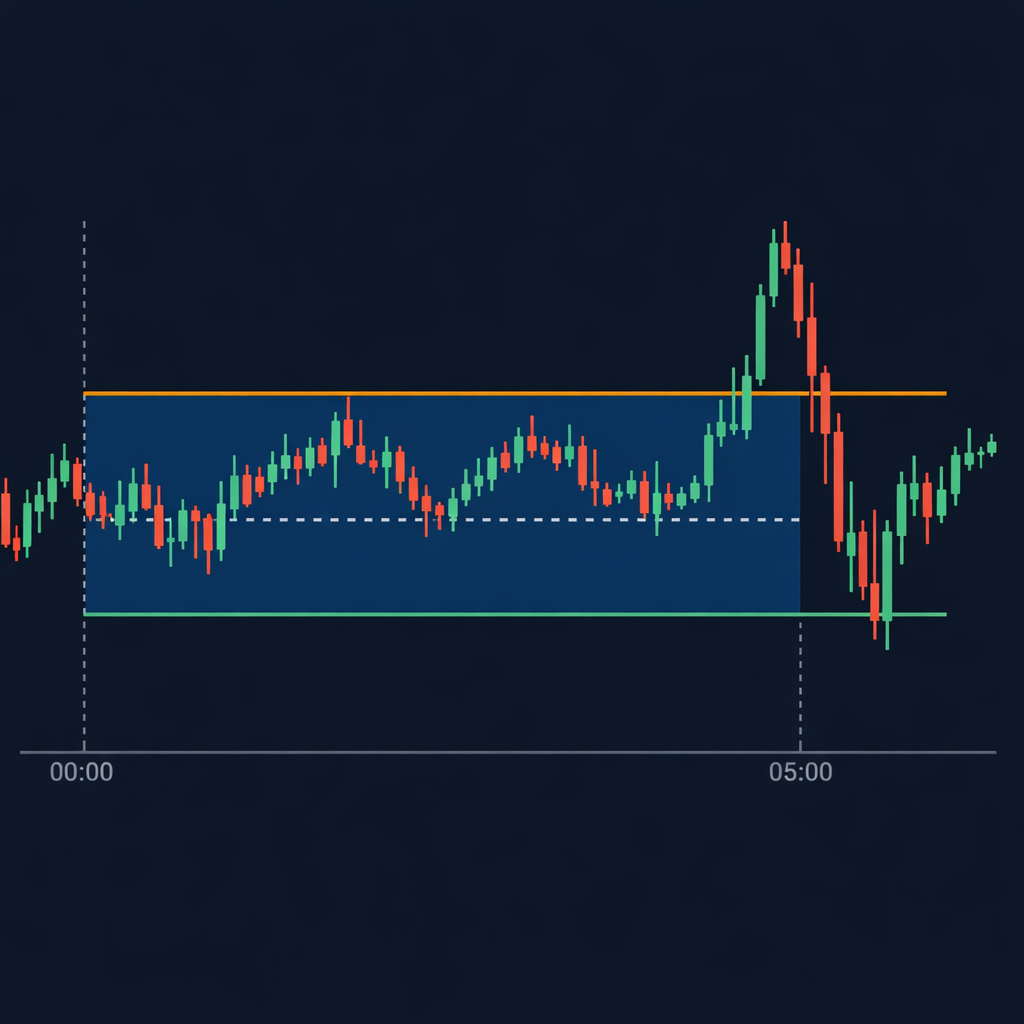
Gold is a liquidity-seeking instrument. That’s not a conspiracy statement—it’s a practical description of how price moves in a market dominated by large participants, hedgers, and algorithmic execution.
When XAUUSD is trading near $2650, small shifts in DXY and rates can trigger fast bursts. With DXY around 106.80, USD/JPY near 149.50, and EUR/USD around 1.0520, the broader USD complex is still firm enough to create two-way volatility in gold.
In that environment, stop hunts become more frequent. Why? Because liquidity is required to fill large orders without excessive slippage. The easiest liquidity to access is often sitting above obvious highs and below obvious lows—like the Asian session range boundaries that thousands of traders watch.
Here’s what typically happens on a sweep day:
- Asia forms a contained range (say $2634–$2646).
- London opens and price spikes to $2649–$2652, wicking above the Asian high.
- Retail breakout traders buy late; stops from earlier shorts get triggered.
- Once that buy liquidity is captured, price reverses—often sharply—back into the range.
The edge is not “predicting manipulation.” The edge is recognizing a repeatable auction behavior: price runs liquidity, then rebalances.
And because gold can move $10–$25 quickly during London/NY, a sweep strategy fits XAUUSD perfectly: tight invalidation, fast confirmation, and clean targets.
If you’re combining this with professional execution support, you’ll see why many traders prefer a structured signal flow. United Kings focuses heavily on London and New York sessions with clear Entry, SL, TP formatting inside our premium gold signals—because that’s where these sweeps pay best attention to rules.
Core Concepts: Liquidity, Stop Pools, and the Asian Session Range
Before rules, we need shared definitions. Most traders lose on “liquidity sweep” strategies because they confuse a wick with a sweep, or they treat every range break as a stop hunt.
Liquidity in practical trading terms is the availability of orders. Stops are orders. Breakout entries are orders. Both cluster around obvious levels.
Stop pools are the areas where those clustered orders sit. In the Asian range context:
- Above the Asian high: buy stops from shorts + breakout buys.
- Below the Asian low: sell stops from longs + breakdown sells.
The Asian session range is typically the price action formed during lower-volatility hours (relative to London/NY). For XAUUSD, this range often becomes the “setup box” for the day.
Why does the Asian range matter so much?
- Visibility: It’s easy to mark and widely watched.
- Order clustering: Asia often creates clean highs/lows with multiple touches.
- Timing: London open brings volume to run those levels.
But we must be precise. A usable Asian range is not “anything that happened overnight.” It’s a contained structure with identifiable boundaries and enough touches to be meaningful.
In our experience (16+ years in FX and metals), the best Asian ranges on XAUUSD have:
- At least 2 taps near the high and 2 taps near the low.
- A total height of roughly $8–$18 (too tight = noise, too wide = already volatile).
- Minimal trend (sideways-to-slight drift), not a strong directional grind.
When the range is clean, the sweep is easier to define, and the invalidation is tighter. That’s where you can aim for 1:2 or 1:3 risk-reward without needing a huge move.
Liquidity Sweep vs Breakout: How to Stop Getting Trapped
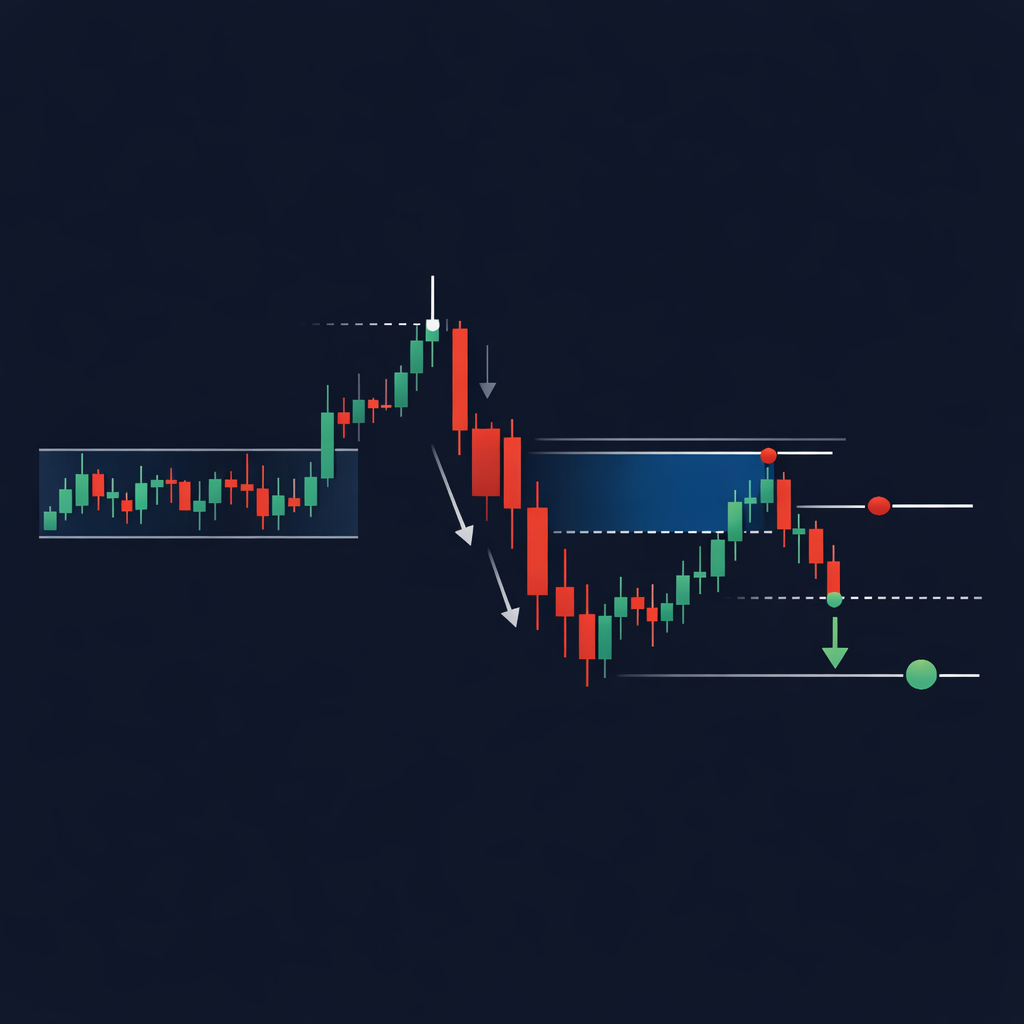
Most traders don’t fail because they can’t draw the Asian high and low. They fail because they can’t tell the difference between a legitimate breakout and a liquidity sweep.
Let’s compare them in a way you can actually apply in real time.
| Feature | Liquidity Sweep (Stop Hunt) | True Breakout |
|---|---|---|
| First move beyond Asian high/low | Often a fast wick or brief push | Strong close(s) beyond the level |
| Candle structure | Rejection wicks, failed follow-through | Body-dominant candles, minimal wicks |
| Displacement | Displacement usually against the break after the sweep | Displacement in the breakout direction |
| Retest behavior | Returns inside range; retest fails | Retests the broken level and holds |
| Best entry style | Fade the sweep after confirmation | Buy/sell retest after acceptance |
| Common trap | Entering too early on the wick | Shorting/longing too soon expecting reversal |
The key word is acceptance. A breakout needs acceptance beyond the level: closes, follow-through, and a retest that holds.
A sweep is the opposite: price rejects the level after taking liquidity. You’ll usually see:
- A wick through the Asian boundary.
- A close back inside the range (or at least a clear failure to hold above/below).
- A displacement candle that breaks a micro swing point in the opposite direction.
On XAUUSD around $2650, a classic trap looks like this:
- Asian high: $2646
- London spike: wick to $2652
- Next candle closes at $2644 (back inside)
- Displacement drops to $2638
That is not “random.” That is a stop run followed by a shift in order flow.
If you want help executing these days in real time, our United Kings signals are built around clarity: we publish the entry zone, the invalidation level, and targets—so you’re not improvising mid-volatility.
Step-by-Step: How to Mark the Asian Session Range on XAUUSD
This is the foundation. If you mark the range incorrectly, everything downstream becomes “almost right,” which is another way of saying “wrong.”
Step 1: Choose a consistent Asian session window
Pick a window and stick to it. Many traders use 00:00–05:00 UTC as a practical “Asia box” for gold. Some prefer 23:00–06:00 UTC depending on broker candles.
Consistency matters more than perfection. Your goal is a repeatable reference, not a debate about time zones.
Step 2: Draw the high and low of the window
On an M15 chart (or M5 if you’re very active), mark:
- Asian Range High (ARH): highest wick in the window
- Asian Range Low (ARL): lowest wick in the window
Example (realistic for current conditions):
- ARH: $2647.20
- ARL: $2636.80
- Range size: $10.40
Step 3: Mark the midpoint (optional but powerful)
The midpoint (50% of the range) often acts like a magnet during rebalancing.
Midpoint in the example above: $2642.00.
Step 4: Add “context levels” for targets
Before London opens, mark:
- Prior Day High (PDH) and Prior Day Low (PDL)
- Prior Day Close (optional)
- Any obvious H1 swing high/low within $2610–$2690
Why do this now? Because once a sweep happens, you won’t have time to “go searching” for targets. You’ll either take profit too early or hold too long.
Step 5: Decide your “no trade” range criteria
Not every Asian range is tradable. A simple filter:
- If the range is < $6, it can be too tight and whippy.
- If the range is > $20, volatility may already be expanded—your sweep SL may need to be wider.
When you do this daily, you’ll notice something: clean Asian ranges often lead to the cleanest London sweeps. That’s the routine we build for traders inside our community of 300K+ active traders—structure first, then execution.
Confirmation Rules: Candle Structure + Displacement (No Guessing)
The biggest mistake in gold stop hunt trading is entering because “it wicked above the high.” A wick is not a signal. It’s an invitation to wait for confirmation.
Your confirmation should answer one question: Did price take liquidity and then shift order flow?
Rule 1: Sweep must be clean
Define a sweep as:
- Price trades beyond ARH/ARL by at least $1–$3 (avoid micro-pokes).
- Then fails to hold beyond the level within the next 1–3 candles (M5/M15).
Example: ARH $2647.20, price hits $2650.80, then closes back below $2647.20.
Rule 2: Rejection candle must show intent
Look for one of these:
- Engulfing candle against the sweep direction
- Pin bar / long wick rejection with a close back inside the range
- Two-candle reversal (spike + strong opposite close)
In gold, the best rejections often happen quickly at London open. If the market “hangs” above the level for 30–60 minutes, it’s less likely a sweep and more likely acceptance.
Rule 3: Displacement must break a micro structure point
Displacement is the engine of the setup. It’s the “proof” that the market is moving away from the sweep area with urgency.
Practical displacement criteria:
- A strong candle body (not all wick) moving $6–$12 quickly.
- Breaks the most recent swing low (for a bearish reversal) or swing high (for bullish reversal) formed during/after the sweep.
Bearish example:
- Sweep above ARH to $2652.10
- Rejection closes back at $2646.40
- Displacement sells to $2639.80, breaking a prior M5 swing low at $2642.50
Rule 4: Optional confluence—premium/discount logic
If you use a simple equilibrium concept, you’ll prefer:
- Selling a sweep above the range when price is in premium (upper half).
- Buying a sweep below the range when price is in discount (lower half).
This isn’t mandatory, but it improves selectivity and reduces “chasing.”
When our analysts send gold setups in the gold signals channel, you’ll notice the same discipline: we don’t call a trade because of a wick. We call it when displacement confirms the shift.
Entry Models: FVG Retracement, Breaker Retest, and Market Entry
Once you have a sweep + rejection + displacement, you still need a professional entry. On XAUUSD, entries are where most traders donate money via slippage and emotion.
You have three practical entry models. Choose one and master it.
Model A: Fair Value Gap (FVG) retracement entry (preferred)
An FVG is an inefficiency created by displacement. In simple terms, price moved so fast it didn’t trade “fairly” through a zone, and it often revisits that zone.
How to trade it step-by-step:
- After displacement, identify the 3-candle structure that creates the gap.
- Mark the FVG zone (often the body/wick imbalance area).
- Place a limit entry in the FVG, ideally aligned with a prior micro level.
- Stop loss goes beyond the sweep extreme (or beyond the FVG + buffer).
Bearish example near current market:
- ARH: $2647.20
- Sweep high: $2652.10
- Displacement down to $2639.80
- FVG zone: $2646.80–$2648.40
- Sell limit: $2647.80
- SL: $2660.00 (risk $12.20)
- TP1: $2635.40 (reward $12.40 ≈ 1:1)
- TP2: $2623.40 (reward $24.40 ≈ 1:2)
Notice the structure: tight invalidation ($10–$25) and targets that make sense intraday.
Model B: Breaker / structure retest entry
Sometimes price doesn’t retrace into a clean FVG. In that case, you can use a “breaker-like” concept: a level that was support becomes resistance (or vice versa) after displacement.
Step-by-step:
- Identify the last small consolidation before displacement.
- Wait for price to retest that zone.
- Enter on rejection (M5/M15 close) with SL beyond the sweep.
Model C: Market entry on displacement close (aggressive)
This is for experienced traders only. You enter at market once displacement closes, accepting a worse price for higher certainty.
If you do this, you must reduce size or widen SL logic slightly—because spreads and volatility can punish you.
In United Kings, we typically favor planned entries (limits on retracements) when possible, because it improves R:R and reduces emotional chasing. If you’re building your own checklist for signal providers, pair this article with our due-diligence guide: forex trading signals provider checklist.
Stop Loss Placement and Tight Invalidation on XAUUSD (Without Getting Wicked Out)
Gold is famous for “one more wick.” If your stop is placed where everyone else places it, you’ll be right on analysis and wrong on execution.
We want tight invalidation, but not naive invalidation. There’s a difference.
Principle 1: Your SL must invalidate the sweep thesis
If you’re fading a sweep above the Asian high, the thesis is: “price ran buy-side liquidity and failed.”
The invalidation is: “price accepts above the sweep area and continues.”
So your SL should usually be:
- Above the sweep high + a buffer (often $2–$6 depending on volatility), or
- Above a clear H1 swing high that, if broken, changes the day’s structure.
Principle 2: Use realistic gold stop distances
With XAUUSD around $2650, typical intraday stops for this strategy are $10–$25. If you’re using $5 stops, you’re basically trading noise unless conditions are extremely calm.
Example SL logic for a bearish sweep:
- Entry: $2647.80
- Sweep high: $2652.10
- Buffer: $5.00
- SL: $2657.10 (risk $9.30)
If the day is more volatile (news, big London expansion), you might need:
- Buffer: $8–$12
- SL: $2660–$2665
Principle 3: Don’t place SL exactly on round numbers
Gold loves round numbers: $2650, $2660, $2670. If your SL is exactly $2660.00, you’re often sitting inside a common stop cluster.
A small offset (e.g., $2660.70) can reduce the chance of being tagged by a liquidity probe.
Principle 4: Position sizing must match SL distance
Professional risk management is not “tight stop, big lot.” It’s “consistent risk per trade.” If your SL is $20 and you normally use $12, your size should be smaller.
For a deeper risk framework—especially if you’re following signals—read our guide on risk management strategies when using forex signals. The concepts apply directly to gold because the math is the same: define risk, then size.
When we send signals, we keep SL logic consistent and transparent. That’s part of why traders value a structured premium service: fewer improvisations in the heat of London/NY volatility.
Targets and Trade Management: Using FVGs, Prior Day Levels, and Range Logic
Entries and stops get the attention. Targets are where the money is made—or given back.
In a liquidity sweep strategy, your targets should align with where liquidity likely sits next. After buy-side liquidity is taken above ARH and price reverses, the next logical draw is often sell-side liquidity below the range and/or the prior day low.
Target Framework (simple and effective)
- TP1: Asian range midpoint (50%)
- TP2: Opposite side of the Asian range (ARL if you shorted ARH sweep; ARH if you bought ARL sweep)
- TP3: Prior Day High/Low (PDH/PDL) or a clean H1 swing level
This gives you a logical ladder. It also prevents the classic mistake: taking full profit too early because you’re scared of a bounce.
Example: Bearish sweep above Asian high (current market style)
Assume:
- ARH: $2647.20
- ARL: $2636.80
- Midpoint: $2642.00
- PDL: $2626.50
Trade plan:
- Entry: $2647.80 (FVG retracement)
- SL: $2660.00 (risk $12.20)
- TP1: $2642.00 (reward $5.80)
- TP2: $2636.80 (reward $11.00 ≈ ~1:1)
- TP3: $2626.50 (reward $21.30 ≈ ~1:1.7)
If you want a clean 1:2, you’d aim for around $2623.40 (24.40 reward on 12.20 risk), assuming structure supports it.
How to manage the position (rule-based)
- At TP1: take partial (e.g., 25–40%) and reduce stress.
- After TP2: consider moving SL to break-even or above a lower high.
- If price returns into the FVG and closes above it (for shorts): reduce or exit—your edge is fading.
Gold can reverse sharply. A plan protects you from your own greed. This is also why our educational content inside United Kings is paired with signals—because good signals without good management still lead to inconsistent results.
If unexpected headlines hit (geopolitics, surprise data), gold can jump $15–$30 in minutes. For that scenario planning, pair this with: how gold signals react to unexpected news events.
Timing the Setup: London Open, NY Open, and the “Kill Zones” for XAUUSD
Liquidity sweeps are not evenly distributed throughout the day. They cluster around session transitions—when volume arrives and when large players have a reason to rebalance positions.
For XAUUSD, the two most productive windows are:
- London open window: roughly 07:00–10:00 London time
- New York open window: roughly 08:00–11:00 New York time
You don’t need to obsess over exact hours. You need to observe when your broker’s candles consistently show expansion.
Why London is so effective for Asian range sweeps
Asia often sets the “box.” London often runs one side of the box. That run is frequently a liquidity grab rather than a true trend start.
On days when gold is sitting around $2650, a London sweep might look like:
- Pre-London: $2637–$2647 range
- London spike: $2651–$2654
- Reversal: fast drop back to $2642, then $2637
This is why the Asian range is such a clean reference: it’s formed during quiet hours, then tested during active hours.
NY open: continuation or second sweep
New York can either:
- Continue the London reversal (best case), or
- Create a second sweep in the opposite direction (common on choppy days).
A practical rule: if London already swept and delivered a full move to the opposite range boundary, be cautious about taking a second sweep unless the structure is extremely clean.
Session bias using correlated markets (light touch)
You don’t need to become a macro analyst to improve timing. But it helps to glance at:
- DXY (106.80): strong USD can cap gold rallies intraday.
- USD/JPY (149.50): risk sentiment proxy; sharp moves can coincide with gold volatility.
- EUR/USD (1.0520) and GBP/USD (1.2680): can hint at USD strength/weakness during London.
We’re not trading correlations blindly. We’re using them as a “wind check.” If DXY is ripping higher during London, a bearish gold sweep setup often has better follow-through.
Two Full Trade Examples (Bullish + Bearish) Using Today’s Price Zone
Let’s make this concrete with two realistic playbooks inside the $2610–$2690 guideline, using typical gold SL distances and 1:2–1:3 targeting.
Example 1: Bearish stop hunt above Asian high (fade the breakout)
Market context: XAUUSD trades around $2650. Asia is quiet, DXY stable near 106.80.
- Asian window: 00:00–05:00 UTC
- ARH: $2646.90
- ARL: $2637.10
- Midpoint: $2642.00
- PDL: $2628.20
London event: Price spikes to $2653.40 (sweep), then closes M5 back below $2646.90 with a strong bearish body.
Displacement: Next 10 minutes, price sells to $2639.60, breaking a micro swing low at $2641.80.
Entry plan (FVG):
- FVG forms between $2646.20–$2648.10
- Sell limit: $2647.30
- SL: $2661.80 (risk $14.50)
- TP1: $2642.00 (reward $5.30)
- TP2: $2637.10 (reward $10.20)
- TP3: $2618.30 (reward $29.00 ≈ 1:2)
Management: Take 30% at TP1, 40% at TP2, trail the rest above lower highs. If NY accelerates and breaks $2637 cleanly, hold for PDL or the next H1 liquidity pocket.
Example 2: Bullish stop hunt below Asian low (trap the breakdown sellers)
Market context: Gold dips early, traders feel bearish. Asia formed a neat box.
- ARH: $2651.20
- ARL: $2640.90
- Midpoint: $2646.05
- PDH: $2674.60
London sweep: Price flushes to $2636.20 (sweep below ARL), prints a long lower wick, then closes back above $2640.90.
Displacement: Strong bullish push to $2649.80, breaking a micro swing high at $2646.30.
Entry plan (FVG):
- FVG zone: $2644.70–$2646.10
- Buy limit: $2645.20
- SL: $2629.80 (risk $15.40)
- TP1: $2651.20 (reward $6.00)
- TP2: $2659.80 (reward $14.60 ≈ ~1:1)
- TP3: $2676.00 (reward $30.80 ≈ 1:2)
Management: If price fails to hold above midpoint and closes back below it after entry, reduce exposure. If it holds above ARH, you can trail under higher lows and aim for PDH liquidity.
These are not “perfect hindsight charts.” They’re structured scenarios you can rehearse daily. The goal is to trade the same model repeatedly, not to invent a new strategy every week.
Common Mistakes (and How to Fix Them) in Gold Stop Hunt Trading
Even with a good strategy, execution errors can erase your edge. Here are the most common mistakes we see—especially with traders new to XAUUSD liquidity sweep strategy models.
Mistake 1: Treating every wick as a sweep
Gold wicks constantly. A sweep is meaningful only if it’s followed by rejection + displacement.
Fix: No displacement, no trade. Make it a hard rule.
Mistake 2: Entering before confirmation (FOMO entry)
Traders see price tag ARH and instantly short. Then price keeps running $8–$15 higher and stops them out before reversing.
Fix: Wait for a close back inside the range and a break of micro structure. If you miss it, you miss it.
Mistake 3: Stops too tight for XAUUSD volatility
At $2650, gold can move $5 in seconds during London. A $6 SL is often a donation.
Fix: Use the $10–$25 guideline and size down. Risk is a dollar amount, not a stop size ego contest.
Mistake 4: Targets based on hope instead of levels
“I’ll just see how far it goes” usually ends with giving back profits.
Fix: Pre-mark midpoint, opposite range boundary, and PDH/PDL. Take partials systematically.
Mistake 5: Trading sweeps during major scheduled news without adaptation
News can invalidate technical structure. A clean sweep can become a trend day in minutes.
Fix: Either stand aside around high-impact events or widen logic and reduce size. For a practical approach to event-driven volatility, review our gold news events survival guide.
Mistake 6: Overtrading the box (revenge trading)
Some days gold will sweep both sides. If you take every move, spreads and chop will grind you down.
Fix: Limit yourself to 1–2 high-quality attempts per session. Quality beats frequency.
If you want a more guided environment, this is where a disciplined signal feed helps. Our community is large (300K+ traders), but the approach is simple: fewer trades, clearer rules, better consistency.
How We Apply This Inside United Kings Signals (Process, Not Hype)
A lot of traders ask the wrong question: “What’s the win rate?” The better question is: What’s the process that produces the trades?
At United Kings, our edge comes from combining:
- Session timing (London/NY focus)
- Repeatable models (like Asian range sweeps)
- Clear formatting (Entry, SL, TP levels)
- Risk discipline (no random doubling, no martingale messaging)
- Education alongside signals so you understand the “why”
We often frame a sweep day in a simple narrative:
- Where is liquidity likely resting (ARH/ARL, PDH/PDL)?
- Which side is more likely to be raided first based on structure?
- What confirmation do we need (rejection + displacement)?
- Where are the logical targets (midpoint, opposite boundary, prior day levels)?
This is also why our signals are delivered in Telegram: speed matters when gold moves $10 in a minute. If you want to see the channel and community updates, join our official Telegram: United Kings Telegram channel.
And if you trade more than gold, you can diversify your playbook with our forex signals and even crypto signals—but the core discipline remains the same: structure, confirmation, risk, execution.
One more important point: when we mention an 85%+ win rate, it’s not a promise of your results. Execution quality, broker conditions, and risk management matter. Past performance doesn’t guarantee future results. What we can control is the clarity of the plan and the consistency of the model.
FAQ: Asian Session Range XAUUSD Liquidity Sweeps
1) What timeframe is best for the XAUUSD liquidity sweep strategy?
Mark the Asian range on M15 for clarity. Trigger and confirmation often show best on M5. Use H1 to mark PDH/PDL and major swing levels.
2) Do liquidity sweeps work on gold during high-impact news?
They can, but the failure rate increases because news can create true breakouts and trend days. If you’re newer, it’s smarter to avoid trading 15–30 minutes before and after high-impact releases, or trade smaller size.
3) How far should price go beyond the Asian high/low to count as a sweep?
On XAUUSD, a practical minimum is often $1–$3 beyond the level. The key is not the distance alone—it’s the failure to hold plus displacement back the other way.
4) Where should I place my stop loss on a gold stop hunt trade?
Typically beyond the sweep extreme plus a buffer. In today’s volatility, many traders use $10–$25 stops depending on the setup quality and session speed.
5) What are the best targets after a sweep?
Start with the Asian midpoint, then the opposite side of the Asian range, then prior day high/low or a clean H1 swing level. This naturally supports 1:2 to 1:3 planning when the day expands.
Risk Disclaimer (Read This Before You Trade)
Trading forex and gold (XAUUSD) involves significant risk and is not suitable for every investor. You can lose some or all of your capital. Past performance is not indicative of future results. This article is for educational purposes only and does not constitute financial advice. If you’re a beginner, practice on a demo account first and use strict risk management on every trade.
Join United Kings: Get Gold Sweeps in Real Time (Entry, SL, TP)
If you want to stop guessing and start executing a structured plan during the sessions that matter, join United Kings.
- Premium Telegram signals for gold and forex with clear Entry, SL, TP
- London & NY session focus (where Asian range sweeps actually play out)
- Educational guidance so you understand the setup, not just copy it
- 48-hour money-back guarantee
Explore our full signal suite on United Kings signals or go directly to the specialized gold signals page.
Ready to choose a plan? See the three options on our pricing page: Starter (3 Months $299), Best Value (1 Year $599 + FREE ebook), or Lifetime ($999).
And if you want the fastest access to trade alerts and community discussion, join the official Telegram now: https://t.me/unitedkings1.
Trade the model. Respect the risk. Let liquidity do the work.