
Ever notice how gold can feel “asleep” for hours… then suddenly rip $15–$30 in a handful of candles?
That bursty behavior is exactly why the XAUUSD London New York overlap is one of the best time blocks to trade gold—especially if you follow gold signals and want cleaner fills, tighter spreads, and fewer fake breakouts.
Right now, gold (XAUUSD) is trading around $2650 (+0.35% on the day). EUR/USD sits near 1.0520, GBP/USD 1.2680, USD/JPY 149.50, and the Dollar Index (DXY) is around 106.80.
Those numbers matter because gold’s best moves often come when FX and rates markets are most active—and that’s precisely what the London–New York overlap delivers.
TL;DR: The London–New York overlap plan (save this)
- Best overlap window (UTC): 13:00–16:00 UTC (core liquidity + momentum). A “warm-up” window is 12:30–13:00 UTC.
- Trade one clear idea: either a breakout from a tight range or a pullback into a key level after a sweep.
- Use a simple confluence checklist: structure + volatility/volume + key levels (and skip trades missing 2/3).
- For XAUUSD, keep stops practical: typically $10–$25 from entry, sized to your risk (not your emotions).
- Target 1:2 to 1:3 R:R (example: buy 2650, SL 2638, TP1 2674, TP2 2686).
- If you trade signals, reduce slippage by executing during overlap and using limit orders on retests when possible.
Why the London–New York overlap is “prime time” for XAUUSD

The overlap is when two major financial centers are active at the same time. That means more orders, more hedging flows, and more real participation from banks, funds, and large speculators.
In practical trading terms, this is when you most often get tight spreads, faster execution, and follow-through after a breakout or reversal.
Gold is not just a commodity. XAUUSD behaves like a macro instrument that reacts to the dollar, yields, and risk sentiment.
When DXY is around 106.80 and USD/JPY is near 149.50, the market is often sensitive to rate expectations and risk appetite.
During the overlap, those macro inputs get repriced quickly. That’s why XAUUSD can jump from 2642 → 2658 in minutes, then continue to 2672 if the move is real.
Outside overlap hours, you can still get moves, but they’re often thinner. Thin liquidity is where you see more “pop and drop” candles that tag your stop by $2–$4 and then run without you.
The overlap doesn’t eliminate fakeouts. It simply gives you a better environment to apply rules and let probability work.
And if you’re using a premium signal service like United Kings, the overlap is where signal execution quality typically improves because spreads and slippage are more manageable.
Exact time windows (UTC) for the London–New York overlap
Let’s be specific, because “trade the overlap” is useless advice if you don’t know the exact window.
Core London–New York overlap (UTC): 13:00–16:00 UTC. This is the highest-quality block for many XAUUSD intraday setups.
A practical approach is to break the overlap into three micro-phases. Each phase has a different “personality,” and your strategy should match it.
Phase 1: Pre-overlap warm-up (12:30–13:00 UTC)
This is when liquidity begins to build and price often tests the edges of the London range. You’ll frequently see a stop hunt above/below a morning high/low.
If gold has been ranging between 2640–2650 in late London, this is where it might spike to 2653 to trigger breakout buyers—then snap back to 2646.
Phase 2: The “engine start” (13:00–14:30 UTC)
New York participation increases. If there’s a real directional bias, this is where it often reveals itself.
Breakouts during this phase tend to have better follow-through, especially if they align with DXY movement and risk sentiment.
Phase 3: Trend continuation or reversal (14:30–16:00 UTC)
US data releases (when scheduled) can inject volatility. Even on quiet days, this phase often offers the cleanest continuation entries: pullbacks into broken levels, VWAP retests, or structure retests.
After 16:00 UTC, conditions can still be tradable, but you’ll often see momentum cool down or become more headline-driven.
Quick comparison: Overlap vs other sessions for gold
| Session block (UTC) | Liquidity | Typical spread/slippage | Best setup type | What to avoid |
|---|---|---|---|---|
| Asia (00:00–06:00) | Low–Medium | Wider / more jumpy | Range fades, mean reversion | Chasing breakouts |
| London (07:00–12:00) | Medium–High | Improving | London range breaks, structure shifts | Early fakeouts without confirmation |
| London–NY overlap (13:00–16:00) | Highest | Tightest / cleanest | Breakout + retest, continuation, sweep-and-reversal | Overtrading every candle |
| Late NY (16:00–20:00) | Medium | Can widen again | Continuation if trend is strong | Entering after the move is “done” |
If you want a repeatable routine, build it around the overlap and stop trying to force trades at random hours.
What changes during overlap: spreads, momentum, and “signal quality”
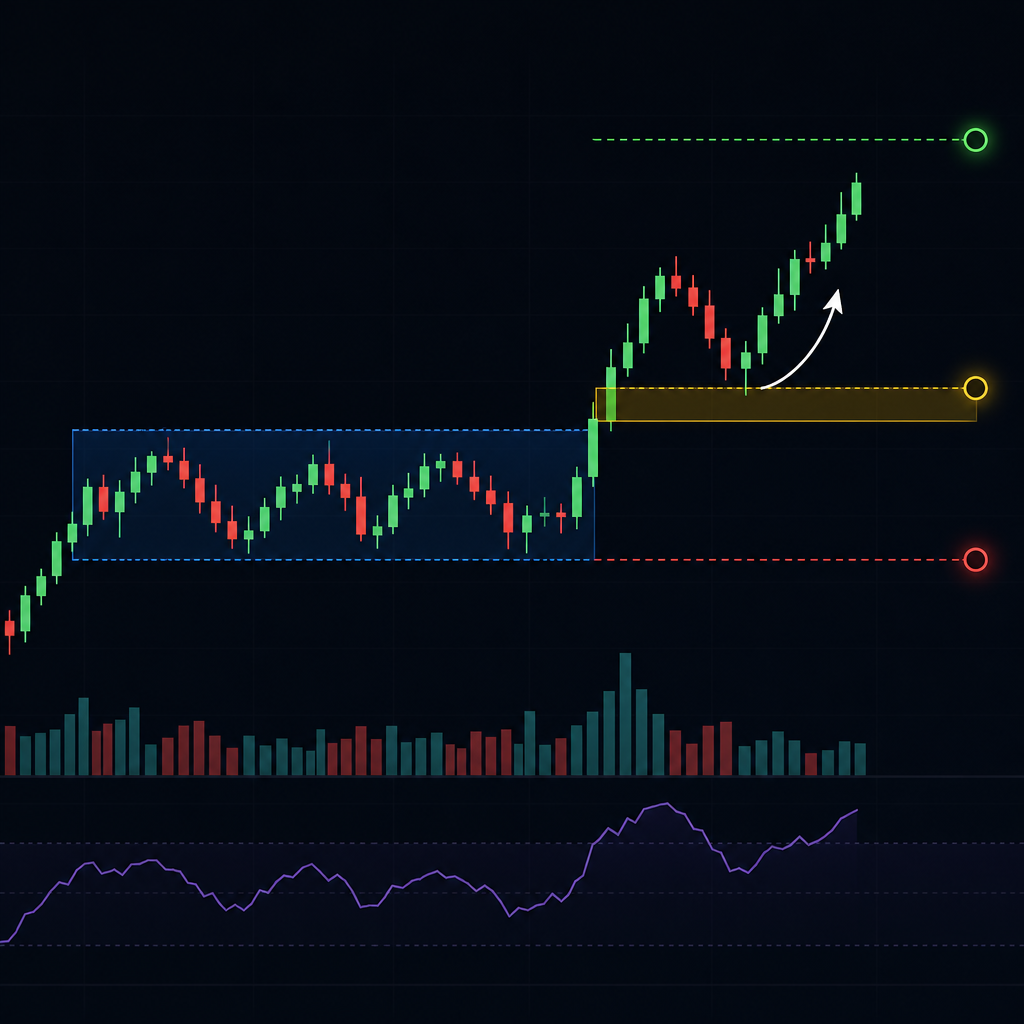
Most traders focus on “volatility,” but overlap quality is really a combination of liquidity + participation + intent.
Liquidity means you can usually enter closer to your desired price. Participation means more two-way flow so levels actually matter. Intent means when price breaks a level, it’s more likely to continue because big players are involved.
When gold is hovering around 2650, a typical overlap move might look like this:
- Price compresses into a 30–60 minute range: 2646–2652.
- Liquidity sweep: a quick spike to 2654 then back to 2650.
- Real break: strong candle closes above 2652 with follow-through to 2660.
- Retest: pullback to 2652–2650 holds.
- Continuation: push to 2670–2680.
That sequence is what you want. It gives you a logical entry, a logical stop, and a logical target.
Now compare that to thin hours. You might get a spike to 2654, then a drop to 2642, then a bounce to 2651—all without clean structure.
If you’re following signals, overlap trading helps because:
- Slippage is usually smaller (especially on market orders).
- Stops are less likely to be “randomly” tagged by thin liquidity.
- Retests are more tradable, so limit entries become realistic.
This is one reason United Kings focuses heavily on London and New York session trading in our premium Telegram community.
If you’re new to signals, it’s also worth reading our execution-focused guide on how to use Forex signals on Telegram the right way.
The overlap confluence checklist (structure + volatility + key levels)
You don’t need 12 indicators to trade gold. You need a short checklist you can apply in 30 seconds while price is moving.
Here’s the confluence model we use when filtering XAUUSD overlap trades. The rule is simple: only take trades that meet at least 2 out of 3 buckets.
Bucket 1: Structure (what is price doing?)
- Higher highs/higher lows for longs, or lower highs/lower lows for shorts.
- A clear break of structure (BOS) followed by a retest.
- A clean range with defined highs/lows (ideal for breakout + retest).
Example: Gold breaks above 2652, closes strong, then retests 2652–2650 and holds. That’s structure you can trade.
Bucket 2: Volatility/volume (is the move “alive”?)
- ATR expanding compared to the prior hour.
- Strong candle bodies (not all wicks).
- Volume spike on the breakout candle (if your platform shows it).
Example: During 13:10–13:30 UTC, you see two bullish 5-minute candles totaling $6–$8 with minimal wick. That’s overlap momentum.
Bucket 3: Key levels (where is price reacting?)
- Prior day high/low.
- London session high/low.
- Round numbers (e.g., 2650, 2660, 2680).
- Obvious supply/demand zones (clean swing points).
Example: If 2650 is both a round number and a prior intraday pivot, a retest there is more meaningful than a random mid-range entry.
This checklist is also how you reduce “signal anxiety.” Instead of guessing whether a signal is good, you verify if the market context supports it.
For a deeper framework on evaluating providers and setups, see our signal provider checklist for beginners.
Step-by-step: The overlap execution plan (the exact routine)
If you want consistency, you need a routine you can repeat daily. Here’s a practical overlap plan that works whether you trade manually or follow XAUUSD signals.
Step 1: Mark the day’s “decision levels” (10 minutes)
Before 13:00 UTC, mark:
- Prior day high and low.
- London high and low (from the session so far).
- Nearest round numbers around current price (if gold is 2650, mark 2640/2650/2660/2670).
Keep it minimal. Too many lines create noise.
Step 2: Decide your “trade type” for the day (breakout or pullback)
Pick one primary play:
- Breakout + retest (best when price compresses tightly before overlap).
- Sweep + reversal (best when price runs stops into a key level and snaps back).
- Trend continuation pullback (best when London already established a trend).
When you try to trade all three, you end up trading none well.
Step 3: Set your risk first (not after you enter)
Choose a fixed risk per trade (example: 1% or 0.5% of account equity). Then size your position based on stop distance.
Gold moves fast. If your stop needs to be $18 away, accept that and reduce lot size. Don’t squeeze the stop to $6 just to trade bigger.
For a full framework, use our guide on risk management strategies when using signals.
Step 4: Execute with a “two-candle rule”
During overlap, the market can spike. A simple filter is:
- Wait for a breakout candle close beyond the level.
- Then wait for either a retest hold or a second candle that confirms continuation.
This reduces the number of times you buy the exact top of a liquidity sweep.
Step 5: Manage the trade mechanically
Plan partials and stop management before you enter. Example:
- At 1R, move stop to breakeven or reduce risk.
- At 2R, take partial profits (30–70% depending on your style).
- Let the remainder run to 3R if structure supports it.
This routine pairs perfectly with premium entries that come with clear Entry/SL/TP levels—like what we provide in our Gold Signals service.
Two high-probability overlap setups for XAUUSD (with exact examples)
Let’s turn theory into trades using realistic prices in today’s context (gold around 2650).
Setup A: Breakout + retest (the “cleanest” overlap trade)
Context: Gold ranges for 60–90 minutes before overlap, building energy. London prints a tight box: 2644–2652.
Trigger: At 13:15 UTC, price closes above 2652 with a strong candle body and minimal wick.
Entry plan: Buy the retest of the broken level.
- Buy limit: 2650–2652 zone (depending on retest depth)
- Stop loss: 2638 (about $12–$14 risk if entry is 2650–2652)
- TP1 (1:2): 2674
- TP2 (1:3): 2686
Why it works: You’re not chasing. You’re letting price prove the breakout, then buying a logical retest in the highest liquidity window.
Setup B: Sweep + reversal (the “trap-and-snap” play)
Context: Gold is struggling below a key level like 2660. London high is 2659.8 and price keeps tapping it.
Trigger: At 12:50–13:10 UTC, price spikes to 2663 (sweeping stops above 2660) but closes back below 2660.
Entry plan: Sell the failed breakout after confirmation.
- Sell: 2658–2659 after a bearish close back under 2660
- Stop loss: 2672 (about $13–$14 risk)
- TP1 (1:2): 2632–2634 (adjust to the nearest structure)
- TP2 (1:3): 2620–2622
Why it works: Overlap liquidity often creates the “final sweep” before a real move. Your job is to wait for the failure, not predict it.
Both setups share one principle: trade from levels, not from feelings.
How to follow XAUUSD gold signals during overlap (reduce slippage + false breakouts)
Signals can be powerful, but execution is where most traders leak performance. The same entry can be a winner at 13:30 UTC and a frustrating loss at 03:30 UTC due to spread, slippage, and thin liquidity.
Here’s how we recommend executing overlap signals like a pro.
1) Translate the signal into a “level story”
If a signal says “Buy XAUUSD 2650, SL 2638, TP 2674 / 2686,” ask:
- Is 2650 a round number or prior pivot?
- Is price breaking out, retesting, or reversing?
- Is this happening inside 13:00–16:00 UTC?
If the entry is floating in the middle of nowhere, be cautious.
2) Prefer limit entries on retests (when structure allows)
During overlap, retests happen more reliably. If the signal gives a zone (or you can infer one), use a limit order near the level instead of a market order at the spike.
Example: If price is at 2656 and the signal entry is 2650, don’t chase. Wait for the retest or skip the trade.
3) Use a “no-fill rule” to avoid FOMO
Set a maximum acceptable slippage or deviation from entry. For example:
- If entry is 2650, you only accept fills up to 2651.5.
- If price trades 2656 without pulling back, you stand down.
Missing a trade is a business expense. Chasing is a business killer.
4) Respect the stop distance and size down instead
Gold stops of $10–$25 are normal. If you tighten to $6, overlap volatility will often tap you out.
Instead, reduce lot size so the dollar risk stays constant.
5) Avoid the “second trade revenge” inside the overlap
The overlap can tempt you to fire multiple entries. If your first trade loses, pause.
Take the next setup only if it meets the same confluence checklist—no exceptions.
If you want structured, session-timed trade ideas with clear Entry/SL/TP, explore our premium United Kings Signals offering (Forex + Gold), and our dedicated XAUUSD Gold Signals stream.
Stops and take-profits for XAUUSD overlap trades (practical rules)
Gold is volatile, and the overlap is when that volatility expresses itself. Your SL/TP rules must be realistic for a market that can move $8–$15 quickly.
Stop loss placement: where you’re “proven wrong”
A good stop is not a random number. It’s a price that invalidates your setup.
- For breakout + retest longs, stops often go below the retest low or below the range low.
- For sweep + reversal shorts, stops often go above the sweep high.
Example long:
- Entry: 2650
- Retest low: 2642
- Stop: 2638 (gives breathing room beyond the low)
Take profit: build around structure, not hope
Targets should align with obvious levels:
- Prior day high/low
- Round numbers (2660, 2670, 2680)
- Next supply/demand zone
Example long from 2650 with SL 2638 (risk = $12):
- 1:2 target: 2674
- 1:3 target: 2686
A simple scaling model (works well with signals)
- Take 50% at TP1 (2R).
- Move stop to breakeven after TP1 (or after price prints a higher low).
- Leave 50% for TP2 (3R) or trail behind structure.
This approach keeps you in the game even when gold overshoots and retraces.
Common overlap mistake: moving TP too early
If your plan says TP at 2674, don’t shift it to 2684 just because price is moving fast—unless structure supports it and you’ve already secured profit.
Professional trading is boring on purpose.
Using DXY and major pairs as a “macro filter” for overlap trades
XAUUSD doesn’t trade in isolation. During the overlap, gold often reacts to the same forces moving the dollar and major FX pairs.
With DXY around 106.80, EUR/USD near 1.0520, GBP/USD 1.2680, and USD/JPY 149.50, you can use a simple macro filter to avoid trading against the strongest intraday flow.
The practical macro filter (simple, not academic)
- If DXY is pushing higher and EUR/USD is falling, gold longs need extra confirmation.
- If DXY is fading and EUR/USD is lifting, gold longs have tailwind.
- If USD/JPY spikes up (risk-on / yields up vibe), gold can struggle unless there’s a separate safe-haven driver.
Example: Filtering a breakout signal
Suppose you receive a buy signal at 2650 during 13:20 UTC.
If DXY is simultaneously breaking above an intraday high and EUR/USD is slipping under 1.0520, you might:
- Wait for a deeper retest (better price).
- Reduce position size.
- Or skip if structure is weak.
But if DXY is rolling over and EUR/USD is bouncing, you can be more confident that the gold move has macro support.
Keep the filter “light”
Your goal is not to predict macro. Your goal is to avoid taking a fragile setup when the broader market is leaning hard the other way.
If you want to diversify beyond gold, our Forex Signals stream is built around the same London/NY session logic.
News, volatility spikes, and the overlap: what to do on event days
Overlap hours are also when many US releases hit the tape. Even when you’re not trading “news,” your positions can be affected by it.
Gold can jump $10–$20 in seconds on a surprise print, especially if liquidity thins momentarily around the release.
Step-by-step: A safe event-day protocol
- Step 1: Check the economic calendar before overlap (CPI, PPI, NFP, Retail Sales, PMI, Fed speakers).
- Step 2: If a high-impact release is within the next 10–15 minutes, avoid new entries.
- Step 3: If you’re already in a trade, reduce risk (partial profits or tighter management), but don’t move stops randomly.
- Step 4: After the first spike, wait for structure to form (often 5–15 minutes) before taking a setup.
Why false breakouts increase around data
News candles are often liquidity events. Price can sweep both sides of a range: up to 2665, down to 2648, then settle at 2656.
If you enter mid-spike, you’re basically donating to volatility.
Where to learn more about handling surprises
Unexpected headlines can hit anytime, even during overlap. We break down survival rules in how gold signals react to unexpected news events.
Common mistakes traders make during the overlap (and how to fix them)
The overlap is a high-opportunity window. It’s also where bad habits get punished quickly.
Mistake 1: Treating every fast candle as a “setup”
Fast movement is not automatically tradable movement. Your checklist exists to protect you.
Fix: Require at least 2/3 confluence buckets and a clear level.
Mistake 2: Entering late because you waited for “perfect confirmation”
Some traders wait until gold has already moved from 2650 → 2665, then buy and place a $12 stop.
That’s a bad trade location, even if the analysis was right.
Fix: Use breakout + retest entries, or accept you missed it.
Mistake 3: Using stops that are too tight for overlap volatility
In overlap, a normal pullback can be $6–$10. If your stop is $6, you’ll be stopped out by normal noise.
Fix: Use $10–$25 stops based on structure, then size down.
Mistake 4: Overtrading because “it’s prime time”
Prime time doesn’t mean nonstop trading. It means the best chance to execute one or two high-quality ideas.
Fix: Cap your trades (example: max 2 trades during 13:00–16:00 UTC).
Mistake 5: Ignoring the provider’s execution instructions
If a signal is designed for a retest entry and you market-buy into the spike, you change the trade’s math.
Fix: Follow the plan: entry type, SL, TP, and timing.
If you’re still building your process, you’ll also benefit from browsing our United Kings blog where we publish execution and routine-based trading education alongside signals.
Putting it all together: A complete overlap trade example (from prep to exit)
Let’s walk through a full example using today’s context: XAUUSD around 2650 with moderate volatility.
Pre-overlap prep (12:40 UTC)
- Gold is ranging: 2646–2652.
- London high: 2652. London low: 2639 (earlier in the day).
- Key round numbers: 2650, 2660, 2670, 2680.
You decide: today you’ll trade breakout + retest only.
Signal arrives (13:12 UTC)
You receive a gold signal aligned with the plan (example format):
- Buy XAUUSD: 2650–2652
- SL: 2638
- TP1: 2674
- TP2: 2686
Checklist validation (13:12–13:18 UTC)
- Structure: Break above 2652 with a strong close. Yes.
- Volatility: Candle bodies expanding. Yes.
- Key level: 2652 is London high and near 2650 round number. Yes.
That’s 3/3. You proceed.
Execution (13:20–13:35 UTC)
Price pushes to 2658, then pulls back. Your buy limit at 2651 fills on the retest.
You do not chase at 2658. You let the overlap deliver the retest.
Trade management
- At 2663 (~1R), you reduce risk (optional: move SL to 2646 or breakeven depending on structure).
- At 2674 (TP1, 2R), you take 50% profit.
- You leave the rest aiming for 2686 (TP2, 3R) or trail behind higher lows.
Exit logic
If price reaches 2680 but prints a clear lower high and breaks a micro structure, you can exit early. That’s still a professional trade.
The goal is not to catch the exact top. The goal is to execute your plan repeatedly.
FAQ: XAUUSD London–New York overlap strategy
What is the best time to trade gold (XAUUSD)?
For many intraday traders, the best time to trade gold is the London–New York overlap, typically 13:00–16:00 UTC, when liquidity and momentum are highest.
Do spreads always tighten during the overlap?
Often they do, but not always. Broker conditions, platform liquidity, and news events can still widen spreads briefly. That’s why using retest entries and avoiding high-impact release minutes helps.
How big should my stop loss be for XAUUSD overlap trades?
A common practical range is $10–$25 depending on structure and volatility. Place stops where the setup is invalidated, then adjust lot size to keep risk consistent.
Is breakout trading better than reversal trading during the overlap?
Both can work. Breakout + retest tends to be cleaner, while sweep + reversal can be highly profitable when price runs stops into a key level. Use the confluence checklist to decide.
How do I follow gold signals without getting slippage?
You can’t eliminate slippage completely, but you can reduce it by trading during 13:00–16:00 UTC, using limit orders on retests, avoiding entries during major news minutes, and sticking to a no-chase rule.
Risk disclaimer (read this before you trade)
Trading forex and gold (XAUUSD) involves significant risk and may not be suitable for all investors. Losses can exceed deposits depending on your broker and account type. Past performance does not guarantee future results. Signals and educational content are provided for informational purposes and are not financial advice. If you’re a beginner, consider practicing on a demo account before risking real capital, and always use disciplined risk management.
Join United Kings: Trade the overlap with premium XAUUSD signals
If you want to stop guessing and start executing with clarity, join the United Kings community.
We provide premium Telegram signals for gold and forex with clear Entry, SL, and TP levels, built around London and New York session opportunities.
- 85%+ win rate target approach with structured trade plans (no guaranteed profits).
- 300K+ active traders in the community.
- Educational guidance alongside signals so you understand the “why,” not just the “what.”
- 48-hour money-back guarantee for peace of mind.
Choose a plan that fits your goals on our pricing page:
- Starter: 3 Months — $299 (~$100/mo)
- Best Value: 1 Year — $599 (~$50/mo) with 50% savings + FREE ebook
- Unlimited: Lifetime — $999 (pay once, access forever)
Ready to trade the overlap with a real plan? Start here: UnitedKings.net, or join our Telegram now: United Kings Telegram trading community.


