
You’ve seen it happen: gold looks sleepy during the last part of Asia, then London opens and XAUUSD suddenly prints a 30–60 point impulse that either pays fast… or stops you out in minutes.
If you’re trading gold around the London session, the difference between “random gambling” and a repeatable edge is usually one thing: a clearly defined range and non-negotiable breakout rules.
In this guide, we’ll build a practical London open XAUUSD strategy using the XAUUSD 15 minute range as your trigger zone, plus spread/volatility filters to reduce false breaks. We’ll also show how to integrate these rules with real-time gold breakout signals so execution becomes consistent, not emotional.
TL;DR: London Open XAUUSD 15-Min Range Breakout (Quick Rules)
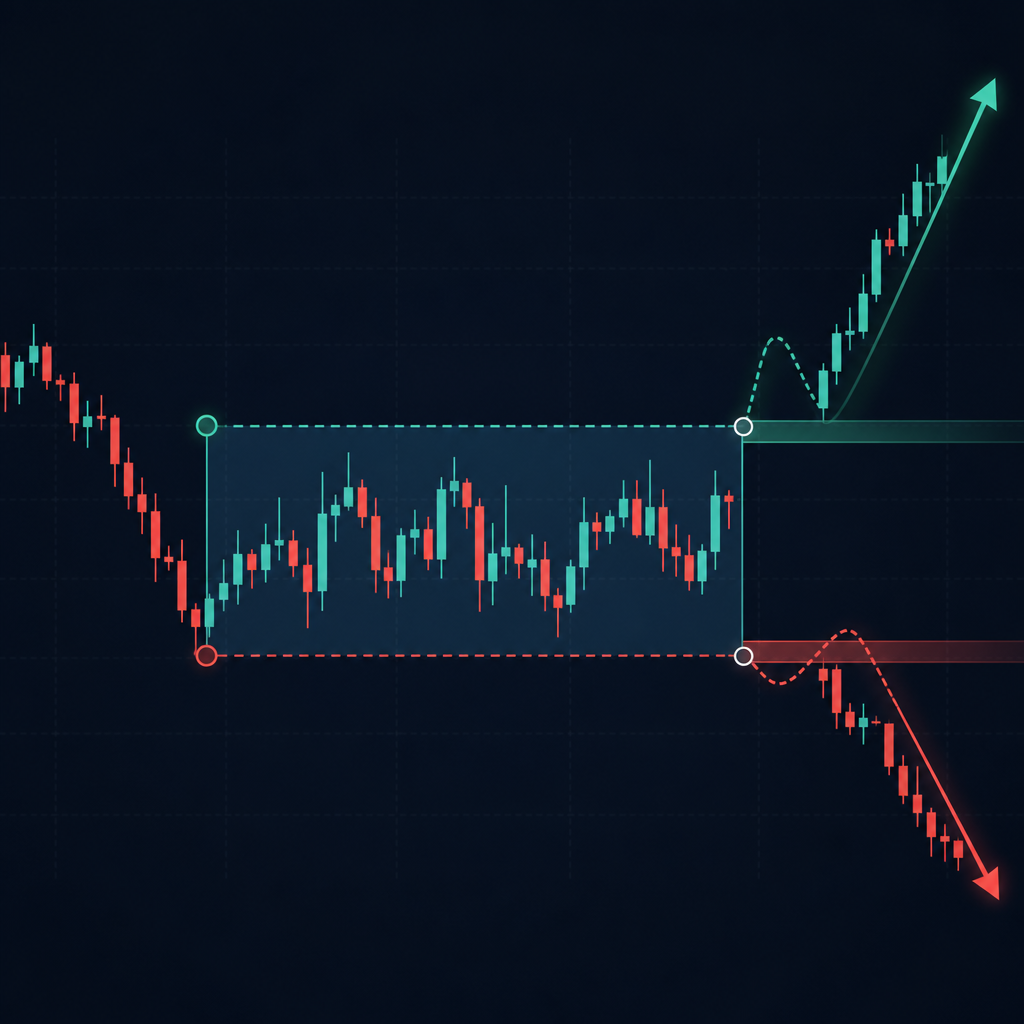
- Define the range: Use the last 15 minutes before London open to mark a clean high/low (your breakout box).
- Trigger: Trade only on a 15M close beyond the range (or a strict retest entry), not on the first spike.
- False-break filters: Avoid entries when spread widens abnormally or the breakout candle is “too big” vs recent 15M ATR.
- Stops & targets: Typical gold SL is $10–$25 from entry; aim for 1:2 to 1:3 RR (e.g., risk $15 to make $30–$45).
- Session logic: Best momentum usually appears in the first 60–120 minutes of London, then again at NY overlap.
- Execution: Use a checklist + position sizing to keep risk fixed (e.g., 0.5%–1% per trade) and avoid revenge trading.
Why the London Open Moves XAUUSD (and Why Breakouts Work)
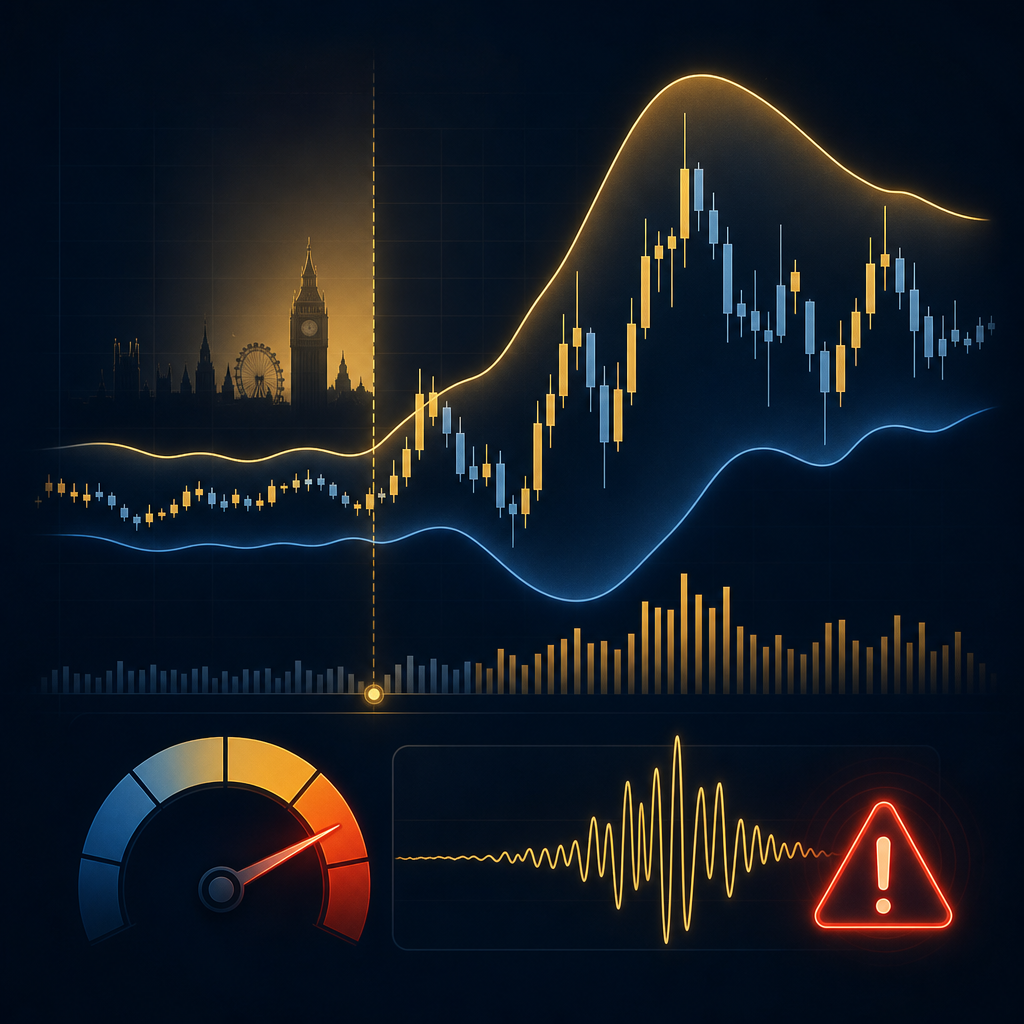
Gold is a global market, but liquidity and intent are not evenly distributed across the day. The London open is one of the few moments where fresh institutional flow hits the tape quickly, and that flow often targets obvious liquidity pools.
Right now, with XAUUSD around $2650.00 (+0.35% over 24h), the market is still sensitive to USD strength (DXY near 106.80) and rate expectations. That creates a familiar pattern: quiet consolidation, then a decisive push when Europe comes online and reprices risk.
Here’s why a breakout framework fits this environment.
1) The market builds a “decision box” before London. During late Asia, gold often compresses into a tight band. That band is a map of resting orders: stops above highs, stops below lows, and breakout traders waiting for confirmation.
2) London open creates order imbalance. When liquidity increases, price can travel farther with less friction. A breakout candle that closes outside the range can be the first sign of real imbalance rather than random noise.
3) Gold respects clean levels. XAUUSD frequently reacts to obvious highs/lows, round numbers, and prior session extremes. A well-defined 15-minute range gives you a level that’s visible to many participants—meaning it can become self-fulfilling.
4) Breakouts fail for predictable reasons. Most “fakeouts” occur when the spread widens, volatility spikes too early, or the breakout candle is oversized relative to recent conditions. If you filter those, your win rate and your emotional stability both improve.
London open breakout trading is not about predicting. It’s about reacting with rules. If you want the same entry/SL/TP clarity we use daily, you can compare your execution to our premium signals inside United Kings Gold Signals, where we publish exact entries, stop losses, and take profits for XAUUSD around the London and NY sessions.
Market Context: What Today’s Prices Tell Us Before London
A breakout system works best when you understand what the market is “leaning” toward. Not to predict direction, but to know whether you should expect clean continuation or choppy whipsaws.
Let’s anchor today’s context using realistic levels:
- XAUUSD: ~$2650.00, mild bullish bias on the day (+0.35%).
- EUR/USD: 1.0520 (soft, implying USD resilience).
- GBP/USD: 1.2680 (holding but not ripping).
- USD/JPY: 149.50 (elevated, often correlates with risk-on USD strength).
- DXY: 106.80 (firm; can cap gold rallies if yields rise).
What does this mean practically for a London open XAUUSD strategy?
Gold can still rally even with a firm DXY if the move is driven by risk hedging, geopolitical headlines, or a sudden shift in rate expectations. But when DXY is strong, gold breakouts tend to be more “two-way”: you’ll see sharp pushes and sharp pullbacks.
So we adapt. We don’t just trade every break. We require confirmation and we manage risk tightly.
Here are the two most common London-open conditions you’ll see around $2650:
Condition A: Compression before London. XAUUSD trades in a tight $6–$12 band for 30–90 minutes. This is ideal for a range breakout because your stop can be small (e.g., $12–$18) and the expansion can be large (often $25–$60).
Condition B: Pre-London drift. Gold trends slowly into London, then spikes and reverses. This is where traders get trapped. In these cases, the 15-minute range still works, but you must add a volatility filter and be willing to skip.
One more context point: news risk. If there’s a major UK/Euro release at or near London open, the first move can be a liquidity run rather than a true breakout. If you want a practical framework for handling surprise volatility, pair this playbook with our event-focused guide: how gold signals react to unexpected news events.
The Core Setup: How to Mark the Pre-London 15-Minute Range
This is the foundation. If you mark the range inconsistently, everything downstream becomes random.
We’ll define the “pre-London 15-minute range” as the high and low of the final completed 15-minute candle before London opens. Some traders prefer a 30-minute or 60-minute box. We’ll focus on 15 minutes because it’s tight enough to give favorable RR while still capturing the session impulse.
Step-by-step: marking the range
Step 1: Confirm your broker/server time
London open depends on time zone and daylight savings. Your MT4/MT5 server time may differ. Your job is not to debate the “perfect” timestamp. Your job is to be consistent.
Pick a single reference: either London time or your platform’s session indicator. If you’re unsure, use a session tool and backtest visually for 20 trading days to confirm you’re boxing the same moment each day.
Step 2: Use the last 15M candle before the open
Mark the high and low of that candle. That is your breakout box.
Example around today’s pricing:
- Pre-London 15M candle high: $2654.80
- Pre-London 15M candle low: $2648.90
- Range size: $5.90
This is a “tight” box. Tight boxes are where breakout trading shines because your risk is naturally capped.
Step 3: Add a buffer (optional but recommended)
Gold loves to wick 30–80 cents above a level and snap back. To avoid getting triggered by a micro-wick, add a buffer.
- Breakout buy trigger: range high + $0.30 to $0.80
- Breakout sell trigger: range low − $0.30 to $0.80
If your broker spread is wider at the open, use the larger buffer. If spreads are stable and you trade a low-spread account, you can keep it tight.
Step 4: Identify the “no-trade” range size
Not all ranges are tradable. If the 15M range is too large, your stop becomes too large, and your RR suffers.
A practical filter for XAUUSD:
- Ideal 15M range: $4 to $10
- Acceptable: $10 to $14 (trade only with strong confirmation)
- Skip: above $14 (often too volatile; fakeouts increase)
This simple rule alone removes many low-quality trades.
Entry Rules: Two Clean Trigger Models (Close-Break vs Retest)
Most traders lose money on London open breakouts because they enter on the first spike. Spikes are designed to trigger you. Your entry must require proof.
We’ll use two entry models. Choose one and stick to it for at least 30 trades before you judge performance.
Model A: 15M Close Beyond the Range (Confirmation Entry)
This is the “professional” entry because it reduces false breaks. You wait for a 15-minute candle to close beyond the range plus buffer.
Buy rules (Model A)
- Price closes on M15 above (range high + buffer).
- The close is in the top 30% of the candle (strong body, not a long upper wick).
- Spread is within your acceptable maximum (more on this later).
Sell rules (Model A)
- Price closes on M15 below (range low − buffer).
- The close is in the bottom 30% of the candle.
- Spread/volatility filters pass.
Example (buy): Range high $2654.80, buffer $0.50 → trigger level $2655.30. If a 15M candle closes at $2656.10 with a solid body, you enter long near $2656.10–$2656.40 depending on spread.
The benefit is fewer trades—but higher quality.
Model B: Break-and-Retest (Precision Entry)
This model aims for a tighter stop and better RR, but it requires patience. You let price break out, then you enter on the retest of the range boundary.
Buy rules (Model B)
- Price breaks above range high + buffer.
- Then pulls back to the range high area (or slightly inside) and holds.
- You enter on a bullish rejection (e.g., M5/M15 pin bar, engulfing, or strong close back above).
Sell rules (Model B)
- Price breaks below range low − buffer.
- Then retests the range low area and rejects lower.
- Enter on bearish rejection.
Example (sell): Range low $2648.90, buffer $0.50 → trigger $2648.40. Price breaks to $2646.80, then retests $2648.50 and prints a bearish M5 rejection. You sell $2648.20–$2648.50 with a tight SL above $2658.00 (example depends on structure).
Model B can deliver beautiful 1:3 trades, but you must accept that sometimes price won’t retest and you’ll miss the move. That’s fine. Missing is cheaper than forcing.
If you prefer to follow a done-for-you execution style, this is exactly how our Telegram team phrases trades: clear entry zone, SL, and multiple TPs. You can see how we structure them inside United Kings Signals and specifically via Gold Signals for XAUUSD.
Stop Loss Placement for XAUUSD: Practical, Not Emotional
Gold can move $5 in seconds at the open. If your stop is based on hope, it will get hit. If your stop is based on structure and volatility, it has a chance.
For this London open XAUUSD strategy, we’ll use two stop models that align with the two entries.
Stop Model 1: Beyond the Opposite Side of the Range
This is the classic breakout stop. If you buy the upside break, your stop goes below the range low (plus a small buffer). If you sell the downside break, your stop goes above the range high.
Example (buy):
- Range high: $2654.80
- Range low: $2648.90
- Entry (close-break): $2656.20
- SL: $2646.90 (range low $2648.90 minus $2 buffer)
- Risk: $9.30
This fits our guideline: gold SL typically $10–$25 from entry. Here it’s slightly under $10, which is fine if spread is stable and the range is tight.
Stop Model 2: Retest Structure Stop (Tighter, Higher RR)
If you enter on a retest, your invalidation is often the retest failing, not the entire range breaking. That allows a tighter stop.
Example (buy retest):
- Break above $2655.30
- Retest entry near $2655.40
- SL below rejection low, e.g., $2643.80
- Risk: $11.60
Notice we still keep it realistic. A $3 stop on gold around London is usually fantasy. You’ll get wicked out even if you’re right.
How to choose the “right” SL size (a simple volatility check)
Before placing SL, look at the average size of the last 10–20 M15 candles. If they’re printing $6–$10 candles, a $7 stop is tight. If they’re printing $2–$4 candles, a $12 stop might be too wide and reduce your RR.
A practical rule:
- If the breakout candle is > 2x the average 15M candle size, either widen SL and reduce size, or skip.
This is how you stay alive on high-volatility days.
If you want a full framework for sizing and risk caps when following signals or trading discretionary, keep our risk guide bookmarked: risk management strategies when using forex signals.
Take Profit Logic: 1:2 and 1:3 Plans That Fit London Volatility
Most breakout traders obsess over entries and ignore exits. But on gold, exits are the difference between a great month and a frustrating one.
We’ll use a simple plan: two targets + optional runner. This fits the reality that London moves can extend, but they can also snap back sharply.
TP Framework A: Fixed RR Targets (Simple and consistent)
Pick a stop distance and multiply it.
- TP1: 1R (optional partial close)
- TP2: 2R (core target)
- TP3: 3R (only if momentum and conditions support it)
Example: You buy XAUUSD at $2656.20 with SL $2641.20 (risk $15.00).
- TP1 (1R): $2671.20
- TP2 (2R): $2686.20
- TP3 (3R): $2701.20 (often ambitious; use only on trend days)
Given our guideline range ($2610–$2690 for examples), TP2 at $2686.20 is realistic during a strong London push. TP3 may require NY continuation.
TP Framework B: Structure Targets (More “market-aware”)
Instead of fixed RR, you target nearby liquidity and session levels.
Common London targets for XAUUSD:
- Prior day high/low
- Round numbers (e.g., $2660, $2670, $2680)
- Asian session high/low
- Unfilled impulsive moves (inefficiencies)
Example: If price breaks above $2655 and the prior day high is $2678, that level is a natural TP2 area even if it’s not exactly 2R.
When to move to breakeven (BE) without getting chopped
Moving to BE too early is a silent account killer. On gold, it’s common to hit +$6 to +$10, retest entry, then run $30.
Practical BE rules:
- Move SL to BE only after price closes beyond 1R on M15, or after a clean retest holds.
- If spread is widening and candles are erratic, take partials sooner and reduce exposure.
This is how you avoid the “right idea, no payout” problem.
False Breakout Filters: Spread, Volatility, and Candle Quality Checks
London open is where brokers and liquidity conditions can change quickly. A breakout system without filters is like driving fast with no brakes.
Here are the three filters we use most often for XAUUSD 15-minute range breakouts.
Filter 1: Spread sanity check (non-negotiable)
Spread widening turns good setups into bad entries. Your “breakout” may be nothing more than a spread spike.
Set a maximum acceptable spread for your account type. Many traders use something like:
- Preferred: $0.15–$0.35 spread (15–35 cents)
- Acceptable: up to $0.50 in fast markets
- Skip: above $0.50–$0.70 (depends on broker)
If your platform shows spread in points, convert it and keep your rule consistent.
Filter 2: Breakout candle size vs recent volatility
If the breakout candle is massive, you’re late. Massive candles mean the market already moved. Your stop must be wider, your RR worsens, and the chance of a pullback increases.
Simple rule:
- If the breakout candle body is > 2x the average body of the last 10 M15 candles, skip Model A and wait for a retest (Model B) or stand down.
Example: Average 15M candle range has been ~$4. If the breakout candle prints $12–$15, you’re likely chasing.
Filter 3: Wick-to-body quality (the “trap candle” detector)
Trap candles break a level, trigger entries, then close back inside the range with a long wick. That wick is the footprint of stops being harvested.
Quality checklist for a valid breakout close:
- Close is outside the range by at least $0.30–$1.00 (depending on volatility).
- Wick against the direction is not larger than the candle body.
- Next candle does not immediately reclaim the range (if it does, caution).
These filters reduce trade frequency. That’s a good thing. The goal is not to trade every day. The goal is to trade the days when London gives clean expansion.
If you want to understand how volatility changes signal performance and why some days should be skipped, read: our latest volatility and gold trading insights on the blog (and pair it with our volatility-focused post already in our library).
Complete Step-by-Step Execution Checklist (From Chart to Order)
This is the part you print, screenshot, or keep in your notes. Consistency comes from doing the same sequence every day.
Step 1: 30–60 minutes before London, check the environment
- Is XAUUSD trending or ranging?
- Any major news within the next 60 minutes?
- Is DXY strong (106.80) and pushing, or stalling?
Step 2: Mark the pre-London 15M candle high/low
- Draw a box or two horizontal lines.
- Measure the range size. If > $14, consider skipping.
Step 3: Define triggers with buffer
- Buy trigger = high + $0.30–$0.80
- Sell trigger = low − $0.30–$0.80
Step 4: Apply filters
- Spread under your max?
- Breakout candle not oversized?
- Close quality acceptable (no trap wick)?
Step 5: Choose entry model
- Model A (close-break) for clean, controlled breakouts.
- Model B (retest) when volatility is high or the first candle is too big.
Step 6: Place SL and calculate position size
- SL $10–$25 from entry is common around London.
- Risk a fixed % (e.g., 0.5%–1%).
Step 7: Set TP plan
- TP1 at 1R (optional partial).
- TP2 at 2R (core).
- TP3 at 3R only on strong trend days.
Step 8: Manage the trade like a professional
- No moving SL wider.
- No adding to losers.
- If price re-enters the range and closes there, reduce risk or exit (depending on your rules).
This checklist is also how we structure our internal execution when publishing signals. If you want to see what “clean, complete” signal formatting looks like, review our guides on signal execution and terminology and then follow live trades in United Kings Telegram.
London Open Breakout vs Other Approaches (What to Use, When)
Not every trader should trade London breakouts every day. Sometimes a sweep/reversal strategy or a trend pullback is more appropriate. The key is knowing what you’re choosing and why.
| Approach | Best Market Condition | Typical SL (XAUUSD) | Pros | Cons |
|---|---|---|---|---|
| London Open 15M Range Breakout | Pre-London compression, clear levels | $10–$25 | Fast momentum, clear rules, strong RR | False breaks if spread/volatility filters ignored |
| Asian Range Sweep & Reversal | Stop-hunt behavior, mean reversion days | $12–$30 | Great when breakouts fail; strong turning points | Requires patience and reversal confirmation |
| Trend Pullback (London continuation) | Strong directional bias from higher timeframe | $15–$35 | Higher win rate in trending markets | Can miss the move if pullback never comes |
| NY Open Volatility Trade | US data days, NY-London overlap | $15–$40 | Big ranges, strong follow-through on news | Slippage risk, fast drawdowns if wrong |
So when should you prioritize the London open XAUUSD strategy?
- When gold is boxed near $2650 with a clean $4–$10 15M range.
- When spreads are stable and there’s no immediate high-impact release at the open.
- When the first breakout candle closes cleanly and doesn’t instantly snap back.
And when should you avoid it?
- When the 15M range is already $15–$25 (the market is already moving).
- When spread is unstable.
- When the first move is a huge candle that screams “late entry.”
Realistic Trade Examples Near $2650 (With Exact Entries, SL, TP)
Let’s make this concrete. Below are two example trades using today’s price zone ($2610–$2690), with realistic stops ($10–$25) and 1:2 to 1:3 RR.
Example 1: Bullish London Breakout (Model A: 15M Close-Break)
Pre-London 15M range:
- High: $2654.80
- Low: $2648.90
- Buffer: $0.50
Trigger: M15 close above $2655.30.
Entry: Buy at $2656.20 (after a strong close).
Stop loss: $2641.20 (risk = $15.00).
Take profits:
- TP1: $2671.20 (1R, partial 30%–50%)
- TP2: $2686.20 (2R, close most)
- Optional runner: trail below M15 swing lows if momentum continues
Management note: If price hits $2671 and then retests $2658–$2660 and holds, that’s often a sign London is building continuation.
Example 2: Bearish Fakeout Then Retest Sell (Model B: Break-and-Retest)
Pre-London 15M range:
- High: $2662.40
- Low: $2655.90
- Buffer: $0.60
Scenario: Price spikes above $2663.00, fails, then breaks below $2655.30.
Retest: Price pulls back to $2655.80–$2656.20 and rejects with a bearish M5 engulfing.
Entry: Sell at $2655.70.
Stop loss: $2675.70 (risk = $20.00).
Take profits:
- TP1: $2635.70 (1R)
- TP2: $2615.70 (2R)
Management note: If price returns and closes back inside the original range ($2655.90–$2662.40), that’s a warning. Consider reducing risk or exiting early per your plan.
These are the types of trades we aim to capture during the London and NY sessions. If you want to receive similar setups with exact execution levels, our community follows them daily through United Kings gold signals and our live updates on Telegram.
How to Integrate This Playbook With Real-Time Signals (So You Don’t Hesitate)
A strategy is only profitable if you can execute it under pressure. London open is pressure.
This is where many traders benefit from combining a rules-based playbook with a trusted signal feed. The goal isn’t to “turn off your brain.” The goal is to standardize decisions so you stop improvising.
Use signals as confirmation, not conflict
If your playbook says “no trade” because spread is too wide or the range is too large, you skip—even if you see a trade idea online. Your rules come first.
If your playbook says “trade is valid,” a professional signal can help you execute confidently with:
- Exact entry or entry zone
- Stop loss level
- Multiple take profits
- Session context (London vs NY)
A simple integration workflow (what we recommend)
Step 1: Mark your 15M pre-London range and define triggers.
Step 2: Wait for the breakout confirmation (Model A) or retest (Model B).
Step 3: If United Kings posts a gold signal aligned with your direction and rules, execute it with your risk plan.
Step 4: If the signal conflicts with your filters (e.g., spread too wide), stand down. There will be another trade.
Why this improves consistency
Most traders don’t fail because their idea is terrible. They fail because they change the idea mid-trade.
Signals + a playbook reduce:
- Overtrading (you wait for the correct window)
- Random entries (you have a defined trigger)
- Emotional exits (you have predefined TPs)
- Revenge trading (you follow a schedule and a cap)
Inside United Kings, we focus on London and NY session trading, with clear Entry/SL/TP formatting and an educational approach alongside the calls. Learn more about our broader offering at Forex Signals (for majors like EUR/USD, GBP/USD, USD/JPY) and our full suite at Signals.
Risk Management for London Open Gold Trades (Position Sizing + Daily Limits)
London open can give you your best trade of the day. It can also tempt you into taking five trades in 45 minutes. Your edge disappears when your discipline disappears.
Let’s set practical risk rules that match the volatility of XAUUSD around $2650.
Rule 1: Fixed % risk per trade (not fixed lot size)
Gold volatility changes. Your lot size must adapt.
- Conservative: 0.25%–0.5% per trade
- Moderate: 0.75%–1% per trade
- Aggressive (not recommended for most): > 1%
If your SL is $15 and you normally use $10, your lot size should be smaller. That’s how pros survive.
Rule 2: Daily loss limit (the “circuit breaker”)
Set a daily max loss. When you hit it, you stop trading.
- Common rule: stop after 2 losses or −2R on the day.
This prevents the classic London open spiral: loss → revenge → bigger loss → emotional overtrade.
Rule 3: One breakout attempt per side
Breakout systems die when you chase multiple breaks in the same direction.
- If you take the upside breakout and it fails, you do not re-buy the next candle.
- If the downside breakout later sets up cleanly (new range formed), you can consider it—but only if it’s a new, valid structure.
Rule 4: Track your stats in “R,” not dollars
R-multiples make performance comparable across different stop sizes.
- Win +2R is the same achievement whether you risked $10 or $20.
If you want a deeper, practical framework for managing risk while following signals, keep this resource open: risk management strategies when using forex signals. The principles apply directly to XAUUSD.
Common Mistakes Traders Make With the XAUUSD 15-Min Range (and Fixes)
If you’ve tried London open breakouts before and felt like “it works on charts but not live,” you’re not alone. The problem is usually one of these mistakes.
Mistake 1: Using the wrong “range” (inconsistent definition)
Some days you box 15 minutes, other days 30, other days you eyeball a zone. That’s not a strategy.
Fix: Always use the final completed 15M candle before your defined London open time. Same rule, every day.
Mistake 2: Entering on the first wick
London loves to run stops above the range, then reverse. If you buy the wick, you’re providing liquidity.
Fix: Require a 15M close beyond the range (Model A) or a retest (Model B).
Mistake 3: Stops that are too tight for gold
A $4 stop around London is often a donation. Gold breathes.
Fix: Use $10–$25 stops based on structure and volatility. If that feels too wide, reduce lot size.
Mistake 4: Taking profit too early, then watching it run
Traders grab +$6, then price runs +$40. Next time they hold too long and give back profit. That inconsistency is exhausting.
Fix: Use a two-target plan. Take partial at 1R, aim for 2R as the core. Let a runner exist only when conditions support it.
Mistake 5: Trading through bad spread conditions
If your spread is $0.70 at the open, your entry is already “behind.”
Fix: Set a maximum spread and respect it. If spread is bad, you skip. Professional traders skip all the time.
For traders who want to reduce these mistakes fast, the easiest shortcut is to mirror professional formatting and discipline. That’s why our community values our structured calls and education inside United Kings—you’re not just getting entries, you’re learning how to execute like a desk trader.
FAQ: London Open Breakout for XAUUSD (15-Min Range)
1) What time is the London open for gold (XAUUSD)?
London session timing depends on daylight savings and your broker’s server time. The key is consistency: define your London open time on your platform and always mark the last completed 15M candle before that moment.
2) Is a 15-minute range enough for XAUUSD, or should I use 30/60 minutes?
15 minutes is excellent when the market is compressing because it keeps stops tighter and improves RR. If gold is already volatile or the 15M box is too large (> $14), a 30–60 minute structure can be more stable—but you must accept wider stops and fewer clean breakouts.
3) What’s a realistic stop loss for a London open gold breakout?
For XAUUSD around London, many traders use $10–$25 depending on the range size and volatility. If your stop needs to be wider, reduce lot size so your % risk stays constant.
4) How do I avoid false breakouts at the London open?
Use three filters: (1) a maximum spread rule, (2) avoid oversized breakout candles (e.g., > 2x recent M15 average), and (3) require candle-quality confirmation (a clean close outside the range, not a wick).
5) Can I combine this strategy with Telegram gold signals?
Yes. The best approach is to use this playbook as your “permission slip” (filters + triggers), then use premium signals for precise execution levels and trade management. You can follow our live calls via United Kings Telegram channel and our dedicated gold signals page.
Risk Disclaimer (Read This Before You Trade)
Trading forex and gold (XAUUSD) involves significant risk and may not be suitable for all investors. You can lose more than your initial deposit if using leverage. Past performance, backtests, or community results do not guarantee future results. This article is for educational purposes and does not constitute financial advice. If you are a beginner, consider practicing on a demo account first and use strict risk management on every trade.
Join United Kings: Premium London & NY Session Gold Signals
If you want to stop guessing and start executing with structure, join the traders who follow United Kings daily for premium Telegram signals on gold and major forex pairs.
We provide clear Entry, SL, and TP levels, focus on London and NY session opportunities, and combine signals with education so you improve while you trade. Our community includes 300K+ active traders, and we aim for disciplined, repeatable execution—not hype.
- Explore our full offering: United Kings Signals
- For XAUUSD specifically: Premium Gold Signals
- For major pairs (EUR/USD, GBP/USD, USD/JPY): Forex Signals
- See plans and choose what fits your goals: United Kings pricing (Starter 3 Months $299, Best Value 1 Year $599 with 50% savings + FREE ebook, Unlimited Lifetime $999)
Bonus: We offer a 48-hour money-back guarantee so you can join with confidence and evaluate the quality of our execution and communication.
Ready to trade London open gold breakouts with clarity? Join us now on United Kings Telegram and start following structured XAUUSD setups today.