
Ever opened a Telegram channel, saw “EUR/USD BUY 1.0520 SL 1.0485 TP 1.0590”, and thought: “Okay… but what do I actually do now?”
If you’re new, forex signals can feel like a shortcut and a trap at the same time.
This guide is built to remove the confusion. You’ll learn what signals really are, how to use forex signals safely, how to choose a provider, and how to build consistency without gambling your account.
TL;DR: Forex signals for beginners (read this first)
- A forex signal is a structured trade idea (pair + entry + SL + TP + context). Your job is execution and risk control.
- Beginners should risk 0.25%–1% per trade. Signals don’t fix bad position sizing.
- Pick providers by process, not hype: transparent SL/TP, track record style, session focus, and education.
- Execution matters: spreads, slippage, order types, and timing can turn a “win” into a loss.
- Build a simple routine: pre-trade checklist → place orders → manage → journal → review weekly.
- Use a demo first if you can’t calculate lot size, pip value, or handle a losing streak calmly.
What forex signals are (and what they are not)
Let’s define the tool before we use it.
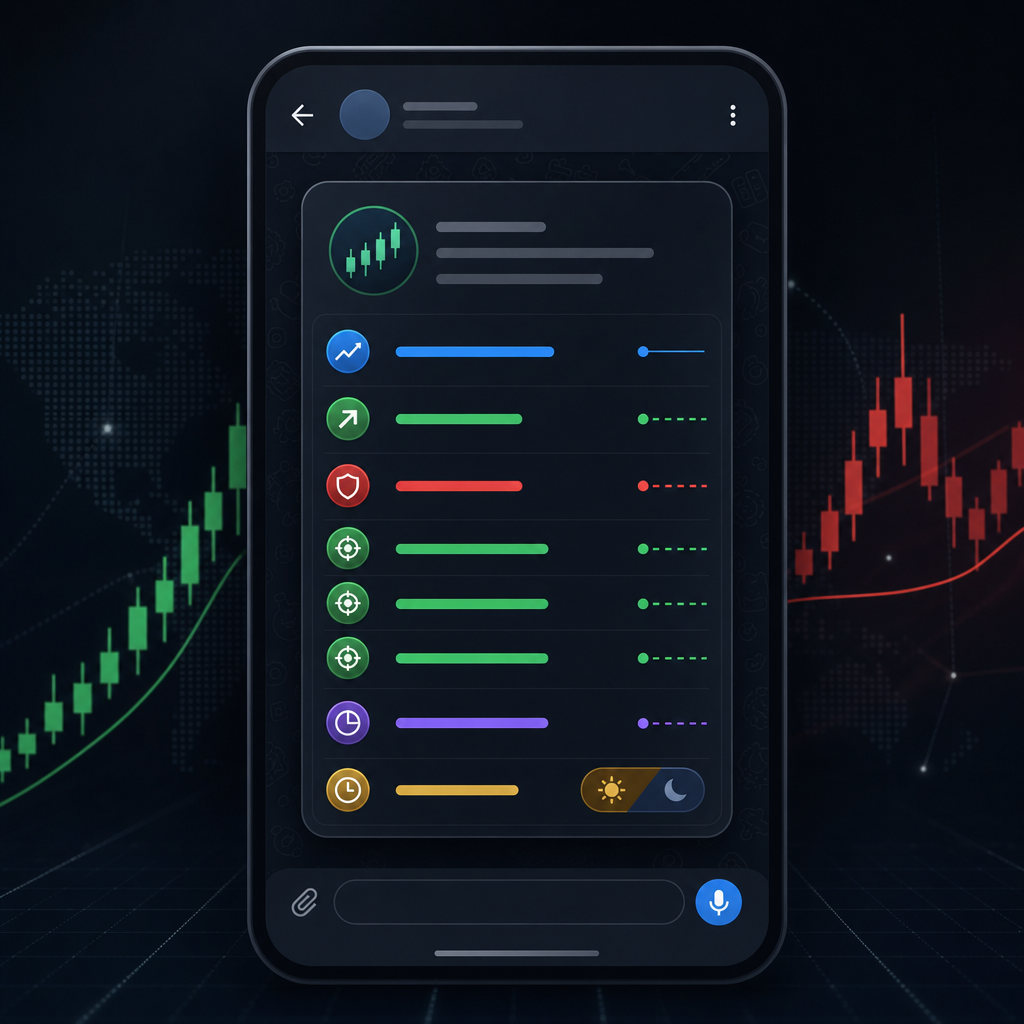
Forex signals are trade ideas sent by a trader, analyst, or algorithm. They typically include the instrument (like EUR/USD), direction (buy/sell), entry, stop loss, and take profit targets.
For beginners, the biggest misunderstanding is thinking a signal is a “guaranteed trade.” It isn’t.
A signal is closer to a plan. Your outcome depends on how you execute that plan, what broker conditions you have, and how you manage risk.
What a good signal usually contains
- Pair/instrument: EUR/USD, GBP/USD, USD/JPY, XAU/USD (gold), etc.
- Direction: BUY or SELL.
- Entry: a price (market or pending range).
- Stop Loss (SL): the price where the idea is invalidated.
- Take Profit (TP): one or more targets.
- Optional context: session (London/NY), news caution, trend bias, or key levels.
What signals are NOT
- Not a replacement for learning. If you can’t calculate position size, you’re outsourcing the most important part.
- Not a promise. Even the best providers take losses. Losses are normal business expenses in trading.
- Not “set and forget” unless the signal is designed that way (with clear management rules).
Think of signals like a GPS. A GPS can give you the best route, but you can still crash if you speed, ignore signs, or drive in the wrong lane.
That’s why the rest of this forex signals guide focuses on execution, risk, and consistency—because that’s where beginners actually win or lose.
How forex signals work in real market conditions (with today’s context)
Signals don’t exist in a vacuum. They react to volatility, spreads, sessions, and macro conditions.
Right now, we’re in a market where the Dollar Index (DXY) is around 106.80, and major pairs are sitting near important zones: EUR/USD 1.0520, GBP/USD 1.2680, USD/JPY 149.50.
Gold is also elevated at XAU/USD ~$2650 (+0.35% on the day), which often signals risk sensitivity and headline-driven volatility.
Why this matters for beginners using signals
When DXY is firm (like 106.80), USD pairs can trend hard. That can be great for signal-following—if you’re aligned with the trend.
But it also means reversals can be violent around data releases. A signal that looks “safe” can get stopped in seconds if you ignore the calendar.
Example: What a signal might look like (EUR/USD)
Imagine a provider sends:
- EUR/USD SELL
- Entry: 1.0520–1.0530
- SL: 1.0560 (30–40 pips risk depending on fill)
- TP1: 1.0460
- TP2: 1.0420
On paper, that’s a clean idea: risk ~30–40 pips, potential reward 60–100 pips (roughly 1:2 to 1:3).
In reality, your result depends on:
- Spread: if your broker’s spread widens during NY open, your entry might be worse.
- Slippage: if the signal hits during high-impact news, you may get filled 5–15 pips away.
- Timing: entering late can destroy the risk-reward.
Example: Gold signal dynamics (XAU/USD around $2650)
A gold signal might be:
- XAU/USD BUY
- Entry: 2648–2652
- SL: 2636 (about $12 risk)
- TP: 2672 (about $20 reward, ~1:1.6)
- TP2: 2684 (about $32 reward, ~1:2.6)
Gold moves fast. A $10–$25 stop is common in active sessions, especially London and New York.
That’s why signal-followers who don’t size correctly often blow up on gold—even if the provider is right frequently.
If you want a practical framework for getting alerts across markets (forex + gold), explore our United Kings signals hub and see how we structure entries, SL, and multiple TPs for clarity.
Types of forex signals: free vs paid, manual vs automated, scalps vs swings

Beginners often ask: “Which signals are best?”
The better question is: Which signals match your schedule, risk tolerance, and execution ability?
1) Manual vs automated signals
Manual signals are created by a human analyst using price action, indicators, fundamentals, or a blend.
Automated signals are generated by algorithms. They can be consistent, but they can also fail when market regimes change.
For beginners, manual signals with clear reasoning are often easier to learn from, because you can understand the “why.”
2) Intraday vs swing signals
Intraday signals are designed to play out within minutes to a few hours. They’re common in London and NY sessions.
Swing signals can run for days. They usually require wider stops and more patience.
If you work a 9–5 job and can’t monitor charts, swing signals may fit you better. If you can watch London/NY, intraday signals can be efficient.
3) Free vs paid signals (the real difference)
Free signals can be useful for practice. But many free channels have issues: no stop loss, edited history, or “signal spam” to look active.
Paid signals should provide structure, accountability, and support. You’re paying for process, not just entries.
Comparison table: Which signal style fits a beginner?
| Signal Type | Best For | Pros | Cons / Risks |
|---|---|---|---|
| Free Telegram signals | Testing, learning formatting | Low barrier, lots of examples | Often no SL/TP, inconsistent quality, hype marketing |
| Paid manual signals | Beginners who want structure | Clear SL/TP, education, better support | Still requires discipline; not all providers are legit |
| Automated/copy systems | Hands-off traders (with caution) | Fast execution, removes hesitation | Black-box risk, can overtrade, broker dependency |
| Scalp signals | Fast decision makers | Quick results, many opportunities | Spread/slippage sensitive; stressful for beginners |
| Swing signals | Busy schedules | Less screen time, fewer trades | Wider stops, patience required, overnight risk |
At United Kings, we focus heavily on London and NY session trading because that’s where liquidity is strongest, spreads are typically tighter, and levels respect more cleanly.
If you want a dedicated feed for currency pairs, visit our forex signals page. If you trade gold, our gold signals are structured for XAU/USD’s volatility.
How to choose a forex signals provider (beginner checklist)
Choosing a provider is the most important decision you’ll make with signals.
A bad provider can keep you busy, excited, and broke. A good provider can help you build consistency—if you do your part.
The 7 traits of a beginner-friendly signal provider
- Clear trade format: pair, entry, SL, TP(s), and updates.
- Risk-first mindset: they talk about drawdowns, not just wins.
- Consistency in strategy: not random scalps + random swings with no explanation.
- Session clarity: when they trade (London/NY) and when they avoid markets.
- Education: short explanations help you learn patterns over time.
- Realistic frequency: not 20 trades/day just to look active.
- Community/support: you can ask execution questions.
Red flags beginners should take seriously
- No stop losses. This is non-negotiable. No SL = gambling.
- “Guaranteed profits” language. Markets don’t guarantee anything.
- Deleted losing trades. If history looks too perfect, it probably is.
- Martingale/averaging down presented as “recovery strategy.”
- Pressure tactics: “Join now or miss the next 500 pips.”
Beginner step-by-step: vet a provider in 30 minutes
- Scan 20–30 past signals: do they include SL/TP every time?
- Check average stop size: is it logical for the pair? (EUR/USD 20–60 pips intraday is common; gold often $10–$25.)
- Look for trade management rules: do they move SL to breakeven? partial profits?
- Check timing: are signals posted before the move, or after it already ran?
- Assess communication: do they explain news risks and sessions?
We published a dedicated checklist you can use before paying anyone: Forex trading signals provider checklist for beginners.
And if you want to compare options quickly, you can also review our overview: best forex signals (what to look for, what to avoid, and how to decide).
How to read a forex signal correctly (so you don’t mis-execute it)
Most beginner losses with signals come from misunderstanding the message.
Not from the analysis.
Common signal formats you’ll see
Format A: Market execution
- “GBP/USD BUY NOW 1.2680 SL 1.2645 TP 1.2750”
This means the provider expects you to enter at current price. If you enter 15 minutes late at 1.2692, the risk-reward changes.
Format B: Entry zone (best for beginners)
- “EUR/USD SELL 1.0520–1.0530 SL 1.0560 TP 1.0460 / 1.0420”
This tells you there’s a zone where the trade still makes sense. It’s forgiving if you’re a little late.
Format C: Pending order
- “USD/JPY BUY LIMIT 148.90 SL 148.40 TP 149.90”
This means you place an order that triggers only if price comes to you. Great for patience and discipline.
Beginner mistakes that ruin good signals
- Entering outside the zone and keeping the same SL/TP anyway.
- Moving the stop loss wider because you “don’t want to be stopped.”
- Taking profit early because you fear the market will reverse.
- Doubling lot size after a loss to “make it back.”
Quick rule: if entry changes, recalc risk
If a signal says sell EUR/USD at 1.0520 with SL 1.0560 (40 pips risk), and you enter at 1.0510, your risk becomes 50 pips.
That means you must reduce lot size to keep the same account risk.
If you want a beginner-friendly Telegram walkthrough, read: forex signals Telegram for beginners guide.
Step-by-step: How to use forex signals (beginner execution workflow)
If you only take one thing from this forex signals guide, make it this: you need a repeatable workflow.
Signals don’t create consistency. Systems do.
Step 1: Confirm the basics (10 seconds)
- Is this the correct pair?
- Is it BUY or SELL?
- Do you have Entry + SL + TP?
Step 2: Check the spread and session (20 seconds)
During London and NY, spreads are usually tighter. Around rollover or illiquid hours, spreads can widen and trigger stops.
On USD/JPY near 149.50, a wider spread might not look big, but it can still distort tight scalps.
Step 3: Check the calendar (30 seconds)
If high-impact news is due (CPI, NFP, FOMC), either reduce risk or skip.
Beginners underestimate news spikes. A clean 30-pip stop can be hit in a single candle.
Step 4: Calculate lot size (the non-negotiable step)
Decide your risk per trade first. For beginners, 0.25%–1% is a professional range.
Example: $1,000 account risking 1% = $10 risk.
If your EUR/USD stop is 40 pips, you want $10 / 40 pips = $0.25 per pip.
That’s approximately 0.025 lots on a standard USD-quoted pair (varies by broker and account type).
Step 5: Place the trade using the right order type
- Market order if the signal is “NOW” and spread is normal.
- Limit order if there’s a pullback entry (better price, better R:R).
- Stop order if it’s a breakout setup (confirm momentum).
Step 6: Manage the trade exactly as instructed
If the provider says “move SL to breakeven at TP1,” do that. If there are no management rules, keep it simple: don’t interfere.
Step 7: Journal the execution (1 minute)
Write down: entry, SL, TP, risk %, result, and whether you followed rules.
This is how you turn signals into skill.
For more on building safe habits, bookmark our guide on risk management strategies when using signals.
Risk management for signal traders (the part that decides your future)
Signals can give you a strong win rate. But risk management decides whether you keep the money.
At United Kings, we emphasize structured entries with clear SL/TP. But we also teach members to size properly, because even strong setups lose sometimes.
The beginner risk model that actually works
- Risk 0.25%–1% per trade.
- Max 2–3 open trades at once until you understand correlation.
- Daily loss limit: stop after -2R or -3R (example: two 1% losses).
- Weekly loss limit: stop after -5R to prevent tilt.
Why beginners should avoid “all-in” confidence trades
Here’s a real scenario.
You take three signals on EUR/USD, GBP/USD, and XAU/USD. Two lose (-1R each), one wins (+2R). You’re still +0R overall.
But if you double risk on the third trade because you “feel it,” you can turn a normal week into a drawdown week fast.
Gold risk example near $2650
Let’s say you buy XAU/USD at 2650 with SL 2638 ($12 risk).
If you trade 0.10 lots on gold, the dollar-per-$1 move depends on contract specs, but many beginners effectively risk far more than they realize.
The right approach is to calculate the exact exposure in your platform, then set lot size so the SL equals your chosen risk (like $10 or $20), not your emotions.
R-multiples: the simplest performance metric
Instead of counting pips, count R (risk units).
- -1R = you hit SL.
- +2R = you made twice what you risked.
This keeps your thinking consistent across pairs. A 25-pip EUR/USD win and a $20 gold win can both be +2R if sized properly.
If you want to trade multiple instruments, keep it organized: use separate risk caps for forex and gold, and avoid stacking highly correlated USD trades when DXY is trending.
Execution details beginners ignore: spreads, slippage, and broker conditions
Two traders can take the same signal and get different results.
Execution is the hidden variable.
Spread: the “invisible fee” on every signal
When EUR/USD is 1.0520, you might buy at 1.0521 and sell at 1.0519. That difference is the spread.
On tight scalps, spread can eat 10%–30% of your expected profit.
Slippage: why news can wreck perfect setups
During high-impact events, price can jump. Your stop loss might fill worse than expected.
This matters a lot on gold around $2650, because gold can move $5–$15 in seconds on headlines.
Beginner rules for managing execution risk
- Avoid entering during major news unless the provider explicitly trades it.
- Prefer entry zones rather than “NOW” signals if you’re slow.
- Use limit orders when the strategy is pullback-based.
- Don’t tighten SL to “improve R:R.” That increases stop-outs.
Broker checklist for signal-followers
- Regulation and reputation (first priority).
- Low spreads on majors during London/NY.
- Fast execution and stable servers.
- Reasonable gold conditions (XAUUSD spread, contract size transparency).
If you’ve ever felt like “the signal works for others but not for me,” 80% of the time it’s execution + sizing + discipline—not a conspiracy.
Building consistency with signals: routines, journaling, and review
Beginners want a “winning signal.” Professionals want a repeatable process.
Consistency comes from boring habits: the same risk, the same execution rules, and honest review.
The 5-minute daily routine (signal trader edition)
- Before London/NY: check calendar, identify high-impact events.
- Set your risk budget: maximum trades and maximum loss for the day.
- When a signal arrives: calculate lot size first, then place order.
- During trade: follow management rules, don’t freestyle.
- After trade: journal outcome and rule-following score (0–10).
What to journal (keep it simple)
- Signal ID / pair / direction
- Your entry vs provider entry (difference in pips)
- SL/TP used
- Risk %
- Result in R
- Notes: late entry? news? emotional interference?
Weekly review questions that create growth
- Did I follow risk rules on every trade?
- How many losses were “good losses” (rules followed)?
- How many wins were “bad wins” (rules broken but got lucky)?
- What was my average entry slippage in pips?
- Which session produced my best execution?
A beginner who journals will outperform a beginner who “just takes signals” even if both have the same provider.
That’s also why we share educational context alongside our premium alerts—so you’re not only copying, you’re learning.
Common beginner scenarios (and exactly what to do)
Let’s address the situations that cause most signal users to spiral.
These are normal. What matters is your response.
Scenario 1: “I missed the entry. Should I chase?”
If price is outside the entry zone, don’t chase.
Chasing turns a 1:2 plan into a 1:1 plan or worse. Wait for the next setup.
Example: EUR/USD sell zone 1.0520–1.0530. If price dumps to 1.0505, your stop might still be 1.0560, so risk expands while reward shrinks.
Scenario 2: “Price is close to my stop. Should I widen SL?”
No.
Widening stops changes the trade after the fact. It’s how small losses become big losses.
If you believe the idea is still valid, the correct move is to accept the stop and re-enter on a new signal or new setup, with a fresh plan.
Scenario 3: “I’m up 20 pips. Should I close early?”
If your TP is 60 pips away and your plan is 1:2, closing at +20 pips destroys your expectancy.
Instead, follow a rule-based approach: partial at TP1, SL to breakeven, or trail—only if the provider’s system supports it.
Scenario 4: “I took three losses in a row. Are signals broken?”
Three losses is normal even with a strong edge.
If you risk 1% each, you’re down 3%. That’s recoverable without panic.
The danger is revenge trading: increasing lot size, taking random trades, or ignoring SL.
Scenario 5: “Gold is moving crazy around $2650. Should I trade it?”
If you’re new, trade smaller size or focus on majors first.
Gold (XAU/USD) can be profitable, but volatility punishes mistakes quickly. A $15 spike against you is not rare.
If you want gold-specific education, also read: how gold signals react to unexpected news events.
What “good” results look like with forex signals (realistic expectations)
Beginners often ask for a monthly percentage target.
That’s the wrong target, because it encourages over-risking.
Instead, aim for process goals first.
Process goals (first 30 days)
- Follow SL on 100% of trades.
- Calculate lot size correctly on 100% of trades.
- Journal every trade.
- Stop trading after hitting daily loss limit.
Performance goals (after you’re consistent)
Once your execution is stable, you can track:
- Expectancy: average R per trade over 30–50 trades.
- Max drawdown: the worst peak-to-valley drop.
- Win rate + average win/average loss.
Understanding win rate vs risk-reward
A provider can win 85% of the time but take occasional large losses if risk is uncontrolled.
Another provider can win 45% of the time but make 2R–3R on winners and still be profitable.
That’s why you should evaluate signals in R-multiples, not just “pips posted.”
At United Kings, our community is built around structured trading and discipline. We’re proud to serve 300K+ active traders and aim for high-quality setups with clear Entry, SL, and TP levels.
But we also say this clearly: no provider wins all the time. The goal is a repeatable edge with controlled downside.
Getting started with United Kings: signals, education, and the right plan
If you’ve read this far, you’re not looking for hype.
You’re looking for a clean, beginner-friendly way to follow signals without blowing your account.
What you get with United Kings premium signals
- Premium Telegram signals for forex and gold with clear Entry, SL, and TP levels.
- London + New York session focus for liquidity and cleaner technical levels.
- Educational context so you learn while you trade.
- Large community of 300K+ active traders for shared execution and feedback.
Where to explore (internal links)
- Start here for everything: UnitedKings.net home
- See all markets covered: signals
- Forex-only access: forex signals
- Gold-only access: gold signals
- If you also trade digital assets: crypto signals
Pricing plans (choose based on commitment, not emotion)
We keep it simple with three options on our pricing page:
- Starter (3 Months): $299 (~$100/month)
- Best Value (1 Year): $599 (~$50/month) with 50% savings + FREE ebook
- Unlimited (Lifetime): $999 pay once, access forever
Beginner onboarding (recommended)
- Week 1 (demo): take every signal at 0.25% risk and journal execution.
- Week 2 (demo or micro): focus on one pair (EUR/USD) + one session (London).
- Week 3–4 (small live): move to 0.5%–1% risk only if you followed rules for 20+ trades.
- Month 2+: add GBP/USD and USD/JPY, then gold once your execution is stable.
If you want to speak with our team before joining, you can reach us via contact or learn more about our approach on the about page.
FAQ: Forex signals for beginners
1) Are forex signals good for beginners?
Yes, if they include clear Entry, SL, and TP—and if you manage risk properly. Signals can speed up learning, but they don’t remove responsibility.
2) How many signals should a beginner take per day?
Usually 1–3 trades is enough. More trades often means lower quality decisions and higher emotional fatigue, especially during volatile sessions.
3) What is the safest risk per trade when using signals?
For most beginners, 0.25%–1% per trade is a conservative range. If you’re still making execution mistakes, stay closer to 0.25%–0.5%.
4) Can I use forex signals on MT4/MT5?
Yes. Most brokers support MT4/MT5, and you can execute signals manually using market or pending orders. Just ensure you understand lot sizing and contract specifications.
5) Do I need to understand technical analysis to use signals?
You don’t need advanced chart skills to start, but you should understand basics like trend, support/resistance, and news timing. The goal is to become less dependent over time.
Risk disclaimer (read before you trade)
Forex and gold trading involve significant risk and may not be suitable for all investors. Trading can result in losses, including loss of capital. Past performance does not guarantee future results. Signals are educational and informational and do not constitute financial advice. Always use a stop loss, manage position size responsibly, and consider practicing on a demo account before trading live.
Join United Kings premium signals (and trade with structure)
If you want a clear, beginner-friendly way to follow the market with disciplined execution, join our community.
Get premium Telegram forex and gold signals with clear Entry, SL, and TP levels, built around London and NY session opportunities.
- Explore: United Kings Signals
- Forex: Premium Forex Signals
- Gold: Premium Gold Signals
- Plans: See all 3 pricing plans (3 Months, 1 Year, Lifetime)
- Join our Telegram now: United Kings Telegram community
Bonus: we offer a 48-hour money-back guarantee so you can evaluate the service with confidence and clarity.
When you’re ready, we’ll see you inside—and we’ll help you trade signals the way professionals do: with structure, risk control, and consistency.