
You just joined a Telegram channel, a signal pops up, and your heart rate spikes: “BUY EUR/USD 1.0520, SL 1.0485, TP 1.0590.”
You have two questions at the exact same time. “Is this a good trade?” and “If I don’t take it, am I missing the move?”
If you’re a beginner, that moment is where most accounts are made… or broken. This forex signals guide is designed to make sure you’re on the “made” side, with a process you can repeat.
TL;DR — Forex Signals for Beginners (Read This First)
- A forex signal is not a magic button. It’s a structured trade idea (entry, stop loss, take profit) that still needs correct execution and risk control.
- Your #1 job is position sizing. Risk 0.5%–1% per trade as a beginner, and don’t increase risk after wins.
- Choose providers with transparency. You want clear Entry/SL/TP, session timing (London/NY), and consistent formatting—not hype.
- Execution matters as much as accuracy. Spreads, slippage, news spikes, and late entries can turn a “winning signal” into a loss.
- Track your results like a business. Journal every signal you take, why you took it, and whether you followed the rules.
- Use a demo first. Prove you can execute signals for 2–4 weeks before risking real money.
We’ll also use realistic current market context throughout: EUR/USD 1.0520, GBP/USD 1.2680, USD/JPY 149.50, DXY 106.80, and Gold (XAUUSD) around $2650 (+0.35% in the last 24h). These levels matter because volatility, spreads, and risk sizing change with conditions.
1) What Forex Signals Are (And What They’re Not)
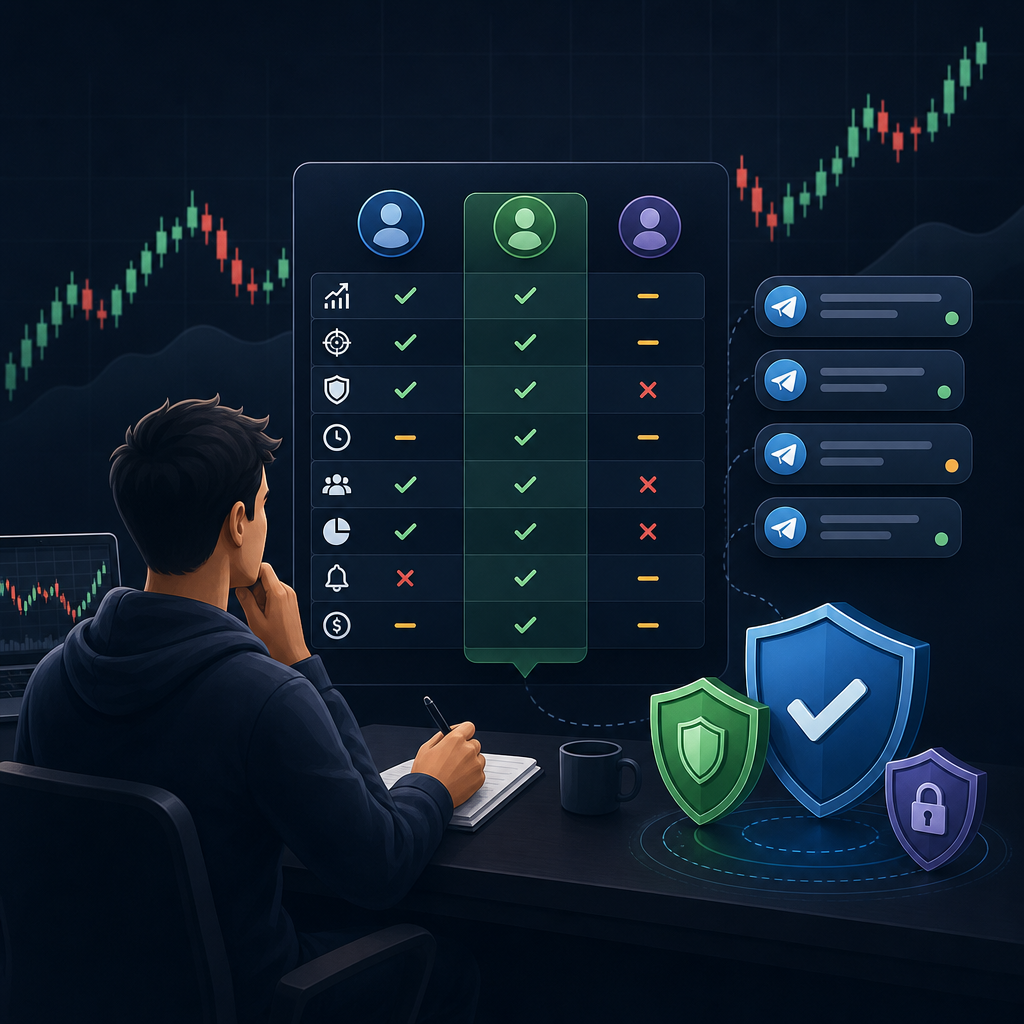
Forex signals are trade instructions or trade ideas shared by a trader, analyst, algorithm, or team. Most beginner-friendly signals include the “big three”: Entry, Stop Loss (SL), and Take Profit (TP).
Some providers also add extra details like a second take profit, a break-even rule, or a note like “London session only.” Those details are not decoration. They’re the difference between a controlled trade and a random click.
What a complete signal looks like
A clean, executable signal usually looks like this:
- Pair: EUR/USD
- Direction: Buy or Sell
- Entry: 1.0520 (market) or 1.0505 (limit)
- Stop Loss: 1.0485 (35 pips risk)
- Take Profit: 1.0590 (70 pips reward, ~1:2 R:R)
- Notes: “Avoid entering during US CPI release”
As a beginner, your goal is to only take signals that are formatted this clearly. If you’re guessing the stop loss, you’re not following a signal—you’re improvising.
What signals are NOT
Signals are not guaranteed profits. They are not “insider information.” They are not a replacement for discipline. And they are definitely not a reason to overleverage.
In real trading, a great setup can lose because of a headline, a liquidity sweep, or a sudden spread widening. That’s normal.
Why signals exist (the honest reason)
Signals exist because most traders struggle with the same three things: timing, structure, and consistency. A good signal provider gives you a repeatable framework, often focused on the most liquid sessions (London and New York) where spreads are tighter and moves are cleaner.
At United Kings, our premium Telegram signals are built around that idea: clear Entry/SL/TP, session-aware timing, and education alongside the callouts. If you want to see the broader ecosystem of what we offer, start with our main signals page and then narrow into forex signals or gold signals depending on what you trade.
2) The Different Types of Forex Signals (Manual, Algo, Copy, Hybrid)
Not all signals are created the same way. Understanding the type of signal you’re using helps you set expectations and avoid common beginner mistakes.
Manual signals (human analysis)
Manual signals are created by traders who read price action, market structure, and fundamentals. They may use indicators, but the decision is ultimately human.
The upside is flexibility. A skilled analyst can adapt when DXY is strong at 106.80 and USD pairs are trending, or when risk sentiment changes and EUR/USD gets choppy around 1.0520.
The downside is that quality depends on the trader. You need proof of process, not just screenshots.
Algorithmic signals (rules-based)
Algo signals are generated from a strategy coded into rules. The benefit is consistency and speed. The risk is that markets change regimes, and rigid rules can underperform during unusual volatility.
For example, USD/JPY at 149.50 can behave differently around intervention headlines. An algo might not “understand” that context.
Copy trading vs. signals
Copy trading automatically mirrors another trader’s positions. Signals require you to place the trade yourself.
Beginners often assume copy trading is “easier,” but it can hide risk. You might not know the lot size, the real stop distance, or whether the trader is martingaling.
Hybrid signals (best of both)
Many premium providers blend human discretion with system rules. That’s often the sweet spot: structure plus adaptability.
In practice, that means you’ll see consistent formatting (Entry/SL/TP) but also notes like “Wait for London open volatility to settle” or “Skip if spread widens.” Those notes protect you.
Comparison table: signal options for beginners
| Signal Type | Best For | Main Advantage | Main Risk | Beginner Tip |
|---|---|---|---|---|
| Manual (human) | Learning + adaptability | Context-aware decisions | Quality varies by trader | Demand consistent formatting + rationale |
| Algorithmic | Consistency + speed | Rules-based execution | Regime changes break systems | Backtest results ≠ live performance |
| Copy trading | Hands-off approach | No manual execution | Hidden leverage + drawdowns | Check max drawdown, not just wins |
| Hybrid | Most beginners | Structure + discretion | Still requires discipline | Follow rules exactly; don’t improvise |
As you progress, you’ll likely use signals as a “decision support system” rather than a crutch. But in the beginning, you want the simplest, clearest structure possible.
3) How to Choose a Forex Signals Provider (Beginner Checklist)
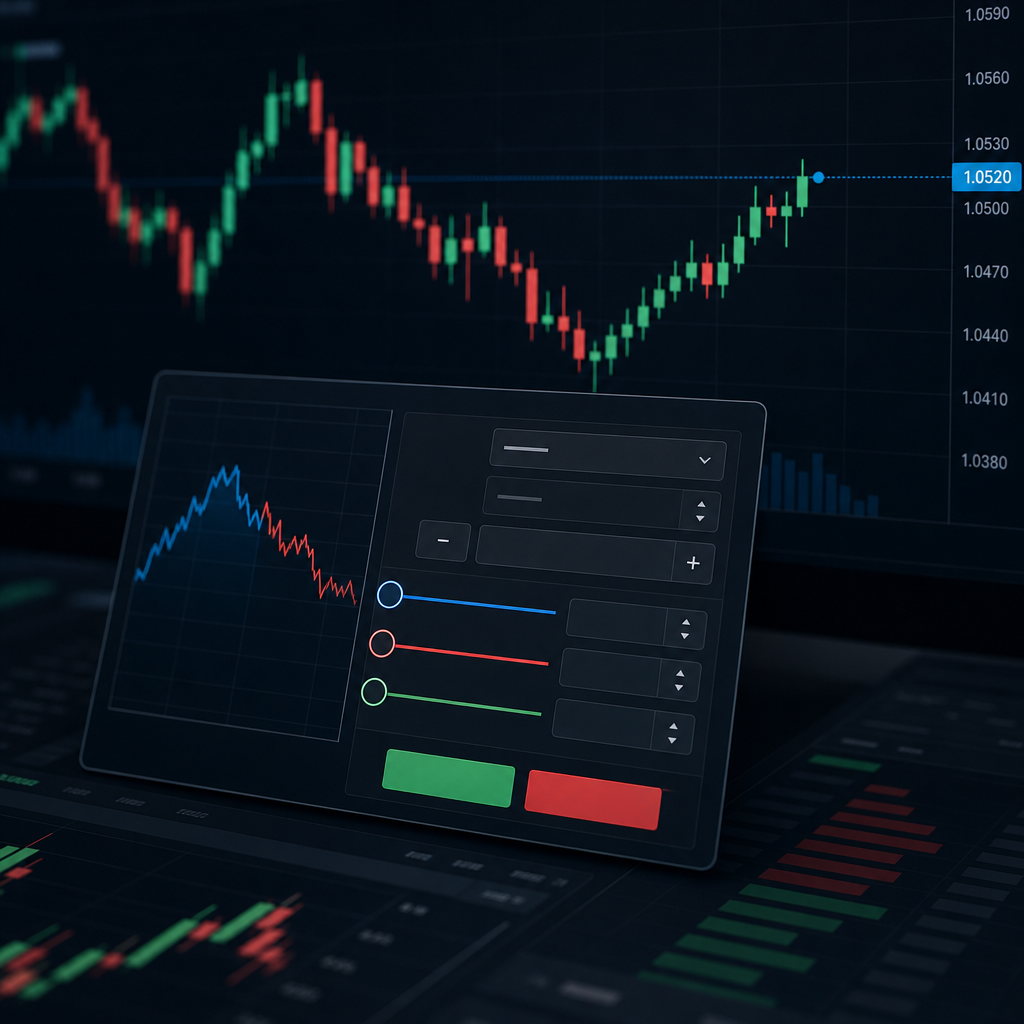
Choosing a provider is the highest leverage decision you’ll make. A beginner with a strong provider and strict risk rules can survive long enough to learn. A beginner with a hype provider and no risk rules usually doesn’t.
Step-by-step: provider selection process
- Check formatting: Are Entry/SL/TP always included? Are there updates for partial closes or break-even?
- Check market focus: Do they specialize (London/NY sessions, majors like EUR/USD, GBP/USD) or spray signals on everything?
- Check transparency: Do they track results with wins and losses, or only post winners?
- Check risk language: Do they talk about position sizing and drawdowns, or only “1000 pips daily” claims?
- Check support: Can you ask questions? Is there education?
- Test on demo: Always. Even if the provider is excellent.
If you want a deeper checklist designed specifically for beginners, this internal resource is a strong companion: forex trading signals provider checklist for beginners.
Red flags beginners should not ignore
- No stop loss or “mental stop only.” That’s not beginner-friendly. That’s account-blow-friendly.
- Martingale language like “we recover every loss by doubling.” That’s not a strategy. It’s a time bomb.
- Pressure tactics like “join now or you’ll miss the next 500 pips.” Professionals don’t sell like that.
- Unverifiable results with cropped screenshots and no timestamps.
What “good” looks like in real life
Good looks boring. It’s consistent, repeatable, and risk-aware.
For example, if DXY is firm near 106.80, a good provider might reduce EUR/USD longs and focus on setups aligned with USD strength. Or they might wait for confirmation rather than forcing trades.
At United Kings, our emphasis is premium Telegram signals for forex and gold, with a large community (300K+ traders) and clear levels. You can also explore beginner-specific Telegram guidance here: forex signals Telegram for beginners guide.
4) How to Use Forex Signals (Execution Step-by-Step)
Most beginners think signal success is about “accuracy.” In reality, success is often about execution quality. Two traders can receive the same signal and get different results because one entered late, used the wrong lot size, or ignored the stop.
Step 1: Confirm the instrument and session
Make sure you’re trading the correct pair and the correct symbol. Some brokers use suffixes like EURUSD.m. That matters.
Also check timing. London and New York sessions typically offer the best liquidity. If you’re entering a GBP/USD signal at 2 a.m. your time during thin liquidity, spreads can be wider and moves can be messy.
Step 2: Identify order type (market vs limit vs stop)
- Market order: You enter immediately at the best available price.
- Limit order: You set a better price and wait for the market to come to you.
- Stop order: You enter only if price breaks a level (momentum confirmation).
If a provider says “BUY LIMIT 1.0505” and you buy at market 1.0520, you changed the trade. Your stop distance and probability are now different.
Step 3: Place SL and TP immediately
Beginners sometimes enter first and “add SL later.” That’s how small mistakes become catastrophic losses during a spike.
Example: A EUR/USD buy at 1.0520 with SL at 1.0485 is a 35-pip risk. If you forget the SL and price drops 80 pips in a fast USD move, you didn’t “get unlucky.” You traded without a seatbelt.
Step 4: Check spread and slippage before confirming
Spreads can widen around news. USD/JPY near 149.50 can jump quickly on headlines, and your fill might be worse than expected.
As a beginner rule: if the spread is unusually high (relative to your normal), skip the trade or reduce size. A 2-pip spread on EUR/USD is different from a 10-pip spread during a news spike.
Step 5: Manage the trade according to the provider’s plan
If the signal includes “move SL to break-even at +25 pips,” do it exactly. Don’t move it early because you feel nervous.
And don’t widen the stop because you “know it will come back.” That’s not management. That’s hope.
If you want a dedicated, execution-focused walkthrough, pair this article with our full service overview on United Kings forex signals, where our formatting and updates are designed to reduce execution mistakes.
5) Risk Management for Signal Trading (The Non-Negotiable Rules)
Signals can give you entries. They cannot protect you from bad risk management. Your risk rules decide whether you can survive a losing streak and stay in the game long enough to benefit from a high-quality provider.
The beginner risk framework (simple and effective)
- Risk per trade: 0.5%–1% of account balance.
- Max daily loss: 2% (stop trading for the day if hit).
- Max open risk: 2% total across all open trades.
- No revenge trading: If you miss a signal, you miss it.
Let’s put numbers on it. If your account is $1,000 and you risk 1% per trade, your max loss is $10 per trade.
If the EUR/USD signal risks 35 pips, your position size should be set so that 35 pips = $10 loss. That’s how professionals think: risk first, profit second.
Why beginners blow accounts even with “good signals”
Because they risk 5%–20% per trade. Then a normal losing streak wipes them out.
Even with an 85% win rate, losses still happen. And if you’re risking too much, one loss feels like an emergency—so you break rules, widen stops, or double down.
Gold (XAUUSD) risk example using current context
Gold is around $2650 right now, moving with moderate volatility (+0.35% over 24h). A typical intraday signal might look like:
- BUY XAUUSD: 2650.0
- SL: 2635.0 (15 dollars risk)
- TP: 2680.0 (30 dollars reward, ~1:2)
This is a clean structure. But if you oversize the position, a $15 move against you becomes emotionally unbearable, and you’ll start making mistakes.
For a deeper framework built for signal traders, read: risk management strategies when using forex signals. It’s the skill that keeps you profitable when conditions change.
6) Understanding Signal Accuracy, Win Rate, and Real Performance
Beginners love win rate because it feels simple. “If a provider wins 85% of the time, I’ll make money.” But win rate alone is not enough.
The three metrics that actually matter
- Win rate: percentage of winning trades.
- Risk-to-reward (R:R): how much you make when right vs. lose when wrong.
- Expectancy: average profit per trade over time.
Here’s a simple example. Provider A wins 85% but uses 1:0.5 R:R (small wins, bigger losses). Provider B wins 55% but uses 1:2 R:R.
Provider B can be more profitable even with a lower win rate. That’s why you must look at the full picture.
How to sanity-check “performance” claims
- Look for losing trades. If you never see losses posted, you’re not seeing reality.
- Ask about drawdown. A strategy can look great until you see a -25% month.
- Check consistency. One viral week doesn’t matter. Three to six months of steady process does.
- Check execution assumptions. Are results based on perfect entries? Do they account for spread?
Realistic expectations for beginners using signals
Your first goal is not “income.” Your first goal is consistency of process. If you can follow rules for 30 trades without breaking them, you are ahead of most retail traders.
Then you optimize: better execution, fewer errors, cleaner risk. Profit is the byproduct.
If you want a curated look at what to expect from a high-quality service, you can also review our ongoing updates and education inside the United Kings ecosystem via the blog and our premium channels.
7) The Beginner’s Workflow: From Signal Alert to Closed Trade
Let’s turn everything into a repeatable workflow. This is the “muscle memory” that keeps you calm when your phone pings during a volatile move.
Step-by-step workflow (copy this into your notes)
- Read the full signal. Pair, direction, entry, SL, TP, and any notes.
- Check the clock. Are we in London/NY session or thin liquidity?
- Check the calendar. Is there major news in the next 30 minutes?
- Calculate position size. Risk 0.5%–1% based on SL distance.
- Place the order with SL/TP attached. No exceptions.
- Set alerts. Alert near TP1, and alert near SL (so you’re not watching every tick).
- Follow management rules. Break-even, partial closes, trailing—only if the provider specifies.
- Journal the outcome. Screenshot entry and exit, record reasons, note mistakes.
Example workflow with GBP/USD (current context)
GBP/USD is around 1.2680. A sample signal might be:
- SELL GBP/USD: 1.2680
- SL: 1.2720 (40 pips)
- TP: 1.2600 (80 pips, ~1:2)
You calculate size so 40 pips equals your chosen risk (say $10). You place the trade with SL/TP. Then you stop touching it unless the plan says to adjust.
What to do if you’re late to a signal
This is where beginners lose money. If price already moved far from entry, you don’t “chase.”
- If the provider gives a range (e.g., sell 1.2670–1.2685), you can enter inside it.
- If price is outside the range, skip or wait for a new setup.
Missing trades is part of trading. Chasing trades is how you donate.
8) Avoiding the Classic Beginner Mistakes With Forex Signals
If you want to speed up your learning curve, don’t focus only on “what to do.” Focus on “what to stop doing.” Most signal users fail from a small set of repeatable mistakes.
Mistake #1: Changing the stop loss
Moving the stop further away is the fastest way to turn a controlled loss into an uncontrolled one.
If a USD/JPY trade is set with a 40-pip stop and price moves against you, the loss is part of the plan. Widening the stop because “149.50 is strong support” is not a plan.
Mistake #2: Overtrading because signals feel “easy”
Signals reduce decision fatigue, but they can increase temptation. You start thinking every alert is an opportunity you must take.
As a beginner, fewer high-quality trades with strict risk beats taking everything.
Mistake #3: Mixing multiple providers
Beginners subscribe to 3–5 channels and end up with conflicting calls. One says buy EUR/USD, another says sell. Then you either freeze or gamble.
Pick one primary provider, learn their style, and track results. If you later diversify, do it intentionally.
Mistake #4: Ignoring fundamentals completely
You don’t need to become a macro economist. But you do need to know when major events can distort signals.
For example, a sudden shift in risk sentiment can spike gold from $2650 to $2680 quickly. If you’re trading XAUUSD signals, you should understand how news shocks can create slippage and spread widening.
This is a useful companion read: how gold signals react to unexpected news events.
Mistake #5: Not tracking performance
If you don’t journal, you can’t improve. You’ll repeat the same errors and blame the provider.
Your journal should show: entry time, entry price, SL/TP, lot size, result in pips, result in $, and whether you followed the rules.
9) Building Consistency: The 30-Trade Challenge for Beginners
Consistency is not a personality trait. It’s a system. The fastest way to build it is to commit to a fixed process for a fixed sample size.
The 30-trade challenge (simple rules)
- Trade only one or two pairs (e.g., EUR/USD and GBP/USD) for clarity.
- Use one provider so you’re not mixing styles.
- Risk 1% max per trade (0.5% is even better at first).
- No manual overrides (no early exits unless the signal updates).
- Journal every trade in the same format.
Why 30 trades? Because it’s enough to see patterns in your behavior without needing months of waiting. You’ll quickly discover if your biggest leak is late entry, moving stops, or taking trades during news.
What “progress” looks like
Progress is not “I doubled my account.” Progress is:
- You can calculate lot size in under 60 seconds.
- You stop chasing entries outside the signal range.
- You accept losses without revenge trading.
- You follow break-even and partial close rules consistently.
How to scale after you prove consistency
After 30 trades with rule-following, you can scale in a controlled way:
- Increase risk from 0.5% to 1% (not higher yet).
- Add one additional pair (like USD/JPY) if spreads and behavior fit your schedule.
- Add gold (XAUUSD) only if you can handle faster movement and wider stops.
Scaling is not “I feel confident.” Scaling is “my journal shows I execute well.”
10) Real Market Context: How Signals Behave When DXY Is Strong and Gold Is Volatile
Signals don’t exist in a vacuum. They interact with market conditions.
Right now, DXY around 106.80 suggests USD strength is a key theme. That can pressure EUR/USD near 1.0520 and create sharp moves in USD/JPY around 149.50.
Why this matters for beginners
When the market is trending, signals can hit targets cleanly. When the market is choppy, you’ll see more stop-outs and reversals.
A beginner mistake is assuming the provider “got worse” when conditions simply changed.
Gold example: volatility and stop placement
Gold at $2650 can move $10–$25 quickly during active sessions. That’s why typical gold stops often sit $10–$25 away from entry.
If you place a $5 stop on XAUUSD because you want “small risk,” you’re not reducing risk. You’re increasing the chance of getting stopped out by normal noise.
Forex example: spread + timing
EUR/USD spreads are usually tight during London/NY overlap. But around major releases, spreads can widen and your entry can slip.
That means your real risk might be larger than planned. A 35-pip stop can become a 40–45 pip effective loss if you get slipped and panic-exit.
Practical rule: adapt by reducing size, not by removing stops
When volatility rises, you have two healthy options:
- Reduce position size so the same stop distance risks less money.
- Wait for cleaner conditions (especially if you’re new).
The unhealthy option is widening stops randomly or trading without them.
If you want to diversify beyond forex later, United Kings also offers crypto signals, but beginners should master one market first before adding more moving parts.
11) Why United Kings Signals Are Built for Beginners (Without Treating You Like One)
Beginner-friendly does not mean “dumbed down.” It means structured, consistent, and supportive.
When you’re new, your biggest enemy is not the market. It’s confusion. Confusion leads to hesitation, late entries, missed stops, and emotional decisions.
What you should expect from a premium Telegram signals service
- Clear Entry, SL, and TP levels so you can execute fast.
- Session awareness (London and NY focus) so trades happen when liquidity is best.
- Education alongside signals so you improve, not just follow.
- Community support so you can learn from repetition and shared experience.
United Kings value props (what we actually do)
United Kings is built around premium Telegram signals for forex and gold, with a large community of 300K+ active traders. We focus on clarity and execution, not hype.
We aim for a high win-rate approach (often referenced at 85%+) with structured trade levels. But we also emphasize what responsible providers emphasize: losses are part of trading, and risk management is mandatory.
Where to start inside our ecosystem
- Explore our full offering on the United Kings signals hub.
- If you specifically want currencies, go to forex signals.
- If you prefer XAUUSD setups around levels like $2650, go to gold signals.
- For social proof and real-time updates, join our Telegram: United Kings Telegram channel.
Pricing plans (3 options, clear choice)
We keep pricing simple with three plans designed for different commitment levels:
- Starter: 3 Months for $299 (~$100/month)
- Best Value: 1 Year for $599 (~$50/month) with 50% savings + FREE ebook
- Unlimited: Lifetime for $999 (pay once, access forever)
You can review the plans and choose what fits your goals on our pricing page.
12) FAQ: Forex Signals for Beginners
Are forex signals good for beginners?
Yes, if the signals are structured (Entry/SL/TP), the provider is transparent, and you use strict risk management. Signals can reduce decision fatigue and help you learn market behavior faster.
How do I know how much to risk per signal?
A common beginner rule is 0.5%–1% of your account per trade. Calculate lot size based on the stop-loss distance in pips, not based on how “confident” you feel.
What if I miss the entry price?
Don’t chase. If the provider gives an entry range and price is still within it, you can enter. If price is far away, skip and wait for the next setup.
Can I use forex signals on MT4/MT5?
Yes. Most signals are executed manually on MT4/MT5 or via broker apps. The key is placing SL and TP immediately and ensuring your symbol matches the provider’s pair.
Do signals work on gold (XAUUSD) too?
Yes, but gold can move faster and require wider stops (often $10–$25 from entry). With gold around $2650, volatility can be sharp during London/NY, so sizing and discipline matter even more.
Risk Disclaimer: Forex and gold trading involves significant risk and may not be suitable for all investors. Signals and educational content are provided for informational purposes only and do not constitute financial advice. Past performance does not guarantee future results. Always use a stop loss, manage position size responsibly, and consider practicing on a demo account before trading live. You are responsible for your own trading decisions and outcomes.
Ready to Trade Signals the Right Way?
If you want a premium, structured approach to signal trading—focused on London and New York sessions, with clear Entry/SL/TP levels and education alongside the calls—join the United Kings community.
Start by exploring our premium signals, choose your plan on United Kings pricing (Starter, Best Value, or Lifetime), and get plugged into our real-time updates on Telegram: https://t.me/unitedkings1.
Bonus: We also offer a 48-hour money-back guarantee so you can evaluate the service with confidence and clarity.
Your next step: Join United Kings today and start building a consistent, risk-managed trading process—one signal at a time.