
FOMC days can make XAUUSD feel “untradable”—until you realize most losses come from the same two mistakes: trading the first spike without a plan, and using normal position sizing in abnormal volatility.
If you’re searching for an XAUUSD FOMC strategy that keeps you in the game while still letting you capture the big moves, this is your volatility playbook.
We’ll use today’s realistic market context as our baseline: Gold (XAUUSD) ~$2650, DXY ~106.80, EUR/USD 1.0520, GBP/USD 1.2680, USD/JPY 149.50.
TL;DR — The FOMC Gold Trading Playbook (Save This)
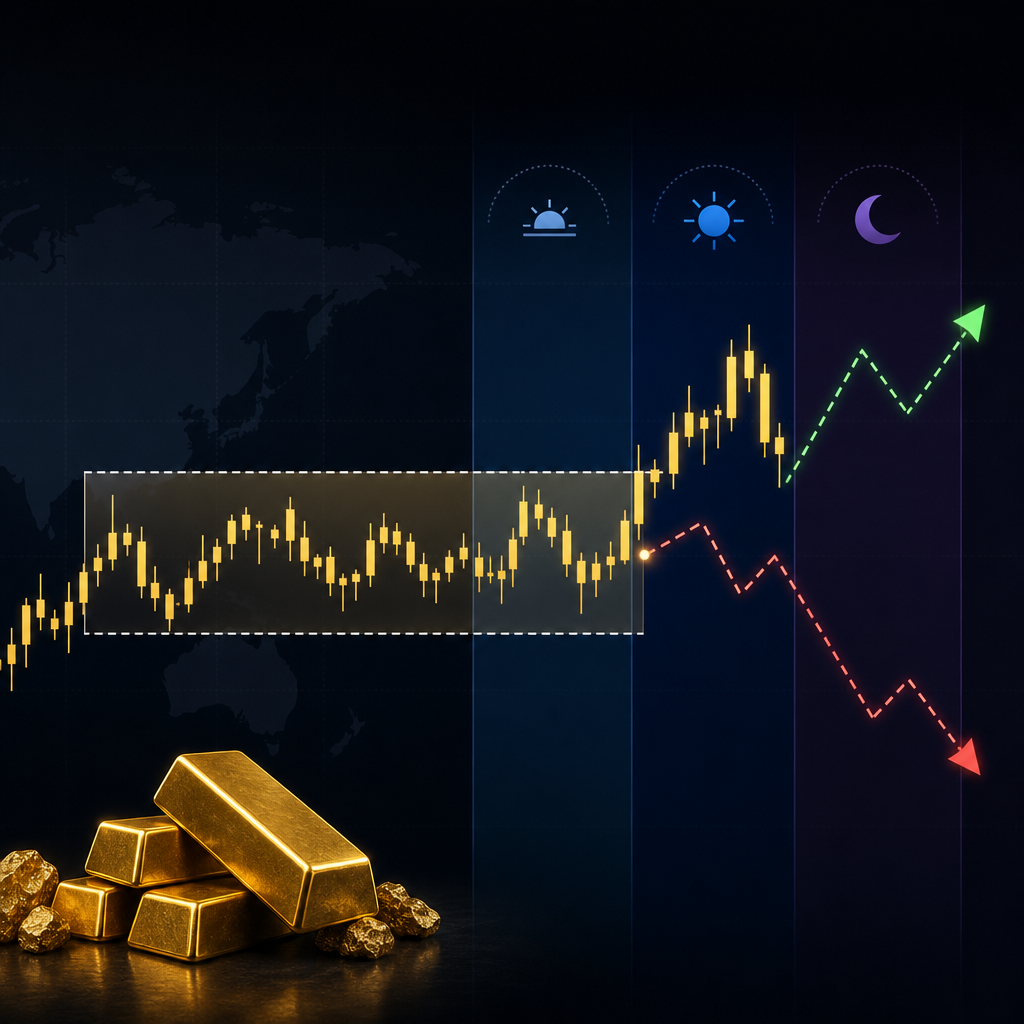
- Map a pre-news range (usually Asia + early London) and treat it as your “decision box” for the day.
- Skip the first 1–3 minutes after the release; most whipsaws and stop hunts happen there.
- Use volatility filters: if spreads widen beyond your limit or slippage is frequent, don’t execute—wait or skip.
- Cut position size (often 30–60%) and widen stops slightly (e.g., $18–$25) to match FOMC conditions.
- Only take signals with confirmation: candle close + reclaim/hold of a key level + DXY/yields alignment.
- Have a post-announcement checklist to avoid “fake direction” moves and late-session reversals.
Throughout this guide, we’ll also show how to integrate United Kings Gold Signals with strict FOMC-day execution rules, so you’re not blindly copying entries into a spread-and-slippage storm.
1) Why FOMC Rate Decisions Move XAUUSD So Violently
Gold is not just a commodity chart.
On FOMC days, XAUUSD trades like a macro instrument reacting to real yields, the US dollar, and risk sentiment—all at the same time.
The three engines behind FOMC-day gold volatility
1) The rate decision itself. Even when the Fed “does nothing,” the market reprices expectations for the next meeting.
A “hold” can still be hawkish if the statement suggests fewer cuts ahead, pushing DXY up and gold down.
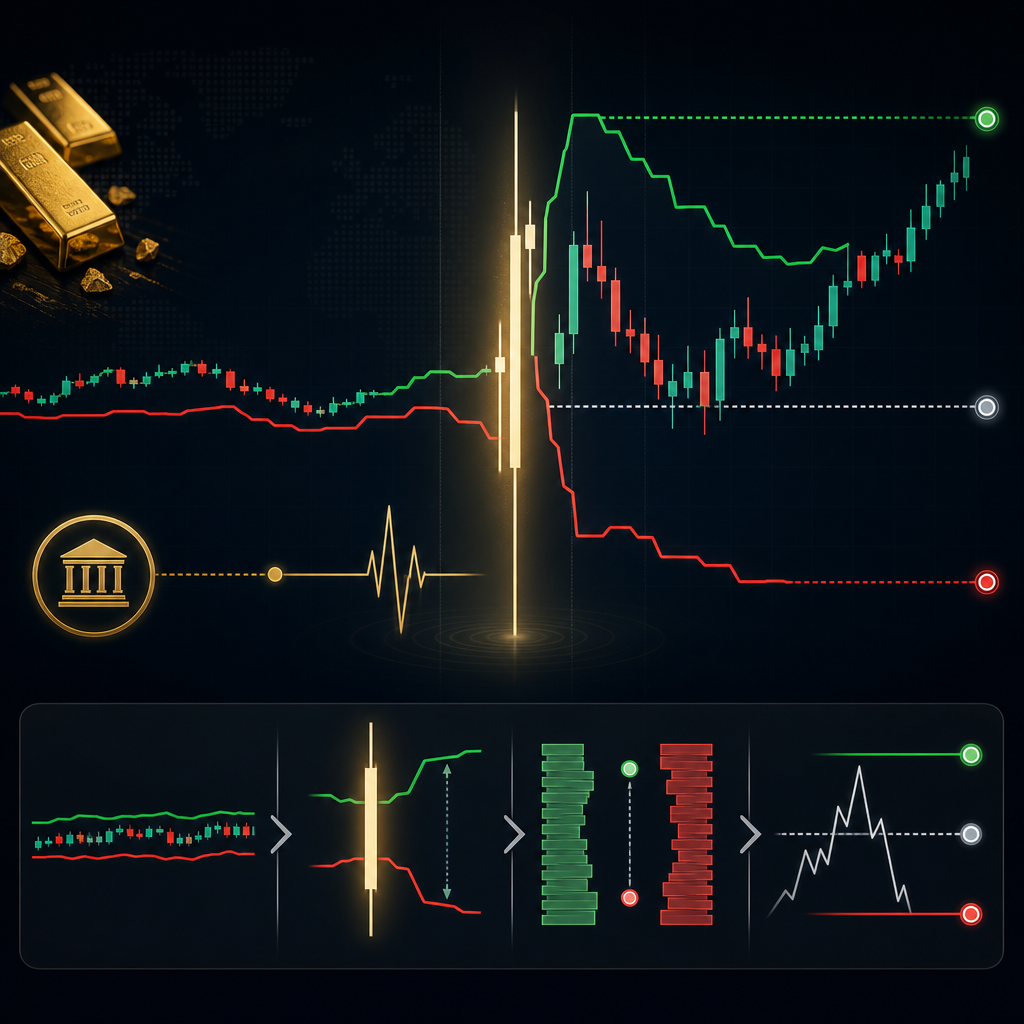
2) The statement + dot plot + press conference. Gold often makes multiple impulses: one at the release, another when dots hit, and another when Powell answers questions.
This is why traders get chopped: they assume the first move is “the move.”
3) Liquidity + execution mechanics. Around the release, liquidity thins, spreads widen, and market orders can slip.
On XAUUSD near $2650, a normal spread might be $0.20–$0.50 on a good broker.
On FOMC, it can briefly jump to $1.50–$5.00+ depending on liquidity conditions.
How today’s context matters (XAUUSD ~$2650, DXY ~106.80)
With DXY elevated around 106.80, gold is more sensitive to any surprise that shifts USD expectations.
If the Fed signals “higher for longer,” the dollar can spike and pressure gold from $2650 toward $2635/$2620 quickly.
If the Fed sounds dovish, the unwind can be just as fast, pushing gold toward $2675/$2690.
The key is not predicting the Fed.
The key is having a process that tells you when to trade, how to size, and when to step aside.
2) The FOMC-Day Reality: Spreads, Slippage, and Why “Good Signals” Still Fail
Many traders blame the signal when a trade fails on FOMC.
But on news volatility, the strategy can be correct and the execution can still destroy the outcome.
What changes on FOMC (and what it does to your P&L)
Spread expansion: If your gold spread widens from $0.40 to $3.00, your entry is instantly worse by $2.60.
On a 1.00 lot XAUUSD position (broker-dependent contract sizing), that can be a meaningful hit before the candle even decides direction.
Slippage: You click buy at $2652.0 and get filled at $2654.2.
That $2.2 slip is not “bad luck”—it’s normal during thin liquidity moments.
Stop-loss skipping: In extreme spikes, price can jump across your stop level.
You planned a $18 stop, but get stopped $24–$30 away in a fast candle.
Why FOMC amplifies fakeouts
Institutions know where retail stops sit: above obvious highs and below obvious lows.
FOMC provides the perfect cover to sweep liquidity and then reverse.
This is why we build a plan around range mapping and confirmation instead of trading the first impulse.
Signals + FOMC: the “rules of engagement”
If you use a premium provider like United Kings, you’re already ahead because entries come with clear SL/TP structure.
But on FOMC, you need an extra layer: execution filters that decide whether you take the signal now, later, or skip entirely.
This guide is that layer.
For a broader foundation on staying consistent with signal-based trading, keep risk management strategies when using signals bookmarked (we’ll apply the same principles here, just more aggressively).
3) Pre-FOMC Preparation: Build Your “Decision Box” Range Map
FOMC day starts before the announcement.
Your edge comes from defining the battlefield while volatility is still relatively normal.
Step-by-step: how to map the pre-news range
Step 1: Mark the Asia range. Use the high/low from the Asian session on M15 or M30.
Example: Asia prints a high at $2658 and a low at $2642.
Step 2: Add early London expansion. London often probes one side of Asia and returns.
Let’s say London tags $2662 and then settles back around $2650.
Step 3: Draw the “decision box.” Your box is now roughly $2642–$2662.
On FOMC, price tends to either break and hold outside the box (trend day) or sweep both sides (whipsaw day).
Step 4: Mark two key liquidity levels.
- Buy-side liquidity: above $2662 (stops from shorts)
- Sell-side liquidity: below $2642 (stops from longs)
What the range tells you about your risk
A narrow box (e.g., $12–$16 tall) usually means the market is coiled.
That can produce a clean breakout—or a violent two-sided sweep.
A wider box (e.g., $25–$35 tall) suggests volatility is already elevated.
That’s a warning to reduce size further or skip the event if spreads are unstable.
Where most traders go wrong
They draw levels, then ignore them when the first news candle hits.
On FOMC, your range map is not decoration.
It’s your filter for deciding if a signal is tradable or just noise.
If you want a deeper understanding of why liquidity sweeps happen and how they affect signal entries, read Decoding Market Liquidity after this.
4) The Volatility Filters: Exact Rules for When to Trade (or Skip)
On FOMC, “discipline” is not a motivational quote.
It’s a checklist that blocks bad trades even when adrenaline is high.
Filter A: Spread limit rule (non-negotiable)
Before you execute any XAUUSD trade, check the live spread.
Rule: If spread is above $1.50 (or your broker’s equivalent threshold), do not enter.
Wait until spreads normalize, even if that means missing the first leg.
Filter B: “No market orders” window
Rule: Avoid market orders from T-30 seconds to T+2 minutes around the release.
That’s where slippage risk is highest.
If you must participate, use limit orders only at pre-defined levels—otherwise, stand down.
Filter C: Candle structure filter (avoid the trap candle)
Trap candles on FOMC are easy to spot:
- Huge wick both sides
- Close near the middle of the range
- Breaks above $2662 and below $2642 within minutes
Rule: If the first 5-minute candle has a large two-sided wick, wait for a second confirmation close.
Filter D: DXY alignment (simple but powerful)
Gold and DXY often move inversely on Fed repricing.
Rule: Only take long gold signals if DXY is failing to hold its spike (or rolling over).
Only take short gold signals if DXY is holding above its breakout level and building higher lows.
Filter E: “One-trade maximum” rule
FOMC tempts revenge trading.
Rule: Maximum one new position per direction within the first 30 minutes after the release.
This stops you from getting chopped in the whipsaw phase.
These filters are exactly how professional desks survive event days.
They don’t try to trade everything—they try to trade the cleanest part of the move.
5) Signal Execution on FOMC: A Safer Framework for Entries, SL, and TP
Let’s talk about how to execute gold signals news trading without turning a high-quality setup into a low-quality fill.
The goal is to respect the signal’s structure while adapting to FOMC volatility.
Use “conditional execution,” not blind copying
On normal days, a signal might be executed immediately.
On FOMC, we treat every entry as conditional on spread, confirmation, and level behavior.
Example 1: Long continuation after confirmation
Assume XAUUSD is around $2650 pre-news and your decision box is $2642–$2662.
After the release, price spikes to $2670, pulls back, then reclaims $2662 and closes above it on M5.
Entry idea: Buy on the reclaim/hold of $2662–$2664.
Stop loss: $18–$22 below entry (e.g., SL at $2644 if entry is $2664).
Take profit: 1:2 or 1:3 RR.
- TP1 (1:2): risk $20 → target $40: $2704 (cap at guideline $2690 in this context; so TP near $2688–$2690)
- TP2 (scaled): partial at $2680, runner to $2688–$2690
Notice the adaptation: we respect the RR, but we also respect the realistic price band ($2610–$2690).
Example 2: Short reversal after a sweep (fakeout setup)
Price sweeps above $2662 to $2676, then collapses back below $2662 and closes M5 under $2658.
This is classic “buy-side liquidity sweep.”
Entry idea: Sell on a retest of $2658–$2660 after the close back inside the box.
Stop loss: $15–$25 above entry (e.g., SL at $2680 if entry is $2658).
Take profit:
- TP1 at the mid-box: $2650
- TP2 at sell-side liquidity: $2642
- TP3 extension if momentum holds: $2625–$2618
When to skip even a “perfect” signal
- Spread above your limit
- Price is inside the decision box with no close outside
- Two-sided wick candles keep printing
- Your broker freezes or requotes (execution risk is a trade risk)
This is how we trade FOMC days with discipline inside a signal environment.
If you want to see how we format entries with clear SL/TP levels, explore United Kings Signals and specifically our Gold Signals coverage.
6) Position Sizing Adjustments: The “FOMC Multiplier” That Protects Your Account
Most FOMC blowups are not caused by being wrong.
They’re caused by being normal-sized in abnormal conditions.
Why your usual lot size is too big on FOMC
On a regular day, gold might move $8–$15 in a clean intraday swing.
On FOMC, a single 5-minute candle can be $15–$35.
If your stop is $15 and the candle range is $30, your stop is basically sitting inside noise.
The FOMC multiplier rule (simple sizing framework)
Pick your normal risk per trade (many disciplined traders use 0.5%–1%).
Then apply an FOMC multiplier based on conditions:
- Normal conditions (spread stable, clean structure): risk × 0.7
- High volatility (wide candles, minor spread expansion): risk × 0.5
- Extreme conditions (spread spikes, whipsaws): risk × 0.0 (skip)
Example: You normally risk 1% per trade.
On FOMC, you risk 0.5% if volatility is high.
Stop size vs lot size: don’t “tight stop” your way into losses
Many traders respond to volatility by tightening stops.
That’s usually backwards.
On FOMC, you often need a slightly wider stop (e.g., $18–$25), and you compensate by reducing lot size.
A practical gold sizing example near $2650
Let’s say you buy at $2660 with SL at $2640 (a $20 stop).
If your account risk is $100 on the trade, you structure your lot size so that a $20 move equals $100 loss.
That’s the correct approach: risk first, lot size second.
If you need a structured approach to calculate sizes across instruments, pair this with our educational resources and community guidance inside United Kings.
And if you’re still refining your risk rules, read our broader guide: risk management strategies when using signals.
7) Order Types on FOMC: Market vs Limit vs Stop (What Actually Works)
Your order type is part of your strategy.
On FOMC, the wrong order type can turn a good idea into a bad fill.
| Order Type | Best Use on FOMC | Main Advantage | Main Risk | Our Rule of Thumb |
|---|---|---|---|---|
| Market | Only after volatility stabilizes | Guaranteed fill | Slippage + spread shock | Avoid around release; use after confirmation |
| Limit | Retests of key levels (reclaim/flip) | Controls entry price | Missed fills if price runs | Preferred for retest entries |
| Stop | Breakout continuation (advanced) | Catches momentum | Triggered by wicks (false breaks) | Only with strong confirmation + spread filter |
Practical execution rules for each order type
Market orders: Use only after the first 5–15 minutes when spreads normalize.
If you’re seeing $2–$4 spread, you’re paying a hidden fee to participate.
Limit orders: Best for “break and retest” structures.
Example: Gold breaks above $2662, then retests $2662–$2664.
A buy limit in that zone can reduce slippage and improve RR.
Stop orders: These are the most dangerous on FOMC because wicks can trigger them.
If you use them, place them only after a close outside the decision box and with a volatility filter that confirms spreads are stable.
One more execution detail: partials beat “all-in/all-out”
FOMC moves often come in waves.
Scaling out at TP1 (1:1 or 1:1.5) and leaving a runner toward 1:2 or 1:3 can reduce emotional pressure.
It also protects you from the press conference reversal that sometimes erases the first impulse.
If you trade multiple instruments beyond gold, you can also compare behavior with our Forex Signals and even Crypto Signals coverage—but for FOMC, gold is usually the cleanest volatility vehicle when traded with rules.
8) The Post-Announcement Confirmation Checklist (Avoiding Fakeouts & Whipsaws)
This is the section that saves accounts.
Most traders don’t need more indicators—they need a confirmation protocol.
Why confirmation matters more than prediction
On FOMC, the first move is often a liquidity event.
The second move is often the real repricing.
Your job is to trade the repricing, not the chaos.
The 7-point FOMC confirmation checklist (use before taking a signal)
- 1) Spread check: Is spread back under your threshold (e.g., $1.50)?
- 2) Box check: Did price close outside the decision box on M5 or M15?
- 3) Retest check: Did the breakout level hold on a retest (flip support/resistance)?
- 4) Wick check: Are wicks shrinking (less two-sided rejection)?
- 5) DXY check: Is DXY confirming the move (USD down = gold up, USD up = gold down)?
- 6) Time check: Are we past the first 5–10 minutes of peak chaos?
- 7) Risk check: Is your size reduced (0.5x–0.7x normal) and stop realistic ($18–$25)?
How this looks in real price action near $2650
Let’s say gold rips from $2650 to $2678 in one minute, then dumps to $2648.
That’s not a signal to “sell because it dumped” or “buy because it spiked.”
That’s a signal to wait for structure.
Now imagine the next 10 minutes: gold forms higher lows above $2658, spreads normalize, and DXY stops rising.
That’s where a long becomes logical: you’re trading a stabilized market, not a headline reaction.
When the checklist tells you to do nothing
If price keeps crossing the box midpoint ($2650 in our example) with large wicks, the market is still searching for equilibrium.
Skipping is a position.
On FOMC, the traders who survive are the ones who can watch 20 candles and only trade one.
For more on surviving sudden volatility events (not just FOMC), also read how gold signals react to unexpected news events.
9) A Complete Step-by-Step FOMC Trading Plan Using Gold Signals
Now we put everything together into a single routine you can follow every FOMC.
This is designed for traders who use signals but want professional-grade execution rules.
Phase 1: 3–6 hours before the decision
- Check where XAUUSD is relative to recent highs/lows (today ~$2650).
- Mark Asia high/low and early London expansion.
- Draw the decision box (example: $2642–$2662).
- Write down two scenarios: breakout hold above $2662, or sweep-and-reject back inside.
Phase 2: 60 minutes before the decision (the “hands off” period)
- Reduce exposure: close random intraday trades that aren’t part of the plan.
- Decide your max risk for the event: usually 0.5% (or less).
- Check broker conditions: spreads, execution speed, any platform warnings.
Phase 3: Release moment (T-30 seconds to T+2 minutes)
- No market orders.
- Watch how price interacts with the decision box boundaries.
- Let the first impulse happen without you.
Phase 4: Confirmation window (T+2 to T+15 minutes)
- Apply the 7-point checklist.
- Look for a close outside the box and a retest that holds.
- Only then consider executing a gold signal entry.
Phase 5: Trade management (T+15 to T+90 minutes)
- Scale out at logical levels: mid-box, opposite boundary, then extension.
- Move stop to reduce risk only after structure confirms (not instantly).
- Expect a second wave during the press conference; protect profits accordingly.
Phase 6: After-action review (end of NY session)
- Screenshot the decision box and your entry.
- Note spread conditions at entry and whether slippage occurred.
- Track whether you followed filters (especially “skip rules”).
This is the difference between “news gambling” and a repeatable trade gold during Fed rate decision process.
And if you want the signal layer on top of this process, United Kings delivers premium entries with clear Entry/SL/TP and educational context inside our community.
10) Realistic Trade Scenarios Around $2650: What We Take vs What We Skip
Let’s make this concrete with realistic price paths inside the $2610–$2690 band.
These are not promises—just decision-making examples using the rules above.
Scenario A (Take): Break, retest, continuation
Pre-news: Box $2642–$2662, price $2650.
Post-news: Spike to $2672, pullback to $2662, then M5 closes at $2666.
- Entry: Buy $2664–$2666 on retest hold
- SL: $2646 (about $18–$20 risk)
- TP1: $2680 (partial)
- TP2: $2688–$2690 (runner)
Why we take it: Close outside box, retest hold, spreads normalized, DXY not strengthening further.
Scenario B (Skip): Two-sided sweep inside 10 minutes
Post-news: Price hits $2678, then dumps to $2638, then reclaims $2655.
Spreads jump to $3.50 and candles have $10+ wicks both sides.
Decision: Skip.
Reason: This is a liquidity storm; any entry is likely to be a coin flip with terrible execution.
Scenario C (Take, advanced): Sweep-and-reject short
Price breaks above $2662 to $2675, then closes M5 back below $2660.
Retest fails at $2658–$2660 with a bearish rejection wick.
- Entry: Sell $2658
- SL: $2678 (risk $20)
- TP1: $2650
- TP2: $2642
- TP3: $2620–$2618 if momentum accelerates
Why we take it: The market showed its hand—breakout failed, liquidity swept, structure confirmed.
Scenario D (Skip): Signal arrives during spread shock
You receive a buy signal while spread is $2.80 and price is printing 1-minute candles with huge wicks.
Decision: Wait for confirmation or skip entirely.
Even the best signal can’t overcome consistently poor fills.
This is how you turn gold signals news trading into a professional routine.
11) Psychology & Process: Staying Consistent When the Market Feels “Fast”
FOMC days don’t just test your strategy.
They test your nervous system.
The three emotional traps of FOMC
1) FOMO after the first spike. You see gold jump from $2650 to $2670 and feel late.
That’s when traders buy the top of the first impulse and get dumped on.
2) Revenge trading after a stop. A $20 stop feels unfair when price reverses right after.
So traders double size to “make it back.”
3) Overtrading the press conference. The market can reverse twice in 30 minutes.
Traders try to catch every turn and end up feeding the spread.
A simple mental model: “I trade the second move”
Tell yourself: I don’t trade the headline, I trade the confirmation.
This one sentence aligns you with the checklist and away from impulsive clicks.
Process rules that reduce emotional mistakes
- Pre-commitment: write your spread limit and risk multiplier before the event.
- Timer rule: set a timer for 2–5 minutes after release; no trades before it ends.
- One good trade: aim for one A+ setup, not five average ones.
- Debrief: review screenshots and note whether you followed filters.
If you’re building a full routine around signals, you’ll also benefit from our broader educational hub at United Kings Blog, where we break down execution, timeframes, and consistency.
And if you want a community environment where traders compare notes in real time during London/NY sessions, that’s a major part of the United Kings experience.
12) How United Kings Gold Signals Fit Into FOMC Trading (Without Overpromising)
Signals are not magic.
They’re structured trade ideas—Entry, SL, TP—delivered faster and more consistently than most traders can generate alone.
What matters most on FOMC: clarity + discipline
On event days, you need clarity because the chart moves fast.
You also need discipline because not every signal should be taken immediately.
How our community uses signals on Fed days
- We focus on London and New York session opportunities where liquidity is highest.
- We emphasize clear levels and structured risk, not impulse trades.
- We provide educational context alongside alerts, so you understand why a setup matters.
Our value props (and how to use them responsibly)
United Kings is known for premium Telegram signals for forex and gold with a strong track record and structured trade management.
We often target an 85%+ win rate in our internal reporting and community performance tracking, but past performance doesn’t guarantee future results.
That’s why this FOMC playbook emphasizes risk filters and skipping trades when conditions are poor.
We also have a large, active community of 300K+ traders, which matters because FOMC is easier when you’re not trading alone.
You can join the discussion and receive updates via our official Telegram: United Kings Telegram channel.
Plans and pricing (choose based on commitment)
We keep pricing simple with 3 options at United Kings pricing:
- Starter (3 Months): $299 (~$100/mo)
- Best Value (1 Year): $599 (~$50/mo) with 50% savings + FREE ebook
- Unlimited (Lifetime): $999 pay once, access forever
And yes—there’s a 48-hour money-back guarantee, which is helpful if you want to evaluate fit without long uncertainty.
FAQ — Trading XAUUSD Safely During FOMC
1) Should I trade gold immediately at the FOMC release?
Usually no.
Most traders do better waiting 2–10 minutes for spreads to normalize and for a candle close outside the pre-news range to confirm direction.
2) What’s a realistic stop loss for XAUUSD on FOMC days?
Many FOMC setups need a wider stop than usual, commonly $18–$25 from entry, depending on structure.
The key is reducing lot size so your account risk stays constant.
3) How do I avoid getting trapped by fakeouts and whipsaws?
Use a decision box (Asia + early London range), wait for a close outside the box, and demand a retest hold before entry.
If the first candle sweeps both sides with large wicks, wait for additional confirmation.
4) Can I use gold signals for news trading?
Yes, but with extra execution rules.
Signals provide structure, but you still need spread/slippage filters and confirmation checks to avoid poor fills during peak volatility.
5) What if spreads stay wide for a long time?
Then you skip.
No setup is worth trading if execution quality is compromised—especially on leveraged instruments like XAUUSD.
Risk Disclaimer (Read Before You Trade)
Forex and gold trading involves significant risk and may not be suitable for all investors. Trading XAUUSD during FOMC can involve rapid price movements, widened spreads, and slippage that may increase losses. Past performance does not guarantee future results. Nothing in this article is financial advice. If you are new, consider practicing on a demo account before trading live, and never risk money you cannot afford to lose.
Final CTA: Trade FOMC Smarter With United Kings Gold Signals
If you want a structured way to trade gold on the biggest volatility days—without guessing—combine this playbook with a premium signal stream built for real traders.
Join United Kings Gold Signals for clear Entry, SL, and TP levels, and access our broader signals suite across markets.
Choose your plan on United Kings pricing (Starter 3 Months $299, Best Value 1 Year $599, Unlimited Lifetime $999), and join the live community on Telegram: https://t.me/unitedkings1.