
Ever followed a “90% win rate” signal provider… then your account still bled?
If you’ve traded around volatile levels like Gold (XAUUSD) at $2650 or USD/JPY near 149.50, you already know the truth: a screenshot of wins means nothing without a repeatable verification process.
This guide is your step-by-step framework to backtest forex signals and validate gold signals using MT5 signal verification plus a trade journal. You’ll log every trade, compute real performance metrics (expectancy, R-multiple, max drawdown), and apply clear pass/fail thresholds before you scale risk.
TL;DR: The MT5 + Trade Journal Validation Framework
- Don’t “backtest” by eyeballing charts. Verify signals by logging every trade from MT5 history with entry, SL/TP, session, and news context.
- Track R-multiple, not just pips. A +2R win and a -1R loss are comparable across XAUUSD and EUR/USD.
- Expectancy is the truth serum. If expectancy is below +0.20R over 100+ trades, don’t scale.
- Max drawdown is your survivability metric. If peak-to-trough DD exceeds 15–20% on reasonable risk, your sizing is wrong or signals are unstable.
- Use a scoring rubric. Grade a provider on transparency, slippage sensitivity, session fit (London/NY), and performance stability.
- Scale only after passing thresholds. Start demo → micro risk → normal risk, with hard rules.
Why “Signal Backtesting” Usually Fails (And How to Fix It)
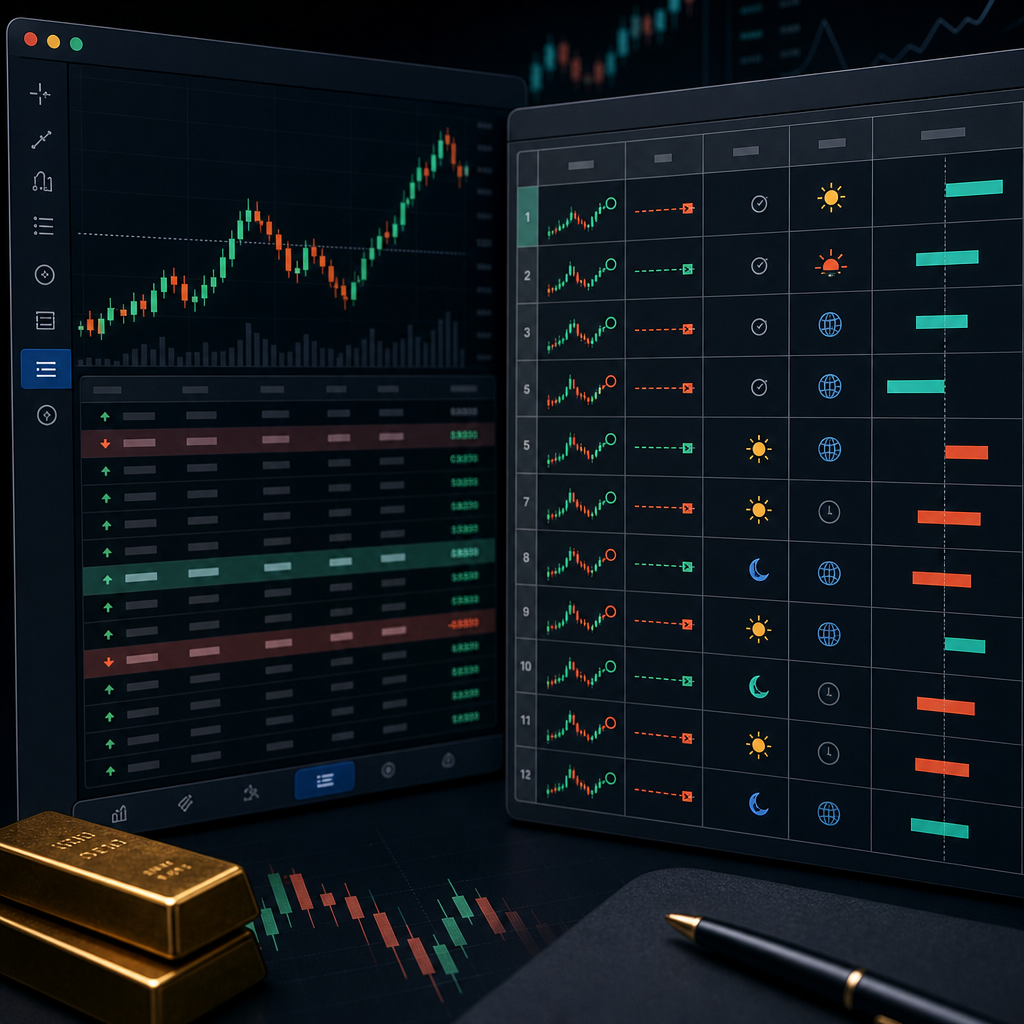
Most traders think backtesting signals means scrolling charts and saying, “Yeah, that would’ve hit TP.”
That’s not verification. That’s hindsight bias wearing a lab coat.
Real-world signal performance depends on execution realities: spread, slippage, session liquidity, news spikes, and whether the provider updates signals when conditions change.
For example, with XAUUSD around $2650 (+0.35%), a normal London session move can be $8–$18. But during a sudden risk-off headline or a U.S. data surprise, a single 5-minute candle can jump $10+ and tag both sides.
If you don’t journal when the signal came, what spread you paid, and what the market regime was, your “backtest” becomes fantasy.
The 3 most common verification mistakes
- Using pips-only reporting: A 30-pip EUR/USD win is not the same as a $15 XAUUSD win. R-multiple standardizes everything.
- Ignoring session effects: A strategy that thrives in London may underperform in Asia. If you trade mostly New York, you need NY-compatible stats.
- Cherry-picking trades: Logging only “clean” setups inflates win rate and hides drawdowns.
The fix is simple: treat signal verification like a mini audit. That’s exactly what this framework does.
If you want a checklist for evaluating providers beyond performance, pair this article with our forex signal provider checklist for beginners.
What to Log in Your Trade Journal (The Non-Negotiables)
A trade journal is not a diary. It’s a dataset.
Your goal is to create enough structure that you can calculate metrics automatically and compare providers apples-to-apples.
Whether you trade EUR/USD at 1.0520, GBP/USD at 1.2680, or gold at $2650, the journal fields below make your analysis consistent.
Core fields (required for performance metrics)
- Trade ID: MT5 ticket number.
- Symbol: XAUUSD, EURUSD, GBPUSD, USDJPY.
- Direction: Buy/Sell.
- Entry price: Exact fill price from MT5.
- Stop loss (SL): Price level.
- Take profit (TP): Price level (or multiple targets).
- Exit price: Exact close price.
- Result: Win/Loss/BE/Partial.
- Risk per trade: In % of equity and in $.
Context fields (required for signal quality diagnosis)
- Date + time: Include timezone.
- Session: Asia / London / New York / Overlap.
- News context: “Pre-CPI”, “Post-FOMC”, “No major news”.
- Spread at entry: Especially important for XAUUSD and volatile moments.
- Slippage: Requested entry vs filled entry.
- Signal source: Provider name / channel / analyst.
- Notes: Any updates, cancellations, or management rules.
Example journal entry (realistic XAUUSD)
- Symbol: XAUUSD
- Direction: Buy
- Entry: 2648.0
- SL: 2636.0 (risk = $12)
- TP: 2672.0 (reward = $24, 2R)
- Session: London
- News: No tier-1 within 2 hours
- Spread: $0.35
- Outcome: TP hit, +2R
Notice how this format makes it easy to compute R-multiple and expectancy later.
If you’re actively using signals, you’ll also want to read our guide on risk management strategies when using forex signals to ensure your journal aligns with sane position sizing.
MT5 Setup: Getting Clean, Exportable Trade Data (Step-by-Step)
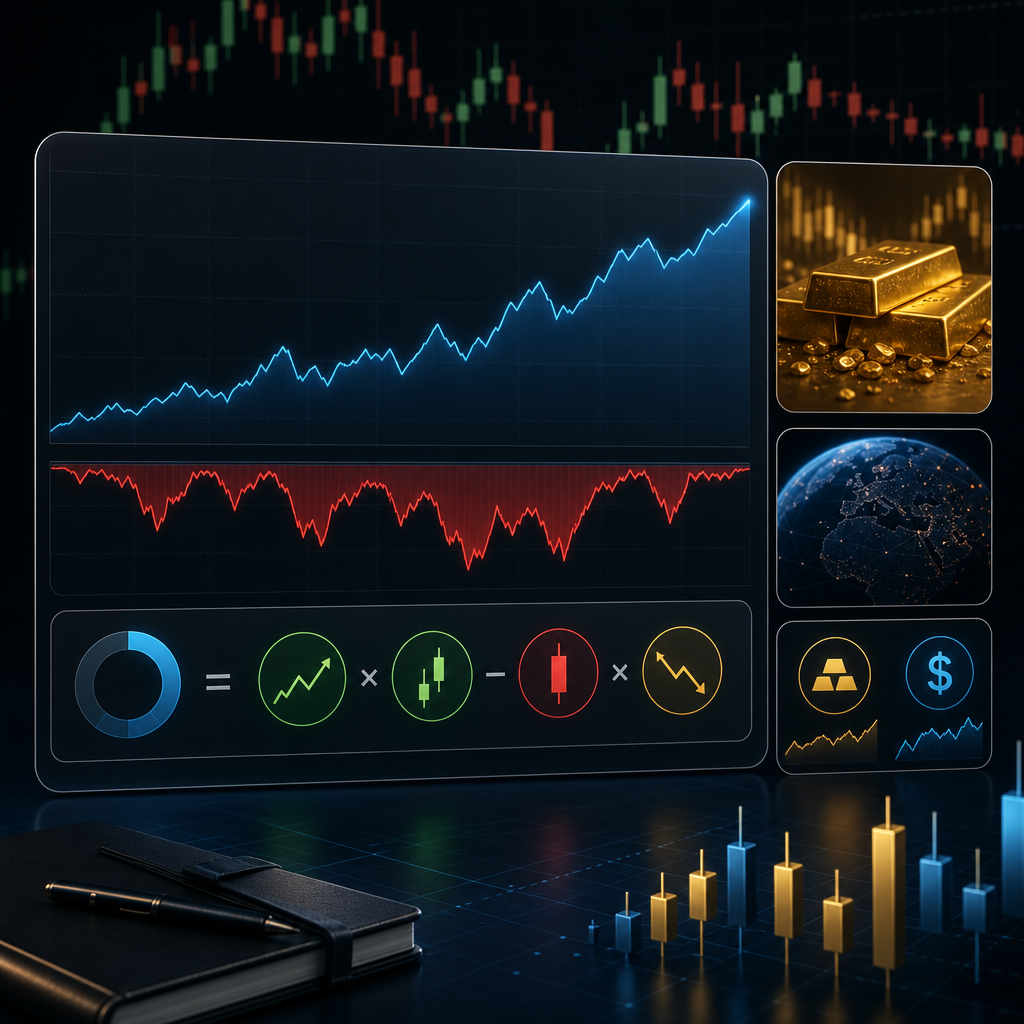
Your journal is only as accurate as your raw inputs.
MT5 gives you everything you need, but you must set it up correctly so you’re logging filled trades, not “intended” trades.
Step 1: Use a dedicated MT5 account for verification
If possible, verify a provider using a separate demo or small live account.
This prevents your manual trades from contaminating the dataset.
It also lets you measure realistic execution: spreads, slippage, and partial fills.
Step 2: Confirm symbol specs for XAUUSD and FX pairs
Before you log anything, check contract size, digits, and tick value.
XAUUSD brokers vary: some quote 2 decimals, others 3. That changes how you interpret “pips” and stops.
On FX, EUR/USD at 1.0520 typically has 5 digits (0.00001). USD/JPY at 149.50 often has 3 digits (0.001).
Step 3: Export trade history from MT5
- Open MT5 → Toolbox (or Terminal) → History.
- Right-click inside History → choose a date range (e.g., Last 3 Months).
- Right-click again → Report or Export.
- Save as HTML/CSV (CSV is easiest for spreadsheets).
Export weekly if you’re serious. Waiting 3 months invites missing notes and memory bias.
Step 4: Normalize the data in your spreadsheet
MT5 exports can include deposits, swaps, and commissions in ways that confuse beginners.
Clean it by separating:
- Trades only: open/close, symbol, volume, price, profit.
- Costs: commission, swap, spread impact (estimated), slippage.
If you can’t separate costs, your expectancy will look better than reality—especially on gold during fast markets.
Step 5: Add the missing context columns manually
MT5 won’t know if you entered during London or right before CPI.
That’s your job. Add columns for session and news context and fill them as you trade.
For a practical framework on how gold behaves around headlines, see how gold signals react to unexpected news events.
The Performance Metrics That Actually Validate Signals (With Formulas)
Win rate is popular because it’s easy to market.
But win rate alone is a trap. A provider can win 80% of trades and still lose money if losses are huge.
To validate signals properly, you need a small set of metrics that reveal edge, risk, and stability.
1) R-multiple (R) — your universal performance unit
R = (Profit or Loss) / (Initial Risk)
If you risked $12 on XAUUSD (entry 2648, SL 2636) and made $24 (TP 2672), that’s +2R.
If you lost $12, that’s -1R. Break-even is 0R.
R lets you compare EUR/USD, GBP/USD, and XAUUSD without getting lost in pip math.
2) Expectancy — the “edge per trade” number
Expectancy (in R) = (Win% × Avg Win in R) − (Loss% × Avg Loss in R)
Example:
- Win rate = 55%
- Average win = +1.8R
- Average loss = -1.0R
Expectancy = 0.55×1.8 − 0.45×1.0 = 0.99 − 0.45 = +0.54R.
That’s strong. Over 100 trades, +0.54R can compound nicely with disciplined risk.
3) Profit factor — useful, but not enough
Profit Factor = Gross Profit / Gross Loss
Above 1.3 is decent. Above 1.6 is strong. Above 2.0 is excellent, but verify sample size.
Profit factor can be inflated by a few outlier wins, so always check drawdown and trade count.
4) Max drawdown — your “can I survive this?” metric
Max drawdown is the biggest peak-to-trough equity decline.
If your journal shows a 22% drawdown while risking 1% per trade, that’s a warning sign.
For many signal followers, 15–20% max drawdown is the line where psychology breaks.
5) Time-in-trade and session breakdown
Signals that win overall may still fail during your trading hours.
Break results into:
- London session trades
- New York session trades
- Overlap trades
- Asia trades
Because United Kings focuses heavily on London and NY sessions, this breakdown matters when comparing providers and aligning with your lifestyle.
Build Your MT5 + Spreadsheet Journal Workflow (Repeatable in 20 Minutes/Week)
You don’t need fancy software to do professional-grade verification.
You need consistency, clean inputs, and a weekly routine.
Here’s a workflow that works whether you’re validating a new provider or auditing your own execution of signals.
Step-by-step weekly routine
- Step 1 (Daily, 2 minutes): After each trade closes, paste the MT5 ticket number and outcome into your journal.
- Step 2 (Daily, 3 minutes): Add session + news context. If it was near a tier-1 event, label it.
- Step 3 (Weekly, 10 minutes): Export MT5 history for the week and reconcile any missing details (entry/exit, commission, swaps).
- Step 4 (Weekly, 5 minutes): Update metrics dashboard: win rate, expectancy, profit factor, max DD, average R.
How to calculate R automatically in your sheet
Create columns:
- Risk (price): ABS(Entry − SL)
- Reward (price): Exit − Entry (for buys) or Entry − Exit (for sells)
- R-multiple: Reward / Risk
For XAUUSD, if you buy 2652.0 with SL 2639.0, your risk is $13.
If you exit at 2678.0, reward is $26, so R = 26/13 = +2R.
Include “execution quality” columns
Signal providers can be good, but your execution can ruin results.
Add two columns that expose this:
- Planned Entry (signal): what the provider posted
- Filled Entry (MT5): what you actually got
If your average slippage on gold is $0.80 during NY open, that’s not trivial.
On a $12 stop, $0.80 is 6.7% of your risk. Over time, it drags expectancy.
When to segment your dataset
- By symbol: XAUUSD vs EUR/USD vs GBP/USD vs USD/JPY
- By session: London vs NY vs overlap
- By volatility regime: quiet weeks vs news-heavy weeks
This is how you discover the truth: “Provider is great on EUR/USD in London, but average on gold during NY.”
Comparison Table: Verification Methods (What’s Legit vs What’s Noise)
Not all “backtests” are equal. Use this table to spot weak verification instantly.
| Method | What You Do | Pros | Cons | Verdict |
|---|---|---|---|---|
| Chart Eyeballing | Scroll charts and assume entries/TP fills | Fast | Hindsight bias, ignores spread/slippage, unrealistic fills | Fail |
| Signal Screenshot Review | Count posted wins/losses from Telegram screenshots | Easy to start | Cherry-picking risk, missing losses, no execution data | Fail |
| MT5 Demo Forward Test | Place signals in demo, export MT5 history | Real-time, consistent, shows trade management | No real slippage/psychology; still valuable | Good |
| Small Live “Micro” Verification | Trade tiny risk live (0.25–0.5%) and journal | Real execution costs, real fills, real emotions | Requires discipline and time | Best |
| Journal + Metrics Dashboard | Compute R, expectancy, drawdown, session stats | Objective, comparable, scalable | Needs consistent logging | Required |
Create a Signal Quality Scoring Rubric (So You Don’t Get Fooled)
Performance metrics tell you what happened.
A scoring rubric helps you judge why it happened and whether it’s repeatable.
This is critical because some providers look great for 30 trades, then collapse when volatility changes.
The United Kings-style scoring rubric (100 points)
- Transparency (20): Are entry, SL, TP always posted? Are losses acknowledged? Are updates timestamped?
- Execution realism (15): Are entries reasonable or “sniped” to the pip? Does strategy survive normal slippage?
- Risk structure (15): Is risk consistent? Mostly 1:2 or 1:3 setups? Avoids martingale?
- Performance stability (20): Expectancy positive across months, not just one hot week.
- Drawdown control (15): Max DD within acceptable range for stated risk.
- Session fit (10): Signals align with when liquidity is best (often London/NY).
- Education + support (5): Helps you execute correctly and avoid common mistakes.
Pass/Fail thresholds (practical and strict)
- 90–100: Institutional-grade process. Scale carefully.
- 75–89: Solid provider. Use with risk controls and keep journaling.
- 60–74: Mixed. Only micro risk, or avoid.
- < 60: Fail. Don’t fund this with meaningful capital.
How a rubric saves you in real life
Imagine a provider shows 70% win rate on XAUUSD.
Your journal reveals average win is +0.8R and average loss is -1.6R due to wide stops and tight targets.
Expectancy becomes negative even with a high win rate. The rubric would flag risk structure and execution realism as weak.
This is how you avoid paying for “feel-good” signals that don’t compound.
Case Study: Validating XAUUSD Signals Around $2650 (Realistic Trade Math)
Let’s make this concrete using the current context: XAUUSD ~$2650, DXY 106.80, and mixed volatility.
Gold at these levels often reacts sharply to U.S. yields and risk sentiment.
That means your verification must include news labeling and session tagging, or your stats will lie.
Sample trade set (10 trades, simplified)
Assume each trade risks 1R with typical gold stops of $10–$25.
- +2.0R
- -1.0R
- +1.5R
- -1.0R
- -1.0R
- +2.5R
- 0.0R (BE)
- +1.0R
- -1.0R
- +3.0R
Total = +6.0R over 10 trades → +0.60R expectancy (simplified average).
That’s strong, but 10 trades is not enough to trust. It’s a sample, not a verdict.
Now add realism: slippage + spread + late entries
On gold, it’s common for traders to enter late by $0.50–$1.50 during fast candles.
Let’s say your average “execution drag” is -0.15R per trade (from worse entries and costs).
New expectancy becomes +0.60R − 0.15R = +0.45R.
Still good. But if your drag is -0.40R (bad broker, high spreads, slow execution), it drops to +0.20R—barely acceptable.
What “good” looks like for gold signals
- Average win: +1.5R to +2.5R
- Average loss: -1R (clean stops, no revenge holding)
- Expectancy: +0.20R to +0.60R over 100+ trades
- Max drawdown: ideally < 15–20% at 1% risk/trade
If you want to align verification with how professionals execute signals, our guide on how to use forex signals on Telegram as a beginner complements this framework well.
Step-by-Step: Your 30-Day Signal Verification Challenge (Demo → Micro → Scale)
The fastest way to stop guessing is to run a time-boxed verification sprint.
Thirty days is long enough to capture different sessions and volatility conditions, but short enough to stay focused.
Phase 1 (Days 1–7): Demo forward test with perfect logging
- Trade every signal exactly as posted.
- Log every trade within 5 minutes of close.
- Record spread and any slippage you notice.
- Do not add “your own filters” yet. You’re testing the provider first.
Goal: Build the journaling habit and test operational clarity (do they post SL/TP clearly?).
Phase 2 (Days 8–21): Micro live verification (0.25–0.50% risk)
- Move to a small live account or smallest lot sizes possible.
- Risk 0.25–0.50% per trade so mistakes are cheap.
- Track execution differences between demo and live.
Goal: Measure real fills. This is where many “great” signals fall apart.
Phase 3 (Days 22–30): Apply pass/fail thresholds and decide
At the end of 30 days, compute:
- Expectancy (R)
- Win rate
- Average win and loss (R)
- Max drawdown
- Session breakdown
Then apply these decision rules:
- Pass: Expectancy ≥ +0.20R AND max DD within your tolerance AND clarity/execution scores high.
- Conditional pass: Expectancy positive but low; only scale if you can reduce execution drag (better broker, faster execution, trade during liquid sessions).
- Fail: Negative expectancy or unstable drawdowns. Stop paying, stop trading it.
This is also where you compare your results to the provider’s claims. If they claim 85% wins and you see 52%, ask why. Timezone? Late entries? Different broker feed? Or marketing exaggeration?
Advanced Validation: News Filters, Session Edges, and Regime Shifts
Once you’ve mastered the basics, the next level is understanding when signals work best.
Markets change regimes. A strategy that thrives when DXY trends may struggle when DXY chops.
Right now, with DXY around 106.80, FX majors like EUR/USD (1.0520) can be sensitive to U.S. data surprises and rate expectations.
Gold at $2650 can react to yields, geopolitics, and risk sentiment, often with sharp spikes.
Add a “news proximity” tag
In your journal, tag each trade as:
- Green: No tier-1 news within 2 hours
- Yellow: Tier-1 within 2 hours
- Red: Tier-1 within 30 minutes (CPI, NFP, FOMC)
Then compute expectancy by tag. Many providers look great in Green and terrible in Red.
Add a “session liquidity” tag
For XAUUSD and GBP/USD, spreads and volatility can widen during illiquid hours.
Tag trades as:
- Asia
- London
- New York
- Overlap
If a provider’s edge is concentrated in London/NY, that’s not a flaw. It’s a feature—if you can trade those hours.
Track “signal maintenance” behavior
Some providers manage trades actively: moving SL to BE, partial profits, or canceling setups.
That can be excellent, but it must be consistent and timely.
In your notes, record:
- Did they move SL to BE? When?
- Did they close early? Was it rule-based?
- Did they cancel pending orders before news?
If management decisions are random, your results will be random too.
How to Validate a Signal Provider Before You Pay (Practical Due Diligence)
Backtesting is the performance audit.
But you should also run due diligence before handing over money or trusting a Telegram channel.
What to look for in a legitimate provider
- Clear trade formatting: Entry, SL, TP, and direction every time.
- Consistent risk logic: No doubling down after losses.
- Session clarity: You know when signals usually come (London/NY is ideal for many).
- Performance transparency: Not just “wins,” but measurable reporting.
- Community and support: You can ask questions and get execution help.
Red flags your journal will expose quickly
- TP edits after the fact: Your logged timestamps won’t match their “results.”
- Unrealistic entries: They post “Buy 2640.2” but price never traded there on your broker feed.
- Hidden losses: Your MT5 history shows losses that never get mentioned publicly.
- High win rate, negative expectancy: Small wins, huge losses.
Where United Kings fits in
At United Kings, we focus on premium Telegram signals for forex and gold with clear Entry, SL, and TP levels, built for the London and New York sessions.
We also support traders with education so you can execute signals properly, not emotionally.
You can explore our offerings here: United Kings trading signals, dedicated XAUUSD gold signals, and our forex signals coverage.
Putting It All Together: Your Pass/Fail Dashboard (Template Logic)
To make this framework repeatable, build a one-page dashboard in your spreadsheet.
It should update automatically as you add trades.
Your dashboard sections
- Trade count: total trades, last 30 days, last 90 days
- Expectancy (R): overall and by symbol
- Win rate: overall and by session
- Average win/loss (R): and win/loss ratio
- Profit factor: overall and by symbol
- Max drawdown: and worst losing streak
- Execution drag: average slippage/spread impact
Suggested minimum sample sizes
- 30 trades: early read (too small to trust fully)
- 100 trades: meaningful confidence
- 200+ trades: robust evaluation across regimes
Practical pass/fail thresholds (use these as defaults)
- Expectancy: ≥ +0.20R (pass), +0.40R (strong)
- Profit factor: ≥ 1.30 (pass), ≥ 1.60 (strong)
- Max drawdown: ≤ 15–20% at 1% risk/trade (adjust to your tolerance)
- Worst losing streak: if 8–10 losses in a row break you psychologically, reduce risk
These thresholds aren’t magic. They’re guardrails.
Your personal tolerance matters, but without guardrails you’ll rationalize anything.
FAQ: Backtesting Forex & XAUUSD Signals with MT5 + Journal
1) Is this “backtesting” or “forward testing” signals?
Strictly, logging signals as they happen is forward testing. Many traders still call it “backtesting forex signals” because you’re validating historical results after collecting them. The key is you’re using real fills from MT5, not hindsight chart guesses.
2) How many trades do I need before trusting a signal provider?
Use 30 trades for a first impression, 100 trades for a real decision, and 200+ for confidence across different market regimes. If a provider won’t survive 100 trades in your journal, don’t scale.
3) Should I track pips or dollars instead of R-multiple?
Track R first. R normalizes performance across EUR/USD, GBP/USD, USD/JPY, and XAUUSD. You can still track pips and $ for comfort, but R is what makes analysis comparable.
4) What if my results differ from the provider’s posted results?
First check execution: broker feed differences, spread, slippage, and late entries. Then check whether the provider edits signals, closes early, or uses partials you didn’t follow. If differences remain large, treat it as a transparency red flag.
5) Can beginners do this without getting overwhelmed?
Yes—start with the core fields only (entry, SL, TP, exit, session) and add news/slippage columns later. Trade on demo first, and keep risk tiny when you go live.
Risk Disclaimer: Forex and gold trading involves significant risk and may not be suitable for all investors. Signals and educational content are provided for informational purposes only and do not constitute financial advice. Past performance is not indicative of future results. You can lose more than your initial deposit if trading with leverage. If you are a beginner, we strongly recommend starting on a demo account and using strict risk management before trading live.
Join United Kings: Verified Signals + A Community Built for Consistency
If you’re serious about validating signals the right way, you’ll love how we operate.
United Kings delivers premium Telegram forex and gold signals with clear Entry, SL, and TP levels, designed around London and New York session liquidity.
We’re also backed by a 300K+ active trader community, and we share educational guidance alongside signals so you can execute with discipline.
- Explore our full suite: United Kings Signals
- For gold traders: XAUUSD Gold Signals
- For FX majors: Forex Signals
- Need crypto too? Crypto Signals
- See our 3 plans (Starter, Best Value, Unlimited) on United Kings pricing with a 48-hour money-back guarantee
- Join the Telegram community now: United Kings Telegram signals channel
Pricing recap: 3 Months $299 (Starter), 1 Year $599 (Best Value, ~50% savings + FREE ebook), Lifetime $999 (Unlimited access forever).
Run the 30-day verification challenge from this article, journal your results, and trade with confidence—not hope.


