
Ever copied a forex trade from a signal… and still lost money?
If you’re new, that can feel confusing (and honestly unfair). You did what the message said, you hit Buy or Sell, and the market still went against you.
This is exactly why beginners need a real forex signals guide—not just a list of “best channels.” In this article, you’ll learn how forex signals actually work, how to use them safely, and how to build consistency without blowing your account.
TL;DR: Forex signals for beginners (the practical version)
- Signals are trade ideas, not magic. You still need correct lot size, timing, and discipline.
- Risk management is the difference between a small loss and a blown account. Start with 0.5%–1% risk per trade.
- Execution matters: spreads, slippage, and news can turn a “good signal” into a bad fill.
- Choose providers like an auditor: track record, clarity, stop losses, and transparency beat hype.
- Build a routine around London and New York sessions—where most liquidity and clean moves happen.
- Use a journal to measure your results with signals (not your emotions).
What forex signals are (and what they are not)
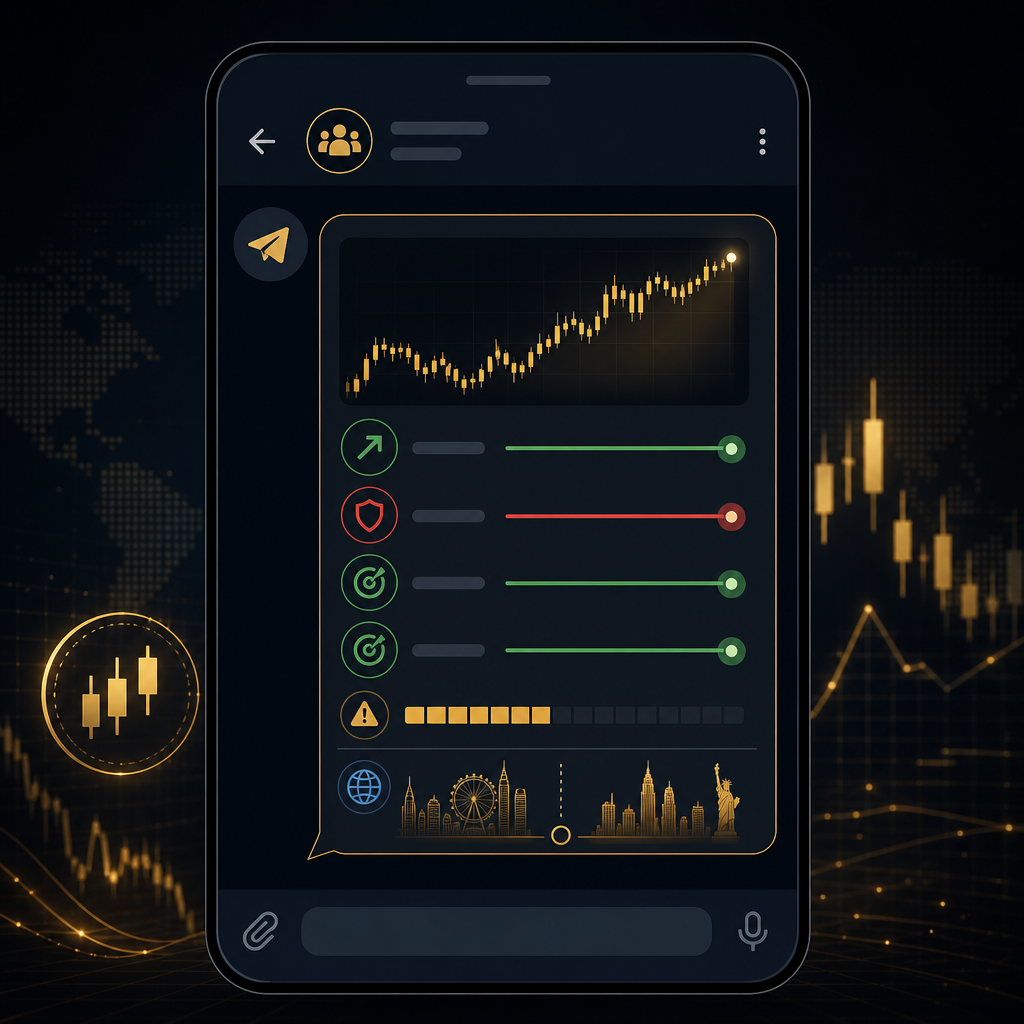
Forex signals are pre-planned trade instructions sent by a trader, analyst, algorithm, or team. A good signal usually includes the pair, direction, entry, stop loss, and take profit levels.
For beginners, signals can be a shortcut to structure. Instead of guessing where EUR/USD might reverse, you’re following a plan with defined risk.
But signals are not a guarantee. They’re not a “money printer.” And they’re not a replacement for learning.
What a high-quality signal typically includes
- Instrument: EUR/USD, GBP/USD, USD/JPY, XAUUSD, etc.
- Direction: Buy or Sell
- Entry: market entry or limit entry (e.g., buy at 1.0520 or buy limit at 1.0495)
- Stop Loss (SL): where the trade is invalidated
- Take Profit (TP): often TP1/TP2/TP3 for scaling out
- Context: session timing, key levels, and whether news is near
Why beginners lose even with “good” signals
Most losses come from execution and behavior, not the idea itself. A beginner might:
- Use the wrong lot size and risk 10% instead of 1%.
- Enter late after price already moved 15–30 pips.
- Move the stop loss “just a bit” and turn a planned -20 pip loss into -80 pips.
- Trade during high-impact news when spreads widen and slippage spikes.
In today’s market context, volatility is real. With DXY around 106.80 and USD/JPY near 149.50, USD flows can move fast. A signal can be correct, but if you execute poorly, your result won’t match the provider’s.
Forex signals vs gold signals (and why many beginners mix them)
Many new traders start with majors like EUR/USD (around 1.0520) and GBP/USD (around 1.2680), then quickly get attracted to gold because it “moves more.”
Gold (XAUUSD) around $2650 can move $10–$25 in minutes during New York. That’s opportunity—but also risk. If you’re curious about gold-specific setups, explore our premium gold signals alongside forex.
How forex signals work in real life (not in screenshots)
Let’s make this practical. A signal is only useful when it fits into a real workflow: broker conditions, spreads, your schedule, and your risk rules.
Here’s what “signal trading” looks like when done properly by a beginner.
Step-by-step: what you do when a signal arrives
- Read the full message: pair, entry type, SL, TP, and any notes (news filter, session).
- Check the chart for location: are we at a key level or already far away?
- Confirm your risk: decide the exact % you’ll risk (0.5%–1% recommended for beginners).
- Calculate lot size: based on stop distance (pips) and account size.
- Place the order: preferably with SL and TP attached immediately.
- Follow management rules: don’t freestyle. If the plan says move to breakeven at TP1, do that.
- Journal the trade: screenshot + notes (entry quality, emotions, execution).
Market vs limit signals (and why beginners should care)
A market signal means enter now at the current price. A limit signal means wait for price to come to you (better entry, often smaller stop).
Beginners often love market entries because they feel “fast.” But limit entries can reduce chasing and improve risk-reward.
Example: EUR/USD is at 1.0520. A provider might send:
- Buy Limit 1.0495
- SL 1.0465 (30 pips)
- TP 1.0555 (60 pips) → 1:2 RR
If you chase at 1.0520 instead, your stop might need to be wider, or your RR shrinks. Same idea, worse math.
Why session timing changes signal quality
United Kings focuses heavily on London and New York sessions because liquidity tends to be deeper and moves cleaner. Asia can be great too, but it often ranges more in majors.
When GBP/USD is around 1.2680, London can push 40–80 pips on a trending day. New York can extend or reverse that move depending on US data and DXY strength.
Types of forex signals: manual, algorithmic, and hybrid
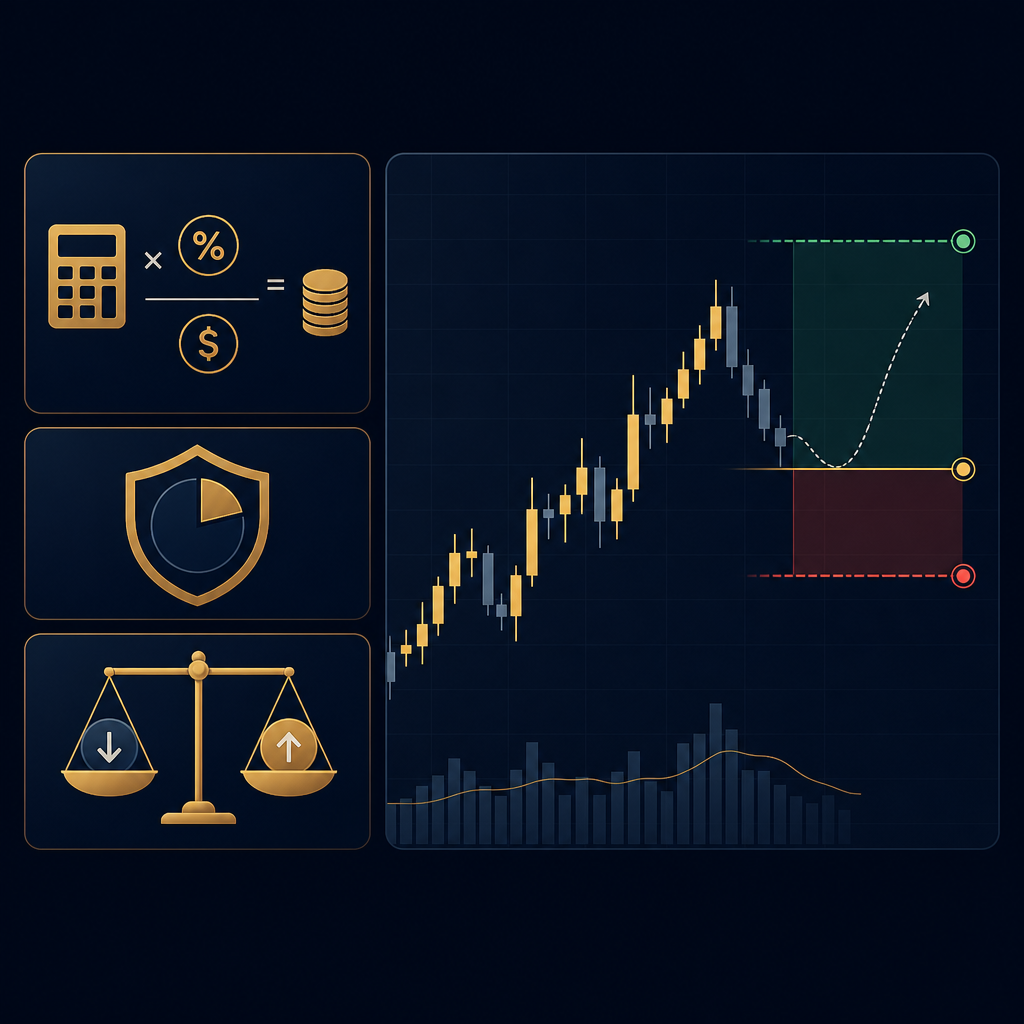
Not all signals are created the same way. Understanding the “engine” behind the signal helps you decide what fits your personality and schedule.
Manual signals (human analysis)
Manual signals are created by traders who analyze price action, structure, order flow, and fundamentals. The advantage is context: humans can adapt when conditions change.
The downside is consistency depends on the trader’s skill, discipline, and process.
Algorithmic signals (rules-based systems)
Algorithmic signals come from a system that triggers trades when conditions are met (indicator combinations, volatility filters, etc.).
The advantage is speed and consistency. The downside is that algorithms can struggle in regime shifts—like sudden risk-off moves when DXY spikes or unexpected geopolitical headlines hit.
Hybrid signals (best of both)
Hybrid models use algorithms to scan and filter, then humans validate and manage. This can reduce noise and avoid low-quality trades.
At United Kings, we prioritize clarity: clean Entry, SL, TP levels, plus educational context so beginners understand what they’re doing—not just copying.
Comparison table: which signal type is best for beginners?
| Signal Type | Best For | Pros | Cons | Beginner Fit |
|---|---|---|---|---|
| Manual (Human) | Traders who want context | Adaptive, explains “why” | Quality varies by provider | High (if provider is transparent) |
| Algorithmic | Traders who want rules | Consistent triggers, fast alerts | Can fail in news/volatility spikes | Medium (needs strict risk control) |
| Hybrid | Traders who want structure + judgment | Filters noise, adds validation | Requires a strong team/process | Very High |
How to choose a forex signal provider (beginner checklist)
If you only take one lesson from this guide, take this: your provider choice is a risk management decision. A bad provider forces you into bad trades, unclear stops, and emotional decisions.
Beginners often choose based on screenshots and hype. Professionals choose based on process.
What to look for (practical criteria)
- Clear formatting: Entry, SL, TP are non-negotiable.
- Risk-reward logic: most trades should target 1:2 or better when conditions allow.
- Consistency of strategy: are they scalping one day and long-term holding the next with no explanation?
- Realistic frequency: 5–20 quality signals/week can beat 50 random alerts/day.
- Transparency: wins and losses shared, not only wins.
- Education: beginners need guidance on execution, not just entries.
Red flags beginners should avoid
- “Guaranteed profits” or “100% win rate” claims.
- No stop loss provided (or “mental SL”).
- Martingale/grid recovery as the main method without clear risk limits.
- Constantly deleting losing messages or only posting after the move.
- Pressure tactics: “deposit now or you’ll miss the next 500 pips.”
A simple provider scoring method
Give each category 0–2 points (10 total):
- Clarity (Entry/SL/TP)
- Risk logic (RR + SL discipline)
- Execution guidance (session, news notes)
- Transparency (losses included)
- Support/education (Q&A, explanations)
If they score under 7/10, keep looking.
To make this easier, use our dedicated resource: forex signals provider checklist for beginners.
Where United Kings fits
United Kings is built for traders who want premium Telegram signals for forex and gold with structure. We share clear Entry, SL, and TP levels and focus on London/NY timing.
We also back it with a large community—300K+ active traders—so you’re not trading alone.
How to use forex signals (execution rules that protect beginners)
Execution is where beginners accidentally turn a good strategy into bad results. The market doesn’t care that you “followed the signal.” Your broker fills you based on price, spread, and liquidity.
In current conditions, USD pairs can jump quickly. With USD/JPY near 149.50, a 20–40 pip burst can happen in seconds around data. If you enter late, your stop distance effectively shrinks and you get stopped out on normal volatility.
Rule #1: Don’t chase—use an entry tolerance
Create a simple rule: if price is more than X pips away from entry, you skip.
- For majors like EUR/USD: 3–7 pips tolerance.
- For GBP/USD: 5–10 pips tolerance (more volatile).
- For gold (XAUUSD): $1–$3 tolerance depending on volatility.
Rule #2: Always place SL and TP immediately
Beginners blow accounts when they “add SL later.” Later becomes never, and never becomes margin call.
If a signal says SL is 25 pips, it’s 25 pips. Not 60 pips because “it will come back.”
Rule #3: Respect news windows
Even the best signal can fail during major releases. If the provider says “avoid CPI/NFP,” take it seriously.
For example, if DXY is strong at 106.80 and US data surprises higher, EUR/USD can drop 40–70 pips fast. If you’re long with a tight stop, you may get slipped.
If you want to understand how news affects accuracy, read: our blog and specifically our resource on signal timing and fundamentals.
Rule #4: Use pending orders when possible
Pending orders remove emotion. If the signal is a buy limit, place it and walk away. Let price come to you.
This also helps beginners avoid “revenge entries” where you jump in after missing the initial move.
Risk management for beginners using forex signals (the survival framework)
Most beginners focus on win rate. Professionals focus on risk per trade and expected value.
Even with an 85% win rate, one oversized loss can wipe out weeks of gains. That’s why risk management is not optional.
Start with the 1% rule (or 0.5% if you’re brand new)
Risking 1% means if you have a $1,000 account, your maximum loss is $10 per trade.
That sounds small, but it keeps you alive long enough to learn execution, psychology, and consistency.
Position sizing (simple method)
You need three numbers:
- Account balance
- Risk %
- Stop loss distance (pips)
Example: $1,000 account, 1% risk = $10. If your SL is 25 pips on EUR/USD, you size the trade so 25 pips = $10.
If you don’t know pip value yet, use your broker’s calculator or a position sizing tool until it becomes natural.
Gold example with realistic levels (XAUUSD around $2650)
Suppose a gold signal is:
- Buy XAUUSD at $2650.00
- SL $2638.00 (risk $12)
- TP $2674.00 (reward $24) → 1:2 RR
This is a clean beginner-friendly structure: defined invalidation and a logical target within the $2610–$2690 range.
Daily loss limit (the “account protection” rule)
Signals can cluster. You might take 3 trades in one session. To prevent spirals, set a daily max loss:
- Conservative: stop for the day after -2R (example: two full stop-outs).
- Moderate: stop after -3R.
This prevents revenge trading, which is the #1 account killer for beginners.
Learn more: risk management resource
If you want a deeper framework, keep this bookmarked: risk management strategies when using forex signals.
Understanding win rate, risk-reward, and what “85%+” really means
Win rate is seductive. Beginners hear “85% win rate” and assume profits are automatic. But profitability depends on the relationship between win rate and average win/loss size.
Let’s break it down in a way you can actually use.
The math that matters: expectancy
Expectancy is the average amount you expect to win (or lose) per trade over time.
Simple version:
- If you win often but your losses are huge, you can still lose money.
- If you win less often but your winners are bigger, you can still be profitable.
Beginner-friendly target: 1:2 risk-reward
Many high-quality signal strategies aim for 1:2 or 1:3 when market structure supports it.
Example on GBP/USD at 1.2680:
- Sell 1.2680
- SL 1.2720 (40 pips)
- TP 1.2600 (80 pips) → 1:2
With this structure, you can be profitable even if you’re right only 45%–50% of the time.
Why beginners should ignore “pip totals”
Some providers advertise “+2,000 pips this month.” That number is meaningless without:
- Lot size assumptions
- Risk per trade
- Drawdown
- Number of trades
Instead, track performance in R-multiples (risk units). If you risk 1R and make 2R, that’s a strong trade regardless of pips.
How United Kings approaches performance communication
We focus on structured setups, clear invalidation, and repeatable execution—especially around London and NY sessions. That’s how you build consistency as a beginner.
If you want a broader overview of our approach, start here: United Kings trading signals and explore the categories for forex and gold.
Building a beginner routine around forex signals (consistency beats intensity)
Most beginners fail because they treat signals like entertainment. They open Telegram, see a trade, jump in, and then stare at every tick.
Consistency comes from routine. Routine creates discipline. Discipline protects your account.
A simple daily routine (30–45 minutes total)
- Pre-session (10 min): check calendar, note red news, mark key levels.
- Execution window (10–20 min): take only A+ signals that fit your rules.
- Post-trade (10–15 min): journal screenshots and execution notes.
London vs New York: choosing your “home session”
If you work a job or study, you can’t trade all day. Pick one session as your primary.
- London: great for EUR/USD and GBP/USD movement and breakouts.
- New York: strong continuation or reversals; watch DXY and US yields.
When DXY is firm (like 106.80), New York can accelerate USD strength, pushing EUR/USD lower or keeping USD/JPY bid.
Signal batching: why fewer trades often pays more
Beginners think more trades = more profit. Usually it’s more mistakes.
A better approach: take 3–5 high-quality signals per week, execute perfectly, and measure outcomes. Then scale up.
Community advantage
Trading alone is hard. In a large community, you learn faster because you see how others execute, where they struggle, and what rules keep them consistent.
United Kings has 300K+ active traders and educational content alongside signals, so beginners don’t feel lost after the entry.
Common beginner mistakes with forex signals (and how to fix them fast)
Let’s be blunt: most beginners don’t fail because signals are bad. They fail because they repeat the same avoidable mistakes.
Here are the big ones—and the fixes you can apply today.
Mistake #1: Overleveraging “because the signal looks strong”
No signal is strong enough to justify risking 5%–20% of your account. The market can spike, spreads can widen, and stops can slip.
Fix: cap risk at 1% per trade until you have 100+ trades of data in your journal.
Mistake #2: Moving stop loss
Moving SL is how a planned loss becomes an emotional disaster. A 25-pip SL exists for a reason: it defines invalidation.
Fix: make a rule: you can only move SL toward safety (to breakeven or trailing), never further away.
Mistake #3: Taking signals during high-impact news
News can invalidate technical levels instantly. EUR/USD can jump 30 pips and reverse 50 pips in minutes during CPI.
Fix: avoid entering 10–15 minutes before major releases and wait for spreads to normalize.
Mistake #4: Subscribing to too many providers
Too many signals create conflict. One channel says buy, another says sell. You freeze or overtrade.
Fix: choose one primary provider and commit for 30 days. If you need guidance on Telegram specifically, read: forex signals on Telegram for beginners.
Mistake #5: Not tracking results (so you never improve)
If you don’t journal, you don’t know whether losses are from the strategy or from your execution.
Fix: track: entry time, slippage, spread, RR, and whether you followed the rules. That’s how you become consistent.
Beginner-friendly examples: executing signals in today’s market context
Let’s use the current market context and walk through realistic examples. The goal is not to predict the market. The goal is to show you how to think and execute.
Example 1: EUR/USD structured trade around 1.0520
Market context: EUR/USD is around 1.0520 while DXY is elevated at 106.80. That often means EUR/USD rallies can be sold unless the market shifts risk-on.
A signal might look like:
- EUR/USD Sell 1.0520
- SL 1.0550 (30 pips)
- TP1 1.0480 (40 pips)
- TP2 1.0460 (60 pips) → roughly 1:2
Your beginner execution rules:
- If price is already at 1.0508 when you see the signal, don’t chase. Wait or skip.
- Risk 1% max. If you’re unsure, risk 0.5%.
- Place SL/TP immediately.
Example 2: GBP/USD volatility-aware setup around 1.2680
GBP/USD is around 1.2680. It tends to move faster than EUR/USD, so stops may need to be slightly wider.
- GBP/USD Buy 1.2680
- SL 1.2645 (35 pips)
- TP 1.2750 (70 pips) → 1:2
Beginner note: if spreads widen during a volatile minute, your actual fill might be worse. That’s why you avoid entering right at major news.
Example 3: USD/JPY with key psychological level near 150.00
USD/JPY is around 149.50. Levels like 150.00 can attract volatility due to options, interventions risk, and headlines.
A conservative beginner approach is to trade smaller size or avoid if you can’t monitor it. Signals here can be high-quality but fast.
Example 4: Gold (XAUUSD) around $2650 with clean risk
Gold is around $2650 (+0.35% on the day). Gold can trend strongly when yields drop or when risk-off flows appear.
A signal example within your guideline range:
- XAUUSD Sell $2662.00
- SL $2676.00 (risk $14)
- TP $2634.00 (reward $28) → 1:2
If you want gold-focused alerts, explore our XAUUSD gold signals and compare how gold behaves versus majors.
How to evaluate your results with forex signals (without lying to yourself)
Beginners often ask: “Are these signals profitable?” The better question is: “Am I executing them profitably?” Because execution differences can completely change outcomes.
To evaluate fairly, you need a system.
Step-by-step: a 30-trade evaluation plan
- Commit to one provider for 30 trades (not 3 trades).
- Use fixed risk (0.5% or 1%) on every trade.
- Record entry quality: on-time, late, or chased.
- Record execution cost: spread + slippage in pips.
- Measure in R: +2R, -1R, etc.
- Review weekly: what mistakes repeated?
What “good” looks like for a beginner
- Following rules on 80%+ of trades
- Average loss close to -1R (not -2R or -3R)
- Stable emotions (less revenge trading)
- Clear data on what pairs/sessions fit you best
Why your broker matters more than you think
If your broker has wide spreads, slow execution, or frequent requotes, your results will differ from the provider’s.
This shows up most on volatile pairs and gold. A $2–$4 spread spike on XAUUSD at the wrong moment can ruin a tight entry plan.
Use educational resources to close the gap
We publish educational content to help traders improve execution and decision-making beyond copying. Start with our broader resources at United Kings blog.
Getting started with United Kings signals (beginner onboarding)
If your goal is to follow signals with structure, clarity, and a serious community, here’s the simplest way to start with United Kings.
What you get with United Kings
- Premium Telegram signals for forex and gold
- Clear Entry, SL, TP levels designed for execution
- 85%+ win rate target as part of our process focus (not a guarantee)
- 300K+ active traders in the community
- London and NY session focus for liquidity and cleaner moves
- Educational guidance alongside signals
- 48-hour money-back guarantee for peace of mind
Step-by-step: how to join and set up (beginner-friendly)
- Review our signal services: forex signals and gold signals.
- Choose a plan on our pricing page (Starter 3 Months $299, Best Value 1 Year $599 with 50% savings + FREE ebook, Unlimited Lifetime $999).
- Join our Telegram channel: United Kings Telegram community.
- Start on demo if you’re new, then move to small live risk (0.5%–1%).
- Follow the routine: execute, manage, journal, review weekly.
Which plan is best for beginners?
If you’re serious about building consistency, the 1 Year plan ($599) is often the best value because it gives you time to learn without subscription hopping. The 3 Months ($299) is a solid starter if you want to test execution and routine first. The Lifetime ($999) is for traders who want long-term access without recurring payments.
FAQ: Forex signals for beginners
Are forex signals good for beginners?
Yes—if they include clear Entry, SL, and TP levels and you follow strict risk management. Signals can teach structure, but beginners should still learn basics and start with demo trading.
How do I know if a signal provider is legit?
Look for transparency, consistent formatting, realistic claims, and a clear risk framework. Avoid providers who promise guaranteed profits or refuse to share stop losses.
How much should a beginner risk per signal trade?
Most beginners should risk 0.5% to 1% per trade. This keeps losses manageable while you build execution skill and confidence.
Can I use forex signals on a small account?
Yes, but you must position size correctly. A small account can still grow with consistent risk control. Overleveraging is what destroys small accounts.
Should I trade forex signals or gold signals?
Forex majors (EUR/USD, GBP/USD) are usually smoother for beginners. Gold (XAUUSD) can be profitable but more volatile. Many traders use both once they have a routine and strict risk rules.
Risk Disclaimer: Forex and gold trading involve significant risk and may not be suitable for all investors. Signals are trade ideas, not financial advice. Past performance does not guarantee future results. You can lose more than your initial deposit if using leverage. If you are a beginner, practice on a demo account first and use proper risk management on every trade.
Ready to stop guessing and start trading with structure?
Join United Kings for premium forex and gold signals with clear Entry, SL, and TP levels, London/NY session focus, and a 300K+ trader community. Explore our signals service, choose your plan on United Kings pricing, then get access instantly via our Telegram channel.
Trade smarter. Manage risk. Build consistency—one high-quality signal at a time.