
If you’ve ever opened a chart and thought, “Where do I even start?” you’re not alone.
Forex signals for beginners can feel like a shortcut—someone tells you what to buy or sell, where to enter, and where to exit. But the truth is simpler and more powerful: a good forex signals guide teaches you how to use signals like a professional, not like a gambler.
In this article, we’ll break down how to use forex signals step-by-step, using realistic current market context (EUR/USD 1.0520, GBP/USD 1.2680, USD/JPY 149.50, DXY 106.80, and Gold around $2650). You’ll learn how signals work, how to execute them, how to control risk, and how to build consistency—without needing to become a full-time analyst overnight.
TL;DR: Forex Signals for Beginners (Read This First)
- Signals are trade plans, not magic. You still need correct execution, risk control, and discipline.
- For beginners, the best signals include Entry, Stop Loss (SL), Take Profit (TP), and a clear setup type (scalp/swing).
- Your #1 job is position sizing. Risk 0.5%–1% per trade until you’re consistent.
- Use signals during London and New York sessions for tighter spreads and cleaner moves.
- Track every trade in a journal. Consistency comes from process, not “more signals.”
- Choose providers with transparency, education, and structure—like United Kings Forex Signals and our community-driven approach.
1) What Are Forex Signals (And What They Are Not)?
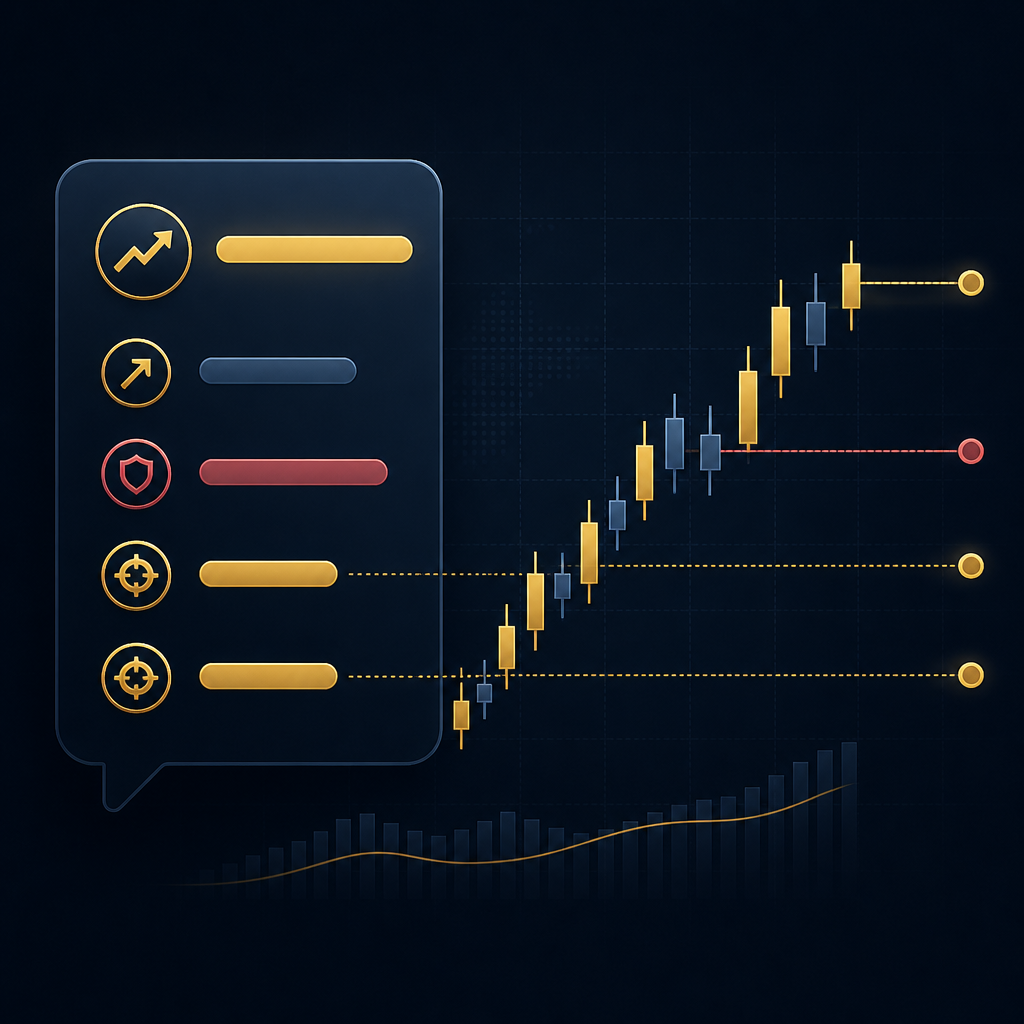
A forex signal is a structured trade idea. At minimum, it tells you what to trade (e.g., EUR/USD), where to enter (price level), where to exit if wrong (SL), and where to take profit (TP levels).
For beginners, this structure matters because it turns trading from “guessing” into a repeatable routine. A signal can be generated by a human analyst, an algorithm, or a hybrid approach. What matters is whether the signal is clear, executable, and risk-defined.
What a beginner-friendly signal typically includes
- Pair + direction: Buy GBP/USD or Sell USD/JPY.
- Entry: A market entry or a limit entry (e.g., Buy EUR/USD at 1.0520–1.0512).
- Stop Loss: A level that invalidates the idea (e.g., 25–50 pips on majors depending on setup).
- Take Profit: One or multiple targets (TP1, TP2). Often 1:2 or 1:3 risk-reward.
- Context: Session timing, key levels, and what would cancel the trade.
What signals are NOT
Signals are not guaranteed profits. They are not a replacement for discipline. And they are not a license to overtrade.
Even a high-quality provider can have losing streaks. In current conditions, with DXY around 106.80 and USD/JPY near 149.50, volatility can spike around US data, central bank commentary, or risk headlines. That means your execution and risk management become the real edge.
Why beginners love signals (and why some get hurt)
Signals reduce decision fatigue. You don’t need to analyze 20 charts. You follow a plan.
But beginners get hurt when they treat signals like “bets,” increase lot sizes after a win, or ignore SL because “it will come back.” Your provider can’t save you from those mistakes. Only your process can.
If you want to understand what professional-grade signals look like across markets, explore United Kings Signals, where we publish structured entries with SL/TP and ongoing education designed for real execution—not hype.
2) The Different Types of Forex Signals (So You Pick the Right Fit)
Not all signals are meant for the same trader. The fastest way to get frustrated is to subscribe to scalp signals when you can’t watch charts, or to swing signals when you expect instant results.
Let’s break down the main signal types so you can match them to your schedule, personality, and risk tolerance.
Scalp signals (minutes to hours)
Scalps aim for smaller moves, often 10–40 pips on majors. They’re common during London and New York when spreads are tight and liquidity is deep.
They require fast execution. If you’re at work and can’t place trades quickly, scalping signals can become stressful.
Day trade signals (hours to same day)
Day trades target intraday swings. Stops might be 20–60 pips on majors depending on structure. You don’t need to stare at the chart, but you should be available to manage trades.
Swing signals (days to weeks)
Swing signals focus on bigger moves and wider invalidation levels. They’re often more forgiving for busy traders because you’re not reacting to every candle.
The tradeoff is patience. A swing trade might float in drawdown before it works, and you must be comfortable with that—without moving the stop.
News-based signals (event-driven)
These are built around economic releases (CPI, NFP, rate decisions). They can be profitable but also high-risk due to slippage and spread widening.
Beginners should treat news signals with caution until they understand execution risks.
Gold vs forex signals (a quick reality check)
Even if this is a forex guide, many beginners also trade gold. With XAU/USD around $2650 and daily movement near +0.35%, gold can move $10–$25 quickly during US session bursts.
A typical gold example might be: Buy XAU/USD at $2650 with SL $2638 (risk $12) and TP $2674 (reward $24, 1:2). That’s normal volatility—not “crazy.” But it’s different from EUR/USD, where a 30-pip move is meaningful.
If you want a dedicated stream for metal setups, see United Kings Gold Signals.
Comparison table: Which signal type is best for beginners?
| Signal Type | Typical Hold Time | Best Session | Beginner Difficulty | Common Mistake |
|---|---|---|---|---|
| Scalp | 5 min–3 hours | London / NY overlap | High | Late entries and revenge trades |
| Day trade | 1–10 hours | London and NY | Medium | Closing early due to fear |
| Swing | 2–15 days | Any (less timing-sensitive) | Low–Medium | Moving SL too soon |
| News-based | Seconds–hours | Release time | High | Slippage + spread surprises |
For most beginners, the sweet spot is day trade + selective swing. You get enough action to learn, but not so much speed that execution becomes chaos.
3) How to Use Forex Signals Step-by-Step (The Beginner Execution Blueprint)
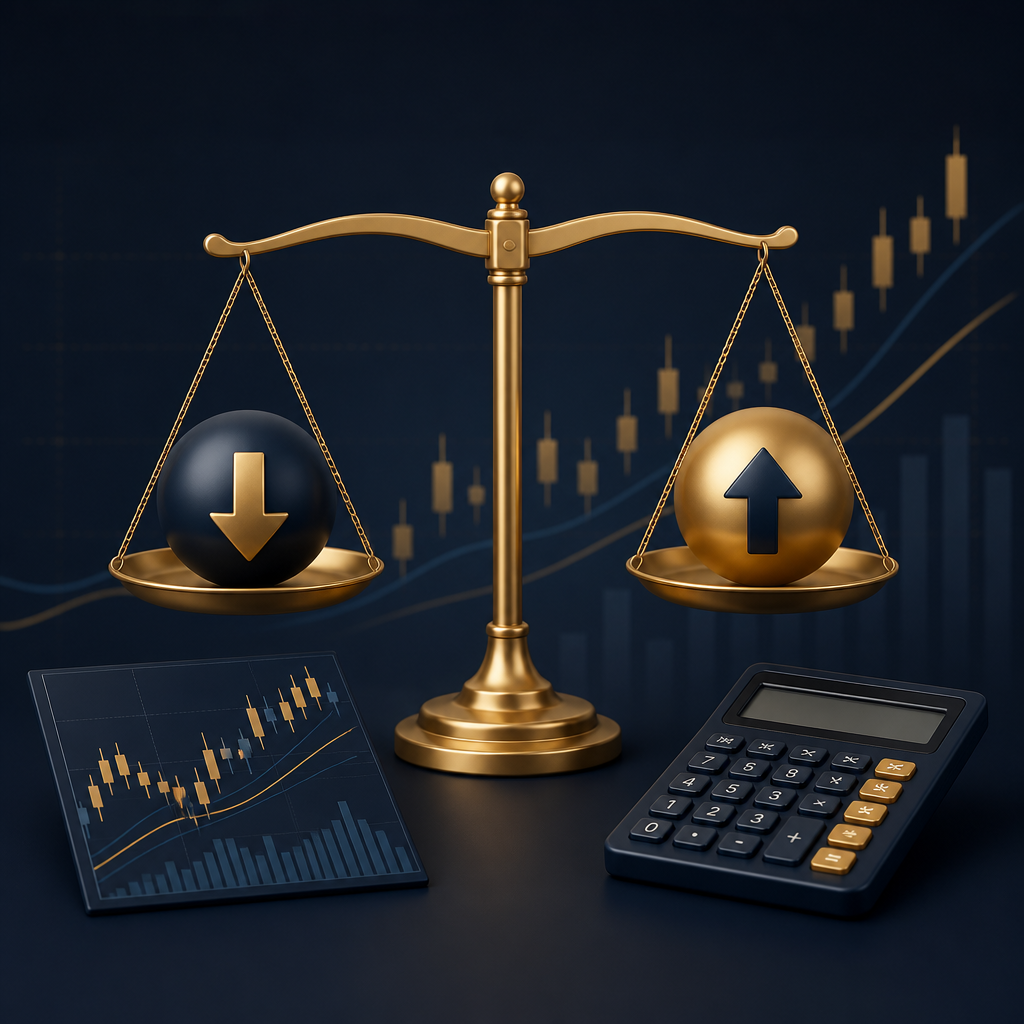
Most beginners don’t lose because the signal was “bad.” They lose because they executed it badly.
Execution is a skill. The good news is you can systemize it with a checklist that takes less than 2 minutes per trade.
Step 1: Confirm the market and session
Look at where we are in the day. London and New York sessions tend to provide cleaner movement and lower spreads.
In today’s context, with DXY near 106.80, USD pairs can trend strongly when US data or Fed commentary hits. That’s great for momentum, but it also means you should avoid random entries during illiquid hours.
Step 2: Read the signal like a trade plan
Before placing anything, understand the structure:
- Is it a market order now, or a limit order at a better price?
- Where is the invalidation point (SL)?
- What is the intended risk-reward (1:2, 1:3)?
- Is there a “cancel if” condition?
Step 3: Calculate your position size (non-negotiable)
This is where beginners either become consistent—or blow accounts.
Pick a fixed risk per trade. If your account is $1,000 and you risk 1%, your max loss is $10. If the stop is 25 pips, you choose a lot size that makes 25 pips equal $10.
That’s it. No emotion. No “I feel confident.” Same process every time.
Step 4: Place the order correctly (and avoid the common traps)
- Trap #1: Entering late. If price already ran 15–25 pips past entry, you’re changing the math.
- Trap #2: Tightening SL to “reduce risk.” You usually get stopped out by noise.
- Trap #3: Widening SL to “give it room.” That’s emotional trading disguised as patience.
Step 5: Manage the trade with simple rules
Beginners over-manage. They move stops every candle and exit early at the first pullback.
A clean approach is:
- At TP1, consider taking partial profit and moving SL to break-even (only if the signal plan supports it).
- Let TP2/TP3 run without watching every tick.
- If price hits SL, accept it. Your job is to follow a system, not win every trade.
Step 6: Journal the trade in 60 seconds
Write down: pair, entry, SL, TP, result, and one note about execution quality.
After 30 trades, you’ll see patterns—like “I lose when I chase late entries” or “I win more during London open.” That’s how you improve fast.
If you want a deeper execution framework, pair this guide with our beginner-friendly resources on United Kings Blog and structured trade streams inside Forex Signals.
4) Choosing a Forex Signal Provider: The Beginner’s Due Diligence Checklist
Choosing a provider is like choosing a gym coach. A great coach won’t do the push-ups for you, but they’ll give you a plan that works, correct your form, and keep you consistent.
A bad coach sells hype, hides losses, and encourages overtrading. As a beginner, you need filters.
Green flags: what you want to see
- Clear trade structure: Entry, SL, TP, and updates when conditions change.
- Consistency of method: Not random pair-hopping every day with no explanation.
- Education alongside signals: You should be learning why trades work.
- Realistic language: No “guaranteed profits” or “100% win rate.”
- Community: A place to ask questions and see how others execute.
Red flags: what to avoid
- Signals without SL (“we’ll close manually”). That’s dangerous for beginners.
- Overposting 20–50 signals per day. That’s often noise, not edge.
- Pressure tactics like “deposit now or miss the next 500 pips.”
- Hidden performance, no transparency, no trade history context.
Beginner reality: win rate is not the whole story
You’ll hear “85% win rate” a lot in the industry. But a high win rate can still lose money if losses are huge and wins are tiny.
What you want is a provider that respects risk-reward and trade management. For example, if a provider targets 1:2 on many setups, they can be profitable even with a lower win rate than someone chasing small TPs with big SLs.
How United Kings fits the beginner checklist
At United Kings, we focus on structured premium Telegram signals for forex and gold with clear Entry, SL, and TP levels. We trade primarily around London and NY sessions, where execution quality is typically better.
We also build traders, not just trades. That’s why our community includes 300K+ active traders and educational guidance alongside signals.
If you want to see how we present and organize signals, start with our main hub at Signals and explore who we are before you subscribe.
5) Risk Management for Beginners: The One Skill That Keeps You in the Game
If you learn only one thing from this forex signals guide, let it be this: risk management is the strategy.
Signals provide opportunities. Risk management decides whether you survive long enough to benefit from them.
Start with a simple risk rule: 0.5%–1% per trade
Beginners should typically risk 0.5% to 1% per trade until they have at least 50–100 trades of consistent execution.
On a $2,000 account, 1% risk is $20. If your stop is 40 pips on EUR/USD, you size the position so 40 pips equals $20. You don’t “round up” because you feel sure.
Why fixed risk beats fixed lot size
Fixed lot size is how beginners accidentally increase risk during volatility. When the market is fast—like when DXY is strong and USD pairs trend—stops may be wider. If you keep the same lot size, your dollar risk jumps.
Fixed risk keeps your account stable across conditions.
Risk-reward examples (realistic beginner math)
Example 1 (EUR/USD): Buy 1.0520, SL 1.0495 (25 pips). TP 1.0570 (50 pips). That’s 1:2.
If you risk $10, you aim to make $20 when TP hits. You don’t need to win 80% to grow. You need a process that doesn’t self-sabotage.
Example 2 (Gold/XAUUSD): Buy $2650, SL $2638 (risk $12). TP $2674 (reward $24). Again, 1:2.
Gold moves differently than majors. A $12 stop is normal in current conditions, especially around NY session bursts.
Daily loss limits: your emotional circuit breaker
Signals can cluster. You might take 2–4 trades in a session. If you hit a losing streak, you need a rule that forces you to stop.
- Rule: Stop trading for the day after -2R (e.g., two 1% losses).
- Why: Most revenge trading happens after the second loss.
Drawdown is normal—panic is optional
Even strong traders go through drawdowns. Your job is to keep drawdown small enough that you can continue executing.
That’s why professional signal users focus on longevity, not “winning today.”
For a deeper framework you can copy into your own plan, review our dedicated guide on risk management strategies when using forex signals.
6) Understanding Market Context: Why Signals Work Better in Certain Conditions
Signals don’t exist in a vacuum. The same setup can perform differently depending on trend, volatility, and macro drivers.
As a beginner, you don’t need a PhD in economics. But you do need basic context so you don’t take every signal blindly.
Use the “big 3” context checks
- Trend: Is the pair trending or ranging on higher timeframes?
- Volatility: Are candles expanding? Are spreads wider than usual?
- Driver: Is there major news soon (CPI, NFP, rate decision)?
Current context example: strong USD environment
With DXY around 106.80, the USD is relatively strong. That can influence how you interpret signals:
- EUR/USD at 1.0520: rallies may be corrective unless the macro tone shifts.
- USD/JPY at 149.50: sensitive to yields and risk sentiment; can move fast.
- GBP/USD at 1.2680: can swing on UK data and risk-on/risk-off flows.
This doesn’t mean “only buy USD.” It means you respect that USD strength can add momentum to certain setups and reduce follow-through on others.
Gold context: why XAUUSD can move when USD is strong
Beginners assume gold always moves opposite the dollar. Often it does, but not always.
Gold at $2650 can rise even with a firm DXY if risk hedging increases, yields drop, or geopolitical uncertainty spikes. That’s why gold signals should be traded with an understanding of volatility and news risk.
If you trade gold signals, you must be prepared for quick $10–$20 bursts. That’s not “manipulation.” That’s liquidity and positioning.
When to avoid taking signals (beginner filter)
- 5–10 minutes before high-impact news on the same currency.
- Late Friday when liquidity thins and spreads can widen.
- During unusual volatility spikes if you can’t monitor the trade.
Want to see how signals behave during sudden volatility? Our breakdown on how signals react to unexpected news events is a must-read, even if you’re primarily a forex trader.
7) The Beginner’s Trade Management Playbook (TPs, Break-Even, and When to Do Nothing)
Trade management is where beginners either build confidence—or destroy good trades with fear.
Signals usually provide a plan. Your job is to follow it with minimal drama.
Multi-TP structure: why it helps beginners
Many premium signals use TP1/TP2 (sometimes TP3). This is not to complicate your life. It’s to balance psychology and math.
- TP1: pays you for being right and reduces emotional pressure.
- TP2/TP3: captures the larger move that makes the strategy profitable.
Break-even (BE): helpful tool, dangerous habit
Moving SL to break-even can protect you. But doing it too early is one of the most common beginner mistakes.
If you move to BE after +5 pips, you’ll get stopped out constantly by normal pullbacks. Then you’ll watch price go to TP without you.
A more reasonable rule is to consider BE after price has achieved a meaningful portion of the move, such as:
- After TP1 is hit, or
- After price reaches +1R (the same distance as your stop).
Trailing stops: only if you understand the instrument
Trailing stops can work well in strong trends. But in choppy markets, they can cut winners short.
For beginners, a simple approach is often better: partial at TP1, hold the rest to TP2, and don’t trail aggressively unless the signal explicitly recommends it.
Realistic management scenario (EUR/USD)
Imagine a signal: Buy EUR/USD 1.0520, SL 1.0495 (25 pips), TP1 1.0550 (30 pips), TP2 1.0570 (50 pips).
- Price hits 1.0550: you take partial profit.
- You move SL to entry (optional, based on plan).
- You let the remaining position target 1.0570.
This keeps you calm and consistent. You don’t need to predict every tick.
When doing nothing is the correct move
Sometimes price is between levels. It hasn’t hit entry or invalidation. Beginners feel they must “do something.”
Professional signal execution often looks boring. You place the trade, set alerts, and walk away. That’s a feature, not a bug.
8) Common Beginner Mistakes With Forex Signals (And How to Fix Them Fast)
Beginners don’t fail because they’re not smart. They fail because trading exposes human behavior—fear, impatience, and ego—at the worst possible moments.
Here are the mistakes we see most often, and the exact fix for each.
Mistake #1: Chasing late entries
You see a signal. Price already moved. You enter anyway because you fear missing out.
Fix: If price is far from entry, skip it. Or wait for a pullback. Your job is to take high-quality executions, not every trade.
Mistake #2: Oversizing after a win
One win makes you feel invincible. You double lot size. Then a normal loss wipes out two wins.
Fix: Use fixed risk per trade for at least 50 trades. Increase size only after proven consistency.
Mistake #3: Moving the stop loss
This is the account-killer. You widen SL because you “know” it will reverse. Sometimes it does. Eventually it doesn’t.
Fix: SL is the cost of doing business. If SL is hit, the idea is invalid. Accept it and move on.
Mistake #4: Not accounting for spreads and slippage
During volatility, spreads widen. On USD/JPY near 149.50, a fast move can create slippage around news. Your entry might be worse than expected.
Fix: Avoid new trades right before major releases. Trade during liquid sessions. Use limit orders when appropriate.
Mistake #5: Signal-hopping and subscription overload
Beginners join 3–5 channels, get conflicting calls, and freeze.
Fix: Choose one primary provider, follow their process for 30 trades, then evaluate. More signals rarely means more profit.
If you want a structured way to evaluate providers and avoid hype, pair this guide with our beginner resource: forex signals provider checklist for beginners.
9) Building Consistency: A 30-Day Plan for Beginners Using Signals
Consistency is not a personality trait. It’s a system you follow even when you don’t feel like it.
Here’s a practical 30-day plan you can start today, even with a small account.
Week 1: Setup and demo execution
- Open a demo account that matches your intended live balance.
- Set risk to 0.5%–1% per trade.
- Follow signals exactly as written for 10 trades.
- Journal every trade: entry accuracy, SL respect, TP discipline.
The goal is not profit. The goal is perfect execution.
Week 2: Add a pre-trade checklist
- Confirm session (London/NY preferred).
- Check upcoming news (avoid 10 minutes before major events).
- Confirm your position size before placing the trade.
- Set SL/TP immediately—no “I’ll do it later.”
Week 3: Introduce simple trade management rules
- Partial at TP1 if the signal uses multiple targets.
- Move to break-even only after TP1 or +1R (if your plan allows).
- Stop for the day after -2R.
Week 4: Review and refine
At the end of 30 days, review your journal and answer:
- Do I lose more from bad signals or bad execution?
- Which session gives me the best results?
- What’s my biggest repeated mistake?
Most beginners discover the truth: execution is the bottleneck, not signal quality.
When to go live
Go live when you can follow the plan without breaking rules. Start small. If you can’t follow rules on a $500 account, you won’t follow them on a $5,000 account.
If you want a community that reinforces process and discipline, join our Telegram and watch how experienced traders execute in real time: United Kings Telegram community.
10) What to Expect From Premium Signals (And How United Kings Structures Them)
Beginners often ask, “What am I actually paying for?” That’s a fair question.
Premium signals should buy you three things: clarity, time savings, and better decision structure. Not guaranteed profits.
What premium should include
- Actionable entries: not vague “bullish bias” posts.
- Defined risk: SL is included and respected.
- Targets and management: where to take profits and how to manage.
- Live updates: when conditions change (e.g., invalidation, partials).
- Education: so you improve, not just copy.
United Kings value props (what beginners actually feel day-to-day)
We provide premium Telegram signals for forex and gold with an 85%+ win rate target as a performance benchmark, while staying compliant: past performance doesn’t guarantee future results, and no outcome is promised.
Our traders focus heavily on London and NY session trading, because that’s where many clean moves happen on majors like EUR/USD and GBP/USD, and where gold often delivers its best intraday ranges.
You’re also not trading alone. With 300K+ active traders in the community, you can compare execution, ask questions, and learn faster than you would in isolation.
Where to start on the site
- For the full suite: United Kings Signals
- For currencies only: Forex Signals
- For metals: Gold Signals
Pricing plans (3 options for different commitment levels)
We keep pricing simple with three plans on United Kings pricing:
- Starter (3 Months): $299 (~$100/month)
- Best Value (1 Year): $599 (~$50/month) with 50% savings + FREE ebook
- Unlimited (Lifetime): $999 pay once, access forever
For beginners, the best value is often the 1-year plan because it gives you enough time to build skill without rushing. But if you want to “test your process,” 3 months is a straightforward start.
11) Forex Signals vs Gold Signals vs Crypto Signals: What Beginners Should Focus On
Many beginners want to trade everything: EUR/USD, gold, and crypto—sometimes all in the same day. That’s usually a recipe for scattered attention and inconsistent results.
Instead, choose a focus lane for 30–60 days. Learn how one market moves, how it reacts to news, and how your psychology responds.
Forex (majors) for beginners: stable structure
Pairs like EUR/USD (1.0520) and GBP/USD (1.2680) often respect technical levels well during liquid sessions. Spreads are usually tight. That makes them a strong training ground for learning execution.
Gold for beginners: higher volatility, bigger emotions
Gold at ~$2650 can move $15 in minutes when the NY session accelerates. That’s opportunity, but it’s also emotional pressure.
If you’re easily shaken out, start with majors first, then add gold once you can follow rules consistently.
Crypto signals: different rhythm, different risks
Crypto trades 24/7 and can gap or spike on headlines. It’s not “harder,” but it’s different. Beginners often struggle with overtrading because the market never closes.
If crypto is your interest, keep it separate and structured. We also offer United Kings Crypto Signals so you can follow a dedicated approach rather than mixing everything into one account.
A simple beginner focus recommendation
- Weeks 1–4: Forex majors only (EUR/USD, GBP/USD).
- Weeks 5–8: Add one more instrument (USD/JPY or Gold).
- After 60 days: Consider adding a third market only if execution remains consistent.
Why focus works
Consistency comes from repetition. When you see the same pair daily, you start recognizing behavior: how it moves around London open, how it reacts to DXY strength, and how it trends or ranges.
That pattern recognition is what turns signals from “copying” into real skill-building.
12) FAQ: Forex Signals for Beginners
Are forex signals good for beginners?
Yes—if the signals include clear Entry/SL/TP and you follow strict risk management. Signals help beginners avoid random decision-making, but you still need discipline and correct position sizing.
How do I know if a forex signal provider is legit?
Look for structured signals, transparent communication, realistic claims (no guarantees), and education. Avoid providers that hide stop losses, pressure you to deposit, or spam too many trades daily.
How many signals should a beginner take per day?
Usually 1–3 high-quality setups is enough. More trades often leads to overtrading and mistakes. Your goal is consistent execution, not constant action.
Should I use a demo account before following signals live?
Yes. Demo trading helps you practice execution, lot sizing, and trade management without financial pressure. It’s the fastest way to build discipline before going live.
What’s the safest risk per trade when using signals?
For most beginners, 0.5%–1% risk per trade is a sensible range. Combine that with a daily loss limit (like -2R) to prevent emotional spirals.
Risk Disclaimer (Please Read)
Forex and gold trading involve significant risk and may not be suitable for all investors. You can lose some or all of your capital. Past performance does not guarantee future results. Signals and educational content are provided for informational purposes and do not constitute financial advice. Always use a stop loss, apply proper position sizing, and consider practicing on a demo account before trading live.
Ready to Trade With Structure? Join United Kings Signals
If you want to stop guessing and start trading with a clear plan, join the United Kings community.
Get premium Telegram forex and gold signals with clear Entry, SL, and TP levels, built around London and NY sessions, plus ongoing education and a community of 300K+ active traders.
- Explore the full offering: United Kings Signals
- Start with currencies: Forex Signals
- Add metals when ready: Gold Signals
- Choose your plan (Starter, Best Value, Unlimited): see pricing and plans
- Join our Telegram now: United Kings on Telegram
Bonus confidence: We offer a 48-hour money-back guarantee—so you can evaluate the structure and communication with peace of mind.
If you have questions before joining, reach out via contact or learn more about United Kings.