
You just joined a forex signals channel. A message pops up: “EUR/USD BUY 1.0520 | SL 1.0485 | TP 1.0590.” Your heart rate jumps.
Do you enter immediately? Do you adjust the stop? What lot size do you use? And how do you know this signal isn’t just guesswork?
This is the real beginner problem: signals can be powerful, but only if you know how to use forex signals with a plan. This ultimate forex signals for beginners guide will walk you through everything—execution, risk, psychology, and how to choose a provider you can trust.
TL;DR: Forex signals for beginners (quick but important)
- A forex signal is a trade idea (entry, SL, TP) — your job is to execute it correctly with proper sizing and discipline.
- Risk management matters more than entries. Most beginners blow accounts by oversizing lots, moving stops, or taking too many signals.
- Choose providers with transparency: clear entries/SL/TP, consistent session focus (London/NY), and realistic performance claims.
- Use a repeatable execution checklist to avoid late entries, wrong order types, and “revenge trades.”
- Track signals like a business (R-multiples, win rate, drawdown) instead of obsessing over single trades.
- Start on demo, then go small. Your first goal is consistency, not income.
1) What forex signals are (and what they are not)
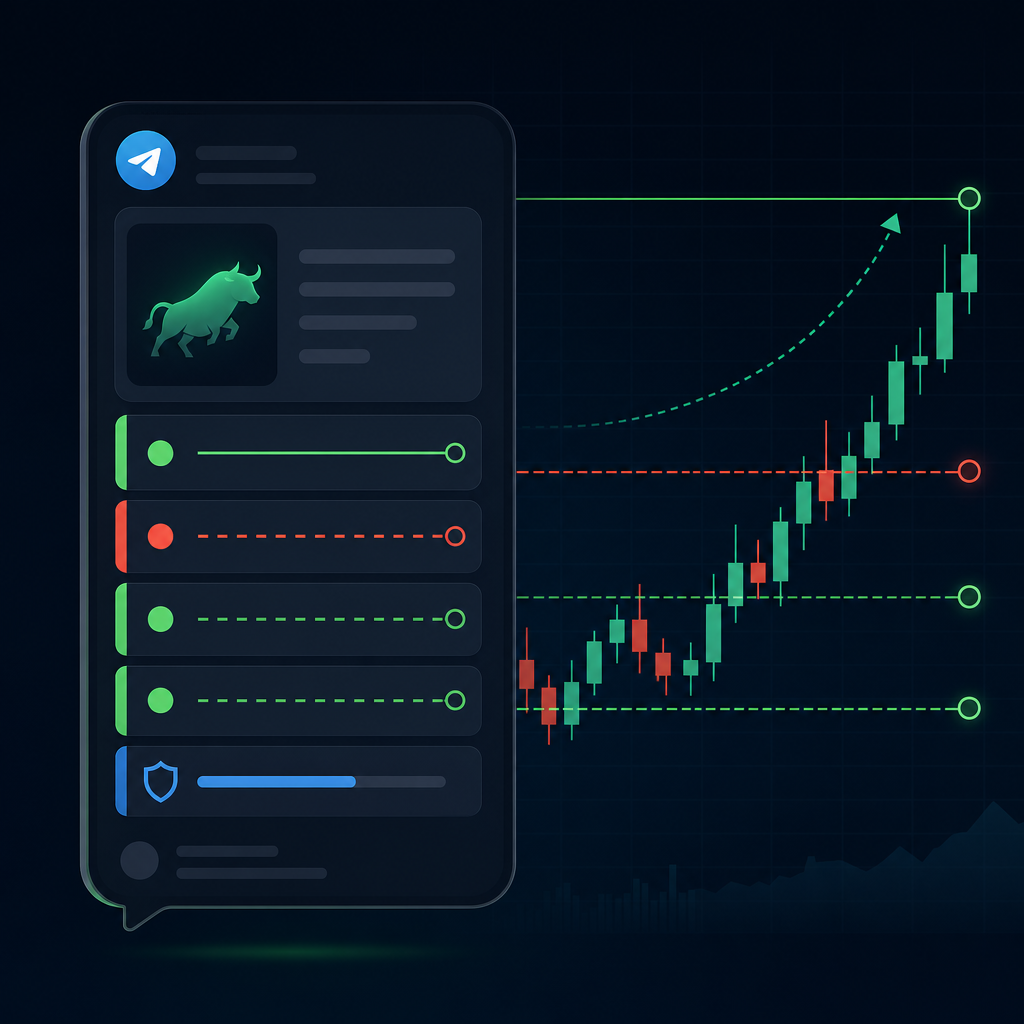
A forex signal is a structured trade idea shared by a trader, analyst, or algorithm. Typically, it includes direction (buy/sell), an entry price, a stop loss (SL), and one or more take-profit targets (TP1/TP2/TP3).
Some signals also include the setup type (breakout, pullback, range), timeframe bias (15m, 1h, 4h), and a note like “London session only” or “wait for confirmation.” Good signals reduce decision fatigue. Bad signals create chaos.
What a beginner should expect inside a proper signal
- Instrument: EUR/USD, GBP/USD, USD/JPY, XAU/USD (gold), etc.
- Entry: e.g., EUR/USD buy at 1.0520 (market) or buy limit at 1.0505.
- Stop loss: e.g., 1.0485 (35 pips risk).
- Take profit: e.g., 1.0590 (70 pips reward) — roughly 1:2 RR.
- Trade management: move SL to breakeven at +25 pips, partial close at TP1, etc.
What signals are NOT
Signals are not a magic button. They don’t remove risk. They don’t guarantee profit. And they don’t replace your responsibility for sizing, execution, and discipline.
Think of signals like a GPS route. The route can be great, but if you drive too fast in the rain, you still crash. In trading, “driving too fast” is usually too much leverage, moving stops, or taking trades during news volatility.
Why signals are popular for beginners
Beginners often struggle with two things: picking entries and staying consistent. Signals help with the first problem. But the second problem—consistency—comes from your process.
If you want the bigger picture of how signals fit into a complete trading routine, start with our main hub at United Kings trading signals and then explore the education inside our community.
2) The current market context (and why it matters when following signals)
Signals don’t exist in a vacuum. Market context changes the quality of entries, spreads, slippage, and how likely price is to hit your target before it hits your stop.
Right now, we’re seeing a market environment like this:
- Gold (XAU/USD): ~$2650.00 (+0.35% last 24h)
- EUR/USD: ~1.0520
- GBP/USD: ~1.2680
- USD/JPY: ~149.50
- DXY (Dollar Index): ~106.80
When DXY is elevated (like 106.80), it often reflects broader USD strength. That can pressure EUR/USD and GBP/USD lower, while supporting USD/JPY higher. Gold can still rise even with a firm dollar if the market is pricing inflation risk, geopolitical stress, or a shift in real yields—but it may become more volatile intraday.
What this means for beginners using signals
Volatility changes your execution. A signal that risks 25 pips in calm conditions may need 35–45 pips in a choppy session. But beginners often keep the same stop and get wicked out.
Spreads and slippage matter more during events. Around high-impact news, your entry may fill worse than expected. That can turn a planned 1:2 trade into a 1:1.4 trade without you realizing.
Session timing matters. Many clean moves happen during London and New York overlap. That’s why United Kings focuses heavily on London and NY session trading, where liquidity is deeper and spreads are typically tighter.
A quick example using today’s levels
Imagine a USD-strong backdrop (DXY 106.80). A signal says:
- EUR/USD SELL 1.0520
- SL 1.0550 (30 pips)
- TP 1.0460 (60 pips)
If you take it during a thin Asian session, price can spike 15–25 pips quickly and tag your stop. If you take it during London open with confirmation, you’re trading with better flow and follow-through odds.
Context doesn’t mean you ignore signals. It means you execute them intelligently.
3) Types of forex signals beginners will see (and which are easiest to follow)
Not all signals are built the same. Beginners do best with signals that are simple to execute and easy to measure. Complexity is fine later, but early on it often creates confusion and mistakes.
1) Market execution signals (instant entry)
These tell you to buy/sell “now” around a current price. Example:
- GBP/USD BUY 1.2680
- SL 1.2645 (35 pips)
- TP 1.2750 (70 pips)
Beginner challenge: entering late. If you enter at 1.2692 instead of 1.2680, your risk increases and your reward decreases.
2) Pending order signals (limit/stop orders)
These are often more beginner-friendly because you can set the trade and let price come to you. Example:
- EUR/USD BUY LIMIT 1.0505
- SL 1.0475 (30 pips)
- TP 1.0565 (60 pips)
Beginner advantage: less impulsive clicking and fewer late entries.
3) Scalping signals vs intraday vs swing
Scalping signals target small moves (5–20 pips). They require fast execution and low spreads. Beginners often struggle here because one mistake wipes out several wins.
Intraday signals target 30–120 pips depending on pair and volatility. This is usually the sweet spot for beginners because trades have room to breathe.
Swing signals can run for days with wider stops. They’re calmer but require patience and comfort holding trades overnight.
4) Gold signals (XAU/USD) vs major FX pairs
Gold moves differently than EUR/USD. XAU/USD can travel $10–$25 quickly, especially around US data. At ~$2650, a realistic signal might look like:
- XAU/USD BUY 2650
- SL 2638 (risk $12)
- TP 2674 (reward $24) — 1:2 RR
If you’re mixing forex and gold, keep your risk consistent (percentage-based), not “lot-size-based.” For more on how we structure gold trades, see United Kings gold signals.
4) How to choose a reliable forex signals provider (without getting scammed)
This is where beginners either set themselves up for progress—or for months of frustration. The signal industry has excellent providers and also a lot of marketing noise.
You don’t need perfection. You need clarity, consistency, and risk-first behavior.
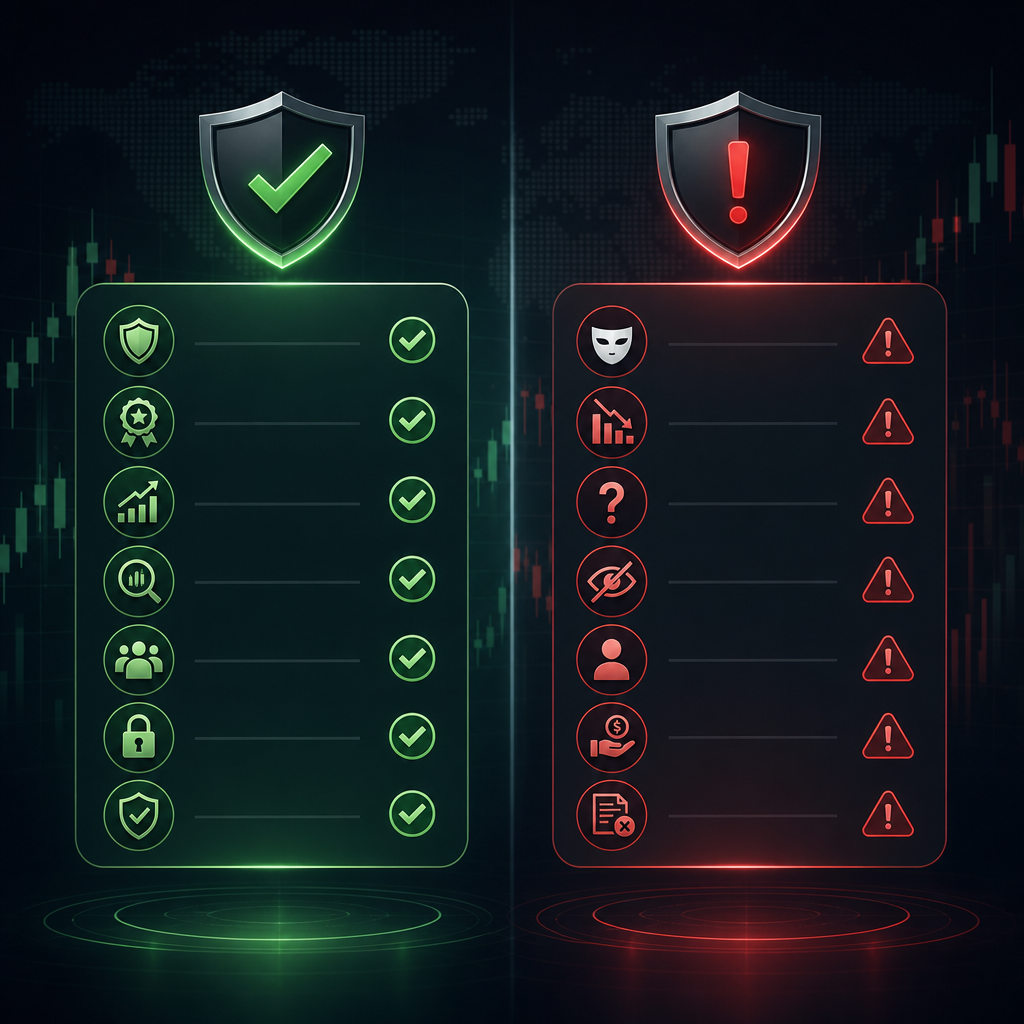
Use this comparison table before you subscribe
| Criteria | Reliable Provider | Red Flag Provider |
|---|---|---|
| Signal format | Entry + SL + TP + clear updates | “Buy now trust me” or no stop loss |
| Performance claims | Realistic, shows drawdowns, no guarantees | “Guaranteed profits” or “100% win rate” |
| Risk guidance | Suggests % risk, position sizing help | Encourages high leverage or martingale |
| Communication | Explains reasoning + session timing | Deletes losing trades, vague excuses |
| Consistency | Focus on a few pairs + repeatable setups | Random pairs daily, no clear edge |
| Community & support | Active help, educational content | Silent channel, no responses |
Beginner shortcut: use a checklist
If you want a structured way to evaluate providers, use our dedicated checklist resource: forex signals provider checklist for beginners. It’s designed to help you filter hype from process.
Where United Kings fits (and why beginners like it)
United Kings is built for traders who want clear execution and structure. Inside our premium Telegram, we share forex and gold signals with defined Entry, SL, and TP levels, plus educational guidance so you learn while you trade.
We also operate with a strong community backbone—300K+ active traders—so you’re not trading alone. And we focus heavily on London and NY sessions, where many high-quality moves happen.
If you’re exploring options, you can also review our curated page on performance and expectations here: best forex signals (what to look for).
5) How to use forex signals step-by-step (execution like a pro)
Most beginners don’t lose because the signal was “bad.” They lose because they executed it badly: wrong lot size, wrong order type, late entry, or emotional interference.
Here’s a simple, repeatable workflow you can use for almost any signal.
Step 1: Confirm the instrument and session
Double-check you’re on the correct pair (EUR/USD vs EUR/JPY mistakes happen). Then check the time: London and New York typically offer better liquidity than late Friday or thin hours.
Step 2: Check the spread and current price
If EUR/USD is quoted 1.0520/1.0521, your spread is ~1 pip. Fine. If it’s 3–5 pips during a volatile moment, your entry quality changes.
For gold around $2650, spreads can widen during news. A $0.30 spread is very different from a $1.20 spread when your SL is only $12 away.
Step 3: Choose the correct order type
- Market order: you enter immediately at the best available price.
- Limit order: you enter at a better price (pullback).
- Stop order: you enter after price breaks a level (momentum).
Beginners often place a buy stop when they needed a buy limit. That flips the logic of the trade.
Step 4: Place SL and TP immediately (no exceptions)
The moment you enter, place the stop loss and take profit. This prevents “I’ll add it later” disasters.
Example on USD/JPY at 149.50:
- USD/JPY SELL 149.50
- SL 149.95 (45 pips)
- TP 148.60 (90 pips)
That’s a clean 1:2 structure. Your job is to keep it clean.
Step 5: Set alerts and walk away (reduce over-management)
Beginners stare at candles and start interfering. Instead, set an alert near your management level (like +1R) and let the trade breathe.
Step 6: Log the trade (before you know the outcome)
Record: pair, entry, SL, TP, risk %, and why you took it. Logging before outcome prevents hindsight bias.
If you want a signal feed designed for clean execution, explore United Kings forex signals and compare the formatting to what you’re currently using.
6) Risk management for beginners: the rules that keep you in the game
If you only learn one skill from this forex signals guide, let it be this: risk management is your edge protector. Signals can be great, but a single oversized trade can erase weeks of progress.
The 1% rule (and why it works)
A beginner-friendly baseline is risking 0.5% to 1% of your account per trade. On a $1,000 account, 1% risk = $10.
That means if your stop loss is 30 pips on EUR/USD, you size the position so 30 pips equals $10. Not $50. Not $100.
Position sizing example (simple math)
Let’s say:
- Account: $2,000
- Risk per trade: 1% = $20
- Signal: EUR/USD BUY 1.0520, SL 1.0485 (35 pips)
Your lot size should be set so that 35 pips ≈ $20 loss if stopped. Many brokers show this automatically in the order window. If yours doesn’t, use a position size calculator.
Gold (XAU/USD) risk example using current prices
Gold is quoted in dollars. A realistic beginner signal near current levels:
- XAU/USD SELL 2662
- SL 2676 (risk $14)
- TP 2634 (reward $28) — 1:2 RR
If you risk 1% ($20), your position size should make a $14 move against you equal about $20 loss. That keeps you consistent across instruments.
Max daily loss and max weekly loss (your circuit breakers)
Signals can cluster. You might get 3 trades in a day. Without limits, a bad day becomes a blown week.
- Max daily loss: 2% (stop trading for the day if hit)
- Max weekly loss: 5% (reduce size or pause if hit)
This isn’t about fear. It’s about staying emotionally stable and avoiding revenge trading.
Leverage: the silent account killer
High leverage makes small moves feel huge. Beginners see USD/JPY move 30 pips and think it’s “nothing,” then realize they just lost 8% because they oversized.
To go deeper, keep our dedicated guide bookmarked: risk management strategies when using forex signals.
7) Trade management: when to move to breakeven, partial close, or let it run
Beginners often think the signal ends at entry. In reality, trade management is where outcomes diverge. Two traders can take the same signal and get different results based on management.
Three common management styles (and who they suit)
- Set-and-forget: best for anxious beginners. Enter, set SL/TP, walk away.
- Breakeven at 1R: move SL to entry after price reaches your risk distance (e.g., +35 pips if risk was 35 pips).
- Partial closes: take some profit at TP1, let the rest run to TP2/TP3.
Example: EUR/USD trade management with 1:2 structure
Signal:
- EUR/USD BUY 1.0520
- SL 1.0485 (35 pips)
- TP 1.0590 (70 pips)
Management option A (simple): do nothing. Either -1R or +2R.
Management option B (balanced): when price hits 1.0555 (+35 pips), move SL to 1.0520. Now worst case is roughly break-even (minus spread/fees). Best case is still +70 pips.
Gold example: avoiding the “tight stop” trap
At XAU/USD ~$2650, intraday swings can be sharp. If your SL is only $8 away in a volatile NY session, you may get stopped even if the idea was right.
That’s why many structured gold signals use SL distances like $10–$25 depending on volatility. For example:
- XAU/USD BUY 2648
- SL 2634 (risk $14)
- TP 2676 (reward $28)
Here, the stop has enough room for normal noise, while the reward still respects 1:2.
One rule that fixes most beginner management mistakes
Don’t change the plan mid-trade unless the signal provider updates it. Beginners often tighten stops because they want to be right. That’s not risk management; that’s fear management.
If you want a Telegram environment where updates are clear and structured, see our beginner-friendly breakdown here: forex signals Telegram for beginners guide.
8) Building consistency with signals: routines, journaling, and realistic expectations
Consistency is not “winning every day.” Consistency is executing the same process the same way, then letting probability do its job over 50–100 trades.
Beginners often quit after a losing streak of 4 trades. But a system with a 55% win rate can easily lose 4 in a row. That’s normal variance.
What to measure (instead of obsessing over dollars)
- R-multiple: if you risk 1R and make 2R, that’s a +2R trade.
- Expectancy: average R per trade over a sample (50+ trades).
- Max drawdown: the worst peak-to-trough decline in your results.
- Execution score: did you follow the rules (yes/no)?
A realistic beginner performance model
Let’s say you take 40 trades in a month, risking 1% each. Your average result is +0.3R per trade (after losses). That’s +12R for the month, or roughly +12% before compounding effects.
That is already strong. But it won’t look like a straight line. Some weeks you might be -3R. Other weeks +7R. The goal is to stay stable enough to keep taking the next trade.
Beginner routine (15 minutes per day)
- Before London: check calendar, spreads, and your max risk limits.
- During session: only take signals that match your plan (pairs, risk, timing).
- After session: screenshot entries/exits and log in a journal.
The “signal hopping” problem
Many beginners jump between providers after two losses. That resets your learning curve every time and keeps you in a permanent state of confusion.
A better approach: commit to one provider for 30 days on demo or micro-lots, then evaluate with data.
If you’re new to United Kings, you can learn more about who we are and how we trade by visiting About United Kings and browsing the education on our trading blog.
9) Common beginner mistakes when following forex signals (and how to fix them fast)
If you’ve ever thought “signals don’t work,” there’s a good chance one of these issues is the real problem. Fixing them can instantly improve your results without changing providers.
Mistake #1: Entering late and pretending it doesn’t matter
If a signal says EUR/USD sell 1.0520 and you enter 1.0508, you changed the trade. Your stop distance and RR are now different.
Fix: define an entry tolerance. Example: “If I miss entry by more than 3 pips (majors), I skip or wait for a pullback.”
Mistake #2: Moving the stop loss “just this once”
This is how small losses become big losses. Beginners move SL because they want to avoid being wrong. The market doesn’t care.
Fix: treat SL as a business expense. If you can’t accept the SL, your lot size is too big.
Mistake #3: Overtrading because signals feel endless
When you join multiple Telegram channels, you can get 10–25 signals per day. That’s not opportunity; that’s noise.
Fix: choose 1–3 pairs you understand (like EUR/USD, GBP/USD, USD/JPY) and only trade those until you’re consistent.
Mistake #4: Trading during high-impact news without a plan
News can create 20–60 pip spikes on EUR/USD and GBP/USD in seconds. Gold can swing $15–$30 quickly. If you don’t understand spreads and slippage, you’ll think the signal was wrong when it was actually the environment.
Fix: pause trading 5–15 minutes before major releases unless your provider explicitly trades news.
To understand how volatility changes signal behavior, read: how gold signals react to unexpected news events.
Mistake #5: Confusing “more leverage” with “more skill”
Skill is executing the same plan for months. Leverage is a multiplier. If your process is inconsistent, leverage multiplies the inconsistency.
Fix: cap risk at 0.5–1% and increase only after 100+ trades of stable execution.
10) A beginner’s toolkit: apps, broker settings, and a simple execution checklist
You don’t need 12 indicators or a $2,000 monitor. But you do need a clean setup that prevents mistakes.
Your basic toolkit
- Broker platform: MT4/MT5 or a reputable web platform
- Telegram: for receiving signals and updates
- Economic calendar: to avoid trading blind into major releases
- Position size calculator: or built-in broker risk tool
- Journal: Google Sheets or a trading journal app
Broker settings beginners should check immediately
- Account currency: USD is simplest for most calculations.
- Lot size type: ensure you can trade micro-lots (0.01) if you’re small.
- Stop level restrictions: some brokers require minimum SL distance.
- Execution type: market execution can slip; understand your broker’s model.
The 60-second execution checklist (save this)
- Is this the correct pair (EUR/USD, not EUR/JPY)?
- Am I in the right session (London/NY) or is liquidity thin?
- Is spread normal right now?
- Did I calculate lot size for 0.5–1% risk?
- Did I place SL and TP immediately?
- Did I check upcoming news in the next 30 minutes?
Where to receive signals (and how to keep it organized)
Many beginners do best with one primary channel and one education resource. If you want both forex and gold in one place, you can start from UnitedKings.net and then choose the stream you want: forex signals and gold signals.
If you also trade crypto, keep it separate in your mind and risk model. You can review our offering here: crypto signals.
11) What to expect from a premium signals service (win rate, drawdowns, and support)
Beginners often ask: “What win rate should I expect?” The more useful question is: “What’s the full performance profile—win rate, RR, and drawdown?”
A provider can have a 70% win rate with tiny wins and huge losses. Another can have a 45% win rate with 1:3 RR and still be profitable. The edge is the combination.
Understanding win rate with RR (simple scenarios)
- 55% win rate with 1:2 RR can be excellent over time.
- 70% win rate with 1:1 RR can also work, but costs/spreads matter more.
- 40% win rate with 1:3 RR can still be profitable if losses are controlled.
Drawdowns are normal (and should be discussed openly)
Any real strategy has drawdowns. If a provider hides them, that’s a red flag. Beginners should plan emotionally and financially for periods where trades don’t work.
This is why we always recommend starting on demo, then moving to small live risk. Your goal is to survive the learning curve.
What United Kings provides (in practical terms)
- Premium Telegram signals for forex and gold with clear Entry, SL, and TP levels
- 85%+ win rate as a performance target communicated with transparency and proper risk framing (no guarantees)
- London and NY session focus for higher liquidity trade conditions
- 300K+ active traders in the broader community ecosystem
- Educational content alongside signals so beginners learn the “why,” not only the “what”
- 48-hour money-back guarantee so you can evaluate the service responsibly
Pricing and which plan suits a beginner
We keep pricing simple with three plans on United Kings pricing:
- Starter (3 Months): $299 (~$100/month) — good if you want a focused trial period.
- Best Value (1 Year): $599 (~$50/month) — 50% savings + FREE ebook for structured learning.
- Unlimited (Lifetime): $999 — pay once for ongoing access.
Choose based on your learning horizon. Beginners who want to build consistency usually benefit from longer access because results require a sample size.
12) Getting started today: a 7-day beginner plan using forex signals safely
If you’re overwhelmed, simplify. Here’s a seven-day plan we use to help beginners go from “I don’t know what I’m doing” to “I can execute a signal cleanly.”
Day 1: Set up your environment
- Create a demo account (or micro account if you’re experienced with platforms).
- Set default risk to 0.5–1% per trade.
- Add pairs to watchlist: EUR/USD (1.0520), GBP/USD (1.2680), USD/JPY (149.50), and optionally XAU/USD (~2650).
Day 2: Learn signal language
- Understand market vs limit vs stop orders.
- Practice placing SL/TP quickly.
- Write down your “entry tolerance” rule (e.g., 2–3 pips on majors).
Day 3: Take 1–2 demo signals and journal them
- Screenshot the signal and your execution.
- Record whether you followed the plan (yes/no).
Day 4: Add a circuit breaker
- Set max daily loss to 2% and respect it.
- Stop trading after 2 consecutive losses for the day (optional rule for beginners).
Day 5: Practice trade management
- Test “breakeven at 1R” on demo.
- See how often it saves you vs how often it cuts winners short.
Day 6: Review your first mini sample
- Count R gained/lost, not dollars.
- Identify your #1 execution mistake (late entry, wrong lot size, etc.).
Day 7: Decide your next step
- If execution is clean: move to micro-lots live (still 0.5–1% risk).
- If execution is messy: stay on demo for another 2 weeks.
When you’re ready to receive structured signals and real-time updates, join our Telegram channel here: United Kings premium signals Telegram. If you have questions before joining, reach out via United Kings contact page.
FAQ: Forex signals for beginners
1) Are forex signals good for complete beginners?
Yes, if you treat them as a structured learning tool and use strict risk management. Start on demo, focus on execution, and avoid high leverage.
2) How many signals should a beginner take per day?
Usually 1–3 is enough. More trades often leads to overtrading and emotional mistakes. Quality and consistency beat quantity.
3) Should I copy signals exactly or adjust them?
As a beginner, copy them exactly unless the provider updates the trade. Adjusting stops/targets without experience usually reduces expectancy.
4) What is a realistic stop loss for gold signals near $2650?
Often $10–$25 depending on volatility and session. For example, buy 2650 with SL 2638 (risk $12) and TP 2674 (reward $24) is a clean 1:2 structure.
5) What should I do if I miss the entry price?
Have a rule. For majors, if you miss by more than 2–3 pips, skip or wait for a pullback. Chasing entries is one of the fastest ways beginners turn good signals into bad trades.
Risk disclaimer (read this before trading)
Forex and gold trading involve significant risk and may not be suitable for all investors. You can lose some or all of your capital. Signals and educational content are for informational purposes only and do not constitute financial advice. Past performance does not guarantee future results. Always use a stop loss, trade with disciplined risk limits, and consider practicing on a demo account before trading live.
Join United Kings: premium forex & gold signals built for consistency
If you want a structured way to follow trades with clear Entry, SL, and TP levels—plus a community and education to help you grow—United Kings is built for you.
- Premium Telegram forex + gold signals
- London & NY session focus
- Clear trade levels and updates
- 300K+ active traders in the ecosystem
- Three plans: 3 Months ($299), 1 Year ($599), Lifetime ($999)
- 48-hour money-back guarantee
Start here to choose your plan: United Kings pricing and membership options.
Or join our Telegram now and see how we format trades in real time: United Kings signals on Telegram.