
You just joined a Forex signals channel. A message pops up: “EUR/USD BUY 1.0520 | SL 1.0490 | TP 1.0580.” Your heart rate jumps.
Do you click buy immediately, or wait for “confirmation”? Do you change the stop loss because it feels “too tight”? And what lot size do you use so one trade doesn’t wipe your account?
If you’ve ever felt that hesitation, this is the forex signals guide you needed. We’ll break down exactly how to use forex signals as a beginner—without blowing up, overtrading, or following the wrong provider.
TL;DR: Forex signals for beginners (read this first)
- A forex signal is a trade plan (pair, direction, entry, SL, TP). Your job is execution and risk control, not guessing.
- Risk per trade beats win rate: a 55% strategy can grow an account if you risk 0.5%–1% per position and keep R:R around 1:2.
- Always standardize your process: check spread, session, news, and your lot size before you place a trade.
- Don’t “improve” signals emotionally: moving SL wider and taking profit early is how beginners turn good signals into bad results.
- Choose providers by transparency: clear entries/SL/TP, realistic performance, education, and consistent risk rules matter more than flashy screenshots.
- Start on demo, then small live: prove you can follow rules for 30–50 trades before sizing up.
1) What forex signals are (and what they are not)
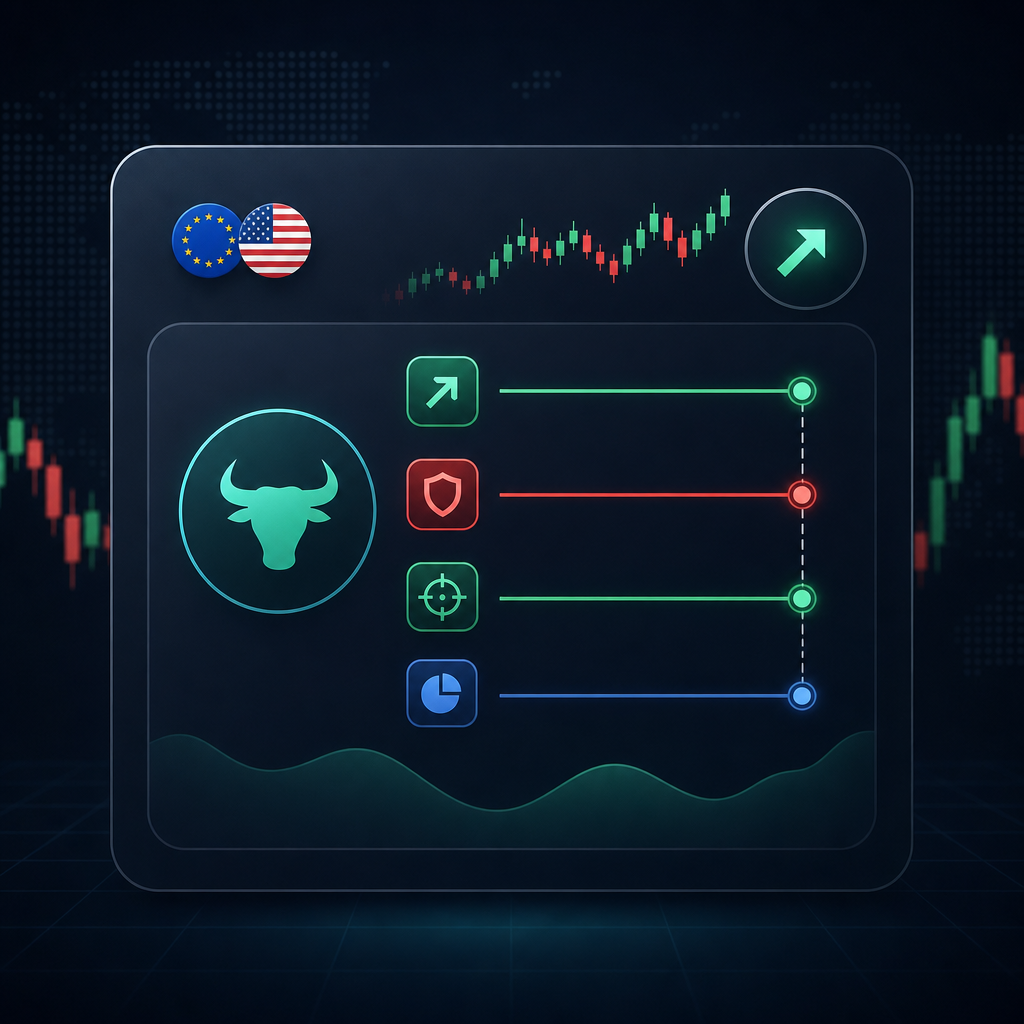
Forex signals are actionable trade ideas sent by an analyst, algorithm, or trading team. A proper signal tells you what to trade, where to enter, where to exit if wrong (stop loss), and where to take profit (one or more targets).
For beginners, signals feel like a shortcut. They can be—but only if you treat them as a structured trading plan, not a lottery ticket.
What a high-quality signal looks like
At minimum, a signal should include:
- Instrument: EUR/USD, GBP/USD, USD/JPY, XAUUSD (gold), etc.
- Direction: Buy or Sell.
- Entry: market entry or limit entry (e.g., buy limit 1.0510).
- Stop loss: the invalidation level (e.g., 1.0490).
- Take profit: one or multiple targets (e.g., TP1 1.0560, TP2 1.0580).
- Optional context: session (London/NY), setup type, and risk note (e.g., “risk 0.5%”).
Example (beginner-friendly): EUR/USD BUY 1.0520 | SL 1.0490 (30 pips) | TP 1.0580 (60 pips). That’s a clean 1:2 risk-reward.
What signals are not
Signals are not:
- Guaranteed profits. Even the best teams take losses.
- A substitute for risk management. If you oversize, one loss can erase 10 wins.
- A reason to trade 24/5. More trades doesn’t mean more money.
Think of signals like a GPS. It can give you the best route, but if you speed through red lights, you still crash.
Where signals come from: analysis types
Most providers generate signals from:
- Technical analysis: structure, support/resistance, trend, liquidity, indicators.
- Fundamental analysis: central bank expectations, inflation data, geopolitical risk.
- Hybrid approach: technical entries aligned with fundamental bias.
In today’s market context, the DXY is around 106.80, EUR/USD near 1.0520, and USD/JPY around 149.50. That tells you USD strength is still a factor, and signals often focus on session timing and volatility bursts.
2) The beginner’s roadmap: how to use forex signals step-by-step
If you want consistent results from signals, you need a repeatable workflow. Beginners lose money not because signals are “bad,” but because execution is chaotic.
Here’s a simple step-by-step process you can follow every time a signal arrives.
Step 1: Confirm the instrument and account settings
Check you’re on the correct symbol and contract type. Some brokers label gold as XAUUSD, others as GOLD. Some use different suffixes.
Also confirm your account is standard vs cent and your lot sizing matches. A “0.10 lot” can mean very different exposure depending on account type.
Step 2: Check spread and execution conditions
Spread can quietly destroy good signals. On major pairs like EUR/USD, a normal spread might be 0.6–1.5 pips on decent brokers. During volatility, it can widen.
For gold (XAUUSD), spreads vary widely. If gold is trading around $2650 and your spread suddenly jumps, your entry might be worse than the signal intended.
- If spread is unusually wide, consider waiting for it to normalize.
- If you’re trading during rollover (swap time), spreads often spike.
Step 3: Identify the session (timing matters)
Most clean moves happen in London and New York sessions. That’s why United Kings focuses heavily on those windows.
Example: GBP/USD around 1.2680 can move 40–80 pips in a London trend day. In a quiet Asian session, it may chop 15–25 pips and stop you out before the real move.
Step 4: Check the economic calendar (news filter)
Before placing the trade, look for red-folder events: CPI, NFP, FOMC, ECB/BoE rate decisions, or surprise geopolitical headlines.
If USD/JPY is near 149.50, a sudden risk-off headline can move it 70–120 pips fast. Your signal might still be correct, but slippage can change the math.
Step 5: Calculate your lot size (non-negotiable)
This is where beginners either become consistent—or become donations to the market.
Pick a fixed risk per trade: 0.5%–1% is a solid beginner range. Then calculate lot size based on stop loss distance.
- Account: $1,000
- Risk: 1% = $10
- Stop loss: 30 pips
- Position size: $10 / 30 pips = ~$0.33 per pip (lot size depends on pair and broker)
If you don’t know pip value math yet, that’s okay. Use a position size calculator, but keep the risk rule constant.
Step 6: Place the order exactly as written
Beginners often “adjust” entries and stops. That’s usually emotion disguised as logic.
- If it’s a market entry, execute quickly while conditions are valid.
- If it’s a limit order, place it and let price come to you.
- Set SL and TP at the same time. No exceptions.
Step 7: Manage the trade with rules, not feelings
If the signal includes trade management (move SL to breakeven at TP1, partial close, etc.), follow it. If not, keep it simple: let SL or TP hit.
Your goal as a beginner is process consistency, not perfect trade management.
3) Understanding signal formats: market, limit, and multi-target setups

Not all signals are delivered the same way. If you don’t understand the format, you’ll mis-execute even a great call.
Let’s break down the most common signal types you’ll see in Telegram channels and premium communities.
Market execution signals
A market signal means “enter now at current price” (or within a small range). Example:
- EUR/USD SELL 1.0520 | SL 1.0550 | TP 1.0460
These work best during active sessions when price is moving with momentum. If you enter 10–15 pips late because you hesitated, the risk-reward can collapse.
Beginner tip: if price has already moved far from the entry, don’t chase. Wait for the next setup.
Limit order signals (pullback entries)
A limit signal is a planned entry at a better price. Example:
- GBP/USD BUY LIMIT 1.2650 | SL 1.2620 | TP 1.2710
This assumes price pulls back into a zone (support, demand, FVG, etc.). Beginners like limit orders because you can set them and walk away.
The risk is that price might never reach your entry. That’s not a failure. That’s discipline.
Stop orders (breakout entries)
Stop orders enter when price breaks a level. Example:
- USD/JPY BUY STOP 149.80 | SL 149.40 | TP 150.60
These can be powerful in London or NY when volatility expands. But they can also get trapped in false breakouts if liquidity is thin.
Multi-target signals (TP1, TP2, TP3)
Multi-target setups help you balance psychology and math. Example:
- TP1: 1R (close 30–50%)
- TP2: 2R (close more)
- TP3: runner (if trend continues)
For beginners, a simple approach works: close partial at 1R and move SL to breakeven, then let the rest aim for 2R.
Gold signals format (XAUUSD) with realistic levels
Gold trades differently than EUR/USD. It can move $8–$25 quickly around data releases.
Example within current context (gold around $2650):
- XAUUSD BUY 2648.0 | SL 2636.0 (12$) | TP 2672.0 (24$) → ~1:2 R:R
- XAUUSD SELL 2662.0 | SL 2678.0 (16$) | TP 2630.0 (32$) → ~1:2 R:R
Notice the stop is typically $10–$25 away, as a practical range for many intraday gold setups.
4) Choosing a provider: the comparison that saves beginners months
The hardest part for beginners isn’t placing a trade. It’s choosing who to trust.
Signal marketing is loud. Screenshots are easy to fake. What matters is whether a provider has a repeatable process, transparent risk approach, and a community that supports execution.
Beginner checklist: what to look for
- Clear trade parameters: entry, SL, TP, and whether it’s market/limit.
- Realistic performance language: no “guaranteed daily profit.”
- Risk guidance: recommended risk per trade and max daily exposure.
- Consistency: same style, same sessions, same logic.
- Education: you should learn while you earn (or while you practice).
- Responsiveness: updates when conditions change.
If you want a dedicated vetting framework, use our beginner-focused checklist here: forex signals provider checklist for beginners.
Comparison table: free vs paid vs copy trading vs premium community
| Option | Typical Quality | Beginner Risk | Transparency | Best For |
|---|---|---|---|---|
| Free Telegram signals | Mixed; often inconsistent | High (overtrading, hype) | Low to medium | Testing formats, learning basics |
| Paid “signal blasts” | Varies; sometimes high volume | Medium to high (too many trades) | Medium | Traders who can filter and manage risk |
| Copy trading | Depends on master trader | Medium (hidden risk, slippage) | Medium | Hands-off users who still monitor risk |
| Premium signals + education | Higher; structured approach | Lower if rules followed | High (clear entries/SL/TP) | Beginners building consistency |
How United Kings fits (without the hype)
United Kings is built for traders who want structure. We deliver premium Telegram signals for forex and gold with clear Entry, SL, and TP levels, and we focus heavily on London and NY session trading where liquidity is best.
We also publish education alongside signals, because beginners don’t just need trade ideas—they need a framework. You can explore our signal hub here: United Kings signals, or go directly to forex signals and gold signals.
5) Risk management for beginners: the rules that keep you in the game
Signals don’t blow accounts. Position sizing does.
Most beginners are surprised by this: you can follow a provider with a strong win rate and still lose money if you risk 5%–10% per trade, revenge trade after a loss, or stack correlated positions.
Start with a simple risk model
For beginners using forex signals, here’s a practical model:
- Risk per trade: 0.5% to 1%
- Max open risk at once: 2% (e.g., two trades at 1% each)
- Max daily loss: 2%–3% (stop trading after hitting it)
- Minimum R:R: aim for 1:2 on most setups
This model is boring. That’s the point. Boring is what keeps you alive long enough to get good.
Gold vs forex risk: why the same lot size doesn’t mean the same risk
Gold at $2650 can swing $10 quickly. That’s not rare; it’s normal volatility. If your gold stop is $15 and you trade too large, your account feels every wiggle.
Example: XAUUSD BUY 2648.0 with SL 2636.0 is a $12 stop. If your risk is $12 total, you can trade 1 unit of $1-per-$1 move (varies by broker contract). If your risk is $120, you’re 10x larger and one loss hurts.
On EUR/USD at 1.0520, a 30-pip stop is typical for intraday. That’s a different volatility profile. Treat each instrument separately.
Correlation risk: the hidden beginner trap
Signals often come on major USD pairs. If you take:
- EUR/USD BUY
- GBP/USD BUY
- DXY is strong at 106.80
You might be effectively betting against USD multiple times. If USD spikes on news, you take multiple losses at once.
Beginner rule: if two trades are highly correlated, reduce size or choose one.
Drawdown reality check (why small risk wins)
If you risk 1% per trade, a 6-loss streak is -6%. That’s recoverable. If you risk 5% per trade, the same streak is -30%. That changes your psychology and forces you to “make it back,” which usually ends badly.
If you want a deeper framework, keep this bookmarked: risk management strategies when using forex signals.
6) Execution mistakes beginners make (and how to fix them fast)
Most signal services don’t fail beginners. Beginners fail execution.
Below are the most common mistakes we see—and the exact fix for each one.
Mistake #1: Entering late and calling it “still fine”
If a signal says EUR/USD SELL 1.0520 and you enter at 1.0508, you changed the trade. Your stop might now be 42 pips instead of 30, or your TP is closer than planned.
Fix: set a rule. If price is more than X pips away (e.g., 5–8 pips on majors), skip or wait for a re-entry plan.
Mistake #2: Moving stop loss wider
This is the account killer. You move SL because “it will come back,” and suddenly a planned -1% becomes -3% or -5%.
Fix: treat the stop loss as the cost of information. If it hits, the market proved your idea wrong. Pay the cost and move on.
Mistake #3: Taking profit early because you “see” a reversal
Beginners often cut winners at +10 pips and let losers run -40 pips. That flips the edge.
Fix: decide before entry. Either you follow the TP levels, or you use a consistent trailing rule. No improvisation mid-trade.
Mistake #4: Overtrading after a win or a loss
After a win, you feel invincible. After a loss, you feel desperate. Both lead to extra trades outside your plan.
Fix: set a daily trade cap (e.g., max 3 trades). When you hit it, stop.
Mistake #5: Ignoring spread and slippage during volatile moments
When gold is moving fast around $2650, spreads can widen and fills can slip. You might enter 2–5 dollars worse than planned on some brokers.
Fix: avoid entering at the exact second of major releases unless the signal explicitly targets news volatility. If you trade news, accept that execution is part of the risk.
Mistake #6: Mixing multiple providers
One provider is bullish EUR/USD, another is bearish, and you end up hedging yourself with fees and confusion.
Fix: commit to one approach for a 30–50 trade sample. Evaluate after, not during.
7) A practical “signals trading plan” you can copy as a beginner
You don’t need a complicated strategy to use signals. You need a simple operating system.
Here’s a beginner plan that works whether you trade EUR/USD at 1.0520 or gold near $2650.
Your beginner signals rules (print this)
- Session rule: trade only London and New York (or your provider’s stated window).
- Risk rule: 0.5%–1% per trade; max 2% open risk.
- Quality rule: only take signals with clear entry, SL, TP.
- Execution rule: enter within a defined tolerance; otherwise skip.
- No-edit rule: do not widen SL; do not move TP closer.
- Journal rule: log every trade: screenshot, reason, execution notes, outcome.
Step-by-step: how to journal a signal trade in 2 minutes
- Copy the signal text into your journal.
- Record entry price you actually got filled at.
- Record spread at entry (approximate is fine).
- Record risk % and lot size.
- Add one sentence: “Followed rules: yes/no. If no, what changed?”
After 30 trades, patterns appear. You’ll see if your losses come from the provider or from execution errors like late entries and oversized lots.
Example: EUR/USD signal journaling
- Signal: EUR/USD BUY 1.0520 | SL 1.0490 | TP 1.0580
- Fill: 1.0523 (3 pips late)
- Risk: 1% ($10)
- Result: TP hit (+57 pips)
- Note: “Entered slightly late but within tolerance. Followed plan.”
Example: Gold (XAUUSD) signal journaling
- Signal: XAUUSD SELL 2662.0 | SL 2678.0 | TP 2630.0
- Fill: 2661.5 (good)
- Risk: 0.5% ($5 on $1,000 demo)
- Result: stopped (-$5)
- Note: “Did not widen SL. Loss acceptable.”
This is how you build consistency: not by avoiding losses, but by keeping losses small and repeatable.
8) Realistic expectations: win rate, R:R, and what consistency looks like
Most beginners chase a magical win rate. They want 90% wins and zero drawdown. That mindset makes them easy targets for scams.
Let’s talk realistic numbers and what they mean for your account.
Win rate vs risk-reward: the math beginners must understand
If you risk 1 unit to make 2 units (1:2 R:R), you don’t need a high win rate.
- At 40% win rate with 1:2 R:R, you can be profitable (roughly breakeven around 33%).
- At 50% win rate with 1:2 R:R, you’re strongly profitable over a sample.
- At 60% win rate with 1:2 R:R, you have a powerful edge—if you keep risk stable.
Now compare that to a trader who takes profit early at 0.5R and lets losses hit full 1R. Even with a 70% win rate, they can struggle.
What an “85%+ win rate” really means in practice
You’ll see providers claim very high win rates. Sometimes it can be real in specific conditions—like selective trading in high-liquidity sessions with strict filters.
But for you as a beginner, the key point is this: even a high win rate doesn’t protect you from bad sizing. If you risk 5% on one trade, one loss can undo many wins.
At United Kings, we focus on structured entries with clear SL/TP and disciplined session timing. That’s how win rate and risk control can work together—without promising guaranteed results.
Consistency is a 3-layer skill
- Provider consistency: signals are clear and repeatable.
- Execution consistency: you enter/exit as planned.
- Psychology consistency: you don’t tilt after wins/losses.
Most beginners only focus on the first layer. The second and third layers are where profit is actually created.
What a “good month” can look like for a beginner
Let’s say you take 20 trades risking 1% each, average R:R is 1:2, and win rate is 50%.
- 10 wins × +2% = +20%
- 10 losses × -1% = -10%
- Net: +10% before costs
Is that guaranteed? No. But it’s realistic over time with discipline. And it’s far healthier than trying to double your account every week.
9) Signals and the current market: how to think in real conditions (EUR/USD, GBP/USD, USD/JPY, gold)
Signals don’t exist in a vacuum. The same setup behaves differently depending on volatility, USD strength, and risk sentiment.
Right now, we’re working with a realistic context: Gold around $2650 (+0.35%), EUR/USD 1.0520, GBP/USD 1.2680, USD/JPY 149.50, and DXY 106.80.
How USD strength changes signal selection
When DXY is elevated (like 106.80), USD can dominate intraday direction. That doesn’t mean EUR/USD can’t rally. It means you should be more selective and respect levels.
Beginner approach: if you’re taking a signal that goes against the broader USD trend, keep risk smaller (0.5% instead of 1%) until you gain confidence.
EUR/USD at 1.0520: what beginners should watch
EUR/USD is often clean for signals because spreads are tight and liquidity is deep. It’s also sensitive to US data and ECB expectations.
- Intraday stops often range 20–40 pips.
- Targets often range 40–80 pips for 1:2.
Example: BUY 1.0520, SL 1.0495 (25 pips), TP 1.0570 (50 pips).
GBP/USD at 1.2680: volatility and fakeouts
GBP/USD can move sharply in London. It’s great for signals, but it can punish late entries.
- Stops might be 25–50 pips depending on setup.
- Be cautious around UK data releases (CPI, GDP, employment).
Beginner rule: if spread widens or candles spike, don’t chase. Wait for a pullback or the next signal.
USD/JPY at 149.50: the “headline risk” pair
USD/JPY can trend beautifully, but it’s sensitive to risk sentiment and potential policy commentary. Sudden spikes happen.
For beginners, keep size smaller and avoid holding through major events until you have experience.
Gold (XAUUSD) at $2650: why it’s loved and feared
Gold is popular because it moves. That’s also why it’s dangerous.
In the $2610–$2690 range, intraday swings can be $10–$25. A clean 1:2 setup might look like:
- BUY 2642.0, SL 2627.0 ($15 risk), TP 2672.0 ($30 reward)
- SELL 2684.0, SL 2699.0 ($15 risk), TP 2654.0 ($30 reward)
If you want to understand how signals behave when headlines hit gold, read: how gold signals react to unexpected news events.
10) Tools, setup, and habits: building a signals “execution environment”
Beginners think trading is about predictions. In reality, trading is about environment design.
If your phone notifications are off, your broker app is slow, and you don’t know your lot size, you’ll mis-execute even the best signal. Let’s fix that.
Your minimum tool stack
- Broker with stable execution: low spreads on majors, reliable fills.
- Charting: TradingView or MT4/MT5 charts for quick level checks.
- Economic calendar: Forex Factory, Investing.com, or your broker’s calendar.
- Position size calculator: app or website (or a spreadsheet).
- Journal: Notion/Google Sheets/Excel, plus screenshots.
Telegram setup for fast, calm execution
If you follow signals on Telegram, configure it like a pro:
- Pin the provider chat at the top.
- Enable notifications only for that channel.
- Create a “Trading” focus mode so other apps don’t distract you.
- Save message templates (Entry/SL/TP) in your notes for journaling.
If you’re new to Telegram-based signals, this guide helps: forex signals Telegram for beginners.
Pre-trade checklist (60 seconds)
- Is this during London/NY session?
- Is spread normal?
- Any major news in the next 30–60 minutes?
- Do I know my risk % and lot size?
- Did I set SL and TP immediately?
This checklist sounds simple, but it prevents the majority of beginner mistakes.
Post-trade routine (2 minutes)
- Screenshot entry and exit.
- Record whether you followed rules.
- Write one lesson (one sentence).
Do this for 30 trades and you’ll improve faster than most traders do in a year.
11) Avoiding scams and “too good to be true” signal marketing
The signal industry has excellent professionals—and also aggressive marketers who prey on beginners.
Your job is not to become cynical. Your job is to become selective.
Red flags beginners should treat as deal-breakers
- Guaranteed profits or “can’t lose” language.
- No stop losses or “we don’t use SL.”
- Martingale/grid promoted as “safe recovery.”
- Pressure tactics: “Only 10 spots left, pay in 5 minutes.”
- Cherry-picked screenshots with no losses shown.
- No clear trade history or refusal to explain risk.
Green flags that signal a professional operation
- Clear SL/TP on every trade.
- Losses are acknowledged and reviewed.
- Education is included (why the trade exists).
- Community support: Q&A, trade management updates.
- Realistic claims and compliance language.
How to test a provider without risking real money
Beginners should use a demo account first. Here’s a simple test:
- Follow the provider for 2–4 weeks on demo.
- Take only the signals that match your trading hours.
- Risk a fixed 0.5% per trade.
- Journal every trade and calculate results after 30 trades.
If you can’t follow the rules on demo, you won’t follow them live. Demo is where you build the habit.
Where to start researching (without getting overwhelmed)
Instead of jumping between random channels, start with curated education. You can browse our latest posts here: United Kings blog, and you can review our current recommendations here: best forex signals (November 2025).
12) Getting started with United Kings: a beginner-friendly path (plans, process, support)
If your goal is to use forex signals effectively as a beginner, you want three things: clarity, structure, and support.
That’s what we built at United Kings. We’re a premium community with 300K+ active traders, focused on high-liquidity session opportunities, and we share clear Entry/SL/TP levels so you can execute without confusion.
Where to access our signals
- All signals overview: United Kings Signals
- Forex-only focus: United Kings Forex Signals
- Gold-only focus: United Kings Gold Signals
- If you also diversify: United Kings Crypto Signals
And if you want to join the live community feed, you can access our Telegram here: United Kings Telegram signals channel.
Pricing plans (3 options) and who they’re for
We keep pricing simple, with three plans available on our site: United Kings pricing plans.
- Starter (3 Months): $299 (~$100/month). Best if you want to test the process seriously with enough time for a 30–60 trade sample.
- Best Value (1 Year): $599 (~$50/month) with 50% savings and a FREE ebook. Best if you want consistency across different market cycles.
- Unlimited (Lifetime): $999 pay once, access forever. Best if you’re committed long-term and want to remove recurring costs.
How a beginner should use our signals in the first 30 days
- Week 1: Demo trading only. Focus on execution speed, spread awareness, and journaling.
- Week 2: Demo + stricter filters. Trade only London/NY, and skip signals near major news if you’re not ready.
- Week 3: Small live account (optional). Risk 0.5% per trade, max 1% open risk.
- Week 4: Review results. Identify your biggest execution leak (late entries, moving SL, overtrading) and fix one thing.
This is how you turn “signals” into a skillset.
Support and accountability
Beginners improve faster when they’re not alone. In a real community, you see how others manage the same setups and you learn what “normal” drawdown looks like.
If you want to learn more about who we are and how we operate, visit: About United Kings. If you have questions before joining, reach us anytime via: Contact United Kings.
FAQ: Forex signals for beginners
Are forex signals good for beginners?
Yes, if you treat them as a structured plan and you control risk. Signals can accelerate learning because you see clean trade models repeatedly. They are not a replacement for discipline.
How many signals should I take per day as a beginner?
Usually 1–3 is enough. The goal is quality execution, not constant trading. Set a daily cap and stop when you hit it.
Should I use a demo account before using real money?
Yes. Demo trading helps you practice execution, lot sizing, and journaling without emotional pressure. Aim for 30–50 demo trades following rules before increasing size.
What risk percentage should I use when following signals?
Most beginners should risk 0.5%–1% per trade. If you’re trading volatile instruments like gold around $2650 with a $15 stop, smaller risk often helps you stay consistent.
What’s the difference between forex signals and gold signals?
Forex majors like EUR/USD often have tighter spreads and smoother moves. Gold (XAUUSD) can move faster and whip more, so stops and sizing must be adjusted. Many traders use both for diversification.
Risk disclaimer (read before trading)
Trading forex, gold (XAUUSD), and cryptocurrencies involves significant risk and is not suitable for all investors. You can lose some or all of your capital. Signals and educational content are provided for informational purposes only and do not constitute financial advice. Past performance does not guarantee future results. Always use stop losses, practice on a demo account if you are a beginner, and only trade with money you can afford to lose.
Ready to follow signals the right way?
If you’re serious about learning how to use forex signals as a beginner, you need two things: a provider that delivers clear, structured setups—and a process that protects your account while you build skill.
Join United Kings for premium Telegram forex and gold signals with clear Entry, SL, and TP levels, a large 300K+ trader community, and an education-first approach designed for London and New York sessions.
Start here: United Kings Signals, review the 3 pricing plans (3 Months $299, 1 Year $599, Lifetime $999), and join our live Telegram community: United Kings on Telegram.
We also offer a 48-hour money-back guarantee, so you can evaluate the experience with confidence—while still trading responsibly and managing risk.