You place a trade that looks fine all day, then around 5pm New York the spread suddenly jumps. A pending order triggers early, your stop loss gets hit “without price touching it,” or your fill is worse than expected. If you’ve ever asked why your spread widens at rollover, you’re seeing a normal market microstructure issue—one that can still damage your execution if you don’t plan for it.
This guide explains what rollover is, why liquidity drops, and exactly how to protect your entries, stops, and position sizing—especially when following forex or XAUUSD signals.
Key takeaways
- Rollover is the daily “accounting reset” for FX (and many CFDs) that typically happens around 5pm New York; liquidity often thins and spreads can widen.
- Wider spreads can trigger pending orders, hit stop losses, and increase slippage even if the chart looks calm.
- The rollover window isn’t identical for every broker—confirm your rollover time forex broker setting and server time.
- Protect yourself with a simple plan: avoid new entries near rollover, adjust stop distance or size, and use order types correctly.
- What matters is not just spread size, but spread relative to your stop (and to the instrument’s typical volatility).
What “rollover” actually is (and why 5pm New York matters)
In spot forex, positions are “rolled” from one value date to the next. Retail platforms simplify this into a daily event called rollover, where your broker applies swap/financing (positive or negative) for holding positions past the cutoff.
The industry convention is that the FX trading day ends at 5pm New York. Many brokers align their rollover processing around that time, even though your platform might display it in a different server timezone.
Two practical points:
- Rollover is not a “news event.” There’s no headline. But market conditions can still change sharply.
- Rollover is not the same as the weekend close. It happens every trading day (Monday–Thursday, and sometimes Friday depending on product rules), and it can affect spreads daily.
Why spreads often widen at rollover
Spreads are largely a function of liquidity and risk for the broker/liquidity providers. Around rollover, both can shift in ways that reduce quote quality.
Common drivers include:
- Lower liquidity: Many banks and liquidity providers reduce quoting size or widen quotes during the daily reset. Fewer competitive quotes usually means a wider bid-ask.
- Inventory and hedging adjustments: Brokers and LPs rebalance exposure and financing. If they’re less willing to take the other side momentarily, spreads can widen.
- Platform/broker processing: Some brokers perform swap calculations, symbol maintenance, or risk checks that can coincide with brief quote interruptions or wider “protection spreads.”
- Session transition: New York is winding down and Asia is not fully active yet. That handoff can create a temporary liquidity gap.
So when you see a sudden spread spike at that time, it’s often less about “the market moving” and more about the price you can trade at becoming temporarily worse.
How a wider spread can hurt you (even if the chart looks fine)
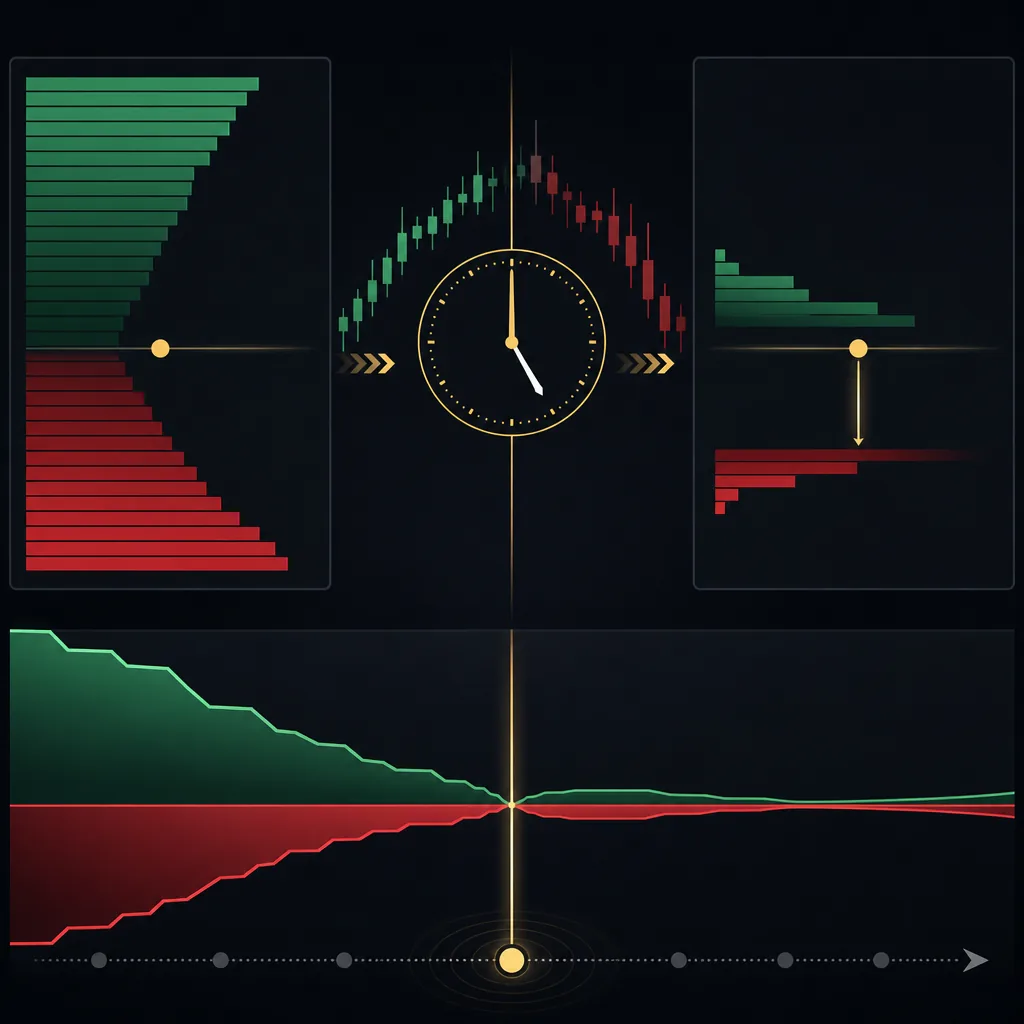
Many traders only watch the mid or candle close and assume their stop or entry level is safe. But orders execute on bid/ask, not the candle body you’re staring at.
Here are the three most common rollover problems we see with signal followers and manual traders.
1) Pending orders can trigger “early”
A buy stop triggers when the ask reaches your level. A sell stop triggers when the bid reaches your level. If spreads widen, the ask can jump up (or the bid can drop) without the chart showing a “real move” in the middle price.
Hypothetical example (forex): You place a buy stop on EURUSD at 1.1000. Normal spread is 1 pip. Around rollover, spread widens to 6 pips. The ask can print 1.1000 while the bid is still 1.0994. Your order triggers, but price may immediately look “below your entry” on the chart because the bid is lower.
This is not necessarily broker manipulation. It’s mechanics: your trigger is the tradable side.
2) Stop losses can get hit without the candle touching your level
This is the classic complaint: “My SL was hit but price never reached it.” If your platform shows candles based on bid prices (common), a widened spread can hit your stop on the ask (for shorts) or bid (for longs) without the candle visually tagging your line.
If you want a deeper explanation of the bid/ask effect on stops, see our guide on the blog (and compare it with your platform’s bid/ask display settings).
Hypothetical example (XAUUSD): You’re long gold and your stop is $2.00 below entry. During normal conditions, spread might be $0.20–$0.40 (varies by broker/account type). At rollover, spread briefly widens to $1.50. Even if the mid-price only dips $0.80, the bid might dip enough to hit your stop.
3) Signal execution can degrade (slippage + worse average entry)
If you follow signals, rollover is a time when execution quality can vary more than usual. Even if you use limit orders, you may see:
- More re-quotes / partial fills (depending on broker execution model)
- Higher slippage on market orders and stop orders
- Entry-to-SL distance effectively shrinking because spread consumes more room
This matters most for short-term strategies with tight stops. If your plan uses a 6–10 pip stop on a major pair, a temporary 4–8 pip spread can turn a normal trade into an execution problem.
Rollover vs news volatility: what’s different?
Rollover spread widening is often confused with news spikes, but they’re different problems and need different solutions.
| Situation | What changes most | What you see on the chart | Main risk to you | Best defense |
|---|---|---|---|---|
| Rollover (around 5pm NY) | Liquidity/quotes; spread temporarily widens | Candles may look calm; spread line (if shown) jumps | Stops/pendings triggered by bid/ask gap; slippage | Avoid new entries; adjust stop/size; confirm broker rollover time |
| High-impact news | Price movement + volatility; spread may also widen | Big fast candles; gaps; whipsaws | Slippage, stop runs, rapid reversals | Trade smaller or stand aside; use wider stops; avoid market orders |
| Weekend open/close | Gaps + thin liquidity | Potential gaps between Friday close and Sunday open | Gap through SL/TP; poor fills | Reduce exposure before close; plan for gaps |
Rollover is unique because it can create execution problems without obvious volatility. That’s why it catches traders off guard.
Which markets are most affected?
Spread widening at rollover can happen on many instruments, but the impact differs.
Major FX pairs
Majors often have the tightest spreads during active sessions, but they can still widen noticeably at rollover. If your system relies on very tight spreads (scalping, grid, tight breakout stops), rollover is a vulnerable time.
Crosses and exotics
Crosses (like GBPJPY) and exotics typically have wider baseline spreads already. At rollover, the percentage increase can be larger, and the “tradable price” can become temporarily unattractive.
XAUUSD (gold) and other CFDs
Gold is highly broker-dependent because it’s commonly traded as a CFD. Different liquidity arrangements, contract specs, and quote streams mean rollover behavior can vary more than on EURUSD.
If you’re newer to gold, start with gold trading for beginners and make sure you understand how your platform displays bid/ask and contract size. You can also review what is xauusd for the basics of the symbol.
Step-by-step: How to confirm your broker’s rollover time (don’t assume)
Many traders know “5pm New York” but still get caught because their broker’s server time is different, or because the broker applies a short maintenance window before/after the cutoff.
Use this process to confirm your real rollover time and the danger window on your account.
Step 1: Find the broker’s stated rollover time
Check your broker’s product/specification pages or contract details. Search their help center for “rollover,” “swap time,” or “end of day.” You’re looking for the daily cutoff time and timezone.
Step 2: Identify your platform’s server time
In MT4/MT5, the “Market Watch” clock and the timestamps on candles reflect server time (not your local time). In other platforms, there’s usually a server time indicator or a setting.
Step 3: Convert 5pm New York to your server time
New York switches between EST/EDT. Your broker server may also shift or remain fixed. Don’t guess—convert using a reliable time conversion tool, then verify by observation (next step).
Step 4: Observe spreads for 5–10 trading days
Open a watchlist of the pairs you trade (and XAUUSD if you trade gold). At the suspected rollover time:
- Note the spread just before rollover
- Note the maximum spread spike you see
- Note how long it lasts (30 seconds? 3 minutes? 15 minutes?)
Write down the worst spike you saw. Your plan should be designed for the worst case you actually observe, not the average day.
Step 5: Mark your “no-trade window”
Most traders don’t need to avoid the entire hour. A practical rule is to set a buffer around the spike you observed (for example, 5–15 minutes on each side), then refine it based on your strategy.
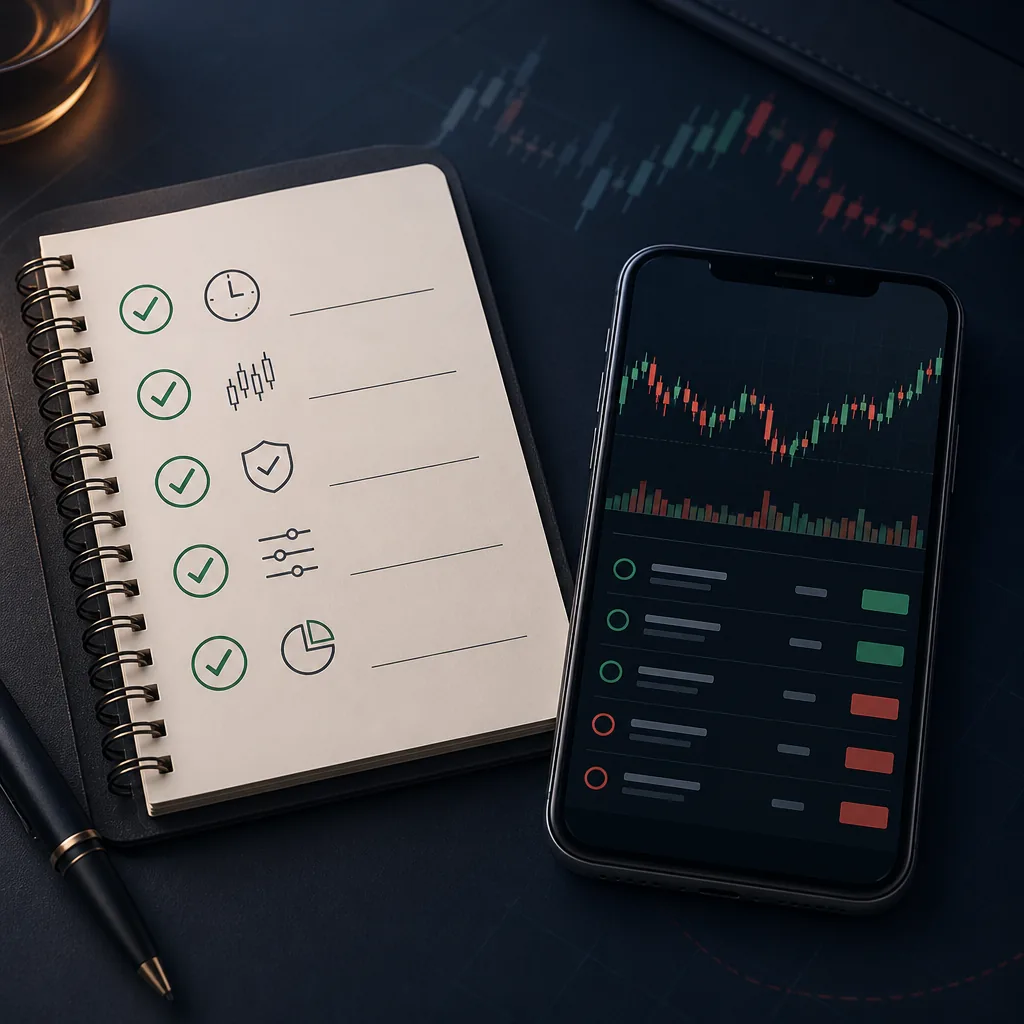
Practical checklist: How to avoid rollover spread damage
You can’t control rollover spreads, but you can control when and how you trade. Use this checklist as a standard operating procedure.
1) Pause new entries near rollover (default rule)
If your strategy is short-term (tight stops, quick targets), the simplest solution is: don’t open new trades into rollover.
- If you’re a scalper or short-term signal follower, consider pausing entries 10–20 minutes before rollover and resuming 5–20 minutes after, based on what you observed.
- If you’re swing trading with wide stops, you may not need to pause—but you should still be aware of execution risk on stop orders.
For traders focused on gold timing, our guide on the best time to trade xauusd helps you structure your day around higher-liquidity windows.
2) If you must trade, widen stops or reduce size (don’t do both blindly)
Rollover risk is about the relationship between spread and your stop distance. If the spread can temporarily expand to a large percentage of your stop, you’re exposed.
Two controlled adjustments:
- Option A: Widen the stop to survive a temporary spread spike (only if your setup still makes sense).
- Option B: Reduce position size so your $ risk stays the same if you widen the stop.
Hypothetical example (risk control): You normally risk $100 with a 10-pip stop. If rollover conditions require a 20-pip stop for the same setup, you cut the lot size in half to keep risk near $100. Use a lot size calculator to do this quickly.
This is the core idea: adjust stop distance and position size together, not randomly.
3) Prefer limit orders over market orders (when appropriate)
Market orders accept the best available price right now. During rollover, “best available” can be worse than you expect.
Limit orders can help you control entry price, but they don’t guarantee a fill. Also, a limit order can still be affected by spread behavior (for example, a buy limit fills on the ask).
Use this simple guideline:
- Market order: Use when you need certainty of entry and conditions are liquid (generally not rollover).
- Limit order: Use when price precision matters more than getting filled (often better near rollover).
4) Give pending orders extra room (or cancel them temporarily)
Pending orders sitting close to current price are most likely to be “accidentally” triggered by a spread spike.
Before rollover:
- Review buy stops/sell stops that are within a small distance of current price.
- Either move them further away (so spread expansion won’t tag them) or remove them and re-place after rollover.
Hypothetical example (buffering a stop entry): If your pair’s spread can spike from 1 pip to 6 pips at rollover, and your buy stop is only 3 pips above current price, it’s living in the danger zone. A safer approach is to place the entry far enough that even a temporary 6-pip spread doesn’t reach it unless price actually moves.
5) Don’t set ultra-tight stops during rollover
This sounds obvious, but many traders do it accidentally when they copy a signal and then “improve” the stop to reduce risk. Near rollover, a tight stop can be functionally equivalent to placing your stop inside the spread spike range.
If you follow signals, keep the provider’s structure intact unless you have a tested rule set. If you want a framework for sizing risk properly, use our forex risk management guide and keep your risk per trade consistent.
6) Avoid moving your stop to break-even right before rollover
Break-even moves are popular, but near rollover they can backfire. If the spread expands and tags your break-even stop, you’re out of a trade that might have been fine.
A more stable approach is to manage stops based on structure (swing points, ATR, or a time-based rule) rather than tightening stops into a known liquidity dip.
7) Know the “triple swap” day (and why it matters)
On many brokers, one day of the week applies a triple swap to account for weekend financing. This can coincide with more sensitivity around rollover for some instruments.
This doesn’t automatically mean spreads will be worse, but it’s another reason to be extra cautious holding or entering right at the cutoff. If you’re unsure, observe spreads and read your broker’s swap policy for the symbols you trade.
Rollover survival rules for signal followers (forex + XAUUSD)
If you follow trade alerts, your goal is simple: match the intended entry/SL/TP as closely as possible while keeping risk controlled. Rollover can interfere with that.
Rule 1: Treat rollover as an execution filter, not a “market bias”
We’re not trying to predict direction at rollover. We’re trying to avoid bad fills and accidental triggers.
Rule 2: If a signal arrives near rollover, choose one of three actions
- Wait: If entry is not urgent, wait until spreads normalize.
- Use a limit: Place a limit at the signal entry (or a planned pullback) rather than a market order.
- Reduce exposure: If you must enter, reduce lot size to account for worse execution risk.
Rule 3: Don’t judge a signal by rollover noise
A trade can look “wrong” immediately after entry if it was triggered during a spread spike. That doesn’t necessarily mean the analysis failed—it may mean execution conditions were poor. Your job is to avoid taking trades in those conditions where possible.
Rule 4: Log spread at entry time
Keep a simple journal note: instrument, time, spread, order type, slippage (if any). After 20–30 trades, you’ll see whether rollover is a real performance drag for your approach.
If you’re comparing providers, execution realism matters as much as the idea. That’s why we publish how results are calculated on our methodology page and share ongoing reporting on the results page.
Common mistakes traders make around rollover
Mistake 1: Assuming rollover is exactly 5:00:00pm New York on every platform
It’s a convention, not a guarantee. Your broker might apply spreads/maintenance slightly before or after, and your platform time may not match New York time.
Mistake 2: Using the same stop distance at all times of day
Stop placement should reflect both volatility and execution conditions. A stop that works during the London–New York overlap may be too tight during rollover.
Mistake 3: Leaving tight pending orders “parked” near price
Pending orders are not passive and harmless. They are instructions to trade when the bid/ask hits a level. During rollover, bid/ask can jump.
Mistake 4: Confusing spread widening with “stop hunting”
Sometimes it’s manipulation, sometimes it’s just a thin market. The practical solution is the same: don’t place vulnerable orders during known thin-liquidity windows, and choose brokers carefully.
Mistake 5: Not accounting for spread in risk calculations
Your stop distance is not the only cost. Spread is a real cost that effectively moves your break-even. If spreads are temporarily 3–10x normal, your trade math changes.
A simple rollover action plan (copy/paste)
Use this as a daily routine. Adjust the minutes based on what you observe on your broker.
Daily plan
- 30 minutes before rollover: Check if you have tight pending orders near current price. Decide whether to cancel or widen the buffer.
- 15 minutes before rollover: Avoid new market entries unless your strategy is designed for it.
- During rollover window: Prefer no action. If you must trade, use smaller size and consider limit orders.
- 10–20 minutes after rollover: Wait for spreads to normalize; confirm typical spread has returned before entering.
- End of day: Journal any abnormal spreads, slippage, or unexpected triggers.
If you’re holding a trade through rollover
- Make sure your stop is not “too perfect” (sitting extremely close to current price).
- Avoid moving SL to break-even right before rollover.
- Accept that spread may temporarily widen; don’t panic-close solely because floating P/L flickers from spread.
FAQ: Rollover spreads and execution
Why does my spread widen at rollover even when price isn’t moving?
Because the spread reflects tradable liquidity, not just mid-price movement. Around rollover, fewer or wider quotes can make the bid/ask gap expand even if the chart looks quiet.
How long does the 5pm New York rollover spread widening last?
It depends on your broker and instrument. For some, it’s a brief spike (seconds to a couple minutes). For others, it can be 10–20 minutes of worse conditions. The best approach is to observe and log it on your own platform for at least a week.
Is rollover time the same as swap time?
Usually yes in retail trading: the daily cutoff when swaps are applied is commonly called rollover. But brokers may use slightly different terminology and may process swaps at a specific server time that corresponds to 5pm New York.
Can rollover spreads trigger my stop loss even if the candle didn’t hit it?
Yes. Stops trigger on bid/ask. If your chart candles are based on bid (common), a widened spread can hit the stop on the other side without the candle visibly touching your level.
What’s the safest thing to do if I’m new?
Practice on a demo account first and avoid placing new trades near rollover until you understand how your broker behaves. Build your routine around higher-liquidity sessions and use consistent risk sizing.
Risk warning: Trading forex and gold (XAUUSD) involves a significant risk of loss and is not suitable for every trader. Spreads, slippage, and rollover conditions can materially affect results. Past performance does not guarantee future results. This article is for education only and is not personal financial advice.
If you prefer to follow structured trade ideas with clear levels, United Kings sends forex and gold (XAUUSD) signals on Telegram with an entry, stop loss, and take-profit levels. You can see a selection of signals in our free public channel on telegram, and review our approach on the methodology page. If you want full access, details are on our pricing page.