
Ever had a perfect XAUUSD signal… and FOMC turned it into a slippage nightmare in 30 seconds?
If you trade gold (XAUUSD), the Fed rate decision is the one event that can make your week in minutes—or wipe out a month of good execution if you treat it like a normal session.
This guide is a XAUUSD FOMC strategy built for real traders using signals. We’ll run a 60-minute pre/post-event execution plan designed to keep you out of the worst liquidity traps, while still giving you a structured way to capture the move.
TL;DR: The 60-minute XAUUSD FOMC execution plan
- 30 minutes before FOMC: reduce risk, define “no-trade” conditions, and pre-map levels (today’s reference: XAUUSD ~$2650).
- 0 to +5 minutes (spike window): avoid market orders, expect spread expansion, and only execute if your signal matches the “A+” volatility criteria.
- +5 to +30 minutes (retracement phase): look for the highest-probability entry—often the pullback into a broken level, not the first candle.
- Stops/targets must be volatility-aware: typical gold SL for FOMC is $15–$25, with 1:2 to 1:3 R:R targets (example: risk $20, aim $40–$60).
- Position sizing is the edge: if you normally risk 1%, consider 0.25%–0.5% during the first 10 minutes after the decision.
- Execution beats prediction: your job is to trade the reaction—confirm structure, manage slippage, and follow a checklist.
Why FOMC moves XAUUSD so violently (and why signals fail here)

Gold is not just a “metal.” In practice, XAUUSD trades like a macro instrument that reacts to real yields, USD strength, and risk sentiment.
Right now, we’re working with realistic levels: XAUUSD ~$2650 (+0.35%), DXY ~106.80, EUR/USD ~1.0520, GBP/USD ~1.2680, and USD/JPY ~149.50. In this environment, a Fed surprise—or even a subtle shift in language—can reprice the dollar and yields fast.
Here’s why FOMC is different from “normal volatility.” Liquidity providers widen spreads because the next price is unknown. Algorithms pull quotes. Stop orders cluster around obvious levels. The result is a two-part move: the initial spike and the secondary move after the press conference or the market digests the statement.
Signals fail around FOMC for three common reasons:
- Spread and slippage: your entry fills worse than planned, instantly breaking your risk model.
- False breakouts: price breaks a key level by $5–$10, triggers stops, then reverses $30.
- Normal stops in abnormal conditions: a $8 stop that works on a Tuesday London session gets hunted in 10 seconds during FOMC.
So the goal isn’t to “predict the Fed.” The goal is to trade gold during the Fed rate decision with a plan that respects microstructure: spread, liquidity, and the way gold actually whipsaws.
At United Kings, our premium Telegram signals focus on London and New York sessions, with clear Entry, SL, and TP levels and an 85%+ historical win rate. But even the best signal needs a news execution framework—and that’s what you’re getting here.
The 60-minute timeline: what you do, minute by minute
Most traders think “FOMC trading” means two minutes of adrenaline. Professionals treat it like a one-hour operation: preparation, execution, and post-event management.
We’ll use a 60-minute block, centered on the decision release time. Adjust the clock to your broker time, but keep the sequence.
Phase 1: -30 to 0 minutes (pre-event preparation)
This is where you win the trade before it happens. You define what you will and won’t do, while spreads are still relatively sane.
Primary objective: reduce avoidable execution risk.
Phase 2: 0 to +5 minutes (the spike window)
This is the danger zone. Your job is not to “be first.” Your job is to avoid being the liquidity for faster players.
Primary objective: avoid slippage traps and false breaks.
Phase 3: +5 to +30 minutes (post-news retracement + continuation)
This is where the cleanest entries often appear. The market shows its hand. You get structure back.
Primary objective: execute the high-probability signal with volatility-aware risk.
Phase 4: +30 minutes and beyond (normalization)
After 30–60 minutes, spreads often normalize. If the move is real, trends can extend for hours.
Primary objective: manage the position like a normal trade again, but with wider levels in mind.
To align this with your signal workflow, make sure you understand how professional signal execution works. If you’re newer, pair this guide with our forex signals Telegram beginner guide and the broader risk management strategies when using forex signals.
Signal quality filter for FOMC: A+, A, and “no trade” rules
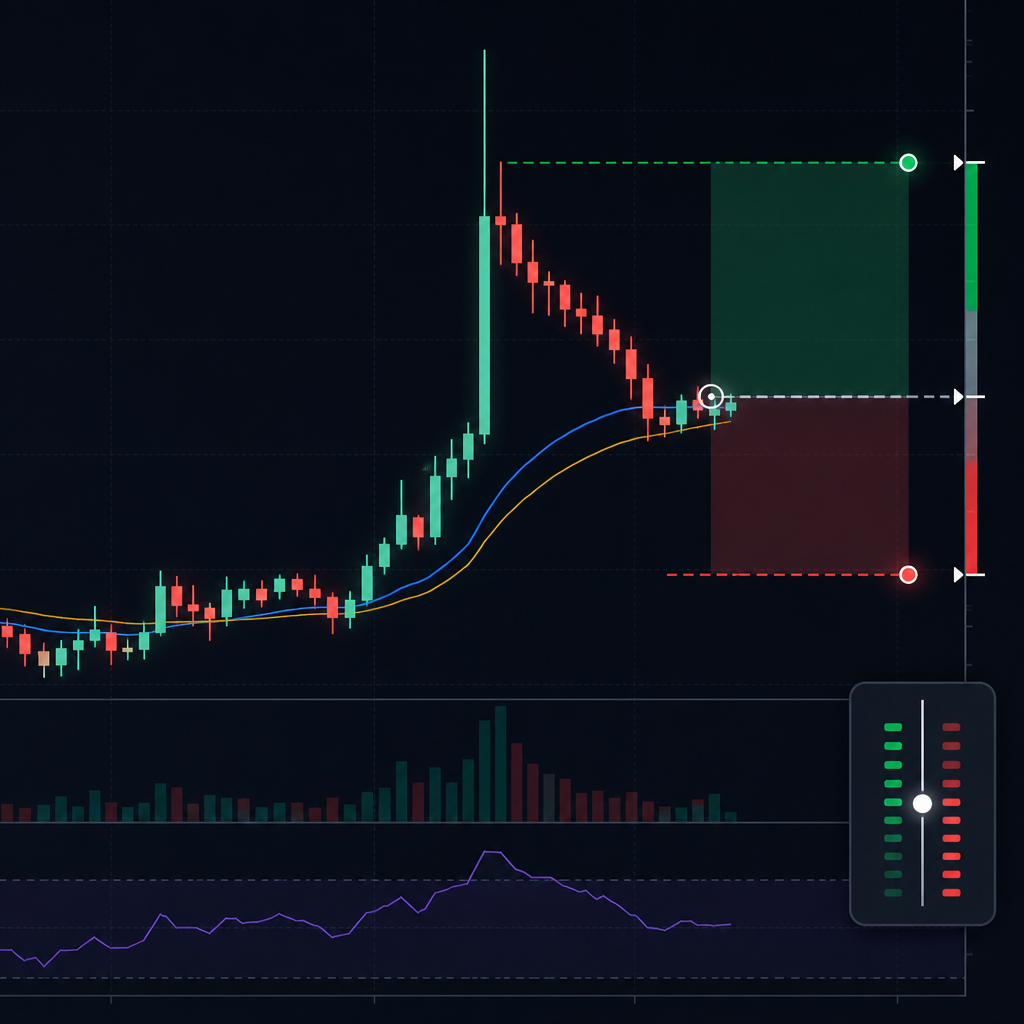
During FOMC, you don’t need more signals. You need fewer, better ones.
Use this simple filter to decide whether to execute a gold signal during the event. Think of it as your “signal validity score” for news conditions.
A+ FOMC signal (tradeable even in high volatility)
- Clear level-based setup: entry is at a major support/resistance, prior day high/low, or a clean breakout/retest zone.
- Room to target: at least $40–$60 of logical space to the next major level (supports a 1:2 to 1:3 R:R with a $20 stop).
- Stop placement makes sense: SL is beyond structure, not “random $10.” Example: if buying 2642, SL 2622 (risk $20) under the swing low and liquidity pocket.
- Execution method is defined: limit entry, retest entry, or conditional entry. Not a blind market order.
- Spread/slippage tolerance planned: you accept you might get 30–150 points (=$3–$15) of slippage depending on broker conditions.
A signal (tradeable only after the first 5 minutes)
- Good setup, but entry is near the middle of the range.
- Stop is acceptable but would be vulnerable in the first candle spike.
- Best executed in the +5 to +30 minute retracement phase.
No-trade signal (skip it, even if it looks tempting)
- Stop too tight: SL under $12 in the first 10 minutes after FOMC.
- Entry is at market during the release: you’re effectively donating to slippage.
- Targets are too close: TP1 is $10–$15 away, which is noise in FOMC conditions.
- Conflicting macro tone: gold is pinned at $2650, DXY is firm at 106.80, and yields are rising—yet the signal assumes immediate gold rally without a level-based trigger.
This filter is how you protect the edge of premium signals. If you want a deeper checklist for evaluating providers and setups, use our signal provider checklist as your baseline, then apply the FOMC-specific rules above.
Pre-FOMC (T-30 to T-5): your checklist to avoid the classic slippage trap
Most FOMC losses happen before the announcement—because traders are positioned incorrectly, emotionally committed, or over-leveraged.
Here’s the checklist we use to prepare for a Fed decision when gold is trading around $2650 and the USD complex is steady (DXY ~106.80, USD/JPY ~149.50).
Step 1: Identify the “line in the sand” levels
Mark three zones on your chart:
- Current price magnet: around 2650 (round numbers often act like liquidity magnets).
- Upper liquidity zone: 2675–2690 (where stops above highs often cluster).
- Lower liquidity zone: 2625–2610 (where stops below lows cluster).
You’re not predicting which one breaks. You’re preparing for how you’ll trade if price reaches them.
Step 2: Decide your maximum risk for the event
If your normal risk is 1% per trade, FOMC is where you consider 0.25%–0.5% for the first entry. You can always add later when spreads normalize.
Example: $10,000 account.
- Normal 1% risk = $100.
- FOMC initial risk at 0.5% = $50.
- With a $20 stop on gold, that’s $2.50 per $1 move, or 0.125 lots (broker-dependent). The point is: risk first, lot size second.
Step 3: Check your broker conditions (don’t ignore this)
Before FOMC, open your platform and watch:
- Spread: if gold spread is already elevated (e.g., $0.60–$1.20), it can blow out during the release.
- Execution mode: market execution vs instant execution changes slippage behavior.
- Stop level restrictions: some brokers enforce minimum distance during volatility.
If your broker is consistently bad during news, your plan must shift toward post-news retracement entries rather than spike trading.
Step 4: Align with your signal source and timing
If you’re following United Kings, you’ll typically receive structured entries with SL/TP in our premium channels. Make sure you’re in the right place before the event: United Kings Gold Signals for XAUUSD focus, or the broader United Kings Signals hub if you trade multiple assets.
Also, keep Telegram ready: United Kings official Telegram. During fast markets, speed of receiving updates matters—but execution discipline matters more.
Step 5: Create a “no impulse trade” rule
Write it down: “No market orders in the first 60 seconds.”
That one rule prevents the most common FOMC mistake: chasing the first candle and getting filled at the top of a spike.
Event moment (T-5 to T+5): how to trade the spike without donating to the market
This is where the crowd loses money. The chart looks like opportunity, but it’s often a trap.
In the spike window, XAUUSD can move $10–$25 in seconds. That’s 1,000–2,500 points on many broker feeds. If you enter with a market order, your fill can be far from your planned entry, and your stop can be triggered by spread alone.
The spike window rules (non-negotiable)
- No market entries unless your strategy is specifically designed for it and you accept slippage.
- No tight stops: anything under $12 is a “stop donation” in the first 5 minutes.
- No revenge trades: if you miss it, you miss it. The retracement phase is where pros enter.
- One attempt maximum in the first 5 minutes. Overtrading is the fastest account killer here.
Three execution methods that work (and when to use them)
1) Break-and-retest entry (preferred)
Wait for price to break a key level and then retest it after the first candle settles.
- Example bullish scenario: price spikes above 2665, then pulls back to 2665–2662 and holds.
- Entry: buy 2664 on confirmation.
- SL: 2644 (risk $20).
- TP1: 2704 (reward $40, 1:2).
- TP2: 2724 (reward $60, 1:3) if momentum is real.
This method avoids being the first buyer at the top. You buy the retest when liquidity returns.
2) Fade-to-mean (only for advanced traders)
Sometimes the first spike is a liquidity sweep. Gold might rip to 2685, then immediately dump back under 2670.
- Entry: sell 2668 after reclaim failure below the swept level.
- SL: 2688 (risk $20).
- TP: 2628 (reward $40) or 2608 (reward $60) depending on structure.
This is powerful but dangerous. You need confirmation, not a guess.
3) Stand down and wait (most profitable for most traders)
If spreads are chaotic, the best trade is no trade. Your edge is preserved for the retracement phase.
How to read the first 1-minute candles
- Long wick + close near open: indecision. Wait.
- Full-bodied candle + follow-through: real momentum possible, but still wait for retest.
- Two-way spike: classic whipsaw. Stand down until +5 to +10 minutes.
If you want more context on how signals behave during unexpected news volatility, read how gold signals react to unexpected news events. FOMC is scheduled, but the mechanics are similar: liquidity shock first, structure later.
Post-FOMC retracement (T+5 to T+30): the highest-probability window for gold signals
Here’s the truth most traders learn late: the “easy money” is often not the initial burst. It’s the retracement entry that forms after the market reveals direction.
In this phase, spreads begin to normalize, and you can place stops beyond structure instead of “hoping” your stop survives a spread spike.
What you’re looking for
- Direction confirmation: higher highs/higher lows for bullish, lower highs/lower lows for bearish on 1m–5m.
- Level interaction: price returns to a broken level (support becomes resistance or vice versa).
- Volatility contraction: candles shrink after the spike. That’s your entry environment.
Two practical retracement setups with current price ranges
Setup A: Bullish continuation from 2650 magnet
Scenario: FOMC is interpreted dovish. DXY softens from 106.80, USD/JPY slips from 149.50, and gold holds above 2650 after the spike.
- Spike high: 2680.
- Retracement: 2652–2658.
- Entry: buy 2656 after a 5m bullish close.
- SL: 2636 (risk $20).
- TP1: 2696 (reward $40, 1:2).
- TP2: 2716 (reward $60, 1:3) if 2690 breaks cleanly.
Setup B: Bearish continuation after a liquidity sweep to 2685
Scenario: FOMC is hawkish or the dot plot shifts. DXY firms, yields pop, and gold fails to hold above 2675.
- Sweep: 2685.
- Failure: 2670.
- Retracement: back to 2668–2672 as resistance.
- Entry: sell 2670 on rejection.
- SL: 2690 (risk $20).
- TP1: 2630 (reward $40).
- TP2: 2610 (reward $60) if momentum stays heavy.
How to manage the trade once you’re in
- Move SL to breakeven only after structure confirms: for gold, that might be after a $15–$25 move in your favor, not after $5.
- Scale out logically: take partial at 1:2 (e.g., +$40) and let the rest run to 1:3 if conditions support it.
- Avoid over-managing: FOMC trends can breathe. If your stop is $20, don’t panic over a $6 pullback.
Volatility-aware stops and targets: the math that keeps you alive on FOMC
Stops and targets are not “preferences.” They are a response to volatility.
On a normal day, you might trade gold with a $10–$15 stop. Around FOMC, that’s often too tight. Your stop must sit beyond the noise created by spread expansion and stop runs.
Rule of thumb for FOMC stops on XAUUSD
- Spike window (0 to +5): $20–$30 stops if you trade at all.
- Retracement window (+5 to +30): $15–$25 stops are typical for structured entries.
- After +30: you can sometimes return to $12–$18 if volatility compresses.
Targets should match the environment
During FOMC, gold can travel $40–$80 in a session. That means your targets should not be “quick scalps” unless your system is built for it.
A clean template:
- Risk $20.
- TP1 at $40 (1:2).
- TP2 at $60 (1:3).
How spread changes your real risk
Let’s say you buy 2656 with a $20 stop at 2636. If spread widens and your fill is 2658 instead, your real risk becomes $22.
That’s why you either:
- Reduce size so small slippage doesn’t break your risk cap, or
- Wait for retracement when spreads normalize.
Practical position sizing adjustment
If you normally risk $100 per trade, your FOMC plan could be:
- Entry 1 (retracement): risk $50 with a $20 stop.
- Entry 2 (only if structure confirms): risk another $50 on a second pullback or breakout retest.
This keeps you in the game without needing to “nail” the first move.
If you want a full framework for sizing and drawdown control while using signals, keep this risk management guide open and apply the “event risk discount” concept specifically for FOMC.
Comparison table: three ways to trade XAUUSD around FOMC (and who each is for)
Not everyone should trade the release the same way. Your best method depends on your experience, broker execution, and psychology.
| Approach | When you enter | Pros | Cons | Best for |
|---|---|---|---|---|
| Spike trading | 0 to +60 seconds | Captures the biggest burst; fast R:R | Highest slippage; false breaks; emotional | Advanced traders with top-tier execution |
| Break-and-retest | +2 to +10 minutes | Structure confirmation; better fills; cleaner stops | May miss the first $10–$20 move | Most signal followers and disciplined traders |
| Post-news trend follow | +15 to +60 minutes | Spreads normalize; clearer trend; less noise | Sometimes late; smaller R:R if move already extended | Beginners, prop traders, conservative accounts |
If you’re unsure which category you fall into, choose break-and-retest. It aligns best with how premium signals are designed: planned entries, planned invalidation, and realistic targets.
Realistic FOMC scenarios for XAUUSD at ~$2650 (and how to react)
Let’s turn this into practical decision-making. When gold is around 2650 and the dollar is firm (DXY 106.80), the market is usually sensitive to anything that changes the path of rates.
We’ll keep this execution-focused. We’re not predicting the outcome. We’re mapping reactions.
Scenario 1: Hawkish surprise (gold sells off)
What you might see:
- DXY pops above 106.80 and holds.
- USD/JPY pushes above 149.50.
- XAUUSD spikes up first (liquidity sweep), then dumps.
How you trade it:
- Skip the first minute.
- Look for failure under a reclaimed resistance (e.g., 2670–2675).
- Sell the retest with SL above the sweep high (e.g., 2690).
- Target 2630 then 2610 if momentum persists.
Scenario 2: Dovish tilt (gold rallies)
What you might see:
- DXY fades from 106.80.
- EUR/USD lifts from 1.0520.
- Gold breaks above a key level like 2665 and holds.
How you trade it:
- Wait for a pullback into 2665–2660.
- Buy after a 1m/5m confirmation candle.
- SL 20 below entry, beyond the pullback low.
- TP 40–60 above entry, toward 2690 and beyond.
Scenario 3: “Nothing burger” decision, but volatile press conference
Sometimes the statement causes a small move, then the press conference triggers the real trend. Traders get chopped trying to force trades early.
How you trade it:
- Treat the first move as reconnaissance.
- Reduce frequency: one high-quality trade only.
- Wait for +15 minutes if needed, then trade the first clean break-and-retest.
This is why we emphasize session structure at United Kings. FOMC often hits into New York liquidity. If you want to refine execution timing further, pair this with our post on the United Kings blog and our session-focused approach inside the signals page.
The practical 30-minute checklist (copy/paste before every FOMC)
If you only take one thing from this article, take this checklist. It’s designed to be used live, not just read.
T-30 to T-15 minutes
- Check current price and volatility: XAUUSD ~2650, note last 15m range.
- Mark key levels: 2650 magnet, 2675–2690 upper zone, 2625–2610 lower zone.
- Confirm your maximum risk: 0.25%–0.5% initial risk for most traders.
- Cancel unnecessary pending orders that could trigger accidentally.
T-15 to T-5 minutes
- Check spread behavior and platform stability.
- Decide your execution style: stand down, break-and-retest, or post-news trend follow.
- Open your signal channel and ensure you can act without rushing.
- Write your rule: no market orders in first 60 seconds.
T-5 to T+1 minute
- Hands off unless you’re advanced and conditions are perfect.
- Watch for liquidity sweep behavior (spike both ways).
- Do not adjust stops impulsively. You’re not in a trade yet.
T+1 to T+5 minutes
- Identify direction: are highs/lows building or failing?
- Wait for a level to break and retest.
- If spreads remain wild, delay to +10 minutes.
T+5 to T+30 minutes
- Execute the best setup only (A+ or A).
- Use SL $15–$25 beyond structure.
- Target 1:2 first, then consider 1:3 if trend is clean.
- Log the trade: entry quality, slippage, emotions, outcome.
This checklist pairs perfectly with premium signal delivery because it turns “information” into “execution.” If you’re currently using random free channels, compare them to a structured approach using our best forex signals resource and then apply the same standards to gold.
How United Kings traders handle FOMC: execution rules + community edge
Signals are not magic. They’re a decision support tool. Around FOMC, the difference between profit and loss is often how you execute, not what the direction is.
Here’s how we encourage traders in the United Kings community to approach FOMC weeks, especially when gold is hovering around a major psychological level like $2650.
Rule 1: We prioritize clarity over frequency
On normal days, multiple setups can be valid. On FOMC, we’d rather take one clean trade than three messy ones.
That’s why our signals are structured with clear Entry, SL, TP. If the market invalidates the setup, we don’t “hope.” We wait for the next structure.
Rule 2: We trade where liquidity is (London + New York focus)
FOMC is a New York event. Liquidity is there, but it’s also where the largest stop runs happen.
We focus on the post-release structure that forms when the market transitions from chaos to trend. That’s typically the +5 to +30 minute window you learned above.
Rule 3: We use community feedback to reduce errors
With 300K+ active traders in our community, you see real-time feedback: spreads, slippage reports, and whether a move is clean or choppy across brokers.
This doesn’t replace your plan. It supports it—especially if your broker’s execution is inconsistent.
Rule 4: Education alongside signals (so you don’t become dependent)
We want you to understand why a setup works. That’s how you stay consistent.
If you’re building your foundation, explore our gold signals page and the broader forex signals offering to see how we structure trades across markets. Some traders also diversify into crypto, but only if it fits their risk profile—see our crypto signals page for a separate volatility framework.
Common FOMC mistakes (and the exact fix for each)
Let’s make this painfully practical. These are the mistakes that repeatedly hit signal traders around Fed decisions—and how to correct them immediately.
Mistake 1: “The signal said buy, so I bought at market at release”
Fix: Convert the signal into an execution plan. If the signal is a buy, your job is to buy the retest or the post-news structure, not the first candle.
Rule: If you can’t define where the retest is likely to occur (e.g., 2665), you’re not ready to execute.
Mistake 2: Tight stops because you want a bigger lot size
Fix: Reverse the math. Decide risk first (e.g., $50), then choose a stop that makes sense (e.g., $20), then compute lot size.
In FOMC conditions, tight stops are not “precision.” They’re usually fragility.
Mistake 3: Taking profit too early because the candle is scary
Fix: Use pre-defined TP levels based on R:R and structure. If you planned TP1 at +$40, don’t close at +$12 because a 1-minute candle pulled back.
Scaling out helps: take partial at 1:2 and let the rest attempt 1:3.
Mistake 4: Overtrading the whipsaw
Fix: Limit attempts. One trade in spike window (if any), one trade in retracement window. That’s it.
If you miss the move, accept it. Consistency is built by protecting capital, not forcing participation.
Mistake 5: Ignoring correlated markets
Fix: You don’t need to trade them, but you should glance at DXY, EUR/USD, and USD/JPY. If gold is rising but DXY is also rising aggressively, be cautious—gold rallies can fail fast in that environment.
FAQ: Trading XAUUSD signals around FOMC
1) Is it better to trade gold before or after the FOMC decision?
For most traders, after. The +5 to +30 minute window often offers better structure and less slippage than the first minute. Pre-FOMC trades can work, but you must accept headline risk.
2) What stop loss size is reasonable for XAUUSD during FOMC?
A common range is $15–$25 for structured post-news entries. In the first 1–5 minutes, stops may need to be even wider, but many traders avoid that window entirely.
3) Should I use pending orders to catch the spike?
Only if you fully understand the risks. Pending orders can fill at poor prices during spread expansion. Many traders find break-and-retest entries safer than trying to catch the first candle.
4) How do I avoid slippage when trading gold during Fed decisions?
You can’t eliminate slippage, but you can reduce it by avoiding market orders at release, trading the retracement phase, reducing position size, and using level-based entries where spreads are calmer.
5) Can beginners trade FOMC with gold signals?
Beginners should consider demo trading first and focusing on the post-news trend phase (+15 to +60 minutes). The spike window is not a training ground—it’s where bad habits get expensive.
Risk Disclaimer: Trading forex and gold (XAUUSD) involves significant risk and may not be suitable for all investors. Volatility around FOMC decisions can cause rapid price moves, spread widening, and slippage. Past performance does not guarantee future results. Signals and analysis are educational and informational, not financial advice. Always use proper risk management, consider practicing on a demo account, and never trade money you cannot afford to lose.
Join United Kings: trade FOMC weeks with structure, not stress
If you want to trade gold around FOMC with a plan—and with a community that takes execution seriously—United Kings is built for you.
We deliver premium Telegram signals for forex and gold with clear Entry, SL, and TP levels, backed by an 85%+ historical win rate approach and a 300K+ active trader community. You also get educational guidance so you understand the “why,” not just the numbers.
Explore our offerings here: UnitedKings.net home, all trading signals, and our dedicated XAUUSD gold signals. If you’re ready to subscribe, review the 3 plans on United Kings pricing: Starter (3 Months) $299, Best Value (1 Year) $599 with 50% savings + FREE ebook, and Unlimited (Lifetime) $999 pay once. All plans include a 48-hour money-back guarantee.
Want the fastest access? Join our official Telegram now: United Kings Telegram signals channel.
Your next FOMC doesn’t need to be a gamble. Use the 60-minute plan, execute with discipline, and let structured signals do what they’re meant to do: support consistent decision-making in the most volatile moments.