Gold just printed $2650.00, and you watched price spike above the Asia high… only to dump $18 in the next 20 minutes.
If that feels familiar, you’re not “late” or “unlucky.” You’re often the liquidity.
This guide teaches a repeatable XAUUSD liquidity sweep strategy built around one of the most common intraday behaviors in gold: Asia high/low stop hunts during London and New York, followed by a reversal that offers clean, rule-based entries.
TL;DR — The Asia High/Low Liquidity Sweep Playbook
- Mark the Asian session range (Asia high and low). That range is a magnet for stops and breakout orders.
- Wait for London or NY to sweep Asia high/low with a wick (stop hunt), then look for confirmation before entering.
- Use invalidation beyond the sweep extreme (typically $10–$25 on XAUUSD depending on volatility) to avoid death-by-noise.
- Target 1:2 to 1:3 R:R using logical liquidity pools (range midpoint, opposite side of Asia range, prior day levels).
- Avoid the #1 trap: selling the first red candle after a sweep. Wait for displacement + structure shift.
- Trade best during London open (07:00–10:00 London) and NY open (08:30–11:00 NY), especially when DXY is moving (currently ~106.80).
We’ll use realistic current-market examples around: XAUUSD $2650, EUR/USD 1.0520, GBP/USD 1.2680, USD/JPY 149.50, and DXY 106.80.
If you want the same style of structured execution in real time, our team shares premium setups inside United Kings Gold Signals with clear Entry, SL, and TP levels, designed around London and NY session flows.
1) What a Liquidity Sweep Means in XAUUSD (and Why Asia Matters)
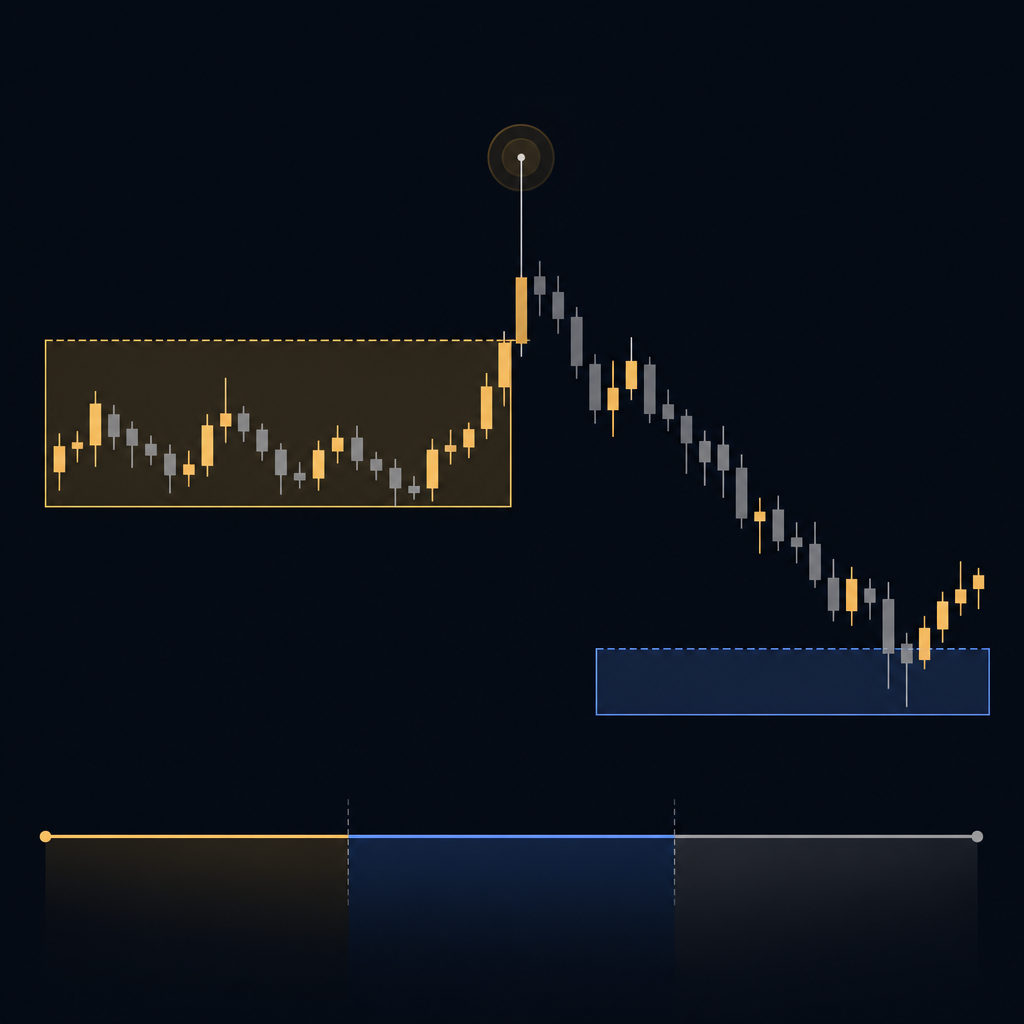
A liquidity sweep is when price pushes beyond a well-watched level to trigger resting orders—then quickly reverses.
In gold, the most “tradable” sweeps often happen around the Asian session high/low because Asia frequently builds a tighter range that becomes a reference point for Europe and the U.S.
Think of the Asia range as a container of orders:
- Breakout buys above the Asia high (stop entries + momentum traders).
- Stop-losses for Asia-range shorts above the high.
- Breakout sells below the Asia low.
- Stop-losses for Asia-range longs below the low.
When London opens, liquidity increases. That’s when gold often makes a fast run to one side of the Asia range to collect liquidity, then reprices in the opposite direction.
This is why “Asia high/low breakout reversal” setups are so common: the breakout is frequently the mechanism that fuels the reversal.
Now add today’s context: gold is around $2650 (+0.35% in 24h). DXY is elevated around 106.80. That combination can create sharp intraday swings—especially during data releases or when yields move.
In other words: sweeps can be cleaner (because liquidity is obvious) and also more violent (because stops are closer and momentum is faster).
Liquidity sweep vs. breakout: the key difference
A breakout continues and holds above/below the level. A sweep fails quickly.
Your job is not to predict which one it is. Your job is to wait for the market to show its hand through confirmation rules.
Why gold is uniquely “sweep-prone”
- High participation across time zones (Asia, Europe, U.S.).
- Macro sensitivity (rates, inflation, geopolitics).
- Algorithmic execution around obvious levels (session highs/lows).
- Fast mean reversion after liquidity is taken, especially in range days.
We’ll use those tendencies—without guessing—by building a strict, repeatable checklist.
2) The Core Setup: Asia High/Low Stop Hunt → Confirmation Entry
This strategy has three phases: range, sweep, and confirmation.
Most traders lose money because they trade phase two (the sweep) as if it’s phase three (the reversal confirmation).
Phase A: Define the Asian session range
For simplicity, define Asia as roughly 00:00–06:00 London time. Some traders use 23:00–07:00; consistency matters more than perfection.
Mark:
- Asia High (highest wick during the window)
- Asia Low (lowest wick during the window)
- Asia Midpoint (optional, but useful as a first target)
Example: Asia range forms between $2641 low and $2654 high (a $13 range). That’s a typical “compress then expand” profile.
Phase B: Wait for the sweep (stop hunt)
A sweep is not just “price touched the level.” You want a clear breach that suggests stops were triggered.
On XAUUSD, a practical sweep often looks like:
- Price trades $1–$6 beyond the Asia high/low, often in a fast burst.
- A visible wick forms (rejection) on M5/M15.
- The candle closes back inside the Asia range (stronger signal).
Example: London pushes from $2650 to $2661, sweeping above the Asia high $2654, then closes M15 back at $2652. That’s a classic stop-hunt signature.
Phase C: Confirmation entry (your edge)
Confirmation is what separates a sweep trade from a random fade.
We use one of these confirmation triggers:
- Break of structure (BOS) on M5/M15 in the reversal direction
- Displacement candle (large body, closes with intent) away from the sweep area
- Retest entry into a small pullback zone (often a fair value gap or prior swing)
Example continuation: after sweeping $2661, gold drops and breaks a minor M5 swing low at $2648. That break is your “market agrees” signal.
Now you can plan an entry on a retest to $2649–$2651 with invalidation above $2661 (plus buffer).
If you prefer having these rules delivered as ready-to-execute alerts, our community shares structured setups inside United Kings Signals and focuses on the exact windows where these sweeps most often occur.
3) Time Windows That Actually Matter (London Open, NY Open, and the Overlap)
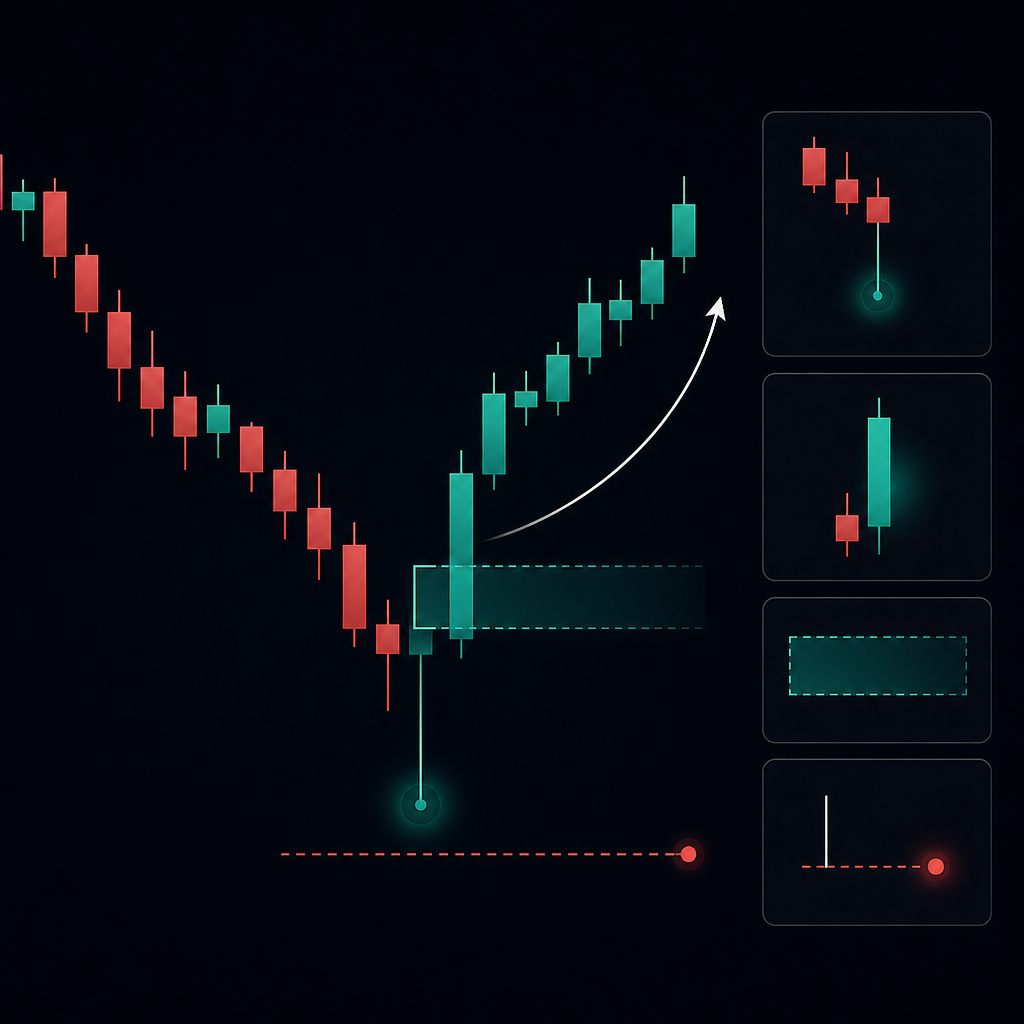
Liquidity sweeps are not evenly distributed across the day.
Gold is most likely to run stops when new liquidity enters—that’s why session transitions matter more than random hours.
Best time windows for Asia high/low stop hunts
- London open: 07:00–10:00 London
- NY open + data window: 08:30–11:00 New York
- London–NY overlap: roughly 13:00–16:00 London (higher follow-through days)
In practice, the cleanest sweep often happens in the first 60–120 minutes of London.
NY can either extend the London move or reverse it again, especially when U.S. yields or DXY (currently ~106.80) shifts quickly.
When to skip the setup (yes, skip)
Some days are designed to chop you up. The best traders don’t “trade more.” They filter better.
- Asia range too wide: if Asia is $30+ wide (e.g., $2615 to $2645), sweeps become messy and stops must be huge.
- Asia range too tight + news imminent: tight ranges before CPI/NFP can explode both sides.
- Major red-folder event within 15 minutes: spreads/slippage can invalidate perfect technicals.
- No displacement after sweep: if price just drifts, it may be building for a real breakout.
Session correlations you can use as “context filters”
Gold often moves inversely to the dollar, but not always. Still, it helps to glance at majors:
- If DXY is ripping higher from 106.80 to 107.10 quickly, gold rallies may fail faster.
- If USD/JPY spikes above 149.50, it can signal risk-on or yield pressure—gold may face headwinds.
- If EUR/USD breaks below 1.0520 during London, that often aligns with dollar strength and gold softness.
We’re not using correlation to predict. We’re using it to avoid trading a sweep reversal against obvious macro momentum.
4) Entry Models: Aggressive vs. Conservative (and Which Fits You)
There are two clean ways to trade the post-sweep reversal: aggressive entries (earlier, higher win-rate risk) and conservative entries (later, smaller drawdown risk).
The best model depends on your psychology and account size.
Model 1: Aggressive “close back inside” entry
Rule: after the sweep, enter when M5/M15 closes back inside the Asia range, in the direction of the reversal.
Example (bearish):
- Asia high: $2654
- Sweep: spike to $2661
- M15 closes back inside at $2652
- Sell around $2651–$2653
- SL: above sweep high $2661 + buffer (e.g., $2672 = $19 risk)
- TP1: Asia midpoint (e.g., $2647)
- TP2: Asia low $2641
This entry is fast and often catches the move early, but it can get wicked out if the market sweeps twice.
Model 2: Conservative “BOS + retest” entry
Rule: wait for a break of structure in the reversal direction, then enter on a pullback.
Example (bearish):
- Sweep above Asia high to $2661
- Price breaks M5 swing low at $2648 (BOS)
- Wait for pullback to $2649–$2651
- Sell at $2650
- SL: above $2661 + buffer (e.g., $2670 = $20 risk)
- TP: 1:2 = $2610? That’s too far for this micro-range; instead target logical pools: $2640 (10), $2630 (20), $2620 (30) depending on day structure
Because our price guideline examples are $2610–$2690, here’s a realistic target ladder if the day opens space:
- Entry: $2650
- SL: $2670 (risk $20)
- TP1 (1R): $2630
- TP2 (2R): $2610
Not every day will reach 2R. That’s why partials and structure-based exits matter.
Comparison table: aggressive vs. conservative entries
| Feature | Aggressive (Close Back Inside) | Conservative (BOS + Retest) |
|---|---|---|
| Entry timing | Early | Later |
| False-signal risk | Higher (double sweeps) | Lower (needs structure shift) |
| Stop size needed | Often larger | Often tighter (but not always) |
| Best for | Experienced scalpers, fast execution | Rule-based traders, fewer trades |
| Common mistake | Entering before any rejection | Chasing after the move already ran |
Inside our gold signals, you’ll often see the conservative model: confirmation first, then entry—because it’s easier to execute consistently across a large community.
5) Invalidation Rules: Where Your Idea Is Proven Wrong (Not “Uncomfortable”)
Most gold traders don’t have an entry problem. They have an invalidation problem.
They place stops where the market naturally hunts, then blame “manipulation.” In reality, their stop is sitting inside the liquidity pool.
The one rule you must respect
If you’re trading a sweep reversal, your invalidation is beyond the sweep extreme.
Not beyond the Asia high/low. Beyond the sweep high/low.
How much buffer should you use on XAUUSD?
Gold’s noise changes by session and by day. With XAUUSD at $2650 and modest 24h change (+0.35%), you still regularly see $5–$12 wicks in active windows.
Practical buffers:
- Calmer London: $3–$6 buffer beyond the sweep extreme
- NY open / data window: $6–$12 buffer
- High-volatility day: consider $12–$20 buffer or skip
That’s how we arrive at typical stop distances of $10–$25 from entry in many sweep setups.
Concrete bearish example (sweep of Asia high)
- Asia high: $2654
- Sweep high: $2663
- Entry (after BOS + retest): $2651
- Invalidation: above $2663 + $7 buffer = $2670
- Risk: $19
Your idea is wrong if price can sweep the sweep and hold. That means the market still wants higher liquidity (next highs, prior day high, or a macro breakout).
Concrete bullish example (sweep of Asia low)
- Asia low: $2641
- Sweep low: $2634
- Entry (after BOS + retest): $2644
- Invalidation: below $2634 + $6 buffer = $2628
- Risk: $16
Two invalidation mistakes that destroy accounts
- Stops inside the Asia range: you’re asking to be wicked out during the retest.
- Moving SL “because it’s close”: you turn a defined setup into an emotional trade.
If you want a broader framework for sizing and risk controls around signals, read our guide on risk management strategies when using forex signals. The principles apply perfectly to gold.
6) Target Rules: Where to Take Profit (Without Guessing Tops/Bottoms)
Targets in a liquidity sweep strategy should be based on where liquidity likely sits next, not on hope.
In gold, the best targets are usually “obvious” levels that attract orders: session lows/highs, prior day levels, and round numbers.
Target framework (simple and repeatable)
Use a 3-step target ladder:
- TP1: Asia midpoint or first internal swing (reduce risk)
- TP2: opposite side of Asia range (the “range fill”)
- TP3: external liquidity (prior day high/low, London low/high, or a round number like $2620/$2680)
Bearish example with 1:2–1:3 logic
Assume:
- Entry: $2652
- SL: $2672 (risk $20)
Now map targets:
- TP1: $2642 (0.5R)
- TP2: $2632 (1R)
- TP3: $2612 (2R)
If the day is trending, 2R can be realistic. If the day is ranging, you may only get TP1/TP2.
Bullish example with 1:3 potential
- Entry: $2638 (after sweep below Asia low)
- SL: $2623 (risk $15)
- TP1: $2648 (0.7R)
- TP2: $2668 (2R)
- TP3: $2683 (3R)
Notice how TP3 aligns with a round-number zone and likely previous liquidity above.
When to use a trailing exit
Use trailing only after the market proves direction:
- After TP1 is hit and structure continues (higher highs/higher lows for longs)
- When NY expands volatility and you don’t want to cap winners
A clean method: trail behind the last M15 swing. Don’t trail candle-by-candle on M1; gold will shake you out.
We often publish target ladders like this in our signals room so you’re not improvising mid-trade.
7) Step-by-Step Checklist (Repeatable, Screenshot-Worthy)
If you want consistency, you need a checklist you can run in under 60 seconds.
Here’s the exact workflow we recommend for trading gold stop hunts around the Asia range.
Step 1: Pre-London preparation (5 minutes)
- Mark Asia High and Asia Low.
- Measure Asia range size. If it’s over $25–$30, reduce size or skip.
- Mark prior day high/low and any clean intraday swing points.
- Check DXY (~106.80), EUR/USD (1.0520), USD/JPY (149.50) for directional pressure.
Step 2: Wait for the sweep (patience phase)
- Price must break Asia high/low with intent (not a 10-cent poke).
- Look for a wick + close back inside (strong) or at least clear rejection.
- Do not enter yet if there is no structure shift.
Step 3: Confirmation trigger
- Wait for BOS on M5/M15 in reversal direction.
- Prefer a displacement candle (large body, closes near its extreme).
- Mark the pullback zone (often 50% of displacement or a small gap).
Step 4: Entry placement
- Enter on pullback into the zone.
- Avoid chasing after a $12 candle. Let it retest.
- If no retest happens, you missed it. That’s fine.
Step 5: Invalidation and position sizing
- SL beyond sweep extreme + buffer.
- Risk a fixed % (many pros use 0.5%–1% per trade).
- If SL is $22 and your max loss is $100, size accordingly. Don’t “hope” it works.
Step 6: Targets and trade management
- Set TP1 at internal liquidity (midpoint/swing).
- TP2 at opposite Asia boundary.
- TP3 at external liquidity (prior day, round numbers).
- After TP1, consider moving SL to BE only if structure supports it (don’t BE too early).
If you like checklist-based execution, you’ll also benefit from our broader due-diligence guide: forex trading signals provider checklist. It helps you avoid random groups and focus on process.
8) Two Full Trade Examples at Current Price Levels (With Entry & Invalidation)
Let’s turn the rules into two realistic, end-to-end scenarios around current pricing.
These are examples for education, not promises. Your broker spreads, slippage, and execution speed matter.
Example A: London sweeps Asia high → bearish reversal
Context: XAUUSD is trading around $2650. Asia ranges quietly.
- Asia high: $2656
- Asia low: $2642
London open: price spikes to $2666 in 10 minutes, printing a sharp wick on M15 and closing back at $2654.
Now we wait for confirmation.
- M5 forms a lower high at $2660
- Then breaks a swing low at $2649 (BOS)
Entry plan (conservative):
- Sell entry: $2652 (retest zone)
- Stop loss: sweep high $2666 + $6 buffer = $2672 (risk $20)
- TP1: $2642 (Asia low, +$10)
- TP2: $2632 (+$20, 1R)
- TP3: $2612 (+$40, 2R)
Invalidation rule: if price trades and holds above $2666, the sweep failed. You exit. No debate.
Example B: NY sweeps Asia low → bullish reversal
Context: London was choppy. NY brings fresh liquidity. DXY stalls near 106.80.
- Asia high: $2658
- Asia low: $2644
NY open: price dumps to $2636, sweeping the Asia low by $8, then prints a rejection wick and closes M15 back at $2646.
Confirmation:
- M5 breaks above a minor swing high at $2650
- Displacement candle closes strong at $2654
Entry plan:
- Buy entry: $2649 (pullback into the displacement base)
- Stop loss: sweep low $2636 + $8 buffer = $2628 (risk $21)
- TP1: $2658 (+$9)
- TP2: $2670 (+$21, 1R)
- TP3: $2690 (+$41, ~2R)
Management note: if price reaches $2670 and structure remains bullish, you can trail a portion toward $2685–$2690 instead of taking full profit early.
These scenarios are exactly why we emphasize London/NY timing in our education and our premium gold signals: the same pattern repeats, but only if you trade it in the right hours with the right confirmation.
9) Common Failure Modes (Why Traders Get Trapped) and How to Avoid Them
The Asia sweep strategy is powerful, but it’s not magic.
Most losses come from a handful of repeatable mistakes. Fixing them is often the difference between “almost profitable” and consistent.
Mistake #1: Trading the sweep as the entry
You see price break above Asia high and you sell immediately because “it’s a stop hunt.”
Sometimes you’ll nail the top. More often, you’ll get squeezed as price runs another $8–$15 to complete liquidity collection.
Fix: require a close back inside + BOS, or BOS + retest.
Mistake #2: Stops too tight (inside the killzone noise)
Gold can wick $5–$12 even on normal days. If your stop is $6 away in NY open, you’re basically donating.
Fix: place SL beyond sweep extreme with a volatility buffer. If that makes risk too large, reduce lot size.
Mistake #3: Overtrading both sides of the range
Gold can sweep Asia high, reverse, then later sweep Asia low, reverse again. That sounds like opportunity, but it often becomes revenge trading.
Fix: limit yourself to 1–2 attempts per session. If you miss, you miss.
Mistake #4: Ignoring the “real breakout day”
Some days, the Asia high breaks and never looks back. That’s not manipulation; it’s trend day behavior.
Clues you’re on a breakout day:
- Strong displacement and holding above Asia high on M15/H1
- Pullbacks are shallow and buyers defend quickly
- DXY and yields are aligned with the move (or gold is reacting to risk-off)
Fix: if price holds above the level and forms higher lows, stop trying to fade it. Either stand down or switch to continuation logic.
Mistake #5: Trading during unexpected news spikes
Headlines can hit gold without warning. That’s why you need a “news-aware” approach.
If you want a survival framework for those moments, read how gold signals react to unexpected news events. It’s built for traders who don’t want one candle to erase a week.
10) Risk Management for This Strategy (Position Sizing, Limits, and Rules)
A liquidity sweep strategy can have a high win rate when traded correctly, but it still includes losing streaks.
Your job is to make sure a normal losing streak doesn’t become an account-ending event.
Position sizing: a simple way to stay consistent
Pick a fixed risk per trade: 0.5% for newer traders, 1% for experienced traders.
Then size your position based on stop distance.
Example:
- Account: $5,000
- Risk per trade: 1% = $50
- Stop distance: $20 on XAUUSD
- Position size: choose lots so that a $20 move equals ~$50 loss (your platform calculates this)
The key is not the exact lot. The key is that your risk is stable even when volatility changes.
Daily loss limits (the professional rule)
Set a daily max loss like 2R or 2%, whichever is smaller.
If you hit it, you stop. Not because you’re emotional—because your edge needs good conditions, and the day may not have them.
Trade frequency limits (to avoid chop)
- Max 1 trade per direction per session
- Max 2 trades total per day for this strategy
- No “re-entry” unless a fresh sweep + fresh BOS occurs
Partial profits and breakeven rules
Many traders move to breakeven too early and get stopped before the real move.
A better rule:
- Take partial at TP1 (e.g., 30–50%)
- Move SL to a logical structure point (not necessarily entry)
- Only move to BE after the market forms a new swing in your favor
Demo first if you’re new
If you haven’t traded session sweeps before, start on a demo for 20–30 trades.
Your goal is to execute the checklist, not to “make money” immediately.
We also publish execution guidance for signal followers in our educational content on United Kings Blog, so you can align your risk settings with the way professional setups are structured.
11) How to Combine This With Signals (So You Don’t Second-Guess Every Wick)
Many traders love the sweep concept but struggle with execution speed.
Gold can move $10 in a minute during London/NY. If you’re hesitating, you’ll either chase or miss.
What “good signals” look like for a sweep strategy
A sweep-based signal should be structured like a plan, not a vibe.
- Entry (exact price or zone)
- Stop loss (beyond the sweep extreme, not random)
- Take profits (laddered, realistic)
- Session context (London/NY timing)
That’s the standard inside United Kings Signals, where we focus heavily on London and NY session opportunities and provide educational notes alongside alerts.
How to execute a sweep signal like a pro (quick steps)
- Check the session: is it London/NY or dead hours?
- Confirm the “sweep story” on your chart: did price actually take Asia high/low?
- Place the trade with the provided SL/TP. Don’t improvise mid-trade.
- Journal the result (win or loss) with a screenshot.
Why community matters when trading gold
Gold is fast. When you’re alone, it’s easy to overtrade.
In a community of 300K+ active traders, you see repetition. You learn what a “real” sweep looks like across many days, not just one chart.
Where to get the alerts
We deliver premium Telegram alerts here: United Kings official Telegram channel.
If you also trade currencies alongside gold, you can explore United Kings Forex Signals for majors like EUR/USD and GBP/USD that often align with DXY moves impacting gold.
Pricing plans (3 options)
Choose a plan that matches your time horizon:
- Starter (3 Months): $299 (~$100/mo)
- Best Value (1 Year): $599 (~$50/mo) with 50% savings + FREE ebook
- Unlimited (Lifetime): $999 pay once, access forever
See the details on our pricing page and pick the plan that fits your trading goals.
12) FAQ + Final Checklist, Risk Disclaimer, and Next Steps
FAQ
1) What timeframe is best for the XAUUSD liquidity sweep strategy?
Mark Asia high/low on M15 or M30 for clarity, then execute on M5. If you go lower (M1), gold noise can cause overtrading.
2) How far should the sweep go beyond Asia high/low to count?
There’s no perfect number, but on XAUUSD a practical sweep often pushes $1–$6 beyond the level and shows rejection. In higher volatility, it can be $8–$15.
3) Can this strategy work on trend days?
Yes, but the “reversal” version is lower probability on strong breakout days. If price sweeps and then holds above Asia high with higher lows, it may be a continuation day—stand down or adapt.
4) What’s a typical stop loss and take profit for gold in this setup?
Stops are commonly $10–$25 depending on session volatility. Targets are usually structured at 1:2 or 1:3 when the day has room, with partials at internal liquidity.
5) Is it better to trade London or New York for Asia sweeps?
London often gives the cleanest first sweep. New York can provide the second move (continuation or reversal), but it can also be more volatile—especially around 08:30–10:00 NY.
Final 10-point checklist (copy/paste)
- Asia high and low marked (consistent time window).
- Asia range size acceptable (preferably under $25–$30).
- London/NY active window (not dead hours).
- Clear sweep beyond Asia high/low (stop hunt behavior).
- Rejection wick and/or close back inside range.
- Break of structure in reversal direction (M5/M15).
- Entry on retest (no chasing).
- SL beyond sweep extreme + volatility buffer.
- TP ladder mapped (midpoint, opposite boundary, external liquidity).
- Daily loss limit and trade limit respected.
Risk disclaimer: Trading forex and gold (XAUUSD) involves significant risk and can result in the loss of your capital. Past performance does not guarantee future results. Signals and educational content are not financial advice. Use proper risk management, consider trading on a demo account if you are a beginner, and only trade with money you can afford to lose.
Ready to trade these sweeps with clear Entry, SL, and TP levels?
Join United Kings Gold Signals and get premium Telegram alerts built for London and NY sessions, backed by an experienced team, an 85%+ historical win-rate focus on disciplined execution, and a 48-hour money-back guarantee.
Start now via our 3 plans (Starter $299 / 1 Year $599 Best Value / Lifetime $999), and get access to the community of 300K+ active traders on Telegram.