
You’ve found a signal you want to copy, you like the entry and the stop loss, and you’re ready to place the trade. Then your platform rejects the order (“not enough money”), or worse: it opens, price moves a little against you, and you’re suddenly close to a margin call.
This happens because many traders don’t calculate margin for forex before copying a signal—especially when multiple signals stack on the same account. The good news: you can estimate margin and free margin in under two minutes once you understand the moving parts.
Key takeaways
- Margin required depends mainly on position size (lots), contract size, price, and leverage—not your stop loss.
- Free margin is what you have left to open new trades and to absorb drawdown: Free Margin = Equity − Used Margin.
- When copying signals, the real danger is stacking trades: used margin rises while equity can fall during normal pullbacks.
- Always check margin level (Equity ÷ Used Margin) and keep a buffer; don’t run accounts near the broker’s stop-out.
- If you’re unsure, reduce lot size first and practice the calculations on a demo until it’s automatic.
Margin, used margin, and free margin meaning (plain English)
Before we calculate anything, we need the same definitions your trading platform uses. These terms look similar, but they do different jobs.
Balance vs equity (why equity matters for margin)
- Balance: your account after closed trades only.
- Equity: balance plus/minus floating profit/loss on open trades.
Margin checks are based on equity, not balance. That’s why an account can be “fine” one minute and under pressure the next if open trades go into drawdown.
Used margin
Used margin is the amount your broker locks as collateral to keep your open positions running. It increases when you open new trades and decreases when you close them.
Free margin meaning
Free margin is the cushion available for:
- opening additional trades, and
- absorbing floating losses without triggering a margin call/stop-out.
The basic relationship is:
Free Margin = Equity − Used Margin
Margin level (the number that decides your fate)
Most platforms show margin level as a percentage:
Margin Level (%) = (Equity ÷ Used Margin) × 100
Your broker defines two key thresholds:
- Margin call level (warning / restrictions may apply)
- Stop-out level (broker starts closing positions)
These levels vary by broker and account type, so check your broker’s specs. Your job is to keep margin level comfortably above those thresholds, especially when copying multiple signals.
What actually changes your margin required?
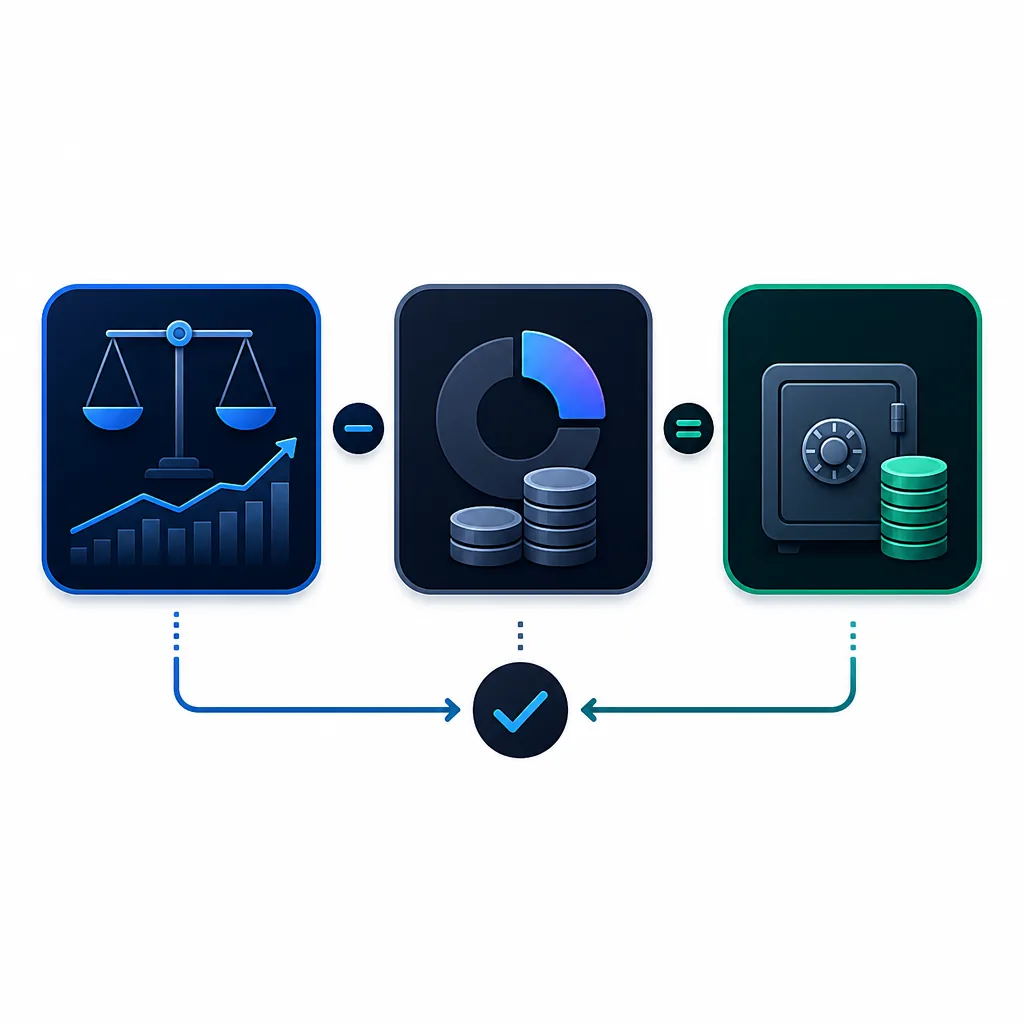
Margin required is not random. It’s mostly driven by four inputs:
- Lots (volume): bigger position = more margin.
- Contract size: e.g., 1.00 lot of EURUSD is typically 100,000 EUR; XAUUSD contract size depends on broker (often 100 oz per lot, but not always).
- Market price: higher price increases notional value (and margin), all else equal.
- Leverage: higher leverage reduces margin required; lower leverage increases it.
What doesn’t directly change margin required: your stop loss distance. Stop loss affects risk, not the margin locked by the broker.
Why contract size matters more than most traders think
Two brokers can show different margin for the “same” trade because their contract specifications differ (contract size, margin calculation mode, hedging rules, and sometimes symbol suffixes).
That’s why a generic “margin required calculator” online can be wrong for your account. The best calculator is your broker’s symbol spec + your platform’s margin preview (more on that below).
Core formulas: how to calculate margin for forex
We’ll keep the math practical. The goal is to estimate margin closely enough to avoid order rejections and margin stress.
Step 1: Calculate the position’s notional value
Notional Value (in base currency units) is:
Notional = Lots × Contract Size × Price
For most major forex pairs, contract size is 100,000 units of the base currency per 1.00 lot.
Step 2: Apply leverage to get margin required
Margin Required = Notional ÷ Leverage
If your account is denominated in a different currency than the quote currency, your platform will convert it automatically. For estimating, you can approximate using the quote currency if your account is in the same currency (many traders use USD accounts).
Quick reference table (typical retail assumptions)
These are typical assumptions for many brokers, but you must confirm contract size and leverage on your platform.
| Instrument type | Common contract size (1.00 lot) | Margin depends most on | Common surprise |
|---|---|---|---|
| Major forex (e.g., EURUSD) | 100,000 base units | Lots and leverage | Margin rises fast when stacking multiple 0.50–1.00 lot trades |
| JPY pairs (e.g., USDJPY) | 100,000 base units | Lots, leverage, and price | Pip value differs; margin still follows notional ÷ leverage |
| Gold (XAUUSD) | Varies by broker (often 100 oz) | Contract size and leverage rules | Some brokers use lower leverage on metals than FX |
| Indices/CFDs | Varies widely | Broker spec (margin rate) | Margin may be a fixed % (not leverage-based) |
Step-by-step: estimate margin and free margin before you copy a signal
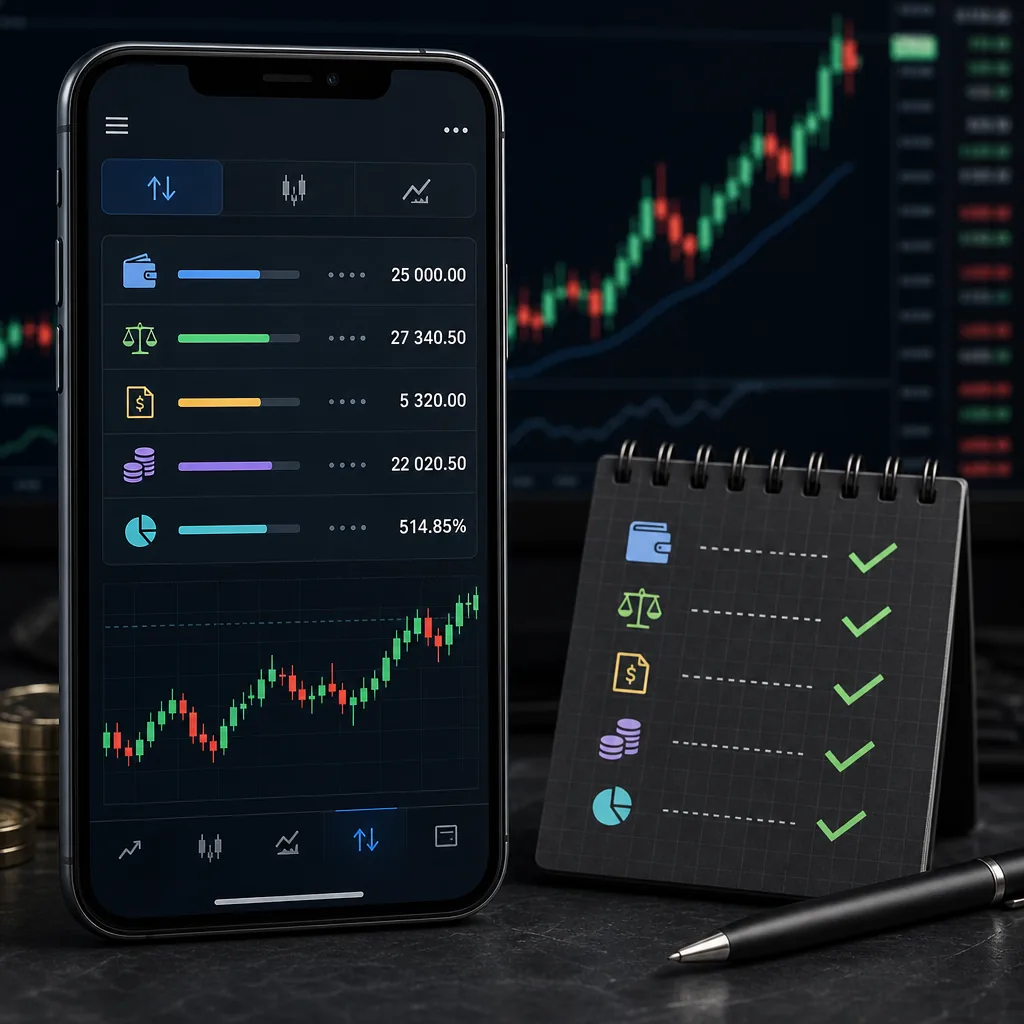
Use this process every time you receive a signal, especially if you already have open positions.
Step 1) Collect the 5 inputs (takes 30 seconds)
- Account equity right now (not balance).
- Current used margin right now.
- Symbol contract size (from your broker’s symbol specification).
- Your leverage for that symbol (FX leverage can differ from metals).
- Planned lot size for the signal.
If you can’t find contract size quickly, open the symbol specs in MT4/MT5 (or your broker’s app). If you trade gold signals often, also read what is xauusd for the basics of how the instrument is quoted and traded.
Step 2) Estimate margin required for the new trade
Use the formula:
Margin Required ≈ (Lots × Contract Size × Price) ÷ Leverage
Hypothetical example (EURUSD):
- Assume EURUSD is trading at 1.1000 (hypothetical).
- Lots = 0.20
- Contract size = 100,000
- Leverage = 1:100
Notional = 0.20 × 100,000 × 1.1000 = 22,000 (approx USD notional equivalent in this simplified example).
Margin required = 22,000 ÷ 100 = 220 (approx, in account currency if USD-based).
This won’t be exact to the cent, but it’s close enough for decision-making.
Step 3) Update your “after-trade” used margin and free margin
Once you have an estimate for the new trade’s margin:
- New Used Margin ≈ Current Used Margin + New Margin Required
- New Free Margin ≈ Equity − New Used Margin
Hypothetical continuation:
- Equity = $1,500 (hypothetical)
- Current used margin = $300 (hypothetical)
- New trade margin required ≈ $220
New used margin ≈ 300 + 220 = $520
New free margin ≈ 1,500 − 520 = $980
Meaning: after opening, you’d still have about $980 as a cushion for drawdown and for additional trades.
Step 4) Stress-test free margin for a normal drawdown (the part most people skip)
When you copy a signal, you should assume price can move against you before it moves in your favor. So don’t only ask “Can I open it?” Ask “Can I hold it if it pulls back?”
A simple stress test:
- Estimate how much floating loss you could reasonably see (based on stop loss distance, volatility, or your own buffer rule).
- Subtract that from equity, then re-check margin level.
Hypothetical stress test: You decide to budget for a temporary floating loss of $250 across all open trades.
- Stressed equity ≈ 1,500 − 250 = $1,250
- Used margin after opening ≈ $520
Stressed margin level ≈ (1,250 ÷ 520) × 100 = 240% (approx).
Whether 240% is “safe” depends on your broker’s margin call/stop-out and how volatile the instrument is. But the method is what matters: you’re checking survivability, not just entry feasibility.
Step 5) Confirm with your platform’s built-in margin preview
Many platforms show margin required in the order window before you place the trade (or in a “specification” panel). Use that as the final check.
If your platform’s number is meaningfully different from your estimate, it usually comes from:
- different contract size than you assumed,
- different leverage for that symbol,
- account currency conversion, or
- broker-specific margin rules (especially on metals).
Worked examples: forex vs gold margin (hypothetical numbers)
These examples are intentionally hypothetical. Do not treat them as current market prices or broker specs. They’re here to show the calculation method.
Example A: EURUSD margin required at two leverage settings
Hypothetical assumptions:
- EURUSD price: 1.1000
- Trade size: 0.50 lots
- Contract size: 100,000
Notional = 0.50 × 100,000 × 1.1000 = 55,000
- At 1:100 leverage: margin ≈ 55,000 ÷ 100 = 550
- At 1:30 leverage: margin ≈ 55,000 ÷ 30 = 1,833
Same trade, very different margin. This is why you must know your effective leverage (and not assume it’s the same across brokers or instruments).
Example B: XAUUSD margin required (contract size is the key)
Gold (XAUUSD) is where traders often get caught because contract size and leverage rules vary more than on majors. If you’re newer to gold, read gold trading for beginners and keep your first calculations on demo.
Hypothetical assumptions:
- XAUUSD price: 2,400 (hypothetical)
- Trade size: 0.10 lots
- Contract size: 100 oz per 1.00 lot (hypothetical broker spec)
- Leverage on metals: 1:50 (hypothetical)
Notional = 0.10 × 100 × 2,400 = 24,000
Margin required = 24,000 ÷ 50 = 480
If your broker uses a different contract size (e.g., 10 oz per lot) or different leverage (e.g., 1:20), the margin changes dramatically. Always confirm in symbol specs.
How leverage and lot size interact when multiple signals stack
Copying signals gets risky when you open several positions that each look “small” on their own. Used margin is additive, but equity can drop quickly during correlated moves.
Stacking scenario (why free margin disappears fast)
Hypothetical account snapshot:
- Equity: $2,000
- Used margin: $400
- Free margin: $1,600
You copy three signals in a row:
- Trade 1 margin: $250
- Trade 2 margin: $250
- Trade 3 margin: $250
New used margin ≈ 400 + 750 = $1,150
New free margin ≈ 2,000 − 1,150 = $850
Now imagine a normal pullback puts you at −$500 floating across those trades.
- Equity becomes ≈ 2,000 − 500 = $1,500
- Used margin is still ≈ $1,150
Margin level ≈ (1,500 ÷ 1,150) × 100 = 130%
Depending on your broker’s thresholds, 130% could already be uncomfortable. The point isn’t the exact percentage; it’s that stacking + drawdown compresses margin level quickly.
A practical buffer rule (not a guarantee, just a habit)
Instead of running your account close to the edge, pick a personal buffer rule such as:
- After opening a new signal, keep at least 50–70% of equity as free margin, or
- Keep margin level above a conservative threshold you choose (well above your broker’s stop-out), and
- Assume a realistic drawdown amount and check if margin level stays healthy.
These aren’t universal numbers. They’re a way to force conservative decision-making when signals arrive quickly.
Margin vs risk: don’t confuse “can open” with “can afford”
Margin answers: “Does my broker allow me to hold this position size?”
Risk answers: “If the stop loss is hit, how much money do I lose?”
You need both checks. If you only do margin, you can open trades that are too risky. If you only do risk, you can size trades that are “safe” by stop loss but still too heavy on margin (especially with low leverage).
Fast risk check alongside margin
When you receive a signal with SL distance, do a quick position sizing check. If you want a deeper guide, use your normal risk framework and tools like a lot size calculator and pip calculator.
Hypothetical example (method only): If your account is $2,000 and you risk 1% ($20) per trade, and the stop is 25 pips away on EURUSD, you size the lot so that 25 pips ≈ $20. That’s risk-based sizing. Then you still must confirm the resulting lot size doesn’t consume too much margin.
Common mistakes that cause margin calls when copying signals
1) Using balance instead of equity
If you have open trades in drawdown, balance looks fine while equity is lower. Margin is based on equity, so always calculate from equity.
2) Assuming the same leverage for FX and gold
Many brokers apply lower leverage to metals than majors. A gold trade can require much more margin than you expect.
3) Ignoring contract size for XAUUSD
Gold contract size is not “universally 100 oz” across every broker and account type. Confirm it in symbol specs before you trust any margin required calculator.
4) Stacking correlated trades
Three trades can be “different pairs” but still move together (USD exposure is a common example). Correlation increases the chance that multiple positions go into drawdown at the same time, shrinking equity while used margin stays high.
5) Forgetting spreads and swaps in the cushion
Spread means you often start slightly negative right after entry. Swap/financing can also reduce equity if you hold overnight. It’s usually small, but it matters if your margin is already tight.
Quick checklist: avoid margin trouble when multiple signals stack
Use this before placing any new signal trade.
- Check equity (not balance). If equity is already down, reduce size or skip.
- Estimate margin required for the new trade using your symbol’s contract size and leverage.
- Recalculate free margin: Equity − (Current used margin + New margin).
- Stress-test: assume a temporary floating loss across open trades (your buffer number) and confirm margin level remains comfortable.
- Count open trades: if you already have 2–4 positions, be extra strict. Stacking is where most margin calls happen.
- Watch metals and news sessions: spreads can widen and equity can swing faster. If you trade gold often, timing helps—see best time to trade xauusd.
- If unsure, reduce lot size or wait for a cleaner setup. Margin safety is more important than catching every alert.
Using a “margin budget” for signal copying (simple framework)
If you copy signals frequently, a margin budget keeps you disciplined. This is not a broker feature; it’s a personal rule.
Create your margin budget
- Pick a maximum % of equity you’ll allow as used margin (for example, 25–40%).
- When used margin hits that cap, you don’t add new trades unless you close something or equity rises.
Hypothetical example: Equity is $3,000. You set a 35% used margin cap.
- Max used margin target = 0.35 × 3,000 = $1,050
If your current used margin is $900, you only have about $150 of margin “budget” left. That’s a signal to reduce lot size, skip, or wait.
Why this works for real life
Signals don’t arrive one at a time in a calm market. They can cluster during active sessions. A margin budget stops you from “just adding one more” until the account is fragile.
Where to find the numbers on MT4/MT5 (and most broker apps)
Even if you don’t use MT4/MT5, most platforms show the same fields.
- Equity, Margin, Free Margin, Margin Level: usually in the Trade/Terminal tab.
- Contract size and margin settings: Symbol Specification (right-click symbol → Specification).
- Order window: often displays required margin before you confirm.
If you want a broader execution routine for copying entries/SL/TP cleanly, see our forex signals telegram guide for practical workflow tips.
FAQ
How do I calculate margin for forex if my account currency isn’t USD?
The structure is the same: notional ÷ leverage. The difference is currency conversion. Your platform converts margin into your account currency automatically. For estimating, use the platform’s margin preview in the order window as the final confirmation.
Is free margin the same as available balance?
No. Free margin is based on equity, which includes floating P/L. If your open trades go negative, free margin drops even if your balance doesn’t change.
Do stop loss and take profit affect margin required?
Not directly. Margin required is primarily about notional value and leverage. SL/TP affects your risk and potential drawdown, which indirectly affects equity and therefore free margin.
Why does my broker’s margin required differ from an online margin required calculator?
Online calculators often assume standard contract sizes and a single leverage. Your broker may use different contract specs, symbol-specific leverage, margin rates, or conversion rules. Always trust your platform’s specification and order preview over a generic calculator.
What’s a safe margin level for copying signals?
There is no universal safe number because brokers have different margin call/stop-out levels and instruments move differently. Practically, keep a wide buffer above your broker’s thresholds and stress-test for normal drawdown before stacking additional trades.
Risk warning: Trading forex and gold involves a significant risk of loss and is not suitable for everyone. Margin and leverage can amplify losses, and you can lose more quickly than you expect during volatile conditions. Past performance does not guarantee future results. This article is for education only and is not personal financial advice. If you’re new, practice these calculations on a demo account before trading live.
If you want structured trade alerts to practice with, United Kings sends forex and gold (XAUUSD) signals on Telegram with an entry, stop loss, and take-profit levels. You can view a selection of signals in the free public telegram channel, and review how results are reported on our results and methodology pages. VIP options are listed on the pricing page.


