
You’re one good week away from getting funded… until one oversized trade breaks the daily loss limit.
If you’ve tried prop firm trading, you already know the painful truth: it’s not the strategy that fails most traders. It’s the rules.
Now add forex signals into the mix. Signals can be a huge edge, but only if you adapt them to the challenge constraints—especially when volatility spikes and spreads widen during London and New York session transitions.
TL;DR: Using Forex Signals to Pass Prop Firm Challenges
- Signals can help you pass—but only if you translate them into your prop firm’s risk rules (daily loss, max drawdown, lot caps).
- Choose the right challenge type: time limits, minimum trading days, and news rules decide whether signal trading is a perfect fit or a trap.
- Standardize risk per trade: most funded trader failures come from inconsistent sizing, not bad entries.
- Use “challenge mode” execution: fewer trades, higher-quality setups, and strict session discipline (London/NY) beat overtrading.
- Build a buffer first: protect equity early; then scale slightly once you’re above break-even and within drawdown comfort.
- Track everything: a simple journal + rule checklist prevents accidental violations (especially around news and holding times).
Why Prop Firm Trading + Forex Signals Is a Powerful Combo (If You Do It Right)

Prop firm challenges reward one thing above all: consistent execution under constraints.
That’s exactly what high-quality signals are designed to provide—clear entries, defined invalidation (stop loss), and preplanned take-profit targets.
But here’s the catch: most signal followers treat a prop challenge like a normal retail account. They copy the entry and ignore the context: daily loss limits, maximum drawdown, minimum trading days, and restrictions around news or weekend holds.
In today’s market context, that mismatch matters. Gold (XAUUSD) is trading near $2650 (+0.35% over 24h). EUR/USD is around 1.0520, GBP/USD 1.2680, USD/JPY 149.50, and DXY 106.80.
When DXY is elevated and USD/JPY sits near key psychological levels, you often get sharp intraday moves and sudden reversals. That’s great for signal precision—if your sizing is correct. It’s disastrous if you’re risking “whatever feels right” and one spike tags your stop.
The real purpose of signals in a challenge
Signals should not be your “get rich quick” shortcut. In a funded trader evaluation, signals are best used as a process tool:
- Reduce decision fatigue so you don’t revenge trade after a loss.
- Standardize execution across multiple days, which helps meet minimum trading day requirements.
- Keep you selective—you take the planned setups instead of chasing random candles.
Where most traders go wrong
They copy a signal designed for a general audience and apply it to a rule-based environment without translation.
A gold signal with a $15 stop and a $45 take profit (1:3 RR) can be perfect. But if you size it at 2% risk and take two losses in a day, you could violate a 4–5% daily loss cap depending on the firm.
So the question becomes: how do you convert a great signal into a prop-firm-compliant trade plan? That’s what we’ll build step-by-step.
Which Prop Firm Challenges Suit Signal Trading (And Which Don’t)
Not all evaluations are created equal. Some are basically built for disciplined signal execution. Others punish it with time pressure, restrictive rules, or unrealistic targets.
To keep this guide broadly useful, we’ll talk in “FTMO-style” terms (because traders often search ftmo signals), but the logic applies to most firms.
Challenge features that work well with forex signals
1) Reasonable profit target vs drawdown.
If the target is aggressive relative to max drawdown, traders are forced to over-risk. Signals won’t save you if the rules demand gambling.
2) Minimum trading days.
Signals are ideal for meeting minimum days because you can take one planned setup per day rather than forcing volume.
3) Clear news and holding rules.
If the firm bans trading during high-impact news, you can simply filter signals around those windows. If the rules are vague, you risk accidental violations.
4) Scaling and consistency rules.
Some firms penalize “lot size spikes.” Signal trading becomes a strength here because you can keep sizing consistent.
Challenge features that can be hostile to signal trading
1) Very short time limits.
If you must hit a target in a tiny window, you’ll be tempted to take every signal and oversize. That’s usually how accounts blow.
2) Tight daily loss limits + high spread environments.
Gold spreads can widen during rollovers and around major releases. If you trade those windows, a normal stop can become a “spread stop.”
3) Restrictions on stop loss placement.
Some firms require an SL on every trade and may have rules about max stop distance. Signal traders must ensure the SL is always placed and within allowed parameters.
Quick comparison: challenge types and signal fit
| Challenge Feature | Why It Matters | Signal Trading Fit | Best Adaptation |
|---|---|---|---|
| Minimum trading days | Forces consistency | High | 1 setup/day, fixed risk |
| Strict daily loss limit | Prevents recovery trading | Medium | 0.25–0.75% risk, 2-loss stop |
| High profit target | Encourages over-leverage | Low–Medium | Focus on 1:2–1:3 RR only |
| News trading restrictions | Signals may trigger during releases | Medium | News filter + session timing |
| Consistency / lot cap rules | Punishes sudden size jumps | High | Use a lot-size ladder |
The takeaway: the best “funded trader” candidates are not the most aggressive. They’re the ones who pick a challenge structure that rewards discipline—and then execute signals like a professional.
Prop Firm Rules That Break Signal Traders (And How to Preempt Them)
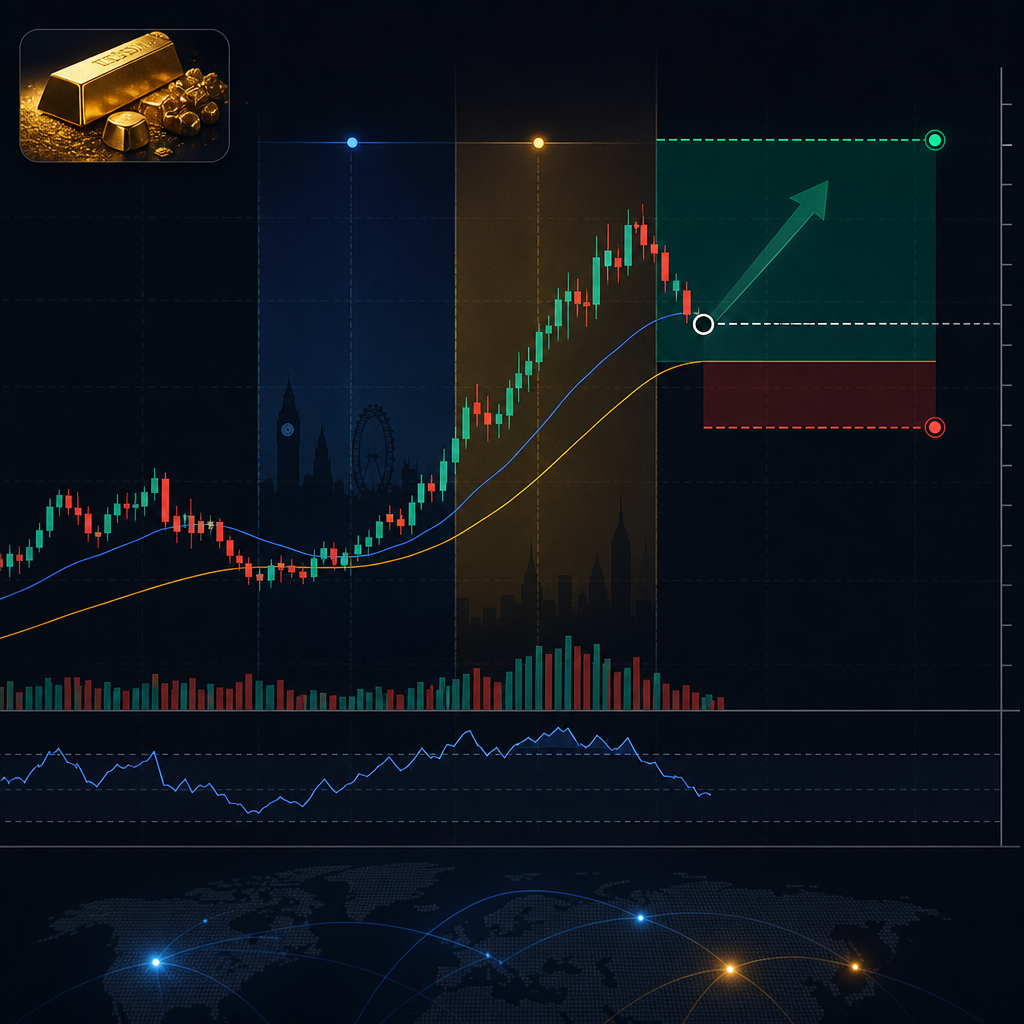
Most prop accounts don’t fail because of a bad signal. They fail because a trader unknowingly violates a rule while trying to “make the signal work.”
Your job is to build a compliance layer on top of any signal you take.
Rule #1: Daily loss limit
This is the silent killer. Traders take one loss, then double down on the next signal to “get it back.”
Instead, define a hard daily rule: max 2 trades per day or stop after 2 losses, whichever comes first.
Example: If you risk 0.5% per trade, two stopped trades = -1%. That’s survivable even under strict daily limits.
Rule #2: Maximum drawdown
Drawdown rules punish streaks. The solution is not “avoid losses.” The solution is avoid oversized losses.
Signals with defined SL make this easier, but you must enforce: no moving SL wider, no “mental stops,” and no adding to losers.
Rule #3: Minimum trading days
This rule tempts traders to place meaningless trades just to “count a day.”
Instead, plan for the requirement from day one. Take one high-quality setup during London or New York, then stop.
Rule #4: News and holding restrictions
Some firms restrict trading around CPI, FOMC, NFP, or major rate decisions. Even if your signal wins, you can fail the account by violating timing rules.
Build a weekly calendar and mark “no-trade windows.” If you want a deeper approach, pair this article with our guide on handling volatility in event-driven markets: how gold signals react to unexpected news events.
Rule #5: Execution quality (slippage, spreads, and copying delays)
Signal traders often ignore execution and assume entry price is “close enough.” In prop trading, a few pips can change your RR and win rate.
On EUR/USD at 1.0520, a 2–4 pip slip might be manageable. On XAUUSD around $2650, a $0.50–$1.50 difference can matter if your stop is tight.
If you’re using Telegram signals, ensure your notifications are instant and your broker execution is stable. Our community uses a structured approach via forex signals and gold signals designed around active session liquidity.
Step-by-Step: How to Convert Any Signal Into a Prop-Firm-Compliant Trade
Here’s the practical workflow we use when traders ask, “Can I use this signal for a challenge?”
We treat the signal as a setup idea. Then we translate it into a rules-compliant order.
Step 1: Read the signal like a professional
A complete signal should include: entry, stop loss, take profit(s), and sometimes a note about session timing or invalidation.
If any of those are missing, you’re guessing. Guessing is how traders violate drawdown rules.
Step 2: Map the signal to your challenge limits
Before you place the trade, answer these questions:
- What is my max risk per trade for this challenge phase?
- How many trades can I take today before I hit my daily loss buffer?
- Does this trade occur near restricted news time?
- Is the stop distance compatible with the instrument’s current volatility?
Step 3: Choose “challenge mode” risk (usually lower than you think)
Most traders should risk 0.25% to 0.75% per trade in a challenge.
Yes, it feels slow. But it keeps you alive long enough for edge to play out.
Step 4: Calculate lot size from stop distance (not from emotion)
Let’s use a realistic gold example in today’s zone.
Example signal (XAUUSD): Buy at $2650, SL $2635 (15 dollars), TP1 $2680 (30 dollars), TP2 $2695 (45 dollars).
That’s 1:2 to TP1 and 1:3 to TP2. Perfect structure.
Your lot size must be set so that if price hits $2635, your loss equals your chosen % risk—not whatever lot you used yesterday.
Step 5: Place bracket orders and walk away
Prop challenges punish micromanagement. Traders move SL, close early, and then re-enter out of frustration.
Use a bracket approach: entry + SL + TP set immediately. Then let the plan work.
Step 6: Post-trade compliance check
After the trade closes, record:
- Did I follow the signal exactly?
- Did I follow prop rules exactly?
- Was execution (spread/slippage) acceptable?
- Did I stop trading after my daily limit rules?
This is how a signal becomes a repeatable funded trader process—not a random alert you gamble on.
Risk Management for Funded Trader Evaluations: The “Buffer First” Method
If you want a simple mental model for passing evaluations, use this: your first job is to build a buffer, not to hit the target fast.
A buffer is a small profit cushion that protects you from normal variance. Once you have it, you can trade more freely without flirting with drawdown thresholds.
Phase 1: Buffer building (days 1–5)
In the early phase, trade like a risk manager, not a hero.
- Risk: 0.25%–0.5% per trade.
- Max trades/day: 1–2.
- Only take 1:2 or better RR setups.
- Prefer London and NY session signals with strong liquidity.
In practice, that might mean taking one clean EUR/USD continuation from 1.0520 with a 20-pip stop and a 40-pip target, then closing the platform.
Phase 2: Controlled growth (after buffer exists)
Once you’re up, you can slightly increase risk—slightly.
A common approach is moving from 0.5% to 0.75% risk, but only if:
- You are above break-even by a meaningful margin.
- Your last 10 trades show consistent execution.
- You are not near a major news week (CPI/FOMC/NFP).
Phase 3: Protect the finish line
The final stage is where traders self-sabotage. They see the target and start forcing trades.
When you’re close, reduce risk again and trade only the highest-conviction signals.
Daily “kill switch” rules (non-negotiable)
Use these to prevent emotional spirals:
- Two-loss stop: if you take 2 losses, you’re done for the day.
- One big win stop: if you hit a full TP (especially 1:3), stop trading and protect the day.
- Time stop: no trades outside your planned session window.
If you want a deeper framework for sizing and drawdown control, pair this with our detailed risk guide: risk management strategies when using forex signals.
Adapting Signals to Prop Firm Objectives: Targets, Consistency, and Trade Frequency
Signals can be used two ways in a challenge: high frequency (many small trades) or high selectivity (few high-quality trades).
For most prop firm traders, high selectivity wins. It reduces mistakes, avoids rule violations, and keeps your psychology stable.
Objective #1: Hit the profit target without overtrading
Traders often assume they must trade every day and take every signal. That’s not true.
If your average trade is 1:2 RR and you win 50%, you can still grow steadily. The key is not “more trades.” It’s consistent risk and clean execution.
Objective #2: Pass consistency rules (or avoid suspicious equity curves)
Some firms watch for extreme lot increases or “one trade did all the work.” Even when not explicitly stated, massive size jumps can trigger scrutiny.
Signals help here because you can standardize your lot size and keep performance smooth.
Objective #3: Meet minimum trading days without filler trades
If you need 5–10 trading days, plan a schedule:
- Day 1–3: 1 trade/day, 0.5% risk, aim for 1:2.
- Day 4–6: 1–2 trades/day only if A+ setups appear.
- Remaining days: trade only if it improves your probability, not because the calendar demands it.
Objective #4: Avoid correlation traps
Signal traders sometimes stack correlated positions: long gold + short DXY proxies + long GBP/USD, all effectively “short USD.”
In the current context (DXY ~106.80), USD strength/weakness can swing multiple pairs together. If USD spikes, you can take multiple losses at once.
A prop-safe rule: limit yourself to one USD-direction bet at a time, or reduce risk per trade when positions are correlated.
Want to diversify beyond FX and metals? We also publish crypto signals, but for most challenges, stick to instruments your prop firm allows and where spreads are stable.
Execution Tactics: London & New York Sessions, Slippage Control, and Entry Precision
In prop firm trading, execution isn’t a detail. It’s part of your edge.
United Kings focuses heavily on London and New York session trading because that’s when liquidity is deepest and price action is most “tradable.”
Why session timing matters for signal traders
Signals work best when:
- Spreads are tight.
- Moves have follow-through.
- Stops are less likely to be hit by random illiquid spikes.
Gold around $2650 can move $10–$25 quickly during active sessions. That’s exactly why we often use SL distances in the $10–$25 range—tight enough to define risk, wide enough to survive normal noise.
Market orders vs limit orders (prop perspective)
Market orders are simple and ensure you’re in. But you risk slippage, which can distort RR.
Limit orders improve entry price but risk missing the trade—sometimes the price taps your level and runs without fill.
Prop-friendly approach: use limits when the signal is a pullback entry. Use market orders when the signal is a breakout with momentum and you’re trading liquid hours.
A realistic execution example (EUR/USD)
Suppose EUR/USD is at 1.0520 during London.
A signal calls for a sell at 1.0518, SL 1.0540 (22 pips), TP 1.0474 (44 pips). That’s 1:2 RR.
If you enter late at 1.0512 due to delay, your stop becomes 28 pips and your TP becomes 38 pips—your RR collapses.
Solution: if you miss entry by more than a pre-defined threshold (for example 3–5 pips on majors), skip the trade or wait for a re-entry condition. Passing a challenge is about avoiding bad trades, not forcing them.
Slippage and spread “filters” you should use
- Spread filter: don’t trade if spread is abnormally wide for that instrument.
- Time filter: avoid rollover and low-liquidity windows.
- Volatility filter: if price is whipping $8–$12 per minute on XAUUSD, your planned stop may be too tight.
If you’re building your full signal execution routine, keep it aligned with your platform setup and order types. For more on signal workflows, browse the education hub at United Kings blog.
Gold (XAUUSD) Signals in Prop Firm Challenges: The Fast Track With Extra Rules
Gold is one of the fastest ways to hit profit targets—and one of the fastest ways to violate drawdown.
At $2650, XAUUSD is active and sensitive to USD moves (DXY ~106.80), yields, and risk sentiment. That means opportunity, but also sudden $15–$25 spikes that can tag stops.
Why prop traders love gold
- Clean technical levels often respected during London/NY.
- Large intraday range gives room for 1:2 and 1:3 targets.
- Strong reaction to catalysts can accelerate trades quickly.
Why gold breaks prop rules
- Traders oversize because “it moves fast.”
- Stops are placed too tight relative to volatility.
- They trade during restricted news and get slipped.
Prop-safe XAUUSD template (use this for most signals)
Use a repeatable structure so you’re not reinventing your risk every trade:
- Stop distance: typically $10–$25 from entry (depending on setup structure).
- Take profit: TP1 at 1:2, TP2 at 1:3 when conditions allow.
- Risk per trade: 0.25%–0.75% in evaluation phase.
- Max gold trades/day: 1–2 (gold overtrading is a common failure point).
Example: turning a gold signal into a challenge-friendly plan
Market context: XAUUSD trades around $2650 with moderate bullish drift (+0.35% 24h).
Signal idea: Buy $2648–$2650, SL $2636 (12–14 dollars), TP1 $2676 (26–28 dollars), TP2 $2688 (38–40 dollars).
This keeps your RR roughly 1:2 to TP1 and near 1:3 to TP2, inside the guideline price zone ($2610–$2690).
Prop adaptation: if you already took one loss today, you either cut risk in half or skip this trade. You protect the daily loss limit first.
When to avoid gold even if the signal is good
Skip XAUUSD signals when:
- There’s a high-impact USD event in the next 30–60 minutes and your firm restricts trading.
- Spread is unusually wide or execution is lagging.
- You’re emotionally “down” and tempted to increase lot size.
If gold is your main instrument, make sure your signal source is specialized. Our dedicated XAUUSD gold signals are built around session liquidity, clear SL/TP, and practical risk structure for active traders.
Forex Pair Signals for Challenges: EUR/USD, GBP/USD, USD/JPY in Today’s Context
Major FX pairs are often more “prop-friendly” than gold because their spreads are tighter and their moves are smoother.
In the current market snapshot: EUR/USD 1.0520, GBP/USD 1.2680, USD/JPY 149.50. These levels matter because round numbers and recent highs/lows often attract liquidity hunts during London and NY.
EUR/USD: the consistency pair
EUR/USD is a favorite for funded trader evaluations because it’s liquid and typically less chaotic than gold.
Prop-style signal usage: focus on 15–40 pip stop structures depending on timeframe, then target 30–80 pips for 1:2 RR.
Example: Buy 1.0522, SL 1.0498 (24 pips), TP 1.0570 (48 pips). If you can’t get filled within a few pips, don’t chase.
GBP/USD: great RR, but watch volatility
GBP/USD at 1.2680 can offer strong intraday swings, which helps hit targets. But it can also spike on UK headlines.
Prop adaptation: slightly lower risk than EUR/USD if you notice larger average candle size. The goal is to keep your loss size stable across pairs.
USD/JPY: trend + event risk
USD/JPY around 149.50 is often sensitive to yield moves and intervention talk. That can create fast 30–60 pip bursts.
Signals can work well here, but prop traders must respect:
- Wider “normal” stops compared to EUR/USD.
- Potential slippage during sudden spikes.
- Correlation with DXY and risk sentiment.
Correlation management: the hidden drawdown
If DXY is at 106.80 and you take multiple trades that all depend on USD weakness, you’re effectively taking one big trade split into pieces.
Prop-safe approach:
- Either take one USD-view trade at full risk,
- Or take two trades at half risk each,
- But don’t take three correlated positions at full size.
If you’re looking for a structured signal feed across majors, our premium forex signals are designed to be executed cleanly with defined SL/TP—exactly what prop rules require.
Building a “Prop Firm Signal Plan”: Your Daily Checklist and Weekly Routine
Most traders think they need better entries. What they usually need is a better routine.
A prop challenge is a performance environment. The traders who pass treat it like a job: check the rules, execute the plan, log results, repeat.
Your daily checklist (10 minutes)
- Rule check: daily loss limit, drawdown buffer, minimum trading days remaining.
- News check: mark restricted windows (CPI, FOMC, NFP).
- Session plan: trade only London, NY, or overlap—whichever matches your strategy.
- Risk setting: choose fixed risk per trade (example: 0.5%).
- Trade cap: max 1–2 trades today; stop after 2 losses.
Your weekly routine (30 minutes)
Once a week, review your last 10–20 trades and answer:
- Did I break any rules (even small ones)?
- Did I move stops or take early exits out of fear?
- Which instrument gave me the cleanest execution this week?
- Am I trading too close to major news?
A simple journaling template (prop-friendly)
Keep it short so you actually do it:
- Instrument + session
- Signal followed? (Yes/No)
- Entry/SL/TP + RR
- Risk % used
- Result (R multiple)
- Rule compliance (Pass/Fail)
- One sentence lesson
Where United Kings fits into this workflow
Our goal isn’t to flood you with alerts. It’s to provide premium Telegram signals with clear Entry, SL, and TP levels, plus educational guidance so you learn the “why,” not just the “what.”
That’s why traders build their routine around our signal pages and community resources at United Kings signals and the broader education on UnitedKings.net.
Common Mistakes When Using FTMO Signals (and How Funded Traders Avoid Them)
Let’s talk about the mistakes that repeatedly show up in evaluations—especially among traders searching for “ftmo signals.”
These are not beginner mistakes. Experienced traders make them too, because challenge pressure changes behavior.
Mistake #1: Over-risking after a win
You hit a 1:3 gold winner and feel unstoppable. Then you double your lot on the next trade and give it back.
Funded trader fix: cap your lot size for the entire evaluation. If you scale, do it by a small step and only after a multi-day review.
Mistake #2: Moving SL because “the signal is still valid”
Signals are built around invalidation. If price hits SL, the idea is wrong—or at least not working now.
Funded trader fix: never widen SL in a challenge. If you must re-enter, do it on a new signal or a clear re-entry rule with fresh risk.
Mistake #3: Taking too many correlated signals
Long GBP/USD and long EUR/USD at the same time can be fine. But if both are essentially “sell USD,” you’re doubling exposure.
Fix: treat correlated trades as one basket and reduce risk accordingly.
Mistake #4: Trading outside the session because you’re bored
Low-liquidity hours create messy price action and spread spikes. That’s where traders get chopped and hit daily loss limits.
Fix: trade only your best 2–4 hour window. For most, that’s London open, NY open, or overlap.
Mistake #5: Not reading the prop firm rulebook carefully
Some firms allow news trading; others don’t. Some allow holding over weekend; others restrict it. Some calculate drawdown on balance; others on equity.
Fix: print the rules and keep them beside your desk. Your strategy must serve the rules, not the other way around.
If you’re choosing a provider, use a structured evaluation process. Our checklist resource can help you avoid hype and focus on execution quality: forex signals provider checklist.
Choosing a Signal Provider for Prop Firm Trading: What Actually Matters
In a challenge, you don’t need “the most signals.” You need signals that are easy to execute and easy to risk-manage.
Criteria #1: Clear structure (Entry, SL, TP)
If a provider posts “buy gold now” without a stop and target, that’s not a signal. That’s a suggestion.
Prop traders need precision because the rules are precise.
Criteria #2: Risk-reward logic (not random targets)
Look for consistent 1:2 and 1:3 structures. Those ratios allow you to grow even with normal win-rate variance.
Criteria #3: Session alignment
Providers who trade during London and NY tend to have tighter spreads and cleaner follow-through. That matters more than most traders realize.
Criteria #4: Community and education
In a prop challenge, your mindset is tested daily. Being in a serious community helps you stay disciplined.
United Kings has a 300K+ active trader community and publishes education alongside signals so you can improve while you execute.
Criteria #5: Transparency and realistic claims
Any provider claiming guaranteed profits is a red flag. Markets don’t work that way.
What you want is a provider focused on process, with a strong historical edge. United Kings targets an 85%+ win rate on our signal approach, but we always emphasize that past performance doesn’t guarantee future results and risk must be managed.
Where to start with United Kings
If you want to see how we structure our service, start with our main hub: premium trading signals.
Then choose your focus: XAUUSD gold signals or major forex pair signals.
And if you want to join the live community feed, our official Telegram is here: United Kings Telegram channel.
Pricing, Planning, and Passing: How to Budget Your Challenge Like a Pro
Most traders budget for the challenge fee and forget the real cost: inconsistent execution.
If you fail two or three evaluations due to preventable mistakes, you’ve spent more than you would on a professional signal service and a disciplined plan.
Match your signal subscription to your challenge timeline
United Kings offers three plans designed for different trader profiles:
- Starter (3 Months): $299 (~$100/mo) for traders actively attempting a challenge now.
- Best Value (1 Year): $599 (~$50/mo) with 50% savings + FREE ebook for traders who want multiple attempts and long-term growth.
- Unlimited (Lifetime): $999 pay once, access forever for traders committed to building a funded-trader career.
You can review the full details and choose a plan at United Kings pricing.
Use the 48-hour money-back guarantee responsibly
We offer a 48-hour money-back guarantee so you can evaluate fit. Use that time to assess:
- Signal clarity and structure
- Execution timing for your timezone
- Whether the style matches your prop firm’s rules
Plan your attempt like a campaign, not a sprint
Set a realistic daily goal: for example, 0.3%–0.8% per day on average when opportunities appear.
Some days you do nothing. That’s not failure. That’s professional restraint.
If you have questions before joining, you can also reach out via contact United Kings or learn more about our team on about us.
FAQ: Using Forex Signals to Pass Prop Firm Challenges
1) Can I really pass a prop firm challenge using signals?
Yes, many traders do. The key is adapting the signal to your prop firm’s rules—especially risk per trade, daily loss limits, and news restrictions. Signals provide structure, but you must execute with discipline.
2) What risk per trade is best for a funded trader evaluation?
Most traders perform best at 0.25%–0.75% per trade during the evaluation. It keeps drawdowns small and prevents one bad day from ending the challenge.
3) Are gold (XAUUSD) signals good for challenges?
They can be excellent because gold moves enough to reach 1:2–1:3 targets quickly. But gold also spikes and can cause rule violations if you oversize or trade around restricted news. Keep stops realistic ($10–$25) and risk controlled.
4) What if I miss the exact entry price from a Telegram signal?
Have a rule. On majors, if you miss by more than a few pips, skip or wait for a pullback. On gold, avoid chasing if price has already moved several dollars away from the intended entry because RR can degrade fast.
5) How do I avoid breaking daily loss limits?
Use a daily “kill switch”: stop after 2 losses, cap trades per day, and never increase lot size to recover. Your goal is survival and consistency, not revenge trading.
Risk Disclaimer (Read Before You Trade)
Forex and gold trading involves significant risk and may not be suitable for all investors. You can lose some or all of your capital. Signals and educational content are provided for informational purposes and do not constitute financial advice.
Past performance does not guarantee future results. Prop firm rules vary by provider, and you are responsible for ensuring your trading complies with your firm’s requirements. If you are a beginner, we strongly recommend practicing on a demo account before attempting a funded trader challenge.
Join United Kings: Trade Prop Challenges with Structure, Not Stress
If your goal is to become a funded trader, you don’t need more indicators. You need a repeatable process: clear entries, defined SL/TP, disciplined risk, and a community that keeps you accountable.
United Kings delivers premium Telegram forex and gold signals with clear Entry, SL, and TP levels, built around London and New York session liquidity—plus educational guidance to help you improve while you trade.
- Explore our full service: United Kings premium signals
- Specialize in metals: XAUUSD gold signals
- Trade major pairs: forex signals for EUR/USD, GBP/USD, USD/JPY
- Choose a plan (3 Months $299, 1 Year $599, Lifetime $999): United Kings pricing
- Join the live community now: United Kings Telegram
Ready to stop guessing and start executing? Join United Kings today and approach your next prop firm challenge with a professional-grade plan.


